
Our readers keep the lights on and my morning glass full of iced black tea. As an Amazon Associate, I earn from qualifying purchases.
Specs are compiled from manufacturer listings and verified buyer reviews and can change over time — please confirm the key details on the product page before buying.
The key to a great AM radio is its ability to pull in faint stations, not its screen. The right receiver separates a clear signal from a frustrating buzz, whether for emergencies, worksites, or daily listening. The best AM radios balance reception power with battery flexibility and easy controls.
I’m Min — the founder and writer behind Gadgets Feed. This guide is built by comparing the manufacturers’ published specifications and the patterns across verified customer reviews, so you get each pick’s real strengths and trade-offs instead of marketing spin.
Reception quality, power source flexibility, and tuning ease separate a keeper from a paperweight—this guide shows which fits your life. am radio
Our Picks at a Glance

How To Choose The Best AM Radio
AM radio differs from FM in signal behavior and receiver requirements. It travels further at night but picks up more static, so the receiver’s internal parts matter more than on FM. You want a radio whose ferrite antenna is big enough to grab the signal without you having to hold it at a weird angle.
Power Sources and Battery Life
Consider your primary use case before choosing a power source. A pocket radio for jogging needs a light rechargeable battery, while an emergency radio should let you fall back on AA or AAA cells when the power’s out. Check the capacity — a 1250mAh battery gives you roughly three times the runtime between charges compared to a small 400mAh unit found in credit-card-sized models. Some premium units run for days on D cells, which is a huge plus in a crisis.
Reception and Extra Bands
To pull in more stations at dusk, focus on the antenna first—a dedicated AM antenna, like a twin-coil ferrite core, matters more than speaker wattage, especially if you live in a rural area. For emergencies when cell towers fail, you can also get NOAA weather alerts or the 2-Meter Ham band for disaster info, both genuinely useful features to consider.
Quick Comparison
| Model | Best For | Power Source | Bands | Weight | Amazon |
|---|---|---|---|---|---|
| FosPower A1★ Best Overall | Emergency Preparedness | Solar, Crank, AAA | AM/FM/NOAA | 14.8 oz | Amazon |
| Panasonic RF-2400DBest Value | Simple Home Use | AC Adapter or 4 AA | AM/FM | — | Amazon |
| SWDSTP Mini | Pocket Portability | 400mAh Rechargeable | AM/FM | 1.14 oz | Amazon |
| Jazmm Pocket | Versatile Listening | 1250mAh Rechargeable | AM/FM/SW/WB | — | Amazon |
| Kalence Earmuffs | Noisy Worksites | 2000mAh Rechargeable | AM/FM | 1.08 lbs | Amazon |
| Sangean U3 | Rugged Durability | AC Cord or 6 D | AM/FM | ~9 lbs | Amazon |
| C. Crane CCRadio-2E | AM DXing Enthusiasts | AC Cord or 4 D | AM/FM/NOAA/Ham | 4 lbs | Amazon |
In-Depth Reviews
1. FosPower NOAA Emergency Weather Radio A1
Our pick — over 4.5★ from 37,500+ verified ratings; the strongest balance of quality and price.
The survivalist’s go-to that keeps your phone alive when everything else is dead.
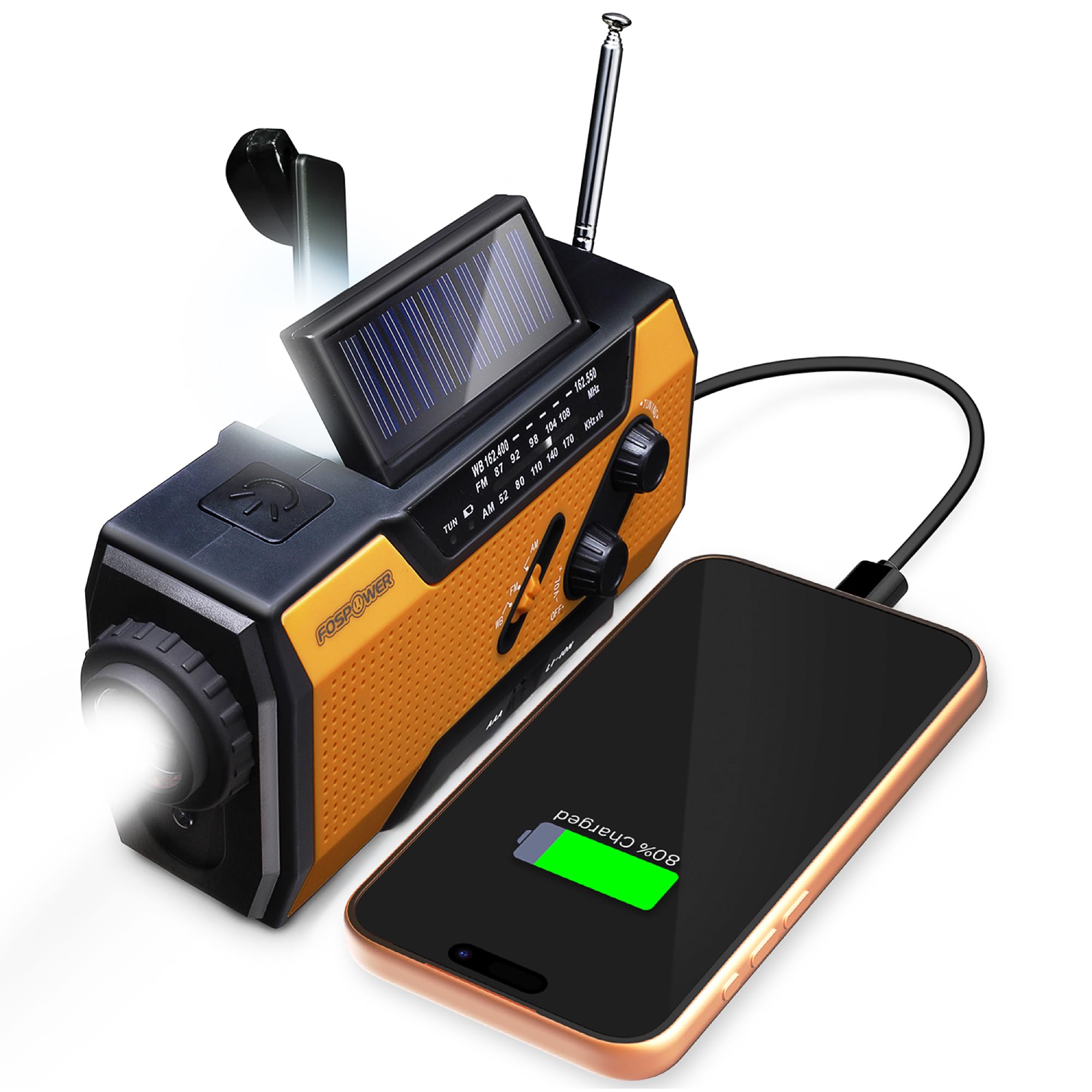
This is the pick for go-bags and storm-season preppers. The defining feature is the built-in 7400mWh (2000mAh) power bank, which is enough juice to top up a small tablet or phone when the grid goes down. It pairs with two light sources — a 4 LED reading light and a 1W flashlight — so you’re not fumbling in the dark while you crank.
Power comes from three places, which is the whole point of an emergency radio. You can spin the hand crank, set it in the sun for the solar panel, or drop in AAA batteries as a fallback. It pulls in NOAA forecasts plus AM and FM stations, so you get official alerts and regular news in one box.
The crowd favorite here is loud and clear on quality and function, and it’s been through real storms — verified in derecho emergencies where it charged a phone after a portable charger died. Buyers report the speaker is surprisingly clear and the size is right for camping. There’s one honest caveat: AAA batteries left in for nine months leaked, and one owner found the flashlight dim, though the hand crank revived the FM radio without issue.
Reasons to trust it
- Three power sources mean backup on top of backup
- USB-C charging keeps modern devices topped off
- Compact 6.2-inch frame fits a camping kit
The trade-offs
- Speaker volume can quit after months of heavy radio use
- Batteries left inside can leak and corrode
Grab it for: emergency kits, storm prep, and camping where a phone charge matters more than perfect audio.
Think twice if: you want a daily kitchen radio — this shines in a crisis, not as an everyday tuner.
2. Panasonic Portable AM/FM Radio RF-2400D
The classic dial radio that a 7-year-old can operate without a manual.
This is the simple workhorse for rooms where no one wants to fiddle with menus. It runs on the included AC adapter or four AA (LR6/R6) batteries, so it works in a blackout and stays put on a nightstand. The large dial with a fluorescent pointer makes tuning easy to see even in the dark, which is why older listeners find it so approachable.
Sound quality is the standout here — owners consistently call it clear and surprisingly strong for the price, and the digital tuner with AFC (Auto Frequency Control) keeps stations locked in without constant re-adjustment. The telescoping antenna picks up both bands, and the 3.5mm headphone jack lets you listen privately. It’s small and light enough to carry from room to room.
Compared to the bulkier Sangean U3 below, the Panasonic wins on price and sheer simplicity, though serious AM enthusiasts note its AM performance is weaker than its FM. The red tuning light is a nice touch, but the volume slider lacks a quiet low range for late-night listening.
Perfect for: kitchens, bedrooms, and anyone who wants one knob for volume and one for station.
Who should pass: DXers chasing distant AM signals at night — look to the C. Crane for that.
3. Jazmm Bluetooth AM/FM/Shortwave Radio with NOAA
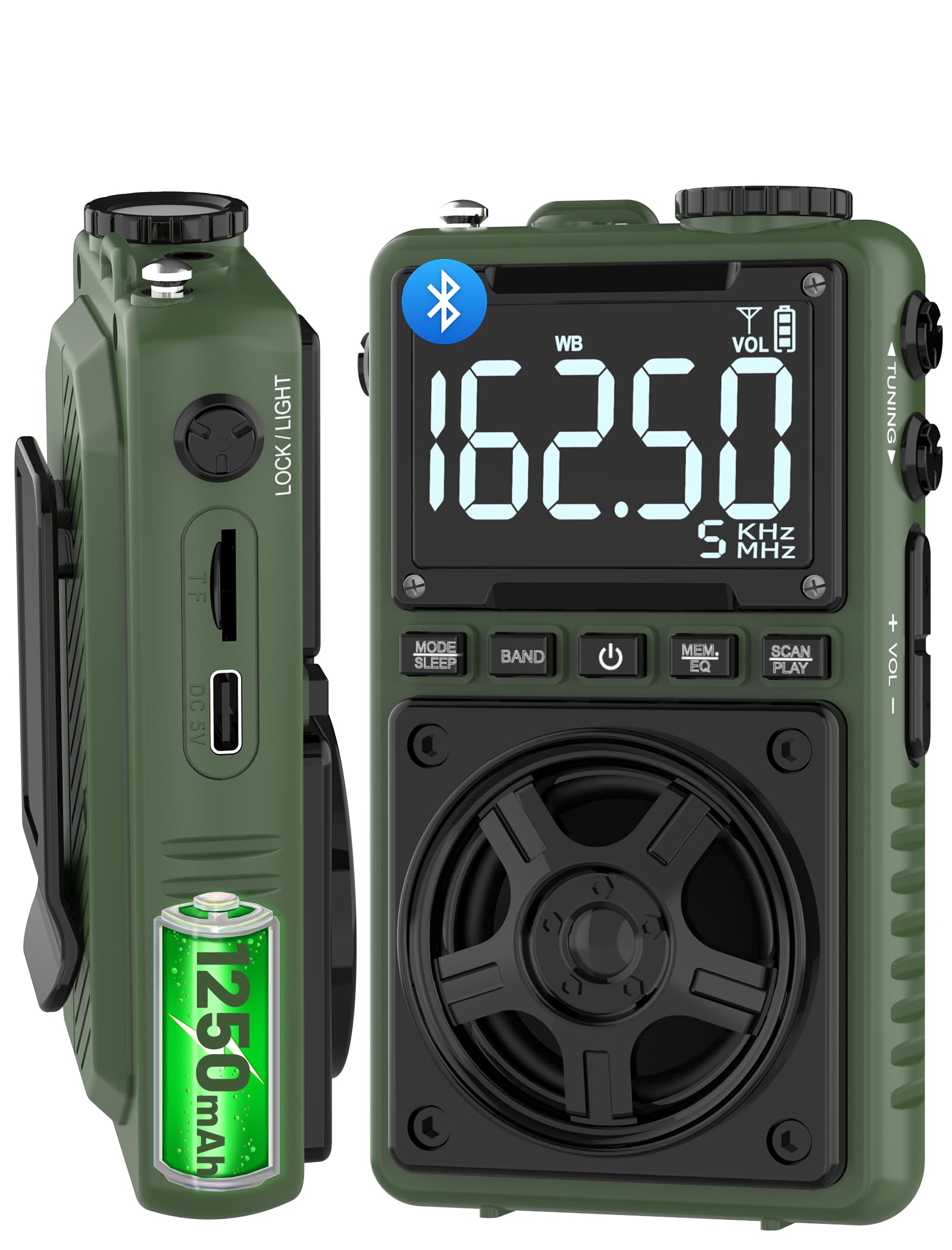
A pocket radio that moonlights as a Bluetooth speaker and NOAA alert station.
If you want one device that does it all, this is it. The built-in 1250mAh rechargeable battery delivers 10-12 hours of music per charge via USB-C — roughly three times the stamina of the tiny 400mAh battery in the SWDSTP mini. That’s a full workday or a long picnic without hunting for an outlet.
The 5W speaker is the headline feature, delivering louder, cleaner audio than any other radio this size. It covers four bands — FM 87-108MHz, AM 520-1710 KHz, shortwave, and weather band — so you can chase international broadcasts or get NOAA alerts. Bluetooth 5.4 lets you stream from your phone, and the TF card slot turns it into a standalone MP3 player.
Owners praise the strong AM seek and the big backlit display, calling it possibly the best portable they’ve owned in decades. The telescoping antenna noticeably improves reception when extended. One quirk: it won’t stand upright on its own, so you’ll lean it against something, and the preset process feels clunky. The flashlight and SOS alarm are handy extras for a go-bag.
Reach for it: if you want shortwave, NOAA, and Bluetooth in one tiny box that slips into a backpack.
Look elsewhere: if you need a stationary radio that stands tall on a shelf — this one prefers to lie flat.
4. C. Crane CCRadio-2E with 2-Meter Ham Band

The AM beast with a twin-coil ferrite antenna that hauls in signals others miss.
This is the serious listener’s radio, built around one spec that matters more than any other on this list: the Twin-Coil Ferrite Antenna. It’s the reason this unit pulls in weak AM signals that leave lesser radios hissing. Owners mention FM stations coming in from over 75 air miles away — a level of reception that makes it a favorite for rural listeners and hurricane preppers.
Beyond AM and FM, it covers NOAA Weather Band with alerts and the 2-Meter Ham Band, which is where life-saving information flows during natural disasters. It weighs 4 lbs and runs on four D batteries or the included AC cord, with up to 250 hours of run time on a fresh set of D cells — that’s over ten days of continuous listening.
The build quality is exceptional; pick it up and it feels solid. Controls are simple, with five one-touch memory presets, a clock, alarm, and sleep timer. Unlike the Sangean’s mixed reception reviews, this unit earns consistent praise for its sensitive tuner. The honest trade-off is reliability — some customers note units that stopped working or lasted only 2 years, and the 4 D batteries drain noticeably faster if you leave it on often.
Best for: serious AM DXing, hurricane zones, and anyone who treats radio as a hobby, not a toy.
Who should skip: casual listeners who just want a bedside FM tuner — that’s overkill at this level.
5. Kalence AM/FM Radio Ear Protection Headphones
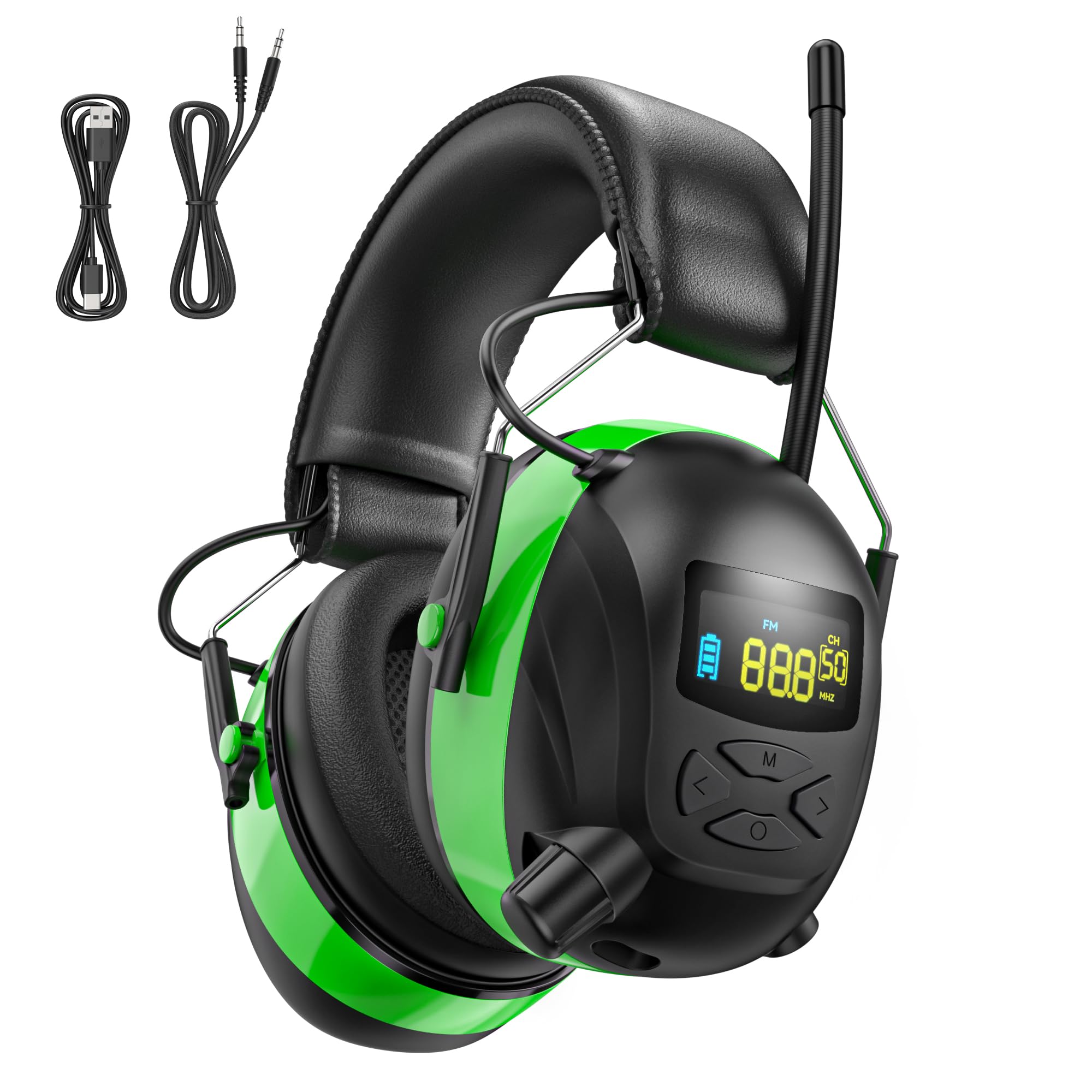
Mowing headphones that drown out the mower while the talk show comes through clear.
This is a different breed of AM radio — it’s built into hearing protection, not a standalone box. The 30dB noise reduction rating (SNR) means you can run a lawnmower or a tractor and barely hear the engine, while the radio keeps your favorite program playing. That combination is exactly what farm and construction owners ask for, and it delivers.
The built-in 2000mAh lithium battery charges via USB-C and runs for up to 120 hours on a single charge — that’s a week or two of industrial shifts without plugging in. It stores 50 AM and 50 FM presets, double what most radio headsets allow. The 1.8-inch color backlit display is readable in direct sunlight, which matters on a bright mowing day. A wired 3.5mm AUX input lets you plug in a phone for podcasts when the radio signal gets interference.
Owners say they make mowing three acres “just a little more bearable,” and that they hold an incredible charge. The audio is clear and the ear pads stay comfortable for long sessions. The recurring complaint is a packaging inconsistency — one order arrived missing the cords and had to be returned — so check the box when it lands.
Why owners love them
- 120H battery lasts weeks on a single charge
- 30dB reduction blocks engine noise effectively
- 50 AM + 50 FM presets beat typical headsets
Watch out for
- No Bluetooth — you must use the AUX cable for phone audio
- Some units ship missing accessories; verify contents
Pick these up: if you spend days on a tractor, mower, or worksite and want protection plus entertainment in one headset.
Pass on them: if you need wireless phone audio — the lack of Bluetooth is a hard limit.
6. Sangean U3 Ultra Rugged AM/FM Radio

A tank of a radio that’s survived drops, rain, and six years of worksite abuse.
If you need a radio that takes a beating, this is the one. The U3 is wrapped in a protective roll cage and rated water-resistant to JIS-4, meaning splashes and light rain won’t kill it. Owners have run it for years on construction sites and campsites, with one unit still going strong after six years of drops and weather.
You buy this for the audio—a 6.5-inch 6W full-range speaker with Dynamic Bass Compensation (a circuit that boosts low frequencies) and a rotary tone control delivers clear, loud sound that owners describe as “clear as a bell.” It runs on a 6-foot AC cord or six D batteries, and stores 10 presets (5 AM, 5 FM) with PLL synthesized tuning (a precise digital tuner that locks onto stations). The LCD shows both clock and radio info with a backlight, plus a built-in LED flashlight for dark job sites.
The catch is size — at roughly 9 lbs with batteries, this is a bench warmer, not a carry-on. Owners also report battery drain even when turned off, so unplug it between uses. It excels as a worksite or garage companion, though it’s not the first choice for pure AM reception, which can get static when you move it.
Built for: garages, workshops, campsites, and anywhere a drop or a splash is routine.
Leave it behind: if you need to carry your radio — at 9 lbs, it stays where you put it.
7. SWDSTP Personal Portable AM/FM Radio

A credit-card-sized tuner that slips into a pocket and runs a full shift.
This is the radio for walks, jogs, and lunch breaks where every ounce counts. At 3.5 x 1.5 x 0.31 inches and just 1.14 oz, it’s around the size of a credit card — the smallest unit here by a wide margin. The 400mAh rechargeable battery runs about 9 hours straight, which owners confirm covers a full work shift or a long day out.
The DSP digital signal processing chip and the earphone wire acting as an antenna give it surprisingly stable reception for its size. It stores 70 stations (50 FM, 20 AM) and features a green backlight plus time display for night use. The removable clip and lanyard make it easy to attach to a waistband or backpack while you’re moving.
Reception beats most small portables, and the stereo sound through the included 3.5mm earbuds is clear. Reviewers point out using it at translation conventions overseas with outstanding quality. The honest catches: the USB port is an odd size so you’re tied to the included charging cord, and the controls take a short learning curve. One owner also found the charging directions unclear.
Grab it for: running, cycling, and travel where a 1.14 oz radio in your pocket beats a phone on airplane mode.
skip it if: you want to use your own charging cable or need a speaker for room-filling sound.
Understanding the Specs
Battery Capacity (mAh)
Milliamp-hours (mAh) tells you how much energy the battery stores. A 1250mAh pack holds roughly three times the charge of a 400mAh one, so it lasts longer between charges. For a pocket radio you’ll recharge daily, smaller is fine. For an emergency radio you might grab once a year, bigger — or a crank and solar panel — matters far more.
Antenna Design
On AM, the antenna is everything. A telescoping rod works well for FM but does little for AM; what grabs AM is the internal ferrite coil. A twin-coil ferrite antenna, like the one in premium radios, dramatically improves weak-signal reception. If you live rural or chase distant stations, this spec decides whether you hear a clear voice or static.
FAQ
Why does AM reception get worse during the day?
Can I use any USB cable to charge these radios?
What is the NOAA Weather Band for?
How long do D batteries last in a portable radio?
Is a hand crank or solar panel actually useful?
What is the 2-Meter Ham Band on the C. Crane?
Can I charge my phone from these radios?
Why does the volume slider on the Panasonic lack a quiet low range?
Final Thoughts: The Verdict
For most people, the strongest am radio winner is the FosPower A1 because it combines three power sources, NOAA alerts, and a phone-charging power bank in one compact emergency kit. If you want a simple daily tuner with great sound, grab the Panasonic RF-2400D. And for serious AM enthusiasts chasing distant signals, the C. Crane CCRadio-2E is the one to reach for.
How We Picked
We do not accept paid placement. Every pick is matched to a real buyer and a real use-case; we do not hands-on test units.
Sources & Methodology
Specifications: manufacturer listings and product documentation. Review insights: verified customer reviews, as of August 2026. Pricing: not shown on this page (it changes often); check the current price via the retailer link.
As an Amazon Associate, Gadgets Feed earns from qualifying purchases. This does not affect which products we feature.