
Our readers keep the lights on and my morning glass full of iced black tea. As an Amazon Associate, I earn from qualifying purchases.
Specs are compiled from manufacturer listings and verified buyer reviews and can change over time — please confirm the key details on the product page before buying.
You want pipe insulation that stops freezing and sweating without tearing when you clamp it on. The picks below are sorted for real-world use — some handle brutal outdoor winters, others are multi-purpose rolls that also cushion handles and furniture. Note: this list uses flexible matching for the 2 inch pipe size, so a few picks are the nearest same-type fit rather than the exact number you searched — they serve the same purpose.
I’m Min — the founder and writer behind Gadgets Feed. This guide is built by comparing the manufacturers’ published specifications and the patterns across verified customer reviews, so you get each pick’s real strengths and trade-offs instead of marketing spin.
The truth is, the thickest wall and the tightest fit matter more than any brand name, so below you will find the 2 pipe insulation foam options that owners actually trust through a hard winter.
Our Picks at a Glance


How To Choose The Best 2 Pipe Insulation Foam
Choosing pipe insulation requires matching the foam’s wall thickness and inner diameter to your specific pipe, not just grabbing any tube. You want to focus on three things: the thickness of the foam wall, the inner diameter (the hole that slips over the pipe), and whether the tube is pre-slit so you can snap it on without cutting.
Thickness is everything
The foam wall thickness directly determines how much cold air is blocked. A thicker wall boosts freeze protection but stiffens the tube, making it harder to bend around tight corners. For outdoor winter freeze protection, you generally want a heavier wall — a 0.79 inch thick layer will slow heat loss far better than a thin 0.3 inch wrap. For indoor or mild climates, a thinner wall is easier to work with and perfectly adequate.
Check the inner diameter, not the pipe name
A “2 inch” foam tube usually means an inner diameter of about 2 inches, which fits a pipe whose outside diameter is roughly 1.5 to 2 inches. The most common mistake is trusting the label instead of measuring your pipe’s outer diameter. Measure the pipe’s outer diameter with a tape measure or caliper before ordering, and buy a tube whose inner diameter is equal to or just slightly larger than that number.
Pre-slit versus solid tube
Pre-slit foam opens along a lengthwise cut, letting you clamp it over an existing pipe without disconnecting anything. Solid tubes require cutting open yourself, which suits new installations but is a hassle for connected pipes. Pre-slit tubes offer easy installation, while solid tubes provide a cleaner seal when cut precisely.
Quick Comparison
| Model | Best For | Wall Thickness | Length | Number of Pieces | Amazon |
|---|---|---|---|---|---|
| Amylove 8 Pcs★ Best Overall | Multi-use value pack | 0.47 in | 1 ft each | 8 | Amazon |
| Water Pipe Insulation TubingExtreme Cold Pick | Winter freeze protection | 0.79 in | — | 1 | Amazon |
| Storystore FoamCushion Pick | Roof racks & stands | 0.3 in | 3.3 ft | 1 | Amazon |
| ZXTDBMBB Insulation Foam | AC condenser lines | 0.72 in | 6 ft | 1 | Amazon |
| Pierce’s Cottage Tubing | Boiler output lines | — | — | 1 | Amazon |
| PATIKIL Foam Tube | 2″ PVC pipe | 0.35 in | 6 ft | 1 | Amazon |
| Amylove 4 Pack with Elbow | Irrigation & faucets | 0.28 in | 15.75 in each | 4 | Amazon |
| Rebower Tubing | Handle grips & gaps | 0.3 in | 6 ft | 1 | Amazon |
| Worldity 4 Pack | AC line & copper pipe | 0.79 in (20mm) | 1.3 ft each | 4 | Amazon |
In-Depth Reviews
1. Amylove 8 Pcs 1 Feet Foam Pipe Insulation
Our pick — over 4★ from 550+ verified ratings; the strongest balance of quality and price.
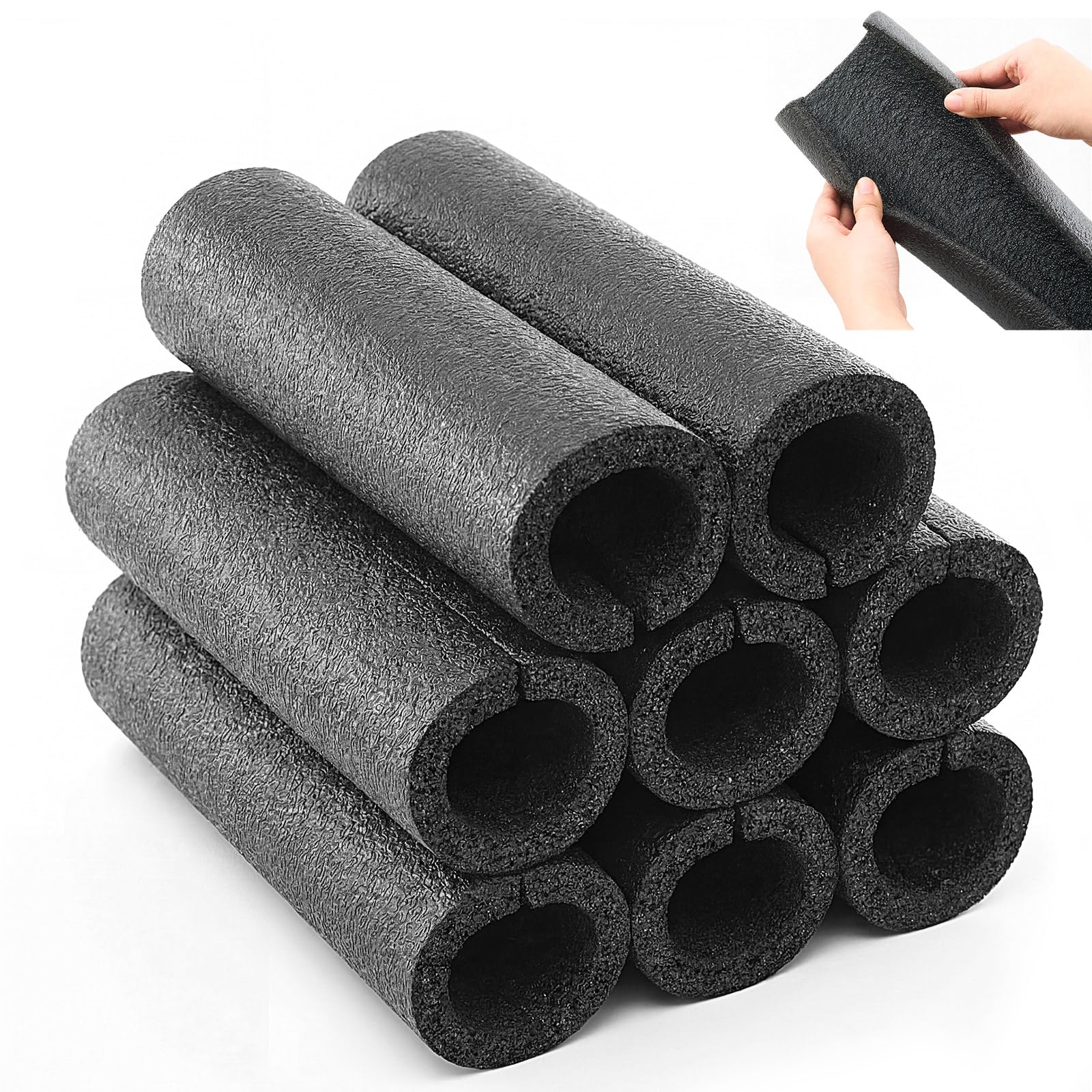
A ready-to-clamp value pack that snaps onto pipes in seconds.
What wins people over here is pure convenience. Each black foam tube is pre-slit down the side, so you open it, clamp it over the pipe, and you are done — no cutting, no tape, no fighting with stiff material. The package hands you 8 pieces, each about 1 foot long with a 0.47 inch wall, which is enough to cover a good stretch of exposed line or to keep spares on hand. Buyers report the black finish looks tidy on outdoor PVC lines, and the tight fit means you will not be re-wrapping the same spot twice.
The crowd favorite here is a value play — the 0.47 inch thickness is solid but not extreme, and the material is described as soft PEP foam rather than a rigid heavy-duty shell. In normal use it does exactly what you need: “These did the job. Not as sturdy and thick but definitely better insulated my pvc lines,” owners mention. The honest caveat is that it is not the hardware-store 6 foot heavy-duty roll you might be picturing — treat it as a flexible, easy daily wrap, not an armored jacket for extreme exposure.
Versatility is the real strength. The same foam you use on water pipes can float in a pool, pad a craft project, or cushion handles, since it is waterproof, dustproof, oil resistant, and corrosion resistant. If you want one box that covers several small jobs around the house, this is the most useful option on the list.
What earns its keep
- Pre-slit design means instant clamp-on installation
- 8 pieces in one box for multiple jobs or spares
- Waterproof and corrosion resistant for outdoor use
Fit notes
- 0.47 in wall is moderate, not extreme-duty
- Pieces are 1 ft long, so long runs need several
Reach for this if: you want a grab-and-go pack that covers a few small pipes, craft padding, or pool floats without overthinking.
Look elsewhere if: you need maximum cold-weather armor and want a thicker wall than 0.47 inches.
2. Water Pipe Insulation Tubing (0.79″ Wall)
The thickest wall here, built for weather that stays brutal for days.
This is the heavyweight of the group, and the thickness is the whole story. A 0.79 inch rubber wall gives you more insulation meat than any other pick on this list — in fact, it is more than 2.6 times thicker than the Storystore tube below at 0.3 inches. For anyone facing real winter, that extra material is the difference between a pipe that survives and one that bursts. Customers note “protects pipes for 2 years so far with temperatures in the teens and twenties for several days,” which is the exact scenario this foam was made for.
The rubber uses a closed-cell structure, meaning each air pocket is sealed off, so water vapor cannot soak in and destroy the insulation value over time. It is also fully flame retardant and waterproof, which is why it gets used for severe weather protection on outdoor lines. That said, installation is not a snap-on affair — there is no longitudinal slit and no adhesive, so you cut it open yourself and glue or tape the seam. The trade-off for that heavy protection is a bit more work at install time.
What makes this versatile beyond pipes is the same dense rubber — it works as grip padding for fitness equipment handles, and one owner used it to stop a car door from dinging a garage jack post. If your priority is raw thermal protection and you are willing to measure, cut, and seal, this is the one that handles the harshest conditions.
Cold-weather champ: the 0.79 inch wall is the standout spec here, giving real insulation depth for freeze protection.
Do-it-yourself install: no slit and no adhesive means you cut and seal, and the dense rubber needs a sharp blade.
Best for: homeowners in cold climates guarding against multi-day deep freezes, or anyone who wants maximum insulation depth.
Think twice if: you want a quick clamp-on wrap — this one asks you to measure, cut, and glue.
3. Storystore Foam Pipe Insulation Tubing
The 2-inch core that doubles as cushioning for racks and stands.
The defining spec here is the dimensions: a 2 inch inner diameter with a 0.3 inch wall and 3.3 feet of length. That makes it one of the thinnest walls in this lineup, so as a pure freeze blocker it is not in the same league as the 0.79 inch rubber above. But what it lacks in insulation depth it makes up for in flexibility and shock absorption. The PDM material is soft, reusable, and shock-absorbing, and it is flame-retardant for safety near equipment.
The most interesting owners are not using it on pipes at all. A recurring success story is refurbishing old collapsible guitar stands — the tubing fits over the base and neck contact points and gives the stands a fresh, secure cushion, reviving gear that would otherwise be trash. It also shows up on roof racks, fitness equipment handles, and air conditioning pipes, which tells you this is a general-purpose tube as much as an insulation product.
The honest watch-out is sizing. Several owners note the product can run smaller than the stated 2 inch dimension, so if your pipe or bar is right at the edge of that 2 inch measure, the fit may be snugger than expected. For padding and cushioning jobs where a little grip is a good thing, that tightness actually helps.
Multi-role tube: the 2 inch ID fits roof rack bars and guitar stand posts as easily as pipes.
Size check advised: the fit runs snug, so measure before you commit.
Grab this if: you need a soft, shock-absorbing tube for racks, stands, or handles more than heavy freeze armor.
Pass on it if: your priority is maximum winter pipe protection — this 0.3 inch wall is a thin line of defense.
4. ZXTDBMBB Insulation Foam Pipe (2 in ID)
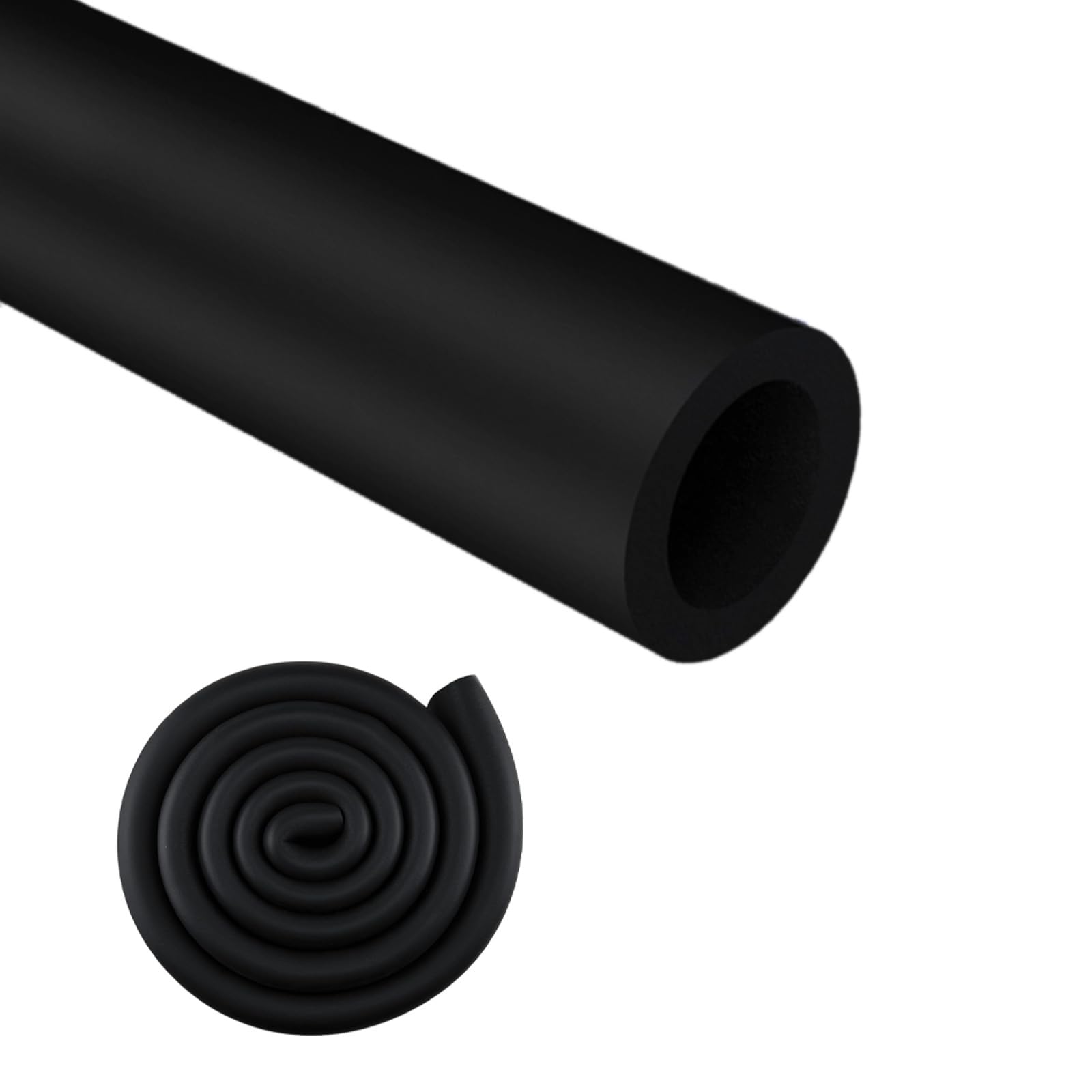
A 6-foot continuous run that covers long AC lines in one piece.
Length is the headline here. A single 6 foot black tube with a 2 inch inner diameter and 0.72 inch wall means you can sheath a long outdoor AC condenser line without piecing together short segments. Reviewers point out wrapping exterior air conditioner condenser pipes and feeling an immediate difference, and one used it to keep swimming pool pipes safe through cold weather — exactly the freeze-protection job it is designed for. The 0.72 inch wall is substantial enough to matter, sitting between the thin 0.3 inch tubes and the extreme 0.79 inch rubber above.
The material is a flexible rubber-like compound that is waterproof and flame retardant, with high elasticity to resist cracking as it bends around corners. The manufacturer’s tip is to wet the pipe with lubricant and water before sliding the foam on, which makes the 2 inch bore easier to work over a 1.5 to 2 inch outer-diameter pipe. That advice is worth following, because the fit is meant to be snug.
The recurring note is that it is thinner than some owners expect, and because it does not hold itself in place by friction alone, a wrap of duct tape or zip ties keeps it seated. It cuts easily, so trimming to length for a short run is quick. This is a strong choice when you need one continuous piece to span a long outdoor line.
One-piece coverage: at 6 feet long with a 0.72 inch wall, it spans big AC and pool lines neatly.
Secure it yourself: the snug fit still benefits from tape or ties to hold it in place.
Choose this for: long AC condenser lines, pool pipes, or any run where you want minimal seams.
Skip if: you need a snap-on tube with a built-in slit — this one is installed by sliding.
5. Pierce’s Cottage Pipe Insulation Tubing

Closed-cell foam that holds up even at boiler output temperatures.
This tube survives high heat. One owner mounted it at a boiler output and worried it might melt at 180 degrees, but after two weeks it held up perfectly — so it can sit near hot lines without degrading. The closed-cell foam (each air chamber sealed) keeps it non-absorbent and waterproof, and the rubber sponge material resists weather, wear, and breakage. It is fireproof and flexible enough to bend with the pipe.
Installation is straightforward since there is no extra layer needed — you cut to length and splice, which saves time if you are doing a full run. The same rubber sponge that insulates pipes doubles as handle padding, so you could wrap a fitness grip or tool handle with the offcut. Build quality earns consistent praise; owners describe it as easy to cut, fit, and apply.
The main caveats are fit-related rather than quality-related. Some owners found the tube limp and needing a slit cut themselves, plus zip ties to close gaps when it would not snap on. It is sold as a single piece, so for a long run you will buy more than one. If you need to insulate a hot line and want a material proven to survive the heat, this is the one.
Heat proved: owners confirm it withstands 180-degree boiler output without melting.
DIY fit: no pre-cut slit means you open it yourself and may need ties to close it.
Best for: hot water lines, boiler outputs, and anywhere the foam sits close to real heat.
Not ideal if: you want a ready-to-clamp tube — this one needs manual cutting.
6. PATIKIL 2 in ID Pipe Insulation Foam Tube

The secure-fitting 6-footer that owners trust on 2 inch PVC drains.
Fit is the story here. One owner ran a freestanding tub drain through a cold crawlspace, wrapped it with this foam, and trusted it to keep the drain from freezing all winter. It comes in a 2 inch inner diameter with a 0.35 inch wall, and owners confirm it fits real 2 inch PVC pipe well. You get 6 feet in one continuous tube, so a long drain or irrigation line is covered without ugly seams.
The closed-cell structure blocks heat conduction and acts as a moisture barrier, which is why it shows up on air conditioning units, water heating and cooling systems, and irrigation lines. The manufacturer rates it for use from -40°C to 120°C, a broad range that covers frozen outdoor pipes and hot indoor lines alike. The foam is flexible, so it bends around corners and trims easily with a knife.
The recurring praise is for build quality — owners call it extremely well made and as advertised, calling it a hard-to-find size done right. One even used it as cushioning for roof rack bars, hauling folded pet crates about 1300 miles with no problem. It is a flexible all-rounder that fits where it claims to fit, which is rarer than it should be.
Verified fit: owners confirm it works on true 2 inch PVC, including crawlspace drain lines.
Broad temperature range: rated from -40°C to 120°C for both cold and hot applications.
Reach for this if: you have 2 inch PVC or AC lines and want one long, continuous, trustworthy wrap.
Consider elsewhere if: you need a thicker wall than 0.35 inches for extreme cold.
7. Amylove 4 Pack Foam Pipe Insulation with Elbow

Straight tubes plus elbow pieces to wrap around corner fittings.
The unique draw of this set is the included elbows. You get 2 straight black foam tubes, each about 15.75 inches long, plus 2 elbow pieces at about 3.15 inches — so you can cover a pipe run and its corner bends in one box. That is genuinely handy for outdoor winter irrigation, sprinkler lines, and faucet isolation where the insulation has to turn a corner. Like the 8-pack from the same brand, these are pre-slit for clamp-on installation.
The foam is soft, tear-resistant, reusable, fireproof, and sound-absorbing. The 0.28 inch wall is on the thinner side, which keeps it flexible and easy to bend around those elbows, and the set is meant for 2 inch copper pipes. For small outdoor jobs where you need the corner coverage, this package saves you from buying separate elbow fittings.
The honest feedback: the foam is thinner than standard pipe insulation and comes in multiple small pieces rather than a coil, so it is not the most sturdy for heavy exposure. Owners also note that tape is needed to keep the pre-slit seam closed, and the thin material tears if you are rough with it. This fits best as a light-duty option for faucets, sprinkler valves, and small irrigation runs.
Corner coverage: the 2 elbow pieces included make this a rare complete corner kit.
Light-duty foam: at 0.28 inches thick, it is flexible but not extreme-weather armor.
Pick this for: faucets, sprinklers, and irrigation lines where you need to wrap a corner neatly.
skip it if: you need heavy-duty wall thickness for a harsh outdoor winter.
8. Rebower Pipe Insulation Tubing (1.6 in ID)
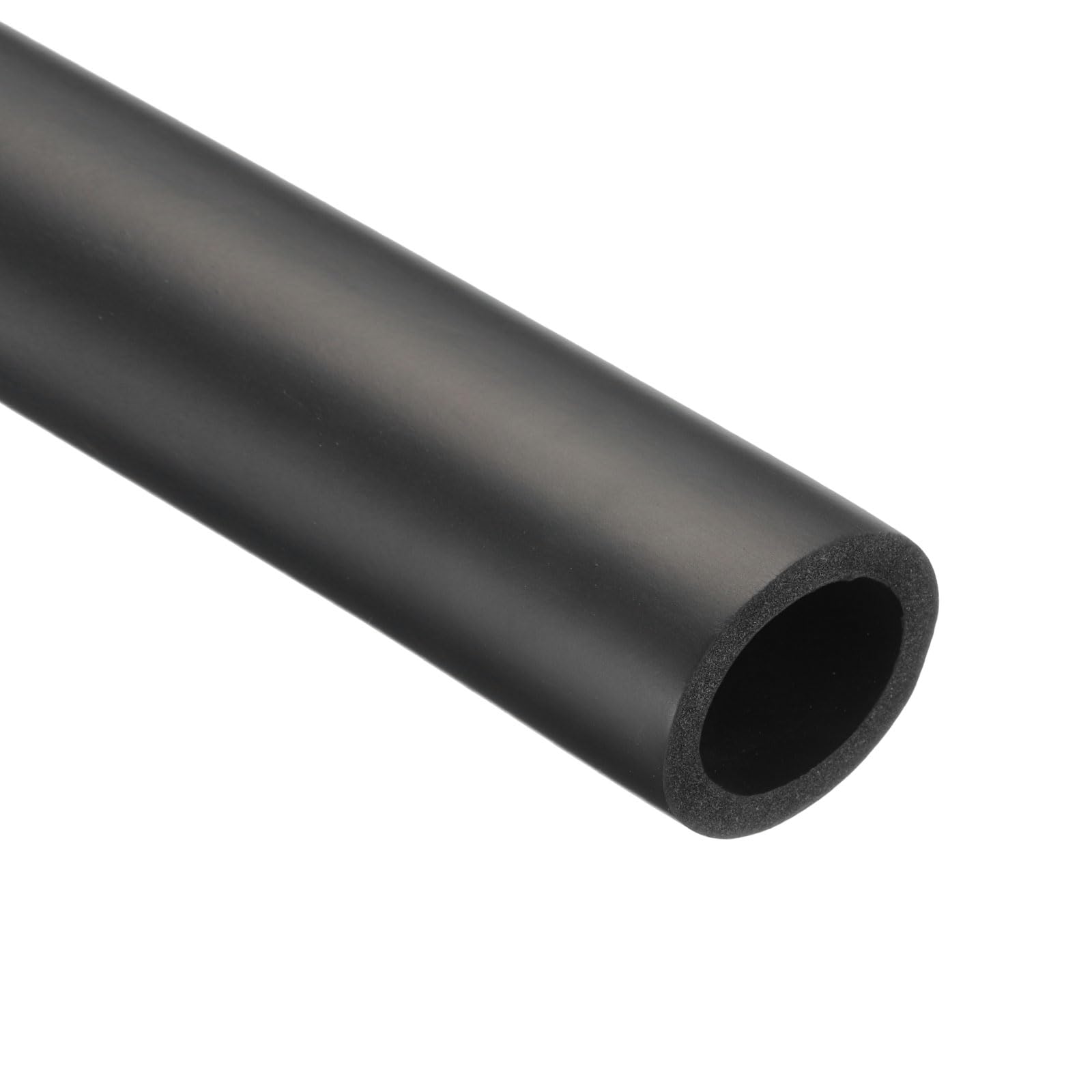
A versatile 6-footer that pads grips, covers gaps, and insulates lines.
This tube earns its keep through pure versatility. With a 1.6 inch inner diameter and a 0.3 inch wall, it is a touch smaller than the true 2 inch-core options, which makes it perfect for tool handles, exercise grips, and smaller posts rather than wide pipes. One owner replaced the rotted foam on a spa cover lifter handle with this, and another used it to stuff gaps between siding and the foundation to keep out mice and chipmunks. It is non-slip, comfortable, and wear-resistant, so it works great wherever you need a soft grippy layer.
On the insulation side, the foam works for both cold and hot pipes — preventing water pipes from freezing and insulating heat pipes. It is rated for use on plumbing, air conditioning lines, and copper pipe, and the 6 foot length covers a generous stretch. The material is soft and flexible, cutting easily to whatever length you need.
The recurring advice from owners is to buy extra tape for the seam, since the tube does not include adhesive. The 1.6 inch inner diameter also means it is not a match for a true 2 inch pipe — measure first to be sure. For handle covers, gap filling, and lighter insulation jobs, this is a handy roll to have.
Grip specialist: the non-slip foam is ideal for exercise machine handles and tool grips.
Bring your own tape: there is no adhesive included to seal the seam.
Use it for: handle grips, gap filling, and light pipe insulation around the house.
Not the one if: you need a true 2 inch inner diameter for a wide pipe.
9. Worldity 4 Pack 2 Inch Pipe Insulation (20mm)

Self-adhesive foam with a foil face that seals itself around the pipe.
The standout feature here is the self-adhesive design. Unlike most foam tubes that need tape or ties, this one has an adhesive strip on the film that sticks the seam closed, so it stays firmly wrapped around the pipe without extra help. The material layers neoprene with a fiberglass aluminum film, giving it a tough outer face that resists moisture, UV rays, and scratching. Owners used it to replace 20-plus-year-old insulation on AC unit pipes, and the fit was described as perfect.
The 20 millimeter wall — that is about 0.79 inches — puts it right at the top for insulation depth, matching the thickest option on this list. Each piece is about 1.3 feet long, and you get 4 pieces for a total of roughly 5.25 feet, which is enough for a compact AC line or several short runs. It is built for both hot and cold water pipes, solar lines, and air conditioning pipelines, and it helps prevent condensation while improving energy efficiency.
The honest trade-off is the foil. Owners note the film is flimsy and extremely sticky, which makes it tough to work with in tight spaces — the adhesive grabs everything it touches. But the glue-on installation means a secure, lasting wrap that will not slide off, and the included adhesive is exactly what owners praise about the build. For a durable, self-sealing wrap on exposed lines, this is the premium choice.
Self-sealing build: the adhesive strip closes the seam firmly without extra tape.
Foil is fiddly: the sticky film is great once on but hard to position in tight areas.
Best for: AC lines, copper pipe, and exterior runs where you want a tough, self-adhesive, long-lasting wrap.
Consider elsewhere if: you are working in a cramped, hard-to-reach space where a non-sticky tube is easier.
Understanding the Specs
Wall Thickness
This is the foam layer between the pipe and the outside air, and it is the single biggest factor in freeze protection. A thicker wall like 0.79 inches slows heat loss far more than a thin 0.3 inch wrap, which is why the heaviest-duty options on this list win for cold climates. Thicker foam is stiffer and harder to bend, while thinner foam is easier to route around corners but offers less protection.
Inner Diameter
The inner diameter (ID) is the hole that slips over the pipe, and it determines whether the foam actually fits. A 2 inch ID fits a pipe whose outside diameter is about 1.5 to 2 inches, while a 1.6 inch ID suits smaller pipes, posts, and handles. Measure the pipe’s outer diameter before buying — the most common mistake is assuming the label matches your pipe exactly when it does not.
FAQ
What size foam do I need for a 2 inch pipe?
How thick should pipe insulation be for freezing weather?
What is the difference between pre-slit and solid foam tubing?
Does pipe insulation foam actually prevent freezing?
Can I use this foam on hot water or AC lines?
Why does my pipe insulation need tape to stay closed?
Is pipe foam safe to use around heat sources?
Can 2 inch foam insulation be used for things other than pipes?
How much pipe will one package cover?
Is closed-cell foam better than open-cell for pipes?
Final Thoughts: The Verdict
Across the board, the 2 pipe insulation foam winner is the Amylove 8-pack because it balances instant clamp-on installation, solid 0.47 inch thickness, and a box of 8 pieces that covers multiple jobs. If you face brutal winters and want maximum insulation depth, grab the Water Pipe Insulation Tubing with its thick 0.79 inch wall. And for a self-sealing, foil-backed wrap on AC and copper lines, the Worldity 4-pack is the one to reach for.
How We Picked
We do not accept paid placement. Every pick is matched to a real buyer and a real use-case; we do not hands-on test units.
Sources & Methodology
Specifications: manufacturer listings and product documentation. Review insights: verified customer reviews, as of August 2026. Pricing: not shown on this page (it changes often); check the current price via the retailer link.
As an Amazon Associate, Gadgets Feed earns from qualifying purchases. This does not affect which products we feature.