
Our readers keep the lights on and my morning glass full of iced black tea. As an Amazon Associate, I earn from qualifying purchases.
Specs are compiled from manufacturer listings and verified buyer reviews and can change over time — please confirm the key details on the product page before buying.
A bike for a 2-year-old isn’t about speed or gears. It’s about learning to balance and steer before pedals ever come into play. The best options here are lightweight balance bikes with low frames so little legs can reach the ground flat-footed, plus closed wheels to protect tiny toes from getting pinched. Three-wheeled designs add extra stability for the earliest riders, while two-wheelers teach the core balancing skill they’ll need for a real pedal bike. You want something sturdy enough to survive being dropped, with an adjustable seat so it grows with your child.
I’m Min — the founder and writer behind Gadgets Feed. This guide is built by comparing the manufacturers’ published specifications and the patterns across verified customer reviews, so you get each pick’s real strengths and trade-offs instead of marketing spin.
You want a first bike that your 2-year-old can actually ride safely, and the crowd favorite here earns that trust with a 4.8-star average across hundreds of owner reviews. That rating anchors everything else in this guide to the bike for 2 year old.
Our Picks at a Glance

How To Choose The Best Bike For 2 Year Old
At this age, the bike’s job is to build confidence, not to go fast. The most important thing is that your child’s feet can rest flat on the ground when sitting on the seat. If they can’t touch, they won’t feel safe, and they won’t practice. Look for a low frame and a seat that adjusts down to at least match your toddler’s current inseam.
Closed Wheels and Toe Protection
For the youngest riders, fully enclosed wheels are a genuine safety feature. They stop little feet from sliding into the spokes and getting pinched. They also mean the bike won’t tip as easily, because the design keeps the center of gravity low and the wheels wide. If your child is under 2, closed wheels are the safer bet.
Weight and Carry Factor
A toddler can’t manage a heavy bike. Look at the listed item weight and compare it to your child’s strength. A bike around 4.6 to 5 pounds is easy for a small child to lift and maneuver. Heavier steel frames are more durable but can be frustrating for a young rider to control on their own.
Quick Comparison
| Model | Best For | Seat Height Range | Wheel Type | Item Weight | Amazon |
|---|---|---|---|---|---|
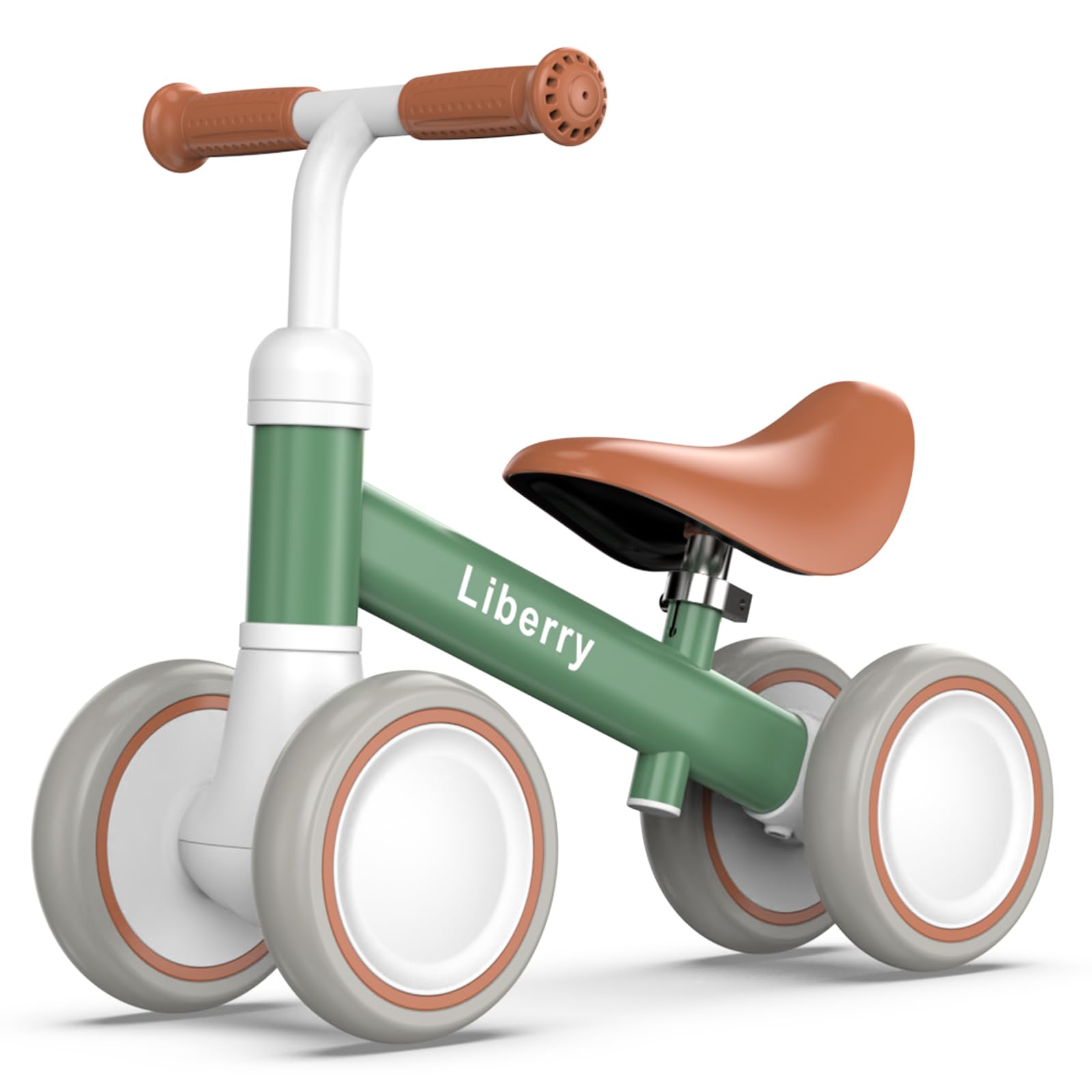
| Liberry Baby Balance Bike★ Best Overall | First walkers needing max stability | 9.7 – 11 in | Closed EVA | 5 lbs | Amazon |
| PerKidern Baby Balance BikeBest Value | Lightweight indoor-outdoor fun | Frame raised 3 in | Closed EVA | 4.6 lbs | Amazon |
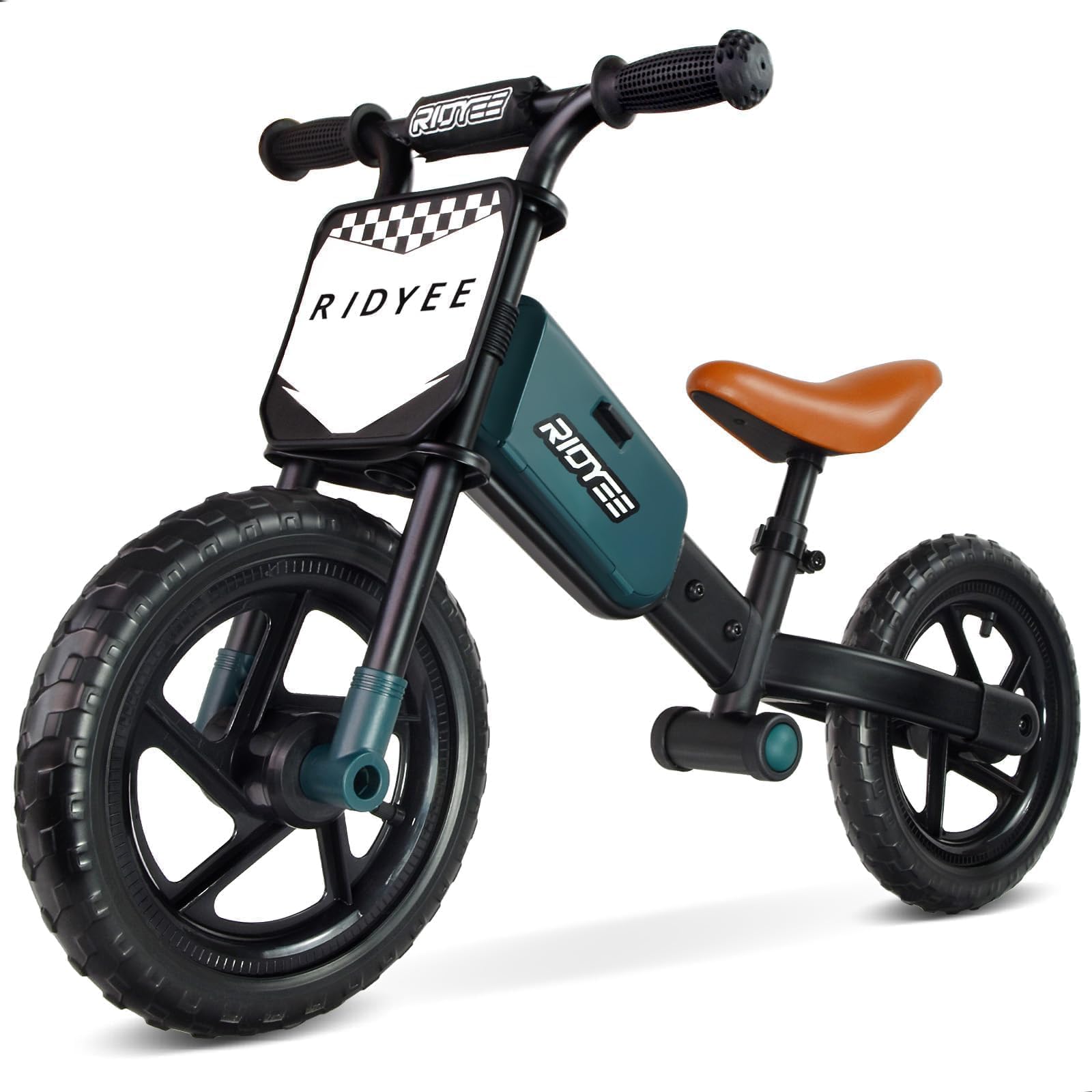
| RIDYEE Toddler Balance BikeGrows to Age 5 | Older 2-5 year olds who need room to grow | 13.4 – 15.8 in | All-terrain | — | Amazon |
| Radio Flyer Steady Start | Stable 3-wheel training indoors | Tool-free adjustable | Treaded | 7 lbs | Amazon |
| XIAPIA 5-in-1 Tricycle | Versatile rides from walker to pedals | Push bar adjustable | Solid EVA | 4 kg | Amazon |
| Birtech 12″ Balance Bike | Pneumatic tire comfort on uneven ground | 13 – 17.3 in | Inflatable rubber | 2.9 kg | Amazon |
| KRIDDO 2-in-1 Trike | Transitioning from trike to balance bike | Tool-free adjustable | Plastic | 4.8 kg | Amazon |
| Radio Flyer Triple Play | 3 modes with tool-free transformation | Padded adjustable | Steel frame | 8.1 lbs | Amazon |
| Retrospec Cub | Long-term durability and puncture-proof tires | 11 – 14.5 in | Puncture-proof | 10 lbs | Amazon |
In-Depth Reviews
1. Liberry Baby Balance Bike
Our pick — over 4.5★ from 700+ verified ratings; the strongest balance of quality and price.
The four-wheel, closed-wheel design that gives brand-new walkers total confidence.
Owners consistently praise the strengthened steel frame for surviving hard daily use. The bike’s frame is strengthened steel, and owners describe it as very sturdy even when a toddler deliberately rams it into walls and furniture indoors. It is built to survive hard daily use, not just gentle living-room glides.
The four-wheel layout is the real standout for the youngest riders. Because there are two wheels at the back, the bike stands on its own, which means a 13-month-old can climb on and off without it tipping over. The seat adjusts from 9.7 inches to 11 inches, which gives it a generous 38% more growth range than the PerKidern below — useful if you want it to last closer to age 2.5. The closed wheels and smooth EVA tires are gentle on wood floors and leave no marks.
The rubber handlebars are a deliberate safety choice over foam, since foam can be torn and chewed by little teeth. Assembly takes a few steps, and the box even includes letter stickers so you can put your child’s name on the frame. It’s rated for children with a 10-18 inch inseam, so it fits the kid who just learned to walk.
Why it wins: The stability of four wheels plus closed-wheel toe protection makes it the safest possible introduction to riding for a child who is still finding their feet.
The honest limit: It’s designed for smooth surfaces — the maker advises avoiding gravel paths, so this is an indoor and smooth-driveway bike first.
Reach for it if: your child is 12-24 months and just learning to walk, and you want a bike they can mount and dismount without help.
Look elsewhere if: you plan to ride on rough, uneven ground or want a bike that will stretch past age 3.
2. PerKidern Baby Balance Bike
The featherweight four-wheeler that a 1-year-old can actually zoom around on.
Kids actually enjoy riding this bike, and that joy is the most-mentioned point in owner feedback by a wide margin. The frame sits 2 inches longer and 3 inches higher than typical toddler bikes, so buyers report their kids zoom around the house on it when a cheaper bike sat too low for their feet to push properly. That extra height makes a real difference to how well a toddler can ride.
You can toss this in the car trunk without a struggle because it weighs just 4.6 pounds, making it the lightest full bike in this guide and a full 9% lighter than the Liberry above. A toddler can also lift and steer it themselves, and assembly is genuinely tool-free, which owners repeatedly confirm. The curved saddle is shaped so the child doesn’t slide forward or backward when riding.
The carbon steel frame and four high-density EVA silent wheels handle both indoor and outdoor play, and the wheels won’t damage flooring.
What owners love
- Super light at 4.6 lbs, easy for toddlers to manage
- Tool-free assembly reported repeatedly
- Curved saddle stops forward/back sliding
- Frame raised 3 inches so feet reach the ground properly
The occasional note
- A shorter 12-month-old may need 2-3 months to grow into it
- Closed wheels mean smooth surfaces are the happy zone
Best for: parents who want the lightest possible bike for a 12-24 month old, with zero assembly frustration.
Think twice if: your child is already close to 3 and needs more seat-height growth room.
3. RIDYEE Toddler Balance Bike
The motocross-styled two-wheeler with the longest seat range for growing legs.
This one breaks the mold with a much taller seat range — 13.4 inches to 15.8 inches — compared to the 9.7 to 11 inches on the Liberry. That’s a 38% bigger adjustment window and it’s why this bike suits ages 2 through 5, not just the early walker stage. If you want one bike to span multiple years, this is the pick.
The carbon steel frame is built for durability, matching the motocross aesthetic. The carbon steel frame looks like a sand motocross bike, which owners say is a huge hit with kids who love the dirt-bike aesthetic. It includes a customizable front plate and three sets of letter and number stickers, so your child can personalize the frame — a detail that boosts engagement.
A tool-free adjustable seat, shock-absorbing seat design, and safety angle limit on the steering round out the package. Owners note it can feel heavy for a young 2-year-old at first, but that same heft translates to sturdiness, and kids typically master it by age 3.
Standout feature: The seat adjusts from 13.4 to 15.8 inches, so this bike grows with your child longer than any other option in this guide.
Fair caveat: The heavier frame can be a challenge for a small 2-year-old’s first week, so it rewards a child who’s already walking confidently.
Grab it for: a 2.5 to 4-year-old who needs room to grow and loves a sporty, dirt-bike look.
Pass if: you have a just-turned-2 child who needs the lowest possible seat to touch the ground.
4. Radio Flyer Steady Start Balance Bike

The wide-front-wheel trike that stands on its own with no kickstand.
Where most balance bikes need a wall or a parent’s hand to stay upright, this one doesn’t. The wide front wheel plus dual rear wheels mean the bike stands by itself whenever the child stops, which is a massive confidence boost for a toddler still figuring out the whole riding thing. It’s a 3-wheel design, so it’s more of a training bike than a pure balance bike.
The Radio Flyer name carries a century of wagon and trike pedigree, and owners praise the sturdy build. The wide, treaded wheels deliver a quiet ride across hardwood, carpet, cement, or paved paths, which makes it a true anywhere bike. The padded seat adjusts without tools, and the comfort handgrips are sized for small hands.
The weighted bottom helps prevent tipping, and the fat tires add stability whether your child is sitting, being pushed, or scooting on their own. It’s rated for up to 42 pounds, the lowest limit in this guide, so it’s built squarely for the 1-3 age window.
Defining strength: Self-standing 3-wheel design means zero tipping during the wobbly learning phase.
Know this: It caps at 42 pounds, so bigger or older toddlers will outgrow it sooner than a 2-wheeler.
Choose this for: a 1-3 year old who needs maximum stability and will ride on varied surfaces like cement and carpet.
Skip if: you want a true 2-wheel balance bike to teach gliding before a pedal bike.
5. XIAPIA 5-in-1 Tricycle

Five riding modes in one frame, from baby walker to pedal bike.
The 5-in-1 design lets it evolve from walker to pedal bike, so owners say it lasts for years. It starts as a walker without pedals, moves to a tricycle, then becomes a balance bike with pedals, and finally a pedal bike. The push-button and snap-on mounts mean you can switch modes in about a minute, with no tools.
The parent push bar adjusts to your height, so you don’t have to bend over — even at 70 inches tall. That’s a big deal for parents who remember the backache of hunching over a toddler trike. The footrests store under the frame when not needed, and the fully enclosed wheels protect little feet. A 120-degree steering rotation limit helps prevent falls.
There’s one honest trade-off owners flag: the parent handle doesn’t control direction, so you steer by guiding the handlebar yourself. It’s a usability quirk, not a dealbreaker — most owners still call it the best of the trikes they tried. The EVA solid shock-absorbing wheels and rubber handles round out a build rated for ages 12 months to 8 years.
Why it’s versatile: One purchase replaces a walker, a trike, and a balance bike as your child grows.
The nuance: The push bar can’t steer the front wheel, so expect to guide direction with the handlebar.
Best for: parents who want a single long-term investment that adapts from a 1-year-old walker to a 4-year-old pedal rider.
Not ideal if: you want a simple, dedicated balance bike without the extra modes and parts.
6. Birtech 12″ Balance Bike

The nylon-fiberglass two-wheeler with real inflatable tires for cushioning.
If your rides go off the driveway onto grass or playground surfaces, this is the only bike in this guide with 12-inch inflatable rubber tires with deep anti-slip tread. Air-filled tires absorb shock that solid EVA wheels can’t, so the ride stays smoother on uneven ground. It fits kids with an 11-to-16-inch inseam, and the seat adjusts from 13 inches to 17.3 inches — the tallest max height in the lineup.
The one-piece molded nylon fiberglass frame has no welded joints, making it impact-resistant. There are no welded joints to break, and the frame is impact-resistant enough to survive being dropped repeatedly. At 6.4 pounds it stays light enough for kids to manage, and the race-style aluminum handlebar gives precise control with full 360-degree rotation.
Owners note two practical things: the tires arrive deflated, so you’ll need a bike pump, and the handlebar isn’t height-adjustable, which can sit a bit low for taller 3-year-olds. The aluminum quick-release seat clamp makes height changes tool-free, which is the adjustment that matters most anyway.
Why it stands out: Inflatable rubber tires offer real shock absorption on uneven ground, something solid-wheel bikes can’t match.
Fair warning: Tires ship flat — keep a pump handy — and the fixed handlebar height won’t suit every tall toddler.
Reach for it if: you’ll ride on grass and playground surfaces and want air-tire cushioning plus a tall max seat height.
Look elsewhere if: you want handlebar height adjustment too, or prefer zero-maintenance tires.
7. KRIDDO 2-in-1 Tricycle

The trike that turns into a balance bike with training wheels that tuck away.
Assembly is the single most-praised aspect here, and it’s easy to see why: this is the first balance bike on the market with pedal storage built into the rear seat, so the pedals never get lost when you switch modes. The training wheels lift and tuck away as your child gains confidence, then fully detach to make a classic balance bike. It’s a clever two-bikes-in-one approach.
The design fits 18-month to 3-year-olds, and owners consistently call it the perfect size for a 2-year-old grandson or granddaughter. The seat and handlebars adjust without tools using quick-release fixtures, and the soft seat is easy to carry. A customizable plate lets kids personalize the frame with stickers.
The honest caveat: the tires are plastic rather than rubber, which is the one negative trend in the feedback. That means a firmer ride on pavement and slightly less grip. But owners still report a durable, well-built frame with no ankle or foot contact in balance mode, which is a thoughtful touch.
Clever design: Pedal storage in the rear seat plus stowable training wheels make mode-switching genuinely low-maintenance.
Know the trade-off: Plastic tires ride firmer than rubber, so very bumpy outdoor paths feel less cushioned.
Perfect for: a 2-year-old who needs trike stability first and can graduate to balance-bike mode without a second purchase.
Pass if: you prioritize air-filled rubber tires for rough terrain over the convenience of the 2-in-1 modes.
8. Radio Flyer Triple Play Trike

A ride-on, a trike, and a balance bike that switch modes in minutes.
The sturdy alloy steel frame handles tile-to-carpet transitions without a wobble, per owners. The 3-in-1 design starts as a ride-on for the youngest kids, converts to a pedal tricycle, then becomes a gliding balance bike — and the pedals store neatly under the seat when not in use.
The tool-free transformation is the headline feature. You add or remove the pedals and adjust the rear wheels without any tools, and owners genuinely describe the pedal storage as genius. A padded, adjustable seat keeps kids comfortable as they grow, and the cheerful ringing bell adds a fun touch that toddlers love.
At 8.1 pounds, it’s one of the heavier picks here, which is the price of that steel frame and multi-mode design. Owners who read the directions note you need to adjust the rear wheels for each setting correctly, but once set, it’s quiet, sturdy, and easy to clean. The range spans 12 to 36 months.
Why it works: Three modes plus tool-free changes mean one bike covers the full 1-3 year ride-on journey.
The weight note: At 8.1 lbs it’s heavier than the pure balance bikes, so very small toddlers may need help at first.
Grab it for: a 1-3 year old who’ll use all three modes and whose parents value tool-free simplicity.
Consider another if: you want the lightest possible bike a small toddler can lift alone.
9. Retrospec Cub Balance Bike

The airless-tire two-wheeler that survived a full year of dragging and dropping.
Owners mention the frame and airless tires surviving a full year of hard use. Customers note this bike surviving a full year of hard use, including being dragged and dropped, with the only real limit being that a taller child outgrew the seat height. The airless, puncture-proof tires mean there’s never a flat to fix, which is exactly the kind of low-maintenance maintenance parents want.
The seat adjusts from 11 inches to 14.5 inches, and the quick-release handlebars adapt as your child grows. The low-profile frame lets a toddler get on and off independently, which builds the kind of confidence the early-learning design promises. It’s rated for kids 18 months to 3 years, with a 50-pound weight limit.
The build is noticeably heavier at 10 pounds, which is the trade-off for that durability. Owners say it’s still easy to carry but a touch more for a small toddler to lug around. The rounded edges, non-slip grips, and low center of gravity round out the safety picture, and the flat-free tires handle pavement, grass, and dirt paths equally well.
The durability edge: Owners consistently report a year-plus of hard use with the frame and tires still going strong.
Know before you buy: At 10 lbs it’s the heaviest bike here, so a petite 18-month-old may need help lifting it.
Choose it for: parents who want a genuinely tough, maintenance-free bike that shrugs off daily use and never needs a tire pump.
Skip if: you need the absolute lightest bike for a very small toddler to carry independently.
Understanding the Specs
Seat Height Range
This is the single most important number on a toddler bike. It tells you the lowest and highest position the seat can be set to. Your child’s feet should sit flat on the ground at the lowest setting. A bigger range, like the 13.4 to 15.8 inches on the RIDYEE, means the bike lasts longer as your child grows.
Closed Wheels vs Open Wheels
Closed wheels fully enclose the wheel, so small feet can’t slide into the spokes and get pinched. They’re standard on bikes aimed at 1 to 2-year-olds. Open wheels are lighter but come with a pinch risk, which is why they’re usually saved for older, more coordinated riders.
FAQ
What size bike does a 2 year old need?
Is a balance bike or tricycle better for a 2 year old?
Why do toddler bikes have closed wheels?
How do I know if the seat height fits my child?
Are air-filled tires better than solid EVA wheels?
How much weight can a toddler balance bike hold?
Will a 2-in-1 bike really replace two separate bikes?
What is the best age to start a balance bike?
Are these bikes safe to use indoors?
What is the difference between a ride-on and a balance bike?
Final Thoughts: The Verdict
The smart money is on the Liberry Baby Balance Bike because its four-wheel stability and closed-wheel design make it the safest possible first ride, and the seat’s wide 9.7-to-11-inch range means it grows with your child. For the longest lifespan across multiple ages, the RIDYEE stretches to age 5 with its taller seat range. And for a single purchase that covers walker, trike, and pedal stages, the XIAPIA 5-in-1 is the versatile workhorse that grows alongside your toddler.
How We Picked
We do not accept paid placement. Every pick is matched to a real buyer and a real use-case; we do not hands-on test units.
Sources & Methodology
Specifications: manufacturer listings and product documentation. Review insights: verified customer reviews, as of August 2026. Pricing: not shown on this page (it changes often); check the current price via the retailer link.
As an Amazon Associate, Gadgets Feed earns from qualifying purchases. This does not affect which products we feature.