
Our readers keep the lights on and my morning glass full of iced black tea. As an Amazon Associate, I earn from qualifying purchases.
Specs are compiled from manufacturer listings and verified buyer reviews and can change over time — please confirm the key details on the product page before buying.
A 12-inch balance bike is the fastest way to turn a wobbly toddler into a confident rider, but the wrong pick—too heavy, too tall, or too flimsy—can derail the learning process. The best 12-inch bikes share two traits: a lightweight frame and a seat that adjusts low enough for flat-footed stops.
I’m Min — the founder and writer behind Gadgets Feed. This guide is built by comparing the manufacturers’ published specifications and the patterns across verified customer reviews, so you get each pick’s real strengths and trade-offs instead of marketing spin.
Here is how the top 12-inch balance bikes stack up for toddlers learning to glide, steer, and stop. 12 inch balance bike options range from budget-friendly steel frames to premium aluminum builds that weigh almost nothing.
Our Picks at a Glance
How To Choose The Best 12 Inch Balance Bike
Buying a bike that’s too big is the most common error—kids can’t reach the ground flat, so they never learn to glide. A too-tall or too-heavy bike gets abandoned; a proper fit is the key to early success. Measure your child’s inseam first—it’s the only reliable way to match a bike’s seat height.
Match the Seat Height to Your Child’s Inseam
When your child sits on the saddle, both feet should rest flat on the ground with knees slightly bent. That means the seat’s lowest setting is the number that matters most — a bike with a 9-inch minimum seat height fits a much younger toddler than one that starts at 14 inches. Always check the seat range before you buy, and remember that a 12-inch wheel size doesn’t automatically mean it fits a 2-year-old.
Weight: The Spec That Decides Everything
For a small child, a bike that weighs 12 pounds versus one that weighs 6 pounds is the difference between mastering balance and fighting the machine. A lighter bike lets your toddler steer, foot-brake, and lift it on their own, building confidence faster. Look for aluminum frames for the lightest rides, or accept that a steel frame will add noticeable heft in exchange for a lower price.
Foam vs. Air-Filled Tires
Most 12-inch balance bikes use foam tires because they’re puncture-proof and require zero maintenance. That means no pumping up before every ride and no worrying about a nail in the driveway. The trade-off is a slightly firmer ride than air-filled tires, but for flat sidewalks and parks, the convenience wins for most families.
Quick Comparison
| Model | Best For | Weight | Seat Height | Max Rider | Amazon |
|---|---|---|---|---|---|
| Strider Sport 2-in-1★ Best Overall | Babies to big kids | 12.7 lbs | 9–17 in | 60 lbs | Amazon |
| SEREED Balance BikeBest Value | Budget first bike | 9 lbs | 11.8–16.5 in | 110 lbs | Amazon |
| KRIDDO Balance BikeCustomizable Pick | 2–3 year olds | — | 14.17–18.5 in | — | Amazon |
| Bobike Balance Bike | Indoor & outdoor play | — | Adjustable | 50 lbs | Amazon |
| Gotrax KS12 | Light-up fun rides | 8.6 lbs | 16.5–18.3 in | 110 lbs | Amazon |
| Retrospec Cub | 18-month beginners | — | 11–14.5 in | 50 lbs | Amazon |
| Schwinn Elm | Long-term value | — | Tool-free | — | Amazon |
| OHIIK 2-in-1 | Balance-to-pedal convert | — | Adjustable | 50 lbs | Amazon |
| Strider 12 Pro | Serious lightweight riders | 5.6 lbs | 11–17 in | 60 lbs | Amazon |
In‑Depth Reviews
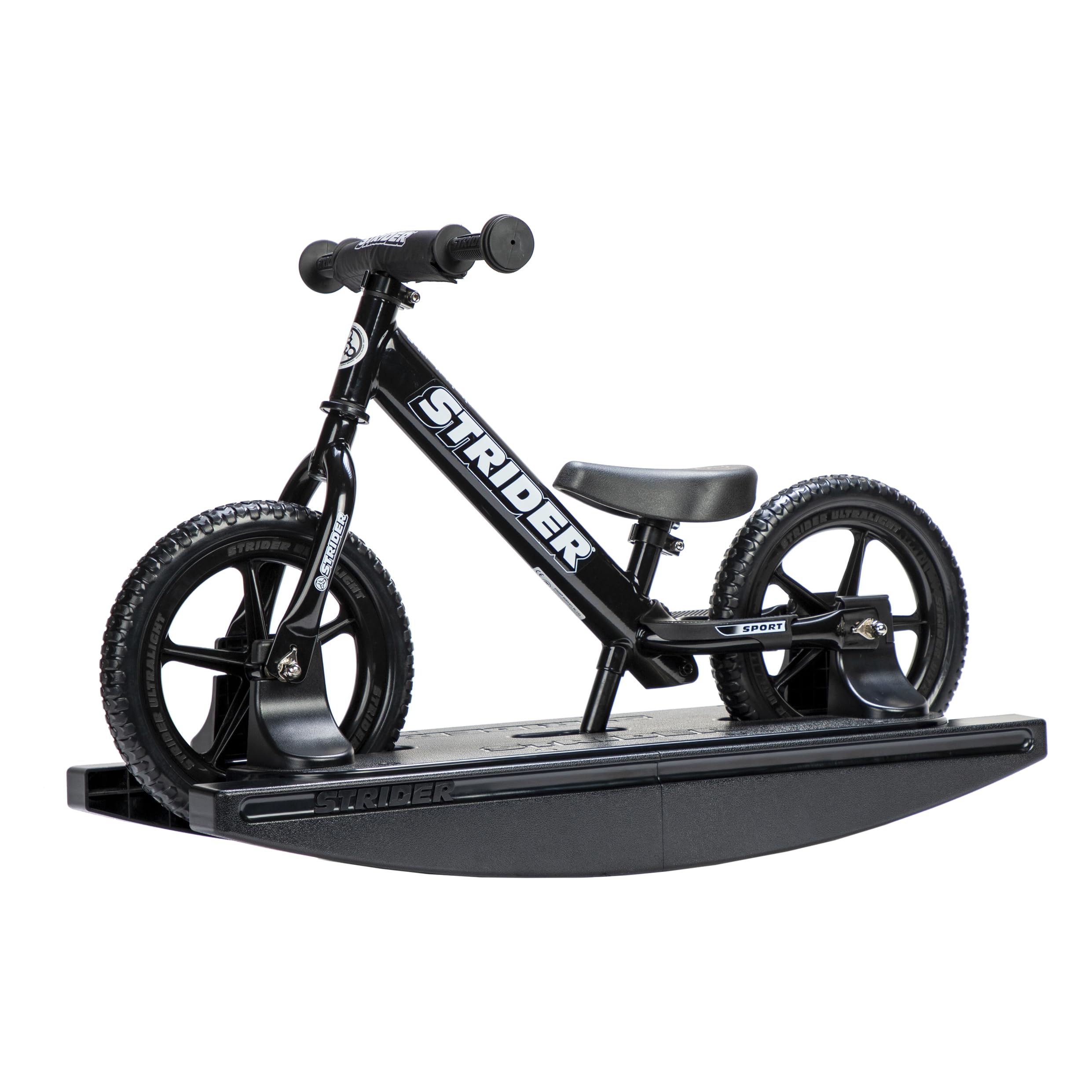
1. Strider Sport 2-in-1 Rocking Bike
Our pick — over 4.5★ from 800+ verified ratings; the strongest balance of quality and price.
The only bike that starts as a baby rocker and ends as a real balance bike
This is the rare 12-inch pick that genuinely grows with your child, thanks to the included Rocking Base. Snap it on and a 6-month-old can safely rock; take it off and the 12″ Sport becomes a proper balance bike for kids up to 4 years old with a seat that adjusts from 9 to 17 inches (23–43 cm) to fit inseams of 10–18 inches (26–46 cm). That dual-stage design is why it earns the top spot — it’s two developmental toys in one box, and owners consistently say their kids mastered balance and steering within days.
What wins people over is the build quality — the most-praised feature by a wide margin, with assembly and balance-enhancement close behind. The rubber mini grips and handlebar safety pad add protection from bumps, and the never-flat, no-maintenance 12″ foam rubber tires mean you’ll never pump a tire or patch a tube. At 12.7 pounds it’s noticeably heavier than the ultra-light Strider 12 Pro below, but the weight is the trade-off you accept for the extra rocking-base versatility. Weighing it against the SEREED at 9 pounds, this is the bigger, more substantial frame — 41% heavier — but it’s built to survive years of use.
Buyers report it’s a “great lightweight balance bike for 2-5” with adjustable seat and handlebars that helped a 1.5-year-old learn fast. The recurring gripes are honest and small: the foam tires can slide on slick hardwood floors, and the foot pegs can scrape calves — though they’re removable. One owner noted it’s “kind of pricey but good quality,” which is the fair summary. The 2-year limited warranty from Strider adds confidence that budget bikes rarely offer.
Why It Leads the Pack
- Rocking base converts to a real balance bike for two stages of development
- Seat range from 9 to 17 inches fits the youngest toddlers
- Never-flat foam tires need zero maintenance
- Rubber grips and safety pad protect little hands
Fair Trade-Offs
- At 12.7 pounds it’s heavier than aluminum rivals
- Foam tires can slip on smooth indoor floors
- Premium price tag reflects the dual-mode design
Reach for this if: you want one bike that starts as a baby rocker and grows into a proper balance bike without buying a second product.
Think twice if: you only need a lightweight outdoor-only bike — the extra rocking base adds weight you won’t use.
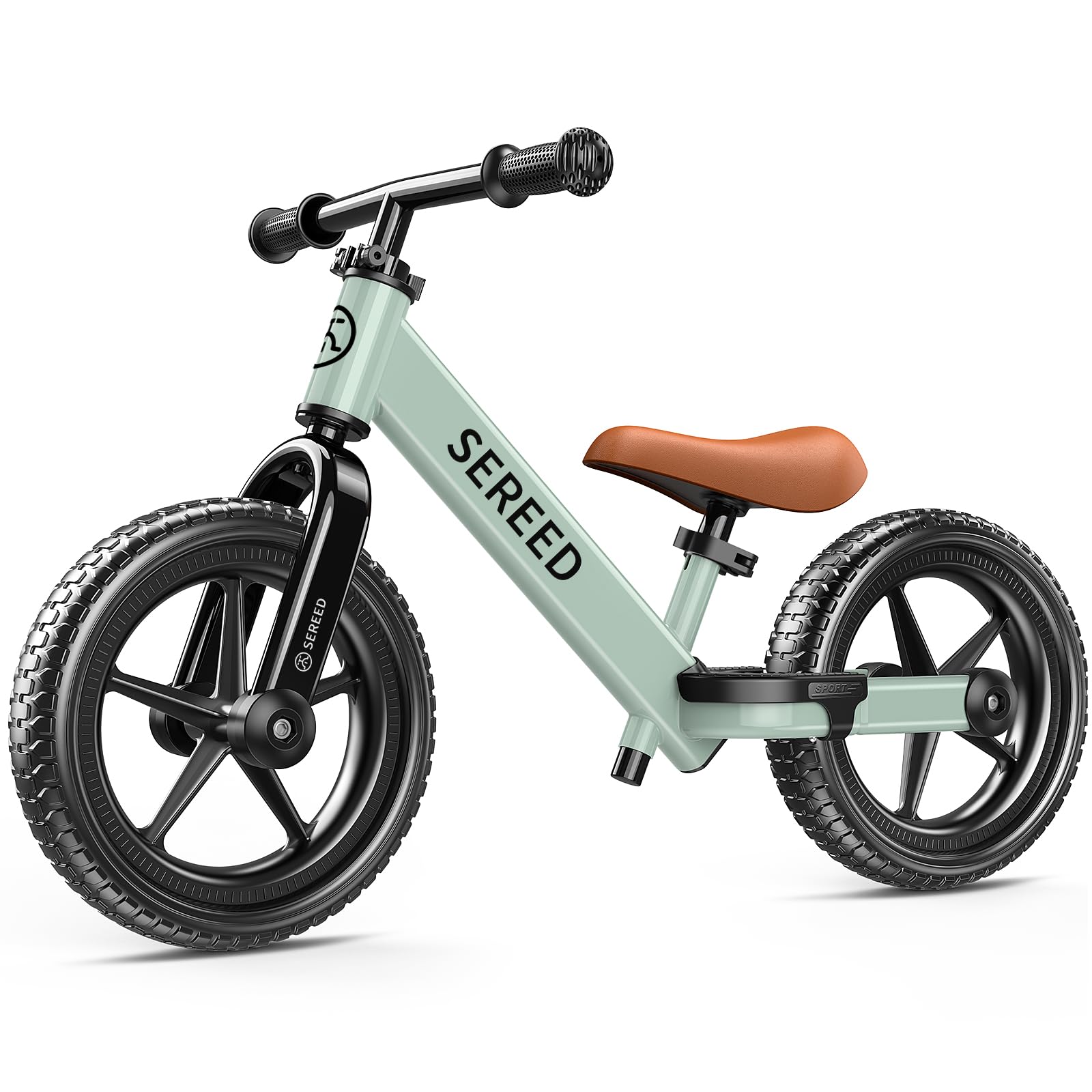
2. SEREED Toddler Balance Bike
A budget-friendly steel frame that holds up to 110 pounds and real trail use
The SEREED stands out for one simple reason: it proves you don’t need to spend premium money to get a bike that lasts. The wide carbon steel frame supports up to 110 pounds, which is far beyond what most toddlers will ever weigh, and the quick-release mechanism lets you adjust the seat (11.8–16.5 inches) and handlebars (19.6–22.5 inches) with zero tools. That tool-free adjustability is the feature parents rave about most, especially as their child grows through the 2–5 age range.
At 9 pounds, it’s 3.7 pounds lighter than the Strider Sport above — a meaningful difference when a small child is trying to steer and control the bike themselves. The EVA foam tires are noiseless, anti-slip, and never go flat, which makes them ideal for both outdoor trails and indoor gliding without scratching floors. A bonus plate and stickers let kids personalize the front, a small touch that owners say their children genuinely love.
Owners mention it’s perfect for a 2-year-old who “absolutely loves this bike,” noting the seat adjustment is “very nice” and that it “has held up in the house, outside, and on walking trails.” The recurring praise centers on the quality build and how quickly children take to it — several mention their kid mastered balance on the first try. The one thing to keep in mind is that this is a no-brake bike, which is standard for balance bikes, so speed control comes from little feet.
The Value Verdict: This is the smart-money pick — it delivers a sturdy, adjustable, lightweight frame at a fraction of premium prices, with quality as the most-mentioned positive across hundreds of owners.
Who It’s For: Families who want a reliable first balance bike without paying for brand-name markup, especially for kids aged 2–3 who are just starting out.
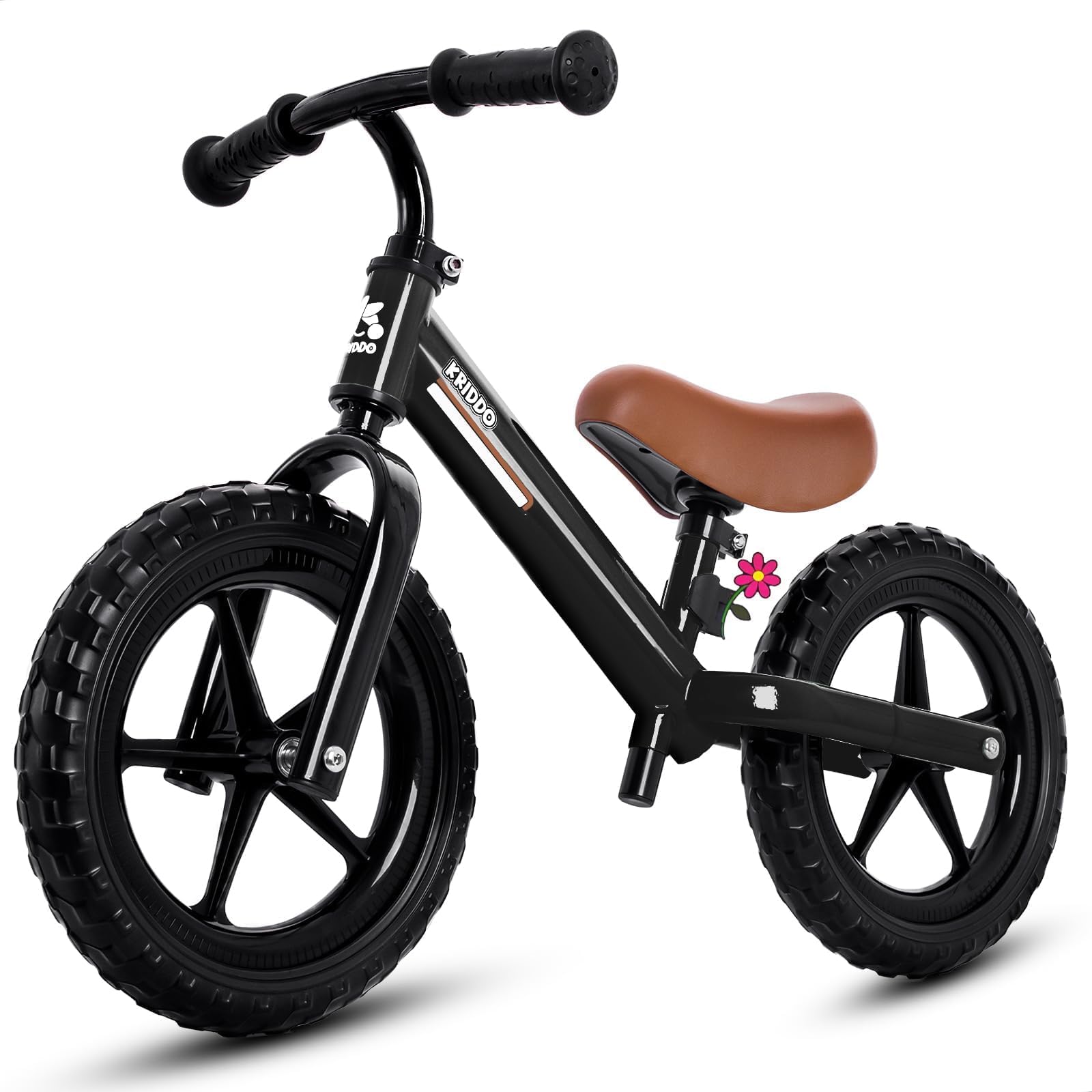
3. KRIDDO Toddler Balance Bike
A smooth-gliding carbon steel bike with dual bearings and a taller starting seat
The KRIDDO earns its place with the dual-bearing wheels, which provide a smooth, low-resistance glide that reduces strain on little knees. The dual bearings let kids glide farther with each push, so they build momentum faster and stay engaged longer. The 12-inch puncture-proof tires handle tracks, grass, carpets, pavements, and wood floors, so this bike doesn’t need to stay on the sidewalk.
The fit is where this pick differs from the SEREED above. The KRIDDO’s seat adjusts from 14.17 to 18.5 inches, which is meaningfully taller at the minimum setting than the SEREED’s 11.8-inch floor. That makes the KRIDDO a better match for a taller 2.5-year-old or a 3-year-old who has outgrown smaller bikes, while the handlebars (20.08–21.65 inches) offer a similar tool-free range. For a child on the younger or smaller side, the seat height is the honest limitation to check first.
Customers note that a 2-year-old learned balance and steering “in days,” and that the bike handles a gravel driveway without issue — proof of the multi-terrain tires. The two decorative plates (a flower and a clover) that attach under the seat are the personalization hook kids love. The carbon steel frame drew praise for feeling sturdy rather than cheap plastic, though a few noted durability is still unproven over the long haul. Reviewers point out it’s a “sturdy, lightweight bike ideal for 2-year-old” — a fair summary of its balance.
Pick this for: a taller toddler aged 2.5–3 who needs a taller starting seat and wants a smooth, low-effort glide on mixed surfaces.
Look elsewhere if: your child is on the small side for their age — the 14.17-inch minimum seat height may leave feet dangling.
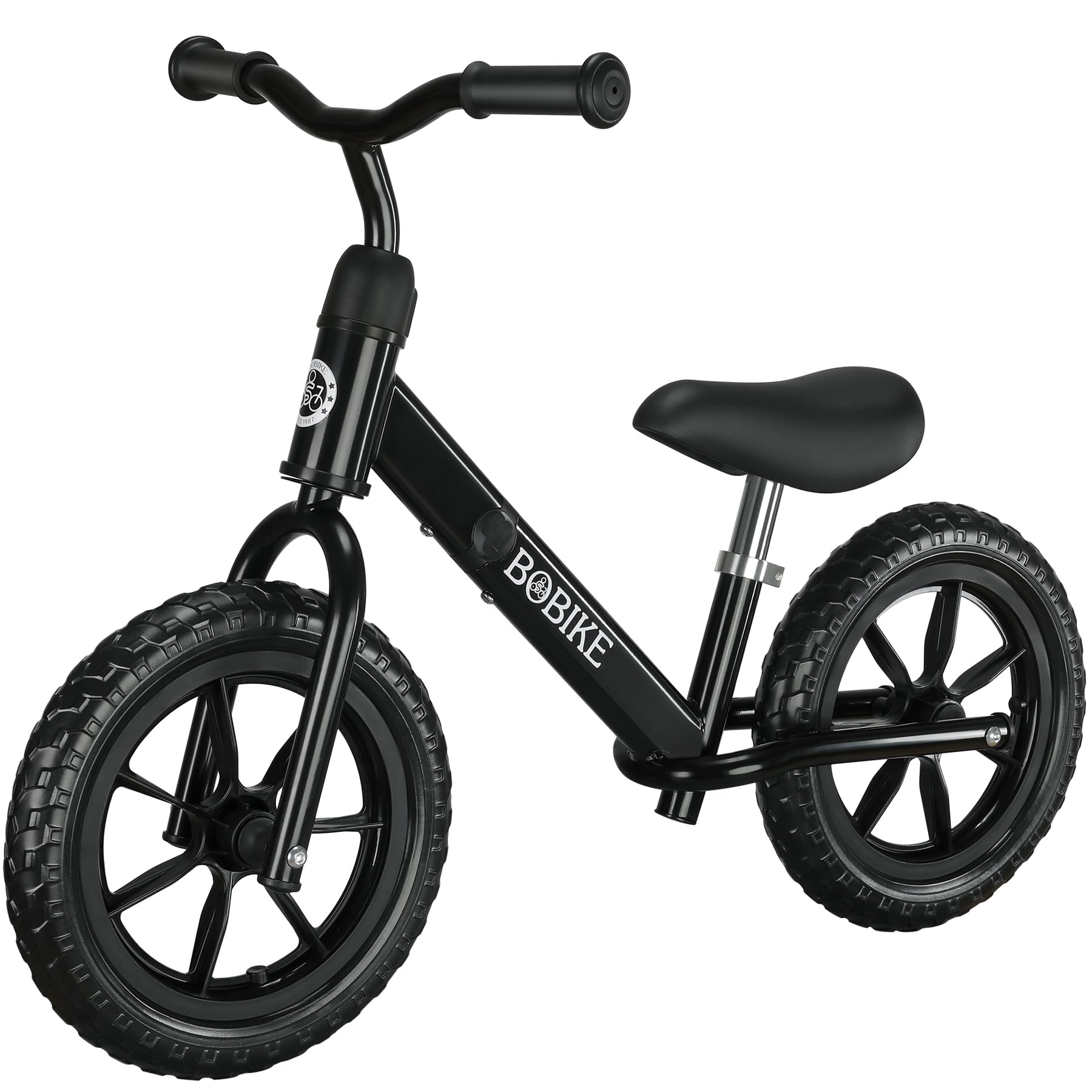
4. Bobike Toddler Balance Bike
A safety-focused aluminum frame with a steering limiter that prevents tip-overs
The Bobike’s defining feature is the 135° steering limit design, which stops the handlebars from turning too far and causing a sudden spill. For a toddler just learning, that built-in guardrail is genuinely reassuring — It cuts the sideways tip-overs that make toddlers hesitant to keep riding. The fully enclosed wheels add another layer of protection against feet getting caught, which is why this bike is particularly popular for indoor use where space is tight.
The aluminum frame keeps it lightweight, and the middle steel section can be disassembled, making it easy to pack for outings. The adjustable seat and handlebars grow with your child, and it carries ASTM F963-11 and EN71 certifications — the exact safety standards that signal a thoughtfully designed kids’ product. Quality is the most-praised aspect by a wide margin, with assembly and child-friendliness close behind, and several shoppers say buying it multiple times because it’s so sturdy — one even mentioned it survived a river, the ocean, and stairs.
That toughness is the headline, but there’s an honest size caveat: several owners note it runs on the small side, which is actually why some bought it — it suits an 18-month-old through about 3 years better than a large 4-year-old. The foam wheels give a firmer ride than air-filled alternatives, and while the steering limiter prevents tip-overs, it also makes tight turns slightly less nimble. Buyers report it’s a “super sturdy” bike that “survived a cross country move,” which speaks to the build quality.
Safety-First Strengths
- 135° steering limit cuts down sideways tip-overs
- Fully enclosed wheels protect little feet
- Lightweight aluminum frame is easy for toddlers to lift
- ASTM and EN71 certified for safety
Size Reality Check
- Runs small — best for 18 months to 3 years, not big 4-year-olds
- Firmer foam wheels vs air-filled tires
- Steering limiter makes tight turns less nimble
Best for: parents who want maximum safety guardrails and a bike that can handle indoor play without scratching floors.
skip it if: your child is already tall for their age — the compact sizing will be outgrown quickly.
5. Gotrax KS12 Toddler Balance Bike
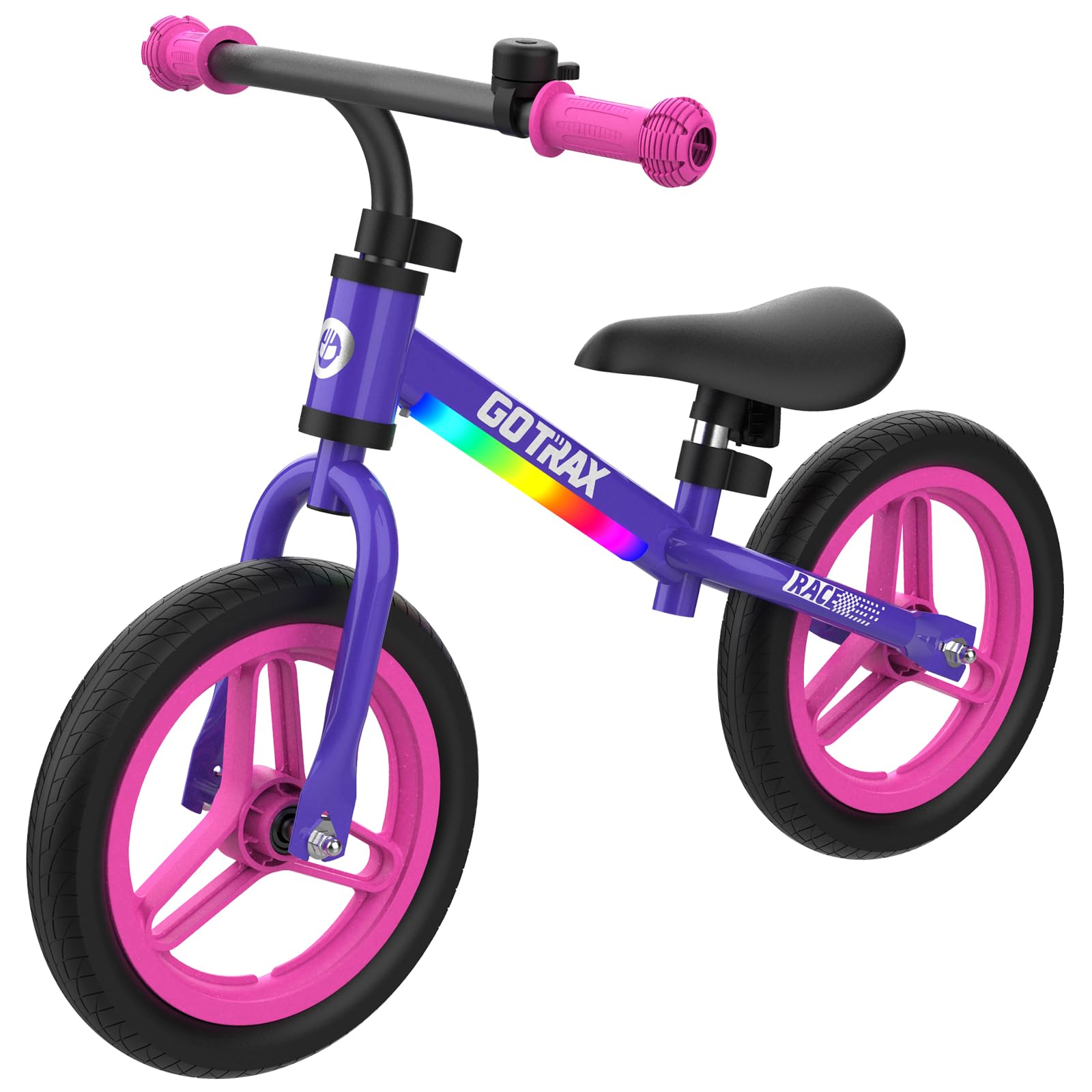
A light-up, bell-ringing 12-inch ride that turns evening glides into a spectacle
The KS12’s a neat extra is the set of LED lights that activate as your child rides, creating a glowing display that’s especially captivating in the evening. Owners consistently say the lights are what their kids love most — it turns a simple balance lesson into something notable enough to beg for. The integrated bell adds another layer of toddler appeal, and the thicker seat cushion plus silicone handlebars make the ride genuinely comfortable.
Under the fun, this is a solidly built machine. The 12-inch EVA wheels are sturdy and flat-free, and the maximum load capacity of 110 pounds means it’s built to last well beyond the early learning stage. At just 8.6 pounds, it’s light enough for a small child to carry, and the seat adjusts from 16.5 to 18.3 inches while the handlebars range from 22.8 to 26 inches. That’s a taller starting point than most rivals, so this suits a 2.5-year-old and up better than a small 2-year-old.
Owners mention it’s a “best push bike for 2.5 year olds” made of “quality materials” that’s “very durable,” with tires that provide a smooth ride and a seat that’s comfortable. The honest caveat is the lighting: while most love it, a few note the strobe light never turns off, which could be distracting in some settings. Gotrax backs it with a 1-year manufacturer’s warranty, which is a nice safety net for a feature-heavy bike.
Get this if: you want a bike that makes learning feel like play — the lights and bell are genuine kid magnets that build excitement.
Consider the height first: the 16.5-inch minimum seat height means this is best for a taller toddler aged 2.5 and up.
6. Retrospec Cub Toddler Balance Bike

A low-slung frame that lets the youngest toddlers mount and dismount on their own
The Retrospec Cub is engineered for the absolute beginner, with an easy-mount low frame that gives a young child the confidence to get on and off independently. That’s the single biggest win for a 1.5-year-old — the low center of gravity means fewer scary wobbles, and the rounded edges and non-slip grips add safety where it counts. The seat adjusts from 11 to 14.5 inches, which is a genuinely low floor that fits children as young as 18 months.
The quick-release handlebars and tool-free seat adjustment mean parents can tweak the fit in seconds as their child grows. The airless, puncture-proof tires roll smoothly across pavement, grass, and dirt paths — no flat-fixing ever — and the alloy steel frame is built to “withstand countless adventures,” as the manufacturer puts it. Quality and durability are the two most-praised aspects, with owners noting it survived a full year of dragging and dropping without issue.
Customers note it’s a “sturdy lightweight frame” that helped a toddler gain balance confidence quickly, with flat-free tires that remove any pressure worries. The honest limitation is the growth ceiling: one owner noted it was enjoyed from age 1 but “maxed out” on height at 2.5 years. That’s not a flaw for the right buyer — it’s a signal this is best as a true starter bike for the youngest riders, not a long-term multi-year investment like the Strider.
The Starter Verdict: If your child is 18 months to 2.5 years, this is the balance — the low frame builds confidence fast, and the build quality is proven by owners who used it daily for over a year.
The Growth Check: It will be outgrown around 2.5–3 years, so it’s a first-bike purchase, not a buy-once-for-years pick.
7. Schwinn Elm Balance Bike

A sturdy Schwinn that feels premium and is built to survive multiple kids
Schwinn brings over a century of bike-building expertise to the toddler arena, and it shows in the Elm’s SmartStart ergonomic design — a frame geometry built specifically for kids’ proportions so handling feels natural rather than awkward. The adjustable seat uses a tool-free mechanism, so you can raise or lower it in seconds as your child grows, and the alloy steel frame feels dense and thick in a way that signals longevity. Quality and sturdiness are the two aspects owners mention most, with several noting it will “last through many kiddos.”
The one thing that sets this apart from most of the list is its honest size range: Schwinn positions this bike for kids from 30 to 54 inches tall. That’s a wide spread, but the practical reality is that the minimum fit is best for a child who already has some height. One owner noted their 27-month-old grandson (30 pounds, average height) couldn’t quite reach the floor from the seat yet — so this is a bike to grow into rather than a first-day fit for a small toddler.
The tires are compressed foam, which the manufacturer is transparent about — not solid rubber or air-filled like some rivals. They provide a smooth ride and never need pumping, and owners describe the bike as “premium and well built.” The single-speed drivetrain is as simple as it gets, and the coaster brake (a brake that engages when pedaling backward) gives older kids a real stopping method once they graduate from foot-braking. Reviewers point out it’s a “beautiful little bike” that looks the part of a quality investment.
Choose this for: families who want a well-known, sturdy brand that will hand down through multiple children and grow with a taller toddler.
Mind the fit: a small 2-year-old may not reach the ground — measure the inseam first and expect to grow into it.
8. OHIIK Balance Bike 2-in-1

The only pick that converts from balance bike to pedal bike in about 60 seconds
The OHIIK’s whole identity is the 2-in-1 conversion: it ships as a balance bike, then transforms into a pedal bike with training wheels when your child is ready — a switch that takes about 60 seconds and requires no extra purchases. That’s a genuinely smart way to avoid buying two separate bikes, and the included pedal kit, training wheels, kickstand, balance footrest, assembly tools, and small tire pump mean everything you need is in the box.
The frame is high carbon steel, which is lightweight and durable, and the hand brake is a sensitive rear holding brake — a real safety upgrade over foot-braking, since your child slows down without dragging shoes. The pneumatic rubber tires are widened, wear-resistant, and bursting-proof, offering a smoother ride than the foam tires on most rivals. The 360-degree steering is a double-edged sword: it lets kids turn tighter and reduces the turning radius for competitions, but it lacks the steering limiter that the Bobike uses to prevent tip-overs.
Build quality is the most-praised aspect, and shoppers say a 4-year-old at 43 inches tall fit the shortest setting with room to grow. The honest concerns center on the pedal mode: some report the chain comes off constantly, and the braking is less reliable than expected, with the most negative feedback tied to riding under force on hills. For a child who will spend most of their time in balance-bike mode, this is a strong value; for heavy pedal use, it’s worth reading those durability notes carefully.
The Conversion Advantage
- Converts to pedal bike with training wheels in ~60 seconds
- Complete kit: pedals, training wheels, kickstand, pump included
- Real hand brake stops without shoe dragging
- Pneumatic tires offer a smoother ride than foam
The Pedal-Mode Caveat
- Chain can come off under hard pedal force
- No steering limiter — more tip-over risk for beginners
- Durability feedback is mixed in pedal mode
Best for: parents who want one bike that spans the balance-to-pedal transition and appreciate a real hand brake for safety.
Proceed with eyes open: the pedal mode has reliability questions, so treat this primarily as a balance bike with a future upgrade path.
9. Strider 12 Pro
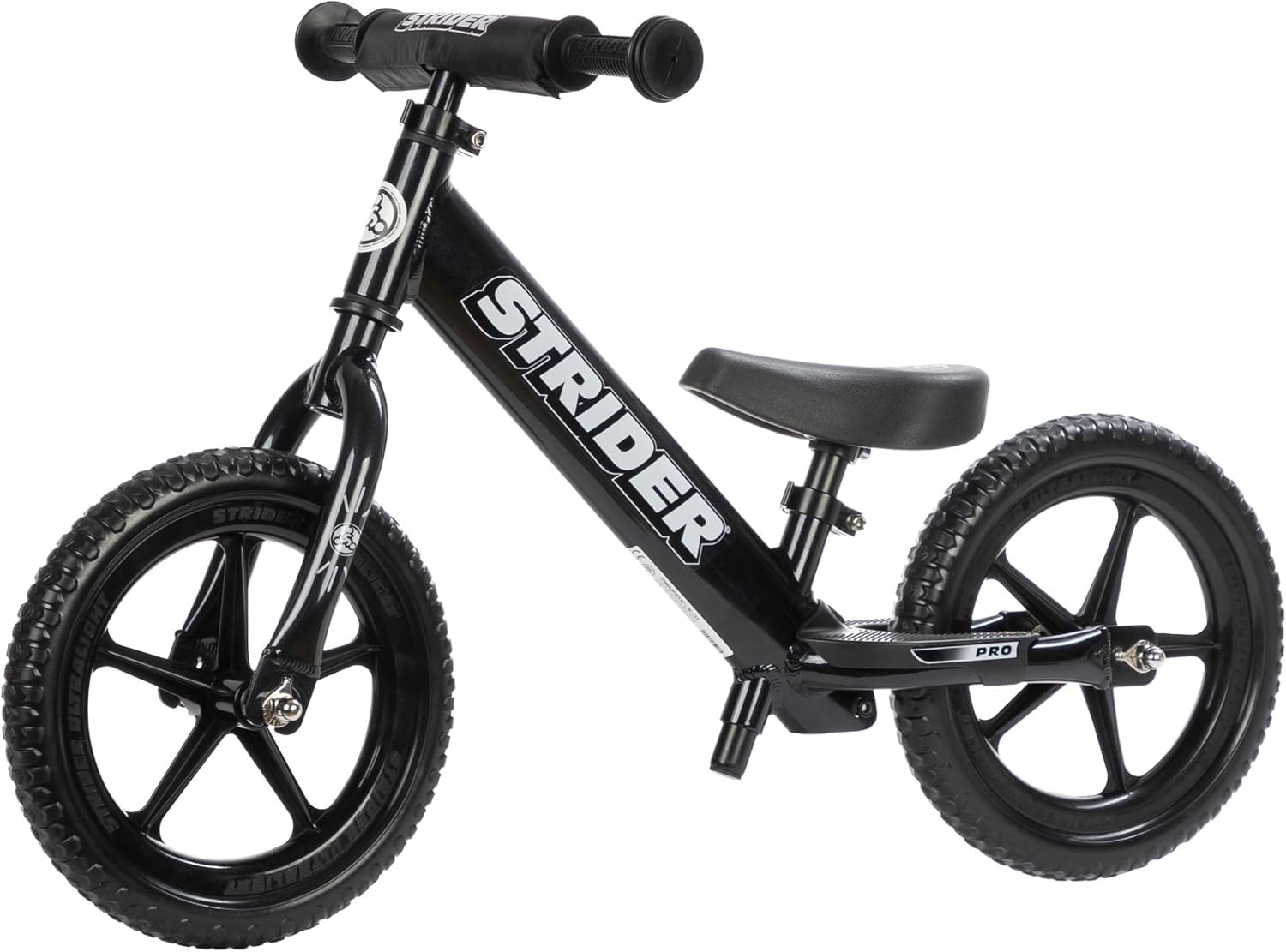
The featherweight aluminum frame that serious young riders barely notice they’re carrying
At just 5.6 pounds, the Strider 12 Pro is the lightest bike on this list by a wide margin — compare that to the 12.7-pound Strider Sport and you’ll understand why this is the choice for kids who need maximum control with minimum effort. The ultralight aluminum frame gives a small rider increased control and easier handling, which is exactly what builds confidence during those wobbly first glides. Buyers report their kids take it everywhere — even to bed, as one amused parent noted — because it’s so easy to carry.
The seat adjusts from 11 to 17 inches (28–48 cm) on the regular post, fitting children with an inseam of 12–20 inches (31–46 cm), and the whole bike accommodates ages 1 to 5 years. The Flat-Free Foam Rubber Tires are genuinely indestructible — they withstand “toddler havoc” without ever needing a pump or patch. The maximum rider weight of 60 pounds means this one bike can carry a child from their first steps to a proper pedal bike, a span few rivals match.
Lightweight is the second most-praised aspect after the sheer enjoyment kids get from it, and owners say their children mastered pedals in under an hour after using this. The honest trade-off is the price — it’s a premium investment, and some owners find it overpriced for what it is. There are small quirks: the seat post can protrude when slammed all the way down (some owners saw it off), and the headset can develop play over time. But for a child who will ride daily for years, the weight savings are the difference between a bike that gets used and one that sits in the garage.
The Premium Verdict: This is the bike serious riders graduate to — the 5.6-pound frame is class-leading for control, and the 2-year limited warranty backs the build quality.
The Cost Reality: It’s the priciest per-pound value on the list, so buy it for the weight savings, not for features — the Sport offers the rocking base for less.
Understanding the Specs
Seat Height Range & Inseam Match
This is the single most important number on any balance bike. The lowest seat setting must let your child sit with both feet flat on the ground and knees slightly bent — that’s the position that builds confidence. A bike with a 9-inch minimum seat height fits the youngest toddlers, while a 14-inch floor suits a taller 3-year-old. Always measure your child’s inseam from the floor to the crotch and match it against the seat range before buying.
Frame Material & Weight
Aluminum frames are the lightest, often coming in around 5–6 pounds, which gives small riders total control. Steel frames (carbon or alloy) are cheaper and often sturdier but add significant weight — sometimes 9–12 pounds. For a 2-year-old, that extra weight is the difference between steering confidently and fighting the bike. If your child is small or young, prioritize lightness over everything else.
FAQ
What inseam does a 12 inch balance bike fit?
What is the weight limit for a 12 inch balance bike?
At what age should a child start on a 12 inch balance bike?
Are foam tires better than air-filled tires on a balance bike?
Does my child need a balance bike with a brake?
How long will a 12 inch balance bike last my child?
What is the difference between a balance bike and a tricycle?
What is a steering limiter and why do some bikes have it?
How hard is it to assemble a 12 inch balance bike?
Final Thoughts: The Verdict
Across the board, the 12 inch balance bike winner is the Strider Sport 2-in-1 because it uniquely spans two stages of development, converting from a baby rocker to a real balance bike while holding the highest ratings in the group. If you want a lightweight aluminum frame that a small child can truly command, grab the Strider 12 Pro at just 5.6 pounds. And for the most safety-conscious families, the Bobike with its 135° steering limit is the one to reach for.
How We Picked
We do not accept paid placement. Every pick is matched to a real buyer and a real use-case; we do not hands-on test units.
Sources & Methodology
Specifications: manufacturer listings and product documentation. Review insights: verified customer reviews, as of August 2026. Pricing: not shown on this page (it changes often); check the current price via the retailer link.
As an Amazon Associate, Gadgets Feed earns from qualifying purchases. This does not affect which products we feature.