
Our readers keep the lights on and my morning glass full of iced black tea. As an Amazon Associate, I earn from qualifying purchases.
Specs are compiled from manufacturer listings and verified buyer reviews and can change over time — please confirm the key details on the product page before buying.
Straight baseboard hits a curved wall and the job stops dead. Base cap moulding that flexes solves that exact problem — it wraps around arches, columns, and rounded corners without the notch-and-bend guesswork that leaves gaps and splinters. The real question is which flexible profile matches your trim, your radius, and whether you plan to paint or stain.
I’m Min — the founder and writer behind Gadgets Feed. This guide is built by comparing the manufacturers’ published specifications and the patterns across verified customer reviews, so you get each pick’s real strengths and trade-offs instead of marketing spin.
Flexible polyurethane profiles bend to a 6-inch radius, shrug off moisture, and mimic wood grain once finished. The base cap moulding comparison below weighs width, thickness, and finish options so you match the right trim to your curved project.
Our Picks at a Glance

How To Choose The Best Base Cap Moulding
Flexible base cap moulding is built from polyurethane resin that bends like a belt instead of snapping. That flexibility lets you follow curves that would defeat solid wood, but it changes how you pick the right profile.
Paint Grade vs Stain Grade
You need to know which finish you want before you buy. Paint-grade profiles are made to be covered with primer and paint, so the factory surface is hidden. Stain-grade profiles accept a gel stain or polyshade and mimic real oak grain, so they blend with existing stained trim. Pick paint grade for a smooth painted wall; pick stain grade when you want the wood-look finish to match your stained trim.
Radius and Thickness Matter
Every flexible moulding lists a minimum radius — the tightest curve it can wrap without kinking. All three picks here handle a 6-inch minimum radius. Thicker profiles hold their shape better but resist tight bends, so match thickness to how sharp your corners actually are.
Quick Comparison
In-Depth Reviews
1. Flexible Moulding – Flexible Base Moulding – WM623-9/16″ X 3-1/4″ – 8′
Our pick — over 4.5★ from 100+ verified ratings; the strongest balance of quality and price.
The wide-profile problem-solver for sweeping curved kitchen islands and entry walls.
The standout here is the 3-1/4″ width — three times the 1-3/8″ width on the FLEXTRIM profile. That extra face makes it the pick for large curved surfaces like a custom kitchen island where standard trim proportions would look lost. At 9 pounds, it is the heaviest of the three, which makes sense for a board that carries this much surface area.
What wins people over is the flexibility — the most-praised trait — and the way it cuts and mitres like wood on standard equipment. Buyers report it worked perfectly on a curved custom kitchen island, and that it matches standard big-box moulding so the transition disappears. On the functional side, it bends around tight 90-degree curves and wraps curved drywall cleanly.
The trade-off is finish prep: owners note it needs 3-4 coats of paint, and the paint can crack if you bend the piece repeatedly after finishing. The value-for-money read is mixed — some call it worth the premium, others find it pricey. For a one-off curved feature wall, that premium buys a clean result that failed alternatives could not deliver.
What Wins Owners Over
- 3-1/4″ width covers large curved spans in one run
- Bends around tight 90-degree corners
- Cuts and mitres like wood on a saw
Before You Commit
- Needs 3-4 paint coats for full coverage
- Paint can crack if bent repeatedly after finishing
- Value for money draws mixed owner opinions
Reach for this if: you are trimming a large curved island, entry wall, or any span where a wider profile looks right.
Look elsewhere if: you want to stain instead of paint — this profile is built for a painted finish.
2. FLEXTRIM #WM163 Flexible Base Cap Molding: 11/16″ Thick x 1-3/8″ Wide – 12 feet

A 12-foot run that forms perfectly around arches and matches existing cap molding.
The headline here is length: this FLEXTRIM board runs 12 feet, a full 4 feet longer than the 8-foot Resinart profiles. For an arch or a long curved wall, that means fewer joints to hide. It is also thicker than the wide WM623 — 11/16″ versus 9/16″ — so it holds a crisper profile on gentler curves.
The main praise is how it forms around arches and stair cases without complaint. Owners mention it blends right in with existing wall trim once painted, and that it works so well bending to a curve on walls that they would buy it again. The 1-3/8″ width pairs it directly with standard cap molding, so it reads as a true match rather than a compromise.
One honest quirk: the trim is hard to keep straight while cutting — the fix owners use is to lay it on a piece of wood first. It is a paint-grade resin, so keep it to painted projects, and note the maker says it is only recommended for painting applications. At this length and thickness, it is the efficient pick for arches that need one continuous piece.
The Payoff
- 12-foot length means fewer seams on tall arches
- 11/16″ thickness holds a sharp profile
- Forms perfectly around arches and matches cap molding
Watch For
- Hard to keep straight when cutting — clamp to a board
- Paint-grade resin, not for staining
Who it beats: shorter profiles on arch jobs where a continuous 12-foot run saves a visible seam.
Who it does not suit: stained finishes — this one is strictly for painted trim.
3. Flexible Moulding – Stain Grade – Oak Grain – Flexible Base Cap Moulding – WM163-11/16″ X 1-3/8″ – 8′
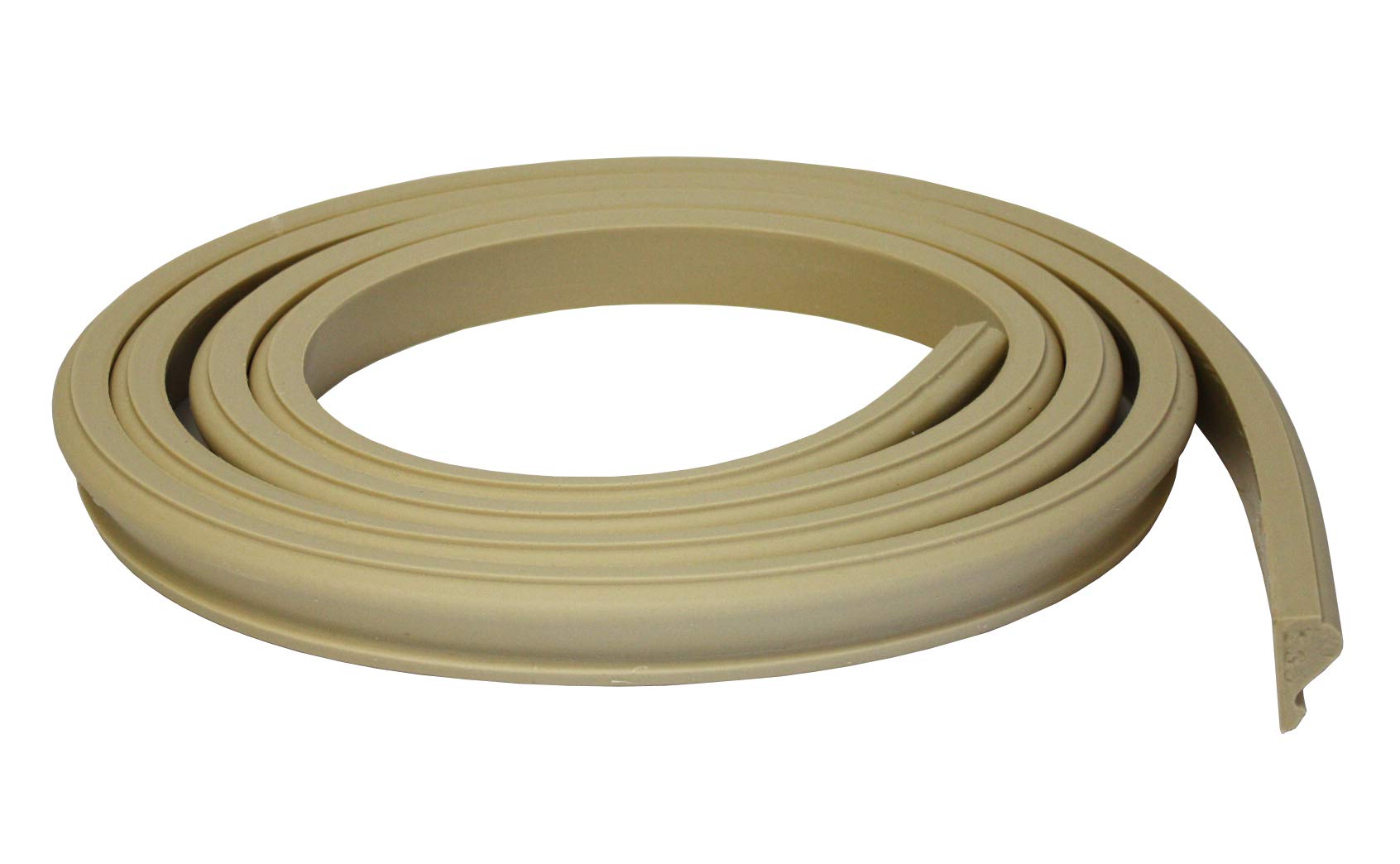
The stain-grade trim that matches a century-old curved wall without cracking.
This is the one to pick when your curved wall meets existing stained wood trim. It carries an oak grain surface built for staining or painting, and at 3.1 pounds it is the lightest of the three — easier to handle on a ladder than the 9-pound wide profile. It shares the 11/16″ thickness with the FLEXTRIM, so it holds a comparable profile shape.
The defining story is restoration: customers note replacing a cracked 124-year-old piece of molding on a curved wall, finishing it with three coats of a walnut polyshade, and ending up unable to tell it from the original. It conforms to curved areas, can be trimmed with a knife for tighter curves, and takes a gel stain very well.
The catch is prep discipline: paint can peel if you skip the groundwork, so owners recommend a light sanding and a primer coat before painting. For stained projects the payoff is high — it passes for real oak grain once finished. The 1-3/8″ width matches standard cap molding, and the 8-foot length suits smaller curved runs.
Where it shines: a stain-grade oak surface that lets you match curved walls to existing wood trim instead of painting over the problem.
The honest note: paint peel risk on unprepared surfaces — sand and prime first if you go the paint route.
Best for: homeowners restoring or matching curved walls with a stained, wood-grain finish.
Think twice if: you plan a quick paint job without sanding or priming — the finish may peel.
Understanding the Specs
Minimum Bend Radius
This is the tightest curve the moulding can wrap before it kinks or cracks. All three picks here handle a 6-inch minimum radius, which covers most residential arches and rounded corners. Tighter than 6 inches and you will need a different approach — measure your curve before buying.
Paint Grade vs Stain Grade
Paint-grade resin is primed to hide under a coat of paint. Stain-grade surfaces carry a wood grain and accept gel stains or polyshades so they read as real oak. If you want a stained match to existing trim, you must choose a stain-grade profile — paint-grade will not take the stain the same way.
FAQ
Will flexible base cap moulding bend around a tight 90-degree corner?
Can I stain flexible moulding to match existing wood trim?
How many paint coats does flexible moulding need?
What is the difference between the 9/16″ and 11/16″ thickness options?
Will this moulding work outdoors or in humid areas?
How do I cut flexible moulding to size?
Which length should I buy for an arch?
Does the material really look like wood once finished?
Final Thoughts: The Verdict
For most buyers, the base cap moulding winner is the Flexible Base Moulding WM623 because its 3-1/4″ width and proven flexibility handle the widest range of curved projects. If you need a continuous run around a tall arch, choose the FLEXTRIM WM163 for its 12-foot span, so you avoid seams on long stretches. For a stained match to existing wood trim, the Stain Grade Oak Grain WM163 is the one to reach for — It earns 4.7 stars from 20+ owners and its surface mimics genuine oak.
How We Picked
We do not accept paid placement. Every pick is matched to a real buyer and a real use-case; we do not hands-on test units.
Sources & Methodology
Specifications: manufacturer listings and product documentation. Review insights: verified customer reviews, as of August 2026. Pricing: not shown on this page (it changes often); check the current price via the retailer link.
As an Amazon Associate, Gadgets Feed earns from qualifying purchases. This does not affect which products we feature.