
Our readers keep the lights on and my morning glass full of iced black tea. As an Amazon Associate, I earn from qualifying purchases.
Specs are compiled from manufacturer listings and verified buyer reviews and can change over time — please confirm the key details on the product page before buying.
If you’ve outgrown a 1×30 belt grinder or a bench grinder, a 2×72 belt grinder (a machine that uses a 2-inch-wide, 72-inch-long abrasive belt) is the biggest step up for knife making, blade sharpening, and heavy metal shaping. The real choice depends on which motor, speed control, and frame will survive the hours you’ll put on it.
I’m Min — the founder and writer behind Gadgets Feed. This guide is built by comparing the manufacturers’ published specifications and the patterns across verified customer reviews, so you get each pick’s real strengths and trade-offs instead of marketing spin.
Here are the 72×2 Belt Grinder picks that balance motor power, variable speed, and build quality for real shop work.
Our Picks at a Glance


How To Choose The Best 72×2 Belt Grinder
Your ideal 2×72 belt grinder depends on how much metal you remove, how much floor space you have, and if you need precise speed control for bevels or just raw grinding power.
Motor amperage and speed
Motor amperage tells you how much electrical grunt the machine can pull, and higher RPM means the belt moves faster for more aggressive stock removal. A 14-amp motor running at 1725 RPM is a different animal from a 5-amp motor spinning at 2900 RPM, so match the power to the thickness of steel you’re shaping.
Variable frequency drive (VFD) and belt speed
A VFD lets you change belt speed smoothly for the task at hand — fast for hogging off material, slower for fine polishing or heat-sensitive blade work. Some grinders run at a fixed speed, which is fine for rough work but limits your control on delicate passes.
Frame weight and stability
Heavier frames resist vibration and keep your passes consistent, which matters when you’re grinding a precise bevel. A machine that walks across the bench while you work will fight you the whole time, so look at the weight and steel construction before you commit.
Quick Comparison
| Model | Best For | Motor Amperage | Max Speed | Weight | Amazon |
|---|---|---|---|---|---|
| Shop Fox W1843★ Best Overall | Fixed-speed shop work | 14 A | 1725 rpm | 105 pounds | Amazon |
| VEVOR 2×72 VFDBest Value | Variable-speed value | 5 A | 2900 rpm | 110.7 pounds | Amazon |
| Jinlida JLD10-5 | High-rpm versatility | 10 A | 3000 rpm | 110 pounds | Amazon |
| Jinlida JLD10-7S | Vertical and horizontal use | 10 A | 3000 rpm | — | Amazon |
| Jinlida Jld-2×72 | Heavy steel removal | 10 A | 3000 rpm | 187 pounds | Amazon |
In‑Depth Reviews
1. Shop Fox Knife Belt Sander/Buffer W1843
Our pick — over 4★ from 80+ verified ratings; the strongest balance of quality and price.
A fixed-speed workhorse that grinds raw steel into knife bevels with relentless power.
This Shop Fox pulls the most electrical muscle of any pick here — a 14-amp motor (a 2.8x amperage advantage over the VEVOR’s 5-amp motor) spinning at 1725 rpm. That amperage translates into steady, unstoppable grinding for hours, and buyers report the motor runs fine even after several hours of continuous work.
It runs at a fixed 4500 FPM belt speed, so you trade speed control for sheer simplicity. The catch is real: you must live without variable speed, as owners put it, though the tool rest adjusts in many ways and tracking is stable once you set it. A novice knife-maker called it far superior to bench grinders for knife-making, and owners mention “plenty of power” plus fast, easy belt changes.
Assembly takes about an hour, and one recurring note is the blue protectant on the arbors — WD-40 and thinner failed, but citrus solvent did the trick. At 105 pounds, it’s a heavy, stable unit that handles general shop work and buffing with equal confidence.
What Owners Rave About
- Powerful 14-amp motor that doesn’t bog down
- Quick, easy belt changes between grits
- Adjustable tool rest for different angles
Consider This
- No variable speed — fixed at 4500 FPM
- Bigger and heavier than many expect
- Tracking is fussy until you dial it in
Pick this if: you want a proven, powerful fixed-speed grinder for knife work and general shop use without VFD complexity.
Look elsewhere if: you need fine speed control for heat-sensitive blade passes or delicate polishing.
2. VEVOR Belt Grinder Sander, 72 x 2-Inch Variable Speed Belt Polisher with VFD
A 5-minute setup and quiet variable speed make this the smart money pick.
This VEVOR delivers a 1500W pure copper motor spinning at 2900 rpm — a 74% faster belt speed than the Shop Fox’s 1725 rpm — so the belt moves fast for aggressive stock removal. Its VFD lets you dial speed steplessly, switching between high-speed fast work and low-speed fine sanding to protect the motor.
Customers note an easy 5-minute setup, a quiet run at 5000rpm, and good belt tracking right from the start. The thing everyone raves about is the sheer value — powerful, heavy-duty build at roughly 110.7 pounds, and a tough frame welded at all joints for stability. It comes with 3 sanding belts (100/180/240 grit) and 3 grinding moulds for circular, arc, and flat work.
The honest trade-off is durability — there are reports of VFD and motor failures within two months, so treat the electronics gently. An occasional unit arrives damaged, and one buyer found the platen bearings ran hot until reamed. It lacks a reverse function, but for the money, owners say it beats the cost of comparable 2×72 grinders.
Value verdict: The most capable variable-speed grinder for the outlay, if you accept some electronics risk.
Watch for: The rare VFD failure and the need to sometimes adjust platen bearings on arrival.
3. Belt Grinder Sander with VFD, 2×72-inch 1500W 2HP Variable Speed Control
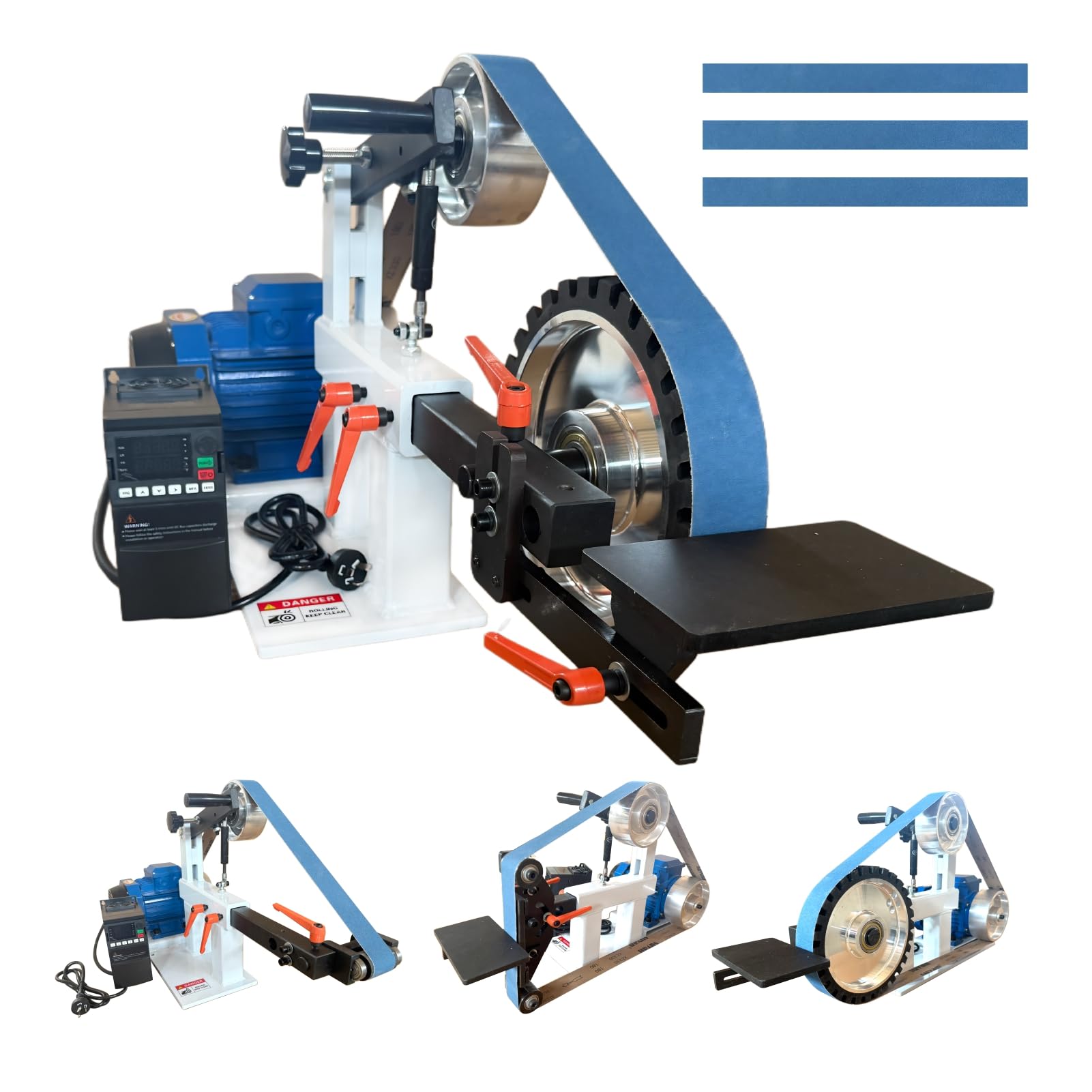
The highest-rated pick here, with reverse function and 36m/s belt speed.
This Jinlida tops the list at 3000 rpm max speed — a 74% faster belt speed than the Shop Fox’s 1725 rpm — with a 1500W pure copper motor for smooth running and stable tracking. Its VFD includes a reverse function via the MFK button, which owners use for a better polishing effect on the product while protecting the motor.
Reviewers point out it does exactly what it is built for and is amazing for the money, with smooth motor and bearings plus a VFD that works well. The kit includes three grinding tools (circular, flat, and arc) and three belts (100/180/240 grit) to cover coarse grinding to fine polishing, with the 240 mesh belt achieves a surface finish below Ra1.6 for high-precision work.
The critical setup note: the motor is rated AC 220V, so you must use the included transformer to boost from 110V — and one buyer stresses you need a dedicated 30 amp plug. A short VFD cord and non-US connectors were the recurring gripes, with one owner modifying motorcycle connectors to fix it. The control box is unsealed, so dust is a risk.
Best for: buyers who want reverse function and the fastest belt speed for versatile grinding and polishing.
Think twice if: you’re not comfortable with the 220V transformer setup or the need for a 30 amp circuit.
4. JLD Professional Belt Grinder Sander, 2×72 Inch Belt, 1500W with 2.2KW VFD
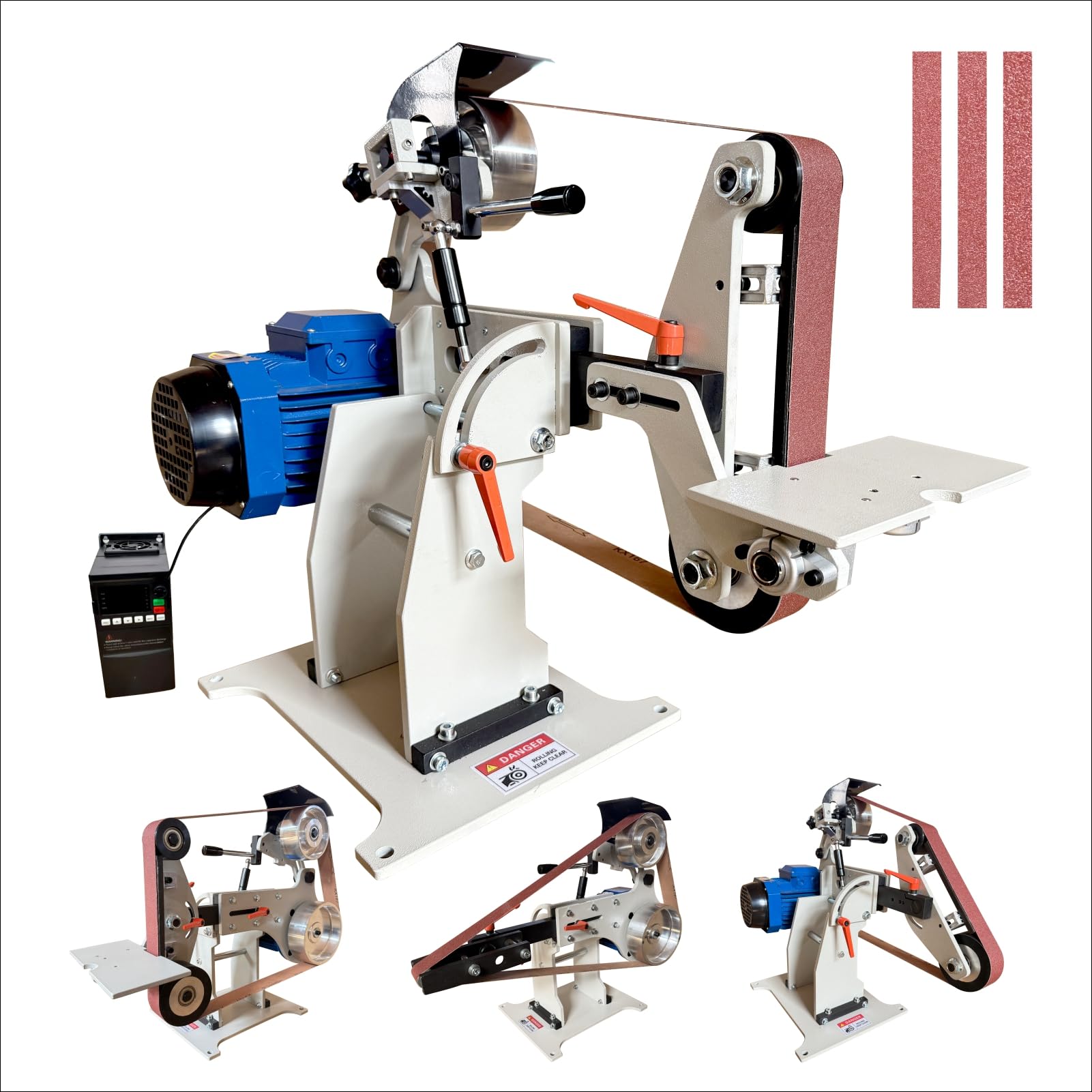
A quiet, versatile beast that holds its own against grinders costing far more.
This JLD pairs a 1500W pure copper motor with a 2.2kW VFD for stepless speed adjustment from 0-2800 rpm — smooth, jerk-free regulation that adapts to steel or softwood. Owners say it will keep up with a Pheer 454, a much pricier machine, yet runs super quiet and versatile.
The standout feature is vertical and horizontal dual-mode operation, letting you switch angles for stable polishing. It includes 2 professional grinding kits for circular, flat, and arc grinding, plus 3 belts (60/100/180 grit) so you can go from coarse deburring to fine polishing in one session. The thickened steel frame with powder-coated anti-rust treatment stays vibration-free under heavy load.
A separate transformer and VFD add a startup switch, and the whole thing is packaged well. The recurring gripe is the lack of a spark guard on the top idler, and one owner hit a wall with undecipherable error codes after days of use — a missing manual made it worse. Most, though, report smooth bearings and a powerful motor that works as advertised.
Dual-mode advantage: The vertical and horizontal switching is the rare feature that sets this apart for angle work.
Fair caveat: Error codes without a manual can be a headache if the VFD misbehaves.
5. JLD 2 * 72-82 Belt Grinder Sander with 2.2KW VFD
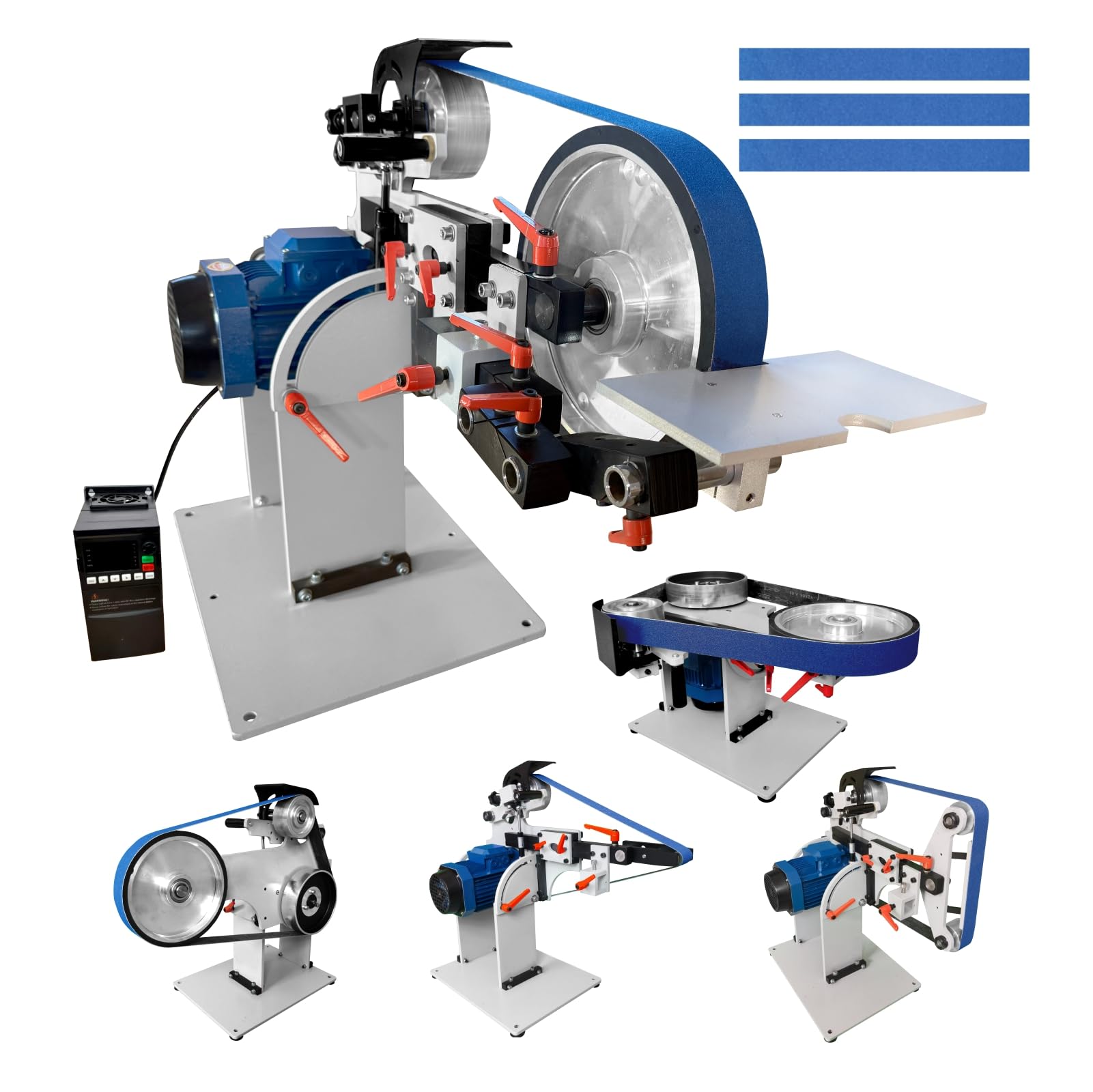
A 187-pound tank that eats 1/2-inch rebar and stays whisper quiet.
A professional bladesmith confirmed it slices through 1/2-inch rebar at 65% power with precise tracking.
It runs a 1500W pure copper motor at 2900 rpm with a 2.2kW VFD for fine speed control, and the 9.2-inch round grinding disc handles efficient metal grinding and blade sharpening. The kit includes three grinding heads and three zirconia corundum belts (60/100/180 grit), and it’s compatible with 2×72 up to 2×82-inch belts for flexibility. Vertical and horizontal dual-mode use plus a detachable workbench round out the setup.
The recurring complaint is the manual — owners say it’s poorly written and you should use CW-100 PDFs instead, and the thick white paint on table arms needed sanding to fit. One unit arrived with a VFD fault but was replaced in two days, and the belts can run off when you change direction. For value, owners insist you cannot assemble a comparable machine for less money — it delivers performance comparable to grinders costing three times as much.
The Tank Factor
- 187-pound frame for near-zero vibration
- Aggressive cutting through thick rebar
- Fine speed control for bevels and sharpening
Setup Hiccups
- Poorly written manual needs external PDFs
- Paint on table arms requires sanding to fit
- Belts can drift off when reversing direction
Reach for this if: you’re a serious bladesmith or metalsmith who needs raw power, stability, and fine control in one machine.
Look elsewhere if: you want a plug-and-play setup without fiddly table adjustments or manual research.
Understanding the Specs
Motor Amperage
Amperage tells you how much electrical current the motor can draw — higher amperage generally means more sustained power under load. A 14-amp motor like the Shop Fox handles thick steel without bogging down, while a 5-amp motor like the VEVOR uses less power but delivers less raw force, relying on higher RPM instead.
Max Rotational Speed
Maximum RPM measures how fast the motor spindle turns — faster speeds move the belt quicker for aggressive stock removal. The Jinlida units top out at 3000 rpm versus the Shop Fox’s 1725 rpm, so you can hog off material faster, though fixed-speed machines trade that flexibility for simplicity.
Variable Frequency Drive (VFD)
A VFD lets you adjust belt speed smoothly and steplessly, from high-speed grinding down to slow polishing passes. This matters for heat-sensitive work like blade bevels where you want to avoid overheating the steel, and it protects the motor from strain by letting you match speed to the material.
Belt Speed (FPM and m/s)
Belt speed measures how fast the abrasive surface moves past your workpiece — the Shop Fox runs at 4500 FPM while the VFD-equipped Jinlida units run at 36m/s. Faster belt speeds remove material quicker, while slower speeds give you more control for finishing and detail work.
FAQ
Do I need a variable speed drive on a 2×72 belt grinder?
What size belt does a 2×72 grinder accept?
Will a 2×72 belt grinder work on 110V household power?
How much power do I need for knife making?
Can I use a 2×72 grinder for wood and metal?
How heavy is a typical 2×72 belt grinder?
What grit belts should I start with?
How do I fix belt tracking issues on a 2×72 grinder?
Is a 2×72 grinder better than a bench grinder for sharpening?
Final Thoughts: The Verdict
For most buyers, the 72×2 belt grinder winner is the Shop Fox W1843 because its 14-amp motor delivers unstoppable power at a fixed speed, making it the most reliable pick for general knife work and shop duty. If you want variable speed control on a budget, grab the VEVOR 2×72 VFD. And for serious bladesmiths who need a vibration-free tank, the JLD Jld-2×72 is the one to reach for.
How We Picked
We do not accept paid placement. Every pick is matched to a real buyer and a real use-case; we do not hands-on test units.
Sources & Methodology
Specifications: manufacturer listings and product documentation. Review insights: verified customer reviews, as of August 2026. Pricing: not shown on this page (it changes often); check the current price via the retailer link.
As an Amazon Associate, Gadgets Feed earns from qualifying purchases. This does not affect which products we feature.