
Our readers keep the lights on and my morning glass full of iced black tea. As an Amazon Associate, I earn from qualifying purchases.
Specs are compiled from manufacturer listings and verified buyer reviews and can change over time — please confirm the key details on the product page before buying.
Getting that deep, warm “radio voice” for your podcast or stream is less about talent and more about the right microphone. Most buyers get tripped up by the difference between dynamic and condenser mics, or they ignore the gain requirements of a classic like the Shure SM7B. This guide cuts through the marketing to help you pick the microphone that fits your room and your setup.
I’m Min — the founder and writer behind Gadgets Feed. This guide is built by comparing the manufacturers’ published specifications and the patterns across verified customer reviews, so you get each pick’s real strengths and trade-offs instead of marketing spin.
You are here because you want a mic that captures your voice cleanly and ignores the fan humming behind you. Find the right broadcast microphone that fits your space and your interface without overpaying for features you will never use.
Our Picks at a Glance


How To Choose The Best Broadcast Microphone
Your room matters more than your budget. A condenser mic picks up every mouse click and air conditioner rumble, while a dynamic mic focuses tightly on your voice. Broadcast mics are almost always dynamic, and for good reason — they reject ambient noise so your audience hears you, not your environment.
Decide Between XLR and USB Connectivity
An XLR microphone gives you a professional analog output that requires an audio interface to connect to your computer. This is the standard for serious studios because it lets you control gain and tone with external gear. A USB microphone is plug-and-play — just connect the cable and start talking, which makes it perfect for beginners or minimal setups.
Check the Gain Requirement Before You Buy
Some famous microphones are “gain-hungry,” meaning they produce a weak signal that needs a lot of amplification to sound loud and clear. If your audio interface cannot provide enough clean gain, your voice will sound quiet and hissy. Look for a microphone that works well with your current interface, or budget for a preamp booster like a Cloudlifter if you choose a low-sensitivity mic.
Match the Polar Pattern to Your Room
A cardioid polar pattern picks up sound from the front and rejects noise from the sides and rear. This is the single most important spec for a broadcast mic because it keeps your voice front and center while ignoring distractions. If you plan to record multiple people around one mic, you might want a different pattern, but cardioid is the safe default for solo podcasters and streamers.
Quick Comparison
| Model | Best For | Connectivity | Pickup Pattern | Weight | Amazon |
|---|---|---|---|---|---|
| Shure SM7B★ Best Overall | Studio-grade voice | XLR | Cardioid | 851 g | Amazon |
| RØDE PodMic (White)Best Value | Value with pro build | XLR | Cardioid | 937 g | Amazon |
| FIFINE AmpliGame KS5Gaming Bundle | All-in-one gaming bundle | XLR & USB | Dynamic | 1.48 kg | Amazon |
| SENNHEISER Profile | Simple USB plug-and-play | USB | Cardioid | 350 g | Amazon |
| Blue Blackout Spark SL | Detailed condenser clarity | XLR | Cardioid | 11.52 oz | Amazon |
| SAMSON Q9U | Flexible dual USB/XLR | USB-C & XLR | Cardioid | 800 g | Amazon |
| Audio-Technica AT2020USB-X | Condenser USB quality | USB | Cardioid | — | Amazon |
| Shure MV7+ | Smart DSP with USB/XLR | USB-C & XLR | Dynamic | 3.6 lbs | Amazon |
| Electro-Voice RE20 | The radio broadcasting legend | XLR | Cardioid | 2.9 lbs | Amazon |
In‑Depth Reviews
1. Shure SM7B Dynamic Vocal Microphone
Our pick — over 4.5★ from 12,000+ verified ratings; the strongest balance of quality and price.
The studio standard that gives voices that warm, rich radio warmth up close
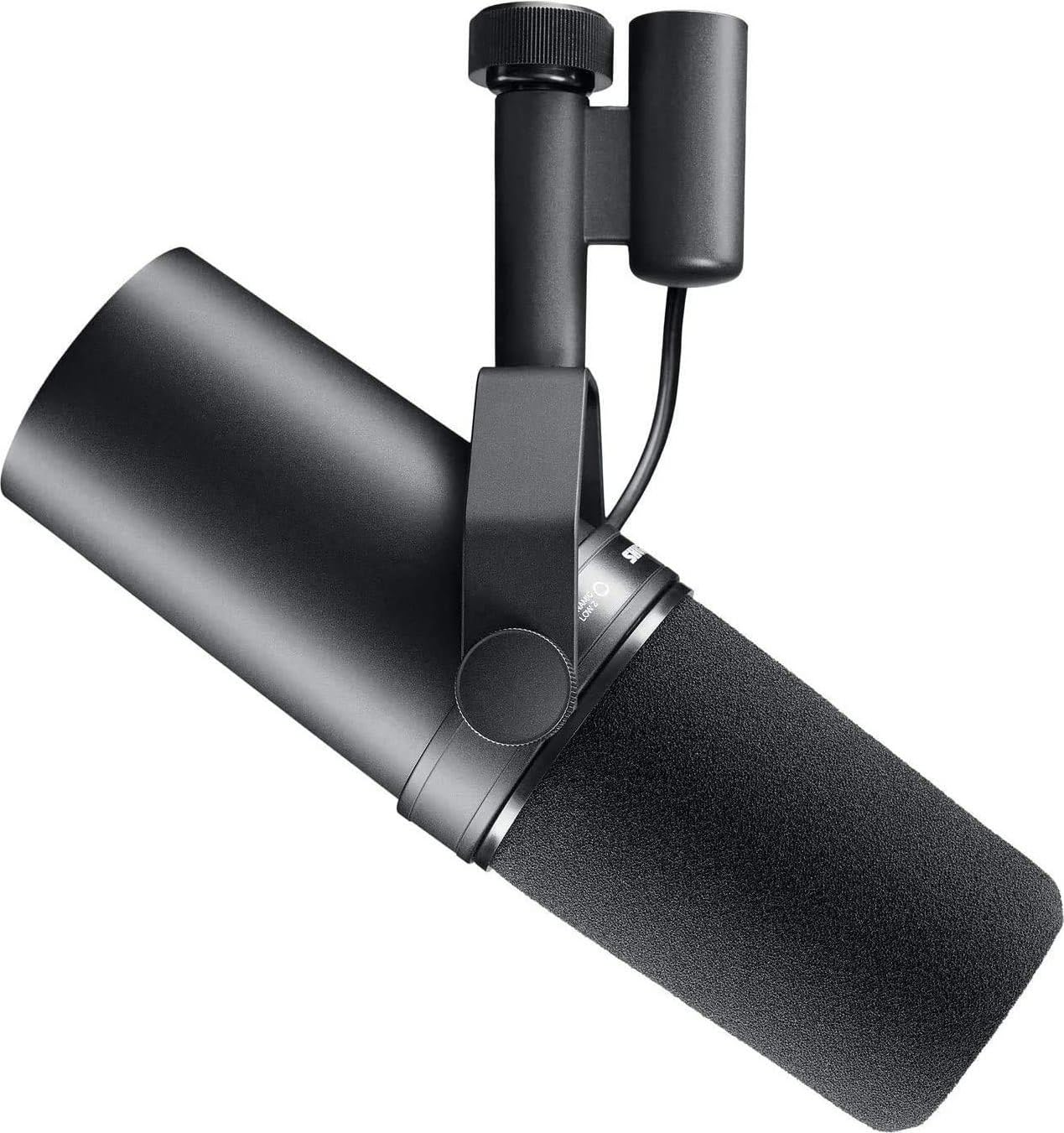
The SM7B is the microphone you hear on nearly every major podcast, and the reason is its legendary vocal character. Its dynamic cartridge delivers a warm, balanced tone that makes speech sound full and polished right from the start. A precise cardioid pickup pattern plus internal air suspension shock isolation means it ignores room noise, vibrations, and handling bumps, keeping your voice front and center in any recording environment.
The magnetic pull of this mic is its clarity — Buyers report it blocks out a fan running nearby., so you get that focused “radio host” sound even in a normal room. Built-in pop filtering and a detachable windscreen tame harsh ‘p’ and ‘b’ plosives, so you do not need extra accessories to sound clean. The rugged all-metal construction and advanced electromagnetic shielding prevent unwanted hum, making it a reliable workhorse in any studio.
The honest catch is gain. The SM7B requires 60dB+ of clean gain, which many audio interfaces cannot provide on their own, so buyers often pair it with a Cloudlifter booster. It is also heavy and carries a premium price, but the sound quality and durability win people over — Its warm, balanced tone has made it the go-to for countless broadcasts..
The vocal warmth
- Sound quality is the thing everyone raves about — owners praise its exceptional fidelity for speech and singing
- Works in live and studio settings with equal grace
- All-metal build that buyers describe as premium and long-lasting
The honest catch
- Needs 60dB+ clean gain, so a booster like a Cloudlifter is often required
- Heavy build at 851 g means you need a sturdy arm
- Premium price that some call expensive but worth it
Reach for this if: you want the gold-standard broadcast tone that powers podcasts and streams, and you have an interface that can drive it or a booster ready.
Look elsewhere if: you want a plug-and-play USB mic with no gain juggling — the SM7B demands a proper audio chain to shine.
2. RØDE PodMic Cardioid Dynamic Broadcast Microphone (White)
A solid metal workhorse that blocks out the fan two feet away
The PodMic proves you do not need to spend a fortune for professional voice reproduction. This dynamic cardioid microphone delivers a rich, warm, clear sound with a 9kHz presence boost that adds a pleasant “air” to your voice. Its internal shock mount reduces the sound of knocks and vibration, while the built-in pop filter tames those harsh ‘p’ and ‘b’ sounds for natural, clean voice capture.
The build quality is what wins buyers over instantly. Solid all-metal construction gives it a stout, reassuring weight of 937 g, and the integrated yoke mount with dual 3/8″ and 5/8″ threads lets you attach it to any stand or boom arm without needing adaptors. Owners mention it blocks out a fan running 2 ft away., making it a brilliant choice for noisy home offices.
The trade-off is that it is gain-hungry at -57dB, so it needs a clean preamp like a Focusrite to avoid hiss. It is also quite heavy, which can cause droop on a cheap boom arm — but with a decent arm, this is one of the best value dynamic mics you can buy.
The solid performer: build quality is the number one praise point — owners call it stout, well-constructed, and worth every dollar for the price.
The fit note: this is a true XLR mic needing an interface, so it is not for someone expecting to plug straight into a laptop.
Who it beats: any budget dynamic that fails to filter background noise — Owners consistently praise the PodMic’s ability to reject background noise..
Who should pass: if you do not own an audio interface, the XLR-only connection means you will need to buy one first.
3. FIFINE AmpliGame KS5 XLR/USB Gaming Microphone Bundle
A complete streaming kit with mixer, RGB, and XLR stability for beginners
This is the all-in-one answer for gamers and rookie streamers who want everything in one box. The FIFINE AmpliGame KS5 pairs a dynamic XLR microphone with a dedicated gaming audio mixer, so you get the stable, natural voice quality of XLR without buying separate gear. The mixer gives you individual mute control, headphone monitoring, and a volume fader to manage your audio channels quickly.
You get two ways to connect: plug the mic into the mixer with an XLR cable (a standard three-pin audio cable) for full control, or use the mic’s USB connection for simple plug-and-play setup with a mute button, gain knob, and real-time monitoring. The mixer’s 4 channels let you add more mics or instruments later, and its five RGB lighting effects (color-changing LEDs) let you match your desktop aesthetic.
Buyers love the value for money, calling it a perfect first setup that outperforms other budget mics. The honest note is that the function keys (RGB, mute, monitoring, volume knob) only work over USB, not XLR, and the plastic build is expected at this price. An occasional owner reports the mixer randomly shuts off during gaming, so it is worth keeping the warranty in mind.
What beginners get
- Value for money is the top praise with easy setup straight from the start
- Complete bundle with mic, mixer, XLR cable, and USB cables included
- Sound quality that owners say makes them come in clear
What to watch
- Mixer function keys are USB-only, not available via XLR
- Plastic build expected at this price point
- A few owners had the mixer reboot during sessions
Best suited for: a first-time streamer or gamer who wants a full kit with mixer control and RGB flair without a complicated setup.
Not ideal for: purists who need the mixer controls to work over XLR — the USB path is where the full feature set lives.
4. SENNHEISER Professional Profile USB Cardioid Condenser Microphone

A tiny USB condenser that sounds like a pro podcaster’s mic without the gear
If the word “setup” scares you, the Sennheiser Profile is your best friend. This is a plug-and-play USB microphone — one cable connection and you are recording, with no software, no interface, and no XLR cables to wrangle. It delivers a natural, warm sound that accentuates the body and presence of the human voice, making it ideal for podcasts, streams, and calls.
What makes it special is the control at your fingertips: a mute button, gain dial, mix control, and a built-in headphone jack for direct monitoring. The compact size is perfect for a boom arm, and the metal housing gives it a high-end feel. Customers note it performs as well as more expensive models and completely replaces bulkier USB mics.
The recurring note is that voice pickup is front-facing only, so it will not grab sound from the sides or rear — which is actually a feature for focused podcasting. The basic table stand is serviceable, but most owners recommend a boom arm to get it closer to your mouth for the best sound.
The plug-and-play star: quality and sound are the top praises, with owners noting it outperforms cheaper USB mics by a wide margin.
Reality check: it is a condenser mic, so it will pick up ambient noise — best used in a quiet room rather than a noisy one.
Grab this if: you want broadcast-quality tone with zero learning curve and a single USB-C connection to your PC or Mac.
skip it if: you record in a loud room or need XLR connectivity for a professional studio chain.
5. Blue Blackout Spark SL XLR Condenser Microphone

A transparent large-diaphragm condenser that adds harmonics to your voice
For those who want detail and clarity above all, the Blue Spark SL is a focused, transparent condenser microphone that excels at capturing the nuances of your voice. Its large-diaphragm cardioid capsule ensures accurate sound for recording and streaming, while the Class-A JFET electronics deliver studio-quality sound with rich harmonic audio. This is a mic that makes your voice sound crisp and professional.
The professional versatility comes from its controls: a 100Hz high-pass filter reduces rumble and room noise, and a -20dB pad helps prevent distortion from loud sources. It connects via XLR to your audio interface or mixer, and it requires 48V phantom power to operate. The included custom shock mount minimizes noise from desk vibrations, and the wooden storage box adds a premium feel to the package.
Owners describe the sound as warm and clear, with One owner calls it the best microphone they have ever used.. The honest caveat is that build quality and reliability get mixed feedback — some units arrive with issues, so check the warranty. It is also a condenser, meaning it thrives in quieter rooms where its sensitivity is an asset, not a liability.
The clarity king: sound quality is the standout praise, with owners noting amazing clarity and a pleasant color it adds to their voice.
The loyalty test: some reviewers point out units that do not work at all, so buy from a source with a solid return policy.
Perfect for: voiceover artists, singers, and podcasters who want a detailed, transparent sound and already own an XLR interface with phantom power.
Not for: noisy untreated rooms where a dynamic mic would serve you better.
6. SAMSON Q9U XLR/USB Dynamic Broadcast Microphone
A dual-connection dynamic that grows with you from USB beginner to XLR pro
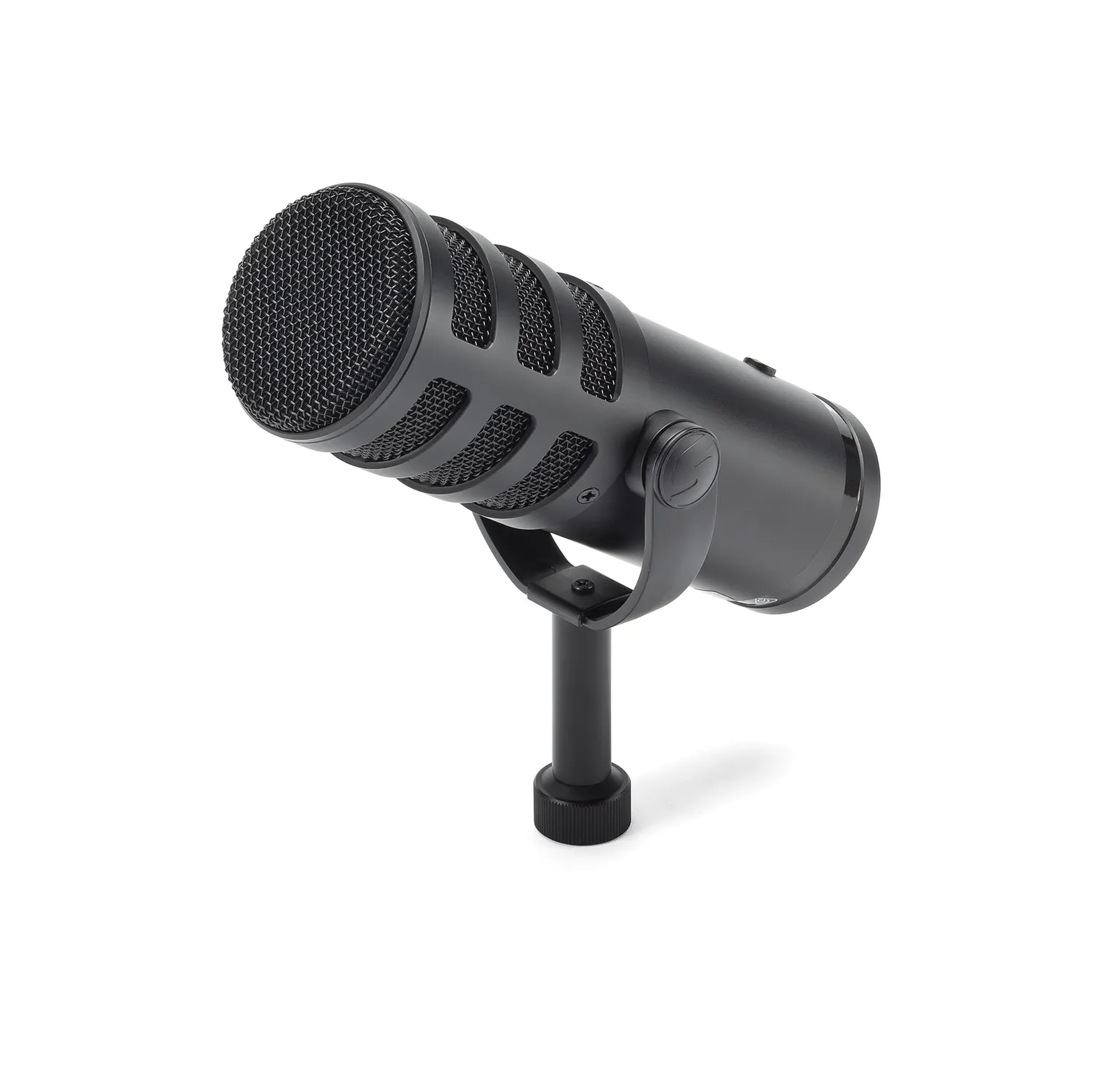
The Q9U is built for flexibility, offering both XLR analog output and a USB-C connection with stunning 24-bit/96kHz high-definition digital audio resolution. This means you can start with plug-and-play USB simplicity and later migrate to a professional XLR mixer without buying a new microphone. Its modern dynamic capsule with a neodymium magnet provides plenty of output to work with any mixer or interface without needing external gain devices.
You hear your voice instantly with zero-latency headphone monitoring (no delay between speaking and hearing), and an onboard mute switch silences the mic to both outputs at once. The cardioid polar pattern (picks up sound mainly from the front) keeps your voice front and center while rejecting off-axis noise, and an internal pneumatic shock mount plus dual-layer windscreen reduce vibrations and plosives (popping sounds on ‘p’ and ‘b’).
Buyers praise it as a great value that beats more expensive mics, with One owner has used it daily for two years straight.. The honest fit note is that sound quality gets mixed feedback — some shoppers say it becoming whisper quiet, and durability is a concern with multiple reports of failure within a month. It also has no stand or XLR cable included, so factor those into your setup.
The flexible setup
- USB-C and XLR connections make it ideal for any rig, beginner to pro
- Zero-latency headphone monitoring and onboard mute switch
- Solid metal build that owners say rivals mics at twice the price
What to know
- Durability complaints — some units fail within a month, so check the warranty
- Sound level can be quiet, needing gain or software tweaks
- No stand or XLR cable included in the box
Choose this if: you want one mic that works over USB today and XLR tomorrow, with professional monitoring built in.
Think twice if: you need a guaranteed long-term workhorse — the durability reports make a warranty plan worth considering.
7. Audio-Technica AT2020USB-X Cardioid Condenser USB Microphone

A studio-grade condenser that brings high-resolution USB sound to your desk
The AT2020USB-X brings Audio-Technica’s legendary condenser quality to a simple USB connection. It features a high-resolution AD converter with 24-Bit/96 kHz sampling rate for extremely clear, natural sound reproduction, making it ideal for podcasting, home studio recording, and voiceover work. The built-in headphone jack lets you monitor your voice directly from the microphone with zero latency.
The directional cardioid pickup (front-focused) minimizes background noise, so your voice stays clear. A soft-touch capacitive mute button on the body lets you mute silently, and the two-state LED ring lights blue when powered and red when muted—a simple visual that matters during live streams. The included custom desk stand and USB-C cable with a USB-A adapter mean you are ready to record from the start.
Buyers report the sound quality is excellent and setup is easy, noting it works smoothly with Mac systems and handles loud sources like electric guitar without distortion. The honest catch is sensitivity: it picks up ambient noise like a furnace or PC fan in less-than-quiet rooms, so it shines in treated spaces. Reliability gets mixed notes, with some owners reporting failure within a year.
The clean capture: sound quality is the top praise, with owners noting excellent voice pickup and simple setup.
The room factor: this condenser is very sensitive, so you need a quiet room and maybe a shock mount to protect it.
Best for: musicians and podcasters who want a high-resolution USB condenser with a proven brand name and easy monitoring.
Not ideal for: noisy open rooms or anyone who wants a mic that ignores mechanical noise — a dynamic is the safer bet there.
8. Shure MV7+ USB-C & XLR Podcast Dynamic Mic with Stand

Shure’s smart dynamic mic that auto-levels your voice and wipes out room echo
The MV7+ takes Shure’s dynamic sound (a type of mic that handles loud sources well) and adds modern smart features. It is OBS-certified (works with Open Broadcaster Software for streaming) and includes Voice Isolation Technology plus built-in DSP (digital signal processing) for clear sound. The DSP’s real-time denoiser filters out ambient sound, fan noise, and room echo, so your vocals stay sharp without a treated studio.
The standout feature is Auto Level Mode, which adjusts gain based on your distance and voice volume, so you get smooth, balanced audio with no manual tweaking. A virtual pop filter eliminates harsh plosives, and the LED touch panel lets you customize the mic with 16.8 million hues, monitor levels, or enable pulse effects — tap anywhere to mute instantly during sessions. Flexible connectivity via USB-C or XLR means it fits any setup from beginner to pro.
Owners describe the sound as professional and clean, noting minimal room noise pickup and a rock-solid stand. The MOTIV Mix app lets you fine-tune your sound and add studio-quality reverb. The honest trade-off is the premium price and heavier weight, but buyers consistently say the versatility and smart features justify it.
The smart features
- Quality and sound are the top praises — voices sound clear and professional
- Auto Level Mode and digital pop filter mean no fiddling with gain
- USB-C and XLR connectivity plus MOTIV app control
The premium cost
- Heavier and pricier than many USB mics
- Requires USB-C or XLR, so check your ports
- Advanced features are best used with the MOTIV app
Reach for this if: you want Shure’s broadcast voice with smart automation, LED flair, and the flexibility of USB-C and XLR in one package.
Pass if: your budget is tight or you want a purely analog XLR experience — the smart DSP here is the main draw.
9. Electro-Voice RE20 Dynamic Broadcast Announcer Microphone

The classic FM radio voice that has been an industry standard since 1968
The RE20 is not just a microphone — it is a piece of broadcast history. This is the classic sound of FM radio voices, smooth, natural, and controlled, and it has been the go-to for radio announcers and podcasters for decades. Its Variable-D technology minimizes the proximity effect, meaning your voice stays consistent whether you are close to the mic or leaning back, which is a huge advantage for dynamic speakers.
The voice-tailored frequency response and true cardioid pattern with no coloration at 180-degrees off-axis give you that clean, controlled broadcast tone without the boominess of other dynamics. It effectively rejects background noise, making it fantastic for untreated rooms. The rugged metal construction is built to last — A 26-year radio veteran reports their station’s 1968 RE20 still works flawlessly..
Buyers consistently praise its rich sound and excellent build quality, calling it worth the cost for quality over advertising. The honest notes: it needs a quality XLR cable to avoid noise, and the built-in pop filter still lets some plosives through if you are right on top of it—angle it slightly off-axis to be safe. It is a premium-priced mic, but for serious broadcasters, it is an investment that lasts a lifetime.
The broadcast sound
- Quality is the top praise — a rich, natural tone that owners call class-leading for voice
- Variable-D tech keeps your voice consistent at any distance
- Durability that spans decades, earning it legendary status
The premium ask
- High price that is an investment rather than an impulse buy
- Requires a quality XLR cable and interface to sound its best
- Built-in pop filter benefits from off-axis placement
Choose this if: you are a serious podcaster, voiceover artist, or broadcaster who wants the definitive radio sound and gear that outlives your career.
pass on it if: you are a beginner who wants USB plug-and-play — the RE20 demands an XLR interface and a real commitment.
Understanding the Specs
Dynamic vs Condenser Capsules
A dynamic microphone uses a moving coil to capture sound and naturally rejects background noise, making it ideal for loud or untreated rooms. A condenser microphone is more sensitive and captures finer detail, but it picks up ambient sound too — best for quiet, treated recording spaces. For broadcasting and podcasting in real homes, dynamic mics are usually the safer choice.
Audio Noise and Gain
Audible noise, measured in decibels, tells you how much self-noise the mic adds to your signal — lower is cleaner. Gain-hungry mics like the classic Shure SM7B have low sensitivity and need a lot of clean amplification (often 60dB+) to sound good without hiss. If your interface cannot provide that, you may need a booster like a Cloudlifter.
FAQ
What is the difference between XLR and USB microphones?
Do I need phantom power for a broadcast microphone?
Why does my microphone sound quiet and hissy?
Will a broadcast mic pick up my keyboard or mouse clicks?
Can I use a USB mic without an audio interface?
What is the cardioid polar pattern and why does it matter?
Is a heavy microphone a problem for a boom arm?
What does a pop filter do and do I need one?
Final Thoughts: The Verdict
For the majority of shoppers, the broadcast microphone winner is the Shure SM7B because it delivers the industry-standard warm vocal tone that powers pro podcasts — just budget for the clean gain it needs. If you want a smart, automated mic with USB and XLR flexibility plus noise cancelling, grab the Shure MV7+. And for the sharpest radio-legacy sound that lasts decades, the Electro-Voice RE20 is the one to reach for.
How We Picked
We do not accept paid placement. Every pick is matched to a real buyer and a real use-case; we do not hands-on test units.
Sources & Methodology
Specifications: manufacturer listings and product documentation. Review insights: verified customer reviews, as of August 2026. Pricing: not shown on this page (it changes often); check the current price via the retailer link.
As an Amazon Associate, Gadgets Feed earns from qualifying purchases. This does not affect which products we feature.