
Our readers keep the lights on and my morning glass full of iced black tea. As an Amazon Associate, I earn from qualifying purchases.
Specs are compiled from manufacturer listings and verified buyer reviews and can change over time — please confirm the key details on the product page before buying.
Watching the big game on a 75-inch screen is glorious until the puck blurs, the ball ghosts, or the sun turns your screen into a mirror. This guide sorts through the top large-screen TVs built for high-refresh sports viewing — covering motion handling, brightness for bright rooms, and anti-glare performance — so you can pick the model that keeps the action crisp from the first whistle to the final buzzer. A quick note up front: this list uses flexible matching, so a couple of picks are the 77-inch versions of the same panel family that sells in 75 inches — the closest available size that delivers the identical viewing experience.
I’m Min — the founder and writer behind Gadgets Feed. This guide is built by comparing the manufacturers’ published specifications and the patterns across verified customer reviews, so you get each pick’s real strengths and trade-offs instead of marketing spin.
Whether you watch Sunday football, playoff hockey, or nightly highlights, finding the right 75 Inch TV For Sports Watching means balancing refresh rate, brightness, and room lighting. These picks cut through the jargon to the specs that matter most.
Our Picks at a Glance

How To Choose The Best 75 Inch TV For Sports Watching
Sports on a giant screen put every panel weakness on display. Fast breaks, slap shots, and end-zone passes push a TV’s motion handling to its limit, and a bright living room tests its glare resistance. Before you commit, understand the three specs that decide how good the game actually looks.
Refresh rate: the motion-smoothness engine
Refresh rate is how many times per second the screen redraws the image. A 120Hz panel (120 redraws a second) is the modern baseline for smooth sports, while 144Hz and 165Hz panels push motion even further for near-tear-free action on fast camera pans. If the puck or ball leaves a ghost trail, a higher refresh rate is the fix — it is the single most important number for a sports-first buyer.
Brightness and anti-glare: the room-lighting reality
Nits measure brightness, and a brighter panel cuts through daytime sun. Just as important is the anti-glare coating, which stops window and lamp reflections from washing out the picture. If your TV sits across from a window or you keep a light on during games, look for a panel advertising glare-free treatment alongside high peak brightness — otherwise you will watch a reflection instead of the match.
Backlight tech: Mini-LED versus OLED
Mini-LED uses thousands of tiny LEDs in local dimming zones to control brightness in specific screen areas, giving deep blacks with bright highlights. It also gets very bright, which helps in sunny rooms. OLED lights each pixel individually, offering the best perfect black and contrast in dark rooms, but it tends to be less brilliant in direct daylight. Choose Mini-LED for a bright living room; choose OLED if you watch mostly in a darker space and want the deepest contrast.
Quick Comparison
| Model | Best For | Refresh Rate | Backlight Tech | Peak Brightness | Amazon |
|---|---|---|---|---|---|
| Samsung QN90F Neo QLED★ Best Overall | Bright rooms + overall sports | 165Hz | Mini-LED | — | Amazon |
| TCL T7 (75T7)Budget Champion | Budget QLED value | 144Hz | QLED | — | Amazon |
| Hisense U6 ProBass Addict Pick | Budget + built-in bass | 144Hz | Mini-LED | — | Amazon |
| LG QNED85A Evo | Mid-range color accuracy | 144Hz VRR | Mini-LED | — | Amazon |
| Toshiba Z670 | Mid-range + bass woofer | 144Hz | Mini-LED | — | Amazon |
| Roku Pro Series | Simplest interface | 120Hz | Mini-LED | — | Amazon |
| Hisense U8 | Brightness + gaming sports | 165Hz | Mini-LED | 5000 nits | Amazon |
| TCL QM8K | Premium brightness/sound | 144Hz | QD-Mini LED | — | Amazon |
| Amazon Ember Mini-LED | Alexa-first smart home | 144Hz | Mini-LED | 1400 nits | Amazon |
| Sony BRAVIA 7 | Processor + color accuracy | 120Hz | Mini-LED | — | Amazon |
| LG OLED C5 (77″) | Dark-room contrast | 144Hz | OLED | — | Amazon |
| Samsung S90F (77″) | Dark-room + bright mix | 144Hz | OLED | — | Amazon |
| Sony BRAVIA 5 | Upscaling + PS5 | 120Hz | Mini-LED | — | Amazon |
In-Depth Reviews
1. Samsung 75-Inch Class Neo QLED 4K QN90F Series (75QN90F)
Our pick — 4.5★ from 350+ verified ratings; the strongest balance of quality and price.
The sunny-living-room king that keeps the puck glued to the ice.
The 165Hz VRR refresh rate tops rivals’ 144Hz panels, keeping fast camera pans tear-free. That means a snap shot from the blue line stays crisp and the camera pan across the rink stays tear-free, with no motion blur to pull your eyes off the action. The NQ4 AI Gen2 processor runs 128 neural networks to smooth fast motion and upscale lower-resolution feeds to 4K.
The other big win is glare. The Glare Free finish is the thing owners come back to again and again — buyers report “excellent anti-glare” that keeps the picture clean “even with sun streaming through your windows.” Quality is what wins people over here, with the most-shared praise split between overall build and picture quality. Brightness, color, and setup all draw heavy positive mentions too. Built-in sound earns “great built-in sound (no soundbar needed)” praise, though a soundbar still enhances the experience.
The trade-offs are small but real. The single solar/USB-C remote is simple and rechargeable, but some owners find it limited: one complaint calls it “small, hard-to-use.” The stand base also drew a wobble note from an owner, so a wall mount or a wide media console is worth planning. And its AI upscaling, while impressive on 1080p, can look pixelated on very old non-HD footage — you can disable the AI if you prefer a raw image. This is the balanced pick for anyone who watches games in a bright room and wants elite motion plus strong sound from one panel.
What wins match day
- 165Hz VRR refresh leads the list for blur-free fast sports
- Glare Free coating keeps daytime viewing reflection-free
- Mini-LED + AI processor delivers strong brightness and 4K upscaling
The little frictions
- Single remote feels small and limited to some owners
- Stand base can wobble; a mount or wide stand is safer
- Very old non-HD content upscales with some pixelation
Reach for this if: you watch afternoon games in a sunlit room and want elite motion plus solid built-in sound.
Look elsewhere if: your main content is decades-old low-resolution footage and you can’t tolerate any upscaling softness.
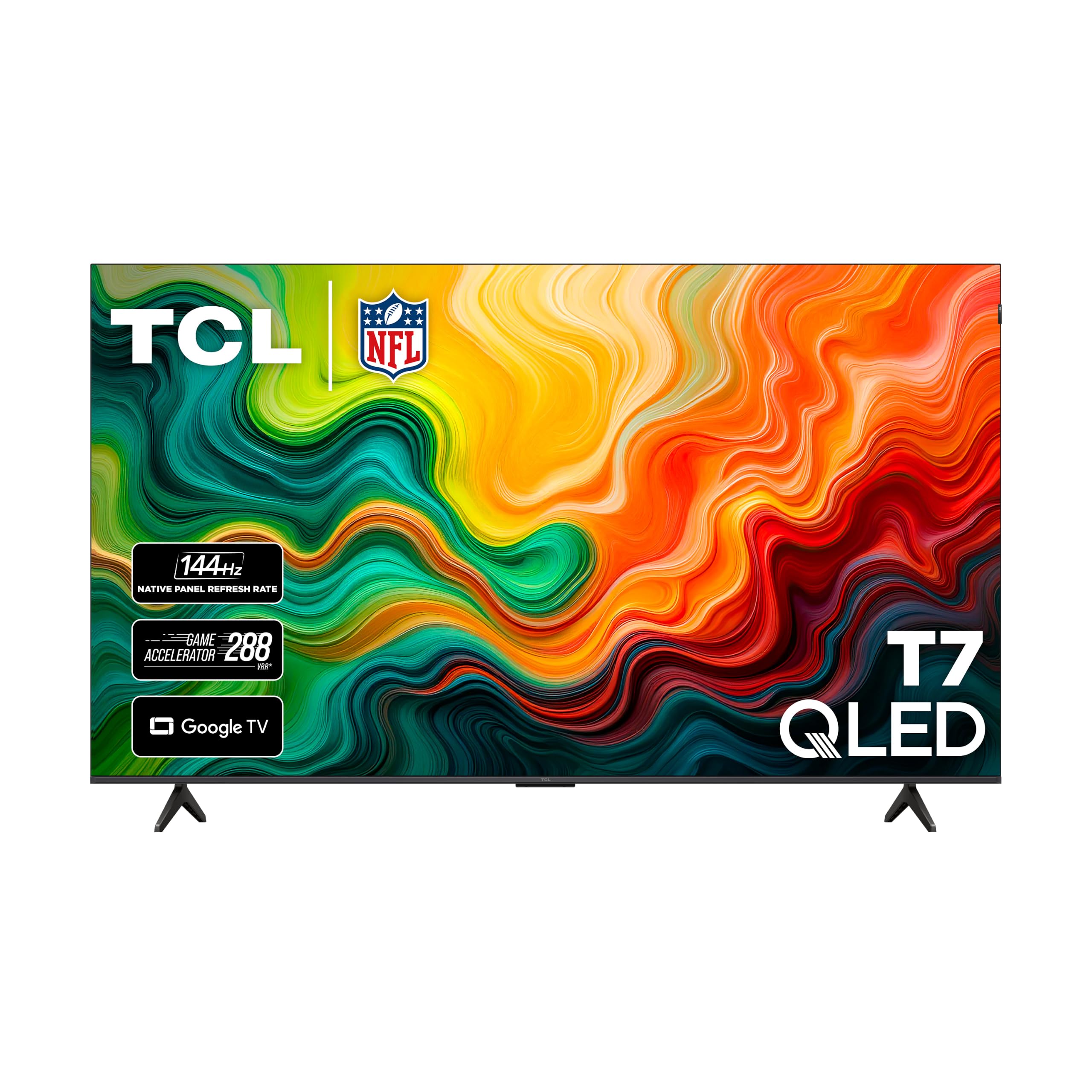
2. TCL 75″ T7 4K QLED Google TV (75T7)
The value pick that makes every channel look like a premium upgrade.
At a budget-friendly mid-range price, this TCL packs a 144Hz panel — the same smooth-motion territory as panels costing far more — plus QLED quantum-dot color covering nearly the entire DCI-P3 color space, which is the professional color range used in film and broadcast. The result is a picture that owners repeatedly call “stunning” and “crisp and vibrant,” with one buyer noticing that PS5 gaming “looks upgraded by a decade.” For sports, the Motion Rate 480 with MEMC frame insertion smooths the blur on fast camera work while staying affordable.
Quality is the most-praised trait here by a wide margin, followed closely by picture quality — owners see it as punching above its price class, with one noting it “looks more premium than its price suggests.” The 4 HDMI inputs, one with eARC, mean a cable box, soundbar, and game console all plug in without an adapter. Settings are easy too: owners mention setup is quick and the remote “works instantly” from the start. Cross-shopping it against the Hisense U6 Pro below, this one leans on brighter QLED color while the Hisense adds a built-in subwoofer.
The honest catch: glare. Customers note “minor glare in bright rooms,” so this isn’t the pick for a window-facing wall. The Google TV interface also “pushes unwanted content” on the home screen, and sound “varies by channel” per one owner. Those are small frictions for a panel this capable at this price. For a first big-screen sports upgrade, this is the smart-money move.
Why it overdelivers
- 144Hz refresh delivers flagship-level motion at a budget price
- QLED color spans nearly the full DCI-P3 professional color range
- 4 HDMI inputs including one eARC for console + soundbar
Room to improve
- Minor glare in bright rooms limits window-adjacent setups
- Google TV home screen pushes unwanted content
- Sound quality varies by channel
Best for: the first-time big-screen buyer who wants 144Hz smoothness and rich color without the premium price tag.
Think twice if: your TV faces a bright window all afternoon, since the glare isn’t fully tamed.
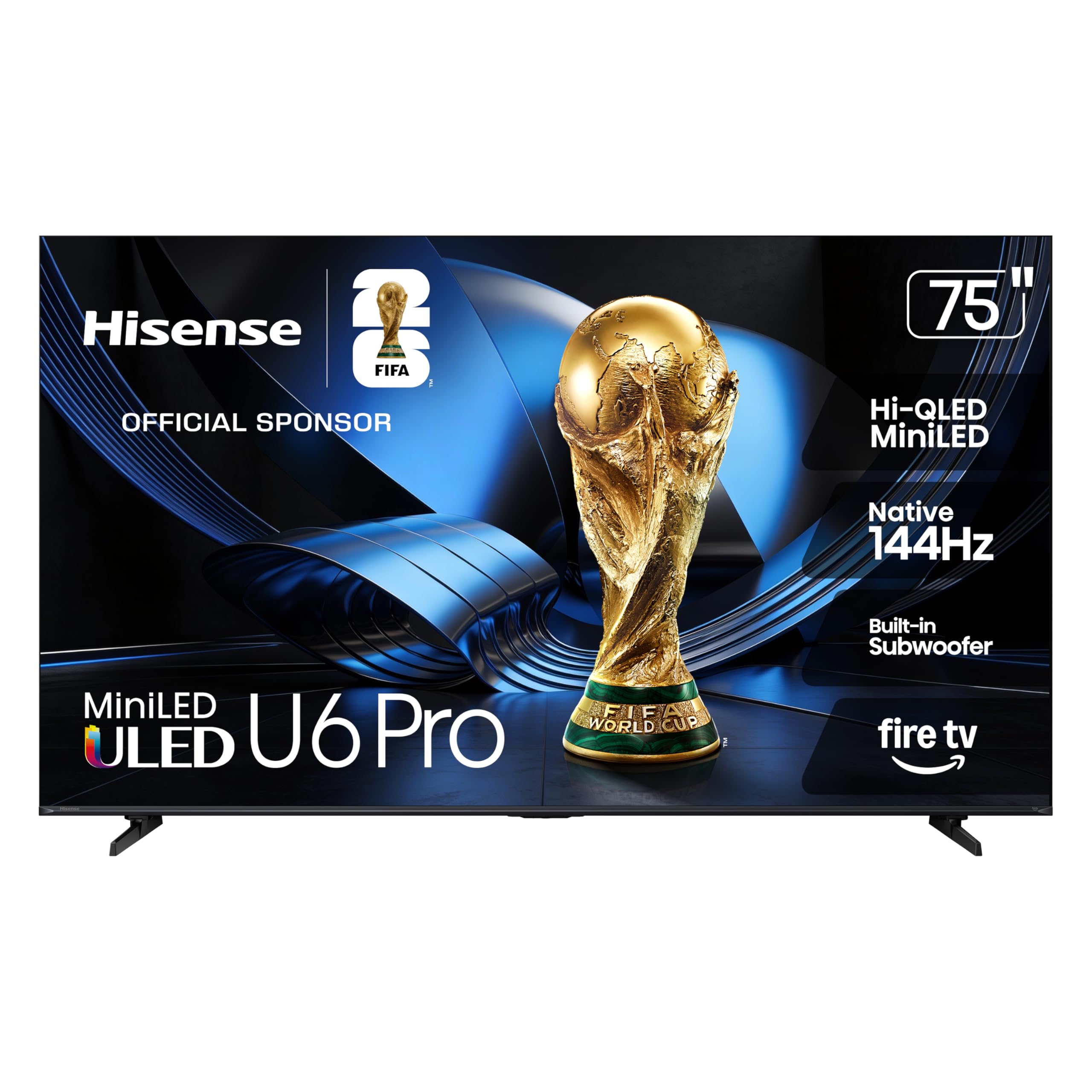
3. Hisense 75″ U6 Pro Series Mini-LED ULED (75U6SF Pro)
Stadium-level bass and silky motion from a panel that undercuts the big names.
This is the sports TV that turns your living room into the lower bowl — the built-in subwoofer delivers deep bass that one buyer says is “powerful,” pulling you into the rumble of a crowd roar. It pairs that audio punch with a native 144Hz refresh rate, keeping fast breaks and rapid camera shots “crisp and fluid” so you catch every play. The Hi-QLED Mini-LED backlight uses hundreds of precise light zones, which is why owners praise its contrast and color right from the start — one calls it “OLED black” with excellent detail.
Value is the story buyers anchor on most, with quality and picture quality close behind in the mentions. The anti-reflection, glare-free screen holds up “near windows,” and the Fire TV interface gets called “snappy” and “simple to navigate.” It’s also IMAX Enhanced certified, so movies and big-match broadcasts carry a cinema-grade signature. Against the TCL T7 above, this pick trades a bit of raw QLED brightness for a built-in subwoofer and IMAX certification at a similar price tier.
The trade-offs: the viewing angle is narrow, so off-center seats see a weaker picture — one owner notes it “needs angling.” Upscaling of very low-resolution content (480p-720p) gets “fuzzy,” and the included remote feels “cheap” to some. Owners also say it “needs custom settings” to open up optimal contrast and color, so budget a few minutes of menu tweaking. For a bright, bass-heavy game room, this is a genuine steal.
Game-day strengths
- Built-in subwoofer delivers deep bass without an external soundbar
- Native 144Hz keeps fast sports motion crisp and fluid
- Glare-free Mini-LED screen holds up near windows
Know before you buy
- Narrow viewing angle means the picture weakens off-center
- Low-res content upscales with some fuzziness
- Best contrast and color need manual settings tweaks
Grab it for: a game room where you want big bass and smooth motion without adding a soundbar to the cart.
Pass if: your seating is wide and off to the sides, since the narrow viewing angle doesn’t suit spread-out couches.
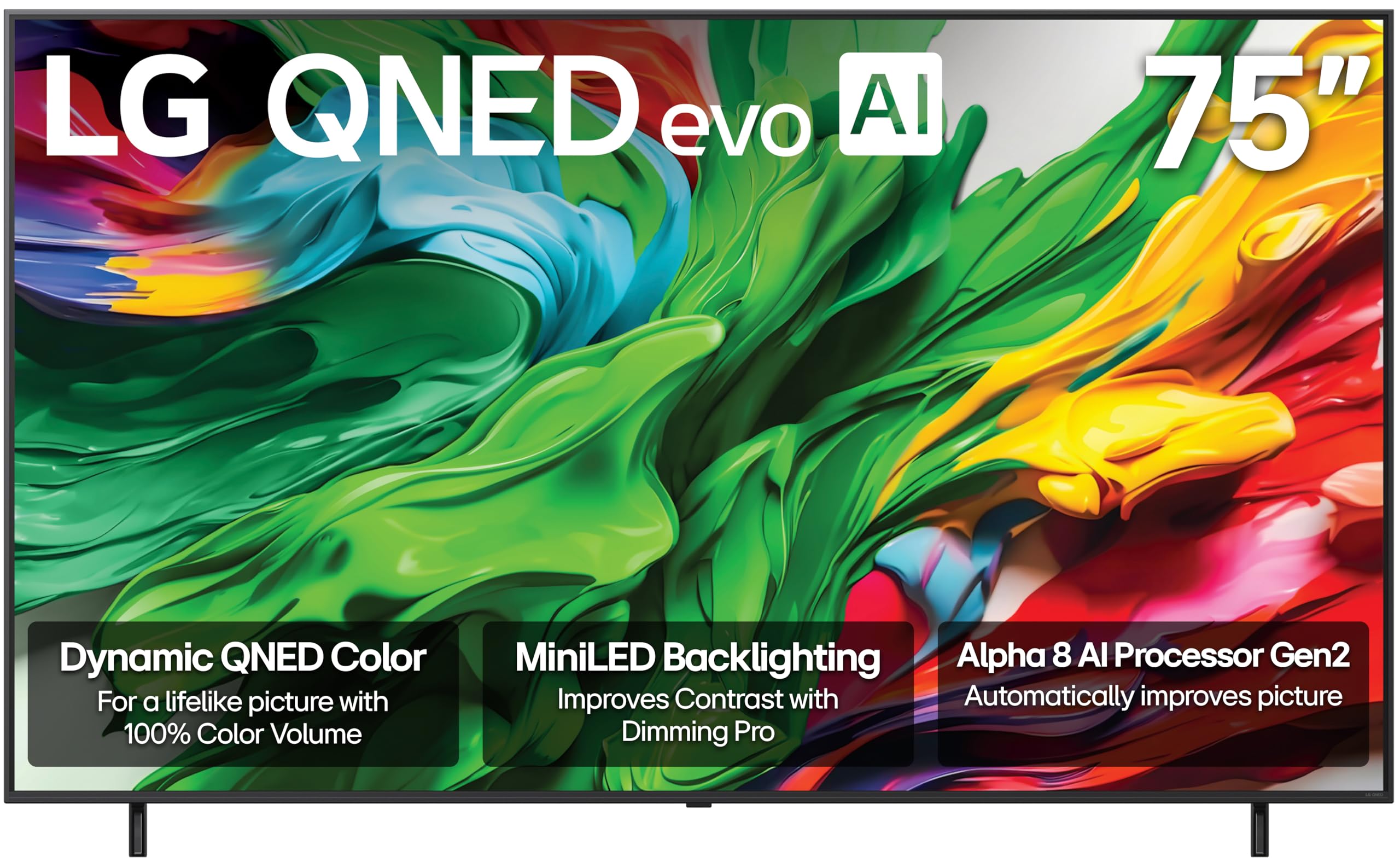
4. LG 75-Inch Class QNED Evo AI QNED85A Series (75QNED85AUA)
The mid-range panel with a native 120Hz heart and a 144Hz gaming overdrive.
LG’s QNED85A runs a native 120Hz refresh rate — the baseline for smooth sports — and pushes to a super-fast 144Hz VRR in game mode, so playoff hockey and competitive gaming both stay crisp. Its defining spec is 100% Color Volume from the Dynamic QNED Color system, which means the color range holds even when scenes get very bright or very dark, not just in a perfect mid-range. The Alpha 8 AI Processor Gen2 detects what you’re watching and automatically tunes picture and sound to it, which is exactly what you want when you flip from a dim thriller to a sunlit stadium.
Owners consistently call the picture “wonderful” and “vivid,” and quality plus picture quality lead the most-mentioned traits. Setup is genuinely easy — “assembly/setup” gets frequent praise, and streaming apps connect without fuss. It also supports Filmmaker Mode so you can watch pre-game documentaries and classic matches in the director’s original colors and frame rates. Compared to the Samsung QN90F at the top, this LG trades the Samsung’s market-leading 165Hz for a still-smooth 144Hz VRR while matching its Mini-LED contrast control.
The known frictions are the remote and the speakers. One owner calls the remote “irritating” with minimal buttons — no dedicated exit or mute — and the integrated speakers get called “muffled” with a strong recommendation to add a soundbar. Energy use is a modest 264 kilowatt hours per year, and the adjustable-width stand fits varied media consoles. For a balanced mid-range buy where color accuracy matters, this is a strong candidate.
What shines
- 100% Color Volume keeps color accurate in bright and dark scenes
- 144Hz VRR game mode handles sports and console gaming smoothly
- Easy assembly with an adjustable-width stand
The compromises
- Integrated speakers sound muffled; a soundbar is strongly advised
- Minimal-button remote lacks dedicated exit and mute keys
Choose it for: a home theater where color accuracy across brightness levels matters more than peak refresh speed.
skip it if: you refuse to add a soundbar — the built-in audio won’t satisfy a critical ear.
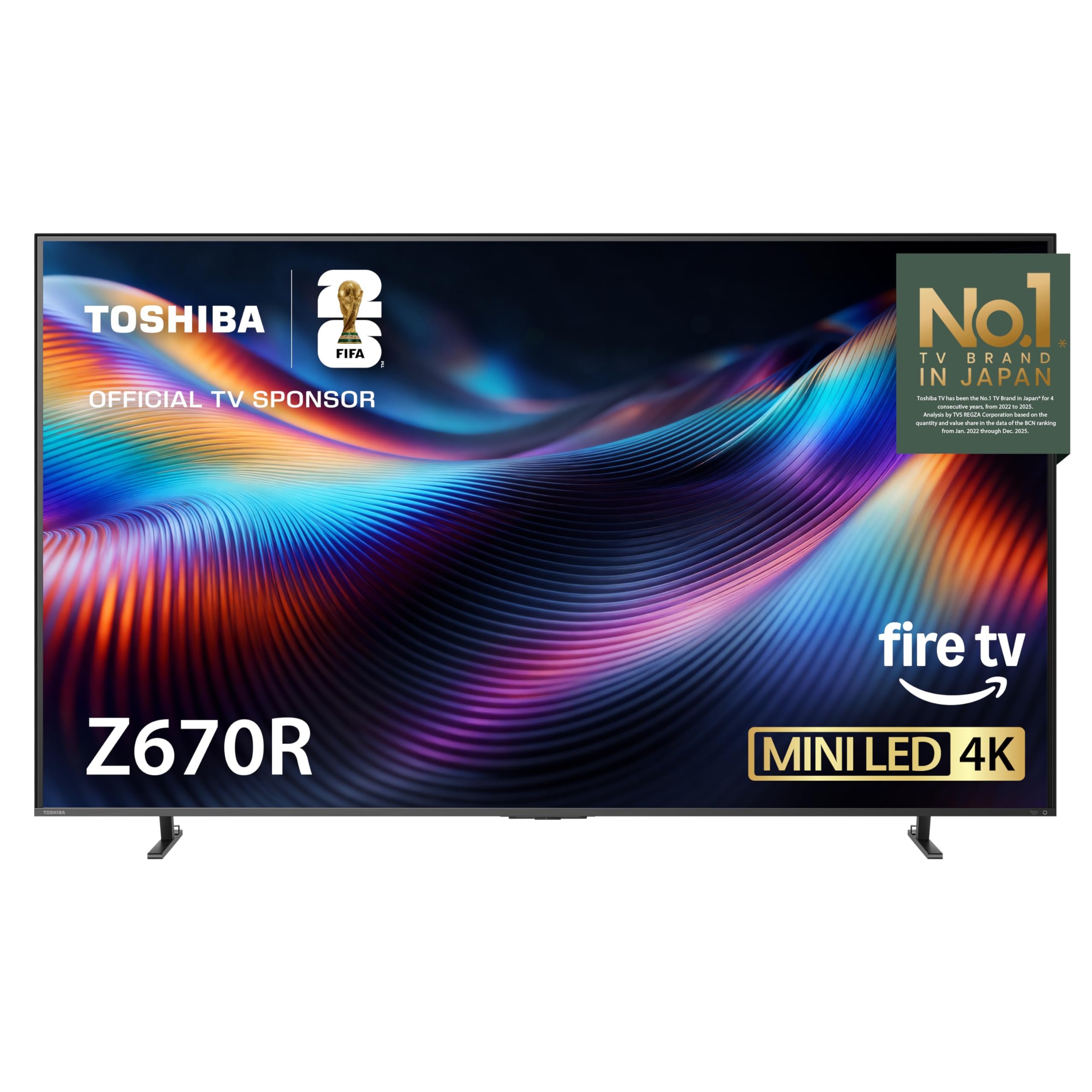
5. Toshiba 75″ Z670 Series Mini-LED (75Z670R)
A bass-shaking panel tuned by Toshiba engineers for blur-free matches.
The headline here is the REGZA Power Audio Pro with its Bass Woofer — a built-in system that “shakes the room” with resonant bass while dual clear direct speakers keep commentator vocals crisp. That audio muscle pairs with a native 144Hz refresh rate plus AMD FreeSync Premium, VRR 144Hz, and ALLM, so next-gen console sports and PC gaming both run tear-free. The REGZA Engine ZRi Gen3, tuned by Toshiba engineers, tune clarity, contrast, and audio scene by scene, with buyers praising “stunning” picture and smooth 144Hz motion.
Picture quality leads the owner praise here, edging out overall quality, and value for money draws strong mentions — buyers see Mini-LED backlighting plus QLED color as a premium combo. The AI Light Sensor Pro auto-adjusts brightness to match room lighting, reducing eye strain. Setup is easy, and the designs stays minimal and clean, “designed in Japan” as the marketing puts it. Stacked against the LG QNED85A, this Toshiba brings a built-in bass woofer but runs the same Fire TV platform rather than LG’s webOS.
Where it stumbles is the software layer. One owner returned it because the Fire OS felt “cluttered” with “intrusive promotions,” and another calls the audio “average” with a soundbar recommended despite the woofer. Owners upgrading from older Toshiba models report “better dark scenes” and “smoother motion,” so the panel itself is a clear step forward. For a sports-first buyer who values deep sound and smooth motion, this is a very solid mid-range call.
Match-day edge
- Built-in REGZA Bass Woofer shakes the room with deep bass
- Native 144Hz plus FreeSync Premium for tear-free gaming and sports
- AI Light Sensor Pro reduces eye strain by matching room light
Watch for
- Fire OS home screen feels cluttered with promotions
- Some owners still recommend a soundbar despite the woofer
Reach for this if: you want deep built-in bass and blur-free motion without a separate sound system.
Look elsewhere if: a clean, minimal smart-TV interface matters more to you than the woofer.
6. Roku 75-Inch Pro Series Smart TV
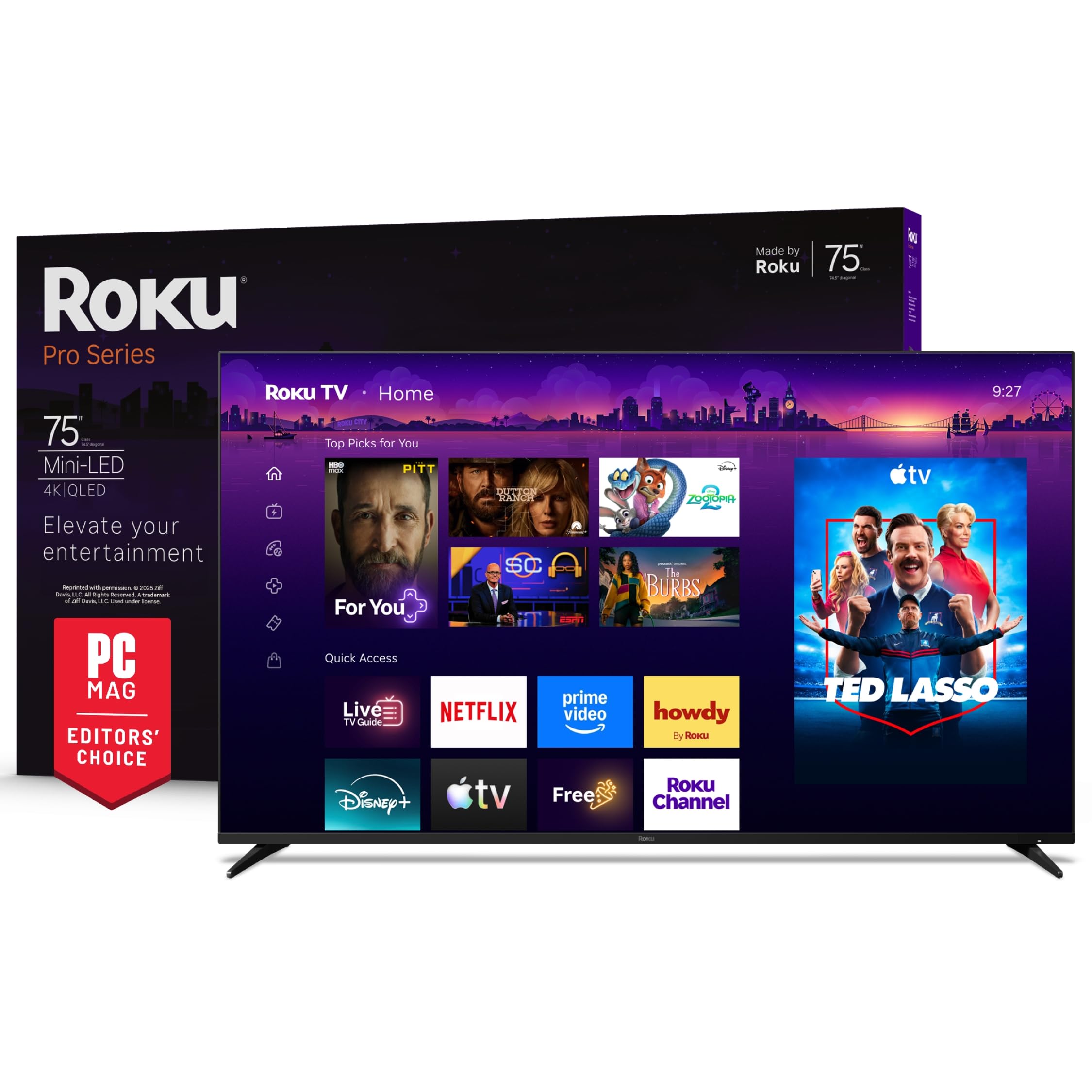
The 120Hz panel that disappears into the wall and never hides the remote.
Roku builds this Pro Series around speed and simplicity, and its 120Hz refresh rate is “perfect for gaming and watching live sports” per the maker — smooth enough for the vast majority of sports broadcasts without the cost of a 144Hz panel. What truly separates it is the operating system: Roku’s interface is famously uncluttered, and owners call it “user-friendly” and “top-tier” for ease of use. The custom mount sits the TV flat against the wall, and the rechargeable remote has backlit buttons plus a remote-finder button on the TV itself that leads you to it when it vanishes between couch cushions.
Owners anchor their praise on overall quality and picture quality, with one noting near-OLED black levels from the Mini-LED backlight. The Roku Soundstage Audio with side-firing speakers is the surprise hit — reviewers point out the “audio performance” is so good it “eliminates the need for a sound bar.” Gaming is covered with auto game mode, Freesync Premium Pro, ALLM, and VRR. This is also a smart choice for a media room: the Backdrops feature turns the TV into a digital art gallery when it’s off, which several owners love.
The trade-offs are minor and niche. One owner notes the Soap Opera Effect — that over-smooth, video-like look — takes some adjustment in settings. Day-one local dimming halo issues self-resolved for one buyer without action. And the 120Hz ceiling means it won’t match 144Hz panels for the most extreme fast-motion scenes, though for broadcast sports you’ll barely notice. For a bright, simple, user-friendly setup, this is a quiet gem.
Why it wins fans
- Roku interface is the simplest, most user-friendly smart TV platform
- Side-firing speakers deliver room-filling sound without a soundbar
- Rechargeable remote with backlit buttons and a locator feature
Small notes
- 120Hz ceiling trails 144Hz panels for extreme fast motion
- Soap Opera Effect needs a settings adjustment for some
Best for: a household that wants plug-and-play simplicity, great built-in sound, and a TV that mounts flush and looks like art when off.
Think twice if: you’re a competitive gamer chasing the very highest refresh rates, where 144Hz panels hold the edge.
7. Hisense 75″ U8 Series ULED Mini-LED (75U8QG)
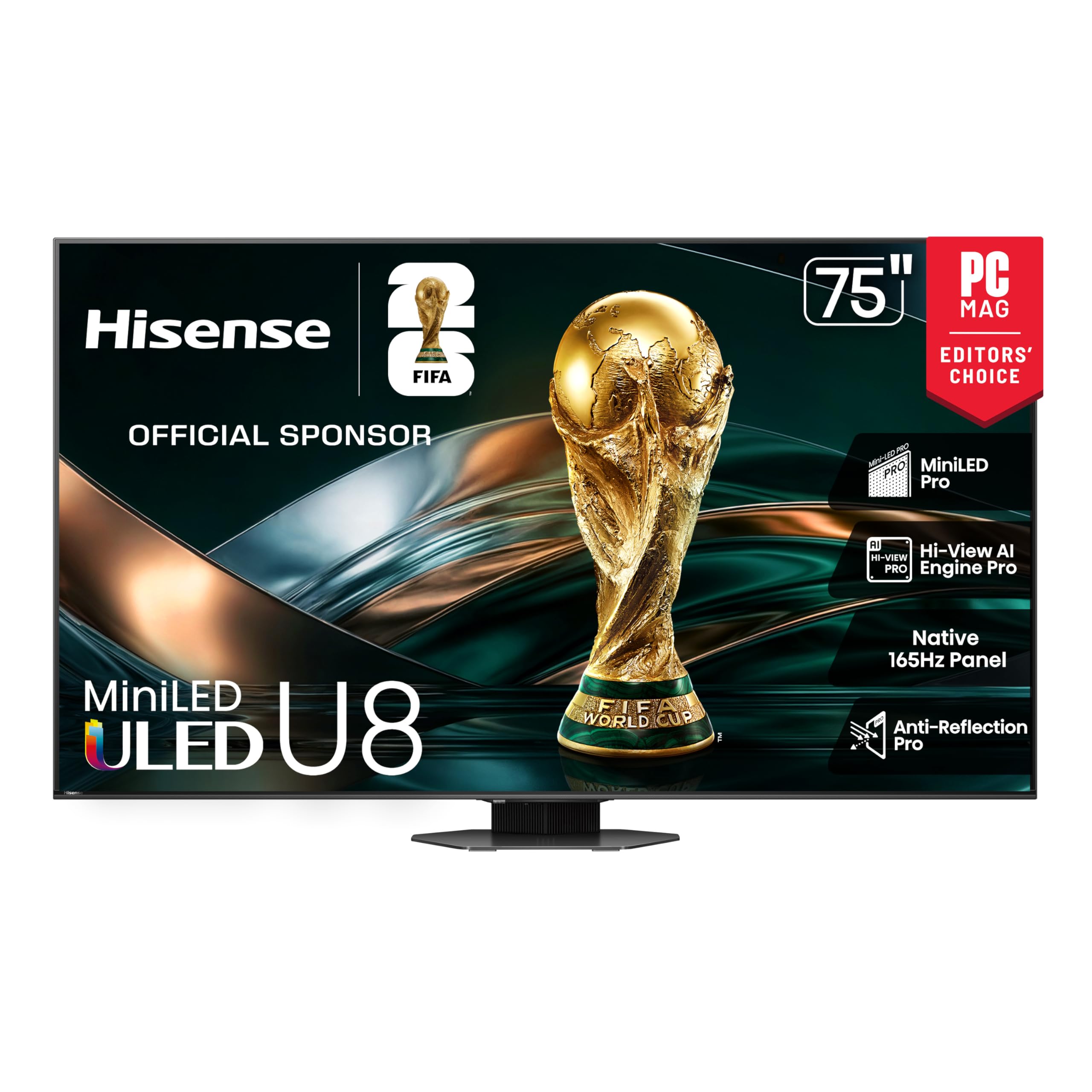
The 5000-nit colossus that turns shadow detail into a spectator sport.
This is the brightest panel on this list by a wide margin — up to 5000 nits of peak brightness with up to 5600 local dimming zones, numbers that crush the 1400-nit Ember below and make daytime football look like it’s lit by stadium floodlights. The Mini-LED Pro backlight with Full Array Local Dimming produces “ink-black blacks” alongside those brilliant highlights while “virtually eliminating halos,” so you see every shadow cast by the players and the ball. Its native 165Hz panel with Variable Refresh Rate from 48Hz to 165Hz is the fastest here, paired with AMD FreeSync Premium Pro for tear-free sports and gaming.
Owners are nearly unanimous on picture quality — it’s the most-praised trait, with quality and value for money close behind. The 4.1.2 channel audio with Dolby Atmos is a genuine home-theater system: left and right surround channels, a built-in subwoofer, and two up-firing speakers projecting sound above you for crowd noise and commentator calls. The Anti-Reflection Pro coating keeps you “on the ball all day and all night long,” per the maker, and QLED color is Pantone validated so every blade of grass renders in its true hue.
The honest costs: this set is heavy — roughly 45 lbs according to one owner — and needs two people to mount. The built-in speakers, while full-featured, draw “weak” feedback from one owner who paired it with a soundbar anyway. Settings tuning is real: one owner spent two days adjusting brightness and color for natural tones versus a Sony, and low-resolution cable content upscales poorly on a screen this large. For a dedicated sports and gaming room where brightness is king, nothing here comes close.
The heavy artillery
- Up to 5000 nits peak brightness dominates bright rooms
- Native 165Hz VRR is the fastest refresh on this list
- 4.1.2 channel Dolby Atmos audio with up-firing speakers
The heavy costs
- Very heavy at roughly 45 lbs; two people needed to mount
- Settings need tuning for natural color from the start
- Old low-res content upscales poorly on a screen this large
Reach for this if: your game room faces direct sunlight and you want the brightest, most detailed picture money can buy here.
Look elsewhere if: you want a one-person wall-mount job or you mostly watch low-resolution legacy content.
8. TCL 75 Inch Class QM8K Series (75QM8K)
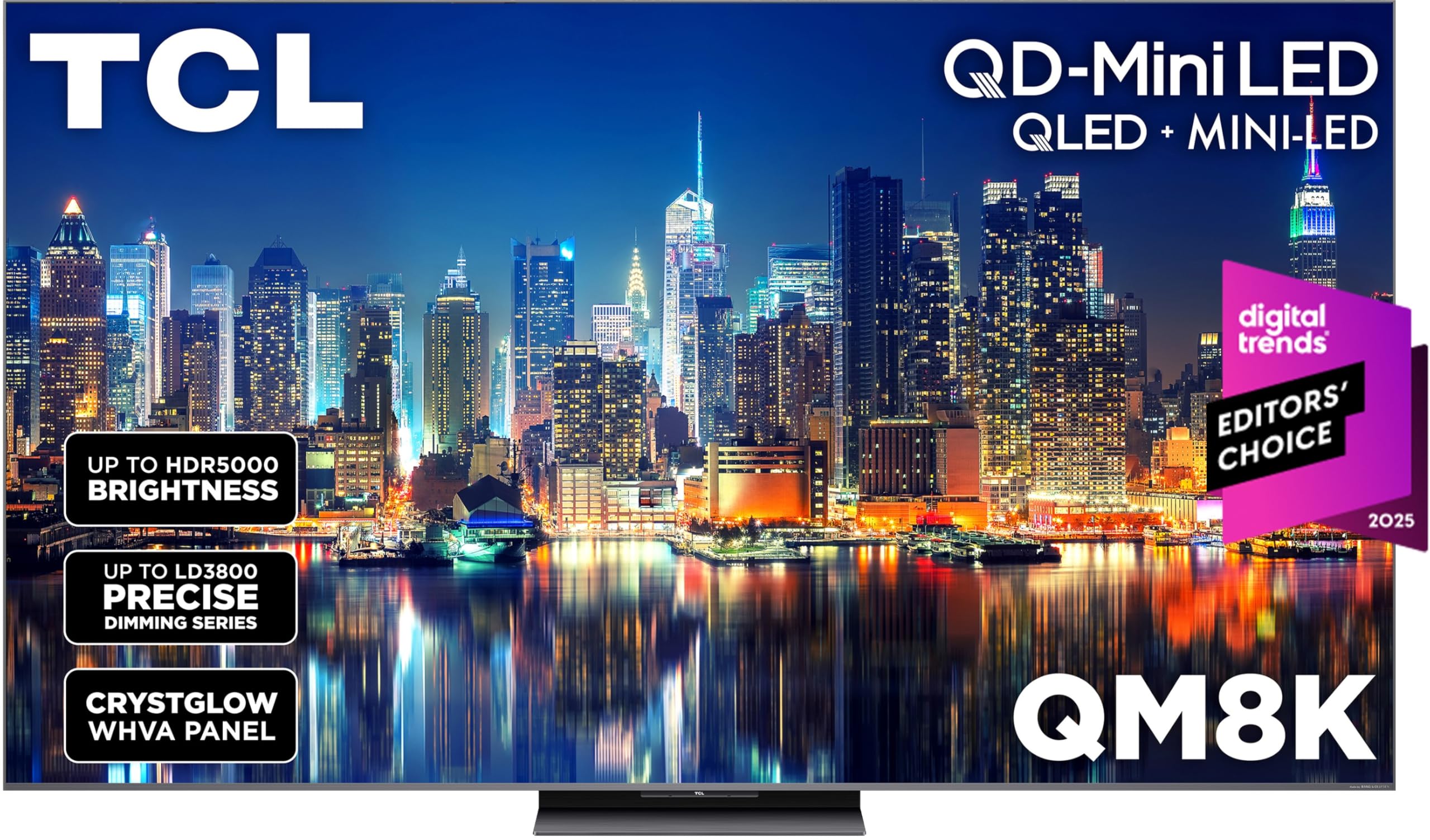
The QD-Mini LED beast with Bang & Olufsen sound built right in.
The QM8K’s defining combo is its audio system tuned by Bang & Olufsen — the Danish high-end speaker house — delivering sound that owners describe as “excellent” with “clear dialogue” and “deep bass.” That alone makes it a contender against the Samsung QN90F at the top, where a soundbar was still recommended. On the picture side, it runs the QD-Mini LED panel with TCL’s new Halo Control System, a technology suite with a Super High Energy LED Microchip and a High Contrast HVA Panel designed for “Halo-Free” images. Shoppers say “deep blacks” that “rival OLED” at night and “minimal blooming,” with high refresh and great color.
The most-praised traits are quality and picture quality, and brightness draws its own strong block of mentions — buyers report it “handles bright rooms” with ease, replacing older sets that looked washed out in daylight. The CrystalGlow WHVA panel is anti-reflective with an edge-to-edge ZeroBorder design, and it keeps color vivid “from any seat,” which solves the viewing-angle complaint that dogs other Mini-LED sets. The Game Accelerator 288 delivers up to a blistering 288 VRR for lag-free gaming, and the backlit premium voice remote controls the Google TV interface hands-free.
The trade-offs are minor relative to the package. One owner calls it “very bright from the start” and recommends adjusting settings with bias lighting to reduce eye strain. The Hulu app specifically was “terrible” for one buyer, with slow menus and audio/video sync issues, though other apps worked fine. For a premium living room where you want OLED-rivaling black levels plus brand-name audio without a receiver, this is a top-tier call.
Premium punch
- Bang & Olufsen audio delivers deep bass and clear dialogue in-box
- Deep blacks that rival OLED with minimal blooming
- Game Accelerator 288 VRR for lag-free console play
Minor gripes
- Very bright from the start; settings tuning recommended
- One owner found the Hulu app slow with sync issues
Choose this for: a premium setup where you want signature audio and OLED-like blacks without adding any external speakers.
Pass if: you’re Hulu-heavy and wary of a single app having issues on an otherwise smooth platform.
9. Amazon Ember 75″ Mini-LED Series with Fire TV
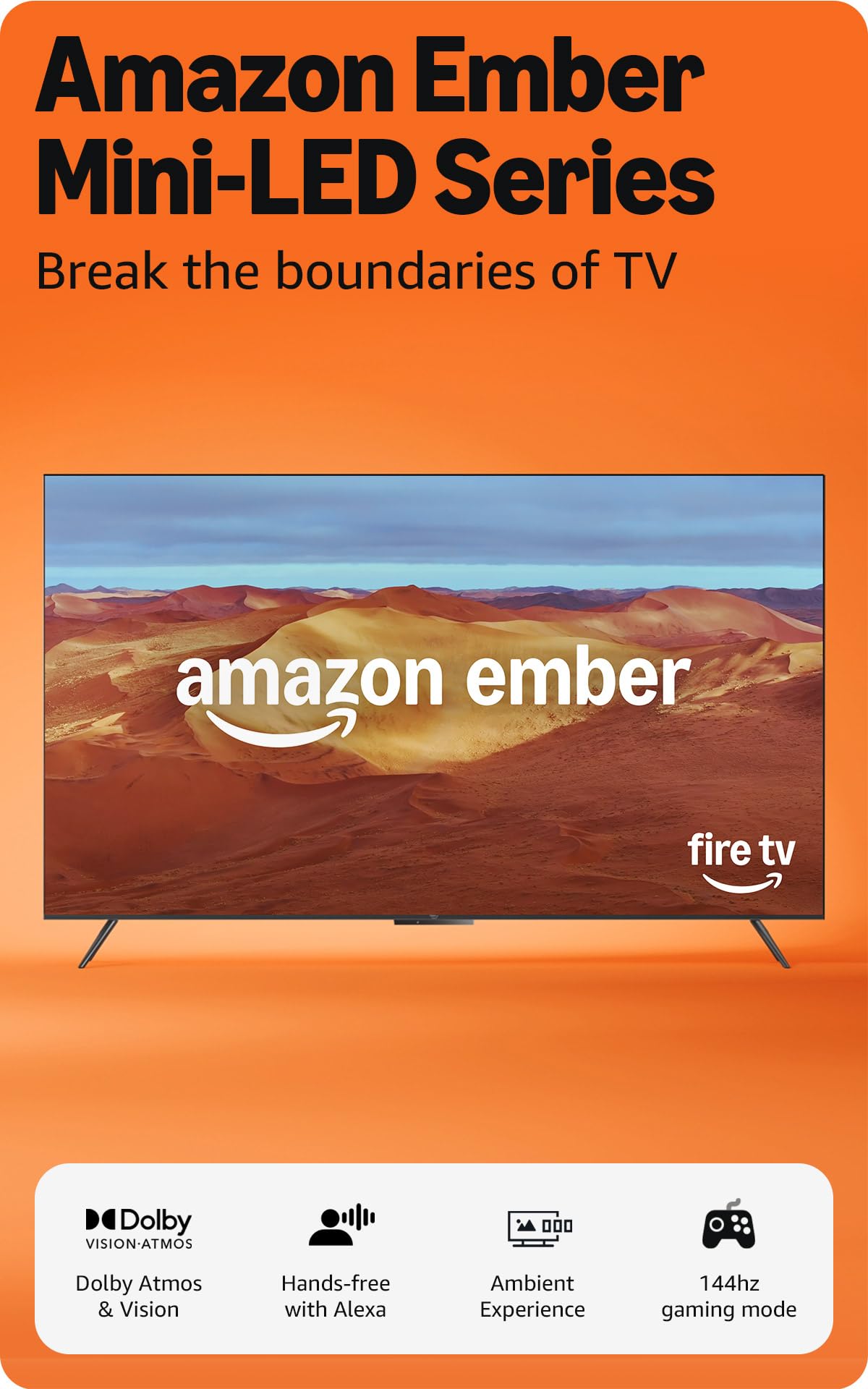
The ambient-aware Fire TV that wakes when you walk in the room.
This is the Alexa-first sports TV, built by Amazon around its new Omnisense technology — built-in sensors wake the display when you enter the room, so you can start watching “in a snap,” even with the screen off. Performance for sports comes from a 144Hz gaming mode that’s AMD FreeSync Premium Pro-certified, plus a 4K QLED Mini-LED display with up to 1400 nits of peak brightness and 512 dimming zones for “higher, more captivating contrast.” The Fire TV Intelligent Picture processor fine-tunes what’s playing scene-to-scene and adapts to your room’s current light.
Owners praise the picture quality with “great clarity,” and quality plus picture quality lead the positive mentions. The 2.1 Dolby Atmos audio with a built-in subwoofer gets solid marks — one buyer calls the “built-in subwoofer best heard on flatscreen” content. Setup is genuinely easy, and the experience integrates deeply with Alexa+, which finds shows across your apps by voice. At this price tier, buyers compare it directly against Samsung, LG, and Panasonic and find it “significantly cheaper” while delivering near-OLED quality.
Here’s the honest truth: this set has the most mixed owner consensus on this list. Brightness is a split — some praise it, others call it “very low.” Reliability and responsiveness both carry mixed-to-negative sentiment, with one frustrating report of the YouTube TV app taking 31 seconds to navigate even on high-speed internet. A privacy-minded buyer will appreciate the physical switch that electronically disconnects the microphones. For an Alexa-centric household where voice control is the priority, this is a compelling pick, but it demands a tolerance for software quirks.
Smart-home edge
- 144Hz gaming mode, FreeSync Premium Pro-certified
- Sensors wake the display when you enter the room
- Built-in subwoofer with 2.1 Dolby Atmos audio
Fair warnings
- Brightness feedback is split, with some calling it low
- Software responsiveness drew mixed to negative owner notes
- Reliability across units is less uniform than rivals
Best for: a deeply Alexa-integrated smart home where hands-free voice control matters as much as the picture.
Think twice if: you demand rock-solid app performance and uniform brightness — this one asks for patience.
10. Sony 75 Inch BRAVIA 7 Mini LED (K-75XR70)

Sony’s XR processor makes every frame look creator-intended.
The BRAVIA 7’s superpower is processing. Sony’s XR Processor analyzes every scene in real time, boosting color, contrast, and clarity — and its upscaling is the thing owners single out most, with one calling 4K content “gorgeous” and another saying the upscaling of HD content “brings back lost detail” via XR Clear Image. Thousands of Mini LEDs are controlled by the XR Backlight Master Drive, delivering what Sony calls its “brightest ever 4K TV” with authentic contrast. This is the pick for buyers who watch a mix of sports, streaming, and 4K Blu-ray and want each source tune automatically.
Owner consensus anchors on quality and picture quality, with color drawing praise for “deep blacks and excellent image tone.” For PS5 owners, the exclusive Auto HDR Tone Mapping and Auto Genre Picture Mode tune the picture for gaming and streaming automatically, and the Game Menu centralizes all gaming settings. The Google TV platform brings Netflix, Prime Video, Disney+, and YouTube together, with AirPlay 2 and Chromecast built-in. Compared to the Samsung QN90F up top, this Sony leans on processor intelligence and color science rather than raw refresh speed — it runs 120Hz, not 165Hz.
The honest caveats are physical and durability-related. The viewing angle is the recurring note: one owner reports the picture degrades beyond 30 degrees off-center, and the screen is reflective, not matte — so bright rooms need careful placement. A separate owner flagged a serious reliability concern with a panel failing after the warranty period, though this is a single anecdote amid mostly positive feedback. Brightness also reads as mixed, with some calling it modest. For a buyer who values Sony’s color science and processing above everything, this remains a premium favorite.
Sony’s strengths
- XR Processor delivers top-tier upscaling and color science
- Exclusive PS5 features auto-tune gaming picture
- Deep blacks from XR Backlight Master Drive Mini LED
Honest limits
- Narrow viewing angle degrades beyond 30 degrees off-center
- Reflective screen needs careful placement in bright rooms
- Runs 120Hz, behind the 144Hz and 165Hz rivals
Reach for this if: you want Sony’s signature color science and processing, especially with a PS5 in the mix.
Look elsewhere if: your seating spreads wide or your room has unavoidable glare — the narrow angle and reflective screen will frustrate.
11. LG 77-Inch Class OLED evo AI 4K C5 Series (OLED77C5PUA)

The OLED benchmark with perfect black and 144Hz motion for dark-room glory.
This is the OLED king of the list, with 8.3 million self-lit pixels delivering the perfect black and color that other panel types can’t match. The “Perfect Black” is the thing owners rave about — one notes it’s “superior to Samsung” in motion, color, and brightness while another calls it “stunning” after upgrading from plasma. The Alpha 9 AI Processor Gen8 powers AI Super Upscaling that enhances picture whether you’re watching sports, movies, or a late-night favorite. Its Brightness Booster magnifies each pixel for luminous quality, and the Bright Room Ready certification (UGR less than 22) means it holds up even in lit rooms — a rarity for OLED.
For gaming and fast sports, the 0.1ms response time and up to 144Hz refresh rate deliver “blinding speed without blurring or tearing,” plus NVIDIA G-Sync and AMD FreeSync Premium for console play. Four HDMI 2.1 inputs let you plug in a cable box, PS5, Xbox, and soundbar all at once. The crowd favorite stat: it carries the highest owner satisfaction on this list — 4.4 stars across 1,500+ ratings, the most reviews here by a wide margin. That’s hundreds of owners agreeing on picture quality, sound, and easy setup.
The recurring friction is the remote. The magic pointer style gets called “terrible” and “finicky” by several owners, with one considering a universal remote. Out-of-box settings also “ruin the picture” per one buyer — you’ll want to set Filmmaker Mode and disable eye care and True Motion. The built-in speakers are “decent” but at this price, a soundbar improve the movie-theater feel. For the buyer who watches in a darker room and wants the absolute best contrast, this is the definitive pick.
Why it’s the benchmark
- 8.3 million self-lit pixels for perfect black and color
- 0.1ms response time with up to 144Hz refresh
- Most-reviewed and highest-rated pick on this list
The known trade-offs
- Magic pointer remote draws persistent complaints
- Out-of-box settings need calibration for best picture
- Built-in speakers are decent but a soundbar helps
Choose this for: the dark-room purist who wants the deepest blacks and the most owner-verified quality on this list.
Skip if: you can’t tolerate a finicky magic-pointer remote and won’t invest in calibration time.
12. Samsung 77-Inch Class S90F Smart TV (77S90F)

The QD-OLED that pairs OLED blacks with sunlight-ready brightness.
This Samsung uses QD-OLED technology — quantum-dot OLED — which delivers the perfect blacks of OLED but with brighter, more vibrant color than standard OLED panels. Owners immediately notice it: one calls the blacks “liquid” and says they “match LG C4,” while another praises its brightness in “sunlit rooms,” a feat most OLEDs struggle with. The NQ4 AI Gen3 processor runs 128 neural networks to upscale to 4K and keep fast sports sharp, with Motion Xcelerator 144Hz for tear-free gaming. The AI processor smooths fast-moving balls and text to keep the action clear.
Quality and picture quality anchor the owner consensus, with value for money and color close behind. Built-in speakers are “clear and full,” making a soundbar optional on this OLED. The Tizen interface draws a compliment versus LG’s webOS — one owner calls it “simpler menus” without the inertial mouse. Its solar-powered remote is a nice touch, and the matte screen cuts reflections in bright rooms. Against the LG C5 above, this Samsung is brighter in standard mode and better suited to mixed-lighting rooms, while the LG edges ahead on total owner satisfaction count.
The honest watch-outs: the panel is “very thin and fragile” per one owner, so handling during setup demands care. Reliability gets mixed feedback — a small number of owners mention issues, including one who received a repackaged, dead-on-arrival unit. The Tizen smart platform, while simpler, still lags Google TV in app breadth for some users. For a buyer who wants OLED contrast but watches in a room with some daylight, this is the smart compromise.
The QD-OLED edge
- OLED blacks with brighter, more vibrant quantum-dot color
- Handles sunlit rooms better than standard OLEDs
- 144Hz Motion Xcelerator with 128-neural-network AI processor
Handle with care
- Panel is very thin and fragile during setup
- Reliability carries mixed owner feedback
- Tizen interface trails Google TV in app breadth
Reach for this if: you want OLED contrast but your room gets some daylight — this is the bright-room OLED compromise.
Look elsewhere if: you’re wary of thin panels and want maximum handling confidence during setup.
13. Sony 75 Inch BRAVIA 5 Mini LED (K-75XR50)

The upscaling wizard that makes your old sports feed look new again.
The BRAVIA 5 is the cost-conscious sibling of the BRAVIA 7, but it shares the same upscaling DNA. Its XR Processor with AI technology enhances every scene in real time, and XR Clear Image “brings back lost detail” from HD and digital content — owners call the 4K upscaling “incredible” and “insanely clear.” For sports, XR Motion Clarity delivers “blur-free picture quality in fast-moving sports,” keeping the action sharp without the soap-opera effect. The Mini LED with XR Backlight Master Drive delivers “captivating brightness and authentic contrast,” and one owner highlights the “deep blacks via mini LED.”
Owners anchor their praise on quality and picture quality, with sound quality also getting positive marks. The PS5 integration is a headline feature: Auto HDR Tone Mapping and Auto Genre Picture Mode tune picture for gaming and streaming, and the Game Menu centralizes settings. The Google TV interface with Google Assistant is “smooth and responsive” per one buyer, and setup is “easy” with a tool-free stand. It also comes with movies included via the SONY PICTURES CORE app and the largest IMAX Enhanced collection.
The trade-offs: only 2 of 4 HDMI ports are HDMI 2.1, so a fully-loaded gaming setup needs cable management. The remote “lacks number buttons” per one owner, which is a nitpick for live TV channel-surfers. Reliability carries mixed feedback — a small number of customers note the TV not turning on, a one-off that bears watching. And energy use runs at 476 kilowatt hours per 1000 hours, higher than rivals. For a buyer who values Sony’s upscaling of lower-quality sports feeds above all, this is a smart premium pick.
Sony’s upscaling magic
- XR Clear Image brings back lost detail from HD content
- Blur-free XR Motion Clarity for fast-moving sports
- Exclusive PS5 features auto-tune gaming picture
Small compromises
- Only 2 of 4 HDMI ports are HDMI 2.1
- Remote lacks number buttons for channel-surfing
- Higher energy use than most rivals
Best for: the buyer who watches a lot of lower-resolution sports and wants the best upscaling money can buy.
Think twice if: you need four full HDMI 2.1 ports for a heavy multi-console setup.
Understanding the Specs
Refresh Rate
Refresh rate measures how many times per second your TV redraws the image, expressed in hertz (Hz). A 120Hz panel redraws 120 times per second, which is the baseline for smooth sports. Panels at 144Hz and 165Hz redraw even faster, which cuts motion blur and screen tearing on fast camera pans, hockey pucks, and soccer balls. For broadcast sports, 120Hz is genuinely fine; for competitive gaming and the most extreme motion, the higher numbers shine.
Nits and Brightness
Nits measure luminance — how bright the screen can get. A panel rated at 5000 nits (like the Hisense U8) will crush one rated at 1400 nits (like the Amazon Ember) in a sunlit room. Brighter panels maintain contrast and detail when sunlight hits the screen, so the image doesn’t wash out. For a living room with windows, prioritize nits; for a dedicated dark theater room, OLED’s contrast matters more than raw brightness.
FAQ
Is 120Hz enough for watching sports on a 75-inch TV?
What is the difference between Mini-LED and OLED for sports?
Will a 77-inch TV fit where my 75-inch TV sits?
Why does my sports picture look blurry on a big screen?
What is VRR and why does it matter for sports and gaming?
Is the built-in sound on these TVs good enough for sports?
How much does a 75-inch TV weigh for mounting?
What is the difference between the Sony BRAVIA 5 and BRAVIA 7?
Do I need HDMI 2.1 ports for sports watching?
Which smart TV platform is best for sports streaming?
Final Thoughts: The Verdict
For most buyers, the winner is the Samsung QN90F because it pairs the fastest 165Hz refresh rate on this list with a genuinely Glare Free panel that handles bright rooms beautifully — plus built-in sound strong enough to skip a soundbar. If you want the value king, the TCL T7 delivers 144Hz smoothness and QLED color at a budget-friendly price. And for the dark-room perfectionist chasing the deepest blacks, the LG OLED C5 is the most-verified pick on this list — 4.4 stars across more than 1,500 owners — making it the confident choice for anyone who prioritizes contrast above all.
How We Picked
We do not accept paid placement. Every pick is matched to a real buyer and a real use-case; we do not hands-on test units.
Sources & Methodology
Specifications: manufacturer listings and product documentation. Review insights: verified customer reviews, as of August 2026. Pricing: not shown on this page (it changes often); check the current price via the retailer link.
As an Amazon Associate, Gadgets Feed earns from qualifying purchases. This does not affect which products we feature.