
Our readers keep the lights on and my morning glass full of iced black tea. As an Amazon Associate, I earn from qualifying purchases.
Specs are compiled from manufacturer listings and verified buyer reviews and can change over time — please confirm the key details on the product page before buying.
If you are shopping for a camera lens, you already know the kit zoom that came with your camera is holding you back. A prime lens with a wide aperture like f/1.8 delivers sharper images, creamy bokeh, and better low-light performance than your kit zoom. We’ve selected 11 lenses across budget primes and professional zooms based on real-world performance and verified owner feedback.
I’m Min — the founder and writer behind Gadgets Feed. This guide is built by comparing the manufacturers’ published specifications and the patterns across verified customer reviews, so you get each pick’s real strengths and trade-offs instead of marketing spin.
You want a camera lens that turns everyday shots into keepers, whether you’re capturing portraits, landscapes, or fast-moving sports. Each pick is evaluated for sharpness, autofocus speed, build quality, and value for its intended use.
Our Picks at a Glance


How To Choose The Best Camera Lens
Buying a lens is a multi-year decision, so it pays to get it right the first time. The three things that matter most are your camera’s mount, the focal length you need, and how wide the aperture opens.
Match the Mount First
A lens must physically fit your camera body. Nikon Z cameras need Z-mount lenses, Canon EOS R series needs RF-mount, and Sony mirrorless uses E-mount. Double-check your camera’s mount before you fall in love with a lens that won’t attach.
Prime vs Zoom: Know the Trade-Off
Prime lenses have one fixed focal length (like 50mm) and are usually sharper and let in more light than zooms. Zooms offer flexibility but often at the cost of a smaller maximum aperture. Think about what you shoot most — portraits love an 85mm, everyday shots suit a 35mm or 50mm.
Aperture Is Everything for Low Light
The aperture (shown as f/1.8, f/2, f/2.8) tells you how much light the lens lets in. A lower number means more light and a creamier background blur. An f/1.8 lens is fantastic for indoor shots without a flash, while an f/5.6 lens needs bright daylight.
Quick Comparison
| Model | Best For | Focal Length | Max Aperture | Mount | Amazon |
|---|---|---|---|---|---|
| Nikon NIKKOR Z 50mm f/1.8 S★ Best Overall | Sharp all-rounder | 50mm | f/1.8 | Nikon Z | Amazon |
| Canon RF50mm F1.8 STMBest Value | Budget portrait prime | 50mm | f/1.8 | Canon RF | Amazon |
| YONGNUO YN35mm F2NBudget Champion | Budget wide-angle | 35mm | f/2 | Nikon F | Amazon |
| VILTROX 9mm F2.8 | Ultra-wide vlogging | 9mm | f/2.8 | Sony E | Amazon |
| Nikon NIKKOR Z 40mm f/2 | Compact daily carry | 40mm | f/2 | Nikon Z | Amazon |
| Canon EF 75-300mm III Kit | Beginner telephoto zoom | 75-300mm | f/4-5.6 | Canon EF | Amazon |
| Fujinon XF35mmF2 R WR | Weather-resistant street | 35mm | f/2 | Fujifilm X | Amazon |
| Sony SEL85F18 | Portrait specialist | 85mm | f/1.8 | Sony E | Amazon |
| Canon RF100-400mm IS USM | Wildlife and sports | 100-400mm | f/5.6-8 | Canon RF | Amazon |
| Tamron 28-75mm F/2.8 G2 | Versatile all-round zoom | 28-75mm | f/2.8 | Sony E | Amazon |
| Sony FE 24-70mm F2.8 GM | Professional standard zoom | 24-70mm | f/2.8 | Sony E | Amazon |
In‑Depth Reviews
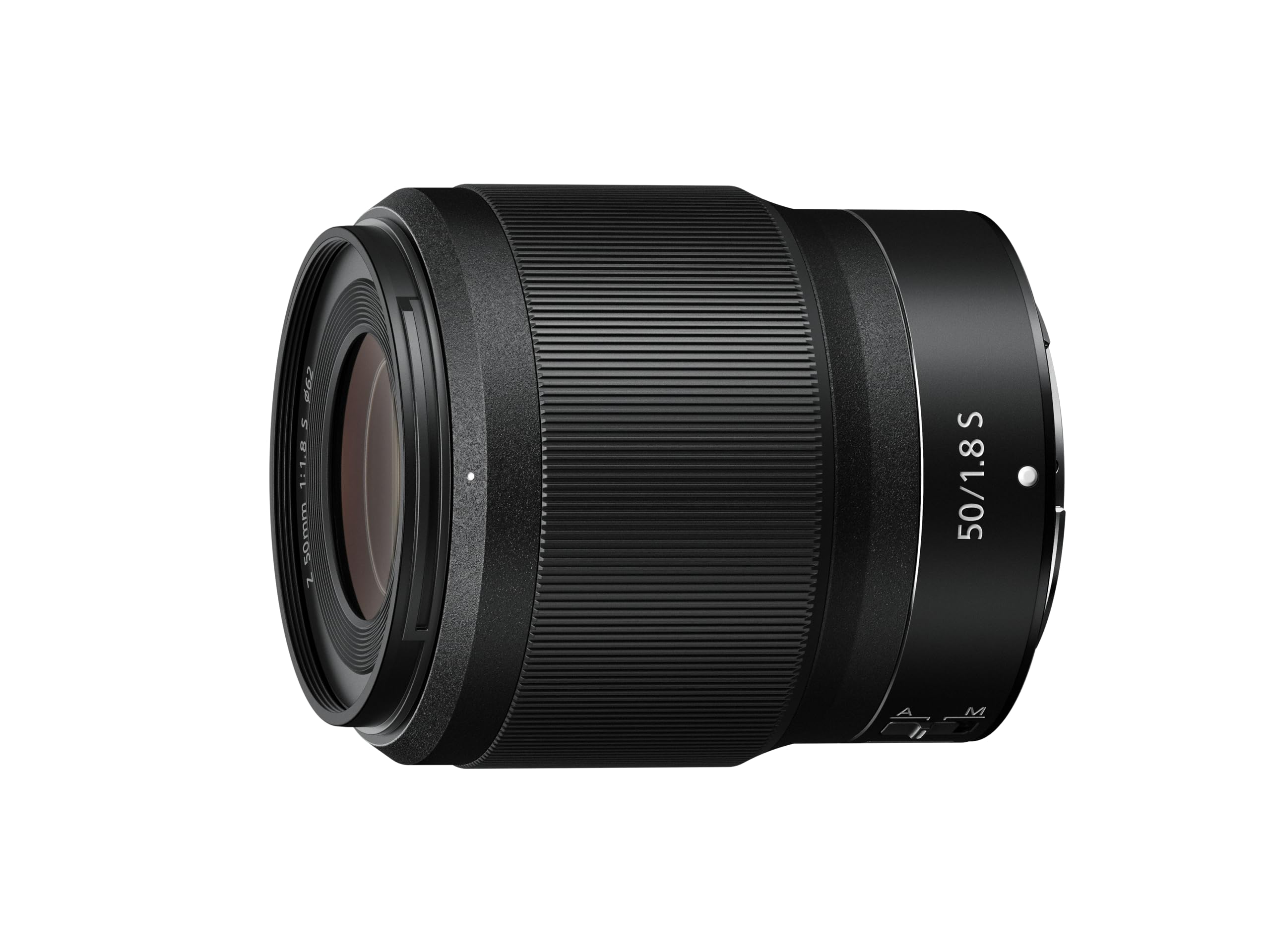
1. Nikon NIKKOR Z 50mm f/1.8 S
Our pick — over 4.5★ from 850+ verified ratings; the strongest balance of quality and price.
The sharpest “nifty fifty” you can mount on a Nikon Z body, period.
The 50mm f/1.8 S delivers edge-to-edge sharpness even wide open, leaving kit zooms behind. The 50mm f/1.8 S is the crowd favorite among Nikon Z shooters — the review pages sum it up: “Stunning optics: sharpness/microcontrast near Zeiss Otus at f/4-5.6, minimal flare/CA.” In plain terms, that means your photos come out crisp from edge to edge, even wide open at f/1.8 where most lenses go soft.
What wins people over is the lens quality — owners single it out more than anything else, and the sharpness is the second most-praised trait. It uses an ultra-quiet stepping motor, so autofocus is silent enough for video, and it works with 5-axis optical VR built into Z cameras, meaning your handheld shots stay stable. It’s compact and light enough for daily street shooting.
This is a premium pick, and the price reflects it. Some owners feel the value is mixed for a prime lens, but those who bought it on sale say it’s unbeatable. If you shoot portraits, landscapes, or night scenes on a Nikon Z6, Z5, or Z50, this is the first lens you should own.
What Owners Rave About
- Extreme sharpness wide open at f/1.8
- Near-zero distortion and minimal chromatic aberration
- Silent, fast autofocus for photos and video
- Compact and lightweight for a full-frame prime
Fair Trade-Offs
- Premium price for a 50mm prime
- Some owners feel value is mixed unless bought on sale
Reach for this if: you own a Nikon Z camera and want the sharpest, most versatile prime lens in the lineup.
Look elsewhere if: you are on a strict budget — the 40mm f/2 below gives you 85% of the fun for less.
2. Canon RF50mm F1.8 STM
A tiny, brilliant prime that turns your Canon R body into a portrait machine.
The RF50mm F1.8 STM offers exceptional sharpness and bokeh for its price. The RF50mm F1.8 STM is only 5.6 ounces, so it feels like nothing on the front of your camera, yet it delivers beautiful bokeh and sharp portraits that look like they came from a lens costing ten times as much. It’s the go-to pick for anyone starting out with an EOS R100, R50, or R10.
The thing everyone raves about is the lens quality, with value for money the second-most praised aspect. Owners love the fast, confident autofocus even in low light, and many are surprised by the macro capability for close-ups of products or food. The gear-type STM motor keeps autofocus smooth and quiet during video recording.
The body is plastic, though it feels solid in hand. At f/1.8, you get lovely background blur, though it’s not as creamy as an f/1.2 lens. If you want one affordable prime that does portraits, street, and indoor shots beautifully, this is it.
Sharp and Sweet: Buyers report razor-sharp images and fast autofocus that make photos look expensive even on entry-level R bodies.
The Catch: The plastic build is the compromise for the low price — treat it gently and it will serve you for years.
Best for: beginners and budget-conscious Canon RF shooters who want a versatile, sharp prime while staying affordable.
Think twice if: you need a professional-grade metal body — this one prioritizes value over ruggedness.
3. YONGNUO YN35mm F2N
A bargain wide-angle prime that makes full-frame Nikon shooters grin.
The YONGNUO 35mm f/2 delivers sharp images at roughly half the cost of a Nikkor equivalent. The YONGNUO 35mm f/2 costs a fraction of a Nikkor equivalent, and owners mention: “Performance matches my Nikon 35mm lens! The cost is about half of the Nikon lens!” That’s the value-for-money story that makes this the most-praised aspect of the lens.
It’s a 35mm focal length, so it’s wider than a 50mm — perfect for street scenes, group shots, and environmental portraits. The f/2 aperture blurs backgrounds nicely with its 7 aperture blades, and it works on both full-frame and APS-C Nikon DSLRs. The metal bayonet adds durability, and the 318-gram weight keeps it light on the front of your camera.
The honest trade-off is autofocus. It’s the most-discussed negative — owners find it slow and noisy, which means it will hunt in low light and can produce soft focus if you shoot fast-moving subjects. This is a lens for patient shooters, not sports photographers. If you can live with manual focus or slow situations, the price is unbeatable.
Why It Wins People Over
- Unbeatable value — about half the cost of a Nikkor
- Sharp images that rival kit zooms
- Works on full-frame and APS-C Nikon DSLRs
Know Before You Buy
- Autofocus is slow and noisy
- Soft focus in low light if you’re not careful
Grab it if: you’re a beginner on a Nikon DSLR who wants a wide prime to learn on without spending much.
skip it if: you shoot fast action or rely on quick autofocus — this one rewards patience.
4. VILTROX 9mm F2.8 E-Mount APS-C
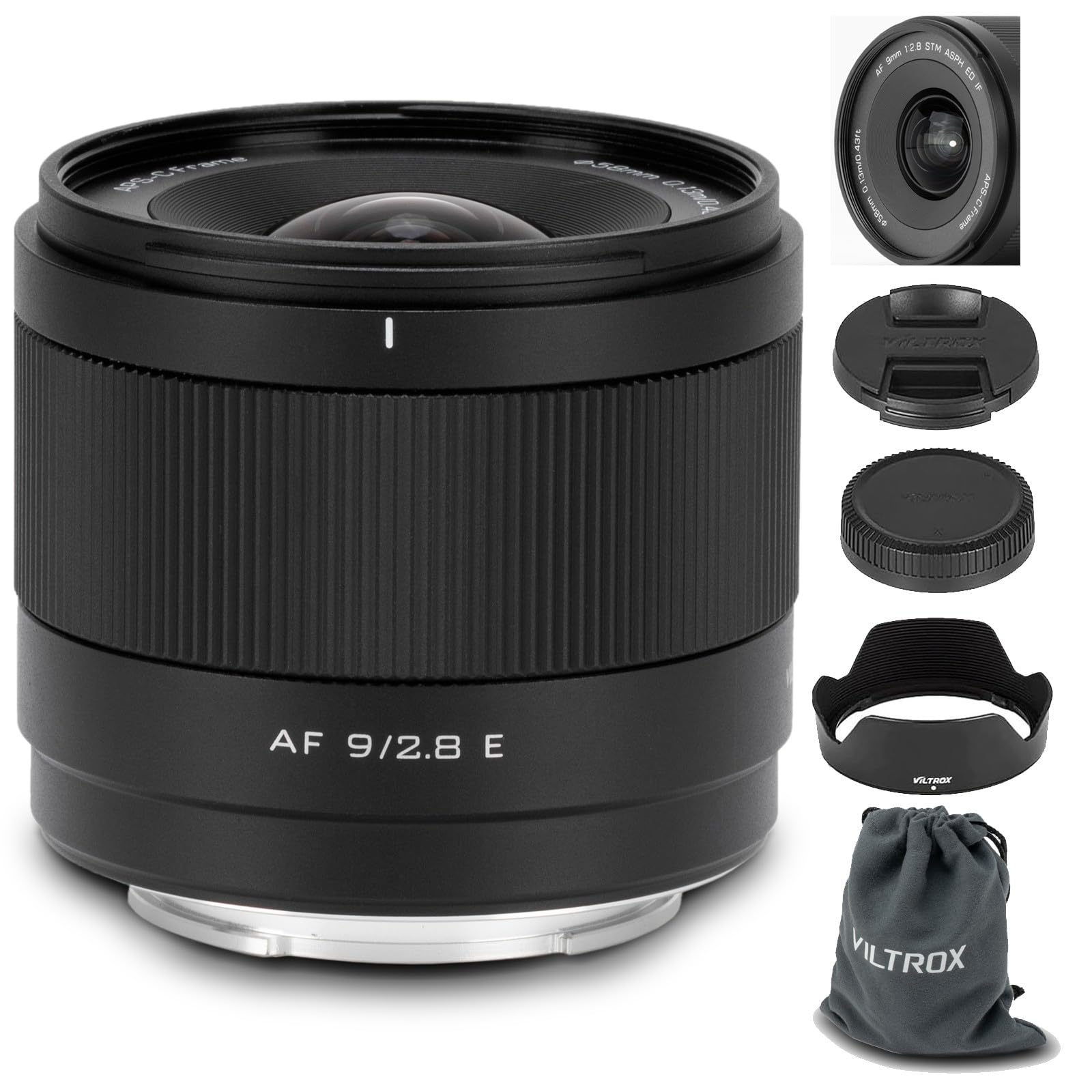
An ultra-wide 113.8° field of view that fits in your palm at 175 grams.
The VILTROX 9mm f/2.8 is ideal for vlogging, real estate, and tight interiors with its 113.8° field of view. The 9mm focal length on an APS-C Sony camera gives you a 113.8° field of view — equivalent to 13.5mm on a full-frame — so you can fit an entire room or a group selfie in one frame. It’s compact and light at roughly 175 grams, making it perfect for a gimbal.
The quality is the most-praised aspect, with value for money close behind. Owners on Sony ZV-E10 and a6400 bodies report excellent image quality, good colors, and fast autofocus with eye and face detection. The 0.13m minimum focus distance lets you get dramatically close to your subject while keeping the background in view.
The bokeh quality is mixed — some love the background separation, others note distortion at the edges, which is normal for an ultra-wide. It also lacks image stabilization, so you’ll want a camera with IBIS for handheld video. This is a specialist tool, but for its niche, it’s a gem.
Perfect for Creators: Owners say it’s ideal for sit-down videos and vlogs, with wide-angle shots that avoid the fisheye look.
Noted Limitation: Autofocus can hunt in low light, and the tiny size means it’s easy to lose in a camera bag.
Reach for this if: you shoot vlogs, interiors, or landscapes on a Sony APS-C body and want maximum width.
Think twice if: you shoot mainly in dim rooms — the f/2.8 and no-stabilization combo needs good light or a steady hand.
5. Nikon NIKKOR Z 40mm f/2
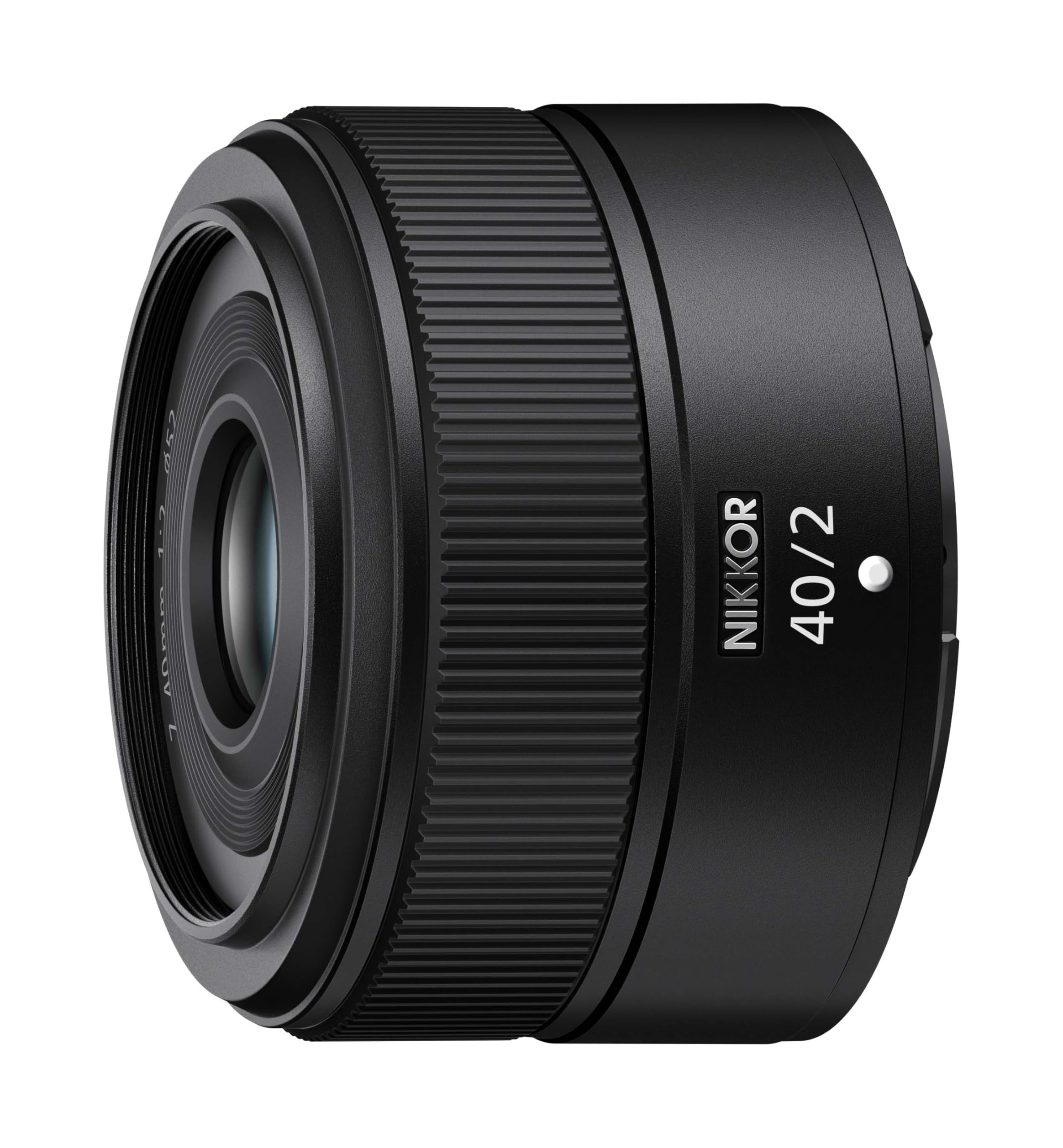
The everyday walkaround lens that vanishes on your camera yet never misses a shot.
At just 6.08 ounces, the Nikon 40mm f/2 is light enough for all-day carry without fatigue. At just 6.08 ounces, the Nikon 40mm f/2 is a featherweight, and owners say it provides 85% of the performance at 2/3rds the size and weight of bigger primes. The 40mm focal length sits between 35mm and 50mm, making it a natural everyday choice.
The lens quality is the most-praised aspect, with image quality second. The f/2 aperture delivers a beautiful shallow depth of field, enhanced by a 9-blade rounded diaphragm that creates natural, creamy bokeh. The click-less control ring lets you adjust aperture smoothly during video, and the autofocus suppresses focus breathing to stop angle-of-view shifts.
This lens has no image stabilization, so you rely on your camera’s IBIS for steady handheld shots. The plastic housing feels cheaper, but owners say it’s fine for a prime. It’s a fantastic daily companion on a Zf, Z5, or any Z body.
What Makes It a Daily Winner
- Featherlight 6.08-ounce build
- Creamy bokeh from the 9-blade diaphragm
- Silent, fast autofocus for video and photos
Honest Limits
- No built-in optical stabilization
- Plastic housing feels less premium
Best for: Nikon Z owners who want a compact, versatile prime for street, portraits, and daily carry.
Look elsewhere if: you need a rugged, weather-sealed lens for harsh conditions.
6. Canon EF 75-300mm f/4-5.6 III Kit

A budget telephoto zoom that brings distant subjects within reach — dogs included.
This kit is all about getting you closer to the action without emptying your wallet. The 75-300mm zoom range gives you a 4x telephoto reach, perfect for sports, wildlife, and portraits with that compressed look. At 16.8 ounces, it’s light enough to toss in a bag for trips, and the functionality is the most-praised aspect.
Owners love it for pet photography and travel, saying it easily fits in most bags and is simple to adjust. The kit includes a 2X telephoto lens, HD wide-angle lens, and accessories, which beginners find notable — though some note the extras are “mostly filler.” The Super Spectra Coating helps deliver high contrast and accurate colors.
The honest truth is that value gets mixed feedback, and the autofocus is the recurring gripe — it’s not fast, so moving subjects can blur. There’s also no image stabilization here, so you need steady hands or a tripod at the long end. This is a starter lens, and for the price, it’s a fun way to learn telephoto shooting.
Great First Tele: Customers note amazing close-up shots of pets and distant subjects at a fraction of the cost of pro telephotos.
The Trade-Off: Slower autofocus and no stabilization mean it shines in bright daylight with stationary subjects.
Grab this if: you’re new to photography on a Canon DSLR and want to try telephoto without a big investment.
Consider another if: you shoot fast sports or birds in flight — you’ll want faster autofocus and stabilization.
7. Fujinon XF35mmF2 R WR

A rugged, weather-sealed prime that thrives at the beach or in a drizzle.
Fujifilm shooters know the 35mm f/2 is the lens of choice for almost everyone — it’s the 53mm equivalent on a full-frame camera, which makes it a perfect everyday normal lens. The image quality is the most-praised aspect, with autofocus speed second. Owners say it’s sharp even wide open at f/2, with fast, consistent autofocus.
The “WR” stands for weather-resistant, and this lens has 8 sealing points for dust and moisture resistance, operating down to 14°F. That’s why owners take it to the beach without worry. The inner focus system achieves a 0.08-second autofocus speed with nearly silent operation, making it brilliant for street and documentary photography.
The 9-blade aperture creates smooth, circular bokeh, and the Nano-GI coating reduces ghosting and flare. It’s compact, metal-built, and lighter than the f/1.4 version. The only quibbles: the aperture ring can feel slippery, and the grooves collect dust. But for most Fuji shooters, this replaces the f/1.4 entirely.
What Wins Owners Over
- Weather-sealed with 8 sealing points
- Fast 0.08-second silent autofocus
- Sharp with creamy bokeh at f/2
Small Quirks
- Aperture ring can feel slippery
- Grooves in the barrel collect dust
Reach for this if: you shoot Fujifilm outdoors and want a durable, sharp prime that handles the elements.
Not for you if: you’re a low-light, slow-shooting purist who needs the extra stop of the f/1.4.
8. Sony SEL85F18 85mm F/1.8

The portrait lens that makes skin tones glow and backgrounds melt away.
If portraits are your passion, this is the Sony lens to own. The 85mm focal length is the classic portrait length, and the f/1.8 aperture creates beautiful defocusing effects that isolate your subject from the background. On an APS-C body, the 35mm equivalent is 127.5mm, giving you an even tighter telephoto look.
Quality is the most-praised aspect, with bokeh coming in second — owners consistently call the images “razor-sharp” with “creamy bokeh.” The double linear motor system delivers fast, quiet, and precise autofocus, and the ED glass element ensures corner-to-corner sharpness. It’s lightweight at 10.4 ounces but feels solid in hand.
The focus hold button and AF/MF switch give you direct control, and the Nano AR Coating II minimizes flare. The one limitation owners note is the long minimum focus distance — don’t expect macro shots. This is a lens you can carry all day for portraits, events, and even video.
Flawless Portraits: Reviewers point out super sharp images with beautiful background blur that makes them look like a pro.
The Limitation: The long minimum focus distance means you can’t get close-up detail shots — keep a 35mm handy.
Best for: Sony shooters who want a dedicated portrait lens with fast, silent autofocus and gorgeous bokeh.
Look elsewhere if: you need a versatile zoom or macro capability — this is a specialist tool.
9. Canon RF100-400mm F5.6-8 IS USM

A lightweight 400mm reach that puts wildlife and sports within your grasp.
This is the budget wildlife lens that Canon shooters have been waiting for. The 100-400mm zoom range gives you serious telephoto reach, and the quality is the most-praised aspect, with value for money second. Owners call it “one of the best budget wildlife options” and rave about its sharpness even handheld at 400mm.
The optical image stabilizer delivers up to 5.5 stops of shake correction, and when paired with an EOS R body with IBIS, you get up to 6 stops — that’s why owners shoot handheld at 1/250s and still get crisp shots. The Nano USM autofocus is high-speed, smooth, and quiet, handling 15fps bursts for sports.
It weighs 816 grams, which is light for a 400mm lens, making it easy to carry on a hike. The honest trade-offs: the f/5.6-8 aperture means it struggles in low light, and owners note it’s a daylight lens. The zoom ring also rotates opposite to standard, which takes adjusting. But for daytime sports and wildlife, it’s unbeatable.
Why It’s a Keeper
- 5.5-stop optical image stabilization
- Sharp handheld shots at 400mm
- Lightweight for telephoto reach
Honest Compromises
- Slow f/5.6-8 aperture struggles in low light
- No weather sealing
Reach for this if: you shoot daytime sports, wildlife, or birds on a Canon R series body and want long reach without the weight.
Think twice if: you mostly shoot in dusk or indoor arenas — you’ll need a faster lens.
10. Tamron 28-75mm F/2.8 Di III VXD G2

The constant f/2.8 zoom that replaces three primes and lives on your camera.
This is the lens that stays on your Sony camera because it does everything well. The 28-75mm range covers wide landscapes, standard street scenes, and portrait-length shots, all at a constant f/2.8 aperture — meaning you get the same bright exposure and background blur at every focal length. The lens quality is the most-praised aspect, with sharpness second.
Owners call it their “favorite everyday option,” praising its sharp image quality and build relative to the price. The VXD linear motor delivers high-speed, high-precision autofocus that’s nearly silent, and the minimum object distance of 7.1 inches at the wide end lets you get creative close-ups with a 1:2.7 magnification ratio.
It’s compact at 4.6 inches long and weighs just 19 ounces, so it’s easy to carry all day — owners mention hiking with it without fatigue. The moisture-resistant construction and fluorine coating add durability. The autofocus can struggle in low light or with foreground subjects, and it’s not for wildlife, but as a versatile daily zoom, it’s a standout.
One-Lens Solution: Owners say it’s the best all-around single lens for the Sony A7 IV, with outstanding quality for the money.
Minor Gripes: Autofocus hunts in dim conditions and the weather seal is on the lighter side.
Best for: Sony shooters who want one versatile, fast zoom for portraits, events, and everyday carry.
Consider another if: you primarily shoot wildlife — you’ll want more reach than 75mm.
11. Sony FE 24-70mm F2.8 GM

The G Master zoom that delivers prime-like sharpness in every frame.
This is the lens that professionals reach for when they can only carry one. The Sony FE 24-70mm f/2.8 GM is a full-frame standard zoom that covers the most useful range, and the sharpness is the most-praised aspect — owners call it “zoom lens with prime-like image quality.” It’s the lens that shoots anything exceptionally well.
The optical design uses ED and Super ED glass elements for breathtaking texture and detail, plus two aspherical elements and an XA element to boost resolution and minimize aberration. The 9-blade circular aperture creates a gorgeous bokeh effect, and the Nano AR Coating improves clarity and contrast. Autofocus via the Direct Drive Super Sonic wave Motor is fast and near-silent.
The aperture range goes from f/2.8 to f/22, with a minimum focus distance of 1.24 feet and a max magnification of 0.24x — enough for impressive close-ups. The honest trade-offs: it’s heavy at 3 pounds, needs a grip for comfort, and shoppers say occasional durability issues with broken glass on arrival. This is an investment, but for pros, it’s essential.
Pro-Level Strengths
- Prime-like sharpness wide open at f/2.8
- Fast, silent autofocus
- Versatile 24-70mm range for almost any scenario
Know the Weight
- Heavy at 3 pounds — needs a good grip
- Occasional durability reports on arrival
Reach for this if: you’re a professional or serious enthusiast who needs one lens for events, weddings, and commercial work.
Think twice if: you value portability — the weight is the price of that G Master quality.
Understanding the Specs
Focal Length
This is the lens’s “zoom amount,” shown in millimeters. Lower numbers like 9mm or 24mm give a wide view for landscapes and interiors. Higher numbers like 85mm or 400mm zoom in tight for portraits and wildlife. A 35mm or 50mm is the classic all-rounder that matches what your eye naturally sees.
Maximum Aperture (f-stop)
The f-number (like f/1.8 or f/2.8) tells you how much light the lens lets in. A lower number means a wider opening — more light for dim rooms, and a creamier blurred background behind your subject. Lenses with a constant aperture like f/2.8 keep that brightness throughout the whole zoom range.
FAQ
Will a Canon RF lens fit my Canon EOS R10?
What is the difference between a 35mm and a 50mm prime lens?
Does the Sony SEL85F18 work on an APS-C camera like the a6400?
Why is my lens autofocus slow in low light?
Is the Canon RF100-400mm good for indoor sports?
What does image stabilization do for telephoto shots?
Which lens is better for beginners, prime or zoom?
Does the YONGNUO 35mm F2 work with live view focusing?
Why does my 400mm photo look soft even with stabilization?
Is the Sony FE 24-70mm F2.8 GM worth the weight?
Final Thoughts: The Verdict
For most people, the camera lens winner is the Nikon NIKKOR Z 50mm f/1.8 S because it delivers razor-sharp images with beautiful bokeh in a compact, lightweight body that works for portraits, landscapes, and night shots alike. If you want a budget-friendly portrait prime that feels like a steal, grab the Canon RF50mm F1.8 STM. And for wildlife and sports shooters who need serious reach without the weight, the Canon RF100-400mm IS USM is the one to reach for. Whatever you choose, match the mount to your camera body first, and you’ll be shooting stunning photos in no time.
How We Picked
We do not accept paid placement. Every pick is matched to a real buyer and a real use-case; we do not hands-on test units.
Sources & Methodology
Specifications: manufacturer listings and product documentation. Review insights: verified customer reviews, as of August 2026. Pricing: not shown on this page (it changes often); check the current price via the retailer link.
As an Amazon Associate, Gadgets Feed earns from qualifying purchases. This does not affect which products we feature.