
Our readers keep the lights on and my morning glass full of iced black tea. As an Amazon Associate, I earn from qualifying purchases.
Specs are compiled from manufacturer listings and verified buyer reviews and can change over time — please confirm the key details on the product page before buying.
Finding a breast pump when you have inverted nipples usually means wrestling with flanges that slip, suction that pinches, and the constant worry that your baby isn’t latching the way you need. The real fix is a pump with a flange design and a suction pattern that physically draws the nipple out gently, so you can actually express milk comfortably. This guide focuses on four wearable models built with exactly that in mind, and it tells you straight which one handles the job best and which ones are better left on the shelf.
I’m Min — the founder and writer behind Gadgets Feed. This guide is built by comparing the manufacturers’ published specifications and the patterns across verified customer reviews, so you get each pick’s real strengths and trade-offs instead of marketing spin.
If you are searching for a reliable hands-free option, this review of the best breast pump for inverted nipples breaks down the suction power, flange sizes, and real-world performance of the top contenders to help you decide with confidence.
Our Picks at a Glance
How To Choose The Best Breast Pump For Inverted Nipples
Choosing a pump for inverted nipples isn’t just about picking the strongest motor. You need a pump that can create a seal, draw the nipple out, and keep you comfortable for the 15-20 minutes of every session, multiple times a day. The right choice hinges on four things: the flange design, the suction pattern, the available sizes, and the battery life.
Flange design is your first filter
The flange is the part that touches your breast, and for inverted nipples it needs to work harder. A standard flat flange can pinch and lose suction entirely. Look for a baby-mouth shaped flange that recreates the soft latch of a baby, or a pump with a dedicated nipple correction or dual-frequency mode. These features actively draw the nipple out rather than just pulling on the surrounding skin.
Suction modes matter more than max power
Every pump lists a maximum suction level, but for inverted nipples, the stimulation phase is what starts milk flow. A pump with 4 modes and 12 levels gives you more granular control to find the lowest effective setting. A mode explicitly designed for flat or inverted nipples is a huge plus, as it uses a rhythmic pattern that encourages letdown without pain.
Size inserts decide the seal
The wrong size flange ruins even the best pump. Check which inserts come in the box — 17mm, 19mm, 21mm, and 24mm are the common options. A measuring card included in the package is a sign the brand takes fit seriously. The seal has to be airtight for the vacuum to do its job.
Quick Comparison
In‑Depth Reviews
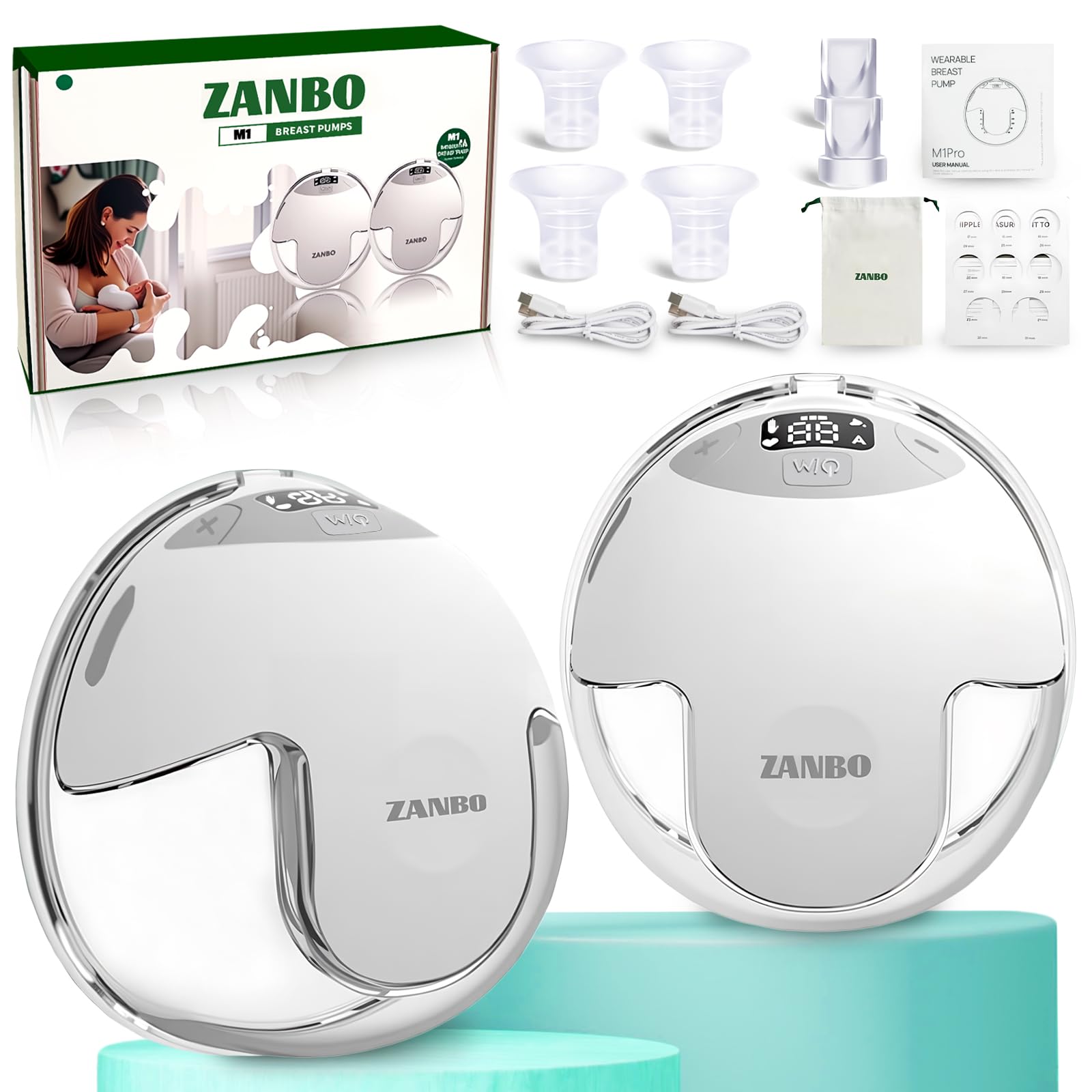
1. Wearable Electric Breast Pump 2‑Pack Hands‑Free (ZANBO M1)
Our pick — over 4★ from 40+ verified ratings; the strongest balance of quality and price.
The featherlight 200g pair that targets flat and inverted nipples with a dual-frequency mode.
This ZANBO M1 set is the smart budget play, and it is genuinely designed for your situation rather than just being cheap. It has a dedicated Dual Frequency mode that smooths milk outflow specifically for flat and inverted nipples, plus a bionic massage that simulates a baby’s natural sucking. For the price of a single premium pump, you get a full 2-pack.
At only 200g and about 2/3 the size of regular pumps, it is the lightest option here — noticeably more compact than the Paruu P10’s 240g. The 4 modes and 12 suction levels give you fine control, and the built-in LED screen shows your working mode and intensity clearly. Each cup holds up to 150ml/5oz, with an optimal collection volume of 120ml/4oz.
It comes with 19mm and 21mm flange inserts plus a size measuring card. Buyers report strong first-day performance, noting “I’ve used this pump for 2 days and 4 pumping sessions now without having to recharge,” which speaks to a battery that handles a full day. The catch is reliability: a handful of owners had units break within the first week, though the seller offered replacements. It’s a value pick with a small durability caveat.
Value verdict: You get two pumps, a dual-frequency inverted-nipple mode, and 12 levels for less than most single units — just keep the warranty slip handy.
Best suited to: moms who want a spare pump or a budget-friendly pair that still includes an inverted-nipple mode.
Watch out for: the occasional unit that arrives faulty — the replacement process works, but it’s a hassle you’d rather avoid.
2. Paruu P21 Wearable Breast Pump with Baby-Mouth Flange Design
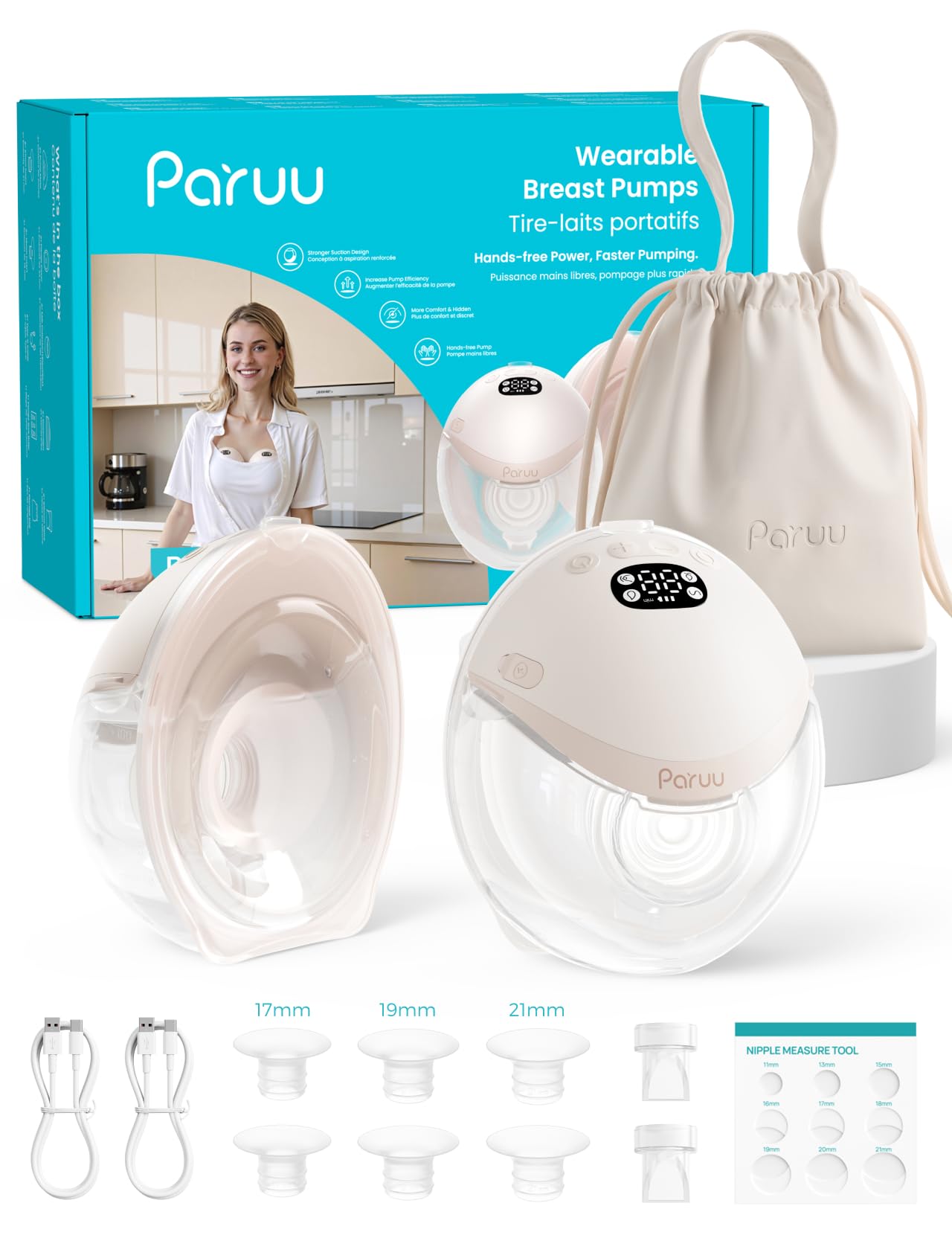
The pump that mimics a real baby latch to gently draw out inverted nipples.
The P21 earns the top spot because it was designed around the exact problem you are facing. Its Baby-Mouth Flange Design recreates the soft, natural latch of a baby, which creates an airtight seal that ramps up vacuum pressure without the pinching that flat flanges cause. For inverted nipples, that seal is the difference between a frustrating session and a successful one.
It pairs that thoughtful flange with a strong -315mmHg (41kPa) suction and 12 micro-adjustable levels, so you can dial in exactly the pull you can handle. The 4 modes include a dedicated Traction mode to gently assist flat or inverted nipples, which is a feature you rarely see at this level. Owners say it gets more output than their old Spectra and empties quickly, with the 6oz cups suiting even oversuppliers.
Beyond the inverted-nipple features, it comes with a stand-up milk bowl so you can set it down when your baby cries, and the included storage bag keeps every silicone part dust-free. The only real complaint is the flimsy carry bag handle — a minor annoyance that doesn’t affect pumping performance. It’s a budget-friendly backup that performs like a premium unit.
What wins parents over
- Baby-mouth flange creates a natural seal for inverted nipples
- Traction mode gently assists flat or inverted nipples
- 6oz cups hold plenty for oversuppliers
- Easy to clean and sterilize repeatedly
The honest trade-offs
- Carry bag handle is flimsy
- Flange material is hard, though it still works well
Reach for this if: you want a pump that actively works with your inverted nipple shape via a baby-mouth flange and a dedicated traction mode.
Think twice if: you need a rugged travel bag for daily commutes — the included one is the weak link.
3. Paruu P10 Hands-Free Breast Pump Wearable, 338mmHg Strong Suction

The highest-suction wearable here, built to empty you fast and fully.
The P10 is the output champion of this list, and for moms who struggle with low supply, that matters. Its max suction of 338mmHg beats the P21’s 315mmHg by a clear margin, and owners mention serious results — one noted “Expression mode lvl 4 yields 3.5-4.5oz in 12min.” It has 4 modes and 9 suction levels, with a dual-frequency mode that helps inverted and flat nipples pump smoothly.
It’s still a wearable at 240g, which is 40g heavier than the ZANBO M1 but still hides in your bra. The set includes flange inserts for 19mm, 21mm, and 24mm, plus a 28mm pump body and a measure card. The 1100mAh battery charges fully in 2 hours for 120 minutes of use, roughly 4-5 sessions, and it shuts off automatically after 30 minutes.
The honest trade-off is noise — the most common complaint is that it’s louder than rivals, though owners agree the suction and output justify it. It’s also an incredibly popular choice, with a strong following of moms who found it more effective than hospital pumps. The battery life is solid for a day, but a few long-term users report the charge holding power fading after months of heavy use.
The things that win
- 338mmHg max suction for fast, full emptying
- Dual-frequency mode for inverted nipples
- 1100mAh battery covers a full day of sessions
- Easy to clean with only four parts
The things to know
- Loud enough that it isn’t fully discreet in a quiet room
- Cups can leak for overproducers
- Charge-holding can weaken after months
Pick this if: your priority is maximum milk output per session and you don’t mind a bit of whirr while you pump.
Look elsewhere if: you need absolute silence or you tend to produce more than 5oz per side at once.
4. Zomee Fit Wearable Hands-Free Electric Breast Pump, Hospital-Grade

The only pump here with a dedicated Nipple Correction Mode baked in.
The Zomee Fit stands out with its dedicated Nipple Correction Mode. This mode gently draws the nipple into better alignment for a stronger seal, specifically aiding flat or inverted nipples.
Its hospital-grade suction reaches 280 mmHg, lower than the Paruu models but still effective, with owners reporting “significantly increased milk production” and better results than their previous Medela. It operates at a quiet 46 dB and features a Smart Fullness Sensor that auto-shuts off at 4, 5, or 6 oz to prevent spills.
However, durability is a concern. Despite only 4 washable parts and a 2-year warranty, several customers note motors stopping after a few minutes and leakage issues. At 2.14 lbs, it’s the heaviest option, notably heavier than the 200g ZANBO pair.
Specialist pick: If you want a pump with an actual nipple-correction mode and a fullness sensor, this is the only one on the list — just be ready for a possible durability gamble.
Choose this for: a hospital-grade option with a genuine Nipple Correction Mode and a sensor that stops spills.
skip it if: you need a lightweight pump or you want proven long-term reliability — the motor and leakage complaints are worth heeding.
Understanding the Specs
Suction Power (mmHg)
This number tells you how strong the vacuum pull is. For inverted nipples, higher suction isn’t always better — you need enough pull to draw the nipple out and a mode that does it rhythmically. The Paruu P10 hits 338mmHg, while the P21 uses a baby-mouth flange to make its 315mmHg more effective. The Zomee Fit runs at 280 mmHg but adds a dedicated correction mode.
Suction Levels & Modes
Levels are your fine-tuning dial. More levels let you find the lowest setting that still works. The P21 and ZANBO M1 both offer 12 levels across 4 modes, while the P10 has 9. Look for a dual-frequency or traction mode specifically — that rhythmic pattern is what helps flat and inverted nipples trigger letdown without discomfort.
FAQ
What flange size do I need for inverted nipples?
Is a wearable pump strong enough for inverted nipples?
What does Nipple Correction Mode actually do?
How long does the battery last on these pumps?
Will these pumps work for exclusive pumping?
How do I clean a wearable breast pump?
What if the pump leaks or loses suction?
Are these pumps quiet enough for use at work?
Which is better, the Paruu P10 or the P21?
Final Thoughts: The Verdict
For most people, the breast pump for inverted nipples winner is the Paruu P21 because its baby-mouth flange and traction mode are purpose-built for your nipple shape. If you want maximum output and don’t mind noise, grab the Paruu P10. And for the most specialized correction feature on any wearable, the Zomee Fit is the one to reach for — just weigh the durability complaints against its unique mode.
How We Picked
We do not accept paid placement. Every pick is matched to a real buyer and a real use-case; we do not hands-on test units.
Sources & Methodology
Specifications: manufacturer listings and product documentation. Review insights: verified customer reviews, as of August 2026. Pricing: not shown on this page (it changes often); check the current price via the retailer link.
As an Amazon Associate, Gadgets Feed earns from qualifying purchases. This does not affect which products we feature.