
Our readers keep the lights on and my morning glass full of iced black tea. As an Amazon Associate, I earn from qualifying purchases.
Specs are compiled from manufacturer listings and verified buyer reviews and can change over time — please confirm the key details on the product page before buying.
Your pump, sump, or pool line needs one thing from a ball check valve: let water, oil, or air flow one way, then block any reverse flow. The right pick keeps your pump primed, stops sump backflow, and prevents pool-line siphoning. The wrong pick leaks, clogs, or bursts under pressure. Here are eight dependable options, sorted by material, connection type, and the real-world job each one handles best.
I’m Min — the founder and writer behind Gadgets Feed. This guide is built by comparing the manufacturers’ published specifications and the patterns across verified customer reviews, so you get each pick’s real strengths and trade-offs instead of marketing spin.
You will find heavy brass fittings rated for high pressure and clear PVC bodies that let you watch the flapper move. This honest breakdown of the ball check valve market helps you match the right valve to your pipe size and application.
Our Picks at a Glance


How To Choose The Best Ball Check Valve
Every check valve does the same basic trick — it opens for flow in one direction and closes to stop it from reversing. But the differences in material, internal design, and connection method decide whether it survives your specific pipe system for a decade or fails in a season. Here is what separates a smart buy from a frustrating one.
Match the Valve Type to Your Flow Demands
A swing check valve uses a hinged flapper that swings open with forward flow and falls shut when flow stops. These handle gravity-fed systems and low-pressure lines well, but they need to be mounted at the right angle to seat properly — a horizontal mount works best for many models. A spring-loaded check valve pushes a poppet or disc shut with spring tension, which lets you install it vertically or horizontally and gives quicker, tighter sealing. The trade-off is that a spring adds a little resistance to forward flow. A ball check valve uses a free-floating ball that lifts off its seat with flow and drops back down to seal — great for vertical lines where debris might jam a hinged flapper.
Read the Pressure Rating Before You Buy
Pressure ratings tell you the maximum pressure the valve body can safely handle. A heavy brass ball valve rated at 600 psi can sit comfortably on a high-pressure water heater or boiler line, while a PVC check valve rated at 150 psi is plenty for a pool pump or irrigation circuit running at typical household pressure. Oversizing for extreme pressure you do not have wastes money; undersizing for a powerful pump invites a burst fitting. Match the rating to your system’s actual operating pressure, and verify potable-water approval — some PVC valves are not rated for drinking water.
Choose the Right Connection for Your Pipe
Valves attach to pipe in three common ways. Threaded connections, usually NPT (National Pipe Tapered — the standard tapered thread that seals as you tighten), screw directly onto metal or plastic threaded fittings and are easy to remove later. Slip and solvent connections glue onto PVC pipe with primer and cement, making a permanent, leak-resistant joint that requires you to cut the pipe if you ever need to remove the valve. Pick threaded if you want future serviceability, and pick solvent or slip if you want the cleanest permanent seal on a PVC run.
Quick Comparison
| Model | Best For | Connection Size | Max Pressure | Material | Amazon |
|---|---|---|---|---|---|
| Eastman 1″ Full Port Ball Valve★ Best Overall | High-pressure brass shut-off | 1 inch IPS | 600 psi | Brass | Amazon |
| Valterra 1-1/2″ Swing CheckBest for Pools | Pool and pond backflow | 1.5 inch Slip | 150 psi | PVC | Amazon |
| SYWUWV 3/4″ Swing CheckRam Pump Pick | Ram pumps and tight brass lines | 0.75 inch NPT | 232 psi | Brass | Amazon |
| Homewerks 1″ Spring Check | PVC solvent-weld lines | 1 inch Solvent | — | PVC | Amazon |
| Midline Valve 2″ Inline Check | Large sprinkler and waterfall lines | 2 inch Solvent | 150 psi | PVC | Amazon |
| Merrill 1″ No-Lead Brass Check | Well pumps and pressure tanks | 1 inch NPT | 200 psi | No-Lead Brass | Amazon |
| Merrill 1-1/4″ No-Lead Brass Check | Bigger well and irrigation lines | 1.25 inch NPT | 200 psi | No-Lead Brass | Amazon |
| HYDROSEAL 1″ True Union Ball Check | Service-free pool and sump installs | 1 inch Socket | 200 psi | PVC | Amazon |
In‑Depth Reviews
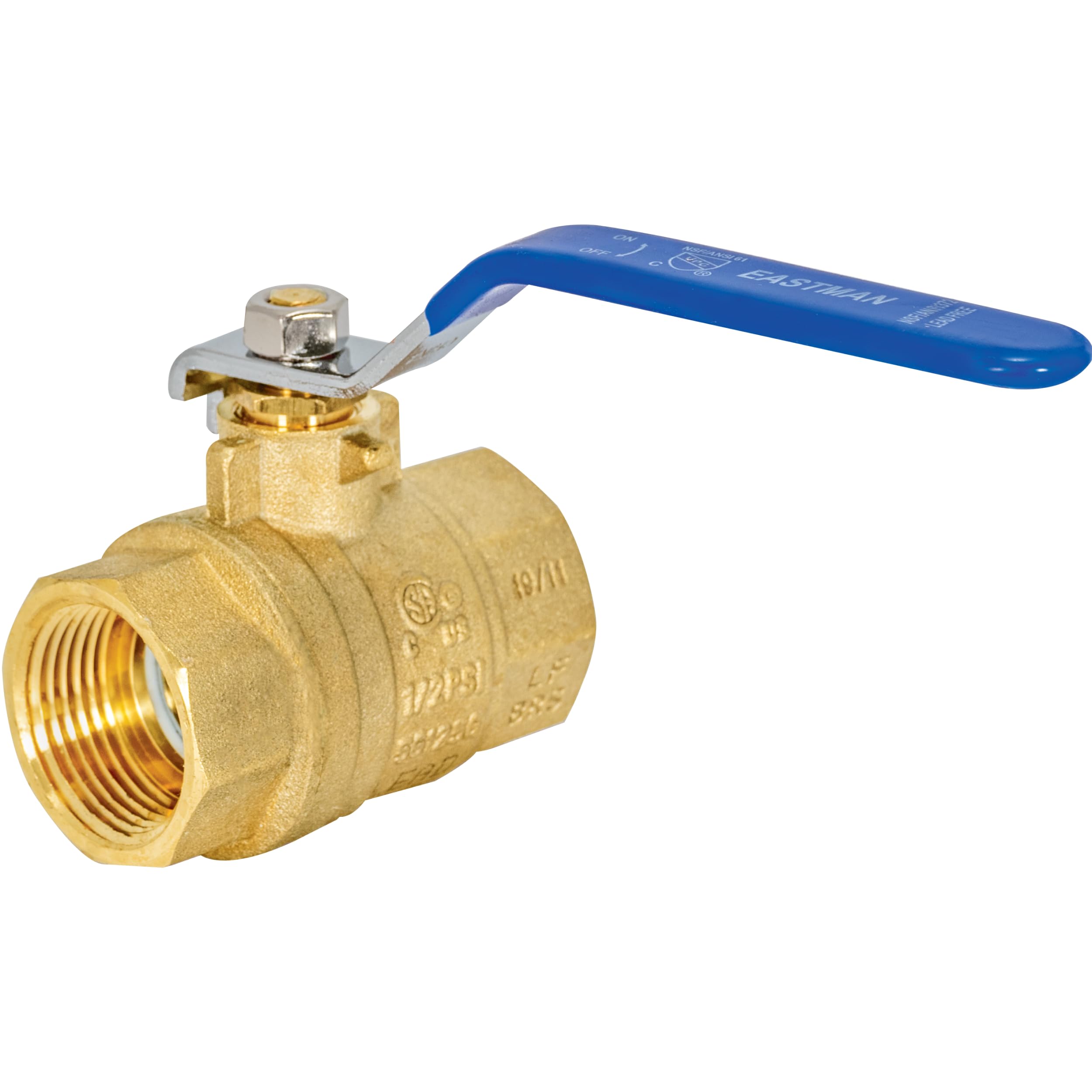
1. Eastman 1 Inch IPS Heavy Duty Full Port Ball Valve, Brass Plumbing Fitting, 20049LF
Our pick — over 4.5★ from 500+ verified ratings; the strongest balance of quality and price.
The heavy brass shut-off that takes a water heater’s worst and keeps flowing.
If your system runs hot and under serious pressure, this is the valve to beat. It is built from durable brass with a Teflon seal, and it is rated to withstand up to 600 WOG (water, oil, gas) — a full four times the 150 psi rating of the Valterra PVC swing check below. That rating makes it a natural fit for a water heater drain or a high-pressure line where a plastic body would be out of its depth. At 16 ounces it is noticeably heavier than that 8.96-ounce PVC option, and that heft translates into a solid, confidence-inspiring feel in the hand.
The full port design means the internal opening matches the full 1-inch IPS pipe diameter, so you get maximum flow and minimum pressure drop when the valve is open. The stamped steel handle with a vinyl coating gives a comfortable, reliable grip for turning the flow on and off by hand. It is also UPC approved and CSA certified, and it meets potable water standards, so it is safe to use on drinking-water lines.
Owners use it on water heaters and air tanks, reporting smooth operation and no leaks when installed with tape and pipe dope. Its dependable function and strong value win people over — it does the job for less than expected at this build quality.
Solid Brass Performer
- Rated up to 600 psi for high-pressure systems
- Full port design reduces pressure drop
- UPC approved and CSA certified
The Trade-Offs
- Fastening nut can rust in outdoor exposure
- Threading quality earns mixed feedback
Reach for this if: you need a heavy-duty brass valve for a water heater, air tank, or high-pressure line where 600 psi of headroom gives you confidence.
Look elsewhere if: your application is outdoors year-round and you would rather not replace a rusting nut in under a year.
2. Valterra 200-C15W PVC Swing (No Spring) Check Valve, Clear, 1-1/2″ Slip
The see-through swing check that lets you watch the flapper work in your pool line.
For pool, pond, and aquarium circuits, the standout feature here is the clear PVC body — you can literally see the flapper move and spot any debris caught inside without tearing the line apart. It is a full flow design that keeps flow loss at a swing check to a minimum, and it uses a no-spring mechanism, so there is less to wear out. With a maximum pressure rating of 150 psi and an inlet connection size of 1.5 inches, it is sized for the bigger gravity-fed lines you find around a pool pump or pond filter.
The slip connection is meant to be glued onto PVC pipe for a permanent, leak-resistant joint. Because there is no spring, orientation is critical — this valve needs to sit at the right angle, generally vertical or horizontal, so the flapper seats under its own weight. Buyers report that replacing a 10-year-old pool backflow valve with this unit worked well six months in, and the clear body makes the visual flapper check easy. It is also a fraction of what a pool store would charge for the same job.
Because the flapper has no spring, debris can occasionally stop it from closing fully. A quick jet of water from the feed side clears it, but be aware if your water carries leaves or grit. Durability gets some mixed owner feedback too, so treat the flapper hinge gently.
Visual Verdict: The transparency is the reason to buy this one — you trade a little durability caution for the ability to see exactly what is happening inside your line at a glance.
Who It Beats: At 1.5 inches slip, it covers larger pool and pond connections that the 0.75-inch brass swing check on this list cannot touch.
Perfect pool partner: choose this when you want a cheap, clear, easy-to-install backflow stop for a pool, pond, or aquarium where you can see the flapper working.
Think twice if: your water has heavy debris that could block the flapper, or you need a valve that seals regardless of mounting angle.
3. 3/4″ NPT Horizontal Swing Check Valve, Brass Heavy-Duty Female Thread, DN20
The smooth-bore brass swing check built for the specific demands of a ram pump.
This 0.75-inch NPT swing check is the go-to for anyone running a hydraulic ram pump, and the owners using it for exactly that job say it is well built with smooth insides that help prevent mineral accumulation. The polished inner wall is the key spec here — it resists scaling and clogging, which keeps flow consistent and makes maintenance easier over time. It handles a maximum working pressure of 1.6 MPa (232 psi) and a temperature range from -4°F to 302°F, so it is comfortable in hot and cold water lines, oil, and non-corrosive gas.
The heavy-duty brass body with uniform wall thickness is designed to deliver reliable performance under pressure, and the horizontal swing disc minimizes water hammer — that banging noise you sometimes hear when flow stops suddenly. It is exclusively for horizontal installation, with flow running parallel to the pipe, so plan your mounting accordingly. Owners note the threads are true NPT, which means they mate cleanly and seal without fight.
The one consistent caveat is thread length: the female threads on both ends are short, so you need the mating pipe to reach fully in for a solid seal. This is a fair trade for a valve that owners mention works perfectly in a ram pump setup with decent flow and head, at a price that undercuts the hardware store.
Built for Flow
- Polished inner wall resists scaling
- 232 psi rating handles hot and cold lines
- True NPT threads seal cleanly
Measure First
- Threads on both ends are short
- Horizontal-only installation
Ram pump ready: this is the valve to grab when you need a reliable brass swing check for a ram pump or any horizontal line up to 232 psi.
skip it if: your install is vertical, or your pipe threads are too short to reach into the female ends fully.
4. Homewerks 1-Inch PVC Spring Check Valve, Solvent, Schedule 40

The spring-loaded PVC check that seals tight and keeps pond water from flowing backward.
This is a straightforward, budget-friendly spring check valve built from Schedule 40 PVC with solvent connections — you glue it into a 1-inch PVC line for a permanent, leak-resistant joint. The spring-loaded mechanism means it seals positively even when installed at angles that would trip up a no-spring swing check, and its tight sealing is exactly what owners praise most. One used it to stop backflow into a pond circulation system during a power outage, and another relied on it with a high-pressure masticating toilet — both reported it sealed without issues.
It works well for preventing any kind of backflow and has been running for six months in some installs with no problems. The solvent-weld install is straightforward if you are comfortable with PVC primer and cement. It is a solid value for a dependable PVC check valve, especially compared to the pricier brass options on this list if you do not need their pressure headroom.
The honest caveat: durability is a mixed note, with a few units reportedly breaking after a couple months of use. Another owner found the opening force a bit high, limiting flow — a situation they fixed by removing the spring and running the valve vertically with flow pointing up. For most jobs it seals fine and stays reliable, but it is worth buying with realistic expectations for a PVC-body valve at this budget tier.
Tight-Seal Take: the sealing performance is the thing owners praise most — this valve does not let anything sneak backward through a glued PVC joint.
Reality Check: a few units have broken in the first couple of months, so this is a value pick rather than a set-and-forget forever valve.
Grab this for: a cheap, dependable spring check in a glued PVC line where you want positive backflow prevention in any orientation.
Pass if: you need a valve that will never need replacing after a rough season, or your flow is strong enough to fight the spring’s opening force.
5. MIDLINE VALVE PVC Inline Check Valve for Backflow Prevention 2” Solvent Connections White Plastic

The big 2-inch PVC spring check that rescued a failing sprinkler system mid-heatwave.
When your line is 2 inches wide, you need a valve that matches that scale, and this Midline Valve unit brings a stainless steel spring-loaded check to large PVC runs. It is rated at 150 psi at 73°F with a cracking pressure of just 0.5 PSI — meaning it opens with almost no resistance, so a low-pressure sprinkler or waterfall pump does not have to fight the valve to move water. The temperature range spans 41°F to 140°F, and it is designed for flow control in landscaping sprinklers, pools, water parks, and aquariums, with the flexibility to install vertically or horizontally.
The defining story here is the owner who fixed their sprinkler system during a heatwave — the valve did exactly what it was supposed to, restoring flow when nothing else would. Another used it on a waterfall pump and called it a lifesaver at a price way below the hardware store. It uses secure solvent connections, so it glues permanently into PVC pipe, and it carries ISO 9002 manufacturer approval along with ANSI.B1.20.1 and ASTM F1970 standards.
Two fit-notes matter here. First, the manufacturer explicitly does not recommend it for potable water, so keep it on irrigation, pool, or aquarium circuits. Second, owners warn against using it on lines carrying solids — one found it clogged on the intake side of a pond pump, though it worked great on the output side. Keep it on clean-water lines and it performs.
Big Flow, Low Resistance
- 0.5 PSI cracking pressure opens easily
- 2-inch size matches large sprinkler and waterfall lines
- Installs vertically or horizontally
Know the Limits
- Not recommended for potable water
- Clogs if the line carries solids
Big-line budget buy: choose this when you need a 2-inch spring check for sprinklers, pools, or waterfalls and you want it to open with almost no pressure.
Not for: drinking-water lines or any circuit where debris and solids will pass through the valve.
6. Merrill MFG CVNL100 1″ No-Lead Brass Check Valve 700 Series, 1″

The no-lead brass check that keeps a shallow well jet pump primed and your pressure tank holding.
For well pump applications, this 1-inch NPT brass check valve is exactly what owners reach for. It is made from high-quality no-lead brass and is IAPMO certified, and it is designed to resist reverse flow so your well pump stays primed when it shuts off. One owner noted perfect system pressure retention at 50 psi — the valve holds the line without letting water drain back down the well. It has an abrasion-resistant O-ring fitted to the poppet for a positive seal, which is the detail that keeps it leak-proof over time.
The 1-inch x 1-inch female NPT connection threads directly onto standard brass pipe and fittings, making it easy to install in a pressure tank tee setup. Customers note it works nicely for well pump pressure tank tees, goes in with no leaks, and has nice machining that inspires confidence. It is rated at 200 psi (Maximum Pressure: 200 psi), giving solid headroom above typical well system pressure, and it can be used in both vertical and horizontal positions.
The build quality is the thing everyone raves about — owners call it well-built, sturdy, and a good value for a brass check valve. The honest fit-note is that compatibility opinions are mixed, and the manufacturer notes this valve may not fully stop reverse flow under all conditions, so it is best suited for certain setups like a well pump or pressure tank rather than every backflow scenario.
Quality Built: the no-lead brass construction and O-ring poppet seal are what win owners over — it is sturdy and holds pressure without dripping.
Best-Fit Note: this shines on shallow well jet pumps and pressure tanks, but it is not a universal cure for every reverse-flow situation.
Well-system winner: pick this when you need a 1-inch no-lead brass check valve for a well pump, pressure tank, or any line where leak-proof sealing is the priority.
Consider the catch: if your setup demands guaranteed backflow stoppage in every condition, this valve’s mixed compatibility reviews suggest checking your specific application first.
7. Merrill CVNL125 1-1/4″ No-Lead Brass In-Line Check Valve 700 Series
The larger no-lead brass check that replaces a hardware-store part for half the price.
This is the big brother of the CVNL100, stepping up to a 1-1/4 inch x 1-1/4 inch female NPT connection for larger well and irrigation lines. It is built from high-quality no-lead brass and is IAPMO certified, and it is rated at 200 psi (Maximum Pressure: 200 psi) with the same abrasion-resistant O-ring poppet seal as its smaller sibling. It prevents backflow in well or irrigation systems and works in both vertical and horizontal positions.
The owner stories here are about longevity and value. One buyer installed a previous unit from this same line over two years ago and it is still working great, which is why they came back for a second. Another found it was an exact replacement for the valve on their water line at about half the price of the local hardware store. The internal poppet works smoothly, seals completely, and seems sturdy, and the brass threads are well cut and create a leak-free connection on both ends.
The construction is solid and comparable to the branded valves sold by a reputable home DIY retailer, but at a price well below it. With a 4.6-star crowd favorite across a few hundred owners, this is a dependable choice for anyone who needs the larger 1-1/4 inch size without paying retail brass prices.
Value Longevity: the construction is solid enough that owners are coming back for second units years later — the durability does the selling.
Big-Size Edge: this covers the 1-1/4 inch NPT gap that smaller brass checks cannot, making it the go-to for larger well and irrigation lines.
Choose this for: a larger 1-1/4 inch well or irrigation line where you want no-lead brass reliability at a fraction of hardware-store pricing.
pass on it if: your pipe is 1 inch or smaller — the CVNL100 covers that size at a lower price.
8. HYDROSEAL Sharkfellow 1” PVC True Union Ball Check Valve with Full Port, ASTM F1970, with EPDM Seals
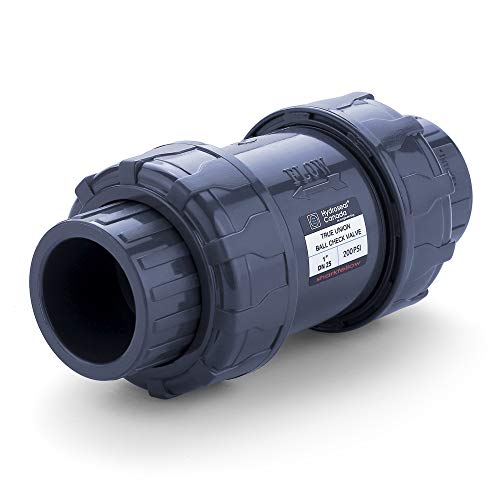
The service-free PVC union check that some owners say will literally work forever — if mounted right.
This 1-inch PVC true union ball check valve is built for commercial plumbing, aquariums, irrigation, swimming pools, water parks, and OEM applications. The standout design feature is the true union — it allows for easy removal without breaking down the piping connection, so you can pull the valve out for service or replacement while leaving your pipe run intact. It is rated at 200 PSI at 72°F working pressure, and it is ASTM F1970 approved with EPDM seals for corrosion-free operation.
The service-free design means it operates without any adjustments or settings, and the corrosion-free construction means it will never jam or stick from rust. Reviewers point out it is way better quality than the check valves they used to buy at the hardware store, and it came with a set of replacement o-rings. One owner put it on a horizontal pool install and said it works flawlessly, auto-closes, has near-zero pressure loss, and prevents backflow.
The critical installation note: this unit only works properly when installed vertically with the arrow pointing up. Mounted that way, owners say it literally works forever; mounted vertically the wrong way or in some positions, it can be noisy. Functionality and leakage get mixed owner feedback, with a minority reporting water leakage issues, and a few mention the valve can be loud in certain orientations. There are no spare parts available, and the union threads are non-standard, so a full replacement is needed if it ever fails — one unit lasted 3 years and 2 months before the threads snapped.
Service-Free Design
- True union allows removal without breaking pipe
- Corrosion-free, never jams from rust
- 200 psi rated with EPDM seals
Mount It Right
- Only works properly vertically with arrow up
- No spare parts; threads are non-standard
- Can be noisy in wrong orientation
Best for: a sump pump or pool line where you want a service-free PVC union valve and can commit to a strict vertical, arrow-up install.
Not ideal if: your line runs horizontal or you dislike the idea of a full replacement when the non-standard threads eventually fail — there are no spare parts.
Understanding the Specs
Pressure Rating (PSI)
This number tells you the maximum pressure the valve body can safely handle before it risks failing. A brass valve rated at 600 psi is overkill for a garden sprinkler but essential for a water heater or boiler line. A PVC valve at 150 psi is perfectly fine for pool pumps and irrigation running at typical household pressure. Always match the rating to your system’s actual operating pressure — going higher than you need just costs more, going lower risks a burst.
Connection Type: NPT vs Slip vs Solvent
NPT (National Pipe Tapered) is the standard tapered thread that seals as you tighten it onto a threaded pipe or fitting — it is removable and serviceable. Slip connections slide over PVC pipe and are glued, while solvent connections are welded with PVC primer and cement for a permanent joint. If you want to take the valve off later, choose threaded. If you want the cleanest permanent PVC seal, choose solvent or slip.
Swing vs Spring vs Ball Mechanism
A swing check uses a hinged flapper that falls shut when flow stops — simple and reliable but sensitive to mounting angle. A spring-loaded check pushes a poppet or disc shut with spring tension, sealing in any orientation. A ball check lifts a free ball off its seat with flow and drops it back down to seal — great for vertical lines with debris. Your mounting angle and flow direction decide which mechanism works.
Full Port vs Standard Flow
Full port means the internal opening matches the full pipe diameter, so there is maximum flow and minimum pressure drop when the valve is open. Standard flow valves have a slightly reduced opening, which can create some restriction. For high-flow systems like pumps and water heaters, full port is worth the small premium because it keeps pressure and flow where they should be.
FAQ
What is the difference between a ball check valve and a swing check valve?
Can this valve be installed vertically or horizontally?
What does the pressure rating mean for my system?
Can I use a PVC check valve on my drinking water line?
Why does my check valve make noise when installed vertically?
What size check valve do I need for my pipe?
How long does a check valve last?
Is a spring check valve better than a no-spring swing check?
Will a check valve prevent my pump from losing prime?
Final Thoughts: The Verdict
For the majority of shoppers, the ball check valve winner is the Eastman 1-Inch Full Port Ball Valve because its 600 psi brass construction and full port design handle the toughest water heater and high-pressure jobs with total confidence. If you want a see-through PVC option for your pool or pond, grab the Valterra Swing Check — the clear body lets you watch the flapper work. And for a well pump or pressure tank where leak-proof no-lead brass is the priority, the Merrill CVNL100 is the one to reach for.
How We Picked
We do not accept paid placement. Every pick is matched to a real buyer and a real use-case; we do not hands-on test units.
Sources & Methodology
Specifications: manufacturer listings and product documentation. Review insights: verified customer reviews, as of August 2026. Pricing: not shown on this page (it changes often); check the current price via the retailer link.
As an Amazon Associate, Gadgets Feed earns from qualifying purchases. This does not affect which products we feature.