
Our readers keep the lights on and my morning glass full of iced black tea. As an Amazon Associate, I earn from qualifying purchases.
Specs are compiled from manufacturer listings and verified buyer reviews and can change over time — please confirm the key details on the product page before buying.
You want a podcast that sounds professional, but you don’t want to drain your savings to get there. The real challenge is choosing among dozens of budget mics, where the right pick depends on your room’s noise level, your interface, and your voice.
I’m Min — the founder and writer behind Gadgets Feed. This guide is built by comparing the manufacturers’ published specifications and the patterns across verified customer reviews, so you get each pick’s real strengths and trade-offs instead of marketing spin.
Starting your first show or ditching a scratchy headset? The right budget microphone for podcasting depends on your room’s noise level and how you connect it to your gear.
Our Picks at a Glance

How To Choose The Best Budget Microphone For Podcasting
Before you click buy, ask yourself: is your recording space quiet and treated, or are you fighting a fridge hum and bare-room echo? That answer decides between a dynamic mic (which ignores background noise) and a condenser mic (which captures more detail but also more of your room).
Match the connection to your workflow
USB mics plug straight into your laptop and record instantly — perfect if you just want to hit record and go. XLR mics need an audio interface to translate the signal for your computer, which adds cost and setup, but opens the door to cleaner preamps and future upgrades. Some mics do both, letting you start with USB and grow into XLR later.
Let the pickup pattern do the heavy lifting
Most podcast mics use a cardioid pattern, meaning they capture sound from the front and reject noise from the sides and rear. This pattern is essential in a shared space, blocking out background chatter and keyboard clatter. Keep the mic close — roughly a fist to a hand’s width from your mouth — and the cardioid pattern will ignore the keyboard clatter and your roommate’s TV.
Count the accessories you actually need
A pop filter tames those explosive “p” and “b” sounds, and a shock mount stops desk bumps from reaching the capsule. Many budget kits bundle these in, which can save you money and a separate shopping trip. Check whether the stand is sturdy enough for your desk or if a boom arm is the smarter way to position the mic at mouth level.
Quick Comparison
| Model | Best For | Connection | Pickup Pattern | Type | Amazon |
|---|---|---|---|---|---|
| Shure SM58★ Best Overall | Lifelong durability & vocal clarity | XLR | Cardioid | Dynamic | Amazon |
| HyperX SoloCast 2Best Value | Plug-and-play gaming & streaming | USB-C | Cardioid | Condenser | Amazon |
| MAONO PD100Studio Style | All-metal broadcast tone for less | XLR | Cardioid | Dynamic | Amazon |
| 512 Audio Skylight | Rich studio vocals on a budget | XLR | Cardioid | Condenser | Amazon |
| FDUCE SL40+ | USB/XLR flexibility with boom arm kit | USB & XLR | Cardioid | Dynamic | Amazon |
| MXL BCD-1 | Deep, rich voice broadcast work | XLR | Cardioid | Dynamic | Amazon |
| Samson Q2U | The safest first mic with USB & XLR | USB-C & XLR | Cardioid | Dynamic | Amazon |
| Sennheiser Profile | Compact, premium USB simplicity | USB-C | Cardioid | Condenser | Amazon |
In‑Depth Reviews
1. Shure SM58 Pro XLR Dynamic Vocal Microphone
Our pick — over 4.5★ from 14,500+ verified ratings; the strongest balance of quality and price.
The road-tested workhorse that turns a flat voice into a broadcast.
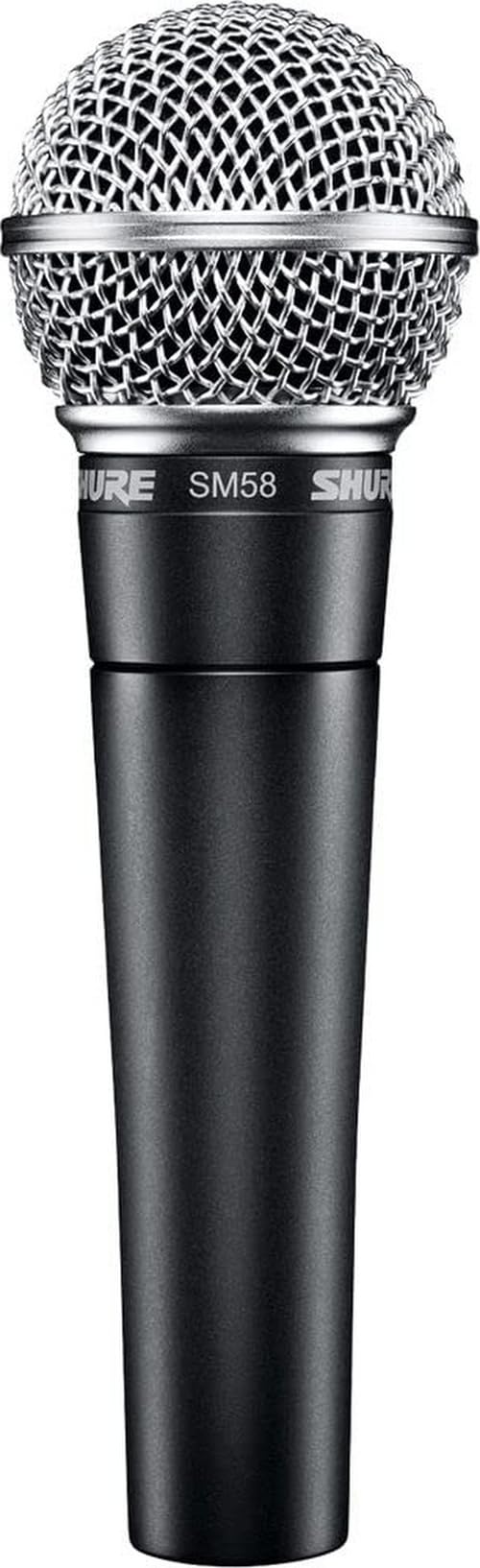
If you want the sound that has defined stages and studios for generations, this is it. The SM58 is a dynamic mic with a precision cardioid pattern that focuses tightly on your voice while pushing aside background noise and feedback, so your podcast stays clean even in a lively room. Its frequency range spans 50 Hz to 15 kHz, with a subtle midrange lift that adds warmth and articulation to spoken word.
The build is famously rugged — a metal enclosure and reinforced stand adapter built to survive touring, which for a podcaster means it shrugs off drops and desk bumps without complaint. You will need an XLR audio interface to use it, so it is not a plug-and-play option from the start. Buyers report it sounds best close up: “Best at 2 inches away, angled to avoid plosives,” which is a reminder to keep your mouth near the grille and off-axis.
Reviewers consistently call it an industry standard, praising its rejection of ambient noise and its ability to add volume and substance to voices that previously sounded flat on cheaper USB mics. The one honest friction is that it demands the extra gear of an interface, and occasional third-party sellers ship units with loose heads — so it pays to buy from the manufacturer directly.
Why it wins on stage and desk
- Built like a tank, survives real drops
- Rejects background noise cleanly
- Sound quality owners rave about — the top theme across reviews
Know before you buy
- Needs an XLR interface, not just a USB port
- Best results within a couple inches of the grille
Grab it if: you are building a serious home studio and want a mic that will outlast every other piece of gear you own.
Look elsewhere if: you want to plug straight into a laptop with zero extra hardware.
2. HyperX SoloCast 2 – Gaming USB Condenser Mic
A tiny all-in-one mic that makes your desk and your audio instantly better.
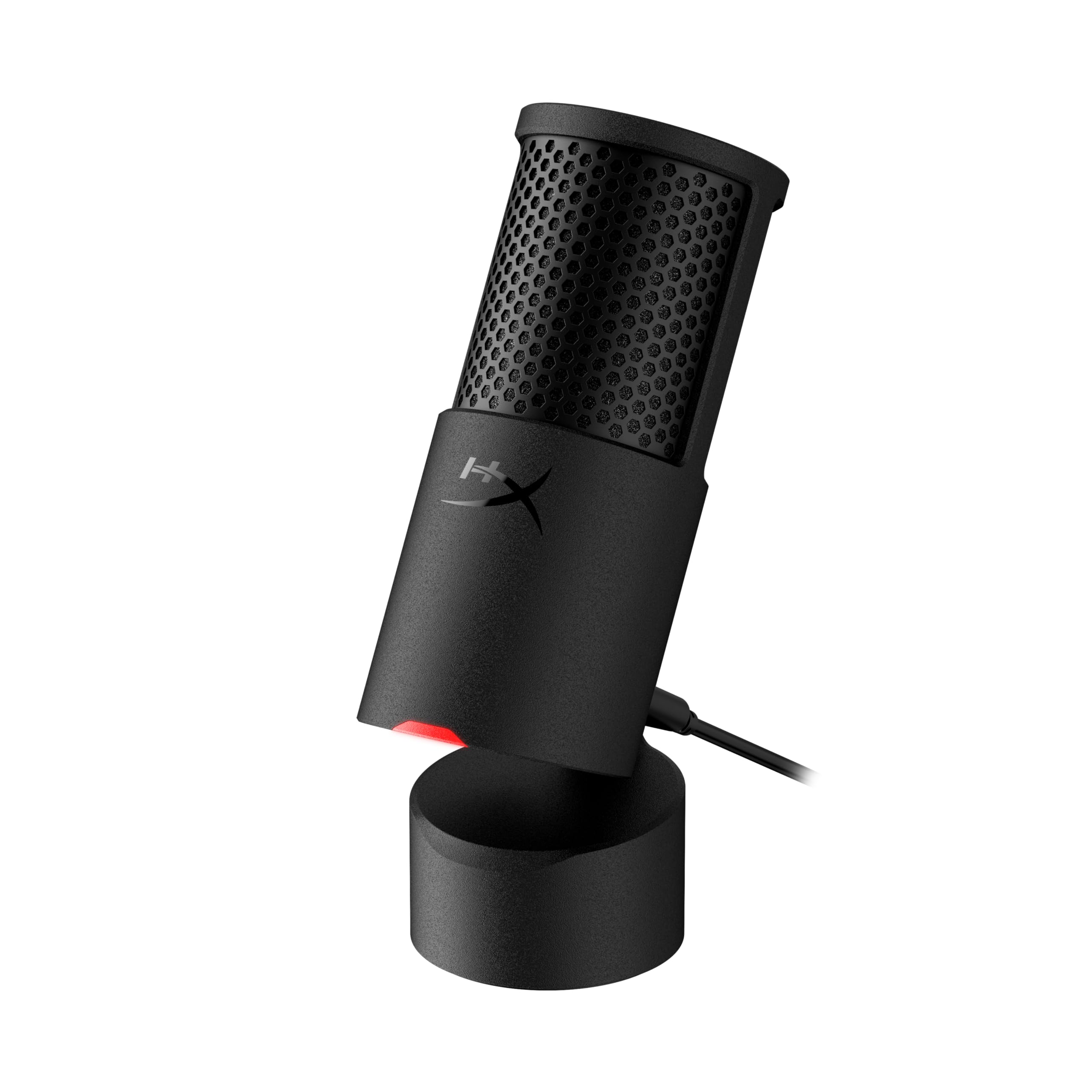
For streamers and gamers who want studio-quality recording without touching a mixer, the SoloCast 2 is the pick. It captures 24-bit audio at a 96kHz sampling rate through a quality condenser capsule, giving you high-resolution recordings straight over a USB-C connection. Everything is built in — a foam pop filter, a tiltable stand, and even a shock-mount-style suspension system that cuts vibrations from your desk.
The cardioid pattern (which picks up sound from the front and reduces it from the sides and rear) lets you speak naturally, and owners mention “clear voice pickup from up to 25-30 ft away” — though they warn it still catches background noise despite suppression. A tap-to-mute button with an LED keeps you in control, and the built-in 3/8″ and 5/8″ threads let you mount it on a boom arm when you outgrow the compact stand.
The standout convenience is the plug-and-play USB setup with no extra gear needed, and the HyperX NGENUITY software lets you shape the sound with high-pass, low-pass, or voice-enhancement filters saved directly to the mic. The recurring trade-off is the USB-C port on the lower back, which some find loose enough to unplug with movement — a small reason to secure the cable with a boom arm.
What wins people over: the quality-per-dollar is the most-praised theme — a compact, premium-feeling mic that rivals pricier condensers.
The honest catch: it is a sensitive condenser, so a quiet room matters, and the tap-to-mute LED logic (red means live) takes a session to get used to.
Best for: the gamer or streamer who wants broadcast-quality sound with zero setup headache.
Think twice if: you record in a noisy room — this will pick up what your keyboard is doing.
3. MAONO PD100 XLR Podcast Microphone
A broadcast-style dynamic mic with a heavy all-metal body and a handy rod extender.
The PD100 is built for the podcaster who wants that classic radio sound on a budget. As a dynamic XLR mic with a cardioid pattern, it focuses on your voice and cuts out the room, with a frequency range of 60 Hz to 14 kHz delivering clean, mellow audio. A built-in double-layer pop filter tames the plosive “p” and “b” blasts before they reach the capsule, so your recordings stay smooth without a separate screen.
What makes it feel more premium than its price is the kit: a heavy round metal base, a 6.56 ft XLR cable, and a 2.36-inch rod extender that lifts the mic closer to your mouth for better pickup. The metal body and sleek compact look earn constant praise, with buyers calling the construction legit all-metal and the setup easy. Connections are XLR only, so it pairs with an audio interface or mixer like the Maonocaster AME2.
The performance punches above its weight — one owner called it “brighter than Shure SM7B but accurate lows,” which is high praise at this level. The honest caveat is that it is analog-only with no USB option, and some find it needs a bit of gain to sound its best in non-studio settings.
Praise most: the quality of the all-metal build is what owners talk about first, with value for money a close second.
Note: sound quality earns mixed feedback — great in a treated space, less forgiving in a lively one.
Reach for this if: you already own an audio interface and want a professional-looking dynamic mic that sounds better than it should.
skip it if: you need a direct USB connection with no extra hardware.
4. 512 Audio by Warm Audio Skylight Condenser Mic

A vintage-inspired condenser that delivers rich, warm studio vocals for less than a dinner out.
If your voice deserves that polished, “expensive studio” tone, the Skylight is a serious contender. It runs on a vintage-inspired 34mm gold-plated large diaphragm capsule that captures detail with warmth and clarity, tuned specifically for the human voice. The cardioid pattern keeps ambient room noise down, and the custom metal mesh pop filter plus low-profile shock mount are both included in the box, saving you the usual accessory spend.
This is a condenser, so it needs phantom power from an audio interface — and it is noticeably heavy, with a build quality buyers describe as gorgeous and studio-oriented. What earns the praise is the smooth, dark, non-fatiguing tone; owners say it works brilliantly for deep vocals and voiceover work, with solid output that doesn’t even require an extra preamp. One buyer who replaced an SM58 called it “crisp, airy, non-sibilant,” proof of how clean the top end is.
The weight is part of the charm — it feels premium in the hand — but it also signals it is a delicate studio tool, not a throw-in-a-bag travel mic. It is XLR only, so you need the interface, and you’ll want to keep it on the included shock mount to avoid handling noise reaching that sensitive capsule.
What everyone raves about: the sound quality is the top theme, with value for money right behind it — a mic that sounds far above its price.
The catch: it is heavy and sensitive, so it rewards a careful desk setup and a quiet, treated room.
Perfect for: the podcaster with a good interface who wants rich, warm vocals and doesn’t mind a larger footprint.
Not for: noisy shared rooms, where a condenser will expose every rustle.
5. FDUCE SL40+ Podcast Microphone with Boom Arm

A dual-interface dynamic mic that ships with a boom arm, ready for desk or studio.
The SL40+ is for the podcaster who wants options. It supports both USB and XLR output, so you can plug it straight into a laptop today and move to a professional interface tomorrow — all without buying a new mic. As a dynamic mic with cardioid pickup and a 50 Hz to 14 kHz frequency range, it focuses on your voice and keeps environmental noise out of the recording.
What sets this kit apart is the included boom stand: an all-metal construction with a table mount clamp that lets you swing the mic to mouth level and clear your desk. Buyers consistently report receiving compliments on their audio quality, with voices coming through clear and full for gaming, calls, and voiceovers. The one-key mute button works in both USB and XLR modes, and in USB mode a long press switches it to control mic or headset volume, so you can monitor yourself in real time.
It records at 96kHz/24bit (high-resolution audio that captures detail), and the built-in digital voice-isolation processing cuts background noise without extra software. The trade-off: it’s a dynamic mic, so you must speak close to the grille, and the included boom arm is entry-level — fine for a clean desk, but not a heavy studio arm.
Praise most: the sound quality is what owners mention first, with the value for money right behind it.
The honest limit: it is an entry-level dynamic, so it likes proximity — a couple inches from your mouth — for its best tone.
Best for: the beginner who wants USB simplicity now and the XLR upgrade path later, all in one box.
Look elsewhere if: you need a precise, heavy-duty broadcast arm for constant repositioning.
6. MXL BCD-1 Dynamic Broadcast / Podcast Microphone

A radio-pro favorite that makes deep, rich voices sound like they belong on air.
The BCD-1 is built with broadcast in mind, and it shows in the details. It is a large-diaphragm cardioid dynamic mic with high output and low noise, meaning you don’t need to push your interface’s gain as hard as you might with other dynamics. Inside, it packs an internal shock mount and pop filter to reduce plosives and handling noise, plus a tuned grille that eliminates internal reflections for cleaner audio.
Where this mic earns its keep is on voices with depth. A 30-year radio professional found it rivals mics costing several times more, praising its crisp high end and nice bottom end with less gain needed. In a direct five-mic comparison against names like the Rode NT1 and Sennheiser MKH 416, the BCD-1 came out best for singing, emotion, and deep voices — though the Sennheiser won for pure voiceover work. It weighs just 16 ounces, and the included carrying case, windscreen, and stirrup mount round out the kit.
The XLR connection means you’ll need an interface, and the design favors close proximity for speech, so keep it near. The build feels sturdy on the mount, though some note it is not built with the same heft as higher-end rivals. For deep, rich spoken-word work, though, this is a standout value that punches far above its price.
What wins people over: the sound quality is the top praise, with value for money close behind — a broadcast-grade dynamic at a fraction of the usual cost.
The caveat: it shines on deep, rich voices; nasal or brighter voices may not love its character.
Grab it if: you have a deeper voice and want that warm, radio-ready broadcast tone without spending big.
Pass if: you need USB connectivity or you have a brighter, thinner vocal that needs a different flavor.
7. Samson Q2U USB/XLR Dynamic Microphone

The most trusted first podcast mic, blending USB ease with a future XLR path.
If you want the lowest-risk purchase in podcasting, the Q2U is it. This dynamic handheld mic gives you both USB-C and XLR connections, so you can plug directly into any computer today and switch to a professional interface later without changing mics. Its frequency response spans 50 Hz to 15 kHz, and the dynamic capsule keeps background noise low while delivering a clear, warm, natural voice.
The kit is complete from the start: a tripod desktop stand, tripod extension, mic clip, windscreen, USB-C cable, and XLR cable — everything you need to start recording immediately. Owners consistently call it fantastic value, with many noting it is one of the few genuinely good dynamics at this price. The sound quality gets compared favorably to much pricier mics, with a satisfying clarity that works for podcasts, voiceovers, and streaming alike.
The dynamic nature means it wants you close to the grille, and the included tripod clamp is a known weak point — flimsy is the word most use. Durability is genuinely impressive, with some reporting years of use and surviving drops. The recurring quirk is a boot-time flashing light on some units that needs a USB replug, but a firmware update addresses it, and the 3.5mm headphone port is a nice bonus for zero-latency monitoring.
Why it is the safe choice
- USB-C and XLR in one — grow without rebuying
- Complete kit in the box
- Quality is the most-praised theme by far
Where it cuts corners
- Tripod stand clamp feels flimsy
- Requires close speaking distance
Ideal first mic: the best all-rounder for someone who wants to start today and upgrade their setup later without replacing the mic.
Worth noting: the flimsy stand angle is the most common gripe, so a boom arm is a smart first add-on.
8. Sennheiser Profile USB Cardioid Condenser Mic

A German-engineered compact USB mic that puts pro controls on your desk, not in software.
For the podcaster who wants a premium experience without the XLR learning curve, the Sennheiser Profile delivers. It is a cardioid condenser with a metal housing and that classic Sennheiser build quality, delivering a natural, warm sound that accentuates the body and presence of the human voice. The plug-and-play USB-C connection gets you recording in seconds, with no software required.
Where this mic stands apart is the physical control set: gain, mix, and volume knobs sit right on the body, along with a mute button and a built-in headphone jack for direct, zero-latency monitoring. No digging through settings menus mid-session — you twist a dial and you’re done. Buyers who upgraded from a Blue Yeti call it a clear step up in sound, with a compact size that keeps the desk clean and the voice front and center.
The pickup is strictly front-facing, so off-axis audio drops off — you need to sit in front of it, which is exactly what a cardioid pattern should do. The included table stand is basic, and owners recommend a boom arm to get it to mouth level. One reviewer noted a Windows 11 recognition hiccup that Sennheiser support helped resolve via settings, so the brand’s customer service is a real plus.
What stands out: the quality and sound are the top two praised themes, with a build that feels worth more than it costs.
The trade-off: it is a condenser, so it is sensitive — pair it with a quiet room and a boom arm for best results.
Best for: the podcaster who wants premium, no-fuss USB audio with hardware controls and a compact footprint.
Not for: noisy rooms, where a condenser will capture the clutter a dynamic would ignore.
Understanding the Specs
Dynamic vs Condenser
A dynamic mic uses a moving coil to capture sound. It is sturdy, ignores background noise well, and needs you to speak close to it — ideal for untreated rooms and live settings. A condenser mic uses a charged capsule and is far more sensitive, capturing detail and air but also every rustle and echo. Condensers need phantom power from an interface; dynamics usually do not.
USB vs XLR
A USB mic plugs straight into your computer and is ready in seconds — the easiest way to start. An XLR mic sends an analog signal to a separate audio interface, which converts it for your PC. XLR setups cost more and take more space, but they give you better preamps, lower noise, and the ability to swap mics later. Hybrid mics offer both, so you can start simple and grow.
FAQ
Would a dynamic or condenser mic be better for my podcast?
I have no audio interface, will an XLR mic work with my laptop?
What exactly does a cardioid pickup pattern do for me?
Why does my voice sound thin on a cheap USB mic?
How far should I sit from the microphone?
Do I really need a pop filter and shock mount?
Is a boom arm worth buying over using the desk stand?
What is phantom power and will I need it?
Final Thoughts: The Verdict
For most people, the budget microphone for podcasting winner is the Samson Q2U because it is the lowest-risk all-rounder — USB-C for today, XLR for tomorrow, and a complete kit in the box. If you want to plug straight into a laptop with zero fuss and a tiny footprint, grab the HyperX SoloCast 2. And if you already own an audio interface and want the most premium vocal tone for your money, the MXL BCD-1 is the one to reach for. Match the mic to your room’s acoustics and your interface, and your listeners will hear a professional broadcast, not your budget.
How We Picked
We do not accept paid placement. Every pick is matched to a real buyer and a real use-case; we do not hands-on test units.
Sources & Methodology
Specifications: manufacturer listings and product documentation. Review insights: verified customer reviews, as of August 2026. Pricing: not shown on this page (it changes often); check the current price via the retailer link.
As an Amazon Associate, Gadgets Feed earns from qualifying purchases. This does not affect which products we feature.