
Our readers keep the lights on and my morning glass full of iced black tea. As an Amazon Associate, I earn from qualifying purchases.
Specs are compiled from manufacturer listings and verified buyer reviews and can change over time — please confirm the key details on the product page before buying.
The hardest part of editing video on a budget isn’t the timeline — it’s trusting what your screen shows you. A monitor that shifts colors or crushes shadows forces you to grade blind, then redo everything on another display. This guide cuts through the noise to find the panels that keep skin tones natural and blacks readable without emptying your wallet.
I’m Min — the founder and writer behind Gadgets Feed. This guide is built by comparing the manufacturers’ published specifications and the patterns across verified customer reviews, so you get each pick’s real strengths and trade-offs instead of marketing spin.
Whether you cut on a Mac or a PC, the right screen makes every grade easier. This is your practical shortlist for a budget monitor for video editing that balances color accuracy, resolution, and daily comfort.
Our Picks at a Glance


How To Choose The Best Budget Monitor For Video Editing
Editing is a marathon, not a sprint. You need a panel that shows accurate colors, enough pixels to see fine detail, and a stand that lets you work for hours without neck strain. Here’s what actually moves the needle.
Color accuracy is the whole game
Look for a monitor that covers a wide color gamut from the start. A Delta E of under 2 means colors match the source closely, so what you grade is what you export. Factory calibration saves you from buying a separate calibrator.
Resolution buys you room to work
At 27 inches, a 4K (3840 x 2160) panel gives you sharp pixels and plenty of timeline space. A 1440p (2560 x 1440) screen is lighter on your graphics card and still crisp, but you lose some desktop real estate for panels and scopes.
Your desk setup matters as much as the panel
A stand that tilts, swivels, and pivots lets you match the screen to your eye level. USB-C with power delivery keeps one cable running your laptop and charging it, which is a huge win for a tidy editing desk.
Quick Comparison
| Model | Best For | Resolution | Color Gamut | Refresh Rate | Amazon |
|---|---|---|---|---|---|
| LG 27UP650K-W★ Best Overall | True 4K value | 3840 x 2160 | 95% DCI-P3 | 60Hz | Amazon |
| Dell S2725QSSilky-Smooth Pick | High-refresh editing | 3840 x 2160 | 99% sRGB | 120Hz | Amazon |
| ASUS ProArt PA278CVColor Grading Pick | Calibrated color work | 2560 x 1440 | 100% sRGB | 75Hz | Amazon |
| INNOCN 27C1U-D | Mac-friendly 4K | 3840 x 2160 | Delta E < 2 | 60Hz | Amazon |
| Dell S2725QC | USB-C convenience | 3840 x 2160 | 99% sRGB | 120Hz | Amazon |
| ViewSonic VP2756-4K | Pantone-accurate output | 3840 x 2160 | 100% sRGB | 60Hz | Amazon |
| LG 32UN650-W | Large canvas on a budget | 3840 x 2160 | 95% DCI-P3 | 60Hz | Amazon |
| Samsung ViewFinity S8 | Tool-free setup | 3840 x 2160 | HDR10 | 60Hz | Amazon |
| ASUS ProArt PA279CV | Pro-grade 4K color | 3840 x 2160 | 100% sRGB | 60Hz | Amazon |
In‑Depth Reviews
1. LG 27UP650K-W 27-inch Ultrafine 4K
Our pick — over 4.5★ from 300+ verified ratings; the strongest balance of quality and price.
The crowd-pleasing 4K panel that nails color without demanding a second mortgage.
For color-accurate editing while staying affordable, this LG delivers a 27-inch 4K (3840 x 2160) IPS display that covers 95% of the DCI-P3 color gamut (the wider color space used in film and video masters), so your color grades translate faithfully to broadcast. It also supports VESA DisplayHDR 400, a standard that boosts brightness and contrast for a punchier preview. With a 60Hz refresh rate and 5ms response time, it’s built for precision, not esports.
Buyers report: “Great clarity. Super easy to use connected to my laptop for work… it was 1000x better” — the sharpness upgrade over cheaper screens is the recurring theme. The matte anti-glare surface handles overhead office light superbly, which is a lifesaver for long timelines. The ergonomic stand adjusts height, tilt, and pivot, so you can flip to portrait for vertical video or long code.
The catch is connectivity: there’s no USB-C port, so a modern MacBook will need an adapter or a USB-C to HDMI cable. Built-in speakers are also absent, and the FreeSync adaptive sync is a gaming bonus rather than an editing feature. The Switch app splits the screen into up to 6 sections for multitasking, but you may never touch it.
What editors will love
- 95% DCI-P3 gamut for film-accurate color
- Height, tilt, and pivot stand for all-day comfort
- DisplayHDR 400 for better contrast previews
Keep in mind
- No USB-C port for modern laptops
- No built-in speakers
Reach for this if: you want true 4K color accuracy and a fully adjustable stand at a price that beats the premium crowd.
Look elsewhere if: your laptop only has USB-C output and you don’t want to carry an adapter.
2. Dell 27 Monitor S2725QS
A 4K editor’s panel that scrolls timelines at 120Hz — once you try it, 60Hz feels broken.
This Dell is the smoothest panel in this list for editing, with a refresh rate up to 120Hz and AMD FreeSync Premium. Scrolling through a 4K timeline or dragging clips feels liquid-smooth, and the 1500:1 contrast ratio is a step above many rivals — owners mention near-OLED blacks and crisp text for photo and video work on a Mac mini. The 99% sRGB coverage handles web and broadcast color reliably.
The 350-nit brightness and ComfortView Plus (which trims blue light to ≤35%) mean you can grade in a bright room or a dark suite without eye strain. Customers note the matte coating shows a slight grain in dark rooms, and an OLED user flags ghosting in fast games — but for editing, this is a non-issue. The 0.03ms response time spec reads like a marketing figure for motion, yet the panel feels genuinely responsive in practice.
Where it beats the LG above: the 120Hz refresh is double the LG’s 60Hz, and the 1500:1 contrast is 25% higher than the LG’s 1200:1. It also throws in built-in speakers, which the LG lacks. The stand offers height, pivot, swivel, and tilt — plus the ash-white finish looks sharp on a clean desk.
Editor’s read: The 120Hz refresh plus 99% sRGB makes this the best-feeling monitor to work on all day — a genuine step up from the 60Hz crowd above it.
Who beats it: anyone who grades for HDR broadcast might want the wider DCI-P3 of the LG, but for everyday editing, the Dell’s smoothness wins.
A fair caveat: if you also game on an OLED TV, the matte grain and slight ghosting will be noticeable here.
3. ASUS ProArt PA278CV
The factory-calibrated workhorse that treats color as a science, not an afterthought.
This ASUS ProArt is the color-accuracy champion of the mid-range, with Calman Verified Delta E < 2 and 100% sRGB plus 100% Rec. 709 gamut. Delta E measures the difference between what’s on screen and the true color; under 2 is the pro threshold, and this panel hits it straight from the start. Buyers use it daily for photo and video editing on Macs, praising the accurate colors and high resolution.
This 27-inch QHD (2560 x 1440) IPS panel is a smart compromise — it’s not 4K, but it’s sharp enough for editing and far lighter on your graphics card during playback. USB-C delivers 65W of power to your laptop over a single cable, which buyers call “smooth” for keeping a desk clean. The ergonomic stand rotates a full 90 degrees into portrait mode, ideal for vertical video or long documents.
Where it falls short of the 4K picks above: the resolution is 2560 x 1440 versus 3840 x 2160 — that’s a 50% gap in pixel count, so you lose desktop space for panels and scopes. The 5-year warranty (3 years standard plus 2 with registration) and free 3-month Adobe Creative Cloud subscription add value, but reviewers point out the built-in speakers are weak and it’s capped at 75Hz.
The honest trade-off: factory-calibrated color beats raw resolution for grading, but if you need 4K pixel density for fine wrinkle detail, this isn’t it.
Perfect for: the editor who prioritizes accurate out-of-box color over raw pixel count and wants one-cable laptop charging.
Skip if: you need 4K resolution to see every fine detail in your footage at 100% zoom.
4. INNOCN 27″ 4K USB-C Monitor

A plug-and-play 4K panel that charges your MacBook and flips to portrait without drama.
This INNOCN is the Mac-friendly value pick, delivering real 4K UHD (3840 x 2160) on a 27-inch IPS panel with a Delta E < 2 for pre-calibrated color accuracy. Shoppers say it “works flawlessly” with an M2 MacBook Air, charging over USB-C (65W) and auto-powering on with the laptop. The 1.07B colors (8-bit plus FRC) produce smooth gradients, which editors notice in sky and skin tones.
The stand is the story here: it swivels 45° left or right, pivots a full 90° for portrait, and tilts for comfort — all tool-free setup. The 400-nit brightness is among the highest in this group, which helps in a sunlit room. It’s G-Sync compatible, and the HDMI 2.1 port keeps future flexibility.
The trade-off is port selection: buyers call it “mixed,” wishing for more ports on the back. You get one DisplayPort, one USB-C, one HDMI, and a 3.5mm audio jack — but no USB hub for peripherals. The built-in speakers are weak, and the on-screen menu buttons take some getting used to. For a pure Mac editing setup, the single-cable USB-C charging is tough to top at this level.
Buyer consensus: 4K sharpness, spot-on colors from the start, and a fully adjustable stand — let down only by sparse ports and mediocre speakers.
Reach for this if: you want a Mac-compatible 4K panel with USB-C charging and a full pivot stand.
Look elsewhere if: you need a USB hub to plug in a mouse and drive at the same time.
5. Dell 27 Monitor S2725QC
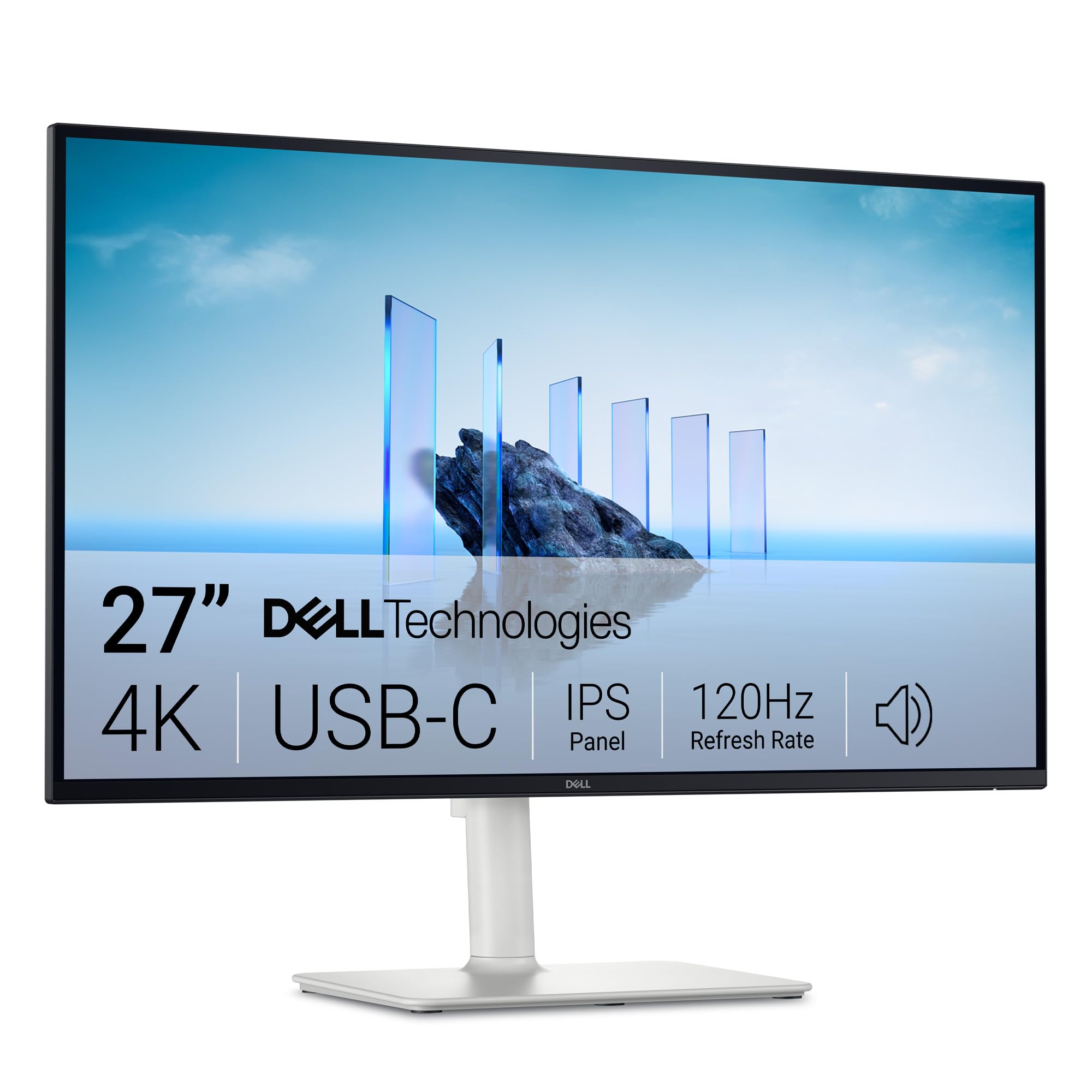
The Dell that combines 4K sharpness with 120Hz smoothness and a clean USB-C desk setup.
This sibling to the S2725QS adds the one feature editors crave: a single USB-C cable (up to 65W power delivery) that charges your laptop and carries the video signal. That means one plug on a MacBook or modern PC, and your desk stays clutter-free. Like its sibling, it offers 4K UHD (3840 x 2160), 99% sRGB, a 1500:1 contrast ratio, and that smooth up-to-120Hz refresh with FreeSync Premium.
Buyers are effusive about the picture: “crisp and vibrant” with “deep blacks” and “surprisingly good speakers” that need no external set. The pop-out USB-A and USB-C ports on the side are a thoughtful touch for plugging in a card reader or drive. The 0.03ms response time and 4ms gray-to-gray spec keep motion clean during preview playback.
The honest concern is reliability — buyers report a minority of units failing within a month, and Dell’s support process drew frustration in one case. The recessed VESA mount needs M4x10mm standoffs if you want to wall-mount. And the on-screen controls sit on the back, which one buyer called awkward after a previous Dell model had front buttons. Most owners still bought a second one for the display quality.
The daily wins
- Single USB-C cable for video and 65W laptop charging
- 120Hz refresh for fluid timeline scrolling
- Surprisingly capable built-in speakers
The watch-outs
- Reliability reports are mixed — occasional failures early on
- Rear-mounted controls are awkward to reach
Best for: the editor who wants a tidy one-cable Mac setup with a smooth 120Hz panel.
A fair note: the reliability reports mean you should test it hard in the first few weeks.
6. ViewSonic VP2756-4K ColorPro
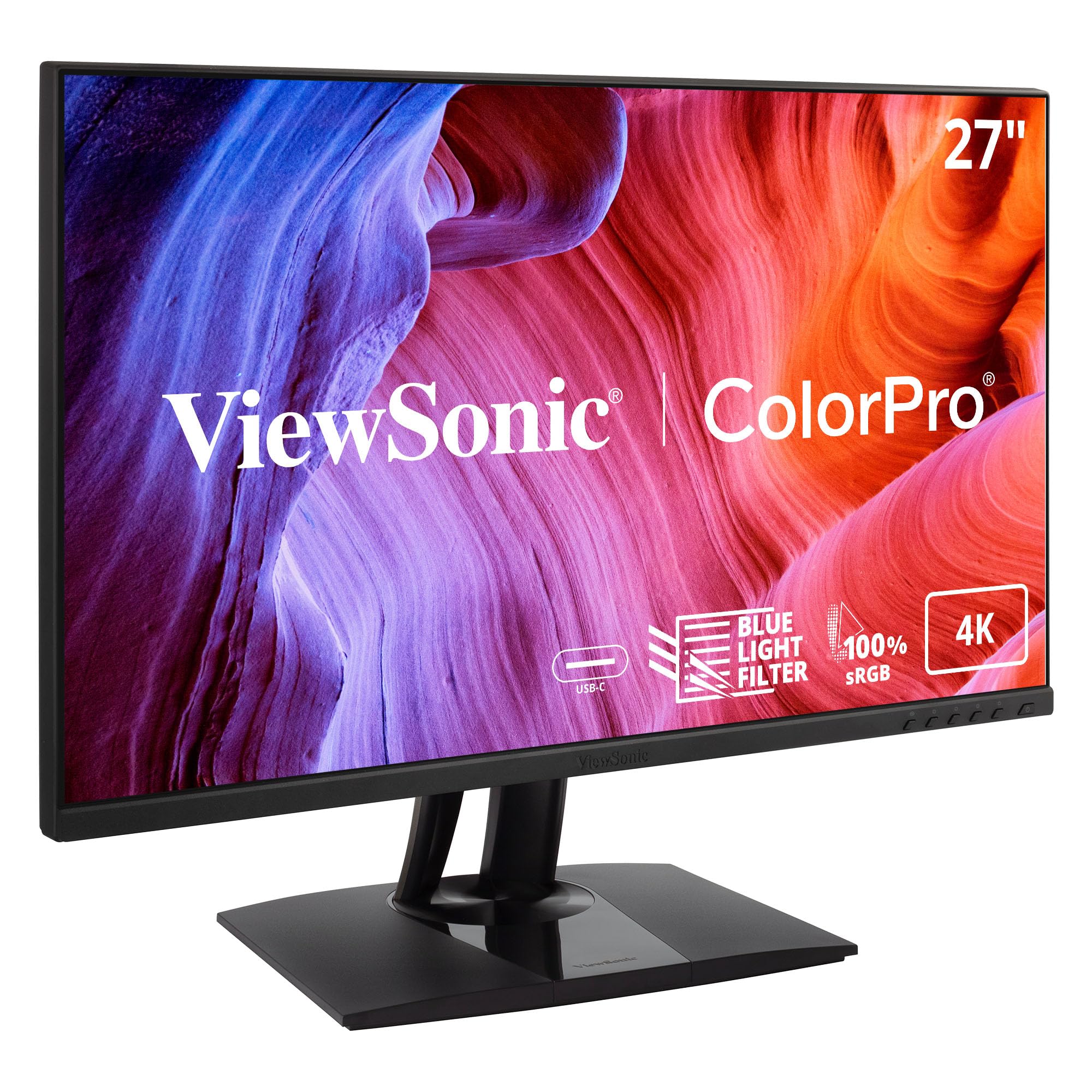
A Pantone-validated 4K panel that matches your MacBook’s color so your exports land right.
This ViewSonic is the premium choice for color-critical work, with 100% sRGB coverage and Pantone Validation — meaning it’s independently certified to reproduce Pantone Matching System colors. That’s a real trust signal for editors whose clients care about brand colors. The 4K UHD (3840×2160) IPS panel at 60Hz balances sharpness and simplicity, and buyers find the color accuracy “matches MacBook” output.
USB-C provides 60W charging over a single cable, and the stand is a highlight — smooth rotation with tilt, swivel, pivot, and height adjustment that buyers call “quality” and “heavy without stand” (that heft is a sign of build quality). The near-borderless 8mm bezel keeps the focus on your footage. Flicker-Free tech (which reduces screen flicker) and a Blue Light Filter help reduce eye fatigue during back-to-back sessions.
The notable gap is Mac portrait rotation — one buyer found it can’t rotate 90° in landscape with a Mac despite the compatibility claim. The on-screen display controls are clunky, though ViewSonic’s software covers the basics. At 350 nits it’s bright but not dazzling, and some buyers flag reliability as mixed — treat the panel gently through delivery.
Editor’s read: For Pantone-accurate output and a rock-solid stand, this is the most professional-feeling panel here — just verify your Mac’s rotation needs first.
Reach for this if: you deliver work where brand color accuracy is non-negotiable and you want a premium stand.
Look elsewhere if: you need to pivot your Mac into portrait mode for vertical video.
7. LG 32UN650-W

The big 32-inch canvas that gives your timeline room to breathe without a premium price.
If you’re cramped on a 27-inch panel, this LG bumps up to 32 inches of 4K UHD (3840 x 2160) real estate — a genuine upgrade for seeing more clips, scopes, and bins at once. It keeps the 95% DCI-P3 color gamut of its smaller sibling, so film-accurate color carries over to the larger screen. The IPS panel delivers a 178° viewing angle, so colors hold when you lean back or share a screen.
Buyers call the picture “vibrant” with “crisp text” and note the color sharpens further after calibration with a colorimeter. HDR10 compatibility adds contrast punch for previewing highlights, and AMD FreeSync keeps motion clean at 60Hz. The height-adjustable stand and 3-side virtually borderless design make it a clean centerpiece.
The honest trade-offs: brightness gets mixed feedback, with some finding it “very dim” from the start — the spec sheet lists 350 nits typical, which works in shaded rooms more than sunlit ones. There’s no USB hub, and the plastic stand wobbles a bit. The 5W speakers are fine for casual listening but not for critical monitoring.
The big-screen verdict: 32 inches of 95% DCI-P3 color for a mid-range price, limited by dim brightness and a wobbly stand.
Perfect for: editors who want maximum timeline space and a larger canvas without jumping to a premium tier.
Skip if: you work in a bright room, where the lower brightness will wash out shadows.
8. Samsung ViewFinity S8 (S80D)
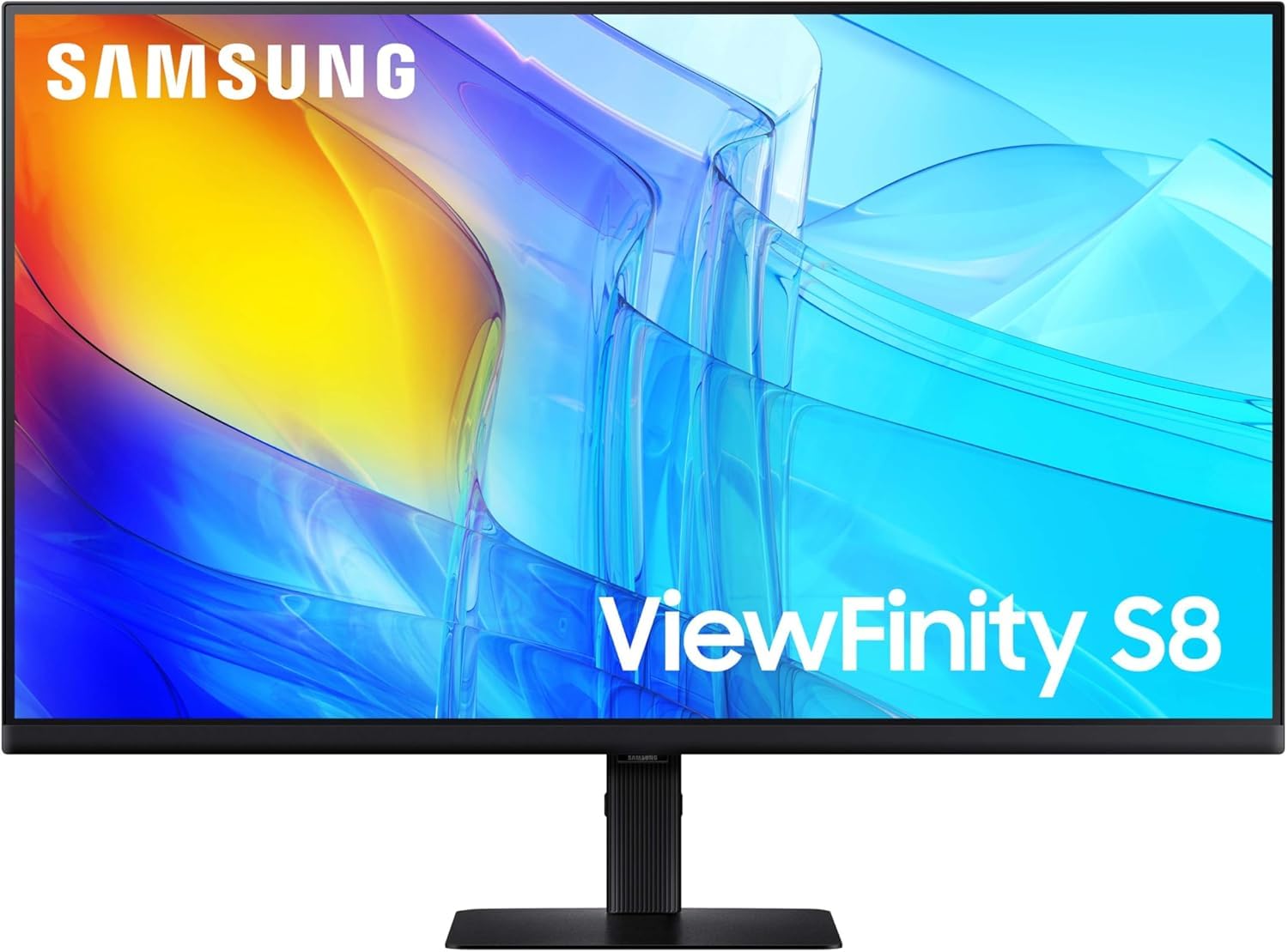
A tool-free 4K stand and HDR10 color that gets you editing minutes after unboxing.
This Samsung stands out for setup speed — the Easy Setup Stand requires no tools or screws, locking in with a simple push. That’s a refreshing break from monitor assembly, and buyers confirm it’s genuinely tool-free. The 4K UHD (3840×2160) resolution delivers high pixel density that makes fine details in footage easy to inspect, which buyers rate as suitable for Photoshop and Lightroom work.
HDR10 brings deeper darks and brighter brights, and the panel is TÜV-certified with an Eye Saver Mode that cuts flicker and blue light — a real comfort win for marathon edit sessions. The stand swivels, tilts, and pivots a full 90 degrees into portrait for long documents with less scrolling. HDMI, DisplayPort, USB-A, and USB-B ports cover multi-device setups, plus a USB hub for peripherals.
The trade-offs: owners mention the controls are a single frustrating button, and there are no built-in speakers (a headphone jack is there). One buyer found it best viewed at 2560×1440 on a Mac mini rather than full 4K, which is worth testing. The 3-year warranty adds confidence, but the brightness maxes at 350 nits (a measure of screen luminance) — fine for indoor editing.
Smart-buyer take: the fastest path from box to editing thanks to the tool-free stand, with sharp 4K color and a 90-degree pivot.
Reach for this if: you want a fuss-free setup and a portrait pivot for vertical work at a friendly price.
Look elsewhere if: you need built-in speakers or prefer physical buttons over a single joystick-style control.
9. ASUS ProArt PA279CV
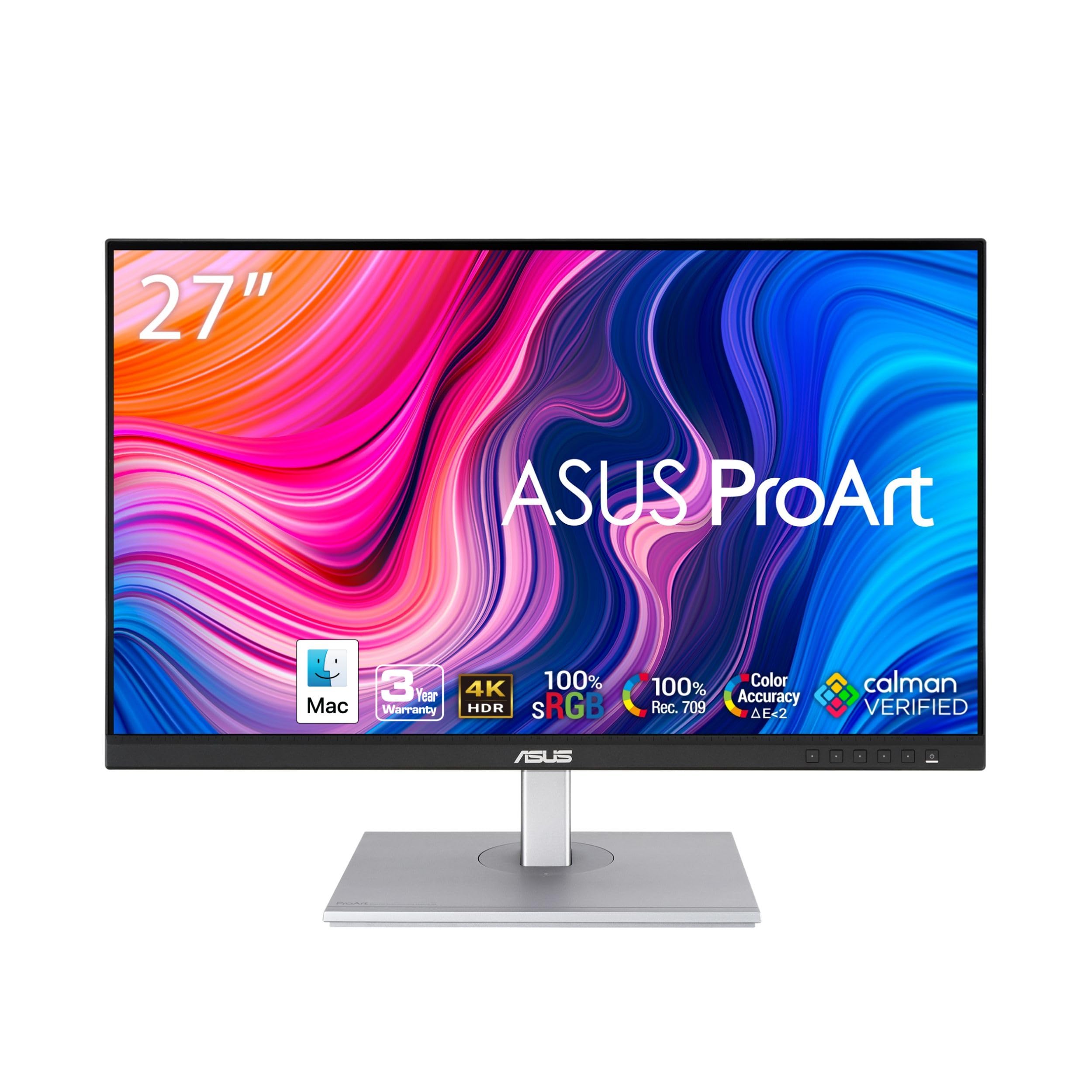
The pro-grade 4K reference monitor for editors who live inside DaVinci Resolve.
This is the 4K sister to the PA278CV, and it doubles down on color for serious grading. It hits 100% sRGB and 100% Rec. 709 wide color gamut — Rec. 709 being the HDTV standard, so your exports land true on broadcast and web. It’s Calman Verified with factory calibration delivering Delta E < 2, meaning colors are accurate straight from the start. Buyers doing 4K video editing in DaVinci Resolve praise the color and performance for the price.
The connectivity is the real pro feature: DisplayPort over USB-C with 65W Power Delivery, plus DisplayPort, HDMI, and a USB 3.1 hub. That’s a full hub built into the monitor, so a single USB-C cable from your laptop handles video, power, and peripherals. The 5-year warranty (3 years plus 2 with registration) and free 3-month Adobe Creative Cloud subscription sweeten the deal. The split-screen HDMI feature lets you compare camera feeds directly for calibration.
The honest warts: customers note a slight green tint from the start, fixed with a tint setting of -7, meaning you may need a few minutes of calibration — the factory calibration isn’t flawless. And while the display quality draws praise, warranty support drew sharp criticism in one case involving a failed USB-C port. It’s the priciest pick here, so weigh the extras against the solid LG and Dell above.
Pro’s verdict: 100% Rec. 709 and a full USB hub make this the most complete editing package, with the caveat of a possible green tint to dial out.
Best for: the semi-pro editor who wants a hub, a long warranty, and broadcast-accurate Rec. 709 color.
Skip if: you want plug-and-play accuracy with zero calibration tweaks, or you’re wary of the support horror stories.
Understanding the Specs
Color Gamut (sRGB vs DCI-P3)
Color gamut is the range of colors a monitor can show. sRGB is the web and standard video standard; 100% sRGB means everything you upload looks as intended. DCI-P3 is wider, closer to what film and HDR masters use — a higher percentage means richer, more true-to-life color for cinematic work.
Delta E and Factory Calibration
Delta E measures how far a displayed color is from the true color; a value under 2 is considered excellent and professionally acceptable. Factory calibration means the maker tuned the panel before shipping, so you can trust the color from the start without buying a separate calibrator device.
FAQ
Is 60Hz refresh rate enough for video editing?
Should I get 1440p or 4K for editing on a budget?
What is Delta E and why does it matter for editing?
Do I need a monitor with USB-C for a MacBook?
What does 100% sRGB coverage actually mean for my videos?
Is a pivot stand worth it for video work?
Can I use a budget monitor for both editing and gaming?
How important is HDR for video editing?
Final Thoughts: The Verdict
For the majority of shoppers, the budget monitor for video editing winner is the LG 27UP650K-W because it pairs true 4K resolution with 95% DCI-P3 color and a fully adjustable stand at a price that leaves room in your budget. If you want a smoother, more fluid editing experience, grab the Dell S2725QS for its 120Hz refresh and 99% sRGB. And for the most color-accurate grading on a tighter budget, the ASUS ProArt PA278CV brings factory-calibrated Delta E < 2 color that’s ready to trust from the start.
How We Picked
We do not accept paid placement. Every pick is matched to a real buyer and a real use-case; we do not hands-on test units.
Sources & Methodology
Specifications: manufacturer listings and product documentation. Review insights: verified customer reviews, as of August 2026. Pricing: not shown on this page (it changes often); check the current price via the retailer link.
As an Amazon Associate, Gadgets Feed earns from qualifying purchases. This does not affect which products we feature.