
Our readers keep the lights on and my morning glass full of iced black tea. As an Amazon Associate, I earn from qualifying purchases.
Specs are compiled from manufacturer listings and verified buyer reviews and can change over time — please confirm the key details on the product page before buying.
Every home has that one ugly hole in the drywall — the one hiding your water shutoff valve, the plumbing behind the shower, or the mess of cables from the TV. You cover it with a flimsy plate and pray it never needs service again, or you patch it and dread the day you have to cut it back open. A quality 16×16 access panel seals the wall cleanly now and swings open in seconds later, so a plumber or electrician never has to take a saw to your paint again. This guide sorts the real keepers from the flimsy cutouts across plastic, galvanized steel, and welded steel builds.
I’m Min — the founder and writer behind Gadgets Feed. This guide is built by comparing the manufacturers’ published specifications and the patterns across verified customer reviews, so you get each pick’s real strengths and trade-offs instead of marketing spin.
Choosing the right 16×16 access panel means matching wall thickness, material durability, and latch style to where you actually need to reach.
Our Picks at a Glance


How To Choose The Best 16X16 Access Panel
You need to reach a shutoff valve or wiring junction without cutting a huge hole in your wall, and a 16×16 panel gives you that room while still fitting between standard wall studs. But before you buy, match the panel’s frame to your wall type, the moisture level in that area, and how often you’ll actually open it.
Plastic, Galvanized Steel, or Welded Steel?
Plastic panels, usually ABS or polystyrene, are light, paintable, and perfect for indoor drywall in living spaces. Steel panels handle damp basements, attics, and exterior walls far better, with galvanized options resisting rust. Welded steel frames are the sturdiest of all — they resist warping over years of use, but they weigh more and cost more to ship. Match the metal to the moisture: if water or humidity lives near that wall, skip plastic.
Cut Size vs. Overall Size — Measure Twice
The single biggest install mistake is cutting the hole to the wrong dimension. The “16×16” spec is usually the rough opening — the size of the hole you cut — while the overall frame is wider (often 17.5 inches or more) so it overlaps the drywall. Read the listing carefully: some panels list the hole size as 15.55 inches, others as 16.2 inches. Trace the frame with a pencil and a level before you touch a saw.
Latches and Hinges Matter More Than You Think
Think about how you’ll open this door every time. Hidden notches open with a flat tool and look smooth closed, but they can be stiff. Screwdriver-operated cam latches are reliable and need no key. Key locks offer security but add a moving part that can loosen. Concealed hinges, meanwhile, let the door blend almost invisibly into the wall — some even swing fully 180 degrees open for deep access.
Quick Comparison
| Model | Best For | Material | Rough Opening | Latch Type | Amazon |
|---|---|---|---|---|---|
| TICONN 16×16★ Best Overall | Budget-friendly interior fixes | ABS Plastic | 16 x 16 in | Hidden Notches | Amazon |
| VEVOR 16×16Best Value | Rust-resistant service doors | Galvanized Steel | 16.2 x 16.2 in | Screwdriver Latch | Amazon |
| Suteck 16×16Lightest Install | Lightweight DIY installs | Polystyrene | 16 x 16 in | Concealed Hinge | Amazon |
| BOZZON 16×16 | High-use interior access | ABS Plastic | 16 x 16 in | Hidden Notches | Amazon |
| Joogto 16×16 | Thick, rigid metal doors | Aluminum + Galvanized Steel | 15.55 x 15.55 in | Key Lock | Amazon |
| EXCELFU 16×16 | Keyed security on a metal build | Aluminum / Steel | 16 x 16 in | Key Lock | Amazon |
| Premier Flush 16×16 | Commercial-grade drywall, tile, plaster | Steel | 16-3/8 x 16-3/8 in | Screwdriver Latch | Amazon |
| Bryce Steel 16×16 | Exterior walls and heavy use | Welded Steel | 16 x 16 in | Screwdriver Cam Latch | Amazon |
| Vent Systems 16×16 | High-moisture, slim profile | Epoxy-coated Steel | 15.67 x 15.71 in | Handle Latch | Amazon |
In‑Depth Reviews
1. TICONN Access Panel for Drywall
Our pick — over 4.5★ from 700+ verified ratings; the strongest balance of quality and price.
The crowd-pleasing plastic panel that hides shutoffs and wires behind a clean, paintable face.
The TICONN earns the top spot because it fits perfectly and opens smoothly, with the hinged door riding nicely in its frame. It’s made of high-quality ABS plastic (a tough, impact-resistant plastic) with a texture made for painting or wallpapering, so it blends into your interior instead of shouting “access panel here.” The surface shrugs off impact and resists water and UV damage, which is why owners trust it for plumbing and wiring spots that see occasional splashes.
Installation is genuinely a 3-step DIY job: draw the measurements on the drywall, cut, then secure the frame with adhesive or screws (neither is included). The front carries two discreet notches that open with a flat tool like a screwdriver or knife — when closed, they vanish into the surface for a polished look. Buyers report it’s an affordable alternative to pricier covers, and some find that stiff opening as the door meets its frame, which is the trade-off for a secure close.
What wins people over is pure function — the panel creates clean access portals in walls and hides shutoffs exactly as promised. The fit of the door to the frame draws repeated praise, with one buyer putting it simply: “Well designed & fabricated. Nice fit of door to frame. Would buy again.” At 16 x 16 inches of ABS, it’s light enough that a single person can handle the install solo, and you can paint it to match any wall color.
Why Owners Choose It
- Impact-resistant ABS plastic resists water and UV, so it stays white in bathrooms and basements.
- Paintable texture lets you match any wall, with two hidden notches for discreet opening.
- Smooth hinged door fits the frame tightly, closing securely every time.
The Honest Trade-offs
- No handle — you need a screwdriver, knife, or a fingernail to pop it open.
- The door opens stiffly at first, per several owners.
- Adhesive and screws are not included, so budget for your mounting method.
Reach for this if: you want a proven, paintable plastic door for interior drywall, wiring, or shutoff access without overthinking it.
Think twice if: you need tool-free daily opening — this one always demands a flat edge to pry.
2. VEVOR Galvanized Steel Access Door
A rust-fighting steel door that brings a screwdriver latch and a paper template to the job.
If your access point lives in a basement, crawl space, or anywhere damp, the VEVOR is the value pick that beats plastic at moisture resistance. Its thickened galvanized steel frame wears a matte baked-paint finish that resists rust far better than standard materials, and the builder claims it’s sturdier than aluminum alloy. Owners describe it as a “very sturdy door” that should last forever because it’s well made — the kind of backing you want behind a shower valve.
The standout feature is the 1:1 paper installation template included in the box. You literally mark and cut the opening from the template to get a precise fit, removing the guesswork that ruins most installs. The installation size is 16.2 x 16.2 inches with an overall size of 17.2 x 17.2 x 0.6 inches, and the white painted face suits ceilings, drywall, and cement walls alike. A flathead screwdriver port opens the latch, which owners appreciate because it eliminates the risk of losing a separate key.
Owners mention the panel feels larger than expected in person but delivers exactly what it promises: easy access to the back of a shower for future repairs. The four-corner L-shaped EVA guards protect the panel during shipping, and the detachable door simplifies maintenance. One honest note — a few customers note the size measurements were off from the standard, so measure your rough opening against the template before cutting.
Built to Last: Galvanized steel with a baked-paint finish gives this door real staying power in damp spaces at a budget-friendly price.
Size Caution: Double-check the template against your drywall cut — a handful of owners found the sizing varied.
3. Suteck Plastic Access Panel
A featherweight polystyrene door that goes up fast and hides behind paint nicely.
At just 3.2 ounces, the Suteck is the panel you can hold in one hand and install in minutes — it’s made of high-impact polystyrene (a rigid, impact-resistant plastic) with UV stabilization, so it won’t fade or corrode even if it sees some sun. The concealed hinge opens to plumbing valves, wiring, or duct systems, and the panel works in homes, hotels, and offices. It’s engineered to be self-contained, which means no framing, screws, latches, or fasteners are needed to hold it in place.
Installation is genuinely reversible: you can flush-mount it or surface-mount it, depending on your wall situation. The one-piece outside flange sits 3/4-inch deep, with rounded safety corners, and the textured surface is designed to grab paint and resist cracking or flaking. Owners describe it as a great option for covering a main water shutoff valve — one used it to replace a cramped 6-inch access hole that his hand could barely fit through, and the 16 x 16 opening finally gave him room to work the valve.
The build quality wins people over, with the biggest praise landing on how lightweight yet solid it feels. It installs easily — one buyer used a jab saw to cut the drywall and construction adhesive to seat the panel — and it stays shut without feeling flimsy. The recurring gripe is the hinged door mechanism, which some find tough to open; it’s a minor friction for a panel this easy to put up.
Quick to Mount: Self-contained design needs no framing or fasteners, and the 3.2-ounce weight makes it a one-person job.
Hinge Friction: A few owners found the door stiff to open, so treat it gently at first.
4. BOZZON Access Panel for Drywall
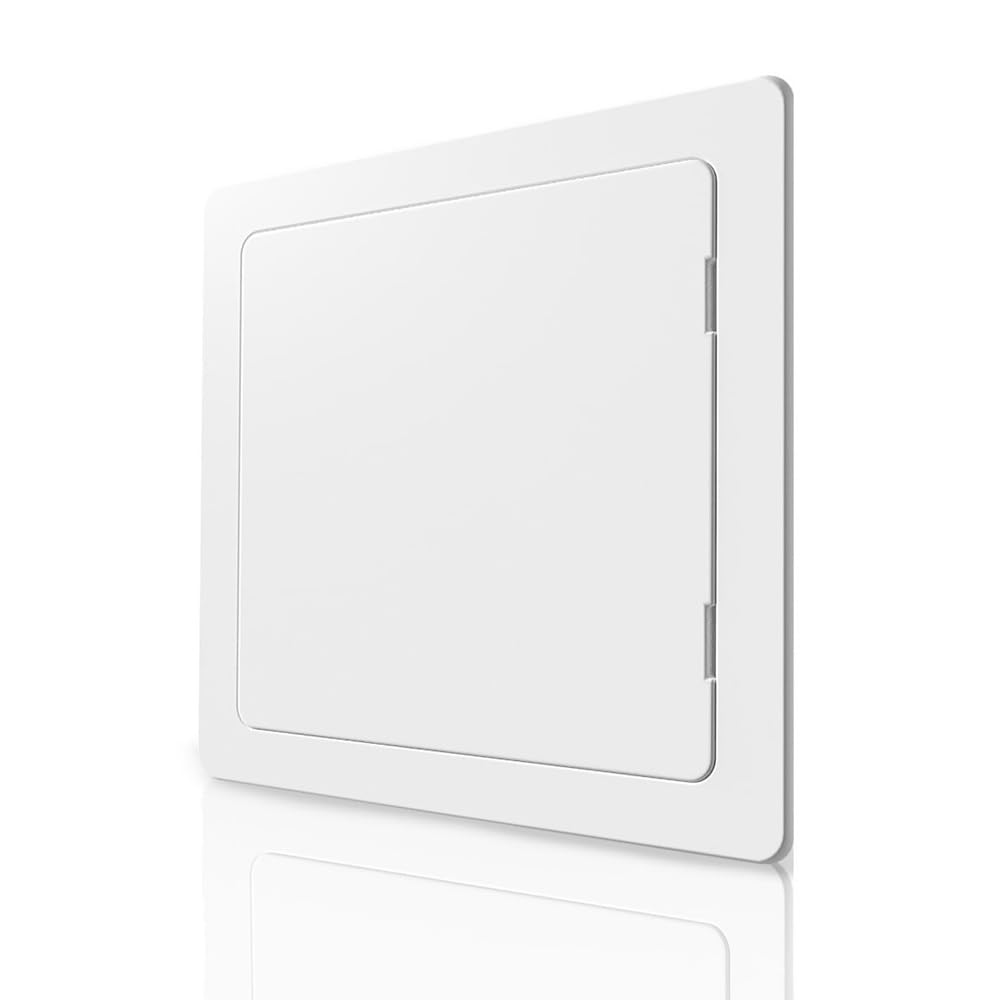
A rugged plastic door that opens a full 180 degrees and comes off entirely for deep jobs.
The BOZZON is the most versatile plastic panel in this lineup because its hinged door swings a full 180 degrees — and comes completely removable when you need your hands and head inside the wall cavity. Made from impact-resistant ABS plastic with UV stabilization, it handles indoor and outdoor use without fading, changing color, or corroding. The white textured surface is designed for maximum paint adhesion, and the water-repellent material makes it safe for basements, attics, and bathrooms.
Installation is straightforward with an overall size of 17 5/7 x 17 5/7 inches and a mounting size of 16 x 16 inches. You position the panel, trace the flange with a pencil, check alignment with a bubble level, cut the wall, then apply sealant to the back and press it into place. Reviewers point out the install measurements are spot on, with one completing the job in about 30 minutes using a rotary cutter and adhesive, no painting required. The flush fit makes it hardly noticeable once closed.
The thing everyone raves about is how easy it makes access — one buyer installed two for shower and washer plumbing, cut the drywall, slipped the panels in, and caulked around them. It’s also a favorite for elderly users because the intuitive latch lets someone open a water valve without wrestling a stiff door. The honest trade-off: a few owners note the door is a bit tough to open and it lacks insulation, but it’s a solid solution for the price.
The Flexibility Wins
- Door opens a full 180 degrees and detaches completely for deep repairs.
- UV-stabilized ABS handles indoor and outdoor spots without fading.
- Flush-mount or surface-mount with no framing, screws, or fasteners needed.
What To Expect
- The door needs a flat object to pry open — it’s not tool-free.
- No insulation is built in, so it’s a cover, not a thermal seal.
Best for: homeowners who want a paintable, water-resistant plastic door they can fully detach when the plumber needs real room to work.
skip it if: you want a latch that opens with one hand while carrying tools — you’ll always need a screwdriver or knife here.
5. Joogto Thickened 1mm Metal Access Panel

The 1mm-thick metal door built specifically to stop the flimsy-panel problem for good.
The Joogto exists to solve one complaint: fragile panels that bend and flex. Its 16 x 16 door is thickened to 1mm, made from aluminum with galvanized steel, and the galvannealed steel core resists rust and deterioration over time. The hole size is 15.55 x 15.55 inches with an inset depth of 1.18 inches, so the panel sits flush with your drywall or ceiling for a clean aesthetic. It’s the pick for attic access doors and crawl space covers that need real rigidity.
The surface gets an advanced baking paint treatment that lays down uniform color with no bubbles or residual marks, and it’s ready to paint if you want to match your ceiling. smooth welding joins the outer frame, reinforced with two stiffeners to keep it from warping. Owners confirm it works well for attic access and hole repairs — one used it to close a ceiling hole left by a leaking shower, finding it much easier than patching drywall. The predrilled holes sit on the ends, so a couple of buyers added side screws for extra rigidity.
The quality is what wins people over, with the baked finish and rigid frame earning consistent praise. An occasional unit arrives damaged in transit, but the seller promises a free replacement part by email, and shoppers say that process is prompt. The key lock works with a screwdriver, though the latch is short and can vibrate loose, and the key itself tends to fall out easily — a minor annoyance if you planned to keep it stored in the panel.
Genuinely Rigid: At 1mm thick, this metal door refuses to flex where thinner panels buckle.
Latch Quirks: The key doesn’t stay seated in the lock, and the short latch may need a snug adjust.
6. EXCELFU 16×16 Metal Access Panel
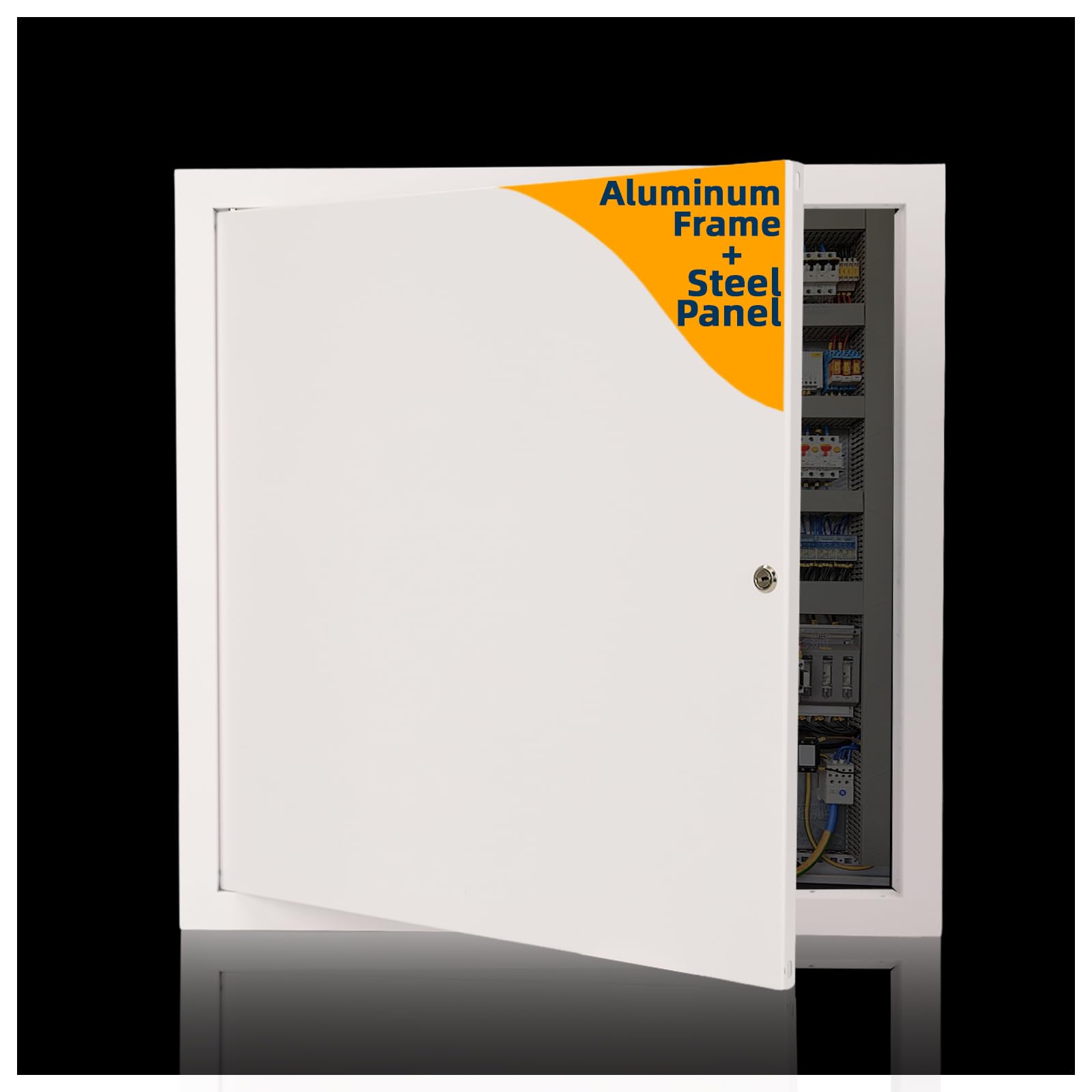
A two-material metal door with a key lock that keeps curious hands out of the wiring.
The EXCELFU pairs a rust-resistant, water-resistant aluminum frame with a galvanized steel door in a white powder-coated finish, giving you a 2.3-pound panel that’s built to sit flush and stay put. It fits a 16″W x 16″H wall or ceiling opening with an overall dimension of 17.5 x 17.5 inches, and the smooth, paintable surface is designed to blend with most interiors. The key lock is the defining feature here — it prevents accidental pushing or opening of the door during daily use, which matters if a curious kid or pet roams the area.
Installation works for either surface or flush mounting, and the smooth edges without sharp corners make it safe to handle. Owners found it worked perfectly for a home theatre’s cords, with the primed finish taking paint well and the material feeling sturdy. It’s also a favorite for tankless water heaters, giving quick access to the unit’s controls without tearing open the whole wall. The multi-size lineup means if 16×16 isn’t your exact opening, the same build exists in a range of dimensions from 10×10 up to 24×24.
The build quality drives the praise — buyers describe the material as thick and easy to install, with a nice primed finish ready for a topcoat. Some note the locks are non-functional in practice, turning with a screwdriver or flat object instead of providing real security. And one owner flagged a 1-inch thickness that caused fit issues when studs or pipes sat close to the opening, so check the depth behind your wall before committing.
Secure Feel: The key lock and rigid two-material build make this a confident choice for keeping doors shut.
Lock Caveat: Treat the key lock as a deterrent, not a vault — it turns with a flat tool in practice.
7. Premier Flush Access Panel 16×16

The 6.6-pound steel door that installs in drywall, plaster, or tile and anchors deep into studs.
When you need a door that reads as commercial-grade, the Premier 2002 Series delivers — it’s a 16″ x 16″ steel access panel built for light-duty commercial or residential work, and it fits a rough wall opening of 16-3/8 x 16-3/8 inches. At 6.6 pounds, it’s the heaviest plastic-free build here, and that weight translates to a thick metal door that doesn’t flex. It installs flush in drywall, plaster, tile, or any flat surface, which makes it the pro choice for tile showers and finished walls.
The mounting flanges are the hidden hero: they’re deep enough to catch the studs even after 5/8-inch Sheetrock, which buyers report is the difference versus other models that miss the framing. The metal is thick and sturdy with a quality powder coating, and the screwdriver-operated latch opens with a standard flathead. Owners describe the mounting hardware as solid and the design as easy to frame for, with a seal that keeps the door firmly shut when closed.
The packaging deserves its own credit — the panel arrives in form-fitting Styrofoam and cardboard, and owners mention it’s packed so well that damage rarely happens. Functionality and sturdiness lead the praise, with owners calling it a solid, quality construction that installs simply. One buyer summed up the experience bluntly: the door “does door things and does door things well.” It’s not the cheapest option, but for a wall you never want to cut again, this steel door is the professional answer.
The Pro Choice
- Deep mounting flanges reach studs even behind 5/8-inch Sheetrock.
- Installs flush in drywall, plaster, or tile surfaces.
- Thick steel with a quality powder coat that resists dents.
What To Know
- At 6.6 pounds, it’s noticeably heavier than plastic rivals.
- Rough opening is 16-3/8 inches, so measure before you cut.
Best for: tile showers, plaster walls, and any surface where a lightweight plastic door would look out of place.
Think twice if: you need tool-free access — this one always requires a screwdriver for the latch.
8. Bryce Hardware Welded Steel Access Panel
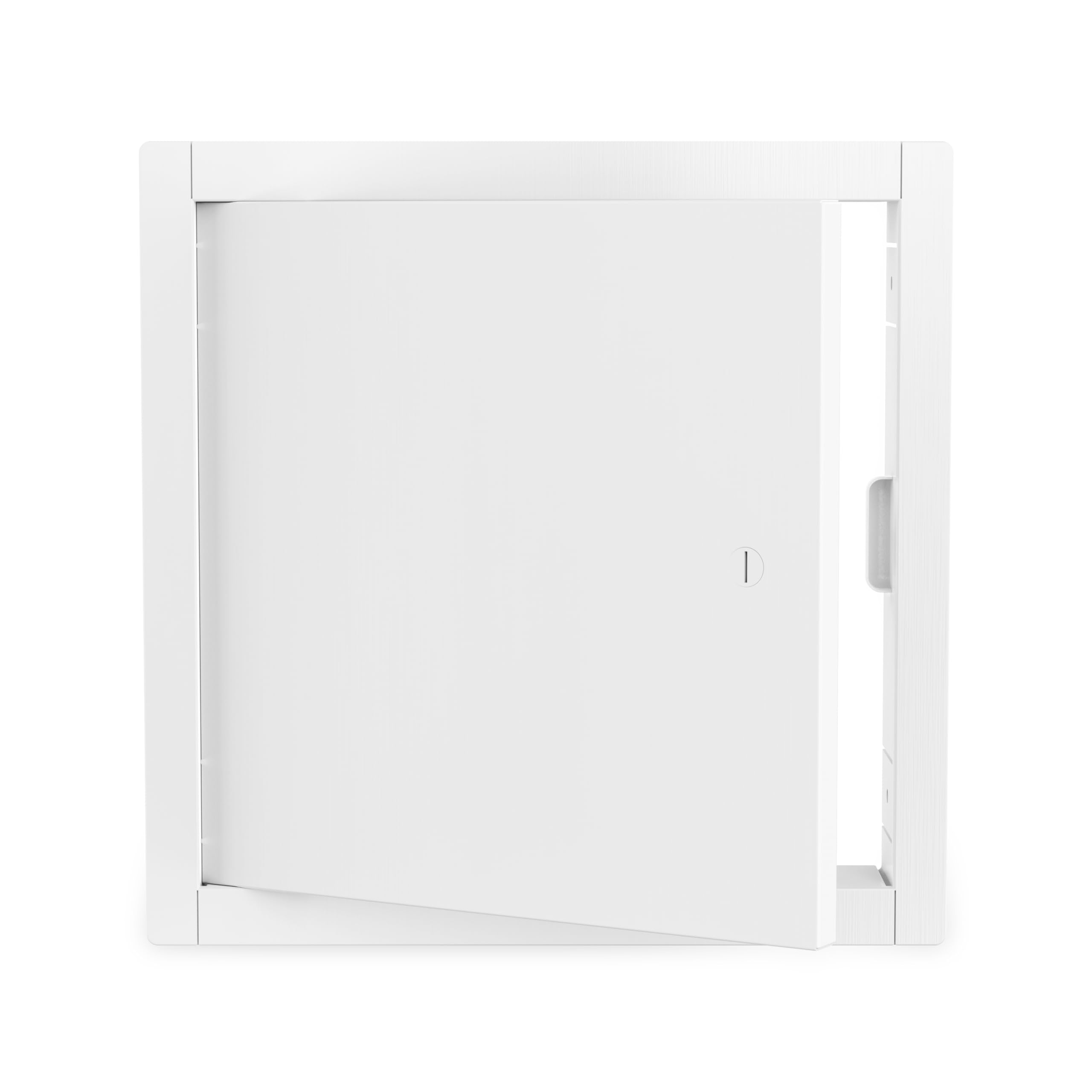
A welded steel door with a bended lid that owners describe as feeling like a vault.
If you’re cutting into an exterior wall or a space that takes real abuse, the Bryce Hardware panel is built like it’s defending a bunker. It’s constructed from expertly welded steel with a bended door lid, and owners describe it as “like a vault door” — heavy-gauge, solid, and unbothered by daily use. The white powder-coated finish provides corrosion resistance while staying paintable, and the screwdriver-operated cam latch opens with a flathead for quick access to plumbing, electrical, or HVAC systems.
The concealed hinge design is the clever part: the door opens to the left or the right, so you can adapt it to whichever side gives you the most room to reach in. Install is fast with pre-drilled holes, and it works in residential or commercial spaces, from walls to ceilings. One owner cut into an exterior stucco wall to reach gas lines and found the steel panel worked perfectly — proof it stands up to weather and rough environments where plastic would crack.
Build quality earns the loudest praise, with the welded steel and paintable white finish drawing repeated compliments. An RV owner used it to access a shower valve and called it excellent quality that’s worth the value. The honest caveat is dimensional: one buyer found the actual access opening measured slightly smaller than the labeled size, so verify the cut against the panel before you commit. Also, a tiny section of the hinge area can arrive unpainted from the spray process, though that’s cosmetic and easy to touch up.
Serious Steel: Welded construction and a bended lid make this the most vault-like door in the lineup.
Check Dimensions: The access opening can run smaller than the label suggests, so measure first.
9. Vent Systems Steel Access Panel with Handle
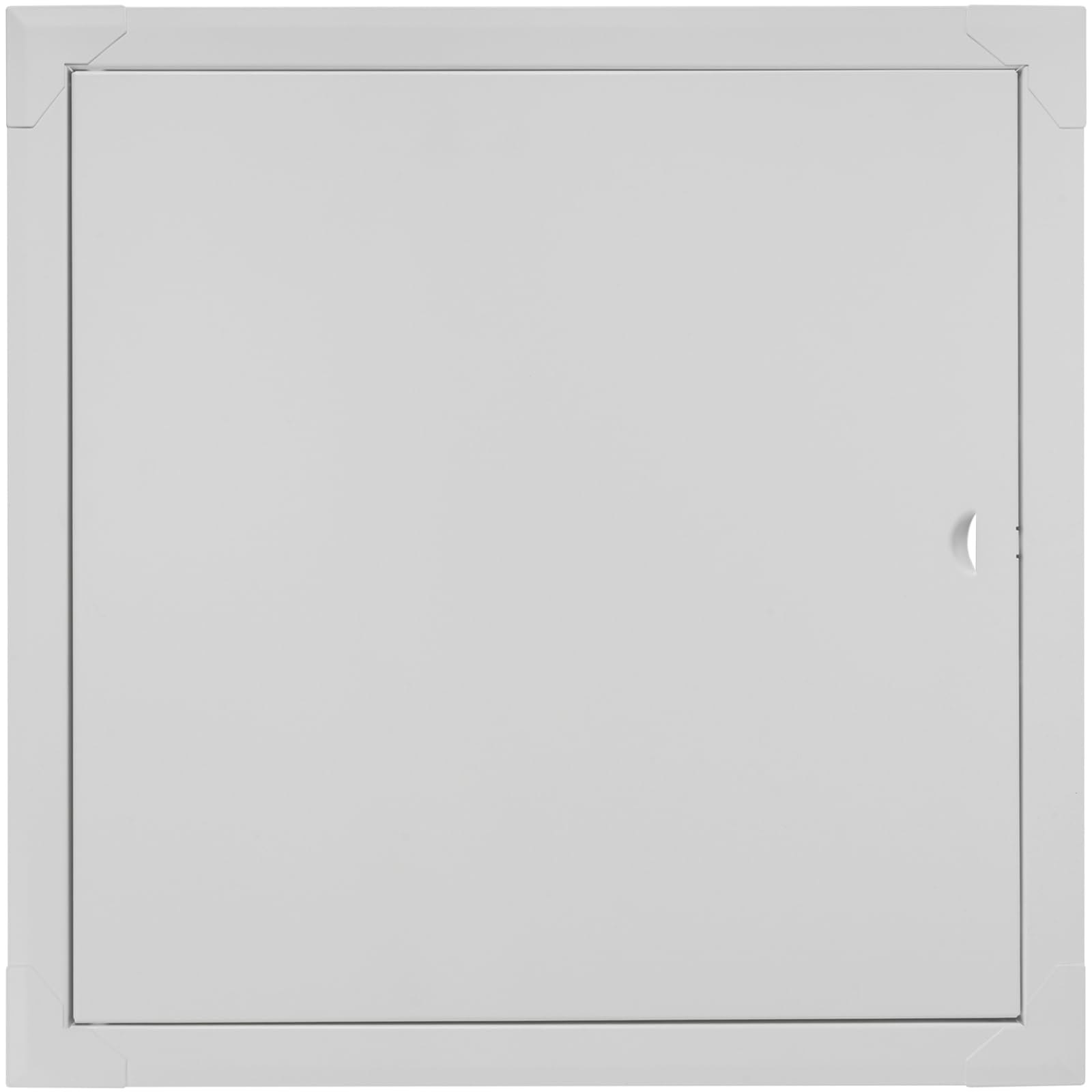
A slim steel door with a real handle, built to outlast damp, high-moisture walls.
The Vent Systems panel is the one that gets the handle right — its unique handle style opens easily for crawl space or service shaft access, which is rare in this category where most doors demand a screwdriver. It’s made from polished steel sheets with an epoxy coating built to resist humidity and mechanical damage, making it a strong candidate for bathrooms, garages, and anywhere moisture lingers. The opening measures 15.67 x 15.71 inches with an outside dimension of 17.64 x 17.60 inches, and the neck depth is 0.98 inches.
Installation is wall-mounted only, so you cut the drywall to match the panel’s dimensions, attach it with adhesive (not included), and wait for the adhesive to dry before opening the door. The practical hinge design keeps the door stable in the frame while opening simply, and owners find it works as a template for creating access holes in wall cavities — one used it to replace a cable box, enlarged the hole to the frame size, and got a perfectly clean garage wall. It functions as a plumbing access door, crawl space door, or service shaft door all in one.
What wins people over is the straightforward build and clean finish — owners call it slim, sturdy, and easy to paint whatever color they want. The quality and fit lead the praise, with one buyer noting the door “opens and closes easily” and recommending it without hesitation. The only mixed feedback is on ease of use, and since the handle is the most tool-free option in this roundup, that’s a minor bump on an otherwise excellent high-moisture pick.
Tool-Free Access: A real handle is a rare luxury here — no screwdriver needed for daily opening.
Wall-Mount Only: This one doesn’t surface-mount, so the cut needs to match the 15.67-inch opening precisely.
Understanding the Specs
Rough Opening vs. Overall Size
The most confusing number on any access panel listing is the size. The “16×16” usually refers to the rough opening — the hole you cut in your drywall. The overall size is always larger, since the frame flange needs to overlap the wall to hold the panel in place (often 17.5 inches or more). Some brands list the hole size slightly smaller than 16 inches, like 15.55 inches, so always trace the frame with a pencil before cutting. Measure twice, cut once — it saves you from a hole that’s too big to cover.
Material: ABS, Polystyrene, and Steel
The material decides where the panel belongs. ABS plastic is impact-resistant, water-repellent, and UV-stable — great for indoor living spaces, basements, and bathrooms. Polystyrene is lighter and cheaper, but its strength is lower than ABS. Steel — whether galvanized or welded — resists rust and warping, making it the choice for attics, crawl spaces, and exterior walls where panels flex and weather. Match the material to the moisture level of your wall, and you’ll never replace it.
FAQ
What is the actual cut size for a 16×16 access panel?
Can I paint an access panel to match my wall?
Will a 16×16 panel fit between standard wall studs?
Do I need screws or can I use adhesive?
What’s the difference between flush mount and surface mount?
Is a steel access panel better than plastic?
How do I open an access panel that has no handle?
Can I install a 16×16 access panel in a tiled shower wall?
Why does my access panel feel larger or smaller than 16 inches?
Are these panels secure enough to keep children out?
Final Thoughts: The Verdict
Across the board, the 16×16 access panel winner is the TICONN because it pairs proven ABS durability with a paint-ready finish and a door that fits its frame beautifully. If you want rust resistance in a damp basement, grab the VEVOR. And for a commercial-grade steel door that installs in tile or plaster, the Premier Flush is the one to reach for.
How We Picked
We do not accept paid placement. Every pick is matched to a real buyer and a real use-case; we do not hands-on test units.
Sources & Methodology
Specifications: manufacturer listings and product documentation. Review insights: verified customer reviews, as of August 2026. Pricing: not shown on this page (it changes often); check the current price via the retailer link.
As an Amazon Associate, Gadgets Feed earns from qualifying purchases. This does not affect which products we feature.