
Our readers keep the lights on and my morning glass full of iced black tea. As an Amazon Associate, I earn from qualifying purchases.
Specs are compiled from manufacturer listings and verified buyer reviews and can change over time — please confirm the key details on the product page before buying.
A deadlift bar is judged on three things: how hard it bites into your hands, how much it flexes under tension, and whether it can take a beating after being dropped from the hips. A 500-pound pull will expose a weak bar in seconds. The right bar locks your grip in place so you can finish the pull.
I’m Min — the founder and writer behind Gadgets Feed. This guide is built by comparing the manufacturers’ published specifications and the patterns across verified customer reviews, so you get each pick’s real strengths and trade-offs instead of marketing spin.
You need a reliable tool you can trust under heavy deadlifts, so we’ve analyzed the top-rated options to find the best bar for deadlifts and the honest trade-offs each one brings.
Our Picks at a Glance

How To Choose The Best Bar For Deadlifts
Deadlifts punish bars differently than squats or presses. The bar gets yanked off the floor, slammed down, and loaded with more weight than anything else you do. Three specs decide whether a bar survives that abuse or becomes a bent, rusted wall decoration.
Start with the knurling
Knurling is the cross-hatch pattern machined into the steel where you grip. A deadlift bar needs aggressive, deep knurling so your hands don’t slip when the bar starts bending. A center knurl — a rough patch in the middle of the bar — is crucial if you pull sumo style, since your legs press against it. Bars labeled “medium” tend to be gentler on high-volume training but can feel slick under maximum loads.
Understand whip and shaft thickness
Whip is the flex the bar shows before the plates leave the ground. A dedicated deadlift bar is thinner — often 27mm rather than the standard 28mm — and longer, which lets it store energy like a spring. That flex helps you “pull the slack out” and start the lift with better mechanics. A stiffer bar with no flex is better for bench pressing but will feel unforgiving for pulls.
Check the tensile strength and sleeve spin
Tensile strength, measured in PSI, tells you how much stress the steel can take before it permanently bends. Higher numbers — think 190,000 PSI and up — mean the bar springs back instead of staying bent after a heavy rep. The sleeves (where the plates slide on) need smooth rotation for cleans, but deadlifters mostly care that they don’t wobble or loosen over time.
Quick Comparison
| Model | Best For | Shaft Thickness | Tensile Strength | Weight | Amazon |
|---|---|---|---|---|---|
| XMARK Lumberjack★ Best Overall | All-around training value | 28mm | — | 20 kg | Amazon |
| Mikolo 7ft OlympicSmooth Operator | Quiet, smooth spinning | 28mm | 190,000 PSI | 45 lb | Amazon |
| E.T.ENERGIC 7FT Alloy | Budget powerlifting | 28mm | 205,000 PSI | 44 lb | Amazon |
| XMARK VOODOO | Aggressive grip, garage gyms | 28mm | 185,000 PSI | 20 kg | Amazon |
| CAP Pro Series Rebel | Whopping 2,000 lb capacity | 28.5mm | 190,000 PSI | 20 kg | Amazon |
| Steelbody IWF Olympic | Ceramic-coated grip | 28mm | 190,000 PSI | 45 lb | Amazon |
| Valor Fitness Deadlift | True deadlift-specific whip | 27mm | 165,000 PSI | 45 lb | Amazon |
In‑Depth Reviews
1. XMARK Olympic Barbell Lumberjack
Our pick — over 4.5★ from 600+ verified ratings; the strongest balance of quality and price.
The all-around workhorse that handles squats, bench, and pulls with zero fuss.
You can pull heavy without your grip giving out first on the Lumberjack. Its medium-depth knurling (the textured grip pattern on the shaft) holds firm on 700-800 lb pulls, yet it won’t tear up your palms like a cheese grater. The bar is 7 feet long, has a 28mm shaft, and weighs 20 kg, so it feels substantial but not unwieldy. The 16.25-inch chrome sleeves rotate on brass bushings (metal sleeves that let the bar spin freely), making cleans and presses feel smooth without being loose.
Owners consistently praise its build quality as rivaling bars costing far more. Owners who loaded 405 lb on it for deadlifts report the bar stays stiff and controlled, which is exactly what you want for a heavy pull. The black manganese phosphate shaft resists sweat and rust far better than bare steel, and the snap-ring construction keeps the sleeves from wobbling even after months of abuse.
The trade-off is no center knurling, so sumo pullers lose thigh-anchoring grip. It also arrives heavily oiled, so plan to wipe it down before your first session. For a versatile bar that handles every lift well, this is the daily go-to for most home gyms.
Why Owners Stick With It
- Medium knurling gives secure grip without tearing up hands on high-volume sets
- Solid construction with smooth, easy sleeve rotation
- Holds up well with no visible wear over time
- Fits all standard 2-inch Olympic plates
What to Know Before Buying
- No center knurling for sumo deadlift stance
- Some buyers report rust developing within a year if not oiled
- Arrives coated in oil — needs a wipe-down first
Reach for this if: you want one bar that pulls, presses, and squats without compromise.
Look elsewhere if: you pull sumo and need center knurling, or you want a bar with aggressive bite for max-effort pulls only.
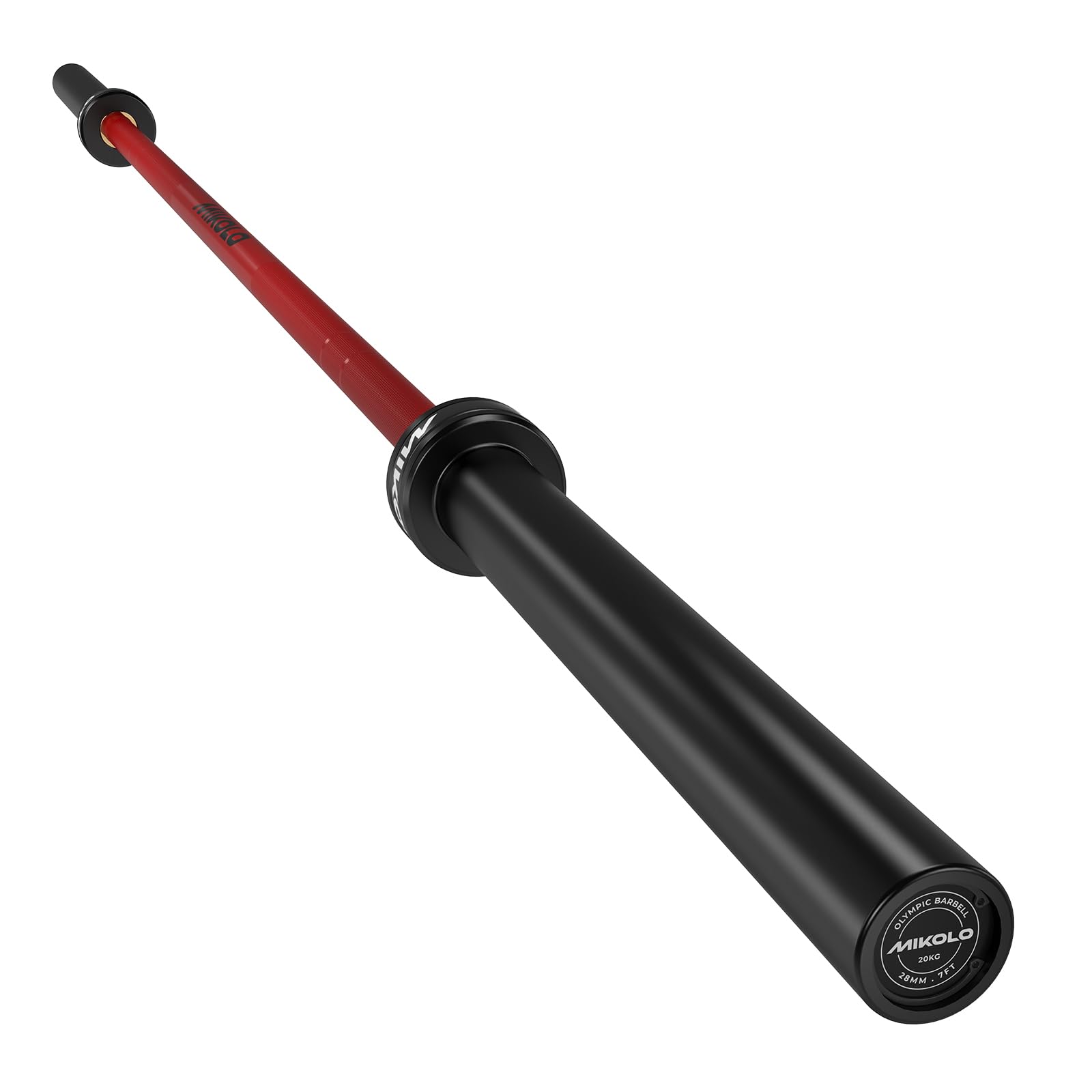
2. Mikolo 7ft Olympic Barbell
A dead-silent bar that spins beautifully and shrugs off 500 lb pulls.
Mikolo built this 7-foot bar to 190,000 PSI tensile strength with a 1,500 lb capacity, and the steel does not bend. Owners mention loading 500 lb on deadlifts and watching the bar hold “a lot more” without a hint of flex. The 28mm grip diameter keeps your hands comfortable, while the dual-marking knurl shows you exactly where to grip for both powerlifting and Olympic lifting.
What sets this bar apart is how quietly it operates. The sleeves run on 8 needle bearings with brass bushings, so they spin fast and silent — no clanging, no rattling when you rack it. The red and black finish makes it one of the better-looking bars you can mount in a garage gym, and owners say it still looks brand new after weeks of regular use.
The honest trade-off is the knurling. At 1.2mm diamond depth, it’s present but not aggressive — some owners say it doesn’t really “bite” into the hands. For heavy deadlifts where grip is everything, you might find yourself reaching for chalk. But if you prioritize a smooth, quiet, corrosion-resistant chrome bar that handles serious weight, this is a polished pick.
The standout trait: silent, friction-free needle bearings that spin beautifully under load.
The catch: knurling is gentler than powerlifters usually want for max-effort pulls.
3. E.T.ENERGIC 7FT Alloy Steel Olympic Barbell

The highest tensile strength on this list at a budget-friendly price.
At 205,000 PSI, this 44 lb bar has the strongest steel rating in our roundup — higher than the XMARK Lumberjack above, which is a full category above it in price. That translates to a bar that springs back instead of bending under heavy pulls. The 28mm shaft with 1.2mm medium knurling gives a firm grip that reduces slippage, and the 16.4-inch loadable sleeves give you room to stack plenty of plates.
Owners who have used it for two years call it “just as good as bars that cost 2 to 3 times as much.” It spins on 4 needle bearings per sleeve, and the hard chrome coating resists rust. The center knurling — a crucial feature for sumo deadlifters — is included, which puts it ahead of several pricier bars on this list.
Expect to clean it before first use, as it ships with machine oil and possibly a few metal flakes from manufacturing. But once it’s wiped down, this is the bar budget-conscious lifters should look at first. It delivers competition-grade specs at a budget-friendly price.
Why It Overdelivers
- 205,000 PSI tensile strength — the highest here
- Center knurling included for sumo stance
- Smooth bearings with zero sleeve play
- Knurled center makes it deadlift-ready
Minor Hiccups
- Ships with machine oil and possible metal flakes — clean first
- Weighs 44 lb, slightly under the 45 lb standard
Who it beats: any bar twice its price on raw steel strength and sleeve length.
Who it doesn’t: lifters who want premium chrome finishes and zero prep work from the start.
4. XMARK VOODOO Olympic Barbell

The aggressive-bite bar that survives concrete drops and garage humidity.
The VOODOO is the bar you buy when you drag heavy weight and don’t baby your equipment. Its 28mm shaft is coated in black manganese phosphate — one of the hardest coatings available — and the collars have micro grooves that lock plates in place during dynamic lifts. The 185,000 PSI steel and 1,500 lb capacity mean it takes a 500 lb daily workload in stride.
Owners who have dropped it on concrete in non-climate-controlled garages for two years say it still looks near-new with just a little patina. The knurling has a “good bite” that’s been described as comparable to premium Rogue and EliteFTS bars, though it’s on the aggressive side — great for grip, but you’ll feel it on high-rep sets. The 16.25-inch sleeves rotate on smooth brass bushings rather than free-spinning bearings, which suits powerlifters who want stability over spin.
It lacks center knurling, so sumo pullers miss the thigh-anchoring grip. And the aggressive knurl means you’ll want chalk or gloves for volume work. But for a garage gym warrior who wants competition-adjacent performance without the premium markup, this is a proven staple.
The thing everyone raves about: knurling with real bite that holds under heavy pulls without slipping.
The trade-off: no center knurl for sumo stance, and aggressive texture wears on bare hands during high-volume sets.
5. CAP Pro Series 7FT Olympic Barbell “The Rebel”
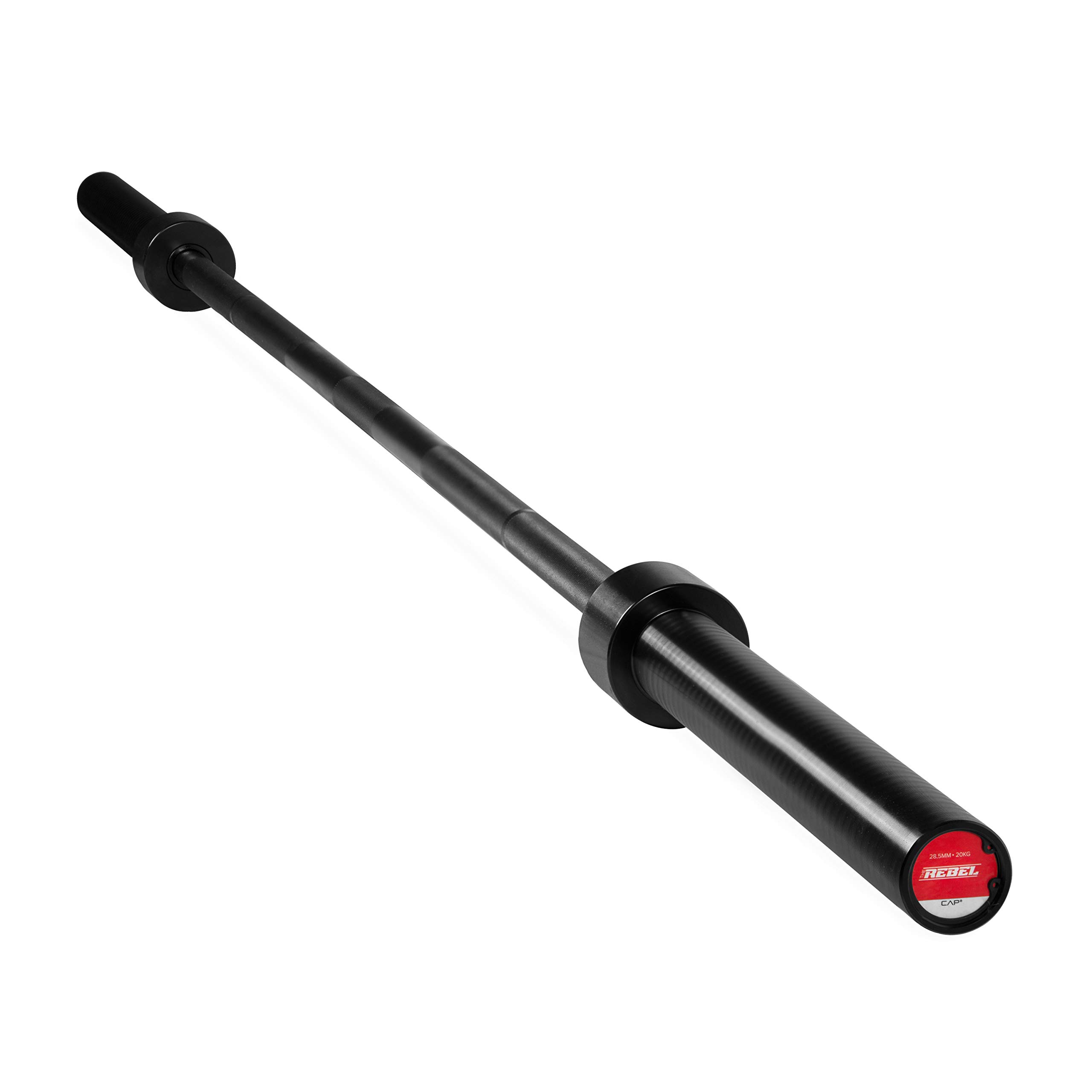
The brute-force bar with a 2,000 lb limit and grippy center knurl.
If you’re chasing elite-level numbers, the CAP Rebel is built for extreme loads. The 28.5mm shaft is slightly thicker than standard, which adds stiffness for heavy squats and presses but makes it less whip-friendly for deadlifts.
The mountain-style knurling is aggressive and includes a center knurl that keeps the bar planted on your back for squats. Owners note the black phosphate coating is “tacky,” adding extra grip on the smooth sections — one lifter reported it helped add 10 lb to 255 lb deadlift reps because the longer knurl pattern gave better traction. It’s a joy for squat and bench work.
However, the Lumberjack is not a deadlift specialist. Its 28.5mm shaft is thicker than the 27mm on dedicated deadlift bars, so it may feel less precise for competition-style pulls. The aggressive knurling can also catch on your thighs during sumo pulls, which is a real annoyance. Shipping is another weak spot: customers note that some units arrive with scuffed bar ends from inadequate padding. But if you want one bar for heavy deadlifts, cleans, and presses, the Rebel’s capacity is class-leading here — it handles more load than the [Other Pick] without flexing.
Why It’s a Heavyweight
- 2,000 lb max capacity — highest on this list
- Aggressive mountain knurling with center knurl
- Tacky coating adds grip on smooth sections
- Bushing sleeves reduce wrist and forearm stress
Heads Up
- 28.5mm shaft is too thick for ideal deadlift whip
- Aggressive knurl sticks to thighs on sumo pulls
- Some units arrive scuffed from shipping
Pick it for: squat-and-bench lifters who want one bar to handle absurd loads.
Skip it for: strict deadlift work where a thinner, whippier shaft helps off the floor.
6. Steelbody IWF Standard Olympic Barbell
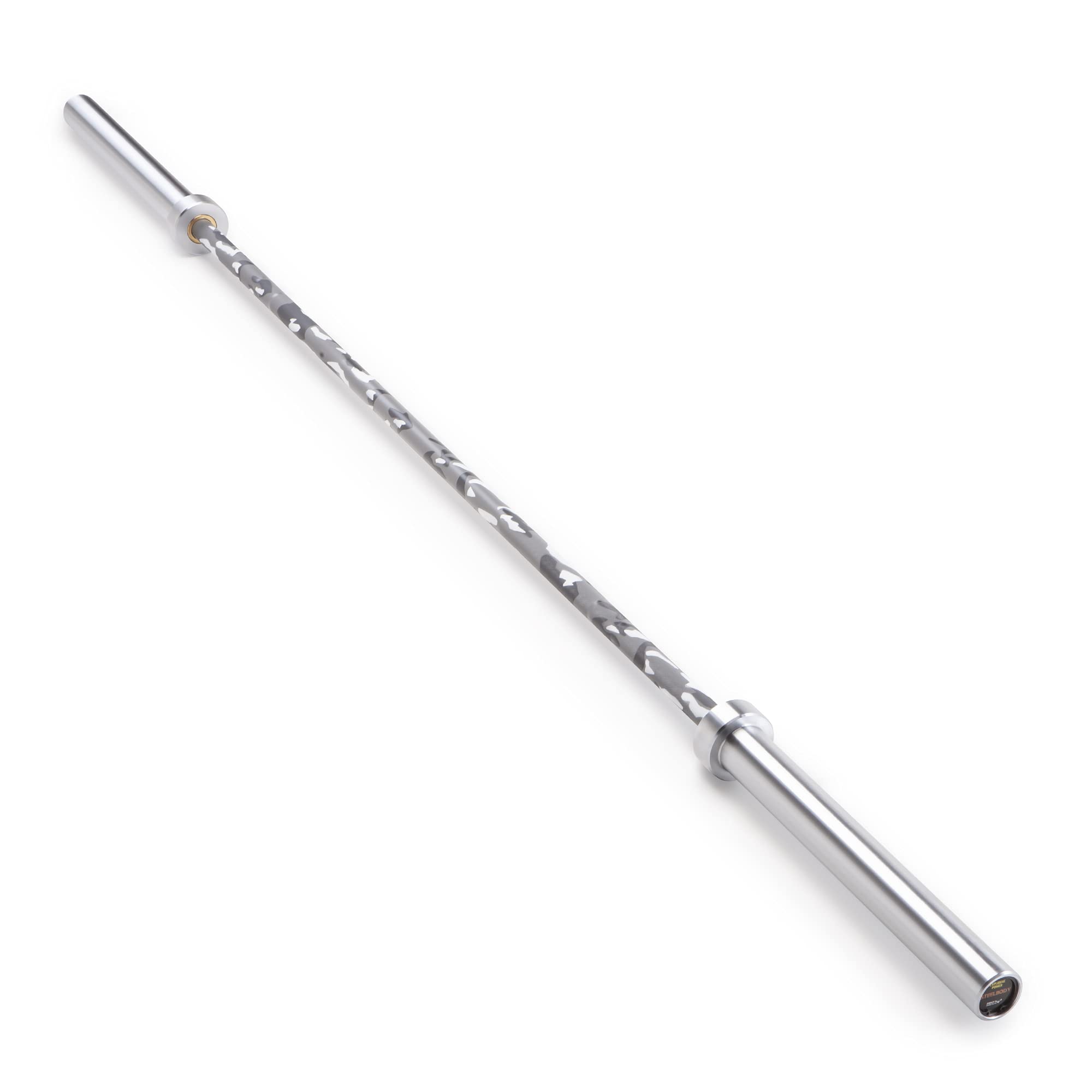
A competition-spec bar with ceramic grip that digs into your palms.
The Steelbody meets all International Weightlifting Federation standards, which tells you it’s built for serious training. The 28mm shaft carries a 190,000 PSI rating and a 1,500 lb capacity, and the 16.25-inch chrome sleeves spin on 4 needle bearings for smooth, durable rotation. It’s built to withstand repeated drops with bumper plates.
The unique selling point here is the ceramic-coated knurling on the shaft. The lighter knurl marks are coated to increase friction between your hands and the bar, so it “grips my palms pretty hard” without needing much chalk. One owner describes it as a lifetime Olympic bar that fits perfectly on a squat rack and feels comfortable to hold through long sessions.
Owners do flag a mixed fit experience — one notes it fits their rack perfectly, while another reports a slightly loose loading sleeve. Packaging has also been inconsistent, with some units arriving with exposed sleeves. But the steel itself is solid, the knurling is excellent, and it’s a dependable 45 lb bar for anyone who wants competition-grade gear.
What wins people over: ceramic-coated knurling that grips hard and holds up to repeated drops with bumper plates.
The fit note: a small number of units show sleeve looseness, so check the fit on your rack early.
7. Valor Fitness Olympic Deadlift Barbell

The only true deadlift-specific bar here, with whip that fires off the floor.
This is the specialist. While the other bars are all-around Olympic bars, the Valor is engineered purely for pulling. Its 27mm shaft — a full millimeter thinner than the standard — combines with a longer 90.5-inch frame to create enhanced whip and flex. Reviewers point out it starts to whip around 450 lb, which is exactly when you want the bar to store energy and help you break the plates off the ground.
The deep, aggressive knurling locks into your hands hard, reducing slippage on heavy reps. At 165,000 PSI with a 1,200 lb recommended max, it’s rated lower than the all-around bars on this list, but its job is different — it’s built to flex, not to rigidly hold 2,000 lb. That trade-off is intentional and makes it feel “amazing in the hand” with “awesome whip,” as owners describe it.
The downsides are real. The powder-coated finish can rust or pit over time in humid environments, and the 7.5-inch sleeves are shorter than the 16-inch sleeves of a standard bar, so you’ll need smaller plates or a tighter loading order. For deadlift-only performance, this is the specialized tool serious pullers should consider.
Why Pullers Love It
- 27mm shaft adds flex and whip at heavy loads
- Aggressive knurling grips securely without tearing hands
- Whips noticeably around 450 lb for better off-the-floor mechanics
- Longer 90.5-inch frame aids setup
Know the Limits
- Powder coating can rust or pit over time
- Shorter 7.5-inch sleeves limit plate loading
- 165,000 PSI is lower than all-around bars here
Choose this if: deadlifts are your primary lift and you want competition-style whip.
Pass if: you need one bar for squats, presses, and pulls — the thicker all-around bars serve better.
Understanding the Specs
Shaft Thickness (mm) and Grip
The diameter of the bar where you hold it. Standard bars are 28mm, while dedicated deadlift bars slim down to 27mm. A thinner shaft adds flex (whip) and is easier to grip for smaller hands. Thicker bars, like the 28.5mm CAP Rebel, feel more rigid for pressing but less ideal for pull mechanics. For deadlifts, thinner usually means better off-the-floor performance.
Tensile Strength (PSI)
This number — measured in pounds per square inch — tells you how much force the steel can absorb before it permanently bends. A bar rated at 190,000 PSI will spring back into shape after heavy pulls, while a low-rated bar may stay bent after a heavy deadlift session. Look for at least 180,000 PSI if you regularly pull over 400 lb.
Whip and Bar Length
Whip is the flex a bar shows when you pull the slack out before lifting. Longer bars with thinner shafts flex more. For deadlifts, that spring action helps you generate momentum off the floor. But too much whip makes the bar feel unstable for bench pressing. If you want one bar for everything, moderate whip (28mm shaft) is the safer choice.
Center Knurling
The rough pattern machined in the middle of the bar, between the two grip areas. It’s essential for sumo deadlifters, who press their thighs against the center of the bar, and for back squats, where it helps the bar stay planted on your shoulders. Not every bar has it — the XMARK Lumberjack and VOODOO skip it — so check before buying.
FAQ
What is the ideal shaft diameter for a deadlift bar?
Do I need center knurling on a deadlift bar?
What does whip mean and why does it matter for deadlifts?
How much tensile strength do I really need in PSI?
Will a 28mm Olympic bar work fine for deadlifts?
What is the difference between a deadlift bar and a powerlifting bar?
How do I know if a barbell fits my weight plates?
How long does a quality deadlift bar last?
Is a more expensive bar always better for deadlifts?
Can I use a deadlift bar for squats and bench press?
Final Thoughts: The Verdict
Across the board, the best bar for deadlifts is the XMARK Lumberjack because it nails the balance of grip, stiffness, and all-around versatility at a price that undercuts premium brands. If you want the highest steel strength for your dollar, grab the E.T.ENERGIC. And for pure pulling power with serious whip, the Valor Fitness Deadlift Bar is the specialist to reach for.
How We Picked
We do not accept paid placement. Every pick is matched to a real buyer and a real use-case; we do not hands-on test units.
Sources & Methodology
Specifications: manufacturer listings and product documentation. Review insights: verified customer reviews, as of August 2026. Pricing: not shown on this page (it changes often); check the current price via the retailer link.
As an Amazon Associate, Gadgets Feed earns from qualifying purchases. This does not affect which products we feature.