
Our readers keep the lights on and my morning glass full of iced black tea. As an Amazon Associate, I earn from qualifying purchases.
Specs are compiled from manufacturer listings and verified buyer reviews and can change over time — please confirm the key details on the product page before buying.
A tiny capacitor is the difference between a crisp tweeter and a crackling one. Without a bass blocker, low frequencies push your tweeter past its limit, causing distortion and premature failure. This guide breaks down seven in-line filters to help you match a crossover point to your speakers and head unit.
I’m Min — the founder and writer behind Gadgets Feed. This guide is built by comparing the manufacturers’ published specifications and the patterns across verified customer reviews, so you get each pick’s real strengths and trade-offs instead of marketing spin.
You need the right cutoff frequency for your speaker size, and that means understanding the specs. Find your best bass blocker for tweeters here without blowing a driver.
Our Picks at a Glance

How To Choose The Best Bass Blocker For Tweeters
The single most important spec on any bass blocker is the cutoff frequency, listed as something like “200Hz @ 4 ohms”. This tells you which deep sounds get filtered out and which highs pass through clean to your tweeter.
Match the blocker to your speaker size
Smaller speakers cannot handle deep bass. A 3.5-inch dash speaker needs a higher cutoff to protect it, while a 6×9 can safely play lower. Pair the blocker with the physical size of the driver you are protecting.
Understand the impedance curve
The cutoff frequency changes with your speaker’s impedance. A blocker rated for 4 ohms will move the blocking point when you use it on an 8-ohm speaker, so confirm your speaker’s impedance before ordering.
Quick Comparison
| Model | Best For | Cutoff @ 4 Ohm | Power Handling | Style | Amazon |
|---|---|---|---|---|---|
| PAC BB-5PR★ Best Overall | Small tweeters & dash speakers | 0-2.8 Hz | — | Pair, Inline | Amazon |
| Install Bay BB398Best Value | 6×9 & door speakers with subs | 85 Hz | 100 Volts | Single, Cap | Amazon |
| Zerone 3.3uF Cap | DIY crossovers & front tweeters | — | 250 Volts | 2-Pack, Copper Pin | Amazon |
| Audiopipe BB-199 | 6×9 & 6×8 midrange | 200 Hz | 50 Watts | 2-Pack, Inline | Amazon |
| Audiopipe BB99 | 3.5″ dash speakers | — | 100 Volts | Pair, Inline | Amazon |
| PAC BB-6PR | Tweeters & midrange clarity | 0-5600 Hz | 50 Watts | Pair, Heat Shrink | Amazon |
| Audiopipe BB99 4PC | 5.25″ & 6.5″ midrange | 400 Hz | — | 4-Pack, Inline | Amazon |
In‑Depth Reviews
1. PAC BB-5PR Pair of 3.5″ Bass Blocker
Our pick — over 4.5★ from 500+ verified ratings; the strongest balance of quality and price.
The crowd favorite that stops small speakers from popping under pressure.
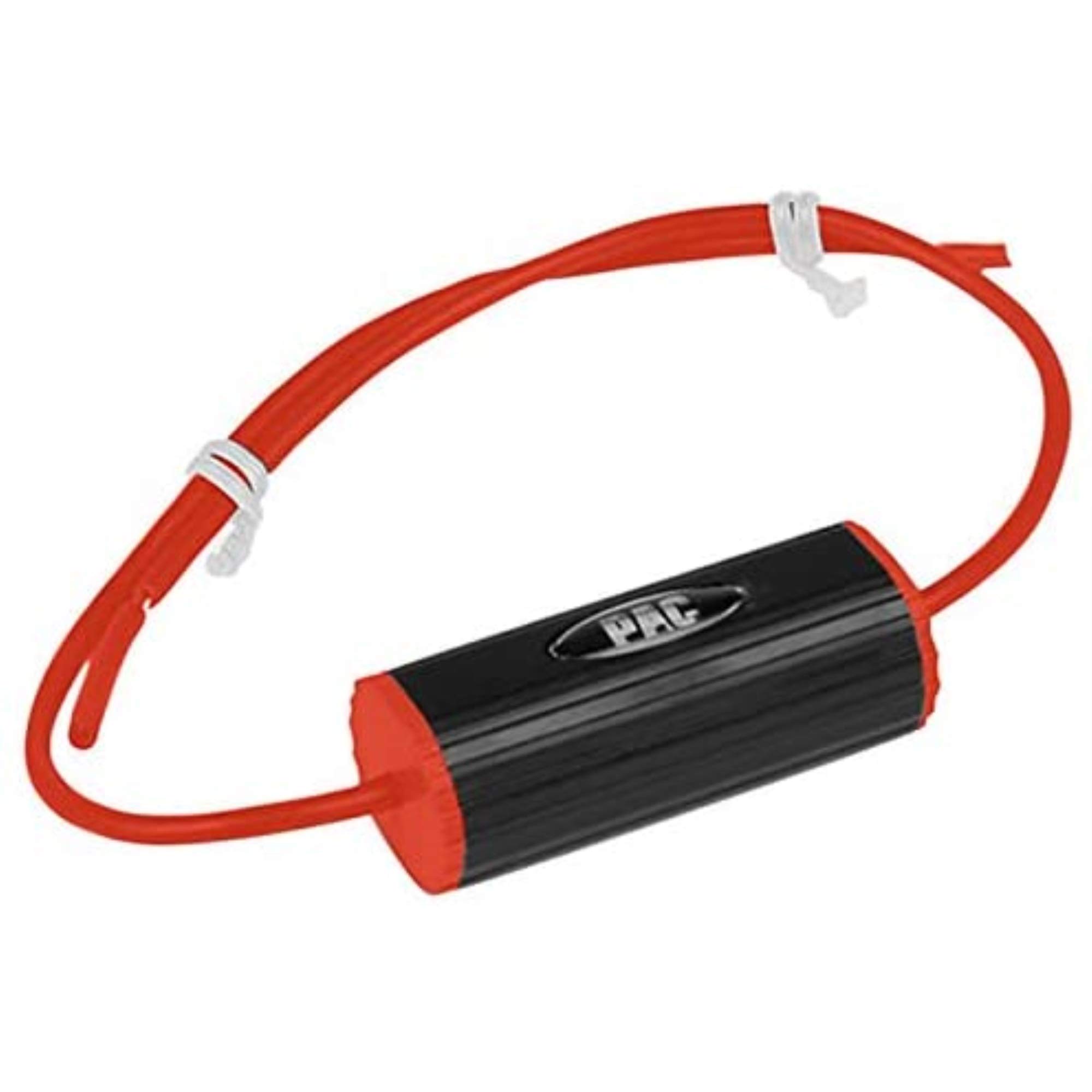
This passive crossover protects 3.5-inch dash speakers by filtering out the low frequencies that cause crackling. The functionality is what wins people over — the filter is a passive crossover designed to pull out the frequencies those tiny cones cannot handle. It is wrapped in heat shrink tubing, so the splice-in install stays tidy inside a cramped dash.
It preserves treble clarity while eliminating bass distortion, as confirmed by owners of Silverado and Aerostar trucks. Buyers report “no real drop in output, other then the bass distortion is gone,” which captures the appeal perfectly. On a 2000 single cab Silverado or a 94 Aerostar with four speakers, owners describe eliminating cracking from 4-inch drivers entirely and getting crisp sound after the install.
The trade-off is physical space. A few owners note the unit takes extra room in tight dash cavities, and the logo sticker can peel off. If you have the clearance, this is the most proven way to stop popping without an amp.
What Wins People Over
- Eliminates popping and distortion on 3.5-inch and 4-inch speakers
- Preserves treble quality with no perceived output drop
- Heat shrink enclosure simplifies splicing into positive wire
The Fitting Catch
- Bulkier than expected in tight dash spaces
- Logo sticker adhesion is weak
Reach for this if: you have 3.5-inch dash speakers that pop when the volume climbs, and you want a splice-in fix without an amp.
Think twice if: your tweeter is mounted in a glovebox-tight enclosure where extra bulk could be a problem.
2. Install Bay BB398 10 Percent Cap 398Uf 100Volts 85 Hertz 4 Ohm Non-Poplar
A single 398uf capacitor that tames low frequencies for door speakers.
This is for the setup with a subwoofer where your door speakers rattle. The BB398 is a 398uf capacitor rated for 85 hertz at 4 ohms, and owners mention it “set perfectly ‘high pass’ filtered out 100Hz and below from my 6×9 4 ohm peakers.” It is bulkier than the photos suggest, but that does not interfere with the install.
Owners praise how it tames low frequencies, keeping sub bass out of 6×9 door speakers for cleaner sound. Owners running 6x9s after adding a sub describe keeping the sub bass out of the front stage, letting them enjoy a higher volume with less distortion. One buyer built a static crossover around 80-100 Hz specifically so 12-inch subwoofers would not rattle door speakers.
Note that this ships as a single capacitor, so you’ll need two for a stereo pair. It also demands a solid understanding of soldering to fit it inline properly.
Smart Cap Choice: a more surgical cutoff than most ready-made blockers, so owners pair it with a soldering iron and tune to taste.
Best for: the DIY installer with 6×9 door speakers who wants a lower cutoff around 85 Hz and already owns a soldering iron.
Look elsewhere if: you want a plug-and-play pair, since this ships as a single unit.
3. 2Pcs 3.3uF Frequency Divider Capacitor, 250V DC Audio Speaker Crossover Capacitor
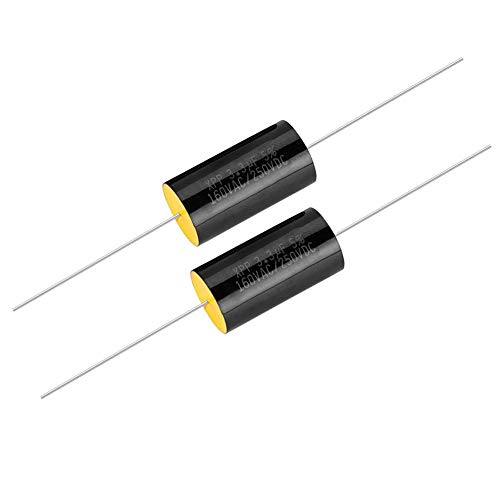
A 3.3uF through-hole capacitor for custom crossover networks.
This Zerone part is not a ready-made blocker — it is the raw ingredient for building your own high-pass filter. With a capacitance of 3.3 microfarad and a DC withstand voltage of 250 volts, it suits car tweeters and speaker frequency dividers where you control the crossover point yourself. The pure copper wire pins give reliable conductivity when soldered into a circuit.
These are genuine Bennic capacitors, a respected name in crossover components, earning trust from DIY builders. Buyers installed them for front stage tweeters and confirmed they “worked perfectly,” with one noting they fixed broken tweeters on Hertz ST25 models better than the original parts. The clear high frequencies and strong midrange are exactly what a DIY crossover aims for.
This is not for someone who wants a wire-and-drive fix. You need solder, flux, and a basic understanding of where to place the capacitor in the signal path.
Makers Only: excellent raw component for tweeter crossovers, but it demands soldering skills and a clear crossover plan.
Pick this if: you are rebuilding old speakers or building a custom crossover and want a quality capacitor with a real brand inside.
skip it if: you prefer clipping a pre-made blocker inline without touching a soldering iron.
4. BB-199 6 x 9″ 6 x 8, 7 10″ 199 UF BASS BLOCKERS 200Hz @ 4 OHM 2 PCS

A 200Hz filter that protects 6×9 and 6×8 midrange drivers from deep bass.
This Audiopipe pair is built for the driver sizes that sit below tweeters — the 6×9, 6×8, and 7×10 door speakers that get hammered by subwoofer bass. The blocker removes sounds below 200 Hz at 4 ohms (0-100 Hz at 8 ohms) and handles power up to 50 watts. Owners on a 2000 Silverado 6.5-inch door installs report less distortion at high volume, with most of the bass routed to the sub.
There is a nuance worth knowing: this is a high-pass filter, not a brick wall. One owner explains it attenuates -6dB per octave from 200Hz, so 100Hz drops -6dB, 50Hz drops -12dB, and 25Hz drops -18dB. It clarifies rather than completely eliminates the bass, which is actually what you want for a natural crossover.
The mixed feedback centers on expectations. A rare complaint says bass volume reduces but does not fully disappear — that is the nature of a filter.
What it Delivers
- Blocks 0-200 Hz at 4 ohms for 6×9, 6×8, and 7×10 drivers
- Handles up to 50 watts of power
- Routes deep bass to your subwoofer for cleaner mids
What to Expect
- Acts as a filter with -6dB/octave slope, not a hard cutoff
- Bass attenuates gradually below 200 Hz
Reach for it if: you run a sub plus 6×9 door speakers and want the lows out of the way without losing midrange warmth.
Not for you if: you expect an absolute brick-wall cut that silences all bass instantly.
5. Pair of BB99 Audiopipe in Line Noise Filter Speaker Bass Blocker 4 OHM Blockers

The inline pair that kills bass for 3.5-inch dash speakers instantly.
Designed for the universal consumer setup — smartphones, tablets, MP3 players, desktops, televisions, and laptops — this Audiopipe pair works as a simple inline filter between your speaker and amplifier. It is built with shrink tube material for durability. The big win is instant bass reduction on small speakers without any complex tuning.
Customers note no bass reaching their 3.5-inch dash speakers while maintaining clear sound. Owners describe “no bass goes to my 3 1/2 speakers” while keeping the sound clear. Another praises its resistance handling around 100 watts while cutting away much of the bass. The inline design means you splice it in and go.
The durability check shows occasional inconsistency, with one unit arriving with wires that detached due to poor soldering. It works well, but inspect the connections before install.
Quick Fixer: a genuinely simple inline filter that makes dash tweeters and 3.5-inch speakers sound clean.
Great for: the casual installer who wants to splice two wires and immediately hear the difference on small dash speakers.
Check first if: you need bulletproof build quality — inspect the solder joints on arrival.
6. PAC BB-6PR Pair of Bass Blocker for Tweeters, 6 Inch x 1 Inch x 6 Inch Black
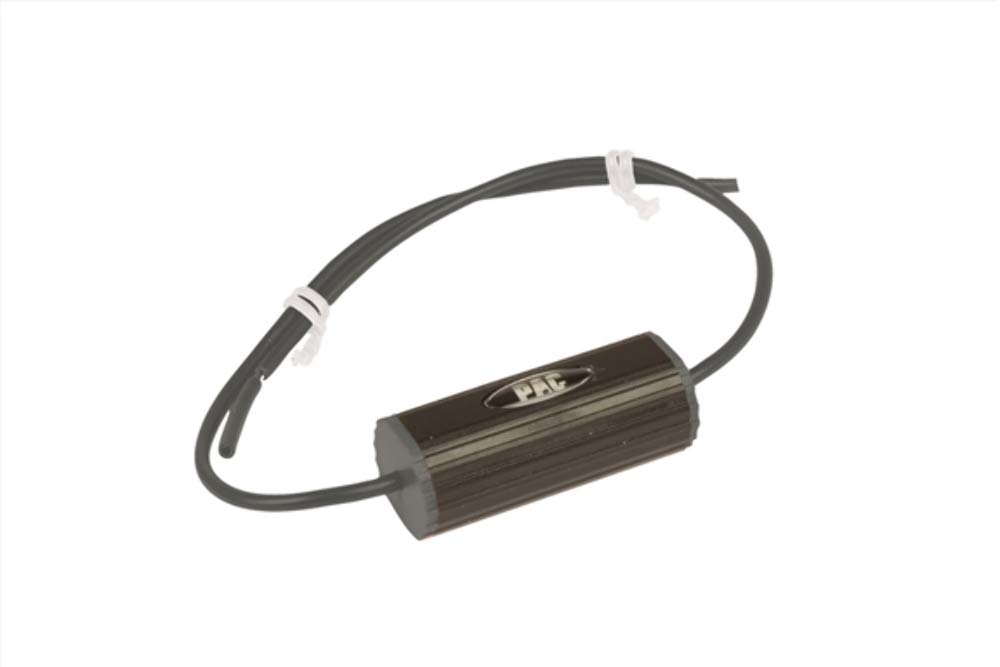
The tweeter specialist that prevents high-volume popping with a 5600Hz ceiling.
This PAC pair is purpose-built for tweeters and midrange speakers, with black color-coded leads for easy identification. It removes frequencies from 0-5600 Hz at 4 ohms (0-2800 Hz at 8 ohms) and handles up to 50 watts. The heat shrink tubing with wire leads makes the splice-in install a five-minute job on the positive end.
Reviewers love its tweeter-specific design, which fixes severe bass distortion on new tweeters without built-in crossovers. After swapping in new tweeters without built-in crossovers, owners describe severe bass distortion that these blockers completely fixed — “now with these installed they sound like tweeters should!” Another notes perfect volume control, preventing popping at high volumes on 3.5-inch dash coaxials with a factory radio.
The main caveat is its bulk, which may not fit tight tweeter enclosures and could require door panel removal. The unit may not squeeze into tight tweeter enclosures, sometimes requiring door panel removal. It also introduces a slight perceived volume reduction for some listeners.
Why It Stands Out
- Blocks 0-5600 Hz at 4 ohms, tuned for tweeter protection
- Simplest splice install — just the positive wire
- Black leads and heat shrink keep installs neat
The Trade-off
- Bulkier design may not fit tight tweeter enclosures
- Some perceive a slight volume drop after install
Reach for it if: your tweeters distort when the volume rises and you want the simplest inline fix that preserves treble clarity.
Think twice if: your tweeter is in a tiny factory pod where the extra bulk will not fit.
7. AUDIOPIPE 5.25″ 6.5″ 99 UF BASS BLOCKERS 400Hz @ 4 OHM 5-1/4″ 6-1/2″ 4 PCS

A four-pack that sets a high 400Hz cutoff for midrange drivers.
This Audiopipe set targets 5.25-inch and 6.5-inch midrange speakers with the highest cutoff in the lineup — blocking frequencies below 400 Hz at 4 ohms (0-200 Hz at 8 ohms). Four pieces come in the pack, enough to filter a full set of door speakers or a pair of 3.5-inch dash units with spares. They are encased in shrink tubing with conductors for straightforward installation.
The high cutoff makes it the right choice when you want mids to stay out of bass territory entirely. One owner confirms “400hz and up it works,” noting the sound stays full in the front when midbass speakers carry the lows. It worked “perfect” on 8-inch Audiopipe speakers, isolating the bass and keeping them loud and clear.
The feedback on sound is mixed because the agressive cutoff trades some warmth for protection. If you remove that much bass, you need bass elsewhere in the vehicle or the system sounds thin.
Aggressive Strake: a steep 400 Hz filter that protects small mids but demands you have subwoofer bass to fill the gap.
Best for: the system with dedicated subwoofers and midbass drivers where small mids should never touch deep frequencies.
Not for: a full-range setup that relies on door speakers for all bass — you will hear the gap.
Understanding the Specs
Cutoff Frequency
The number like 200Hz or 400Hz marks the point where deep bass starts getting filtered out. This is a high-pass filter, meaning everything above that number passes through to your speaker. The right cutoff depends on your speaker size — smaller drivers need higher cutoffs to stay safe.
Impedance Rating
This is the electrical load your speaker presents, typically 4 ohms or 8 ohms for car audio. The cutoff frequency shifts depending on this value. A blocker rated at 200Hz for 4 ohms will filter differently on an 8-ohm speaker, so match it to your actual speaker impedance.
FAQ
What does a bass blocker actually do?
How do I know which cutoff frequency I need?
Does a 4-ohm vs 8-ohm speaker change the blocking point?
Can I install a bass blocker without an aftermarket amp?
Is a bass blocker the same as a crossover?
Will a bass blocker reduce my overall volume?
Can I use a raw capacitor as a bass blocker?
How many blockers do I need for my car?
Will a bass blocker fix tweeter crackling?
Do these work for home theater speakers too?
Final Thoughts: The Verdict
For the majority of shoppers, the best bass blocker for tweeters is the PAC BB-5PR because it is the proven crowd favorite for protecting small dash speakers. If you want a surgical DIY approach for door speakers, grab the Install Bay BB398. And for tweeters that distort at high volume, the PAC BB-6PR is the premium one to reach for.
How We Picked
We do not accept paid placement. Every pick is matched to a real buyer and a real use-case; we do not hands-on test units.
Sources & Methodology
Specifications: manufacturer listings and product documentation. Review insights: verified customer reviews, as of August 2026. Pricing: not shown on this page (it changes often); check the current price via the retailer link.
As an Amazon Associate, Gadgets Feed earns from qualifying purchases. This does not affect which products we feature.