
Our readers keep the lights on and my morning glass full of iced black tea. As an Amazon Associate, I earn from qualifying purchases.
Specs are compiled from manufacturer listings and verified buyer reviews and can change over time — please confirm the key details on the product page before buying.
Choosing wired earbuds as an audiophile isn’t about following a trend—it’s about chasing the purest signal path from your source to your ears. The real question is which driver configuration and tuning philosophy matches the music you love. This guide breaks down nine serious in-ear monitors by driver counts, tuning signatures, comfort for long sessions, and the honest trade-offs each one demands.
I’m Min — the founder and writer behind Gadgets Feed. This guide is built by comparing the manufacturers’ published specifications and the patterns across verified customer reviews, so you get each pick’s real strengths and trade-offs instead of marketing spin.
Balanced armatures, dynamic drivers, and hybrid designs each color the sound differently, shaping every listening session. This guide to the best audiophile wired earbuds shows you which tuning fits your ears and your music collection.
Our Picks at a Glance


How To Choose The Best Audiophile Wired Earbuds
Before you spend serious money, know that the “best” pair depends entirely on your source gear and hearing preferences. A neutral monitor perfect for studio mixing can sound lifeless to someone who loves a warm, bass-heavy consumer tuning.
Driver Configurations Explained
The engine of any IEM is its driver setup. Balanced armature (BA) drivers are known for their speed, detail, and efficiency, often used in multi-driver arrays to handle specific frequency bands. Dynamic drivers, like those in traditional speakers, deliver punchier bass and a more natural, cohesive sound. Hybrid designs combine both to get the strengths of each—precise BA treble with a dynamic woofer for low-end thump.
Reading Tuning Curves
Tuning is the intentional shaping of the frequency response, defining the earbud’s character. Some are tuned “neutral” to be as accurate as possible, mirroring studio monitors. Others have a “V-shape” with boosted bass and treble for a more notable, fun sound. Look beyond marketing buzzwords: a flat response suits critical listening, but a slight bass shelf often makes long sessions more enjoyable.
Quick Comparison
| Model | Best For | Driver Config | Connector | Tuning Style | Amazon |
|---|---|---|---|---|---|
| Kiwi Ears Orchestra Lite★ Best Overall | Neutral detail & soundstage | 8 Balanced Armature | 2-Pin | Neutral / Natural | Amazon |
| KZ ZARBass Champion | Bass-heavy hybrid value | 7BA + 1DD | 2-Pin C | Warm / Engaging | Amazon |
| Fosi Audio IM4Versatile Tuner | Open-back airy clarity | 1 Dynamic (10mm) | 2-Pin 0.78mm | Flat / Tunable | Amazon |
| Sennheiser IE 200 | Everyday neutral listening | 1 Dynamic (7mm) | MMCX | Neutral / Balanced | Amazon |
| MEZE AUDIO ALBA | Premium comfort & build | 1 Dynamic (10.8mm) | 2-Pin 0.78mm | Natural / Balanced | Amazon |
| Etymotic ER4XR | Maximum isolation accuracy | 1 Balanced Armature | MMCX | Accurate / Reference | Amazon |
| Kiwi Ears Astral | Professional hybrid mixing | 1DD + 6BA | 2-Pin | Neutral with Bass Shelf | Amazon |
| Moondrop Blessing 3 | Surgical treble precision | 2DD + 4BA | 0.78-2Pin | Reference / Analytical | Amazon |
| Shure SE846 Gen 2 | Stage monitoring loudness | 4 Balanced Armature | MMCX | Warm / Customizable | Amazon |
In‑Depth Reviews
1. Linsoul Kiwi Ears Orchestra Lite
Our pick — 4.5★ from 600+ verified ratings; the strongest balance of quality and price.
An eight-driver wall of sound detail wrapped in a neutral, studio-honest tuning.
This is the pick for anyone who wants to hear the recording exactly as the engineer intended, not colored by consumer-friendly boosts. The Orchestra Lite packs eight balanced armature drivers—two custom ultra tweeters for treble, four for mids, and two subwoofer drivers for lows—to create an intricate, layered soundstage. Owners consistently describe the sound as “natural” and “correct,” with a wide, expansive soundstage that makes instruments easy to pick apart.
The tuning here is meticulously neutral. Bass is restricted to sub-bass frequencies, peaking at 8dB from 20Hz to 200Hz, while the mids stay within a 1dB difference from 200Hz to 800Hz. The treble follows the human ear’s natural pinna perception with a 7dB peak at 2.5kHz. This makes it a fantastic tool for gamers needing directional audio and studio work, but the unvented design can create suction for some, so consider aftermarket tips like Comply foam to dial in the fit and seal.
The included 4-core 7N oxygen-free copper cable is light and comfortable for stage use, and the removable 2-pin connection makes cable rolling easy. Buyers report that “needs quality tips (Comply recommended)” is the key to open up this IEM’s full performance, as the stock tips don’t always seal perfectly for everyone. It’s proof of the value that many owners have replaced far more expensive over-ear headphones with these.
What Wins People Over
- Exceptional detail retrieval and a huge soundstage for the price.
- Neutral tuning that rivals studio monitors for mixing.
- Gaming performance with superb directional audio.
The Honest Trade-Offs
- Unvented design can cause painful suction for some ears.
- Stock tips may not provide the best seal; aftermarket tips are often needed.
Your best bet if: you want reference-grade neutral sound for studio, gaming, and critical music listening without spending flagship money.
Think twice if: you’re sensitive to ear pressure; this design demands a perfect seal and can feel fatiguing without the right tips.
2. KZ ZAR in-Ear Monitor
A hybrid powerhouse delivering warm, engaging bass with a resolute 8-driver build.
If your music collection leans toward rock, metal, and electronic, the ZAR is tuned to hit hard. It combines 7 balanced armature drivers with a single 10mm dynamic driver to deliver a warm, engaging low-end with articulate highs that extend beautifully. Owners who’ve come from high-end planar headphones like the Audeze LCDGx still find themselves impressed, noting the sound “surpassed expectations” for the price.
You can block out the world with these earbuds. The detachable ear tips seal deep in your ear canal, cutting up to 35 dB of outside noise (a measure of sound reduction), so you can focus on your music in a noisy café or on a busy train. The build is tough too—the shells are milled from solid aluminum, and owners mention the unit stays “durable after 4 months.” The 2-pin C connectors (the standard detachable cable plugs) and braided cable also help “reduce noise” from microphonics—that thumping sound when the cable rubs against your clothes.
Comfort is generally good, but a few owners find them slightly less comfortable than lighter competitors, and some note the tuning can be a bit hot in the treble for certain genres like pop. It’s a fantastic value proposition that punches far above its weight class, and the detachable cable means every part is serviceable if something wears out.
Why It Impresses
- Huge, engaging bass response perfect for rock and metal.
- Excellent noise isolation blocking up to 35dB.
- Durable, serviceable build with a quality braided cable.
Consider This
- Subdued highs may need EQ for some listeners.
- Fit is great for many, but a few find it slightly less comfortable than rivals.
Reach for this if: you want a fun, bass-forward sound with pro-grade isolation and the reliability of a serviceable, detachable cable.
Look elsewhere if: you prefer a completely neutral, flat response for critical studio mixing over a warm, engaging consumer tuning.
3. Fosi Audio IM4 Open-Back IEM
An open-back breather with a featherlight metal build and user-swappable tuning parts.
Unlike the sealed, isolating IEMs on this list, the IM4 features an open-back design that lets air flow, creating a wide, natural soundstage without the “boxed-in” feeling you get from closed monitors. It’s powered by a premium 10mm beryllium-coated diaphragm single dynamic driver with a dual-chamber structure and N52 dual-magnet circuit. This translates to a clean, bright, and highly resolved sound that owners describe as “flat” and tunable.
The standout feature here is customizability. It includes three sets of ear tips (balanced, bass, deep-bass) in three sizes and two types of swappable nozzles (brass and aluminium alloy) to fine-tune the treble response. At just 7g per bud with a smooth full-metal aluminum alloy housing, it’s practically invisible in your ear, making it a great choice for long listening sessions or drumming practice where fatigue is a concern.
While the tuning is quite neutral, some owners note the imaging and soundstage are “mediocre for ” compared to more expensive hybrids, and the deep-bass tips have thicker canals that some find uncomfortable. However, the ability to swap tips and nozzles means you can shape the sound significantly without spending more money. The 2-Pin 0.78mm detachable cables add to the versatility, though the 3.5mm termination is not swappable.
Its Strengths
- Lightweight 7g per bud metal shell for all-day comfort.
- Open-back design creates an airy, non-fatiguing sound.
- Extensive tuning options with swappable nozzles and 3 tip sets.
Its Limits
- Soundstage is good, but not class-leading for the price.
- Deep-bass ear tips have thicker canals that may not fit everyone.
Best for: listeners who want a comfortable, neutral-sounding daily driver that they can tune to their preference with included parts.
Not for: those seeking maximum soundstage width or the raw detail of a multi-BA setup; this is a clean single-driver experience.
4. Sennheiser IE 200

Sennheiser’s precision-matched 7mm drivers deliver balanced sound with a dual-tuneable bass.
The IE 200 is Sennheiser’s accessible gateway into high-resolution wired audio, built around a 7mm TrueResponse transducer that produces a balanced, natural sound with expressive mids and smooth treble. The key innovation is the dual bass-tuning design: you can mount the ear tips in one of two positions to switch between a tighter, more controlled bass and a fuller, warmer presentation. This gives you two distinct sound signatures from one pair.
Comfort is a strong suit, thanks to flexible ear hooks and multiple silicone and memory foam tip sizes. The over-ear fit is secure enough for all-day wear. It’s a great choice for sit-down, critical listening with a dedicated DAC or analog player—owners note it sounds “more authentic” than wireless options and close to studio monitors when paired with a good source.
However, this is a divisive pair. The sound is flat from the start and many owners find it “needs EQ” to shine; the stock cable is described as “junky” and prone to picking up interference. Durability is also a common complaint, with some reporting issues after a few months. It’s a headphone that rewards effort—pair it with a DAC and you’ll get great sound, but it demands more patience than plug-and-play rivals.
What It Does Well
- Dual-position tips let you tune bass tightness and warmth.
- Comfortable, secure over-ear fit for long sessions.
- Neutral, revealing sound that responds beautifully to EQ.
What It Needs
- Flat out-of-the-box tuning often requires EQ to sound its best.
- Stock cable quality and long-term durability receive criticism.
Ideal for: tinkerers who enjoy shaping their sound through EQ and have a good DAC to pair with these.
skip it if: you want a plug-and-play experience with a premium stock cable, or if maximum durability is your top priority.
5. MEZE AUDIO ALBA
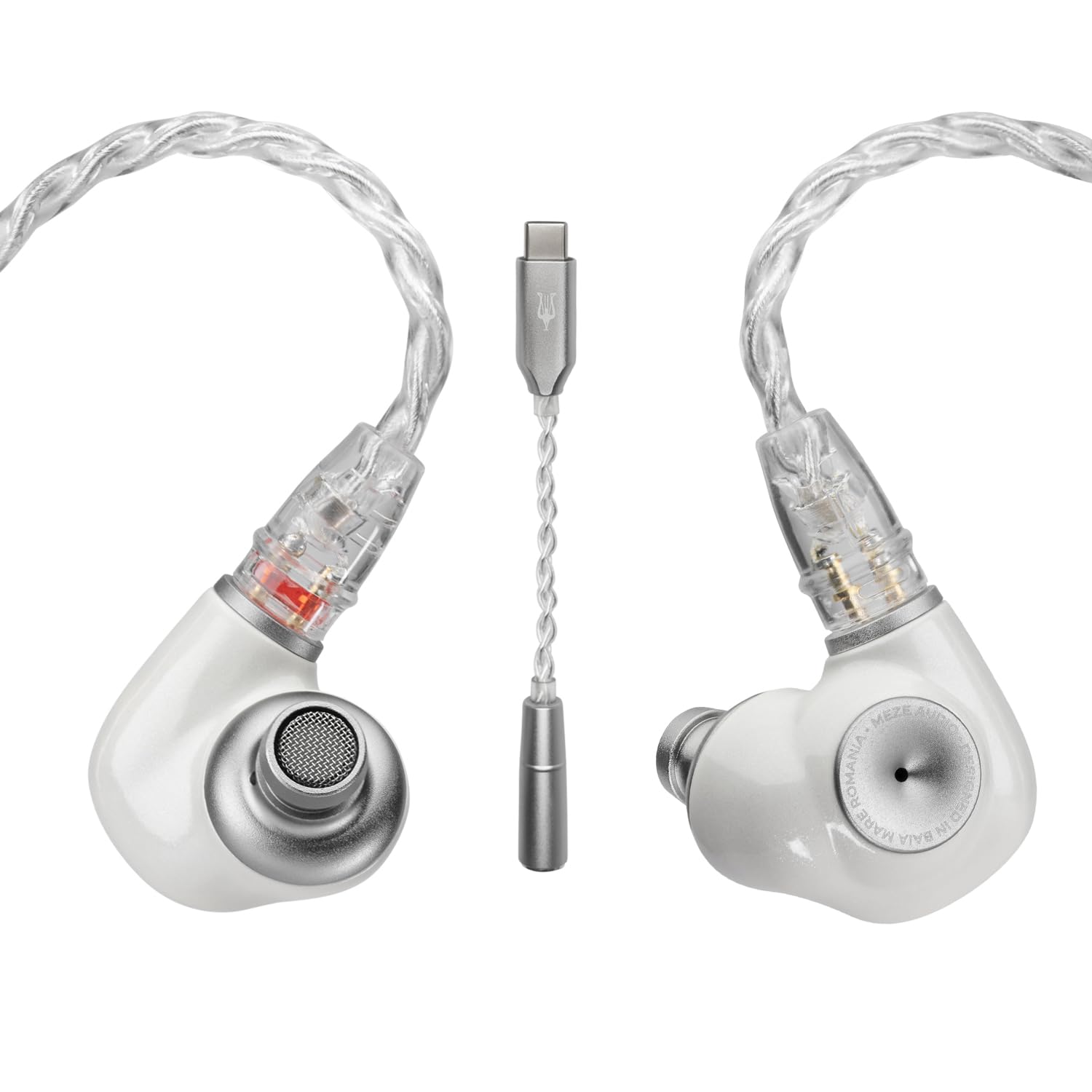
A lustrous, metal-bodied IEM with a built-in USB-C DAC for easy smartphone pairing.
If you want to plug straight into your phone, the ALBA is the easiest pick here. It comes with a custom 3.5mm to USB-C adapter that has a built-in DAC/AMP (a digital-to-analog converter and amplifier that boosts the signal), so you get a clean, rich sound from a modern smartphone or laptop without buying a separate headphone amp. Inside, a 10.8mm dynamic driver (the speaker that produces sound) delivers a natural, balanced tone with richer lows and crisp, clean highs.
Build quality is exceptional—a combination of zinc alloy and anodized aluminum gives it a resilient, premium feel, and the iridescent pearl-like finish is genuinely striking. It’s also remarkably comfortable, with owners noting they can wear it “for long sessions without fatigue,” and the included four sizes of silicone tips (S, M, L, XL) help achieve a solid seal for noise isolation. The 2-pin braided SPC 1.2m cable is durable and tangle-resistant.
It’s a fantastic all-rounder for commuters and performers, but it’s not flawless. The included cable is described as “thin” and “non-durable” by some, and the 2-pin connector can feel loose from the start. For stage use, it excels with clean vocals, but casual listeners note the sub-bass is lacking and the treble can be slightly metallic on cymbals. It’s a significant step up in comfort and sound from budget KZ models, but those chasing pure technical performance might find better raw specs elsewhere.
Why It’s Loved
- Included USB-C DAC adapter makes it truly plug-and-play with modern phones.
- Stunning zinc-aluminum build with a beautiful iridescent finish.
- Superior comfort with excellent noise isolation for long wear.
The Catch
- Stock cable is thin and fragile for some users.
- Sub-bass impact is subtle; treble can sound metallic on complex tracks.
Perfect for: smartphone users who want a premium, comfortable, high-quality wired experience without buying a separate DAC dongle.
Consider alternatives if: you’re a bass-head looking for heavy low-end thump, or you plan to heavily cable-roll with rough handling.
6. Etymotic ER4XR Extended Response
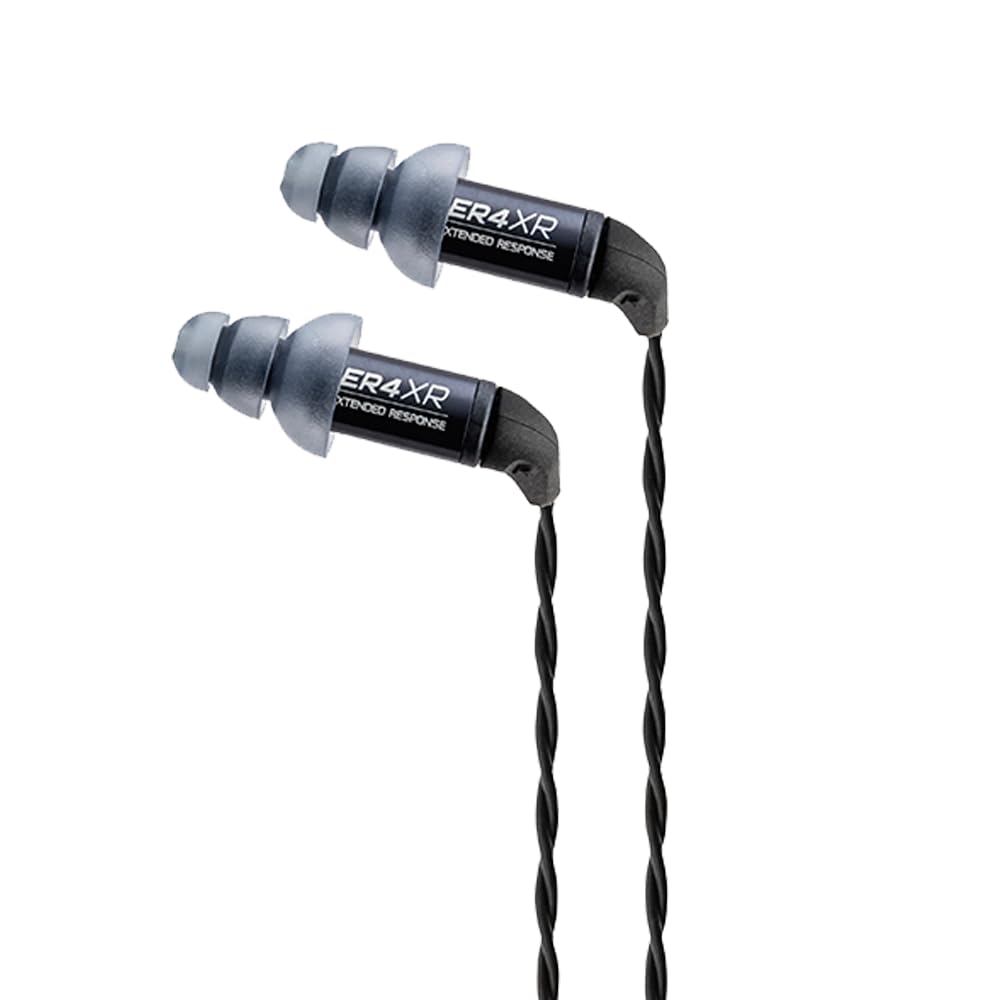
The reference standard for sheer accuracy and the most profound passive noise isolation you can buy.
The ER4XR is an audiophile institution, designed by Etymotic with a single high-performance balanced armature driver per channel, precision-matched to within 1 dB. It’s tuned for “uncompromising accuracy” in the mids and highs with a touch of extra lower-end presence. For 40-year audiophiles, it remains “the most well engineered and good sounding IEM for the price under K,” delivering outstanding instrument separation and bass fundamentals.
Its superpower is isolation. The deep-insertion design provides a staggering 35-42 dB of passive noise isolation—more effective than most active noise cancellation—with a max output of 122 dB. The included accessories are extensive: 4 dual-flange silicone pairs, 2 triple-flange pairs, 2 foam pairs, a filter removal tool, and replacement filters to protect the drivers from earwax. It’s a complete kit.
However, that deep insertion is a polarizing fit. It requires a learning curve, and some find it “hard to wear” and painful initially, though most report it becomes extremely comfortable after break-in. The included cable is functional but underwhelming for the price, and the MMCX connector rubber has been known to wear out over a year of use. You’re buying this for one thing: unrivaled accuracy and isolation that puts you alone with the music.
Its Legendary Strengths
- class-leading 35-42dB passive noise isolation, better than ANC.
- Reference-grade accuracy with drivers matched within 1dB.
- Comprehensive accessory kit with filters and multiple tip types.
Its Demands
- Deep-insertion fit has a steep learning curve and can be painful initially.
- Stock cable quality doesn’t match the earphones’ reference status.
Choose this for: the ultimate in earplug-level isolation and a neutral, hyper-accurate sound for critical listening.
Avoid if: you dislike deep in-ear insertion or want a warm, bass-heavy consumer sound—this is a precision instrument, not a party speaker.
7. Linsoul Kiwi Ears Astral Hybrid

A professional-grade hybrid that pairs a bioceramic subwoofer with six balanced armatures.
The Astral is designed for professional music engineers and discerning audiophiles who need accuracy without sacrificing engagement. It combines a 10mm bioceramic diaphragm dynamic driver for a powerful sub-bass (a 9dB shelf that rolls off smoothly at 300Hz) with six custom balanced armature drivers—two for a neutral midrange and two dual ultra-high-frequency tweeters. The result is a powerful low-end that transitions into clinical, accurate mids and airy, non-fatiguing treble.
Owners describe it as having “tight bass” that lets you hear critical audio cues accurately, making it superb for gaming and electronic music. The cable is a highlight, receiving positive feedback for its build quality, and the inclusion of both 3.5mm and 4.4mm adaptors is a thoughtful touch for users with balanced DACs. The 3D-printed resin shell is comfortable for long sessions, with a stylish black gold-sprinkled faceplate.
Comfort is the main sticking point. The shells are large, and the 6mm nozzle can be a problem for smaller ears, with some owners reporting pain or the stock tips falling out. It’s a fantastic-sounding IEM that demands a proper fit, and the sharp treble can be a “dealbreaker” for a minority of treble-sensitive listeners. It’s a top-tier value for the price if it fits your ears.
Its Strengths
- Excellent bass response and detail separation for mixing and gaming.
- Great stock cable with both 3.5mm and 4.4mm adaptors included.
- 3D-printed resin shell is comfortable for long sessions.
Its Challenges
- Large shells and 6mm nozzle create fit issues for smaller ears.
- Treble can sound sharp, which some listeners find fatiguing.
Best suited for: producers and gamers with average or larger ear canals who want tight bass and leading-edge detail.
Look elsewhere if: you have small ears, or you’re treble-sensitive and prefer a smoother, darker tuning.
8. Moondrop Blessing 3

An engineer’s scalpel: surgical treble precision with a striking stainless steel faceplate.
For the sound designer and mixing engineer, the Blessing 3 is a precision tool. It uses a Horizontally-Opposed 2DD module based on 3D printing technology combined with 4 balanced armature drivers in a triple-frequency division setup. This yields what one sound designer calls “surgical precision” for music production, with excellent detail and separation that responds beautifully to EQ without losing detail. The 3D-printed acoustic filtering nozzle is a high-tech touch.
The treble and vocals are crisp and detailed, which is fantastic for spotting flaws in a mix. However, this analytical tuning comes with a caveat: the bass is noticeably lean, with owners noting the “weak bass” means even an AirPods Pro hits harder. It’s also a physically heavy IEM, and extended listening sessions can lead to sore ears. The stainless steel faceplate is eye-catching, but it scratches easily.
The stock cable is a known weak point, described as “flimsy,” and the case’s zipper tends to fail after about 50 uses. Many owners recommend upgrading to a Tripowin C8 cable and SpinFit CP100 tips. It has a low impedance, so it needs a good DAC to avoid hiss from noisy sources. This is a specialist tool for those who prioritize treble detail and soundstage over bass impact and all-day comfort.
Its Precision Strengths
- Exceptional treble detail and soundstage for critical listening.
- Highly responsive to EQ without losing clarity.
- Stunning design with a 3D-printed acoustic nozzle.
Its Analytical Trade-offs
- Bass response is weak compared to competitors and consumer buds.
- Heavy build and flimsy stock cable; accessories are not durable.
Ideal for: audio engineers and detail hunters who want to analyze every layer of a track and don’t mind a bass-light signature.
Not for: casual listeners who want a fun, bass-heavy sound or those who prioritize comfort for marathon listening sessions.
9. Shure SE846 Gen 2

Four high-definition drivers in a legendary shell, delivering rich, fatigue-free stage sound.
For working musicians who need to hear every detail on a loud stage, the SE846 Gen 2 is the flagship pick. It packs four precision balanced armature drivers (tiny speakers that each handle a specific frequency range), delivering detailed highs, clear mids, and a deep low-end that owners describe as “subwoofer bass.” The sound “just sounds normal” in the best way—accurate and uncolored, yet strong enough to stand in for studio monitors when you’re mixing.
What makes it stand out is the tunable sound. You can swap in different sound signature filters to switch between balanced, warm, bright, or extended audio profiles—no EQ needed. That’s a real advantage for performers who want one profile on stage and another in the studio. The low-profile, sound-isolating design sits comfortably and securely, and it blocks more outside noise than many other in-ear monitors (IEMs, the term for high-end earbuds that fit deep in the ear).
The catch is the cost—it’s the priciest pick here by a wide margin, and “value for money” is the most common complaint in reviews, with many feeling it “isn’t worth” the outlay. It also needs a dedicated DAC/amp (a separate digital-to-analog converter and amplifier) to sound its best. If you’re an audio pro or a serious enthusiast with the budget, it’s a legendary reference. But for a casual listener, the price is tough to justify when cheaper options get you 90% of the way there.
Its Professional Strengths
- Industry-leading build quality and studio-grade accuracy.
- Interchangeable filters allow significant on-the-fly tuning.
- Powerful, detailed sound that works on stage without fatigue.
Its Premium Cost
- Very expensive; value for money is widely challenged.
- Requires a good amp/DAC to open up its full performance.
Worth it for: professional musicians and engineers who need an indestructible, reference-grade monitor with on-the-fly tuning for different performance environments.
Hard to justify for: casual listeners who can get near-flagship performance from IEMs at a fraction of the cost.
Understanding the Specs
Driver Count and Types
More drivers don’t automatically mean better sound—it’s about how they’re tuned. Balanced armature (BA) drivers are small, fast, and efficient, which is why you see 4 or 8 of them handling different frequency bands. A single high-quality dynamic driver can still sound more natural and cohesive, especially for bass. Hybrid designs (like 1DD+6BA or 2DD+4BA) attempt to get the physical punch of a dynamic woofer with the detailed clarity of BAs.
Isolation and Fit
The seal your eartips create is the single most important factor for both bass response and noise isolation. Deep-insertion IEMs, like the Etymotic, use triple-flange tips to block out a phenomenal 42dB of noise. Others rely on foam or silicone tips. A poor fit means weak bass and a thin sound, which is why a lot of owners recommend aftermarket tips like SpinFit or Comply foam to dial in the perfect seal for your ear shape.
FAQ
Do wired IEMs need a DAC or amp to sound good?
What is the difference between 2-pin and MMCX connectors?
Why is the tuning curve or frequency response so important?
Will these earbuds fit my iPhone or Android phone?
Are hybrid driver IEMs always better than single-driver IEMs?
How do I choose the right ear tips for the best fit?
What is the difference between an “audiophile” earbud and a regular one?
Why does the cable matter so much for wired earbuds?
Final Thoughts: The Verdict
For most people, the audiophile wired earbuds winner is the Kiwi Ears Orchestra Lite because its 8 balanced armature drivers deliver a huge, detailed soundstage with a neutral tuning that satisfies both studio and gaming needs. If you want a warm, bass-forward sound with great isolation for less money, grab the KZ ZAR. And for the most phone-friendly experience with a built-in USB-C DAC, the MEZE ALBA is the one to reach for.
How We Picked
We do not accept paid placement. Every pick is matched to a real buyer and a real use-case; we do not hands-on test units.
Sources & Methodology
Specifications: manufacturer listings and product documentation. Review insights: verified customer reviews, as of August 2026. Pricing: not shown on this page (it changes often); check the current price via the retailer link.
As an Amazon Associate, Gadgets Feed earns from qualifying purchases. This does not affect which products we feature.