
Our readers keep the lights on and my morning glass full of iced black tea. As an Amazon Associate, I earn from qualifying purchases.
Specs are compiled from manufacturer listings and verified buyer reviews and can change over time — please confirm the key details on the product page before buying.
An affordable running watch must nail three things: accurate GPS that locks on quickly, a battery that lasts a full week of training plus daily wear, and a display you can read mid-stride. The best budget options now pack serious training tools—pace guidance, recovery insights, and turn-by-turn navigation—once reserved for premium flagships.
I’m Min — the founder and writer behind Gadgets Feed. This guide is built by comparing the manufacturers’ published specifications and the patterns across verified customer reviews, so you get each pick’s real strengths and trade-offs instead of marketing spin.
Whether you’re chasing a PR or training for your first 5K, these watches deliver accurate tracking without the premium price tag. Here is exactly how the best affordable running watches compare head-to-head before you spend a dime.
Our Picks at a Glance


How To Choose The Best Affordable Running Watches
Choosing a running watch gets overwhelming fast because every brand throws acronyms at you. Cut through the noise by focusing on the four specs that directly change your run experience: GPS accuracy, battery life, display type, and training features.
GPS Accuracy is Everything
This is the core job of a running watch. Multi-band or dual-frequency GPS uses multiple satellite signals to lock onto your position quickly and keep your track accurate even near tall buildings. A watch with weak GPS will make your 10K look like a marathon on the map.
Battery Life Determines Your Routine
Battery life is measured two ways: smartwatch mode (daily wear with notifications) and GPS mode (continuous tracking during a run). A watch that lasts 2 weeks in smartwatch mode and 20 hours in GPS mode means you charge it twice a month, not every night.
Display Type: AMOLED vs Transflective
AMOLED screens are bright, colorful, and great for glancing at data in the dark, but they consume more power. Transflective MIP displays are always-on, use minimal battery, and stay readable in direct sunlight — a key trade-off for marathon runners.
Training Features Matter for Improvement
Look for metrics that actually help you progress: daily suggested workouts, recovery time, and training load. These features turn raw data into actionable advice about when to push hard and when to rest. Free apps with no subscription are a huge plus.
Quick Comparison
| Model | Best For | Battery (Smartwatch) | Battery (GPS) | Display | Amazon |
|---|---|---|---|---|---|
| Garmin Forerunner 55★ Best Overall | Beginners & Data-Lovers | Up to 2 weeks | Up to 20 hours | Transflective MIP | Amazon |
| Fitbit Inspire 3Best Lightweight Pick | All-Day Activity Tracking | Up to 10 days | — | AMOLED | Amazon |
| Amazfit Active 2Best Display | Style & Screen Quality | Up to 10 days | — | AMOLED | Amazon |
| SUUNTO Run | Dual-Frequency Navigation | Up to 12 days | Up to 20 hours | AMOLED | Amazon |
| Garmin vívoactive 5 | Health-First Smartwatch | Up to 11 days | — | AMOLED | Amazon |
| COROS PACE 3 | Endurance Training | Up to 24 days | Up to 38 hours | Transflective Touch | Amazon |
| Garmin Instinct E | Rugged Outdoor Use | Up to 16 days | — | Transflective MIP | Amazon |
| Garmin Venu Sq 2 | Bright AMOLED + Payments | Up to 11 days | — | AMOLED | Amazon |
| COROS PACE 4 | Ultralight Performance | Up to 19 days | Up to 41 hours | AMOLED | Amazon |
In‑Depth Reviews
1. Garmin Forerunner 55
Our pick — over 4★ from 6,000+ verified ratings; the strongest balance of quality and price.
The coach-on-your-wrist that turns raw miles into a structured training plan.
The Forerunner 55 earns the top spot because it delivers the core Garmin training experience without the flagship price. The standout feature is PacePro, which offers GPS-based pace guidance for a selected course or distance — so you get a real race-day strategy without paying for it. It also predicts your race times and estimates finish times, giving you concrete goals to chase.
Battery life here is the stuff of legend: up to 2 weeks in smartwatch mode and up to 20 hours in GPS mode. That means you can run a marathon, track your daily steps, and still have power left to spare. The transflective MIP display stays readable in direct sunlight, and physical buttons mean you can start a run with gloves on or when your fingers are sweaty. Buyers report using it for years — one long-term owner notes “3+ years use, zero regrets” with accurate heart rate tracking and roughly 2 weeks of battery even with 1.5 hours of daily activity.
It is not a touchscreen, which some find limiting, and the interface has a learning curve — opinions on ease of use are genuinely mixed. Also, the heart rate sensor can glitch on a treadmill for some owners after months of use, though turning the watch off at night fixed it. This is a pure training watch, not a smartwatch replacement — it shows notifications but expects you to focus on the run.
fast GPS lock
- PacePro gives GPS-based race pacing without a subscription
- Up to 2 weeks battery in smartwatch mode, 20 hours in GPS
- Built-in profiles for running, cycling, pool swim, HIIT, and more
- Custom watch faces from the Connect IQ Store
no altimeter
- No touchscreen — navigation is all physical buttons
- Ease of use is mixed; not the most intuitive for everyone
- Occasional treadmill HR glitches reported after months
pace chasers: Runners who want real coaching features and marathon-ready battery life without paying premium prices.
trail hikers: You want a touchscreen or a watch that doubles as a full smartwatch — this is a focused training tool.
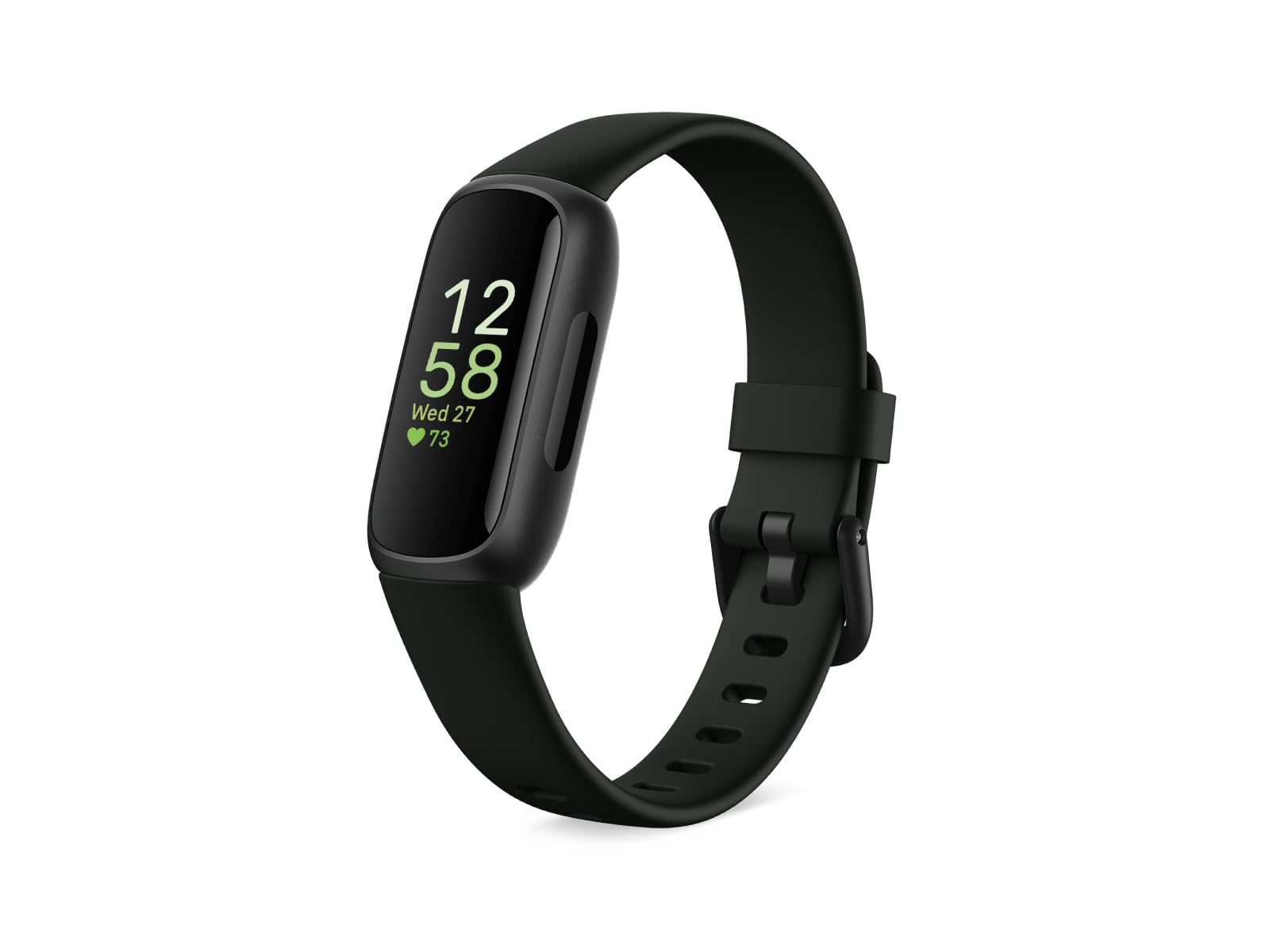
2. Google Fitbit Inspire 3
A featherweight band that tracks your whole day, not just your runs.
The Inspire 3 is the pick for anyone who wants a slim, comfortable tracker rather than a bulky sport watch. It is a different shape than the other picks here — a small band, not a round watch face — which makes it the best all-day companion. It delivers a Daily Readiness Score, Active Zone Minutes, and 24/7 heart rate tracking to tell you when to push and when to recover. With 40+ exercise modes and automatic exercise tracking, it catches your workouts even when you forget to start the timer.
Battery life reaches up to 10 days, and owners mention getting 8-9 days even after adjusting settings. The always-on display option is there, but disabling it stretches that runtime further. Buyers praise its step accuracy and the detailed sleep tracking, which includes a Sleep Score and smart wake vibrating alarm. The screen is bright and colorful, and it comes with both small and large bands in the box so you can find the right fit.
The honest trade-off: this is a tracker, not a GPS running watch. It counts steps accurately, but it fails to count them when you hold treadmill rails, and it can count hand gestures as steps. Some owners have reported the strap hinge fracturing after months of use, and occasional syncing issues with iPhones that need re-pairing. Treat it as a daily wellness companion, not a precision running tool.
slim all-day
- Slim, comfortable design that suits smaller wrists
- Accurate step, sleep, and resting heart rate tracking
- Smart wake vibrating alarm and mindfulness sessions
- Comes with both small and large bands included
no GPS
- No built-in GPS — requires your phone for distance
- Misses steps when holding treadmill rails
- Some customers note hinge durability and sync hiccups
daily wear: You want a slim, comfortable tracker with excellent sleep and step data that you can wear 24/7.
runners: You need GPS mapping for outdoor runs — this tracker leans on your phone for that.
3. Amazfit Active 2
A stainless-steel stunner with a screen bright enough to read in full sun.
The Amazfit Active 2 proves that affordable doesn’t mean boring. Its stainless steel build feels more premium than its price suggests, and the bright 1.32″ AMOLED display stays legible even under harsh sunlight. It uses 5 satellite positioning systems for faster GPS locks, so your route trace starts accurately the moment you hit the start button. With over 160 sports modes, it covers everything from running to padel to HYROX race training.
Battery life hits up to 10 days with typical use, and reviewers point out stretching it even further — one noted up to 11 days between charges. The free Zepp App has no hidden subscription fees, and the voice control (Zepp Flow) lets you reply to Android messages via speech-to-text. Free downloadable maps with turn-by-turn directions on-screen or through Bluetooth headphones make it a surprisingly capable navigation tool for trail runs.
The catch? Watch faces in the app are paid extras, which frustrates some buyers — you can’t create fully free custom faces. Also, you can’t initiate texts from the watch, only reply to incoming ones. The value proposition is strong regardless: buyers consistently describe it as “worth it” and praise the fast charging and responsive screen.
screen lovers: The combination of a premium-looking stainless steel case, a bright AMOLED screen, and free voice-command features.
long treks: Paid watch faces and no option to start texts from the watch are the main compromises.
4. SUUNTO Run
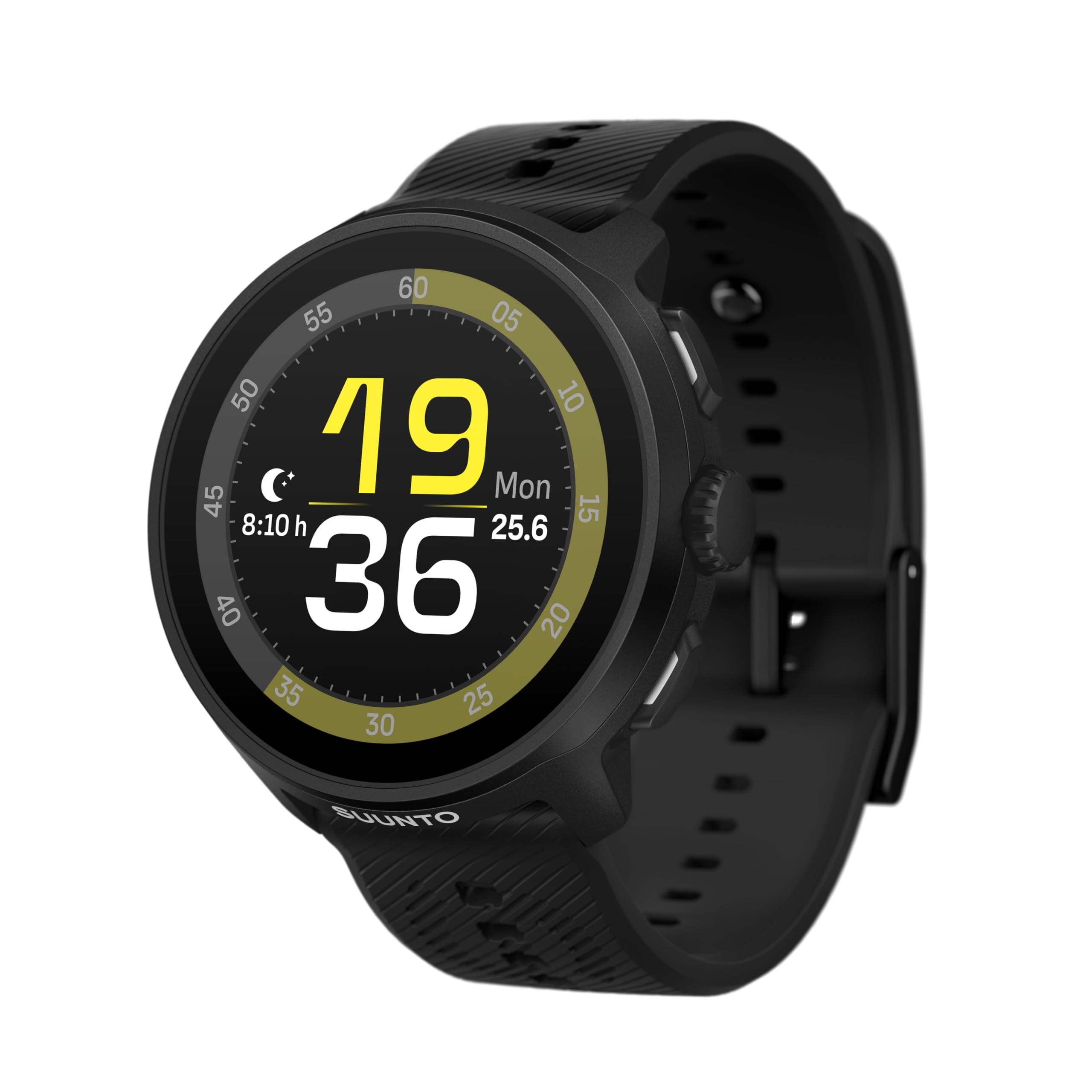
A featherweight 51g runner that tracks your training load and never loses your route.
The SUUNTO Run is built specifically for runners who want accurate navigation without hauling a heavy watch. It weighs just 51g with the silicone strap, making it one of the lightest AMOLED-equipped running watches here. Its advanced dual-frequency GPS technology locks onto satellite signals with precision, so your route stays accurate whether you’re in the city, countryside, or deep in the woods. The Breadcrumb Trail and navigation features let you view your route and key points so you never get lost.
Battery life reaches up to 12 days for daily activity and sleep tracking, and up to 20 hours of training with high-precision GPS. Fast charging gives you a full recharge in just one hour. The watch tracks your training load, monitors post-exercise heart rate, and measures Training Stress Score (TSS) to tell you how hard your body has worked. Buyers find it very easy to use — one switched from Garmin specifically because they found it “too complicated,” and appreciated the SUUNTO’s simplicity.
The honest caveat: the supporting app feels outdated to some, and there are occasional quirks. A couple of shoppers say the touchscreen starting on its own if hit accidentally, and one had freezing issues in the pool. It’s best treated as a running-focused tool rather than a general fitness smartwatch.
adventurers: Runners who want dual-frequency GPS navigation accuracy and a light 51g build for long trail sessions.
music fans: You want a polished companion app or a watch that handles swimming flawlessly — this shines on the road, not in the pool.
5. Garmin vívoactive 5

A bright AMOLED screen wrapped around Garmin’s most complete health tracking suite.
The vívoactive 5 is the pick for runners who want more than pace and distance — they want a full picture of their health. Its bright, colorful AMOLED display makes data pop, and the battery lasts up to 11 days in smartwatch mode, so you can wear it 24/7 without nightly charging. The Body Battery energy monitoring shows when you’re charged up or need rest, and personalized insights pull from your sleep, naps, stress levels, and workouts.
It goes beyond running with more than 30 built-in indoor and GPS sports apps, including walking, cycling, HIIT, swimming, and golf. The wheelchair mode even tracks pushes instead of steps. You get a sleep score with personalized coaching, HRV status, and automatic nap detection. Preloaded workouts cover cardio, yoga, strength, and Pilates, and you can download music from Spotify, Amazon Music, or Deezer for phone-free listening.
The trade-off: this is a health-first smartwatch, not a dedicated running coach. Some owners note occasional false nap detection and minor software bugs, and battery life drops to around 5 days with heavy GPS use. But the quality is the most-praised aspect — 839 owners single it out — and buyers regularly call it the best fitness tracker they’ve used.
casual users: Runners who want a bright AMOLED smartwatch with top-tier sleep, stress, and energy tracking alongside their GPS runs.
hikers: Those who need advanced running dynamics like ground contact time — this is a health watch that runs, not a pure running watch.
6. COROS PACE 3

An 11.7mm ultra-slim runner that outlasts every Garmin on this list.
The COROS PACE 3 is the endurance athlete’s dream, delivering a staggering 38 hours of continuous GPS tracking or 24 days of daily use on a single charge — the best battery figures here. It weighs just 30g with the nylon band, so you genuinely forget it’s on your wrist. The always-on 1.2″ transflective touchscreen stays visible in any light, with backlight modes for Always On, Navigation & Activity, or Navigation Only.
Its redesigned dual-frequency satellite chipset keeps GPS tracks accurate even in high-rise cities, and it records air pressure and elevation gain. The route planner lets you build custom routes on the COROS App and sync them directly to the watch, with breadcrumb navigation to keep you on track. Activity modes cover run, trail run, bike, swim, strength, snowboard, ski, and more. Owners consistently call it superior to Garmin for battery and value — one enthusiast notes 2+ weeks of battery with detailed sleep and HRV data.
The main frustrations are minor but real: the USB charging cable can be finicky on a laptop, and the watch may shut off when the battery drops below 10%. Some find the menu system less user-friendly than Garmin’s. Also, workouts don’t close Apple Health rings, requiring a Strava sync workaround for iPhone users.
serious runners: The unbeatable 38-hour GPS battery and 30g weight that make it perfect for ultramarathons and 24/7 wear.
touchscreen fans: Finicky USB charging and an app that doesn’t sync with Apple Health rings natively.
7. Garmin Instinct E

The rugged 45mm tank that shrugs off bumps, drops, and week-long trail adventures.
The Instinct E is for runners who train where the pavement ends. This rugged 45mm GPS smartwatch is engineered to MIL-STD-810 standards for thermal and shock resistance, so it survives the knocks and temperature swings that would break a standard watch. It’s also 10 ATM water-rated, meaning it handles swimming and heavy rain without worry. Battery life reaches up to 16 days, and buyers report it easily lasting weeks between charges — one ex-Apple Watch user switched after 12 years of daily charging and hasn’t looked back.
For navigation, you get a 3-axis compass, barometric altimeter, and multi-GNSS support to keep your bearings in remote areas. It tracks a 20-mile hike with ease, stores steps and heart rate locally, and syncs later when you have a signal. Smart notifications and Connect IQ Store integration let you add new apps and watch faces. The appearance is the most-praised aspect, with owners loving the rugged look that isn’t too busy.
The honest gripes: the band runs short, even for average wrists, so you may need an aftermarket strap. The monochrome-style display is utilitarian rather than pretty, and usability opinions are split — some find it simple, others less intuitive. One owner also received a unit linked to another account, so check yours on arrival.
field work: Trail runners, hikers, and anyone who needs a tough, week-long battery watch that handles extreme conditions.
color lovers: The stock band runs short for average wrists, and the display is functional rather than flashy.
8. Garmin Venu Sq 2

A square-faced smartwatch that packs Garmin’s health suite into a compact, dress-friendly body.
The Venu Sq 2 is the running watch that doesn’t look like a training device. Its square, compact case fits smaller wrists comfortably, and the bright AMOLED display with an always-on mode makes quick glances easy. Battery life reaches up to 11 days in smartwatch mode, and owners mention getting multi-week performance — one user managed 9 nights with 15% battery left, beating their previous Samsung and Fitbit watches. You can track Body Battery, sleep score, respiration, hydration, stress, and women’s health from one screen.
It’s genuinely versatile with more than 25 built-in indoor and GPS sports apps, covering running, cycling, HIIT, swimming, and golf. Garmin Pay contactless payments let you leave your wallet at home, and incident detection sends your live location to emergency contacts during certain activities. Preloaded workouts include cardio, yoga, strength, and Pilates, plus free Garmin Coach adaptive training plans. Buyers praise its functionality most of all — it tracks running, lifting with reps and rest, swimming, and yoga all accurately.
The catch: there’s no overnight HRV tracking like the pricier Forerunner 965, and band options are limited. Some owners find the silence mode toggle clunky, and you can’t manually delete workouts. It survived a washer/dryer cycle in one owner’s account, so durability is solid — just don’t expect to push that luck.
small wrists: Runners who want a compact, good-looking smartwatch with Garmin Pay, great battery, and accurate multi-sport tracking.
long battery: Advanced overnight HRV data and a wide selection of aftermarket bands are the main trade-offs.
9. COROS PACE 4
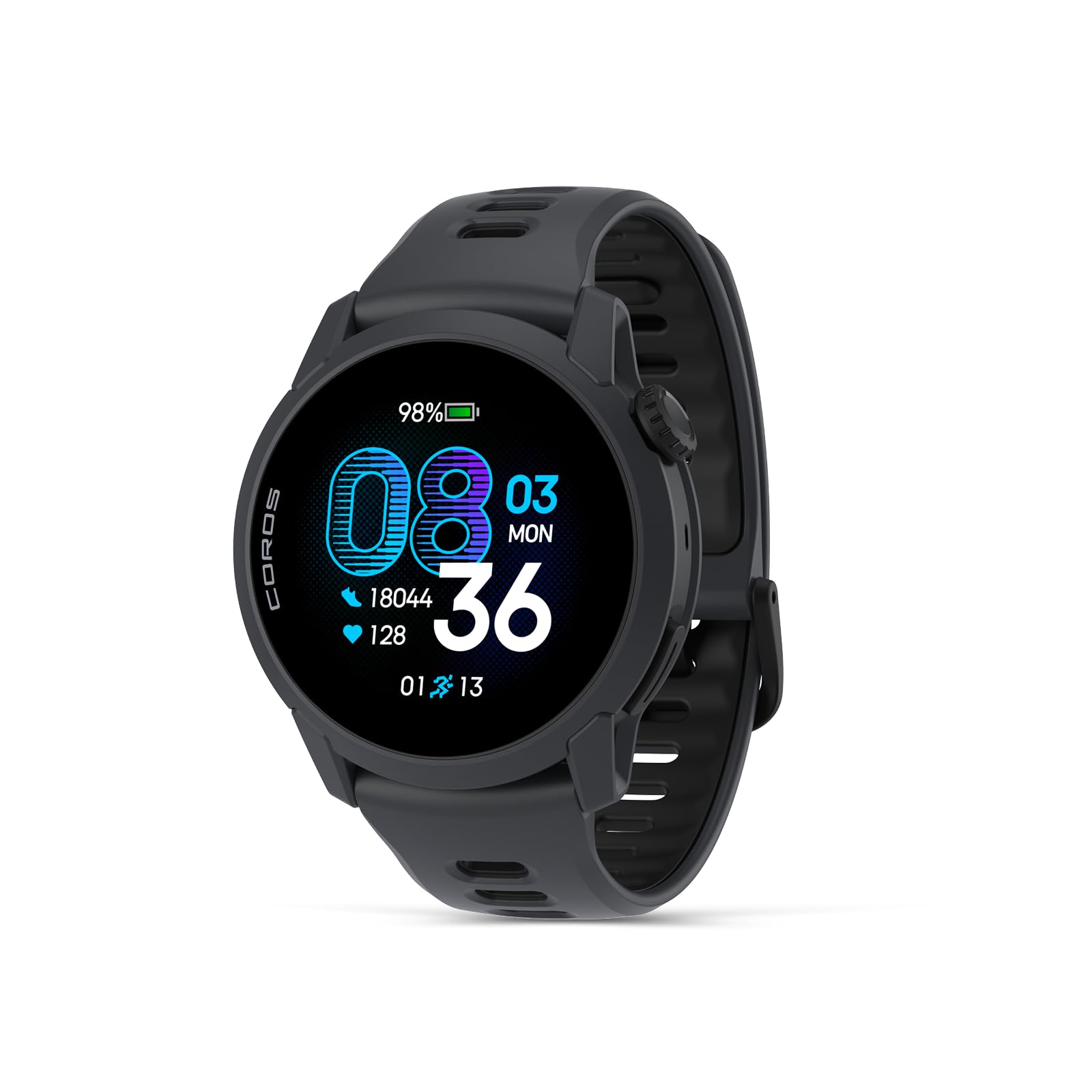
The ultralight 32g performance machine that makes the PACE 3 look heavy.
The COROS PACE 4 pushes the envelope further than its sibling, weighing just 32g with the nylon band and measuring a razor-thin 11.8mm. That makes it lighter than an energy gel, and comfortable enough for 24/7 wear. Its 1.2″ touchscreen AMOLED display offers 164% higher resolution than the PACE 3, with auto-adjusting brightness that keeps colors vibrant and lines sharp in any environment. Battery life delivers 41 hours of continuous GPS use and up to 19 days of daily battery life.
This watch introduces voice features that set it apart: a voice recording tool captures training logs about where you were and how you felt, and Voice Control can set alarms or create target workouts. The tactile digital crown, two buttons, and smooth touchscreen give you easy control even at high intensity, plus a customizable Action Button for one-tap access to media or breadcrumb navigation. A 12-mile run in one owner’s account left 75% battery with music playing, max GPS, and always-on max brightness.
The honest gaps: the always-on display dims some metrics, heart rate can be spotty during intervals (an external HRM helps), and pace can lag slightly. Sleep tracking misses onset sometimes, and if you want on-device maps like the PACE Pro, you’ll pay more. But the value is undeniable — an ex-Garmin user of 10+ years calls it “1/3 the price” with better battery and a cleaner app.
data fans: The ultralight 32g build, 41-hour GPS battery, and voice training logs that make it the best pure value in performance running.
music streamers: You need on-device maps — otherwise this is the smarter buy for most runners.
Understanding the Specs
Battery Life: Smartwatch vs GPS Mode
Manufacturers quote two numbers because they measure different things. Smartwatch mode is your daily wear with notifications, heart rate, and sleep tracking running. GPS mode is continuous tracking during a workout. A watch might give you 2 weeks of smartwatch use but only 20 hours of GPS tracking — that’s normal. For marathon training, look for at least 15 hours of GPS mode so you can run long without battery anxiety.
GPS Chipsets: Single vs Dual-Frequency
Dual-frequency or multi-band GPS uses two satellite frequencies to lock onto your position faster and keep the track accurate near tall buildings or under tree cover. Single-band GPS is fine for open roads but can wander in cities. If you train in urban canyons or dense trails, the dual-frequency radios in the COROS and SUUNTO models are worth the upgrade.
Display Types: AMOLED vs Transflective
AMOLED displays are bright and colorful, perfect for glancing at stats in the dark, but they drain battery faster. Transflective MIP displays are always-on and reflect sunlight naturally, so they’re legible in bright conditions with minimal power draw. For a runner, this is the trade-off between a gorgeous screen and longer battery life.
Training Metrics: Beyond Pace and Distance
Modern running watches track more than just speed. Recovery time tells you how long to rest before your next hard session. Training load measures the cumulative strain on your body. HRV (heart rate variability) shows your recovery quality. These metrics turn raw data into actionable advice on when to push hard and when to rest.
FAQ
What is the difference between smartwatch battery mode and GPS mode?
Is a touchscreen better than physical buttons for running?
Will an affordable running watch track my heart rate accurately?
Do these watches require a monthly subscription?
Can I use these watches for swimming and triathlon training?
How long does the battery last on the Garmin Forerunner 55?
What is dual-frequency GPS and why does it matter for runners?
Will a fitness tracker like the Fitbit Inspire 3 replace a dedicated running watch?
Final Thoughts: The Verdict
For most runners, the top choice among affordable running watches is the Garmin Forerunner 55 because it delivers real coaching features like PacePro and race predictions with the battery endurance to back them up. If you want the best battery life in the price range, the COROS PACE 3 is the one to reach for with its 38-hour GPS mode. And for a bright AMOLED display that doubles as a full health smartwatch, the Garmin vívoactive 5 is the strongest all-rounder. The crowd favorite of the budget tier — the Forerunner 55 — holds a 4.4-star average across 6,000+ owners, which tells you the quality is consistently there.
How We Picked
We do not accept paid placement. Every pick is matched to a real buyer and a real use-case; we do not hands-on test units.
Sources & Methodology
Specifications: manufacturer listings and product documentation. Review insights: verified customer reviews, as of August 2026. Pricing: not shown on this page (it changes often); check the current price via the retailer link.
As an Amazon Associate, Gadgets Feed earns from qualifying purchases. This does not affect which products we feature.