
Our readers keep the lights on and my morning glass full of iced black tea. As an Amazon Associate, I earn from qualifying purchases.
Specs are compiled from manufacturer listings and verified buyer reviews and can change over time — please confirm the key details on the product page before buying.
A cattle fence has one job: keep animals in and trouble out. Yet most buyers discover too late that a fence is only as good as its posts and wire — a flimsy post bends in wind, and thin wire snaps under a curious cow. This guide cuts through the noise and maps out nine proven ways to build a boundary that actually holds, from step-in electric posts for quick rotations to 14-gauge welded rolls that shrug off impact.
I’m Min — the founder and writer behind Gadgets Feed. This guide is built by comparing the manufacturers’ published specifications and the patterns across verified customer reviews, so you get each pick’s real strengths and trade-offs instead of marketing spin.
Your cattle fence choice depends on three questions: permanent perimeter, solar-powered charger, or portable net for grazing. Your herd size and land layout dictate the material, gauge, and power source that will actually hold.
Our Picks at a Glance
How To Choose The Best Cattle Fence
Picking a cattle fence starts with one question: permanent containment or flexible grazing? A fixed perimeter needs heavy woven wire and sturdy line posts. Rotational grazing calls for lightweight posts you can move in minutes. Choose permanent containment or rotational grazing before buying.
Wire Gauge and Mesh Design
The gauge number tells you the wire thickness — lower numbers mean thicker, stronger wire. A 14-gauge wire is the common workhorse for cattle, resisting both pressure and rust. Mesh pattern matters too: fences with smaller openings at the bottom block calves and predators while larger top gaps save material and cost.
Posts: The True Backbone
A fence is only as straight as its posts. Steel U-posts handle permanent lines and heavy tension, while step-in posts of fiberglass or polypropylene suit temporary electric runs. Consider your soil — hard, drought-packed ground can defeat a step-in post, and frozen ground may need a pre-drilled hole or a mallet.
Power: Electric vs. Physical Barrier
Electric fencing trains animals with a psychological boundary rather than brute strength, which cuts material costs. The charger’s joule rating dictates how much fence it can energize, and its power source — AC, solar, or battery — determines where you can place it. Weed pressure along the line saps power, so low-impedance designs hold up better in overgrown pastures.
Quick Comparison
| Model | Best For | Material | Height | Coverage | Amazon |
|---|---|---|---|---|---|
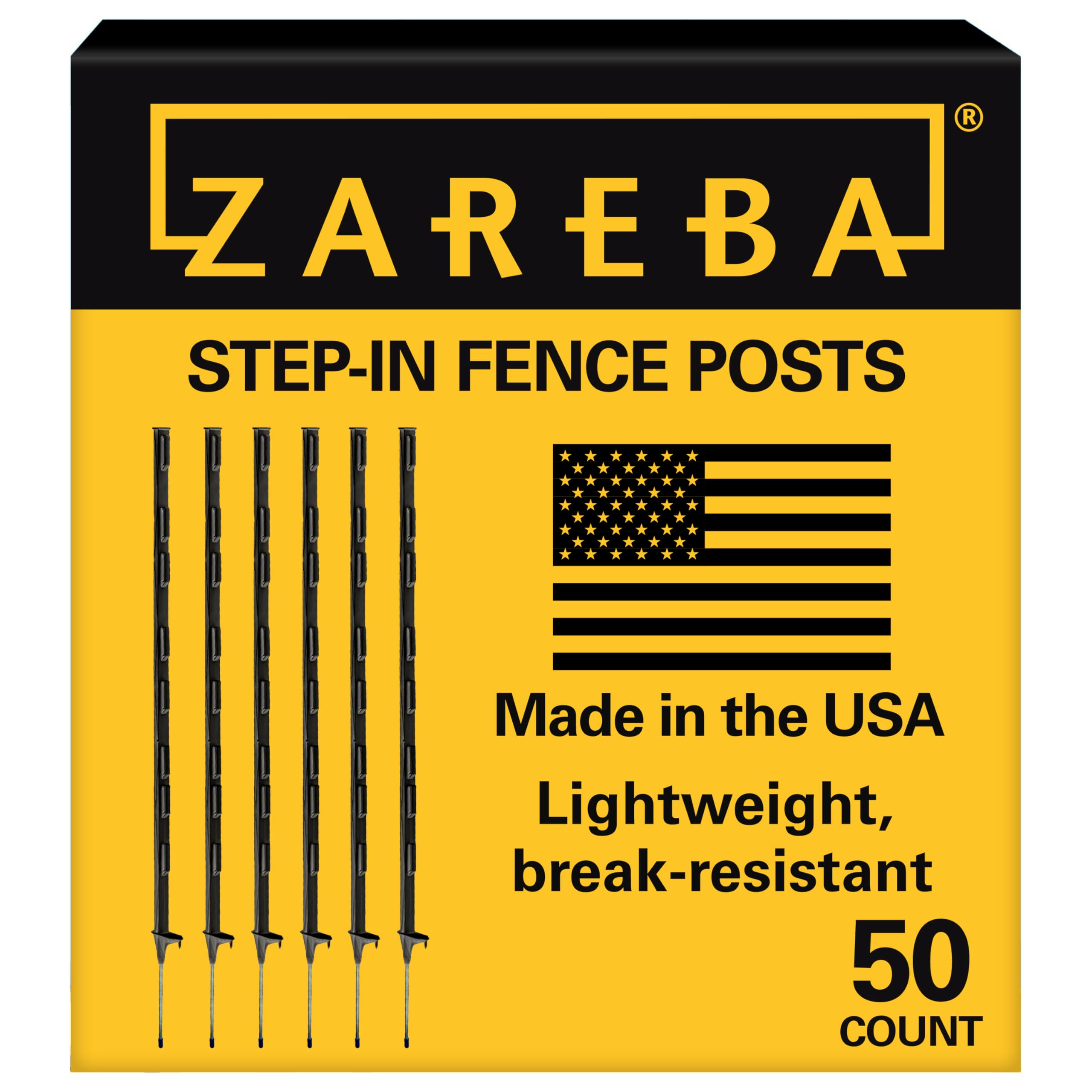
| Zareba Step-In Posts★ Best Overall | Quick Temporary Fences | Polypropylene + Steel | 39 in Above Ground | 50 Posts | Amazon |
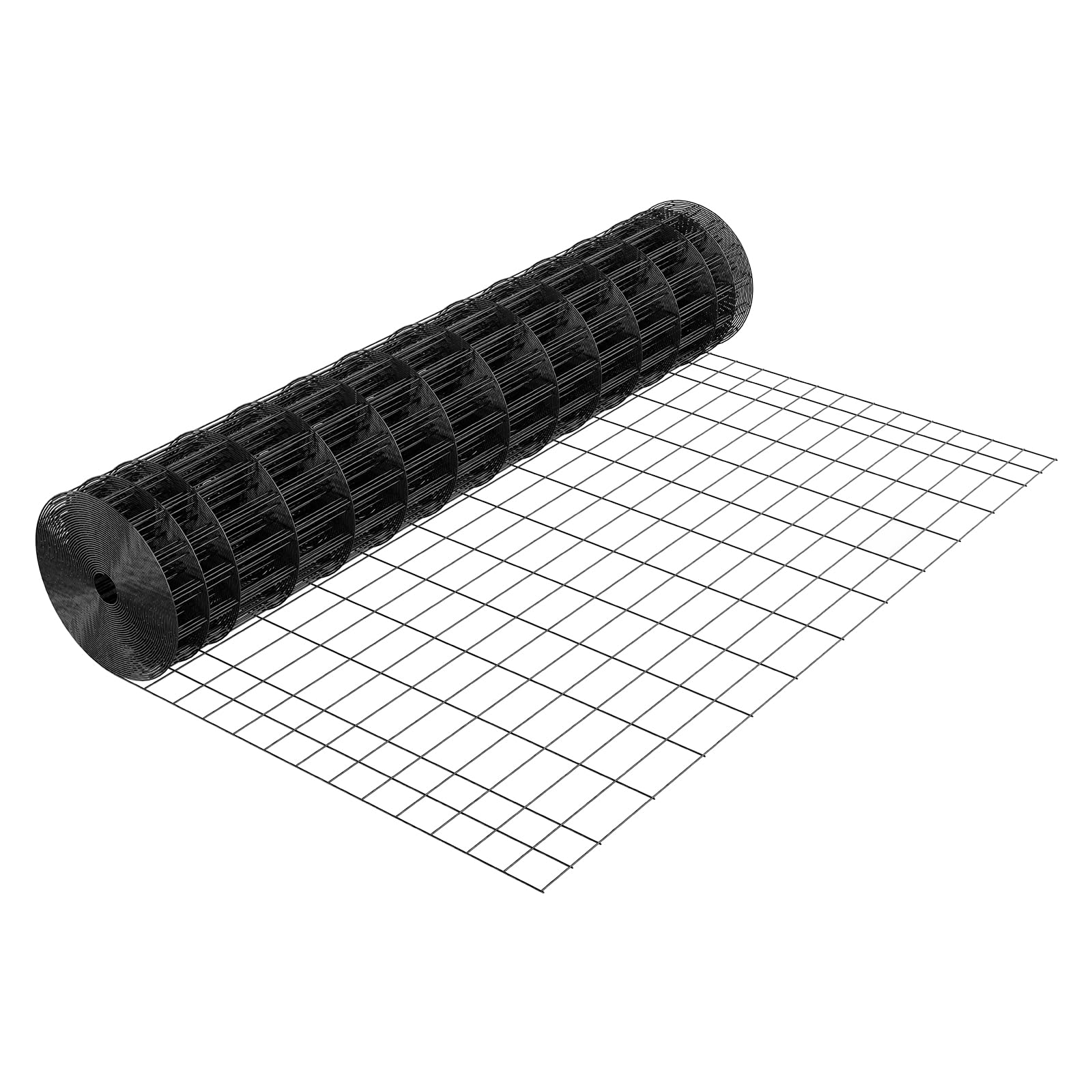
| VEVOR Hardware ClothPredator-Proof Pick | Predator-Proof Enclosures | Galvanized Iron + PVC | 48 in | 50 ft Roll | Amazon |
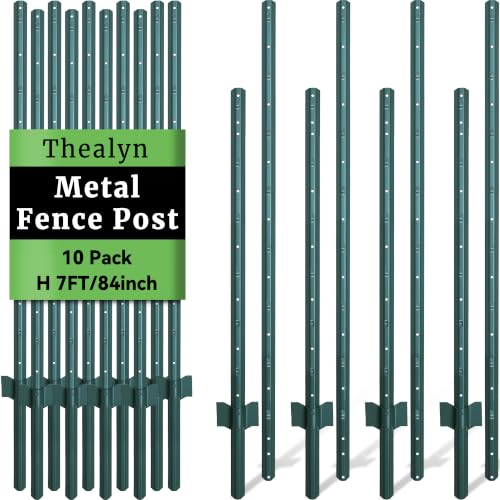
| Thealyn U-PostsSteel Backbone | Permanent Wire Support | Solid Steel | 7 ft | 10 Pack | Amazon |
| YESON Cattle Fence | Graduated Mesh Barriers | 14-Gauge Alloy Steel | 4 ft | 164 ft | Amazon |
| RUOXI Farm Fence | Budget-Minded Herds | 14-Gauge Galvanized | 4 ft | 164 ft | Amazon |
| ANDMON MINI400 | Remote Solar Power | Solar + 12V Battery | — | 30 Miles | Amazon |
| Gallagher Step-In Posts | Rotational Grazing | Solid Fiberglass | 48 in | 50 Pack | Amazon |
| Zareba AC Charger | Large Permanent Lines | AC-Powered, 2 Joule | — | 50 Miles | Amazon |
| Premier 1 ElectroNet | Portable Sheep & Goats | PVC + Electrifiable Mesh | 35 in | 164 ft | Amazon |
In‑Depth Reviews
1. Zareba Step-In Electric Fence Posts, 4 ft, 50 Pack
Our pick — 4.5★ from 700+ verified ratings; the strongest balance of quality and price.
The quick-move favorite that turns fence building into a foot-stomp, not a digging project.
This 50-pack of step-in posts gets a fence perimeter up fast — each stake is 39 inches above ground when installed, which is enough for a solid electric line without back-breaking labor. The key is the anti-rotation spike: you press the post in with your foot, and that spike stops it from twisting loose as animals lean on the wire. The UV-resistant polypropylene body is molded in one piece and reinforced with a ribbed, steel I-beam inside, which explains why it survives the hard, drought-packed ground that defeats lesser stakes.
Owners consistently find these perfect for temporary fencing — and the functionality is what wins people over here. Each post carries 8 molded clips that hold electric wire and poly tape up to 2 inches wide, so you can set the fence line exactly at the height you need. These are for electric lines only, not permanent non-electric fences. The clips that hold the wire break easily when the deer go through, as buyers report, and heavy non-electric pressure can bend the shaft.
What impresses long-term users is the versatility — the same stakes that run a 3D deer fence also work as garden ground stakes, boundary markers, and crowd-control lines. They are not designed for permanent use, so treat them as the rotational-grazing workhorse they are. For the money, you get a fence system that goes up in minutes and comes down just as fast.
quick step-in setup
- Foot-press installation with an anti-rotation spike for staying power
- 8 molded clips per post handle wire and poly tape up to 2 inches wide
- Steel I-beam reinforced shaft resists bending in hard soil
lightweight for heavy stock
- Wire clips can snap under heavy animal pressure like deer
- Not built for permanent, non-electric fence lines
portable grazing: you rotate pastures, run seasonal electric lines, or need a fence up before sundown.
permanent corrals: your cattle lean hard on non-electric wire — the clips and shaft have their limits.
2. VEVOR Hardware Cloth, 48 in x 50 ft, 2 x 4 in Mesh
The welded-roll shield that keeps raccoons, opossums, and nosy neighbors out of the coop.
This 48-inch by 50-foot roll of 2×4-inch mesh is the go-to for anyone building a fortress around hens or a garden. The 14-gauge galvanized steel wire gets a double layer of protection — hot-dip galvanizing plus a black vinyl coat — so it shrugs off sun and rain far longer than bare wire. And because the welds are done by machine and checked by hand, the wire won’t slip or gap at the joints when an animal tests it.
Predator protection is why this fence stands out: the tight 2×4-inch mesh stops raccoons and opossums cold, and owners praise the quality most. The roll ships with steel wire pliers and cut-resistant gloves, so the 15-minute setup promise holds even for first-timers. At 24.9 pounds, it is noticeably lighter than a comparable bare-steel roll, making handling and trimming far easier — though some owners note it isn’t quite as sturdy as plain galvanized for bottom-of-cage use.
The recurring gripe in the review pages is sizing — a few owners mention the roll arrives short, with one noting the height measured 70 inches instead of the promised 72, and the length short by about 10 feet. While the PVC coating is a plus, an occasional unit ships with coating damage and surface rust already present. For coops, catios, and garden barriers where wildlife is the enemy, this is a genuinely versatile buy — just budget for a possible shortfall.
welded mesh strength: It keeps wildlife out and protects plants and pets all year, and at 24.9 pounds it is a far easier roll to manage than heavier bare-steel alternatives.
3. Thealyn Metal 10-Pack 7FT Fence Posts
The no-dig steel line posts that stand straight through wind because they sink a full foot down.
Each of these 7-foot U-posts is meant to be driven 1 foot into the ground, leaving a full 6 feet of support above for tall fence mesh. The solid steel construction has real bending resistance, and the green powder coating is the rust prevention that keeps these standing through harsh weather. The design philosophy is simple: no digging holes, just drive the post in with a rubber mallet or manual post driver, and let the depth do the work.
Installation is the selling point — evenly spaced punched holes and built-in hooks (tabs) make it easy to attach, adjust, and tension your wire mesh securely, which is why the functionality earns the most praise. The whole 10-pack weighs 30.6 pounds, which tells you these are built to stay put once driven. They are ideal for supporting light-to-medium garden wire, chicken wire, snow fencing, and temporary borders — and a common winner for reinforcing existing fences so energetic dogs can’t jump over.
These are U-posts, not T-posts, so they won’t fit standard T-post clips. Opinions on value split, and stability in very windy conditions gets mixed marks. Price them against that 1-foot depth requirement: they are a solid mid-range choice for permanent-feeling lines that don’t need concrete.
firm soil: you need tall, no-dig posts for wire mesh and want rust protection without painting.
rocky ground: anyone expecting T-post clip compatibility — these use their own hook-and-hole system.
4. YESON Cattle Fence 4ft x 164ft

The graduated-mesh roll that blocks calves at the bottom without wasting wire up top.
This 4-foot by 164-foot roll uses a smart design: the mesh size gradually decreases from top to bottom, so tiny animals can’t squeeze through the lower gap while you save material where the big animals roam. The 14-gauge steel wire is hot-dip galvanized for corrosion resistance, and the twisted weaving technology locks vertical and horizontal wires together so they resist loosening under pressure.
Versatility is the core strength here — it handles cattle, horses, sheep, dogs, and deer, making it a practical single-roll solution for a mixed-species property. The galvanized surface stays rust-free through wet seasons, and the 4-foot height is enough to keep deer and rabbits out of a vegetable garden while feeling less confining than taller panels. A red top line aids visibility, which owners find genuinely useful for both livestock and people.
Customers note the roll measures short of 164 feet and the wire is very thin. Unrolling can be a nightmare too — the roll tends to catch on itself and bend awkwardly, with some noting it needs two people to manage. If you are fencing sheep or dogs on a budget, it works; if you need a heavy-duty cattle barrier, look at beefier options.
graduated wire spacing: The smaller bottom mesh saves you money on wire while keeping the small animals where they belong.
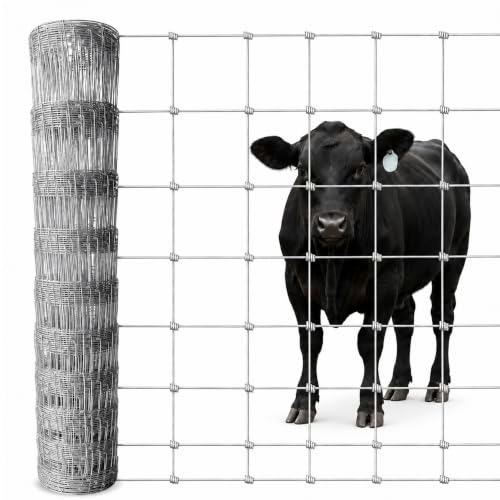
5. RUOXI Farm Fence 4ft x 164ft
The light-feeling woven roll that bends into place without fighting back for garden and goat pens.
For the same 4-by-164-foot footprint, this woven option leans into easy handling. The high-strength, hot-dip galvanized 14-gauge steel wire gives it the same corrosion resistance as pricier rolls, but the woven, weld-proof construction means it flexes and bends into shape without the stiffness of welded mesh. Owners describe it as lightweight but sturdy — a combination that makes solo installation genuinely practical.
The graduated mesh design (smaller openings at the bottom) keeps small animals in and predators out, while distributing impact pressure across the whole panel. It is a proven deer deterrent for gardens, and the quality and functionality are the most-praised aspects across the reviews. The 48-pound weight gives it enough heft to feel secure, yet the weave allows it to contour to uneven ground better than rigid panels.
This is not a heavy-duty cattle-tight woven fence. One owner sums it up as “good enough for a dog fence and I would say goats” — but not the kind of heavy woven wire used for cattle. Sturdiness splits reviewers, with some finding it flimsy and too easy to bend. It is a budget-friendly mid-range choice for lighter livestock and garden exclusion, not a bull-proof perimeter.
temporary pens: goats, chickens, dogs, and garden plots where easy solo install beats brute strength.
long-term use: you need a true heavy-duty cattle barrier — this wire is built light.
6. ANDMON MINI400 Solar Electric Fence Charger
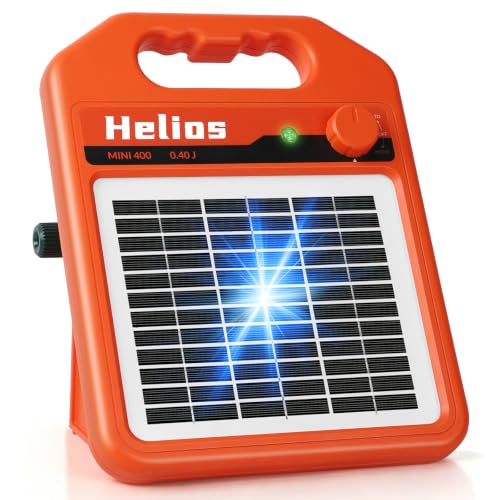
The solar box that runs up to 14 days on battery so remote pastures stay hot without a cord.
This is the solution for fence lines where there is no outlet for miles. The low-impedance design and 0.4 stored joules of power can energize up to 30 miles of fence, depending on the wire type and strand count. Inside sits a 12V/4.5AH sealed lead acid battery that operates up to 14 days without sunshine — meaning a stretch of cloudy weather won’t leave your herd wandering.
Setup borders on trivial: the easy-to-set-up aspect is what owners single out most. It mounts on Y, T, or wooden posts, and with clear instructions you can throw it on a T-post and wire it in under a minute. The Night mode is a clever efficiency feature — it pulses every 1.5 seconds during the day but slows to every 2.9 seconds at night, cutting power use when animals are less active. The solar panel plus DC charger dual power options give you flexibility in any environment.
Battery life splits reviewers: some hold a charge all season, others fail after a month and let goats escape. The internal battery ships disconnected for safety, so you must open the cover and connect the red and black cables before first use. For a remote pasture or a 40×40 garden with a couple of hot lines, this is a capable, portable answer — just verify the battery is seated correctly from day one.
solar self-sufficiency: Two to four hours of sun runs it all night, strong enough to bounce deer out of a garden like proper border security.
7. Gallagher 3/8″ x 48″ Fiberglass Step-in Posts, 50 Pack
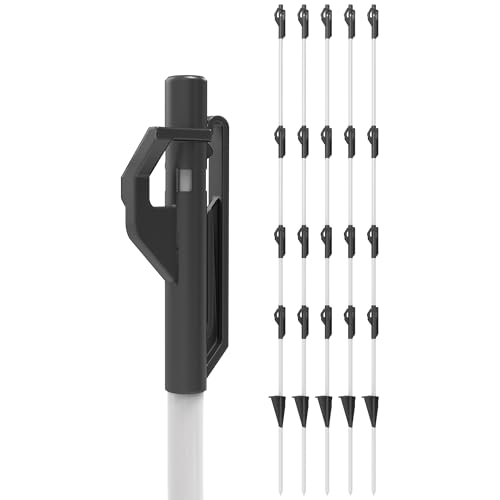
The fiberglass stalwart that survives a year of weather and still holds a taut wire without sagging.
Where lesser step-in posts crack or splinter, these solid fiberglass stakes simply refuse to. Each 48-inch post is molded from solid fiberglass that won’t rust, splinter, or weaken in sunlight, and the non-conductive shaft resists cracking when hammered or reused. A reinforced foot peg lets you step each post into the soil with no driver or pilot hole — and they hold up for months even in wet or frozen ground.
The quality and sturdiness are what owners rave about here — these are the best they have tested, and they keep buying more. Four integrated clips on each post hold electric wire, polywire, polytape, or polyrope firmly, and the layout supports multi-strand configurations for anything from goats and pigs to garden exclusion. Owners have run these for a year with zero corrosion, no sagging, and no bending, covering 40 acres of beef cattle perimeter. The 50-pack weighs in at 10.89 kg, giving you a sense of the density that makes them feel substantial.
The trade-off is the step-in foot peg on truly hard, drought-baked ground — it can break under a heavy stomp, so a rubber mallet is the safer bet in rock-hard soil. The fixed wire hooks also sit at set positions, which can be limiting for mixed-size herds that need two separate lines. If you practice rotational grazing and want a post that genuinely lasts seasons, this is the set to own.
multi-wire fences: you rotate pastures and want a rust-proof post that won’t bend out of shape.
sandy soil: your ground is rocky or bone-dry — the foot peg has its breaking point.
8. Zareba 50 Mile AC-Powered Electric Fence Charger

The plug-in powerhouse that keeps 10 to 15 acres hot and has lasted a decade for repeat owners.
If you have a permanent fence line near an outlet, this is the charger that ends the debate. The 2-joule AC-powered unit energizes up to 50 miles of electric fencing in ideal conditions, and the low-impedance design maintains effective performance up to 12 miles even in heavy weeds and 25 miles in light vegetation. For context, reviewers point out it covers a 10-acre fenced property and a 15-acre spread with ease, delivering a genuine, memorable shock.
Effectiveness is the most-praised aspect, and durability follows close behind — this is the kind of charger people run for 10 years, and the factory backs it with a 2-year warranty including lightning damage protection, extendable to 3 years with free online registration. Made in the USA and full-load tested, the rugged cabinet protects the internals from extreme weather, and the UL-listed design means it is safe to plug into a standard wall outlet. It works with all fence wire types, including high-tensile, polywire, and polytape.
The small complaints are cosmetic: some owners prefer colored plastic knobs over the wing-nut connection method, and the blinking pulse light is hard to see unless you walk right up to the unit. This is not a portable option — it needs that AC outlet. But for goats, cattle, and gardens where you want a low-maintenance shock, the value per joule is outstanding.
high-voltage AC power: A 2-joule unit that survives lightning strikes and a decade of use — the warranty honors mean repeat owners gladly pay more.
9. Premier 1 ElectroNet for Sheep & Goats – 35″H x 164’L

The prefab mesh that goes up 900 feet a day solo — a complete fence straight from the start.
This is the closest thing to a fence in a box: an electrifiable, prefabricated portable mesh that arrives complete, with PVC posts preinstalled every 12.5 feet and strong plastic struts to reduce sagging between them. It spans 35 inches tall by 164 feet long, and multiple rolls connect together for larger rotations. One owner, dealing with a bad back, reports putting up over 900 to 1000 feet in a single day alone — that is the speed this system delivers.
The mesh features 9 horizontal strands, 8 of which are electrified, and the lowest strand is deliberately not electrified to prevent the fence from grounding out against vegetation. It is purpose-built for sheep, goats, and guard dogs, while also working for cattle and domestic hogs — though it is not recommended for poultry or small animals. The quality and easy setup are what owners praise most, with a strong shock even when grass touches the mesh.
The energizer is not included, and continuous-output energizers can damage the net. Poles can bend, vegetation must be kept clear (a mowed strip helps), and frozen ground demands sharpened pins. For rotational grazing where you move fence lines weekly, the speed and simplicity are transformative.
sheep/goat control: rotational sheep and goat grazing where setup speed matters more than brute strength.
tight budgets: a quality energizer, mowed fence lines, and corner reinforcement — the net is only half the system.
Understanding the Specs
Wire Gauge
Gauge measures wire thickness — the lower the number, the thicker and stronger the wire. In cattle fencing, 14-gauge is the common standard because it balances strength with flexibility. Thicker wire resists bending and rust, but it is heavier and harder to work with. If you are containing large, pushy animals, favor 14-gauge or lower; for sheep and gardens, lighter options work fine.
Joule Rating
Joules measure the raw power output of an electric fence charger — the energy in each pulse. More joules means the charger can push voltage through weeds, wet grass, and longer fence lines. A 0.4-joule solar unit covers up to 30 miles, while a 2-joule AC unit handles 50 miles and powers through heavy vegetation. Match the joule rating to your total fence length and how much vegetation touches the wire.
FAQ
What is the difference between woven wire and welded wire cattle fence?
How deep should I drive a 7-foot fence post?
Can step-in fence posts work in hard or rocky ground?
How many joules do I need for an electric cattle fence?
Will a solar fence charger work in cloudy weather?
What is the best wire gauge for keeping calves and small animals inside?
Can I use electric netting for cattle?
How long will a galvanized cattle fence last?
Final Thoughts: The Verdict
For most buyers building a flexible, temporary cattle fence, the winner is the Zareba Step-In Posts — a 50-pack that goes up in minutes and handles everything from rotational grazing to garden borders. If you need an electrified, permanent perimeter, the Zareba AC Charger delivers 50 miles of coverage backed by a lightning-proof warranty. And for remote pastures with no outlet, the ANDMON Solar Charger keeps lines hot for up to 14 days on battery alone.
How We Picked
We do not accept paid placement. Every pick is matched to a real buyer and a real use-case; we do not hands-on test units.
Sources & Methodology
Specifications: manufacturer listings and product documentation. Review insights: verified customer reviews, as of August 2026. Pricing: not shown on this page (it changes often); check the current price via the retailer link.
As an Amazon Associate, Gadgets Feed earns from qualifying purchases. This does not affect which products we feature.