
A blocked exhaust, a cracked heater shroud, or a leaking muffler can fill your aircraft’s cabin with carbon monoxide in minutes. This odorless, colorless gas binds to your blood’s hemoglobin more tightly than oxygen, starving your brain and muscles of air before you notice any symptoms. An aviation-grade detector that catches CO at low parts-per-million thresholds is not optional gear—it’s a second set of eyes on your environment.
I’m Min — the co-founder and writer behind Gadgets Feed. My research into aviation safety monitors focuses on electrochemical sensor accuracy, alarm reliability, and the real-world battery endurance pilots need for cross-country flights and pre-flight checks.
best aviation co detector models separate pilot-specific instruments from general-purpose industrial units by offering triple alarms, TWA logging, and certified sensitivity down to single-digit ppm thresholds where hypoxia starts.
How To Choose The Best Aviation CO Detector
Selecting a CO detector for aviation requires looking past the marketing claims and focusing on the sensor technology, alarm configuration, and real-world reliability that keep you safe at altitude.
Sensor Type: Electrochemical Is the Only Option
Only electrochemical sensors provide the accuracy, low-ppm sensitivity, and long-term stability needed for cockpit use. Semiconductor sensors are cheap but drift badly and cannot reliably detect the 10–50 ppm range where hypoxia symptoms become dangerous. Every detector on this list uses electrochemical cells, but the age and quality of the cell matters—sensor lifespan typically runs 2 to 5 years.
Alarm Thresholds and TWA Logging
Look for a detector with adjustable or factory-set alarms at 35 ppm (the NIOSH ceiling limit) and a high alarm at 200 ppm. The best aviation units also provide Time-Weighted Average (TWA) logging that tracks cumulative exposure over 8 hours, because a steady 25 ppm over a long flight is as dangerous as a short burst at 100 ppm.
Form Factor and Mounting in the Cockpit
A bulky unit is a hazard in a cramped cockpit. The ideal detector fits in a shirt pocket, attaches to a kneeboard, or clips to a seatbelt. Look for a steel clip, lanyard loop, and optional mount kits that keep the sensor within your line of sight without cluttering the instrument panel.
Quick Comparison
On smaller screens, swipe sideways to see the full table.
| Model | Category | Best For | Key Spec | Amazon |
|---|---|---|---|---|
| Sensorcon AV8 Inspector Pro | Aviation | Cockpit & pilot use | Electrochemical, 2+ years battery | Amazon |
| Sensorcon Inspector 2 Kit | Pro Kit | Pre-flight & probe sampling | Hand pump & probe, IP67 | Amazon |
| Sensorcon INS-CO-02 | Industrial | Rugged continuous monitoring | IP67, 2-year battery life | Amazon |
| Forensics FD-90A-CO | Multi Alarm | Detailed ppm readings | 1 ppm resolution, USB recharge | Amazon |
| BW Technologies BWC2-M | Disposable | Single-use safety monitoring | 35-event log, 2-year life | Amazon |
| Testo 317-3 | HVAC | Ambient & flue gas checks | 3-year CO cell warranty | Amazon |
| Forensics FD-4A 4-Gas | Multi Gas | Multi-hazard cockpit & hangar | O2, CO, H2S, LEL + NIST cert | Amazon |
| Forensics FD-4S 4-Gas | Multi Gas Color | Data logging & color display | Color screen, data logging | Amazon |
| Safe T Alert 35-741-BL | Dual Gas | RV & propane/CO detection | LP + CO, 12V powered | Amazon |
In‑Depth Reviews
1. Sensorcon AV8 Inspector Pro
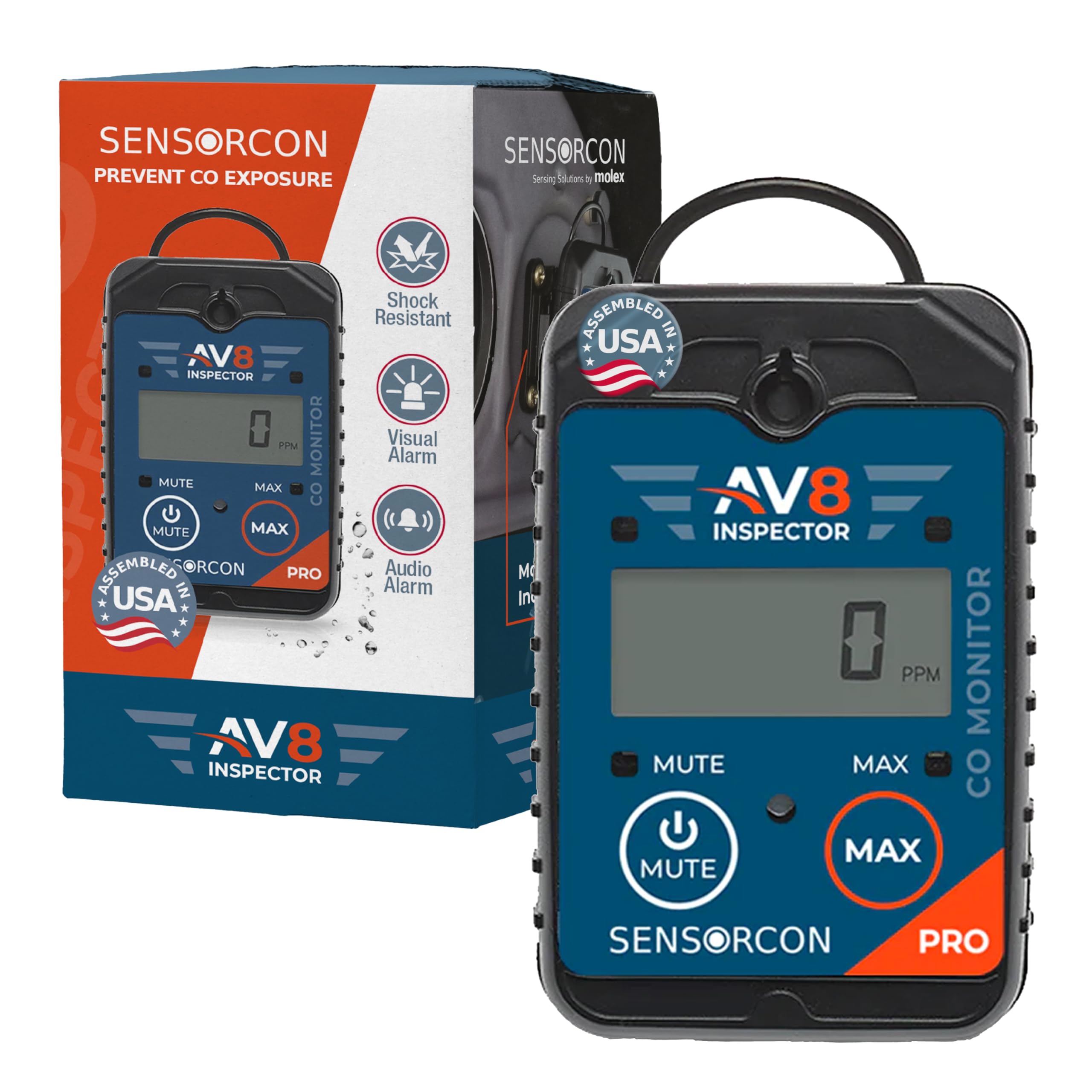
The Sensorcon AV8 Inspector Pro is purpose-built for pilots, with triple alarms—visual LED indicators, an 80–85 dB audible alert, and a vibrating motor—that cut through cockpit noise and vibration. Its advanced electrochemical sensor provides real-time readings down to single ppm, crucial for catching a leaking heater before symptoms set in. The compact, shock-resistant housing clips to a flight bag or kneeboard without adding bulk.
Battery life is a standout advantage here: a single Panasonic CR123A cell delivers over two years of continuous operation under normal conditions. This matters on cross-country flights where you cannot swap batteries mid-leg. The IP67-rated housing also shrugs off hangar dust and rain, making it field-ready for ramp checks and maintenance zones.
Professional aviators consistently praise its reliability—reviews note it saved at least one pilot from a HVAC-related CO leak and that they “wouldn’t fly without it now.” The only minor catch is that the adjustable alarm levels require a brief learning curve to set TWA thresholds correctly, but the peace of mind is well worth the initial configuration.
Why it’s great
- Aviation-grade triple alarms (visual, audio, vibration)
- Over 2 years of continuous battery life
- IP67 water-resistant and shock-resistant build
Good to know
- Alarm thresholds need initial programming
- No backlight on display
2. Sensorcon Inspector 2 CO Detector Kit
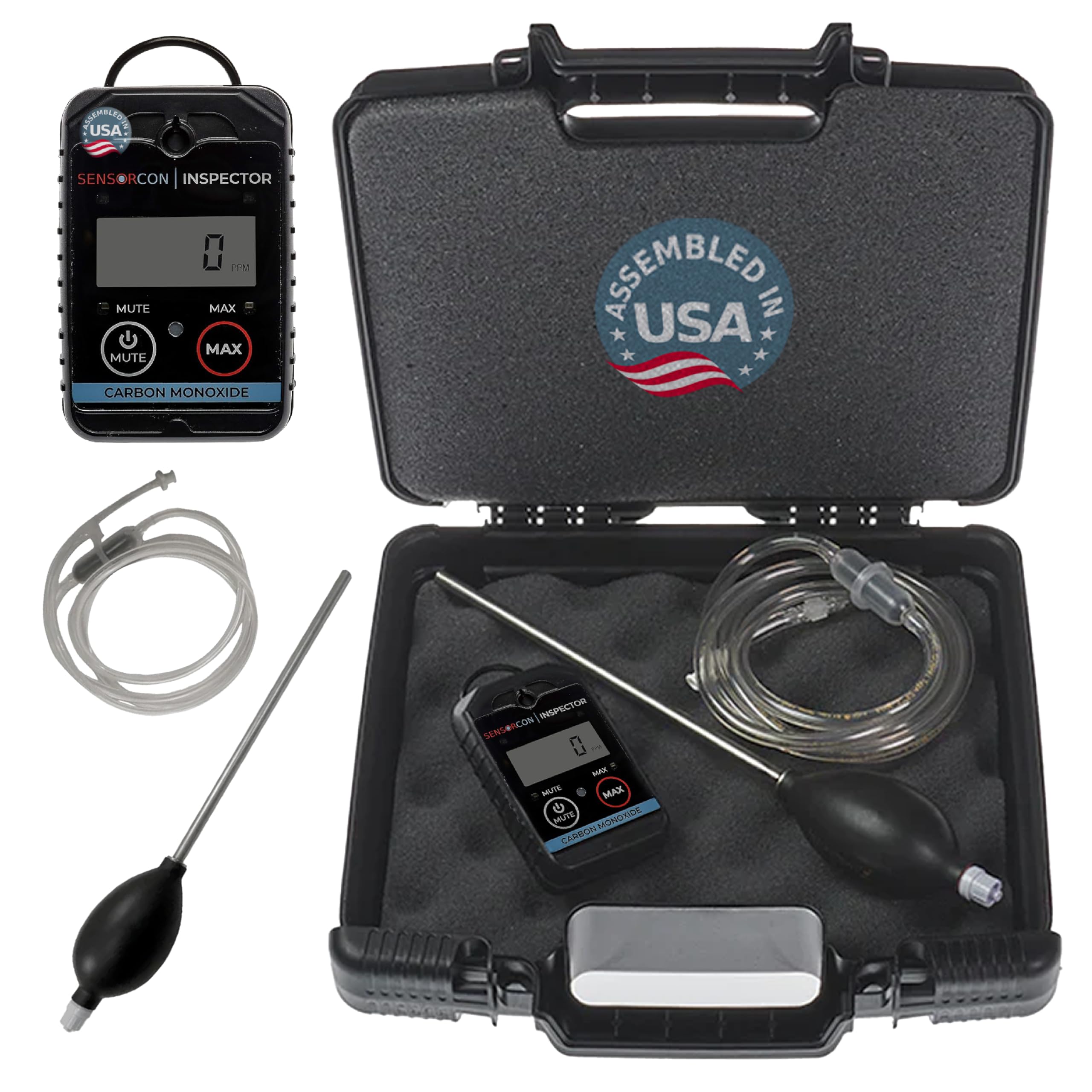
The Inspector 2 Kit builds on Sensorcon’s solid platform by adding a hand pump assembly and a probe kit for sampling hard-to-reach spaces—ideal for pre-flight checks on heater exhausts or cabin air inlets. The detector itself retains the same electrochemical sensor found in the AV8 Pro, offering real-time ppm readings with a ceiling alarm at 200 ppm and a low-level alert at 35 ppm. The included hard case with foam cutouts protects everything during transport.
The hand pump draws air through the probe directly into the sensor chamber, giving you instant readings from flue stacks, vents, or confined compartments without sticking your face near hot exhaust. This feature is especially valuable for maintenance personnel or pilots who inspect their own aircraft. The IP67-rated body ensures the unit survives rain, hangar spills, or rough handling.
Home inspectors and HVAC pros note that it works as a real-time detector rather than an averaging UL-type alarm, meaning you see fluctuations as they happen. The only downside reported is slow sensor recovery after a high-level CO hit—best practice is to power cycle the unit to clear the reading faster. Despite that, the kit’s utility for targeted sampling makes it a strong choice for professional pre-flight inspection.
Why it’s great
- Hand pump for targeted sampling of vents and exhausts
- IP67 waterproof and shock-resistant
- Complete kit with protective case
Good to know
- Slow recovery after high-concentration exposure
- No display backlight
3. Sensorcon Industrial CO Monitor (INS-CO-02)
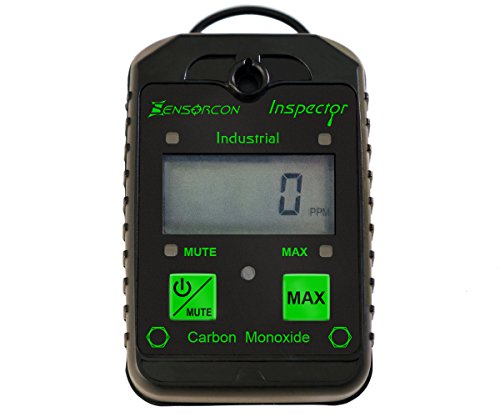
The Sensorcon INS-CO-02 is the industrial sibling of the AV8 line, sharing the same electrochemical sensor core but tuned for continuous 24/7 use in demanding environments. It offers real-time CO display from 1 to 1,999 ppm with a low-level alert at 35 ppm and a ceiling alarm at 200 ppm. The unit is certified Intrinsically Safe for use in potentially explosive atmospheres—a critical safety certification missing from many consumer-grade detectors.
Battery life is exceptional at two years of continuous operation, powered by a single non-rechargeable cell. The IP67 waterproof rating means it survives unexpected weather, fuel spills, or submersion without skipping a beat.
The compact form factor—roughly the size of a pager—clips to a pocket, straps to a lanyard, or sits in a cup holder. One reviewer noted it fits perfectly in an aircraft’s side pocket for constant ambient monitoring. The trade-off is a slightly higher price tier than the Forensics units, but the Intrinsically Safe rating and proven reliability justify the investment for serious pilots.
Why it’s great
- Certified Intrinsically Safe for hazardous environments
- Two-year continuous battery life
- IP67 waterproof and incredibly rugged
Good to know
- Alarm threshold set at 70 ppm by default, not 35 ppm
- No vibration alert, only audio and visual
4. Forensics FD-90A-CO CO Meter

The Forensics FD-90A-CO brings lab-grade accuracy to the cockpit with 1 ppm resolution and a certified error margin of better than ±5% full scale. The electrochemical sensor covers 0–1,000 ppm with a response time under 30 seconds, and the unit arrives with a USA NIST traceable calibration certificate. This level of precision is critical for detecting low-level CO leaks that cheaper alarms miss entirely.
Rechargeability sets this unit apart from battery-only competitors. The built-in 1500 mAh Li-Ion cell runs for roughly 10 hours between charges, and the micro-USB port means you can top it off from a USB power bank or cockpit charger. Triple alarms—audio, visual, and vibration—ensure you catch alerts even with engine noise. The shockproof, water-resistant, and explosion-proof housing adds field durability for hangar and flight line use.
HVAC technicians and professional users praise the Forensics for its sensitivity—one review documents detecting back-draft CO from a water heater in under one minute. The main caveat is sensor lifespan: electrochemical cells last 2–3 years and require recalibration every six months. For pilots who fly regularly, this is manageable, but it is not a set-and-forget device like the BW Clip.
Why it’s great
- 1 ppm resolution with NIST calibration certificate
- USB rechargeable, 10-hour runtime
- Triple alarm system (audio, visual, vibration)
Good to know
- Requires recalibration every 6 months
- Sensor lifespan of 2–3 years
5. BW Technologies BWC2-M Clip Single Gas CO Monitor

The BW Technologies BWC2-M is a no-fuss, single-gas CO monitor designed for two years of continuous operation with zero maintenance. Its photoelectric sensor constantly samples ambient air, and the yellow clip-on housing makes it easy to attach to flight gear or seat webbing. The built-in data log records the 35 most recent gas events and bump test results for post-flight review.
This unit operates in hibernation mode until paired with the IntelliDoX docking station or a case accessory, which activates the logging features. It automatically logs high and low alarm set points before the device is activated, simplifying setup for fleet operations. The straightforward design appeals to pilots who want a “set and forget” monitor without menus or calibration routines.
Real-world feedback from medicolegal death investigators and first responders confirms its value: one review notes it identified hazardous environments at death scenes, and another credits it with saving a responder during a CO poisoning call. The catch is the strict 2-year lifespan from manufacture date—if you receive a unit already one year old, your effective service life shrinks to 12 months. Check the manufacture date before installing it in your aircraft.
Why it’s great
- True set-and-forget operation for 2 years
- 35-event data log for post-flight analysis
- Compact, clips easily to gear
Good to know
- Disposable—cannot replace sensor or battery
- Lifespan counted from manufacture, not purchase
6. Testo 317-3 CO Meter
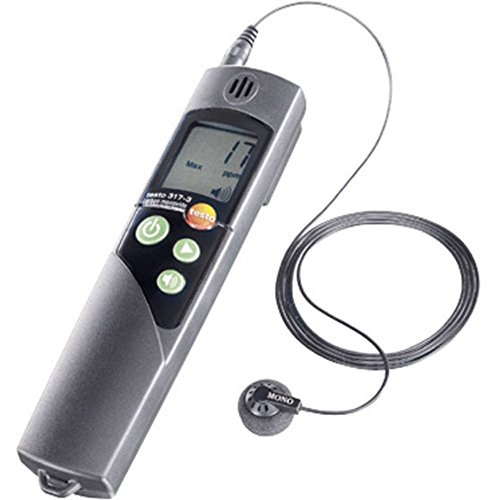
The Testo 317-3 delivers German engineering in a probeless ambient CO meter that fits easily in a shirt pocket. It requires no fresh-air zeroing before use—just power it on and start measuring. The electrochemical sensor is backed by a 3-year warranty on the CO cell, which is among the longest coverage periods available. Visual and audible alarms let you set custom thresholds for your specific aircraft environment.
A built-in self-test mode verifies the CO sensor function without requiring test gas, so you can confirm operational readiness at the start of every flight day. The included belt clip, hand strap, and earphone jack make the unit adaptable for noisy cockpits. The compact size—roughly the length of a marker pen—means it disappears into a flight bag side pocket or kneeboard pouch.
HVAC technicians and commercial users consistently confirm its accuracy against expensive calibrated meters. One reviewer uses it daily for residential service calls and finds it matches his TPI 775 reference unit. The main ergonomic issue is the protruding power button, which can get pressed accidentally when stored in a pocket. If you need a no-hassle meter with exceptional sensor longevity, the Testo is a premium choice that delivers.
Why it’s great
- 3-year warranty on the CO sensor cell
- No fresh-air zeroing needed
- Self-test mode without test gas
Good to know
- Power button protrudes and can activate accidentally
- No vibration alarm, only audible and visual
7. Forensics FD-4A 4-Gas Monitor

The Forensics FD-4A goes beyond CO-only detection by monitoring oxygen (O2), hydrogen sulfide (H2S), and combustible gases (LEL) alongside carbon monoxide. For pilots who also work in hangars, fuel storage areas, or maintain older aircraft, this four-gas capability adds another layer of safety. The unit arrives with a USA NIST traceable calibration certificate and uses high-quality electrochemical sensors for each target gas.
Triple alarms—audio, visual, and vibration—activate at preset levels for each gas, and the unit logs alarm events with digital timestamps. The robust ABS housing with anti-slip rubber grip resists drops and moisture, and the rechargeable battery keeps the device running for roughly 6 hours per charge. The turn-on-and-go operation means no complicated setup for pre-flight checks.
Customer feedback highlights that customer service resolved initial sensor issues promptly, and one reviewer reports the unit survived water submersion and continued working accurately. The broader sensor set makes this ideal for anyone who needs to monitor multiple hazards, but the operating cost is higher due to annual multi-gas recalibration requirements. For pure cockpit CO detection, a dedicated unit like the AV8 Pro is simpler, but the FD-4A excels in multi-environment roles.
Why it’s great
- Four-gas detection (O2, CO, H2S, LEL)
- NIST traceable calibration included
- Triple alarms with time-stamped logging
Good to know
- 6-hour battery life requires daily charging
- Annual multi-gas recalibration needed
8. Forensics FD-4S 4-Gas Monitor

The Forensics FD-4S takes the same four-gas platform as the FD-4A and adds a color display with graph functions for visualizing gas trends over time. This is useful for spotting gradual CO buildup during a flight rather than just reacting to alarm thresholds. The unit monitors O2, CO, H2S, and LEL with the same electrochemical sensor accuracy, factory calibrated and NIST traceable out of the box.
Data logging capabilities let you download exposure history for post-flight review or compliance documentation. The 12-hour battery life doubles the FD-4A’s runtime, covering a full day of operations without recharging. The robust ABS and rubber grip body withstands drops and moisture, making it suitable for hangar and ramp use alike.
User feedback from HVAC and marine professionals confirms the FD-4S competes well with major-brand multi-gas monitors at a lower entry point. One reviewer uses it daily on ships for three-hour watches and gets three watches per charge. The color screen is a notable advantage for readability in variable cockpit lighting, though the display fonts and manual grammar received minor criticism. If you want trend graphs and data export, the FD-4S is the pick.
Why it’s great
- Color display with real-time graph functions
- 12-hour battery life per charge
- Data logging for post-flight compliance
Good to know
- UI layout takes time to learn
- Annual recalibration required for multi-gas
9. Safe T Alert 35 Series Dual LP/CO Alarm
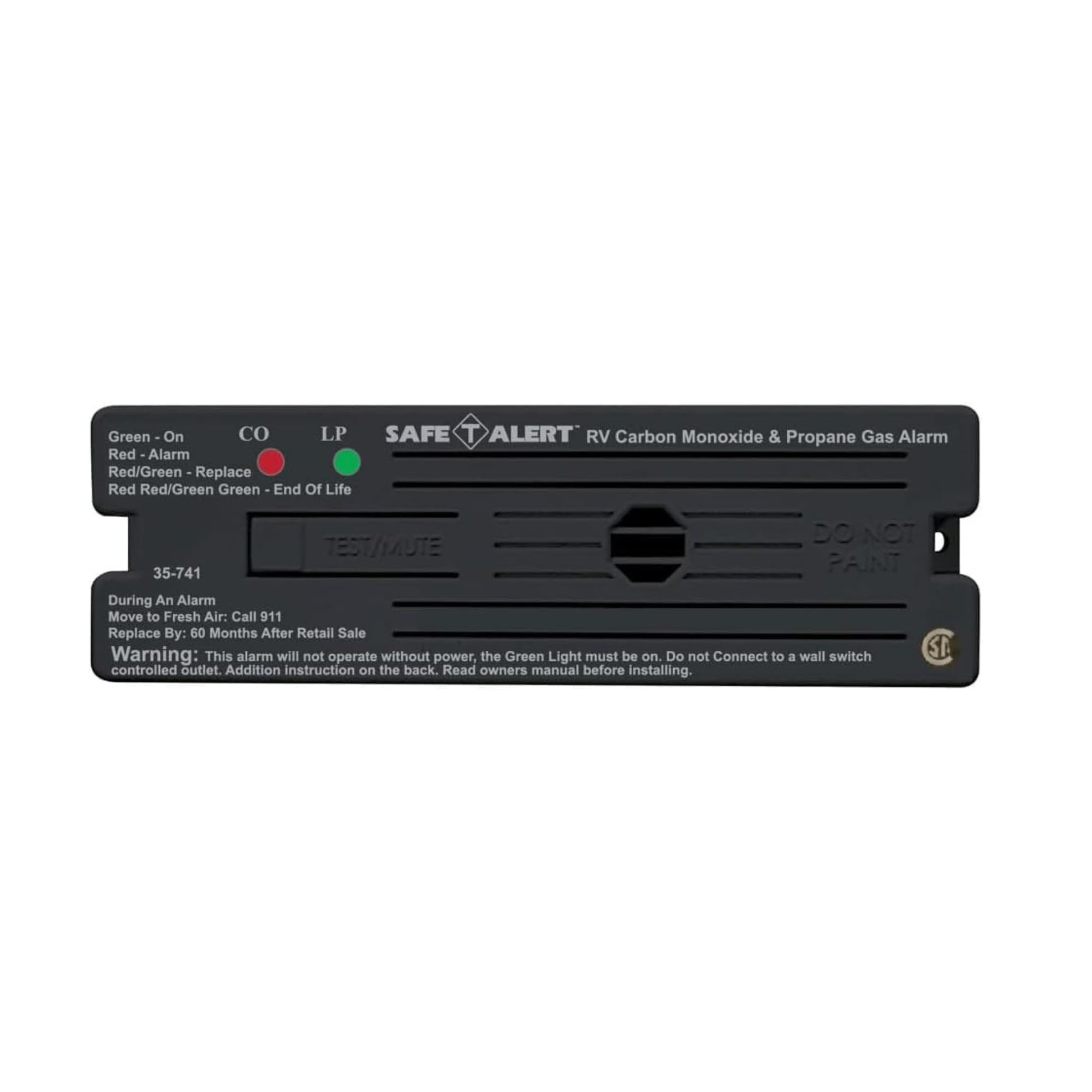
The Safe T Alert 35 Series is a fixed-mount dual LP/CO alarm designed for RVs and aircraft with propane-fueled appliances—making it a strong choice for pilots who fly campers or experimental aircraft with propane cabin heaters. The patented double-duty design detects both propane gas and carbon monoxide from a single 12V-powered unit, replacing separate alarm systems without additional wiring.
No batteries are required; the alarm draws 108 mA from the vehicle’s 12V DC system. It features an Alarm Mute button that allows safe ventilation until gas clears, along with a rapid recovery sensor that re-activates if danger persists. The self-resetting operation means you do not need to manually restart the unit after an alarm event. It operates in extreme temperatures from -40°F to +158°F, covering cold-weather flying.
Users report it as a direct replacement for aging alarms in motorhomes and fifth wheels, with easy installation using WAGO connectors. The main limitation for aviators is that it is designed for surface or flush mount installation, not portable cockpit use—so it belongs in a cabin wall, not a flight bag. Dual detection makes it invaluable for propane-equipped aircraft.
Why it’s great
- Detects both propane and CO in one unit
- 12V powered, no batteries to change
- Self-resetting with rapid recovery sensor
Good to know
- Fixed-mount only, not portable
- Service life counted from manufacture date
FAQ
Why can’t I just use a cheap home CO detector in my airplane?
How often does an aviation CO detector need recalibration?
Is a vibration alarm really necessary in a cockpit?
Can a multi-gas monitor replace a dedicated CO detector for flying?
Final Thoughts: The Verdict
For most pilots, the best aviation co detector winner is the Sensorcon AV8 Inspector Pro because it combines a purpose-built aviation form factor with triple alarms and over two years of battery life. If you want probe sampling for detailed pre-flight checks, grab the Sensorcon Inspector 2 Kit. And for maximum ruggedness with an Intrinsically Safe certification, nothing beats the Sensorcon INS-CO-02.