
Our readers keep the lights on and my morning glass full of iced black tea. As an Amazon Associate, I earn from qualifying purchases.
Specs are compiled from manufacturer listings and verified buyer reviews and can change over time — please confirm the key details on the product page before buying.
Before you buy a 2 1/2-inch angle iron, ask yourself where it will live. If it will face moisture outdoors, in a marine setting, or near food, you need stainless steel that resists rust. If you are building structural frames, brackets, or braces, a carbon steel A36 bar (a common structural steel grade) gives you strength and weldability at a lower cost. This guide compares the three most useful 2-1/2 inch options by their real specs and how owners actually use them.
I’m Min — the founder and writer behind Gadgets Feed. This guide is built by comparing the manufacturers’ published specifications and the patterns across verified customer reviews, so you get each pick’s real strengths and trade-offs instead of marketing spin.
Whether you are fabricating brackets, reinforcing a boat, or building a custom grill basket, getting the right 2 1/2-inch angle iron for your project depends on matching the steel grade to the environment it will live in. The stainless option resists rust, while the A36 carbon steel is easier to weld and cheaper for structural work.
Our Picks at a Glance

How To Choose The Best 2 1/2-Inch Angle Iron
Angle iron is an L-shaped steel bar with two equal legs, and the 2-1/2 inch size is a workhorse for frames, brackets, and supports. The first decision is the material grade, which drives everything from rust resistance to how easily it welds.
Stainless Steel vs. Carbon Steel
304 stainless steel is the most common alloy and provides high strength and good corrosion resistance, making it the pick for marine, food, and outdoor use. A36 carbon steel is the standard low-carbon structural steel — it offers good strength, high durability, and easy weldability for general building projects. If rust is your enemy, go stainless. If you are welding a frame, A36 is your friend.
Match the Thickness to the Load
The wall thickness determines how much weight the bar can handle. A 0.25″ wall is a full one-third thicker than a 0.188″ wall, so it carries heavier loads without flexing. The thicker bar also weighs more and costs more, so match the thickness to the job rather than buying the beefiest option every time.
Quick Comparison
| Model | Best For | Material | Wall Thickness | Length | Amazon |
|---|---|---|---|---|---|
| 304 Stainless Steel Angle★ Best Overall | Marine & outdoor projects | 304 Stainless | 0.25″ | 24″ | Amazon |
| A36 Steel Angle | Structural framing & grill mods | A36 Carbon Steel | 0.25″ | 12″ | Amazon |
| Hot Rolled Steel A36 Angle | Heavy-duty brackets & braces | Hot-Rolled A36 | 0.188″ | 48″ | Amazon |
In‑Depth Reviews
1. 304 Stainless Steel Angle (24″)
Our pick — over 4.5★ from 30+ verified ratings; the strongest balance of quality and price.
The 304 stainless bar resists corrosion in marine and outdoor environments.
When rust is not an option, this 24-inch bar is your pick. It is made from 304 stainless steel (the most common stainless alloy, known for high strength and good corrosion resistance), so it holds up in environments where carbon steel would start to pit and corrode within a season. The 0.25″ wall thickness gives it real load-bearing heft, and the 2-1/2″ equal legs offer a stable footprint for brackets and backer plates.
Owners confirm its outdoor calling: it is described as “perfect for above water line boat projects,” specifically as a backer plate to stop leaks around a captain’s call exhaust. The unpolished mill finish is functional but rough — a quick run through a bead blaster makes it uniform, per the owners who bothered to finish it. At 8.2 pounds, you feel the substance when you lift it.
The steel meets AMS-QQ-S-763, AMS-5639, AMS-5647, ASTM-A276, and ASTM-A479 specs, and it ships as a single 2-foot bar. Delivery speed and packaging draw consistent praise, with buyers noting they would return for more.
Why it wins outdoors
- 304 stainless shrugs off corrosion for marine and food-contact use
- 0.25″ wall carries real structural loads
- Meets multiple aerospace-grade specs (AMS-5639, ASTM-A276)
- Fast, well-packaged shipping noted by buyers
Know before you buy
- Unpolished mill finish needs bead blasting for a uniform look
- Premium price over carbon steel for the same shape
Your outdoor fabricator: this is the bar for boat, marine, and exterior projects where rust would destroy a carbon steel alternative.
Consider the cost: if your project is dry and indoors, the A36 options deliver the same shape for far less.
2. A36 Steel Angle (12″)
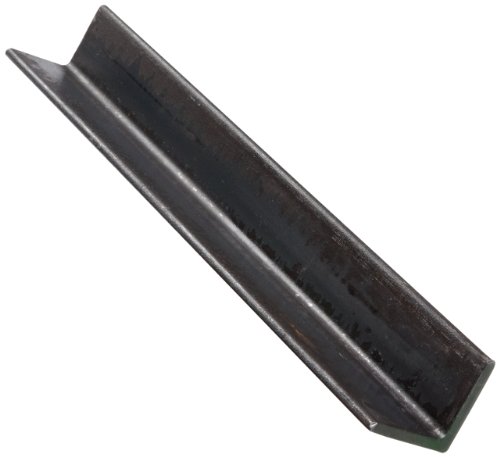
The A36 carbon steel bar welds cleanly and suits compact structural projects.
If your project lives indoors or under cover, this A36 carbon steel bar is the smartest buy on the list. At 12 inches long with a 0.25″ wall, it is a thick, dense chunk of steel that owners describe as “exactly as advertised” and “a nice chunk of steel” that is notably harder than aluminum foil. A36 is the most common low-carbon structural steel, and it delivers good strength, high durability, and easy weldability all at once.
The review pages paint a clear picture of how versatile this bar is. It is ideal for organizing briquettes in a PK 360 grill — owners say it creates a flexible, on-the-fly charcoal basket that works better than the manufacturer’s own baskets. Another buyer turned one into a super-strong security door strike plate, mortised flush and bolted from two directions. For structural work like bridges and buildings, A36 is the standard, and this bar brings that same grade to your garage or shop.
What wins people over is the accuracy — the bar arrives straight and undamaged because it is packed well, and the price lands comparable to a local hardware store while being delivered to your door. As the review pages sum it up: “so it’s steel. Can’t go wrong right?” At 0.25″ thick, this bar shares the same beefy wall as the stainless pick above, making it a direct value alternative when rust is not a concern.
Built for makers: from grill charcoal baskets to door strike plates, this bar’s weldability and straightness make it the go-to for DIY fabricators who want accurate, damage-free steel at a fair price.
The honest limit: at 12 inches it is short, so you will need to order multiple bars for larger frames — and carbon steel will rust if you leave it out in the weather.
Your best all-rounder: if you weld, frame, or fabricate indoors, this is the bar to start with — accurate, weld-friendly, and easy on the wallet.
Skip it for wet work: if the project sits outside or near salt, the stainless pick above is the one to reach for.
3. Hot Rolled Steel A36 Angle (48″)
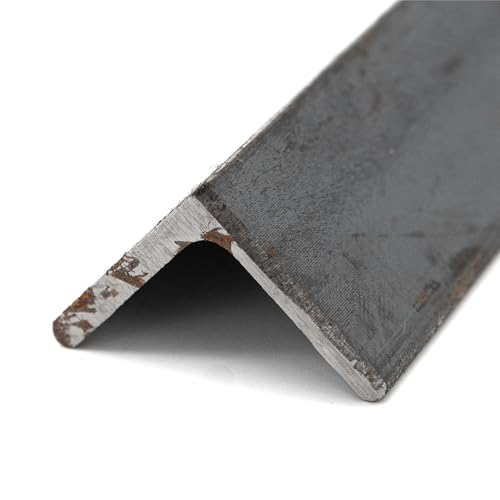
The 48-inch hot-rolled A36 bar covers long spans without needing a splice.
Need one continuous piece that covers serious distance? This hot-rolled A36 bar runs a full 48 inches — a 4.0x length gap over the 12-inch A36 bar above — so you can build a long frame, brace, or support without joining shorter pieces. The equal-leg L-profile uses identical 2.5″ legs for symmetrical strength, and the hot-rolled process ensures consistent material properties across the whole bar.
At 0.188″ wall thickness, this bar is a full one-third thinner than the 0.25″ bars above — 0.188″ versus 0.25″ — which makes it lighter and easier to cut and weld, though it carries less extreme load. Owners call it “very heavy duty” and perfect for making four brackets, and note it welds very nicely for medium-duty applications. The low carbon content gives it excellent welding characteristics for various joining methods.
The one catch buyers flag is the listing photo: it shows two bars, but you receive one single piece. As owners put it: “don’t be fooled by photos that show two pieces.” Buyers also note the per-bar price runs high for steel, but they accept it as convenient for buying small quantities without a steel supplier minimum. For a long, weld-ready structural bar delivered to your door, this is the pick.
Why it earns the long-span spot
- 48-inch length covers big frames without splices
- Hot-rolled A36 welds cleanly for fabrication
- Equal 2.5″ legs for symmetrical structural strength
- Light enough for medium-duty brackets yet “very heavy duty” per owners
Read the listing carefully
- Photo misleadingly shows two bars; you receive one
- 0.188″ wall is thinner than the 0.25″ bars above
- Price runs high for a single piece of steel
Your long-span builder: reach for this when you need one continuous four-foot bar for frames, braces, or racks — the weld quality and length are the selling points.
Set expectations: one bar arrives, not two, and the thinner wall means very heavy loads belong on the 0.25″ options.
Understanding the Specs
Steel Grade: 304 vs A36
The grade decides how the bar behaves. 304 stainless steel is the most common alloy and provides high strength and good corrosion resistance, making it ideal for marine, food, and outdoor use. A36 is the most common low-carbon structural steel, offering good strength, high durability, and easy weldability for general construction. Pick stainless when rust matters; pick A36 when you are welding and cost matters.
Wall Thickness and Load
Wall thickness controls how much weight the angle can carry before flexing. A 0.25″ wall is a full one-third thicker than a 0.188″ wall, so it supports heavier loads with less deflection. The trade-off is weight and price: thicker bars weigh more and cost more, so match the thickness to the actual job rather than always buying the thickest option.
FAQ
How many bars come in this order?
Will 2 1/2-inch angle iron rust outdoors?
Can I weld 2 1/2-inch angle iron?
What is the difference between 0.188 and 0.25 inch wall thickness?
Is 304 stainless steel better than A36 carbon steel?
How long is each angle iron bar?
What does a mill finish look like?
Can this be used for a door strike plate or grill project?
Final Thoughts: The Verdict
Across the board, the 2 1/2-inch angle iron winner is the 304 Stainless Steel Angle because its corrosion resistance makes it the only option that survives outdoor and marine conditions — and it carries a healthy 0.25″ wall. If you want easy weldability and the best value for indoor structural work, grab the A36 Steel Angle. And for long continuous spans like frames and braces, the Hot Rolled Steel A36 Angle is the one to reach for. Every bar here is genuinely worth owning — the real decision is matching the steel grade and length to the environment your project lives in.
How We Picked
We do not accept paid placement. Every pick is matched to a real buyer and a real use-case; we do not hands-on test units.
Sources & Methodology
Specifications: manufacturer listings and product documentation. Review insights: verified customer reviews, as of August 2026. Pricing: not shown on this page (it changes often); check the current price via the retailer link.
As an Amazon Associate, Gadgets Feed earns from qualifying purchases. This does not affect which products we feature.