
Our readers keep the lights on and my morning glass full of iced black tea. As an Amazon Associate, I earn from qualifying purchases.
Specs are compiled from manufacturer listings and verified buyer reviews and can change over time — please confirm the key details on the product page before buying.
You want a monitor that keeps up with your reflexes, not one that blurs or tears when the action heats up. This guide ranks the 27-inch QHD (2560 x 1440) balance that serious gamers and dual-use work setups actually live on, covering 165 Hz and 180 Hz panels in the same class so you get the full picture without being misled by the exact search number.
I’m Min — the founder and writer behind Gadgets Feed. This guide is built by comparing the manufacturers’ published specifications and the patterns across verified customer reviews, so you get each pick’s real strengths and trade-offs instead of marketing spin.
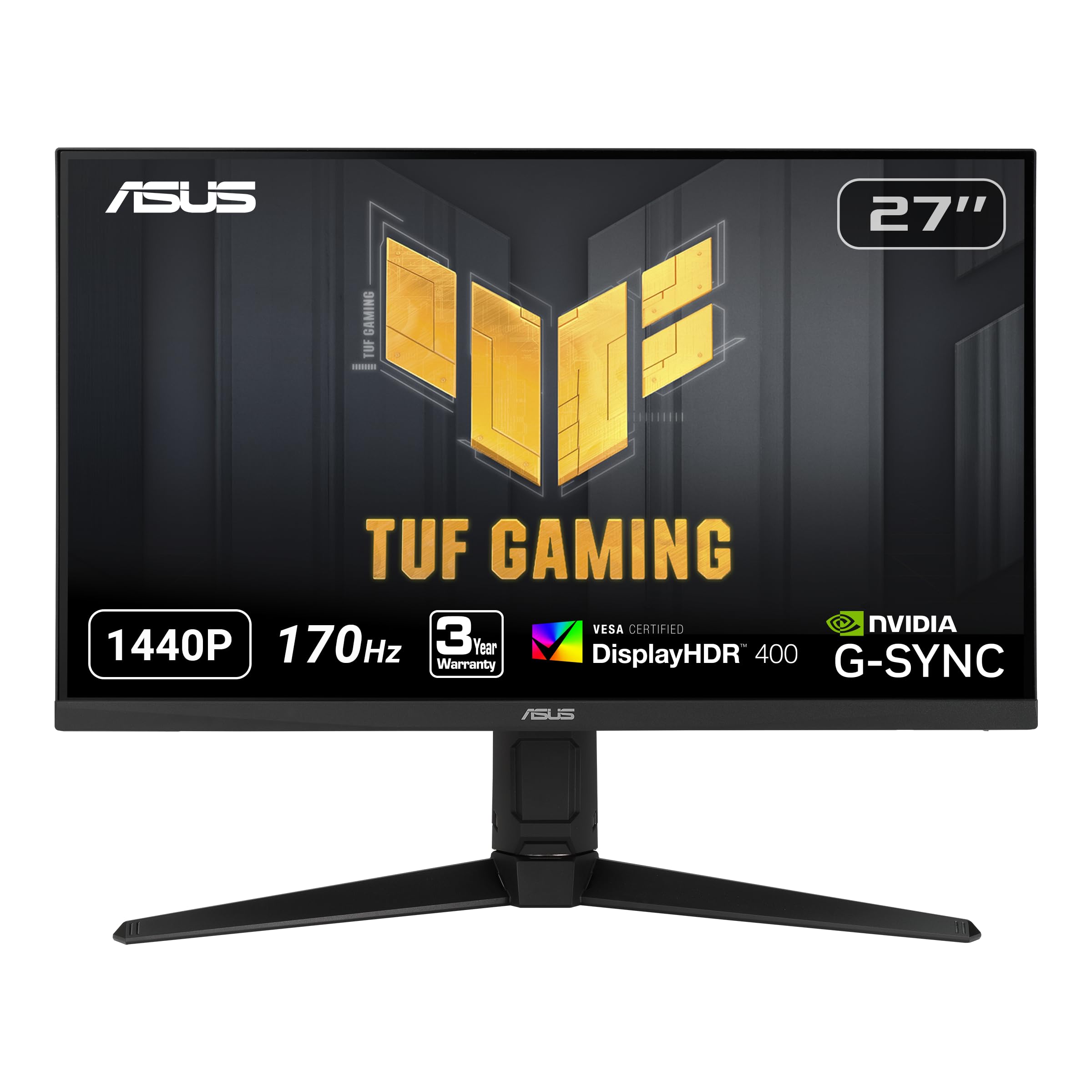
The crowd favorite here is the ASUS TUF Gaming VG27AQL1A, which delivers a 170Hz refresh on a 27-inch WQHD IPS panel with G-SYNC compatibility and HDR400 support. 170 hz monitor
Our Picks at a Glance


How To Choose The Best 170 Hz Monitor
Start with the three numbers that define the experience: refresh rate (the smoothness), response time (the sharpness during motion), and resolution (the detail). For a 170 Hz monitor you want them to work together — a huge resolution with a weak GPU means you will never see the refresh rate you paid for.
Refresh Rate vs. Your GPU
170Hz means the screen redraws its image 170 times every second. You’ll only see that smoothness if your GPU can output 170 FPS at your resolution. A 1440p 170Hz panel demands a strong GPU to avoid bottlenecking.
IPS vs. VA Panel Chemistry
IPS panels are prized for wide viewing angles and punchy, accurate colors — great for work and vibrant games. VA panels trade some of that for noticeably deeper blacks and higher contrast, which makes dark scenes look richer. Choose IPS for accurate colors or VA for deeper blacks and higher contrast.
Adaptive Sync: G-SYNC vs. FreeSync
These technologies tell the monitor to wait for the GPU’s frame instead of tearing the image. G-SYNC is NVIDIA’s, FreeSync is AMD’s, and the newest cards support both for compatibility. They all remove screen tearing, so check which your graphics card officially supports to get the smoothest pairing.
Quick Comparison
| Model | Best For | Refresh Rate | Panel Type | Adaptive Sync | Amazon |
|---|---|---|---|---|---|
| ASUS TUF Gaming VG27AQL1A★ Best Overall | Best Overall | 170Hz | IPS | G-SYNC Compatible | Amazon |
| Alienware AW2725DMPremium Pick | Premium Pick | 180Hz | Fast IPS | G-SYNC & FreeSync | Amazon |
| ASUS TUF Gaming VG27AQA1AValue Pick | Value Pick | 170Hz | IPS | FreeSync Premium | Amazon |
| KOORUI 27″ QHD | Budget Friendly | 170Hz | IPS | FreeSync & G-Sync | Amazon |
| AOC Q27G4XN | Value for Money | 180Hz | VA | FreeSync | Amazon |
| Acer Nitro XV271U | Versatile Pick | 180Hz | IPS | FreeSync Premium | Amazon |
| LG 27G610A-B | Speed Pick | 200Hz | IPS | FreeSync Premium | Amazon |
| msi G273CQ | Best Curved | 170Hz | VA | FreeSync Premium | Amazon |
| LG 27GS75Q-B | All Rounder | 180Hz | IPS | G-SYNC & FreeSync | Amazon |
| msi G272QPF | Ergonomic Pick | 170Hz | IPS | FreeSync | Amazon |
| Acer Nitro XV272U | Color Accuracy | 170Hz | IPS | FreeSync Premium | Amazon |
In‑Depth Reviews
1. ASUS TUF Gaming VG27AQL1A
Our pick — over 4.5★ from 1,500+ verified ratings; the strongest balance of quality and price.
The all-rounder that pairs a 170Hz IPS panel with G-SYNC to please gamers and workers alike.
The ASUS TUF Gaming VG27AQL1A is the monitor that makes 170Hz feel like a standard, not a stretch. Its 27-inch WQHD (2560 x 1440) IPS panel runs at 170Hz (supports 144Hz), with a 1ms (MPRT) response time for crisp motion. The ASUS Extreme Low Motion Blur Sync (ELMB SYNC) technology can run side-by-side with G-SYNC Compatibility, so you get sharp movement without the ghosting that often plagues fast scenes — it is the anti-tearing combo competitive players chase.
What wins people over is the overall monitor quality, praised more than any other aspect, with picture quality close behind. Owners describe a thin bezel, bright visuals at 60-70% daily brightness, and colors that look great after minor tweaks. Buyers report one quirk: “Flicker at 170Hz fixed at 165Hz,” so expect to drop the overclock by a notch if you see any instability — a minor trade for a panel this capable.
The ergonomics are a genuine selling point. You get height, pivot, swivel, and tilt adjustments, plus built-in speakers for a cleaner desk setup. The contrast ratio sits at 1,000:1 with 350 cd/m² brightness, certified DisplayHDR 400 so highlights pop. The catch is the control layout — the buttons sit on the back and take some memorizing, and HDR is capped at 120Hz, not the full 170Hz.
Why it leads the pack
- 170Hz IPS with 1ms response for fluid, ghost-free motion
- ELMB SYNC plus G-SYNC Compatibility work together to kill tearing
- Full ergonomic stand (height, pivot, swivel, tilt) for all-day comfort
Small compromises
- On-screen controls are hard to reach and confusing at first
- HDR only runs at 120Hz, so you choose between HDR and max refresh
- An occasional unit arrives with a stuck pixel — check on delivery
The go-to: Reach for this if you want a proven 170Hz IPS panel with G-SYNC and full ergonomics — it is the safest all-rounder in the list.
Think twice if: You need HDR at full refresh rate simultaneously; this caps HDR at 120Hz, so max-speed purists may want to look elsewhere.
2. Alienware 27 Gaming Monitor AW2725DM
Alienware’s 180Hz Fast IPS panel brings vibrant color and marathon comfort to the QHD class.
The Alienware AW2725DM steps up the smoothness game with a 180Hz refresh rate and a 1ms gray-to-gray response time on a 27-inch WQHD Fast IPS panel. It covers DCI-P3 95% of the color spectrum, which is what makes game worlds look lush and lifelike. With VESA DisplayHDR 400 certification, bright highlights get the boost they need without washing out.
This is the monitor built for long sessions. The dedicated console mode and hardware-based low blue light solution reduce eye strain without muting the colors — a feature that matters when you are grinding through a weekend of matches. Owners consistently praise the premium build and the sturdy adjustable stand that comes with height, swivel, pivot, and tilt controls.
Owners mention it pairs beautifully with mid-range GPUs, with one noting it works flawlessly alongside a 16GB 5060 Ti card for Baldur’s Gate 3 sessions. The main trade-off is that the speakers are absent — you will need USB speakers or a headset, and some units show scratches around the ports on arrival. The port selection is generous: DisplayPort 1.4, HDMI, and USB connectivity, with all the cables you need in the box.
The luxury pick: If you value rich DCI-P3 95% color and a 180Hz refresh with a premium feel, this is the display that makes every game pop.
Watch for: No built-in audio output — budget extra for sound, and inspect the port area carefully on arrival.
3. ASUS TUF Gaming VG27AQA1A
A budget-friendly 170Hz IPS with FreeSync Premium and Shadow Boost for night-vision gameplay.
The ASUS TUF Gaming VG27AQA1A is the entry point into 1440p high-refresh gaming without the premium markup. It runs a 27-inch QHD (2560 x 1440) panel overclocked to 170Hz (supports 144Hz) with a 1ms (MPRT) response time. ASUS Extreme Low Motion Blur (ELMB) technology cuts down ghosting in fast motion, keeping your aim true in chaotic firefights.
FreeSync Premium is enabled by default, so you get tear-free gameplay via variable refresh rate (a system that lets the monitor match the GPU’s frame output). The built-in Shadow Boost feature brightens dark scenes, so you spot enemies hiding in shadows before they spot you — a real edge in tactical shooters. HDR-10 support enhances bright and dark areas for a more cinematic look when you want it.
Owners highlight the solid build quality, with one calling it a perfect match for their ASUS 4070 Super OC Dual over nearly two years of daily use. The refresh rate performs as advertised for those with capable GPUs. The honest limitations: there is no true height adjustment (just a tilt), and the built-in speakers are not very loud — plan on a headset or external sound for anything beyond casual use.
Best for the price
- 170Hz IPS with 1ms response at a friendly price point
- FreeSync Premium and ELMB for smooth, tear-free motion
- Shadow Boost gives you a visibility edge in dark game scenes
What you give up
- No height adjustment — just tilt, so your eye level is fixed
- Speakers are weak; you will want external audio
Smart budget buy: Pick this if you want 1440p at 170Hz with FreeSync and proven reliability for less — it delivers the core experience without the frills.
Consider elsewhere: If your desk demands exact height positioning, the fixed tilt-only stand will disappoint.
4. KOORUI 27″ QHD IPS Gaming Monitor
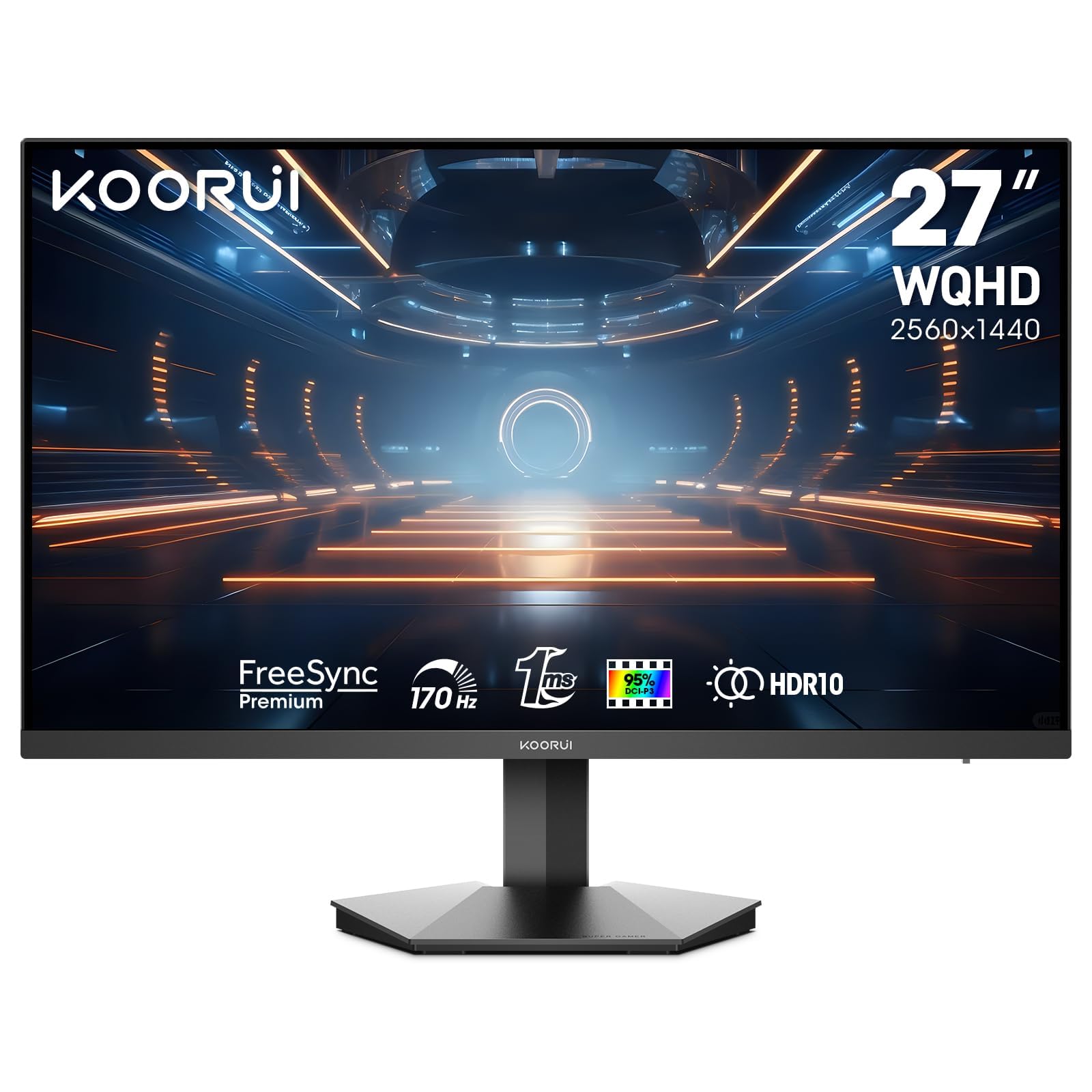
The value king that packs 170Hz, HDR400, and a full-height stand into a budget 27-inch frame.
The KOORUI 27-inch QHD IPS monitor is proof that 170Hz is no longer a premium-only feature. It overclocks to 170Hz on a 2560 x 1440 IPS panel with a 1ms (MPRT) response time and Adaptive Sync to reduce ghosting. FreeSync Premium runs by default, making tear-free gaming accessible whether you are on PC or console — a big deal for the price.
Where KOORUI surprises is ergonomics. The 110mm height adjustment, tilt (-15° to 15°), swivel (-5° to 20°), and ±90° rotation for vertical mode are features usually reserved for pricier panels. It is also VESA compatible, so you can mount it on an arm. Setup is genuinely tool-free with a snap-on base that installs in about three minutes — no screwdrivers required.
Owners praise it as a great value for PS5 gaming, with the higher refresh rate being immediately noticeable and no ghosting or tearing in fast-paced titles. The reality is mixed though: some units develop dead pixels within a week, and random black screens during gaming or app switches appear for a few. The 99% sRGB color coverage and 350 cd/m² brightness are solid, but build quality leans budget-friendly, so treat it as a spend-smart option rather than a forever display.
The budget champion: If you want 170Hz, a 110mm height-adjustable stand, and HDR400 without spending big, KOORUI delivers the most for the least.
The gamble: Panel lottery is real — buy through a channel with easy returns in case you get a dead pixel or flicker issue.
5. AOC Q27G4XN
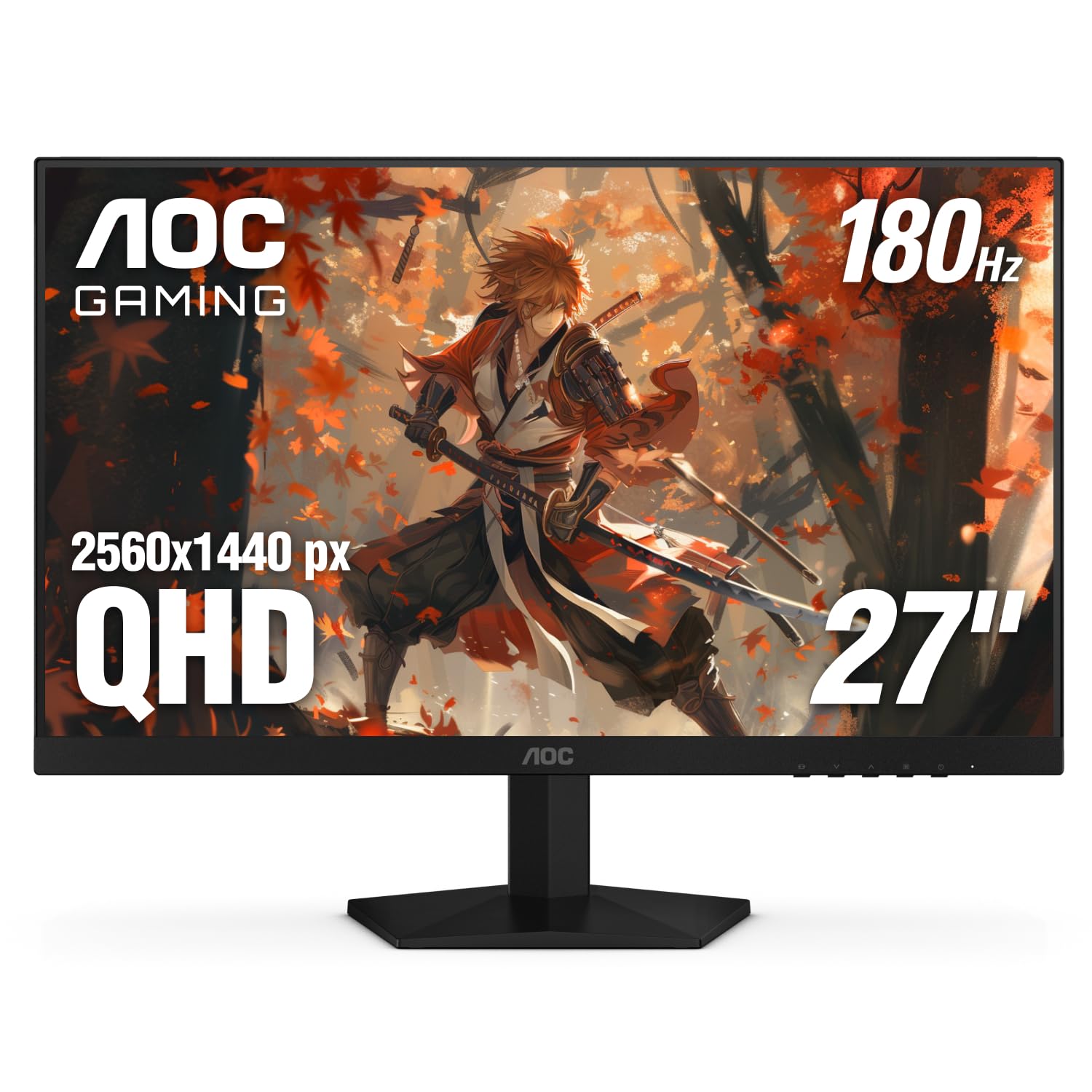
The VA panel that delivers near-OLED blacks and a 180Hz refresh for a fraction of the cost.
The AOC Q27G4XN is the value pick for gamers who crave deep blacks, and it delivers. Its 27-inch VA panel hits 2K QHD (2560×1440) resolution with an impressive 127.8% sRGB color gamut, bringing characters to life with rich detail and strong contrast. That VA chemistry gives it the kind of shadow depth that makes dark scenes feel cinematic.
Performance keeps pace with a lightning-fast 180Hz refresh (via DP1.4) and a rapid 1ms GtG response time. Fast-moving action renders smoothly without ghosting, and Adaptive-Sync keeps team fights tear-free so skill shots land true. The narrow border and three-sided frameless design minimize bezel distraction, making it a clean multi-monitor companion.
Owners say it is “flawless” running with a Switch 2 and PC, with one calling the deep blacks “near-OLED” — high praise for this price tier. In terms of color gamut, it edges out the ASUS TUF VG27AQL1A’s 130% sRGB claim by a narrower margin than expected, coming in just 2% behind at 127.8%. The honest trade-offs: the built-in speakers are average, the menu buttons feel clunky, and viewing angles on a VA panel are narrower than IPS — so sit centered and it will treat you well.
The contrast king
- 180Hz with 1ms GtG for ultra-smooth competitive play
- 127.8% sRGB gamut and 400 nits for vibrant, punchy color
- Near-OLED blacks from the VA panel for cinematic darkness
Know before you buy
- VA viewing angles demand you sit dead-center
- Menu buttons are clunky and speakers are average
For the shadow-lover: Choose this if deep blacks and high contrast matter more than wide viewing angles — it is the best contrast-per-dollar on the list.
Not ideal if: You share your screen with viewers off to the side; the VA panel washes out at extreme angles.
6. Acer Nitro XV271U M3bmiiprx

A 180Hz IPS with full ergonomic movement and FreeSync Premium at a mid-range price that overdelivers.
The Acer Nitro XV271U M3bmiiprx is the versatile workhorse that shifts between gaming and office duty without compromise. Its 27-inch WQHD (2560 x 1440) IPS panel runs at 180Hz using DisplayPort (144Hz on HDMI) with a response time down to 0.5ms (G to G). AMD FreeSync Premium Technology keeps gameplay tearing, making it a strong pairing for both PC and console.
Ergonomics are where this Acer shines. The Ergostand offers tilt from -5° to 25°, a 4.7-inch height adjustment range, 360° swivel, and ±90° pivot — the full movement suite for finding your perfect viewing angle. It is VESA compliant (100 x 100mm) if you prefer a monitor arm, and the pixel pitch of 0.233mm keeps text razor-sharp for spreadsheet and coding marathons. Two 2-watt speakers cover casual audio needs.
The build quality earns the most praise from owners, with picture quality and reliable performance close behind. One long-time owner calls it a “reliable over a year” daily driver with crisp 1440p and vibrant colors. The catch is the 250-nit brightness — noticeably dimmer than the 400-nit panels on this list, so it is better suited to indoor, controlled lighting. Some units also fail to turn on, so buy from a seller with easy returns.
The desk chameleon: If you want a 180Hz IPS with a 360° swivel and 4.7-inch height range for mixed work and play, the XV271U gives you total desk flexibility.
The limitation: At 250 nit, it lacks the punch for bright rooms — keep it in a controlled-light setup.
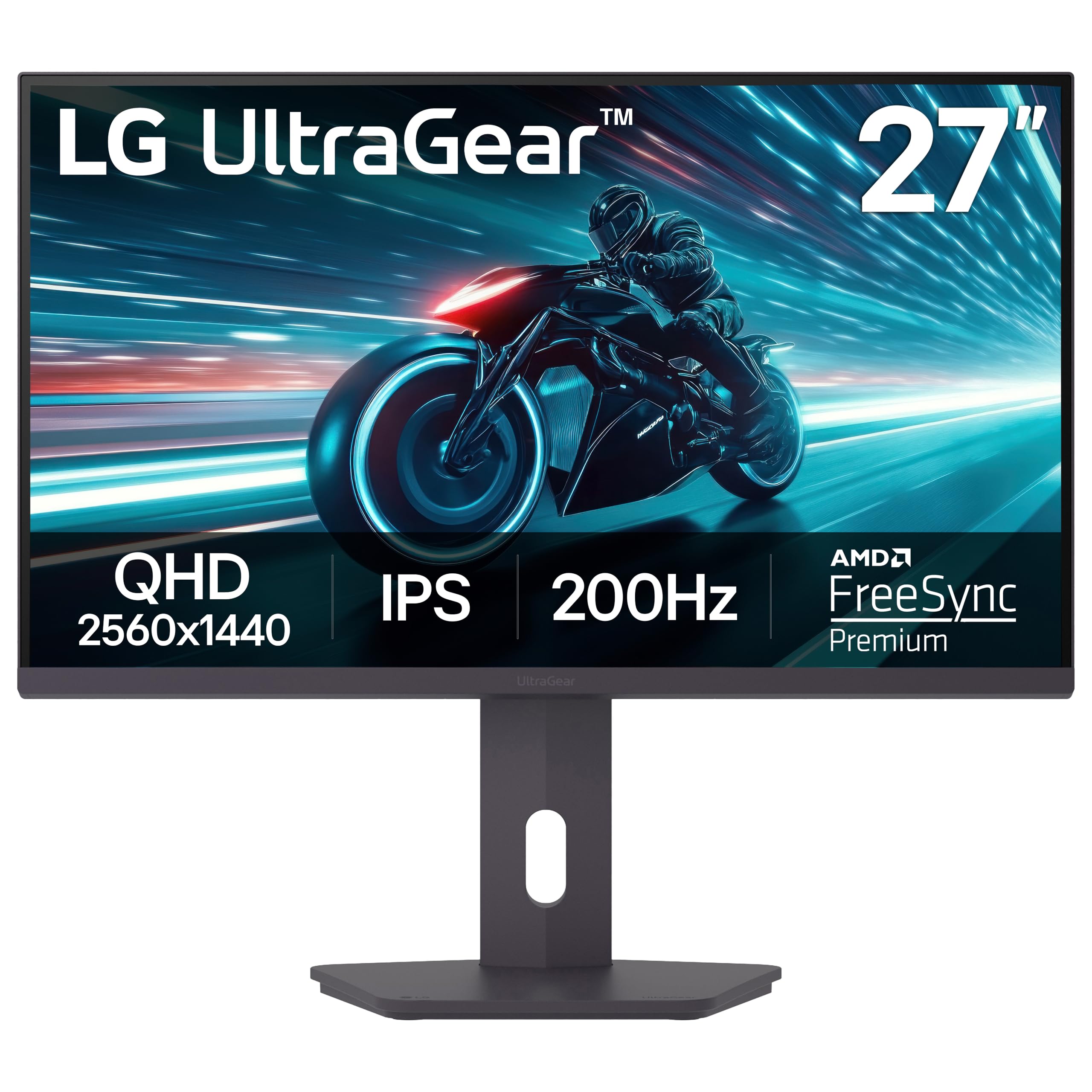
7. LG 27G610A-B UltraGear
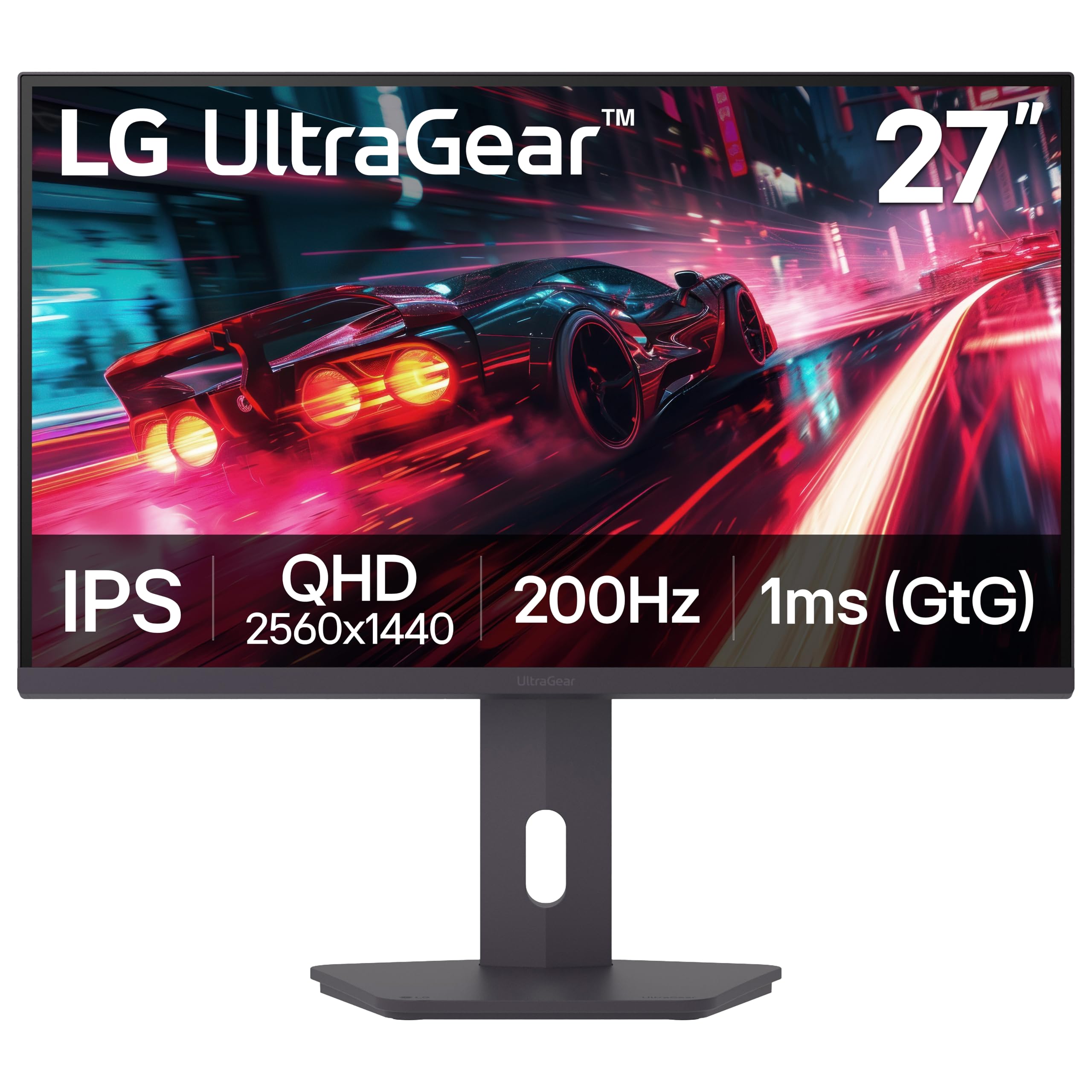
LG’s 200Hz native refresh gives esports players a speed cushion beyond the 170Hz class.
The LG 27G610A-B UltraGear skips the overclocking dance and delivers a blazing 200Hz native refresh rate from the start. That is a genuine speed bump over the 170Hz class, giving competitive players extra headroom to track fast-moving targets. The 27-inch QHD (2560 x 1440) IPS panel pairs that speed with a 1ms (GtG) response time, keeping motion blur and ghosting to a minimum.
Color quality is handled with up to 99% sRGB coverage and VESA DisplayHDR 400 certification, so scenes look rich and bright without calibration fuss. FreeSync Premium keeps gameplay tear-free, and advanced features like Dynamic Action Sync cut input lag, Black Stabilizer brightens dark scenes to reveal hidden enemies, and an FPS Counter shows your real-time frame rate. The Crosshair overlay helps with precision aiming.
The full spec sheet is a battlestation upgrade: a narrow-bezel 27-inch IPS with adjustable height, tilt, swivel, and pivot, plus a Switch app that splits the screen into up to six sections for multitasking. Owners call it excellent value, with one noting it offers QHD and 200Hz for under. The honesty check: some users report ghosting visible when browsing web pages, and the built-in speakers are essentially useless — plan for external audio.
The speed demon
- 200Hz native refresh — no overclocking required for full speed
- 99% sRGB with DisplayHDR 400 for vivid, accurate color
- Fully adjustable stand plus Dynamic Action Sync for low input lag
The honest flaws
- Some ghosting visible in web browsers at desktop refresh rates
- Speakers are useless — external audio is essential
For the refresh-rate chaser: Grab this if 200Hz native speed at a friendly price beats the 170Hz crowd — your aim will thank you.
Skip if: You need perfect text or browser rendering; the desktop ghosting will bother a productivity-heavy user.
8. MSI G273CQ

The 1500R curved VA (a panel type with deep blacks) wraps the action around you at 170Hz for rich play.
The MSI G273CQ brings immersion to the 170Hz class with its 1500R curvature — a gentle wrap that pulls the edges of the screen toward you for a more involving view. The 27-inch VA panel runs QHD (2560 x 1440) at a smooth 170Hz refresh rate with a 1ms response time that eliminates screen tearing and choppy frame rates in fast games. Wide 178° viewing angles keep the picture consistent across the curve.
The VA panel gives you strong contrast and deep blacks, which owners consistently praise as delivering “phenomenal colors” and strong visual depth. Adaptive Sync (FreeSync Premium) works behind the scenes to keep screen tearing away, so your eye stays locked on the action rather than the artifacts. The included stand offers tilt, though the menu system is a bit awkward with no in-menu explanations.
This is the monitor that proves 1440p at 170Hz does not have to break the bank — owners repeatedly call it a great mid-range option with crisp visuals. The trade-offs are real: a VA panel means colors are slightly less vibrant than IPS rivals, and there are no built-in speakers, so audio requires a headset or external setup. An occasional unit shows white fringing around corners in darker scenes after a few weeks of use.
For the immersion seeker: Choose the G273CQ if the 1500R curve and deep VA blacks matter more than flat IPS vibrancy — it makes single-player worlds feel bigger.
Be aware: No speakers and slightly muted colors versus IPS, plus a minor white-fringing risk at the corners on some units.
9. LG 27GS75Q-B UltraGear
The dual-sync LG that covers both NVIDIA and AMD cards with 180Hz speed and a full stand.
The LG 27GS75Q-B UltraGear is the inclusive choice for mixed-GPU households. It is officially validated by NVIDIA as G-SYNC Compatible AND equipped with AMD FreeSync, meaning whatever graphics card you own pairs smoothly with no screen tearing or stutter. The 27-inch QHD (2560×1440) IPS panel runs at 180Hz natively (overclockable to 200Hz) with a 1ms GtG response time for responsive play.
Color comes in at up to 99% sRGB gamut with HDR10 support, making games visually pop with vivid tones. The gamer-centric design sports a three-side virtually borderless, ultra-thin frame to boost desk space. You get two HDMI ports plus DisplayPort connectivity and a height, tilt, and pivot adjustable display — the full ergonomic suite for dialing in your perfect position. A 360-degree rotation makes vertical mode easy for coding or reading.
Owners describe it as a “beautiful vivid screen” with excellent adjustability and good value for money. The thing everyone raves about is the screen quality, with image quality close behind. Xbox players appreciate the aim-assist sight and smooth FreeSync performance. The honest catch: the bottom controls are hard to see in low light, there is no built-in sound (Bluetooth speakers work fine), and a few units carry a yellow tint unless adjusted in settings.
The dual-platform pick
- G-SYNC Compatible and FreeSync — works flawlessly with any GPU
- 180Hz native and 99% sRGB for a smooth, colorful image
- Full adjustable stand with 360° rotation and pivot
Minor annoyances
- Bottom controls are hard to see — you will memorize them fast
- No built-in speakers, and a slight yellow tint on some units
The safe bet: Reach for this if you want one monitor that works with any GPU brand — NVIDIA or AMD — with 180Hz speed and a full stand.
Think twice if: You need built-in audio; this is a silent display from the start.
10. MSI G272QPF

A Rapid IPS panel with tilt, swivel, height, and pivot controls for the posture-conscious gamer.
The MSI G272QPF is built for gamers who care as much about their neck as their K/D ratio. Its Rapid IPS panel delivers the full ergonomic suite — tilt, swivel, height adjustment, and pivot — so you can position the screen to your exact eye level and angle. The 27-inch QHD (2560 x 1440) panel runs at 170Hz with a 1ms response time, offering afterimage-free motion and wide 178° viewing angles.
The anti-glare screen is a standout for bright rooms, cutting reflections so you can play near a window without squinting. Owners call it the best monitor they have ever had for picture quality, with the non-glare finish earning consistent praise. The stand has a solid, stable base that holds the panel firmly in place, and the Quick Response Time handles fast-paced shooters without tearing when Adaptive Sync is enabled.
The key to this panel: owners advise avoiding HDR mode and instead manually adjusting brightness and contrast for the best image — a small learning curve but worth it. There are no built-in speakers, so plan on audio from elsewhere. The durability record is mixed, with one unit failing around the two-year mark, so consider an extended warranty if you plan to keep it long-term.
The posture pick: Choose this if an anti-glare Rapid IPS panel with full height, swivel, and pivot adjustment matters more than any other feature — your back will thank you.
The trade-off: Skip HDR mode for best results, and be ready with external audio since there are no speakers built in.
11. Acer Nitro XV272U Vbmiiprx

A 170Hz IPS with DCI-P3 95% color and Delta E<2 accuracy for creator-grade gaming.
The Acer Nitro XV272U Vbmiiprx is the colorist’s gaming monitor, pairing a 170Hz refresh with exceptional color fidelity. Its 27-inch WQHD (2560 x 1440) Agile-Splendor IPS panel covers 95% DCI-P3 — the wider color space used in film production — and ships with a Delta E of less than 2, meaning colors are accurate enough for light creative work without a second, dedicated monitor. Response time goes up to an incredibly fast 0.5ms (G to G).
The zero-frame design keeps bezels minimal for a cleaner multi-monitor wall, and the stand offers tilt from -5° to 25°, a 4.7-inch height range, 360° swivel, and pivot. It is VESA Certified DisplayHDR 400, so bright content gets a genuine boost. Port selection is solid with one DisplayPort 1.2 and two HDMI 2.0, and both cables are included in the box. Two 2-watt speakers provide basic audio.
The monitor quality earns the most owner praise, with value for money close behind. It works well with both Xbox and PC, and gaming performance holds up well with vibrant colors and good brightness. The reliability record is the worry: some units stop working within months of heavy use, and a few report dead pixels. The cheap wobbly stand and narrow viewing angles also dilute an otherwise strong package.
The creator-gamer crossover
- DCI-P3 95% color with Delta E<2 for accurate, rich tones
- Up to 0.5ms response and 170Hz for a fast, sharp image
- Full ergonomic movement plus DisplayHDR 400 certification
The reality check
- Reliability is the weak spot — failures reported within months for some
- Wobbly stock stand and poor viewing angles off-axis
For the color-sensitive: Pick this if DCI-P3 95% coverage and Delta E<2 accuracy matter most — it justifies the price over other 170Hz panels.
Consider a warranty: Given the mixed reliability record, buy with a strong return policy or extended protection in place.
Understanding the Specs
Refresh Rate (Hz)
This is how many times the screen redraws its image per second. A 170Hz monitor refreshes 170 times a second, which makes fast motion look smooth instead of choppy. You’ll only notice the difference if your GPU can hit 170 FPS at your resolution.
Response Time (ms)
This measures how fast a pixel can change colors, usually listed as 1ms (GtG or MPRT). Lower is better for reducing ghosting — the blurry trail behind moving objects. The catch is that marketing-friendly MPRT numbers are measured differently from GtG, so a 1ms (MPRT) panel might not be truly faster than a 1ms (GtG) one in practice.
Adaptive Sync (G-SYNC / FreeSync)
These technologies synchronize the monitor’s refresh rate with the GPU’s frame output to eliminate screen tearing — that horizontal split where the image looks cut in half. G-SYNC is NVIDIA’s standard and FreeSync is AMD’s, though modern cards often support both. Check your GPU brand and pick a monitor that matches to get the smoothest experience.
Panel Type (IPS vs VA)
IPS panels give you wider viewing angles and more accurate, vibrant colors — better for work and colorful games. VA panels deliver deeper blacks and higher contrast, ideal for dark cinematic scenes but with narrower angles. Pick IPS for color accuracy or VA for shadow depth.
FAQ
Will a 170Hz monitor work with my current graphics card?
What is the difference between 165Hz and 170Hz?
Is 170Hz worth it over 144Hz for gaming?
Do I need DisplayPort or HDMI for 170Hz?
What does HDR400 actually mean for a monitor?
Can I mount these monitors on an arm or wall bracket?
What is the difference between a 1ms MPRT and a 1ms GtG response time?
Is a curved monitor better for gaming than a flat one?
What is the deal with the stand on these monitors?
Should I buy a 170Hz monitor if I mostly play console games?
Final Thoughts: The Verdict
For most people, the 170 hz monitor winner is the ASUS TUF Gaming VG27AQL1A because it balances a 170Hz IPS panel, G-SYNC compatibility, and full ergonomic stand with a proven track record across over a thousand owners. If you want deeper blacks and a curve for rich single-player games, grab the AOC Q27G4XN with its 180Hz VA panel. And for the speed chasers who want headroom beyond 170Hz, the LG 27G610A-B delivers a native 200Hz refresh at a mid-range price. All three are genuine upgrades over a 144Hz panel, so pick the one that matches your GPU, your desk space, and the games you play most.
How We Picked
We do not accept paid placement. Every pick is matched to a real buyer and a real use-case; we do not hands-on test units.
Sources & Methodology
Specifications: manufacturer listings and product documentation. Review insights: verified customer reviews, as of August 2026. Pricing: not shown on this page (it changes often); check the current price via the retailer link.
As an Amazon Associate, Gadgets Feed earns from qualifying purchases. This does not affect which products we feature.