
Our readers keep the lights on and my morning glass full of iced black tea. As an Amazon Associate, I earn from qualifying purchases.
Specs are compiled from manufacturer listings and verified buyer reviews and can change over time — please confirm the key details on the product page before buying.
Two people trying to squeeze into most “2 person” tents discover the hard way that the rating means “fits two sleeping bags with zero extra room.” The goal is a shelter where both can sit up, roll over, and keep gear dry without carrying a heavy load. This guide ranks tents by weight, floor space, and owner feedback to find one that truly fits two.
I’m Min — the founder and writer behind Gadgets Feed. This guide is built by comparing the manufacturers’ published specifications and the patterns across verified customer reviews, so you get each pick’s real strengths and trade-offs instead of marketing spin.
Whether you’re thru-hiking or weekend car-camping, the right shelter balances weight, headroom, and weather protection — and this 2 person backpacking tent guide shows which models deliver on all three without breaking your back or your budget.
Our Picks at a Glance


How To Choose The Best 2 Person Backpacking Tent
Before you pick a tent, know that every “2 person” rating is a legal fiction. Most are sized for two average adults lying shoulder to shoulder, with just enough room for your bags in the vestibules outside. You must choose between minimum weight and maximum comfort, as you rarely get both.
Weight: The number that decides your trip
Backpacking weight for this category typically falls under 5 lbs, with budget models stretching to 6 lbs. Trail weight (the tent, poles, stakes, and fly minus the stuff sack) is the honest number to compare. A lighter tent reduces fatigue but often sacrifices durable fabric and interior space, so weigh your priorities.
Floor space and wall angle: where the comfort hides
Pre-bent poles create steeper walls and a more vertical shape, which adds headroom and makes the interior feel far larger than the square footage suggests. Floor length matters for tall sleepers — an 88-inch floor fits a 6’2″ frame, while shorter floors force diagonal sleeping. Check the width too: 50 inches is cozy for two, but 54 inches or more lets both sleepers move without elbowing each other.
Waterproofing and ventilation: the rain test
Look for a rainfly coating rating — 1500mm is entry-level, while 3000mm or 5000mm handles sustained downpours. Factory-sealed seams prevent leaks at the stitch lines, and full mesh walls boost airflow so condensation doesn’t drip on you at dawn. If you camp in humid heat, prioritize breathability; if you camp in storms, prioritize the fly coating and seam sealing.
Free-standing design: flexibility on any terrain
A free-standing tent pitches with just its poles, so you can set it up on a sandy beach, a rocky ridge, or a concrete pad — no stakes required to hold the shape. This also lets you pick the tent up and move it to a better spot once pitched. Trekking-pole tents (which use your hiking poles as part of the frame) save weight but demand the right terrain and a bit more setup skill.
Quick Comparison
| Model | Best For | Trail Weight | Floor Length | Floor Area | Amazon |
|---|---|---|---|---|---|
| ALPS Zephyr 2★ Best Overall | Value with spacious vestibules | 4 lb 11 oz | 88 in | 31 sq ft | Amazon |
| MC TOMOUNT UltralightMost Versatile | Budget 4-season versatility | 4.4 lb | 86.6 in | 459.74 sq in | Amazon |
| Kelty Grand Mesa 2PBest Value | Reliable 3-season shelter | 4 lb 1 oz | 7.5 in | 30 sq ft | Amazon |
| Kelty Late Start 2P | Quick setup with high peak | — | 89 in | 30.6 sq ft | Amazon |
| Naturehike Star River UL | Ultralight split carry | 4.07 lb | 82.7 in | 4229.24 sq in | Amazon |
| LANSHAN 2-Person | Featherweight trekking-pole shelter | 2.6 lb | 86.6 in | 26.1 sq ft | Amazon |
| North Face Stormbreak 2 | Durable brand-name value | 5 lb 5 oz | 87 in | 30.56 sq ft | Amazon |
| MSR Elixir 2 | Wide pads and rugged build | — | 84 in | 30 sq ft | Amazon |
| Big Agnes Copper Spur HV | Premium ultralight with vestibules | ~3 lb (2P) | 20.83 in | 29 sq ft | Amazon |
In‑Depth Reviews
1. ALPS Mountaineering Zephyr 2-Person Tent
Our pick — over 4.5★ from 450+ verified ratings; the strongest balance of quality and price.
The roomiest floor in this lineup — 31 square feet — with pre-bent poles that change how the walls feel.
The Zephyr’s pre-bent 7000 series aluminum poles create steeper walls than a standard dome, which buyers report translates into real headroom and a more vertical shape instead of that cramped coffin feel. Full mesh walls boost airflow for hot, humid nights, while the 75D 185T polyester rainfly with a 1500mm coating resists UV damage and stays taut in the wind. Factory-sealed fly and floor seams add a layer of storm defense that owners confirm has kept them bone dry through heavy rainstorms over years of use.
At a trail weight of 4 lb 11 oz, it’s honest about being heavy for its class — owners mention it’s snug for a 6’/200lb sleeper paired with a 5’9″/185lb partner. That’s the trade-off for the space: dual doors give each sleeper their own exit, and two spacious vestibules swallow gear and muddy boots without cluttering the interior. The included mesh storage pocket, gear loft, 7075 aluminum stakes, and guy ropes round out a kit that owners describe as the best tent they’ve owned, still going strong after 7-8 years of festivals, storms, and backpacking trips.
What wins people over is the size — it’s the most-praised aspect, with over a hundred owners calling it out — and right behind that, the easy setup. Customers note the snap-on pole clips make pitching fast, though the thin floor benefits from a separate footprint to prevent punctures and wetness. It’s not a 4-season tent, and a few found the poles flexed at high elevation in severe winds, but for three-season use with two sleepers who want room to move, it’s the value pick that keeps delivering.
What owners love
- 31 sq ft floor and 88-inch length fit two adults with gear to spare
- Dual doors and dual vestibules mean no climbing over your partner
- Survives severe storms with no leaks or condensation over 20+ uses
What owners note
- Trail weight of 4 lb 11 oz is heavy for ultralight backpacking
- Snug fit for two large sleepers on wide sleeping pads
- Not built for 4-season use or extreme high winds
Reach for this if: you want maximum interior space and vestibule storage for the weight — the crowd favorite that balances comfort, durability, and price.
Think twice if: every ounce matters on your back; at 4 lb 11 oz, ultralight purists will feel the difference.
2. MC TOMOUNT Backpacking Tent Ultralight Nylon 1-2 Person Camping Tent
A 4-season-rated shelter under 4.5 pounds that pitches fast with just two crossing poles.
The MC TOMOUNT sets up by crossing two lightweight aluminum poles — so simple that first-time campers can manage it in the dark, and seasoned reviewers point out a full pitch in about 10 minutes with 8 points staked out. The 20D nylon body carries a PU3000mm waterproof rating, which buyers put to the test on very rainy nights and came out totally dry. The 86.6-inch length accommodates taller sleepers — though one father noted his 6’3.5″ son wishes it were bigger, while a lightweight 60s camper found it easy to handle and warm down to the 40s with a pad and quilt.
Versatility is the real headline here: shoppers say using it on a month-long trip, alternating between this tent and their truck bed tent, and it held up fine. The inner tent is self-standing, so it can be pitched inside a larger shelter for all-season use, and the top of the inner tent is nylon to stop condensation drips. At 4.4 pounds total, it’s heavier than true ultralight options — one owner noted it’s far cheaper than the featherweight crowd but heavier in exchange.
The thing everyone raves about is material quality, with 16 owners singling it out as well-made for the price. Windows on both sides plus inner tent mesh provide ventilation and keep bugs out, while the extended space at both doors gives room for luggage and shoes. Setup is genuinely easy — just cross the poles and clip the frame — making it a solid pick for bike campers and climbers who want a bombproof budget shelter that doesn’t demand a PhD in pole geometry.
Solid for the price: metal poles, quality materials, and the 3000mm rating mean it shrugs off rain that would soak cheaper tents.
Who it’s not for: two large adults — at 53 inches wide with mixed size feedback, it’s honestly best as a roomy 1-person or a snug 2-person for average frames.
3. Kelty Grand Mesa 2P Backpacking Tent
At 4 lb 1 oz, the lightest freestanding dome here with Kelty’s lifetime reputation behind it.
The Grand Mesa nails the backpacking brief: a freestanding, lightweight tent at 4 lbs 1 oz with 2 compact folding aluminum pressfit poles that set up in about 3-5 minutes, even solo. Kelty Quick Corners hold the poles in place during setup, and color-coded clip and fly attachments remove all guesswork — one owner called it a 5-minute pitch that fits a Big Agnes sleeping mat and stays bone-dry through sideways rain. The 68D polyester floor and rainfly are fully seam-taped and rated for 3-season use, backed by among the most trusted names in outdoor recreation.
The honest catch is size: at 85 x 57 inches with a 44-inch peak, owners consistently report it’s tight for two adults — one 6’0″ sleeper barely fits lengthwise, and the consensus is that it shines as a roomy 1-person shelter or a snug 2-person for smaller frames. That same compact footprint keeps it light and easy to carry. Buyers report the packed size is a bit bulky at 16 x 7 x 7 inches, but the weight-to-price-to-durability balance is what makes owners call it “the one.”
Quality is the most-praised aspect, with over seventy owners calling it out, and weight right behind at 38 mentions. It’s survived 12 nights across 4 trips and held up in showers and cold 30s temps without condensation. The single door plus EZ-Zip vestibule with fully taped seams keeps gear covered, though the Shark Mouth carry bag makes pack-up genuinely easier. Zippers are stiff at first and the ground cover sells separately, but for a dependable 3-season shelter that won’t weigh you down, this is the value king.
A fast, light partner: 4 lb 1 oz trail weight with a sub-5-minute setup and a rainfly that keeps gear dry in storms.
Know the size limit: best as a spacious 1-person or a cozy 2-person for average builds — wide pads and tall sleepers will feel the squeeze.
4. Kelty Late Start Backpacking Tent

A 56-inch peak gives this 2P tent sit-up clearance that most domes simply don’t offer.
The Late Start’s claim to fame is headroom: a peak height up to 56 inches means you can sit upright to change clothes or eat breakfast without hunching, and at 89 inches long and 54 inches wide, it’s the longest floor in this lineup — real space for two average adults. The single-door design keeps weight down, and the 68D polyester bathtub-style floor and full-coverage rainfly (68D Polyester / 1200mm / C0) are built to shrug off rain. Kelty updated it for 2024 with Quickcorner pole sleeves and color-coded buckle attachments so one person can pitch it in about 3 minutes flat.
The build quality is what owners praise most, with 25 of them calling it out — solid stitching, reinforced floor, and a fly that survived rainstorms and extreme winds at 10,000 feet in Colorado. One buyer was confident enough to buy a second as a gift per verified buyer reviews at high altitude. The full-coverage rainfly uses additional guyouts for airflow even in rough conditions, and the bathtub floor keeps moisture out while the mesh top lets you stargaze on clear nights.
The trade-off is honest: at 89 inches long, it’s on the heavier side of this list, and opinions on weight are genuinely mixed. But packability earns praise — it compresses fairly small with a Shark Mouth Stuff Sack — and the interior gear pockets plus vestibule store plenty. Owners mention the entry can be tricky in a rainstorm with mosquitoes, and the materials feel lighter at first touch, but after real trips the consensus is it holds two comfortably with gear room and survives abuse. A 43-inch peak on the 2P model is the actual spec for the standard version.
Ideal for couples who want to sit up and spread out — the 89-inch floor and 54-inch width give both sleepers genuine personal space.
Watch the weight: this is a value play, not an ultralight one; you trade ounces for that headroom and durability.
5. Naturehike Star River UL 2 Person Backpacking Tent

At 4.07 pounds with awning-style vestibules, this ultralight splits cleanly between two hikers.
The Star River UL is built around weight and modularity: the total weight is about 4.07 lbs, and every part gets its own storage bag so the tent, fly, and poles split across two backpacks — one owner calls the 3-piece design ideal for sharing the load with a partner on popular trails. The 15D nylon body is lighter than comparable domes, and the included footprint protects the thin floor. At 82.7 x 51.2 x 41.3 inches inside, it’s spacious for two sleeping on mummy pads, though wide pads are a tight fit — one buyer notes it’s too small for wide pads but fits two with standard mummy bags.
The awning-style vestibules are the standout feature: double zippers let you open them multiple ways, expanding shade and rain shelter while you enjoy the view. A detachable triangle storage bag adds space between the inner tent and rainfly, and large interior pockets keep phones and small gear within reach. Customers note it withstood multiple thunderstorms with the rainfly shedding water effectively — though one noted water ran under the tent on a slope, and another found the rainfly design has a center stake that can block a door. Setup takes about 10 minutes thanks to color-coded poles, and the vertical ends add useful space at the head and foot.
The owner consensus praises the size — the most-mentioned aspect at 21 callouts — along with setup ease at 11 mentions and solid rain protection at 8. It packs to a compact 15.7 x 5.1 inches and comes with a full kit: rain fly, inner tent, aluminum alloy poles, 6 wind ropes, 14 stakes, footprint, and separate storage bags. The removable rainfly means you can stargaze on clear nights, and the two large doors with two-way zippers give each sleeper independent access. This is a genuinely well-rounded ultralight that balances weight, price, and features better than most in its class.
What makes it special
- Modular 3-piece design for splitting weight between hikers
- Awning vestibules with double zippers expand rain shelter
- Full kit included: footprint, 14 stakes, 6 wind ropes
What to know
- Best with mummy pads — wide pads won’t fit two
- Rainfly center stake can block a door opening
- One report of water running under on a slope
Grab this for: split-weight ultralight trips where both hikers carry their share and want real vestibule space — the awning design separates it.
Look elsewhere if: you sleep on wide expedition pads or camp on severe slopes where the fly’s quirks become noticeable.
6. LANSHAN Ultralight Waterproof 1-2 Person Backpacking Tent
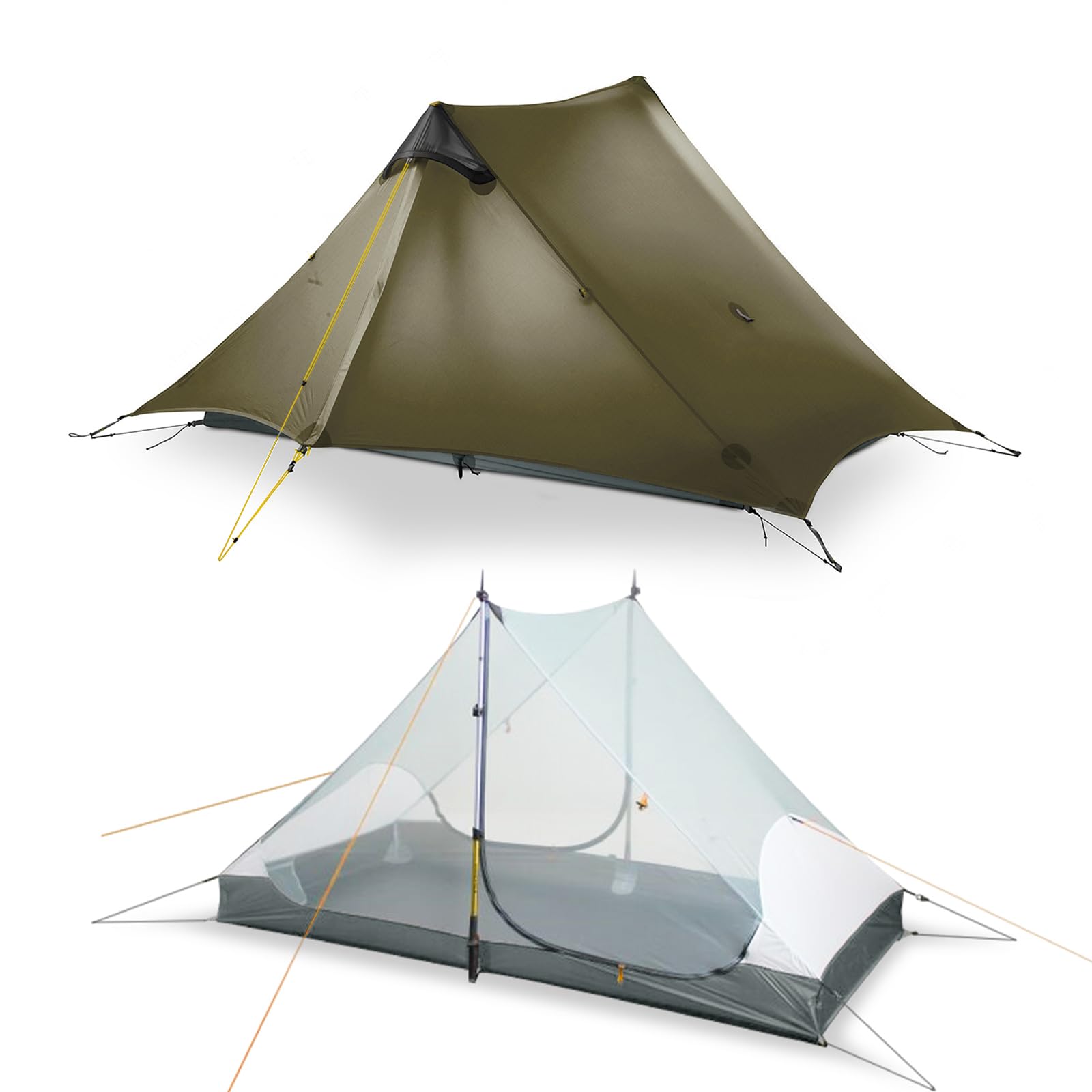
At 2.6 pounds, this trekking-pole shelter is the lightest way to sleep two in the backcountry.
The LANSHAN is the weight weenie’s dream: the 2-person standard version weighs just 2.6 lbs and packs to 12.6″ x 4.7″ x 5.9″, using your hiking poles (not included) as the frame. This trekking-pole design lets you set it up in 5-10 minutes with practice, and the hooks connect outer and inner tent quickly. The 15D nylon rainfly carries a 5000mm HH waterproof rating while the bathtub floor is rated at 6000mm HH — serious specs that owners put through storms on Teton and Yellowstone trips with zero sealing beforehand and no problems. The walls are full no-see-um mesh for maximum ventilation and airflow, and with 2 ventilation windows on the 2-person model, condensation stays manageable.
The real trade-off is interior space: at 86.6″ x 43.3″ x 49.2″, it fits a wide sleeping pad or a person plus a dog, but owners are blunt that it’s not truly for two adults — the consensus across the review pages is “not for two people” alongside praise for its weight. The 26.1 square feet is the smallest floor here, so think of it as a very spacious 1-person shelter that can pinch-hit for two in a pinch. It pitches as a tarp-tent without the floor and mesh walls, or as an inner mesh tent without the rainfly, giving you flexible setups for different weather.
Quality is the most-praised aspect with 142 owner callouts, and lightweight is right behind at 113 — this is a tent people buy specifically for its weight-to-quality ratio. The catch is setup: 70 owners rate it as mixed, and the fly requires proper staking to stay taut in wind. A recurring note is that tie-out points can leak without seam sealing, and water can pool at the fly edges in heavy storms — so buy seam sealer and pitch it thoughtfully. The single gear hook and mesh pocket handle essentials, and it packs small enough to disappear into your pack.
The lightweight champion: 2.6 lbs with 5000mm/6000mm waterproof ratings is exceptional for the price — the stuff of ultralight legends.
Size honesty: this is a roomy 1-person or a snug 2-person for small frames; two average adults on wide pads will feel cramped.
7. The North Face Stormbreak 2

Brand-name durability with twin-zip vestibules and a bathtub floor that owners trust in rain.
The Stormbreak 2 is The North Face’s classic two-person tent, and it leans on a proven formula: fully seam-taped canopy and floor for enhanced waterproofing, with a 75D polyester taffeta canopy, rainfly, and floor that feel built to last. Two large doors give each sleeper their own entrance and view, and mesh stuff pockets keep the entryways clear without rolling up the doors. The twin-zip vestibules store gear securely, while high-low ventilation openings drive airflow so you stay cool at base camp or after a long day on the trail.
Owners consistently rate the quality as excellent — 12 call it out — and note it’s easy to set up and roomy enough for two people. One camper tested it in 50-degree lows and stayed nice and warm, while another confirmed it endured rain perfectly with no water coming in from above. The bathtub-style floor forms a tub that keeps moisture out, and the vestibules store gear without cluttering the interior. At a trail weight of 5 lb 5 oz, it’s not the lightest option here, but buyers describe it as worth the money for the build quality and brand reliability.
The honest notes: one owner says it’s very roomy for one person but would hesitate to recommend it for two, while another praises it as just right for two — so frame size matters. The footprint sells separately, and one moto-camper wished for better stakes. But the review pages sum it up: “worth the extra money.” With a floor area of 30.56 sq ft and an 87″ x 50″ x 43″ footprint, it balances space and packability — small enough to fit in panniers for motorcycle camping, quick to pitch after practice, and built from a brand with decades of trail credibility.
Choose this for: a dependable brand-name shelter with excellent ventilation and a tub floor that buyers trust to stay dry — worth the premium for durability.
skip it if: you’re counting every ounce; at 5 lb 5 oz trail weight, ultralight hikers will find lighter options elsewhere.
8. MSR Tents Elixir 2
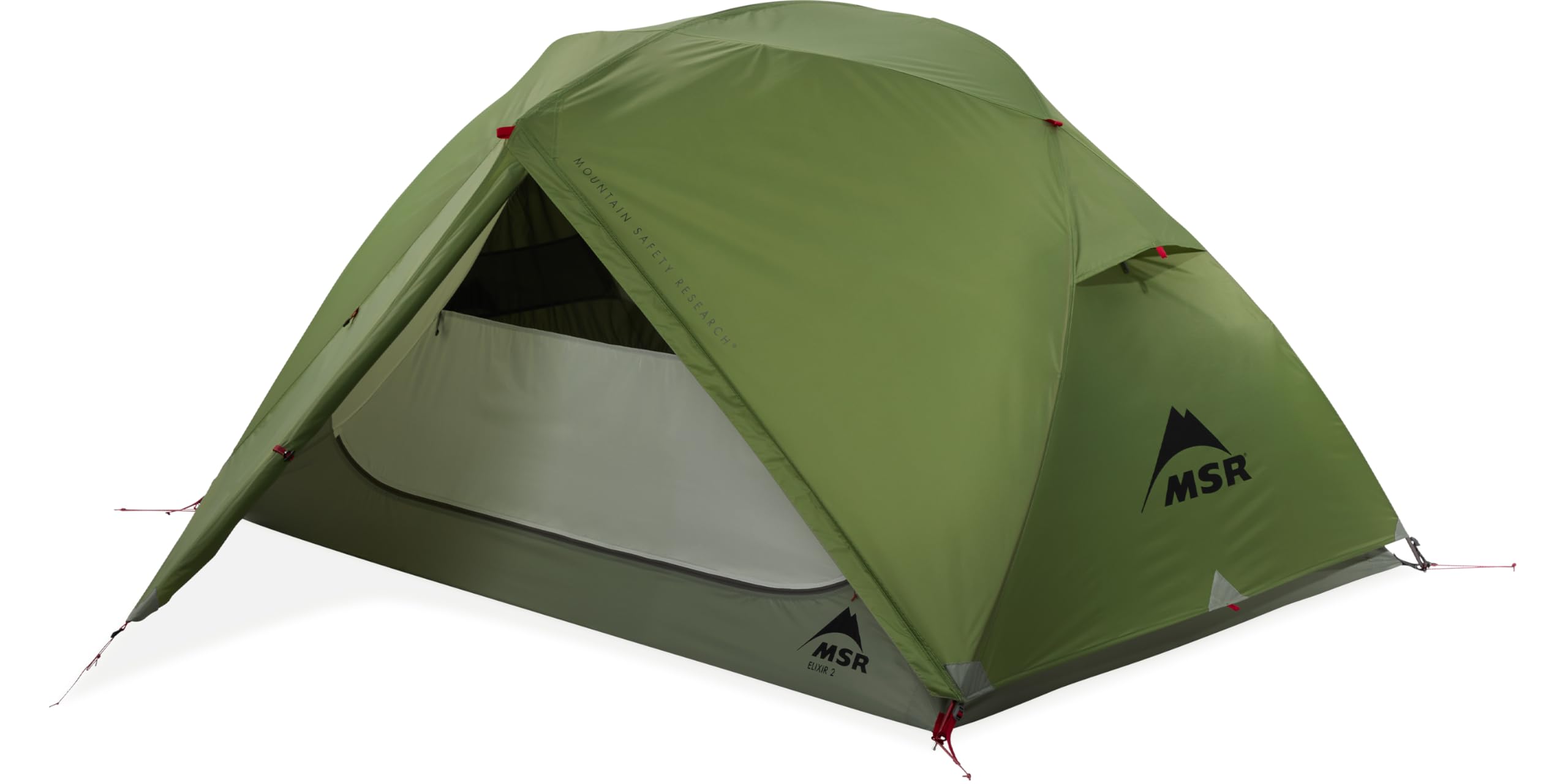
A true rectangular floorplan and nearly vertical walls that finally fit wide, thick sleeping pads.
The Elixir 2 solves the most common 2-person tent complaint — wide pads don’t fit — with a true rectangular floorplan and nearly vertical walls. At 84 x 52 inches with a 30 square foot floor, it accommodates wide, thick, rectangular sleeping pads side by side without the foot and head squeeze of tapered domes. The 75% polyester, 25% nylon body uses strategically placed mesh panels that provide airflow to remove condensation while retaining heat. Updated all-metal corner hardware and straight pull zippers are more durable than curved designs and make finding the pull at night easy.
MSR’s reputation for longevity is the through-line in owner feedback: reviewers point out their first MSR tent lasted 15 years, and the second is going on 8 and still in great shape. The inclusion of a dedicated footprint in the box is a notable value-add. Owners confirm it kept them and their stuff dry through solid rain, and one called MSR “bulletproof.” The gear loft and end pockets include cable ports, and it’s compatible with the MSR Gear Shed for extra storage — a modular system that grows with your needs.
The trade-off is dual: weight and setup. At a price that puts it in the premium tier, it’s heavier and bulkier than the ultralight options — one owner says it’s car camping only for that reason — and the setup is more involved, with one buyer noting the poles can pop out and are hard to fold or separate solo, especially for petite or older users. The green color earns small praise, though the round pegs were swapped out by one owner for sturdier Hilleberg stakes. For two people who prioritize durability and pad compatibility over pack weight, this is a shelter that simply refuses to wear out.
Built for the long haul: a 84-inch rectangular floor that fits wide pads, with all-metal hardware and PFAS-free waterproofing — durability you can pass down.
Know the cost: heavy and bulky compared to ultralight domes, and solo setup takes practice — this rewards campers, not weight weenies.
9. Big Agnes Copper Spur HighVolume Ultralight Backpacking and Camping Tent

The gold standard ultralight — roughly 3 pounds with high-volume architecture that makes it feel bigger inside.
The Copper Spur HV is the tent other ultralight tents aspire to be. The design allows for high volume pole architecture resulting in steeper walls — no more crouching or feeling like the ceiling is closing in. A high volume angle hub increases stability and strength while creating optimal livable space, so two adults fit comfortably with room to sit up. At roughly 3 lbs for the 2-person version, it’s barely heavier than the LANSHAN above but delivers a fully freestanding dome with dual doors and vestibules that fit a backpack each. The two-tone mesh provides privacy while still allowing star-gazing transparency at night.
Owners are unanimous that this is a top-shelf tent: lightweight is the most-praised aspect at 7 callouts, with quality matching at 7. It’s held up in rain and wind at 11,500 feet for two days straight, survived Colorado storms, and packs down small when you stash the poles outside the bag. The quick stash on the tent body door makes stowing the unzipped door quick and easy, and the storm flaps on the vestibule zippers add weather protection. Multiple interior pockets keep essentials organized, and the free-standing design means you can pick it up and move it once pitched.
The premium price is the big commitment — this is the most expensive tent in this lineup — and owners are honest that it’s a splurge: “kind of pricey, but wanted to buy a quality product, and I feel I got that.” The interior is spacious but not huge: mummy pads fit well, while large rectangular pads don’t — one owner notes it’s a true 2-person for average frames. The awning feature is troublesome for some, and the bag is bulky if you keep poles inside. But for backpackers who split the weight between two people and want the best balance of ultralight, durability, and livable space, the Copper Spur HV is the destination.
Why it’s the flagship
- ~3 lbs with fully freestanding pitch and steeper walls via high-volume hub
- Dual doors and vestibules each fit a backpack
- Survived 11,500-ft storms — durability matches the price
Why it’s not for everyone
- Premium price puts it well above the rest of this list
- Large rectangular pads don’t fit — mummy pads only for two
- Awning feature is finicky; bag is bulky with poles inside
Buy it if: you want the definitive ultralight with real headroom and are willing to pay for the best — this is the one owners call top-shelf without hesitation.
Look elsewhere if: your budget tops out in the mid-range; the Kelty or ALPS options deliver 80% of the experience for far less.
Understanding the Specs
Trail Weight vs Packed Weight
Trail weight excludes the stuff sack, covering tent, poles, stakes, and rainfly. Packed weight includes the stuff sack. For backpacking, compare trail weights between models; the difference between 2.6 lbs and 5 lbs is the difference between a pleasant hike and a grind.
Waterproof Ratings (mm)
The number (like 1500mm or 5000mm) is the hydrostatic head — how tall a column of water the fabric can hold before leaking. 1500mm handles light rain, 3000mm manages sustained downpours, and 5000mm+ is serious storm gear. Higher ratings mean heavier fabric, so balance waterproofing with weight.
FAQ
Will a 2 person tent actually fit two adults?
What is the difference between a 3-season and 4-season tent?
Does a freestanding tent need stakes?
What does a trekking-pole tent mean and why is it lighter?
Do I need a footprint for a backpacking tent?
What is a vestibule and why does it matter?
Can I use a 2 person tent for solo backpacking?
How do I stop condensation inside my tent?
What does seam-taped mean and is it important?
Final Thoughts: The Verdict
For most buyers, the 2 person backpacking tent winner is the ALPS Mountaineering Zephyr 2 because it delivers the largest floor area and genuine dual-vestibule comfort at a weight most hikers can manage. If you want the lightest possible shelter, grab the LANSHAN at 2.6 lbs. And for a premium splurge with class-leading headroom and brand cachet, the Big Agnes Copper Spur HV is the one to reach for.
How We Picked
We do not accept paid placement. Every pick is matched to a real buyer and a real use-case; we do not hands-on test units.
Sources & Methodology
Specifications: manufacturer listings and product documentation. Review insights: verified customer reviews, as of August 2026. Pricing: not shown on this page (it changes often); check the current price via the retailer link.
As an Amazon Associate, Gadgets Feed earns from qualifying purchases. This does not affect which products we feature.