
Our readers keep the lights on and my morning glass full of iced black tea. As an Amazon Associate, I earn from qualifying purchases.
Specs are compiled from manufacturer listings and verified buyer reviews and can change over time — please confirm the key details on the product page before buying.
Behind the head ear muffs solve the one problem that ruins the classic over-the-head style: they leave the top of your skull completely clear. That means you can wear a hard hat, a wide-brimmed sun hat, a helmet, or even just a baseball cap without giving up hearing protection. The band wraps around the back of your neck instead of sitting on your crown, so the fit is also often more secure for people who find standard muffs slip forward.
I’m Min — the founder and writer behind Gadgets Feed. This guide is built by comparing the manufacturers’ published specifications and the patterns across verified customer reviews, so you get each pick’s real strengths and trade-offs instead of marketing spin.
We break down the best behind-the-head styles for warmth, shooting, and shop work, from foldable cold-weather warmers to electronic range muffs. behind the head ear muffs let you protect your hearing without ever fighting your hat.
Our Picks at a Glance

How To Choose The Best Behind The Head Ear Muffs
Start with what you will be doing while wearing them. If you are mowing, shooting, or running power tools, you need a high Noise Reduction Rating (NRR) — that number tells you how many decibels of sound the muff takes away. If you are just walking the dog in winter, you want soft, foldable warmth that does not crush your ears.
Check the hat clearance first
The entire reason to pick this style is headgear compatibility. A behind-the-head band leaves your crown free, so hard hats, straw hats, and helmets all fit on top. But the band still has to clear your collar and sit low enough to seal around your ears, so a lower-profile design is worth more than a high NRR if you live in a hard hat all day.
Decide between passive and electronic
Passive muffs are simple foam and plastic with no batteries — perfect for steady noise like a lawnmower. Electronic muffs add microphones that pipe voices into your ears while still cutting loud blasts, which is why they dominate at shooting ranges where you need to hear the instructor. The trade-off is batteries, weight, and usually a higher price.
Quick Comparison
| Model | Best For | Noise Reduction | Weight | Power | Amazon |
|---|---|---|---|---|---|
| 180s Degrees Ear-Warmers★ Best Overall | Cold-weather comfort | — | Light | — | Amazon |
| 3M Peltor Optime 95Best Value | Shop & warehouse work | — | 6.7 oz | — | Amazon |
| 3M PELTOR Optime 101 H7B | High-noise jobs | 25 dB | 9.28 oz | — | Amazon |
| Caldwell E-Max | Shooting ranges | 21 NRR | — | 2 AAA | Amazon |
| Peltor H10B | Maximum sound blocking | 28 dB | 2 lb | — | Amazon |
In‑Depth Reviews
1. 180s Degrees Behind-the-Head Ear-Warmers
Our pick — over 4.5★ from 950+ verified ratings; the strongest balance of quality and price.
The foldable winter warmer that leaves your hair and hat completely untouched.
This is the crowd favorite — 4.6 stars across 900+ owners — and the reason is simple: it solves the winter-ear problem without the bulk of a hat. The band grips around the back of the head so well that even a large-headed person can trust it to stay firmly over the ears in very cold weather. It is also light enough that you barely notice it, and the soft fur interior keeps ears warm without feeling itchy against the skin.
What wins people over is the build quality — over 100 owners specifically call it out — with warmth a close second. The muffs fold together into a compact pocket-sized shape for storage, which is exactly what you want for cycling or running where a hat traps heat. Buyers report they are not too bulky-looking and hold around the back of the head without feeling too tight or uncomfortable, even down to around 20 degrees.
One useful quirk: because there is no over-the-top band, your hair is never flattened and a hearing aid sits underneath without issue. The main trade-off is that these are warmth muffs, not hearing protection — there is no noise reduction rating here, so they belong on a winter walk, not a shooting range. The occasional complaint is build quality at the hinges, but for everyday cold-weather wear the balance is hard to argue with.
Why Owners Love Them
- Folds compact for a jacket pocket
- Grips well on larger heads without slipping
- Keeps ears warm without itch or bulk
Who Should Look Elsewhere
- No noise reduction for loud work
- Occasional hinge durability complaints
Reach for this if: you want warm, secure ears this winter without sacrificing your hairstyle or hat.
Think twice if: you need actual hearing protection for power tools or machinery.
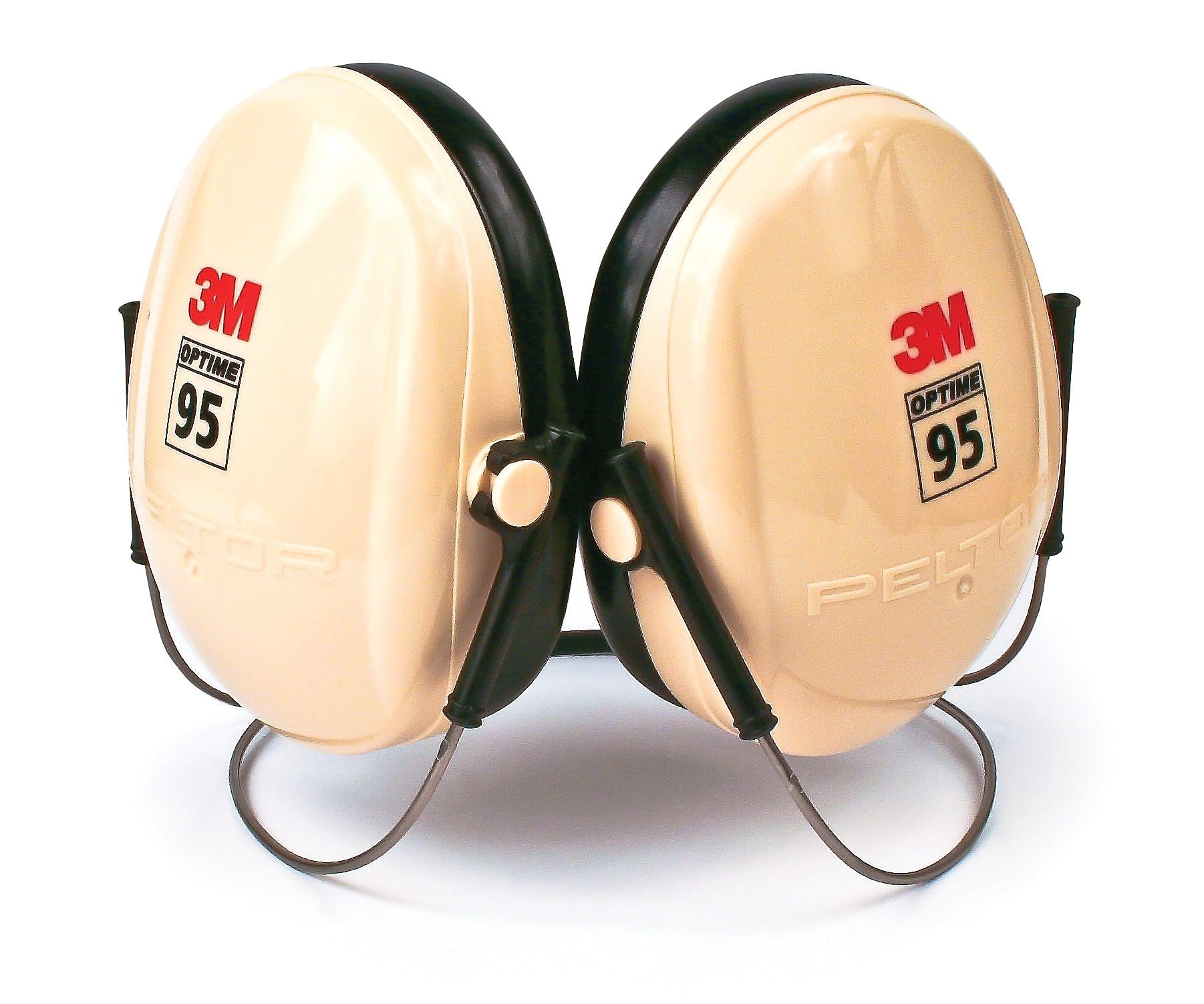
2. 3M Peltor Optime 95 Behind-the-Head Earmuff
The featherweight workhorse that slides under hard hats and wide-brimmed hats alike.
At just 6.7 ounces, this is the lightest hearing protection here — noticeably easier on the head than the 9.28-ounce Optime 101 further down. The spring wire is tight enough to grip the head well while you work, yet owners mention it stays very comfortable even when you are also wearing a hard hat, straw hat, or the kind of full-brim headwear you use for airboating and mowing.
The thing everyone raves about is comfort — it is the top reason owners pick it over over-the-head styles. Buyers who spent years in industrial warehouses call it a good item for the home shop too, especially comfortable when wearing headwear. The metal frame does have one honest quirk: it can rub against a collar and make a little noise, and some find it less stable than over-head muffs, so a head strap helps if you are leaning into the work.
Noise protection gets mixed feedback here — some owners find it great for blocking sound, others say the seal is not snug enough for full effect. That makes this the pick for lighter-duty noise like a riding mower or general shop chatter, not the loudest industrial settings. It also works well for rimfire shooting, and woodworkers recommend it for guarding against further hearing damage.
Best in its lane: the lightest, most hat-compatible work muff here, ideal for yard work and shop use where comfort beats maximum attenuation.
Who it beats: anything you would wear for hours with a hard hat on — the 6.7-ounce weight and tight spring grip make it disappear on your head.
Who it does not beat: the Optime 101 above it in raw noise blocking for serious industrial noise.
3. 3M PELTOR Hearing Protection Optime 101 Ear Muffs, Behind the Head, H7B
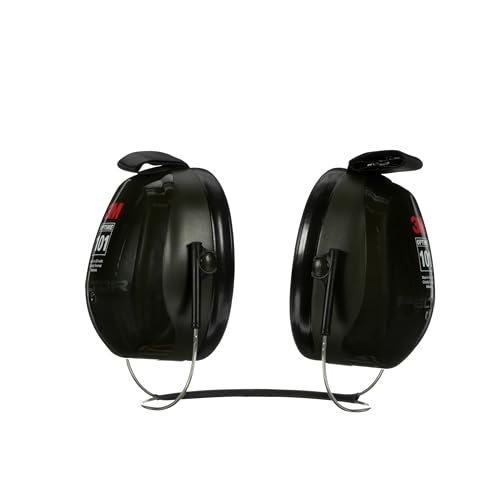
The deeper-cup muff that drowns out grinders and saws while a hat stays on top.
This is the serious-work option, rated for noise levels up to 101 dBA with a 25 dB Noise Reduction Rating. The stainless steel band distributes weight for a low-pressure fit across the head, which matters when you are wearing it for long stretches. Owners who upgraded from the 95 series say the deeper cups and softer foam make this the most comfortable hearing protection they have owned, and the behind-the-head design is non-distracting all day.
What wins people over is functionality — it blocks out saws, grinders, hammering, and other workshop sounds effectively. The behind-the-neck wire keeps the muffs in place, and the fit is good across sizes, clearing wide-brimmed hats without sliding. One honest catch from the review pages: you may have to take the earcups apart to connect the straps yourself, which should have been done by the manufacturer, and one owner notes the unit arrived very dark green rather than the listed black.
Owners who work around high-pitch noise from grinders, saws, and routers call it the best ear protection they have owned, surpassing a 15-year-old Peltor 95. It is note 3M recommends reducing the NRR by 50% for estimating real-world protection, and these are labeled for industrial or occupational use only. There is an ear cup button for listening mode when you need to hear a coworker without removing the muffs.
Built for the shop: the deeper cups and softer foam beat the 95 for extended wear, and the stainless band keeps pressure low even with a hat underneath.
Pick this if: you run loud tools daily and want more attenuation than the lighter 95 offers.
The catch: assembly takes a minute — the straps come detached and you connect them yourself.
4. Caldwell E-Max Hearing Protection Earmuffs with Sound Amplification

The electronic range muff that lets you hear the instructor without ever taking it off.
This is the only electronic pick here, and it earns its place with a simple trick: dual microphones capture voices and pipe them into your ears while the 21 Noise Reduction Rating still cuts gunfire and other loud blasts. Owners say they can converse normally in loud shooting environments without hearing the shots, and range commands stay crisp. A turn dial on the side makes volume adjustments easy, and an audio input jack lets you plug in music if you want it.
What wins people over is the functionality — nearly 200 owners single it out as the reason they bought it, with hearing protection a close second. The low-profile design offers comfort while allowing an up-close cheek weld, which matters for shooting accuracy. It runs on 2 AAA batteries (not included), and the dual mics mean you can hear people talking without taking the muffs off, which owners describe as a huge upgrade over passive foam.
The honest caveats: sound quality is mixed, with some owners finding the audio a bit dated, and durability is the recurring negative — an occasional unit arrives with cracked muffs, though the brand’s customer service is praised for sending replacements. It is not foldable, and one owner notes the fit can feel tight on larger heads. For range work where hearing conversations matters, this is the clear standout; for pure mowing duty, the lighter passive 3M above is the better fit.
The Range Advantage
- Hear conversations without removing the muffs
- Volume dial for easy adjustment
- Audio jack for music
The Trade-Offs
- Requires 2 AAA batteries
- Not foldable for storage
- Occasional durability complaints
Choose this for: shooting ranges and any spot where you must hear an instructor over the noise.
Skip it for: pure yard work — the mics pick up engine drone, so a passive muff does that job better.
5. Peltor H10B Earmuff, Behind-The-Head, Black
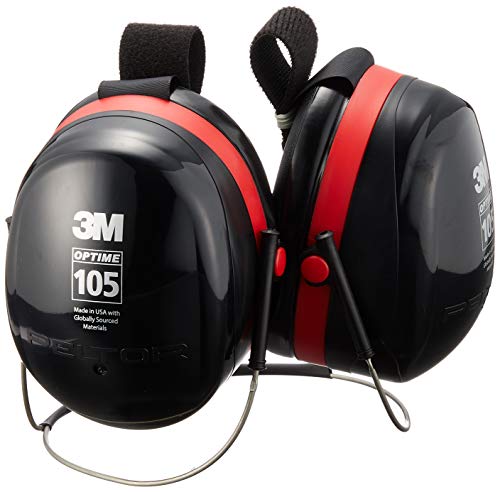
The 28 dB heavyweight built for the loudest machinery and long haul sessions.
If maximum attenuation is the whole game, this is the muff to beat — the 28 dB Noise Reduction Rating is the highest in this lineup, sitting above the 25 dB Optime 101. The patented dual cup design minimizes resonance to achieve maximum sound quality without bulky muffcups, and the wide, soft padded headband distributes weight while the two-point suspension keeps pressure low for long-term wear.
The 2-pound weight tells the story: this is a serious hearing protector, not an accessory. Japanese owners using it for mowing with a weighted, netted straw hat report the behind-the-head style lets the hat fit right on top, which is exactly why this type exists. The foam-filled ear cushions add comfort, and the fit works for most adults, clearing helmets and hats without issue.
The real-world trade-off is pressure: some owners note that after about an hour of wear, the clamping around the ears can make the head ache, and finding the best band position takes some adjusting. For short, loud tasks like hammering or riding a tractor, the noise-blocking here is the strongest of the bunch — owners praise the sound isolation as exceeding their expectations. If your days are full of the loudest equipment, this is the protective wall you want.
Raw protection first: the dual cup design and 28 dB rating out-block every other pick here, at the cost of 2 pounds of weight on your head.
Grab this for: tractors, hammering, chainsaws, and any noise that makes the lighter muffs feel insufficient.
Be warned: an hour in, the clamping pressure can turn into a headache, so take breaks.
Understanding the Specs
Noise Reduction Rating (NRR)
This is the number that tells you how many decibels of sound the muff blocks — a 25 dB NRR takes 25 decibels off the noise reaching your ears. Higher is better for loud machinery, but 3M itself suggests reducing the NRR by 50% to estimate real-world protection since a perfect seal is rare. For a lawnmower you can get away with a lower rating; for a tractor or grinder, you want the highest number you can stand to wear.
Behind-the-Head Band Design
The band wraps around the back of your skull instead of over the top, which keeps your crown clear for hats, helmets, and hard hats. The trade-off is that the band sits closer to your collar, and some designs can rub or feel less stable than over-head styles. If you live in a hard hat all day, this design is essential; if you never wear headgear, an over-head band is usually more secure.
FAQ
Will behind-the-head ear muffs fit under a hard hat?
What does a higher Noise Reduction Rating do for me?
Can I hear people talking while wearing these?
Are behind-the-head muffs more comfortable than over-the-head ones?
How long can I wear hearing protection muffs comfortably?
Do these muffs work for shooting at a range?
What is the difference between passive and electronic ear muffs?
Will cold-weather ear warmers protect my hearing too?
Final Thoughts: The Verdict
For the majority of shoppers, the behind the head ear muffs winner is the 180s Degrees Ear-Warmers because it solves the everyday problem of cold ears with a secure, foldable fit that never touches your hair or hat. If you work under a hard hat and need real hearing protection, grab the 3M Peltor Optime 95 for its featherweight 6.7-ounce comfort. And if you shoot at a range and still want to hear the instructor, the Caldwell E-Max brings electronic sound amplification — the only pick here that lets you talk without taking it off.
How We Picked
We do not accept paid placement. Every pick is matched to a real buyer and a real use-case; we do not hands-on test units.
Sources & Methodology
Specifications: manufacturer listings and product documentation. Review insights: verified customer reviews, as of August 2026. Pricing: not shown on this page (it changes often); check the current price via the retailer link.
As an Amazon Associate, Gadgets Feed earns from qualifying purchases. This does not affect which products we feature.