
Our readers keep the lights on and my morning glass full of iced black tea. As an Amazon Associate, I earn from qualifying purchases.
Specs are compiled from manufacturer listings and verified buyer reviews and can change over time — please confirm the key details on the product page before buying.
Rough idle, sluggish throttle, and a slow creep downward on your gas gauge are almost never a sign your engine is dying. This guide separates true fuel-system cleaners from overpriced snake oil.
I’m Min — the founder and writer behind Gadgets Feed. This guide is built by comparing the manufacturers’ published specifications and the patterns across verified customer reviews, so you get each pick’s real strengths and trade-offs instead of marketing spin.
You’ll see exactly which formulas target injectors, valves, and combustion chambers, and how to match one to your engine’s mileage. That’s what makes this a genuinely useful rundown of the auto gas treatment options worth your money.
Our Picks at a Glance

How To Choose The Best Auto Gas Treatment
Fuel additives all look alike on the shelf, but they break into two camps: those that clean and those that merely stabilize. For a daily driver feeling sluggish, you want a cleaner that dissolves the carbon baked onto injector tips and intake valves.
Match the chemistry to your engine type
The star ingredient in most serious cleaners is polyetheramine (PEA), a detergent that survives combustion and scrubs deposits deep in the chamber. If you drive a gasoline direct injection (GDI) engine — where fuel is sprayed straight into the cylinder — look for a formula that specifically targets intake-valve buildup, since GDI engines skip the cleaning wash that port injection provides.
Read the dose, not just the bottle size
One product might tell you to pour in a full quart, while another treats the same fuel load with a single ounce. Check the “treats X gallons” ratio before comparing prices, because a small bottle with a concentrated dose can outlast a big jug that asks for frequent refills.
Quick Comparison
| Model | Best For | Size | Dose Rate | Engine Type | Amazon |
|---|---|---|---|---|---|
| Lucas Oil 10003 Fuel Treatment★ Best Overall | Gas & diesel daily drivers | 1 Quart | Multi-fill-up bottle | Gasoline & Diesel | Amazon |
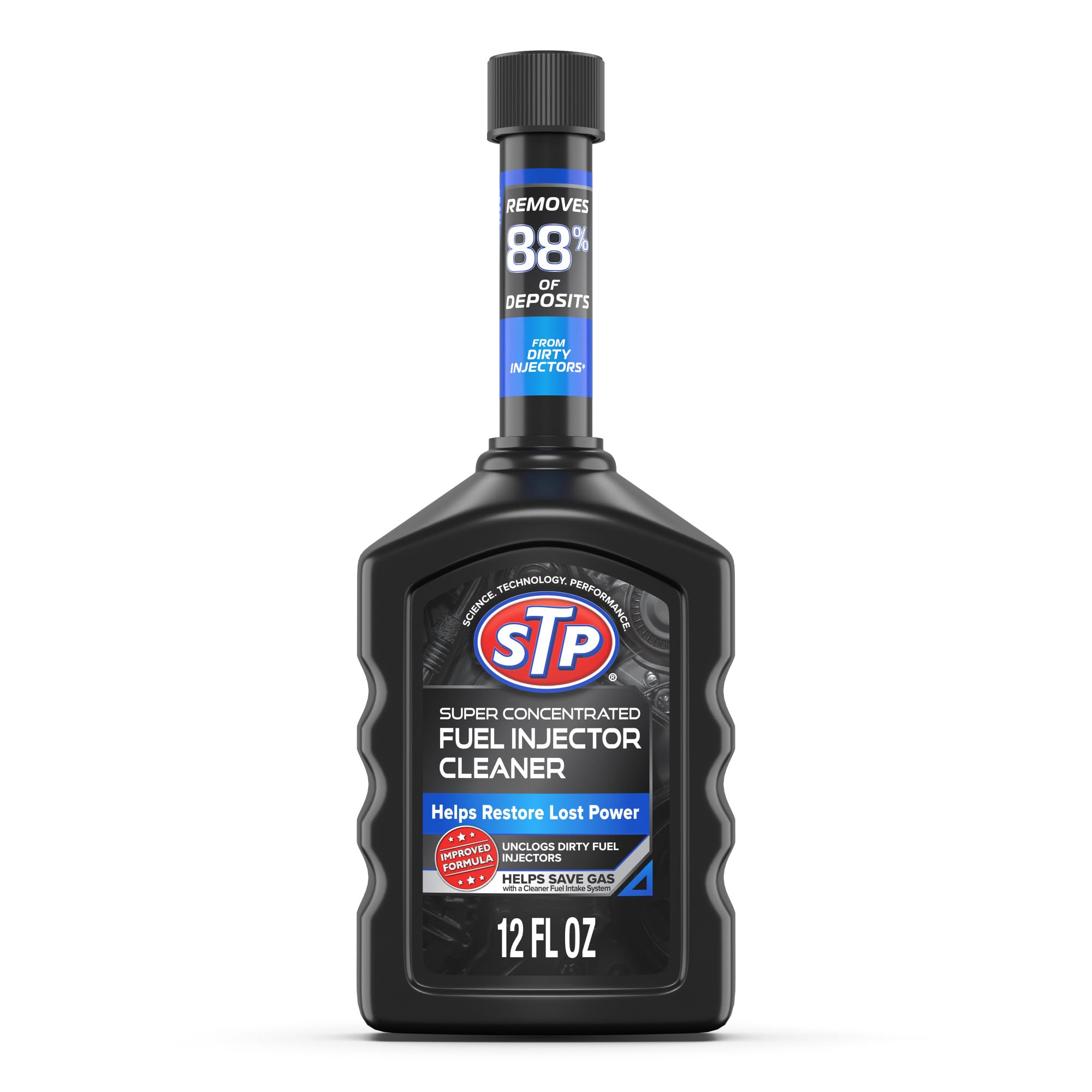
| STP Super Concentrated Injector CleanerBest for Commuters | Short-trip commuters | 12 Oz | Single tank | All Gasoline | Amazon |
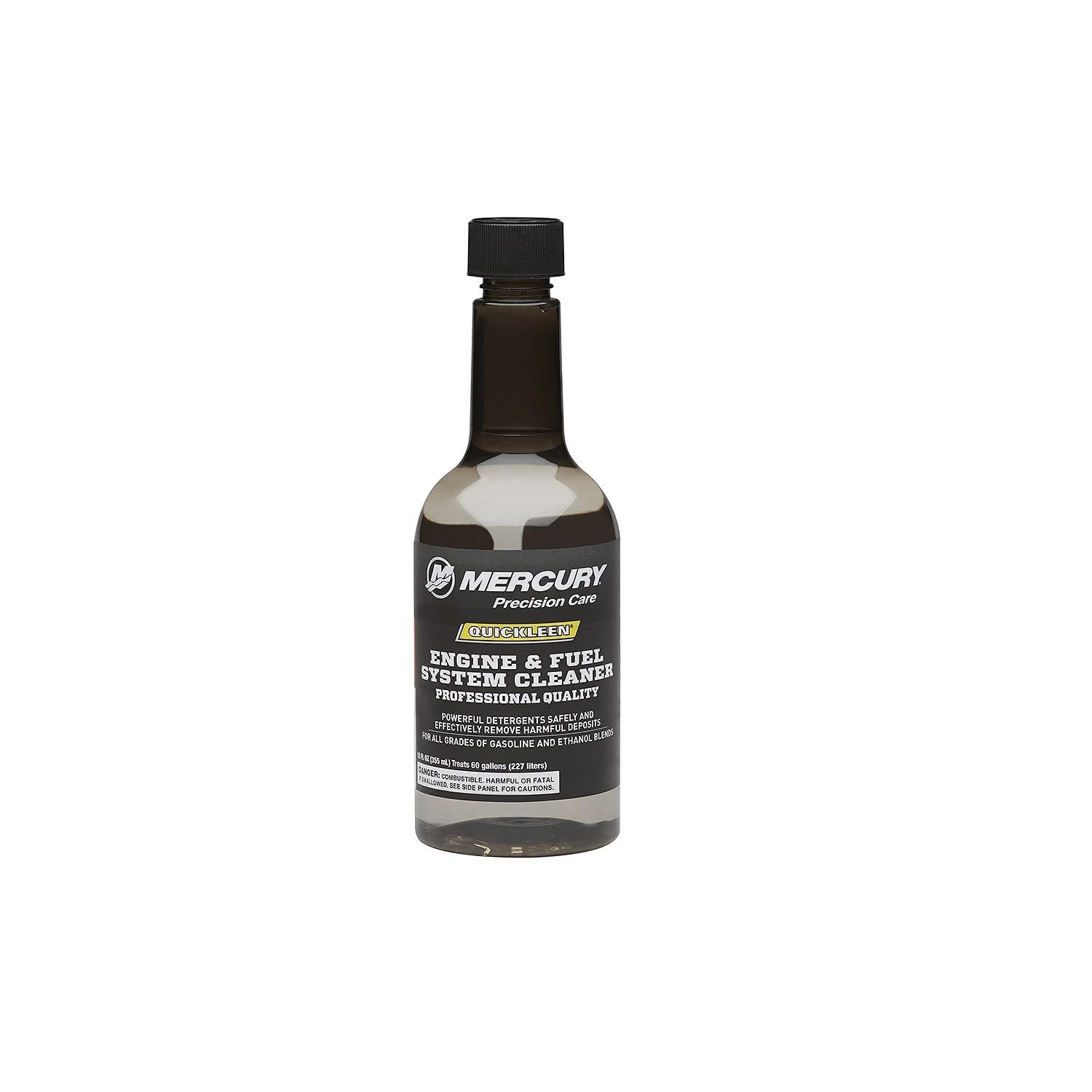
| Mercury Quickleen Engine CleanerMarine Pick | Marine outboards | 12 Oz | 1 oz per 5 gal | Watercraft | Amazon |
| Quicksilver Quickleen Cleaner | Ethanol-blend marine fuel | 12 Fl Oz | 1 oz per 5 gal | All Gasoline | Amazon |
| LIQUI MOLY DIJectron | GDI engines | 10.01 Fl Oz | Single treatment | GDI Only | Amazon |
| Liqui Moly Jectron 2-Pack | Multi-car households | 2 x Bottles | Single treatment each | All Gasoline | Amazon |
| BG 44K Fuel System Cleaner 2-Pack | Professional-grade cleaning | 2 x 11 Oz | 1 can per 20 gal | Gasoline Only | Amazon |
| Gumout Regane High Mileage 6-Pack | High-mileage fleets | 6 x 6 Oz | Single tank each | All Gasoline | Amazon |
| Lucas Oil Fuel Injector 12-Pack | Bulk buyers | 12 x 5.25 Oz | Every 4 fill-ups | All Gasoline | Amazon |
In-Depth Reviews
1. Lucas Oil 10003 Fuel Treatment
Our pick — over 4.5★ from 24,500+ verified ratings; the strongest balance of quality and price.
The one-bottle solution that treats both gas and diesel with a no-brainer pour-and-go dose.
What wins people over here is simple functionality — buyers report smoother engines, better throttle response, and real gains at the pump after a single quart. The 1-quart bottle stretches across multiple fill-ups, making the per-dose cost easy to justify.
It doesn’t just clean; it lubricates the entire fuel path, including injectors, the carburetor, and the combustion chamber. That lubrication layer also neutralizes sulfur and prevents rust, which is why diesel truck owners with 200,000-plus miles swear by it — owners mention using it “religiously” through an 8841-mile trip and a 5500-mile desert run with zero engine issues.
For best results, use it consistently over time rather than as a one-and-done fix. For a used vehicle burning slightly rich or idling rough, this is the closest thing to a tune-up in a bottle.
What the crowd loves
- Genuinely improved gas mileage and smoother running reported across the board
- Cleans injectors and lubricates pumps, extending their life
- One bottle stretches across several fill-ups for strong value
Who should look elsewhere
- If you want an instant one-tank shock treatment, a concentrated dose is stronger
- It’s a maintenance product, not a cure for severe mechanical failure
Reach for this if: you drive a gas or diesel daily driver and want one reliable, cost-effective cleaner you can use every oil change cycle.
Look elsewhere if: your engine has a serious mechanical fault, since no additive can fix a broken part.
2. STP Super Concentrated Fuel Injector Cleaner
The concentrated cure for short-trip cars that never get hot enough to burn off their own deposits.
This one is built around a simple, specific problem: city drivers who only do short trips. A dealer once told an owner to take the car on the highway to burn out buildup — but the STP bottle did the job on its own, restoring smooth running and boosting the car’s mileage from 33 to 39 MPG. That MPG jump is the kind of concrete result that defines this cleaner.
It uses a high-quality carrier of active ingredients with a jet-fuel base, made in the USA, and it’s safe for every gasoline engine. The 12-ounce size is a rare find in retail stores, which makes it a smart stock-up buy for anyone with both a truck and a car. Acceleration is where owners feel it most — a noticeable boost in throttle response without any of the rough idle that clogged injectors cause.
The one thing to expect is that it’s a treatment, not a permanent fix. For a car stuck in stop-and-go traffic, you’ll want to dose it regularly to keep the injectors free.
Performance first: owners feel the difference most during acceleration, with a “great boost” and no burnout theatrics. Owners feel the difference most during acceleration, with a noticeable boost in throttle response.
Grab this if: your commute is all short hops and you’re tired of paying a dealer to do what a bottle can do.
skip it if: you’re after a diesel-compatible formula — this one is strictly for gasoline engines.
3. Mercury Quickleen Engine & Fuel System Cleaner
A factory-grade marine cleaner that pulls carbon off plugs, pistons, and valves in one season.
This isn’t a car product that happens to work on boats — it’s built by Mercury Marine to their own OEM specifications for watercraft. The formula strips carbon deposits from carburetors, injectors, intake valves, spark plugs, piston crowns, and cylinder heads, which is exactly what a boat engine needs after a season of sitting with old fuel.
The dose is measured and gentle: just 1 ounce treats 5 gallons of gasoline, so you can run it occasionally through the season without worrying about over-dosing. Customers note it completely cleared sputtering and full-throttle power loss in a Mercury Optimax Pro XS outboard, and that two seasons of regular use resolved issues that came from bad gas and buildup.
Note that it contains no fuel stabilizers — if you’re winterizing, you’ll need a separate stabilizer product. But for restoring lost power mid-season, this is the one marine techs reach for.
Why boat owners trust it
- Removes carbon and plaque from the entire combustion path
- OEM-formulated to Mercury’s exact engineering standards
- 1 oz per 5 gallons makes dosing simple and safe
The fine print
- No fuel stabilizers included — winter layup needs a separate step
- Vehicle-specific fit means it’s aimed at watercraft, not cars
Best for: outboard and stern-drive owners who want to fix sputtering and knocked power without a shop visit.
Think twice if: you need a stabilizer for off-season storage, because this cleaner won’t cover that job.
4. Quicksilver Quickleen Engine and Fuel System Cleaner

The fuel-system flush that rescues ethanol-clogged carburetors on older motors.
Ethanol-blend fuel is a known headache for small engines and marine motors, gumming up carbs and injectors over time. Quicksilver — Mercury’s parts arm — formulated this cleaner specifically for all grades of gasoline and ethanol-blend fuel, so it attacks the exact varnish problem that modern fuel creates in older equipment.
A 75hp Mercury that sat idle for a year came back to life with a 3oz-per-gallon “shock” dose in a portable tank, running smooth and powerful instantly. Owners with contaminated fuel report it smoothing out a rough idle, and one long-term user says running it every tank saved hundreds in carburetor repairs. It can be used at every fill-up, at the same 1 ounce per 5 gallons rate as the Mercury-branded version.
The honest expectation is patience: ethanol-clogged carbs often need a day of running, an overnight sit, and a repeat dose before the improvement is complete. It’s powerful, but ethanol-clogged carbs often need a repeat dose.
Effectiveness wins: reviewers point out it restored a dead-smooth idle and full power after a year of sitting, with several calling it better than comparable additives for ethanol gum. The recurring gripe is a leaky bottle on arrival for some units — check the cap before storing it.
Reach for this if: you run ethanol-blend fuel in a boat or small engine and want to avoid carb rebuilds.
Look elsewhere if: you need a stabilizer, since it doesn’t include one and a separate product covers that job.
5. LIQUI MOLY DIJectron GDI Cleaner

The precision cleaner for direct-injection engines that port cleaners can’t fully reach.
If you drive a modern turbocharged car — think Audi, VW, Mercedes — you have a GDI engine, and it has a specific weakness: carbon builds up on the intake valves because fuel never washes over them. Generic cleaners don’t touch that. LIQUI MOLY’s DIJectron is formulated for exactly these engines, removing deposits from the direct-injection system and protecting against corrosion and wear.
The results owners describe are the slow-burn kind that show up over mileage, not instantly. A high-mileage Audi Q5 that had dropped from 30 MPG highway to 25 after 178,000 miles of hard driving saw real recovery, and a Mercedes S550 at 90,000 miles “driving like new” after two bottles plus fresh filters. One owner saw fuel efficiency climb from 15 toward almost 20 MPG.
It’s an eco-friendly liquid spray formula, and it’s aimed strictly at GDI engines — that’s the point. If your car is an older port-injection model, you don’t need this level of specialty chemistry.
Built for modern engines
- Specifically removes deposits where GDI engines actually collect them
- Reported real MPG recovery on high-mileage turbo vehicles
- Eco-friendly formula with corrosion protection
Know before you buy
- Only for gasoline direct injection engines — wasted on older port injection
- Value is a mixed call; some owners find it pricey for the can size
Best for: owners of turbocharged GDI cars with 60,000-plus miles who want to claw back lost MPG.
pass on it if: you drive a conventional port-injected engine, where a general cleaner works just as well.
6. Liqui Moly Jectron Fuel Injection Cleaner 2-Pack

German-engineered injector care that sharpens throttle response and steadies a rough idle.
Liqui Moly’s Jectron takes a broader approach than the DIJectron, cleaning the whole fuel path — pipes, distributors, and injection valves — rather than just GDI internals. It keeps components free of new deposits while promoting accurate injector dosing and finer fuel atomization, which translates to cleaner combustion and better throttle response.
Shoppers say smoother idling, crisper throttle response, and measurable fuel savings. Buyers report increased mileage while towing, and a Can-Am Spyder that was missing and acting like it was running out of gas ran clean a couple of miles after a bottle. The 2-pack is the smart buy for a two-car household or for dosing a truck twice.
It reduces fuel consumption through low-pollution combustion, so it’s doing environmental work in the background too. Just don’t expect it to silence noisy lifters completely — one owner noted it helped but was light on that specific fix for a 4-cylinder turbo.
Smooth operation is the headline: owners consistently describe steadier idles and crisper acceleration, with gas mileage gains reported on trucks and tow rigs. The value math is simple when you need two doses anyway — the 2-pack saves you a second shipping charge.
Reach for this if: you want a premium general-purpose injector cleaner and have more than one vehicle to treat.
Look elsewhere if: your car is a GDI model — the DIJectron is the one that targets that engine type specifically.
7. BG 44K Fuel System Cleaner Power Enhancer 2-Pack

The shop-favorite can that pros have trusted for over 40 years to scorch carbon loose.
Mechanics have trusted BG 44K for over 40 years, and this 2-pack brings that professional-grade cleaning home. This 2-pack brings that professional-grade cleaning home, rapidly scouring fuel injectors, valves, and combustion chambers with a single can that treats up to 20 gallons of gasoline.
Real-world owners saw a 2016 Silverado run smoother with better MPG and more power, and a 2019 Tundra at 50,000 miles shed a rough idle and sluggish throttle while gaining roughly 1 MPG — about 400 miles per tank. Others watched it clear a stubborn check engine light by cleaning sludge out of the system. Owners mention restored throttle response and smoother acceleration after a single can.
The price point sits above the grocery-store cleaners, and the value debate is genuine — owners split on whether the cost justifies the dose. But for a serious cleaning that a dealer would charge far more to do, it tends to win on results.
Why the pros use it
- One can treats 20 gallons — a concentrated, powerful dose
- Real reports of smoother idle, better throttle response, and MPG gains
- Cleared check-engine codes tied to carbon buildup
The honest cost check
- Premium pricing; the value is a mixed call among owners
- For gasoline engines only — keep it away from diesel tanks
Best for: gas truck and SUV owners who want dealer-level injector cleaning on a fuel budget.
Think twice if: you drive a diesel or you’re only treating a small commuter car, where a cheaper dose suffices.
8. Gumout Regane High Mileage Fuel System Cleaner 6-Pack

A six-pack of maintenance for the high-mileage car that refuses to retire.
Older cars with 100,000-plus miles have different needs: worn upper cylinders, ethanol corrosion, and carbon that’s had years to bake on. Gumout’s Regane formula layers three detergents — PEA, PIBA, and a patented technology — intended to clean better than PEA alone, while conditioning the upper cylinder to reduce friction and wear.
The 6-pack format makes this a set-and-forget maintenance routine rather than a one-time fix. A long-term user at 100,000 miles found the fuel system looking new with no induction cleaning ever needed, and another at 178,000 miles credits it with helping fuel mileage when used every 3,000 miles. It fights ethanol and water corrosion and prevents future carbon buildup, which is the right battle plan for a daily-driven older car.
It won’t eliminate a pre-existing engine knock — one Prius owner saw improvement but not a complete cure. Think of it as the ongoing insurance policy for a high-mileage motor, which explains why it’s marketed for fleet and plant maintenance.
Built for the long haul
- Three-detergent CarbonClear formula targets what PEA alone misses
- Six bottles = a full year of scheduled maintenance for two cars
- Prevents future carbon and corrosion, not just cleans current buildup
Manage expectations
- It improves knock rather than always eliminating it entirely
- Best as a recurring treatment, not a dramatic one-shot cure
Best for: households running two or more high-mileage cars and wanting a year of preventive fuel-system care in one order.
it’s not for you if: you need a heavy-duty shock dose for a badly clogged motor — the concentrated single cans hit harder.
9. Lucas Oil Fuel Injector Cleaner 12-Pack

A year’s worth of injector maintenance for the driver who treats every fill-up as a ritual.
Lucas Oil built its name on the quart-size fuel treatment, and this 12-pack of 5.25-ounce bottles is the convenience version of the same philosophy: clean and lubricate the fuel system every tank, not just when things go wrong. It increases power and MPG by burning excess emissions and neutralizes low-sulfur fuel problems.
The bulk format changes the math entirely. Instead of buying one bottle for an emergency, you keep a case in the garage and dose on a schedule — one owner runs E85 in an M2 and adds a bottle every four fill-ups, while another uses it every other tank on a 7.3L gas engine and watches the MPG climb from 11 to 14. It also quiets noisy lifters, which is a bonus on high-mileage pushrod engines.
It works in marine and auto applications, so one case covers a boat and a truck. The trade-off is the upfront investment of a 12-pack, but for anyone who’s already committed to regular fuel-system care, it’s the cheapest per-dose way to stay on schedule.
Quality you can schedule around: owners describe “very stable” quality and repeat purchases, with the bulk format saving money compared to buying singles. The only murmur in the data is occasional seal or leak issues on individual bottles — worth a quick cap check on delivery.
Reach for this if: you’re already a Lucas believer and want the lowest cost per dose for a year of maintenance.
Look elsewhere if: you only need a single emergency treatment — a one-off bottle is the leaner buy.
Understanding the Specs
PEA vs PIBA Detergents
PEA (polyetheramine) is the heavy hitter that survives combustion and keeps scrubbing carbon deposits inside the chamber. PIBA works earlier in the intake path. A formula pairing both, like Gumout’s CarbonClear, is designed to clean a wider stretch of the fuel system in a single treatment.
Dose Rate and Treated Volume
Additives are concentrated at wildly different rates. Mercury and Quicksilver both treat 5 gallons per ounce, while BG 44K covers up to 20 gallons a can. Checking the “treats X gallons” spec tells you which product is actually the better value for your tank size.
FAQ
How often should I use a fuel injector cleaner?
Will a fuel treatment fix a rough idle caused by carbon?
What is the difference between PEA and PIBA cleaners?
Do I need a special cleaner for a GDI engine?
Can I use an auto fuel treatment in my boat motor?
Is a fuel system cleaner safe for high-mileage engines?
Will a gas treatment actually improve my MPG?
Can I mix a fuel treatment with diesel fuel?
Final Thoughts: The Verdict
For most drivers, the auto gas treatment worth keeping in the garage is the Lucas Oil 10003, because one quart covers multiple fill-ups and treats both gas and diesel with proven, crowd-backed results. If you drive a modern turbo GDI car, the LIQUI MOLY DIJectron is the targeted specialist for that engine type. And for boat owners fighting ethanol gum, the Quicksilver Quickleen is the marine-grade answer that keeps carbs running clean all season.
How We Picked
We do not accept paid placement. Every pick is matched to a real buyer and a real use-case; we do not hands-on test units.
Sources & Methodology
Specifications: manufacturer listings and product documentation. Review insights: verified customer reviews, as of August 2026. Pricing: not shown on this page (it changes often); check the current price via the retailer link.
As an Amazon Associate, Gadgets Feed earns from qualifying purchases. This does not affect which products we feature.