
Our readers keep the lights on and my morning glass full of iced black tea. As an Amazon Associate, I earn from qualifying purchases.
Specs are compiled from manufacturer listings and verified buyer reviews and can change over time — please confirm the key details on the product page before buying.
The biggest problem with a 3/8 drive ratchet isn’t strength—it’s access. You can muscle a bolt, but you can’t always fit the tool’s head into the gap where that bolt lives, especially around engine bays, brackets, and exhaust work. This guide cuts through the marketing to find the ratchets that genuinely fit tight spots, turn fasteners with minimal swing, and survive real abuse.
I’m Min — the founder and writer behind Gadgets Feed. This guide is built by comparing the manufacturers’ published specifications and the patterns across verified customer reviews, so you get each pick’s real strengths and trade-offs instead of marketing spin.
The best 3/8 drive ratchet for you balances tooth count, head size, and handle length against the jobs you actually do, not the ones on a spec sheet.
Our Picks at a Glance

How To Choose The Best 3/8 Drive Ratchet
Before you pick, understand what actually matters. The three numbers that define a ratchet’s usefulness are the tooth count, the head size, and the handle length—each one solves a different problem.
Tooth Count Determines Your Swing Room
Tooth count is the key number that defines how much space you need to work. A 72-tooth ratchet needs only a 5-degree arc to catch the next tooth, so you can turn a bolt in a tight spot with just a small wiggle of your wrist. A 90-tooth gear cuts that to just a 4-degree swing arc, which lets you work in even tighter confines where larger movements are physically impossible.
Head Profile Decides What You Can Reach
The head is the part that actually grips the socket, and its size controls where you can slide it. A “low profile” head reduces thickness, but the best designs shrink the head in every dimension—height, width, and length—to slip into narrow gaps. Flex heads add a hinge so you can angle the drive around obstacles, though you may need to lock the angle to keep it stable under load.
Handle Length Dictates Leverage Versus Access
Longer handles give you more torque and reach, making it easier to break loose stubborn fasteners. But a long handle is also harder to maneuver in tight engine bays. Short “stubby” ratchets fit into cramped spaces where a full-size tool cannot, yet they trade away the leverage you get from a longer bar. The right pick depends on whether your work is more often wide open or squeezed into tight corners.
Quick Comparison
| Model | Best For | Tooth Count | Handle Length | Head Style | Amazon |
|---|---|---|---|---|---|
| Astro Tools 93808 Nano★ Best Overall | Tight space access | 72-Tooth | 8 Inches | Fixed Square | Amazon |
| Klein Tools 65720Best Value | Everyday carry | — | 7 Inches | Fixed Square | Amazon |
| Steelman 96755Best Reach | Extended reach and torque | 72-Tooth | 13.5 Inches | Flexible Head | Amazon |
| CRAFTSMAN CMMT99425 | Stubby tight spots | 72-Tooth | 5.7 Inches | Flex Head | Amazon |
| GEARWRENCH 81218T | Fine-tooth precision | 90-Tooth | 8.39 Inches | Teardrop | Amazon |
| TEKTON SRH31108 | Angle versatility | 90-Tooth | 8 Inches | Flex Head | Amazon |
| TEKTON SRH11108 | Everyday all-rounder | 90-Tooth | 8 Inches | Fixed Square | Amazon |
| Capri Tools CP90S38L | Extra leverage | 90-Tooth | 20 Inches | Fixed Square | Amazon |
| Wera 8004 B | Precision and feel | — | 9.06 Inches | Hex | Amazon |
In‑Depth Reviews
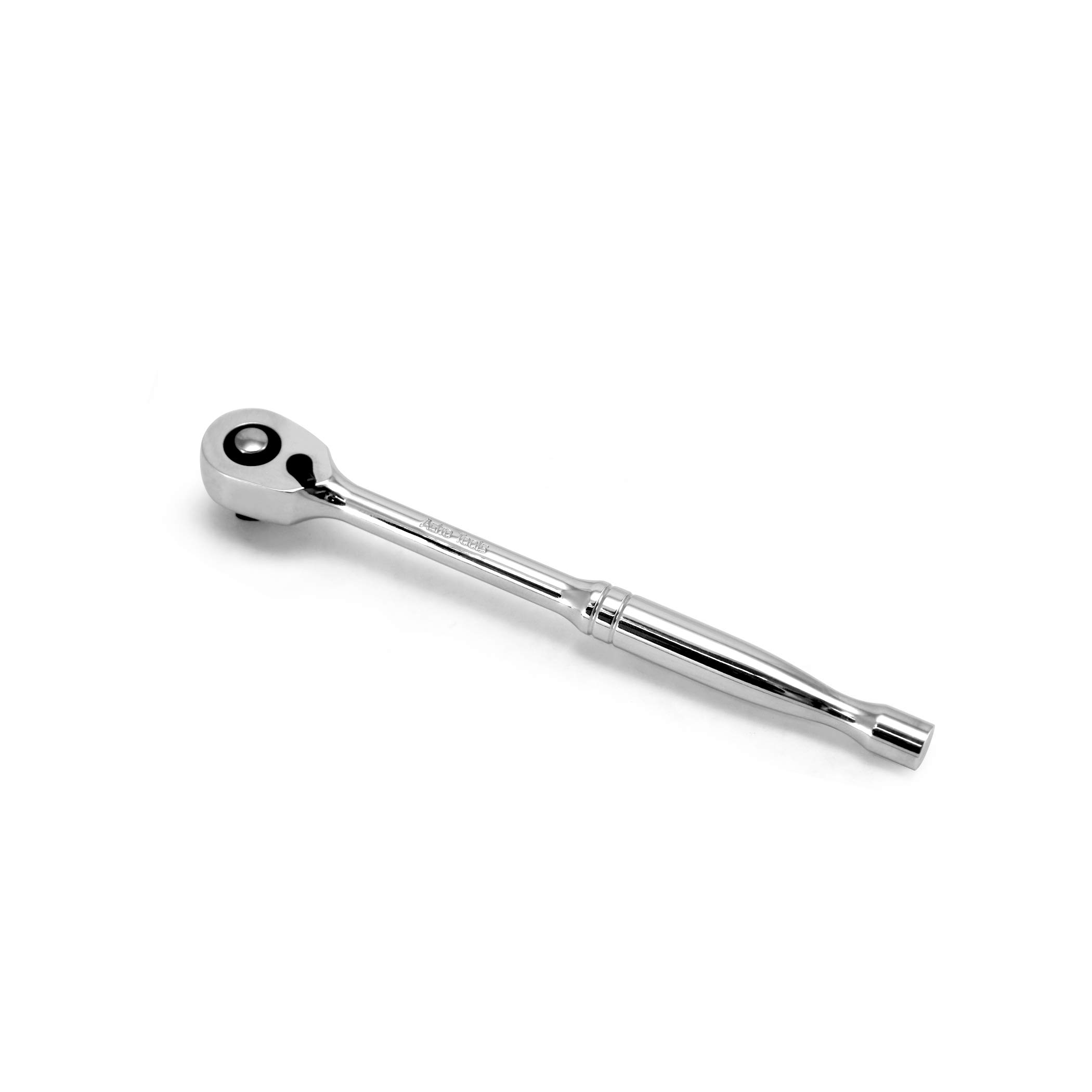
1. Astro Tools 93808 Nano Ratchet
Our pick — over 4.5★ from 950+ verified ratings; the strongest balance of quality and price.
The pocket-sized wrench that opens up tight engine bays without giving up 3/8 drive muscle.
This is the ratchet that solves the classic access problem: you have a 3/8 drive socket, but a full-size 3/8 ratchet head simply won’t fit where the bolt lives. Astro shrinks the drive down into a 1/4-inch ratchet body, so the 3/8 head is about half the size of the most popular 3/8 competition and roughly the same size as most 1/4 drive ratchets. At 8 inches long and 8 ounces, it reaches where bigger heads cannot, which is why it became famous in the Subaru community for spark plug changes.
The build is tougher than its tiny footprint suggests. It uses a solid teardrop handle with a full chrome polish finish, and a 72-tooth gear that needs only a small swing to catch. The quick-release socket retention lets you swap sockets one-handed. Despite the miniature size, it exceeds ASME torque standards for 3/8 drive tools, so you are not sacrificing strength for access.
The handle gets mixed feedback—some owners love the thin profile for tight gaps, while a few find it almost too thin for comfort on harder pulls. Well over 80 owners call out the quality, and it holds up as a daily-use tool in many workshops.
Why It Wins Access
- 3/8 head in a 1/4 body slips into spaces full-size ratchets cannot.
- Quick-release retention makes one-handed socket changes easy.
- Meets ASME torque standards despite the compact head.
Who Should Think Twice
- The thin handle feels slim for heavy, repeated torque.
- 8-inch length offers less leverage than longer bars.
Reach for it if: your engine bay or machinery has fasteners that ordinary ratchets simply cannot get to, and you want true 3/8 drive power in a compact package.
Look elsewhere if: your work is mostly wide open where a longer, thicker handle gives you more comfort and leverage for the same job.
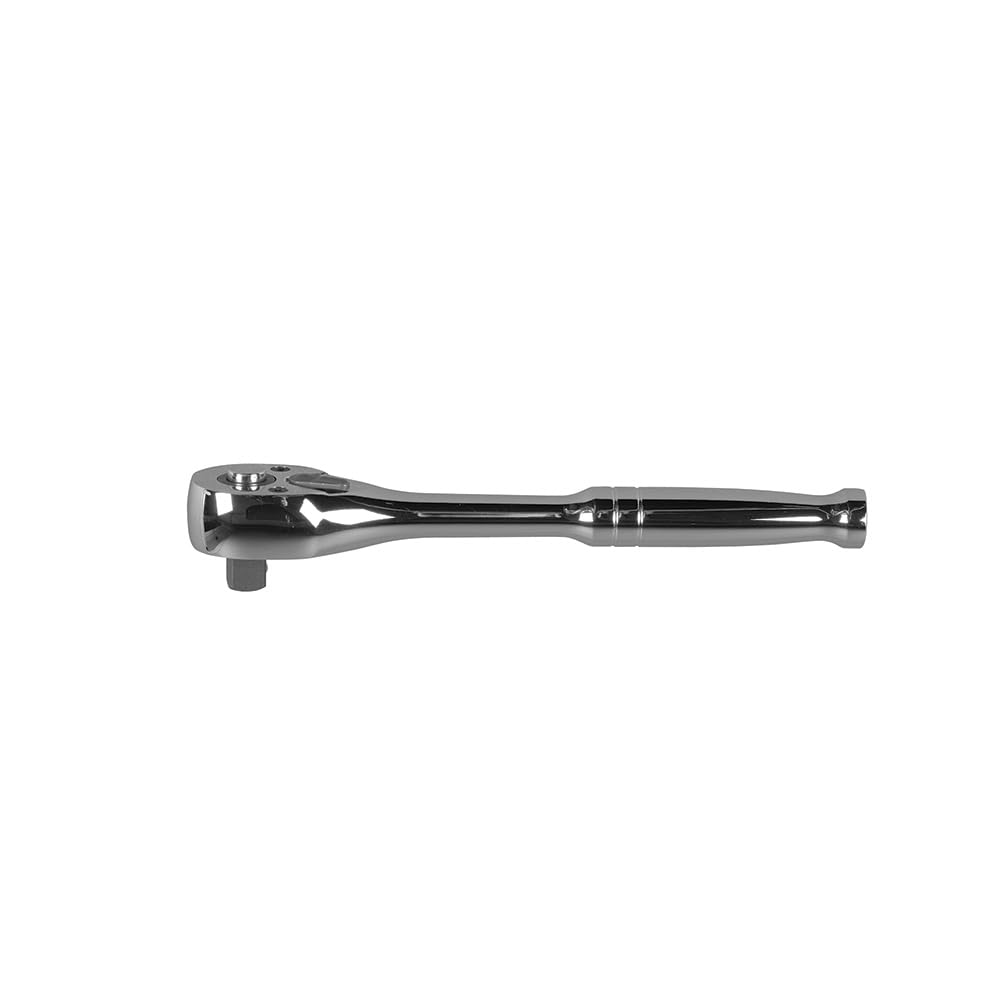
2. Klein Tools 65720 7-Inch Ratchet
A featherlight 7-inch worker that disappears into a backpack yet handles real shop abuse.
This is the ratchet you grab when you need a reliable, solid tool that rides along in a work bag without weighing you down. At just 2.4 ounces, it is the lightest pick here—about a third of the weight of the Astro Nano above—but it is forged from alloy steel with a corrosion-resistant chrome-plated finish. Owners repeatedly describe the finish and polish as exceptional, and the 7-inch length is praised as just right for portable carry.
The feel in hand is what wins people over. Klein backs it with a lifetime warranty on material defects and workmanship, which removes the worry about a tool that gets worked hard.
Where it sits in the lineup is worth noting: it is significantly shorter than the Steelman’s 13.5-inch extended handle, so it cannot match that kind of leverage, but it also slips into spaces a long-bar ratchet cannot. This is a straightforward, no-flex, no-gimmicks design that simply does the job well.
Everyday workhorse: The build quality and smooth action are the headline here—owners consistently praise how solid and comfortable it feels for a tool this light.
What it sacrifices: The modest 7-inch handle means less torque for breaking loose seriously seized bolts than a longer ratchet would offer.
3. Steelman 72-Tooth Extendable Flexible Head Ratchet
One tool that stretches from 9.5 to 13.5 inches and bends 180 degrees to beat awkward angles.
This is the multi-tool of the ratchet world: it combines a flex head with an extendable handle, so it tackles both access and leverage problems in one package. The handle telescopes from 9.5 inches out to 13.5 inches—about twice the length of the Klein above—giving you a big reach and torque boost the moment you pull it out. The 180-degree flex head swivels to approach fasteners at nearly any angle.
The 72-tooth mechanism needs only a 5-degree arc to catch, which keeps it useful in tighter spots than a coarser gear would allow. The heat-treated chrome-vanadium steel and TPR grip hold up under heavy use, and the quick-release button ejects sockets cleanly. Owners note it handles tough jobs effectively and that the telescoping design works flawlessly, making it a favorite for DIY mechanics doing front-end work.
The honest trade-off shows up in the flex head: it does not lock rigidly, so some owners wish they could pin the angle for maximum torque without the head pivoting. There is also a real durability note here—one owner pushed it hard on lower control arms and snapped the 3/8 head, though the warranty replacement arrived in about a week through email. The durability is the most-praised aspect overall, with over two dozen buyers highlighting it.
The Reach Advantage
- Extendable handle from 9.5 to 13.5 inches adds serious leverage.
- 180-degree flex head reaches fasteners at awkward angles.
- 5-degree arc swing for tight-quarter ratcheting.
The Flexibility Catch
- Flex head lacks a lock, so it can pivot under heavy load.
- One owner broke the head on stubborn bolts, though warranty service was easy.
4. CRAFTSMAN Flex Head Stubby Ratchet

The shortest bar in the lineup for cramming into spots long handles cannot enter.
Some bolts sit in pockets so tight that even an 8-inch ratchet is too long to swing. This Craftsman stubby measures just 5.7 inches, making it the most compact full-drive option here, and it pairs that short body with a 72-tooth flex head for angled access. It is the tool you reach for when working around brake calipers, brackets, and other confined spaces.
Two design details make it more usable than typical stubbies. The flex head swivels and stays put thanks to a toothed pivot, which owners describe as staying tight rather than flopping around. A large chrome quick-release button and a big direction switch lever make one-handed operation easy even in awkward positions. It is backed by a full lifetime warranty, which removes worry about a tool that gets leaned on.
The honest caveat is that the short handle limits torque, and some owners find the head bulky for the very tightest spots even with the stubby body. Over two dozen owners call out the quality, and it is routinely described as smooth and strong for its size.
Right-sized for crammed work: The toothed flex head stays rigidly in place at your chosen angle, and the 72-tooth gear needs only a small swing to catch.
Know the limit: A 5.7-inch bar gives you modest leverage, so this is for access, not for breaking loose severely seized hardware.
5. GEARWRENCH 90-Tooth Teardrop Ratchet

A fine-tooth specialist that cracked a frozen exhaust bolt where other ratchets simply would not fit.
When a bolt is seized and the space around it is barely wide enough for your fingers, the ratchet that saves you is the one with the finest teeth. This GEARWRENCH carries a 90-tooth gear that delivers just a 4-degree swing arc, so you can inch a fastener free with the smallest possible wrist movement. It is a tool whose reputation is built on exactly that scenario—breaking free stubborn fasteners in tight confines.
The head is a teardrop profile with a flush on/off switch, both designed to keep the tool slim where it matters. A precision-engineered ball detent locks sockets in place and keeps them from dropping off until you press the quick-release button. The handle stretches 8.39 inches, and at a touch over 8 inches of working length it gives more reach than the Craftsman stubby while staying agile. Owners describe it as strong yet not too heavy, with reasonable back drag.
Over three dozen owners highlight the quality, and the value-for-money reputation is nearly as strong. The recurring note is that it works perfectly in tight spaces—one owner removed a frozen driveshaft bolt between the shaft and exhaust where nothing else had worked.
Tight-Space Hero
- 90-tooth gear needs only a 4-degree swing arc to catch.
- Ball detent locks sockets securely until you release them.
- Teardrop low-profile head improves access in narrow gaps.
Minor Quirks
- Some buyers report mixed feelings on the trigger mechanism feel.
- Back drag is noticeable but reasonable for the tooth count.
6. TEKTON 8-Inch Flex Head Ratchet

Nine locked flex positions and a 90-tooth gear make this the most adjustable angle-fighter of the group.
If you need one ratchet to handle a wide range of angled fasteners, this TEKTON flex head is engineered for exactly that job. The head sweeps through 180 degrees and snaps into nine distinct detent positions, so you can set an angle and trust it to hold while you apply force. The 90-tooth gear backs it up with a 4-degree swing arc for tight spaces.
The head design is genuinely compact—TEKTON shrank it in height, width, and length rather than just thinning it like conventional low-profile designs. A single half-moon pawl keeps 9 teeth engaged with the gear at all times, which owners say prevents slipping or skipping under stress. At 8 inches and 12 ounces, it is heavier and more substantial than the Klein, which some prefer for the solid feel.
Over 80 owners praise the build quality, and the value-for-money reputation is strong. The flex head itself is the mixed note: some owners love the versatility and the nine positions, while others say it is a bit too easy to flex during heavy use and wish it locked firmly. It is consistently compared well against pricier tool-truck brands.
Angle Mastery
- Flex head locks into nine detent positions across 180 degrees.
- Ultra-compact head shrinks in every dimension for access.
- 9 teeth stay engaged with the gear to resist slipping.
The Flex Trade-off
- Head can flex during heavy pulls since it lacks a hard lock.
- Reversing lever is low profile, which some find hard to flip.
7. TEKTON 8-Inch Fixed Ratchet

The no-flex everyday workhorse with a buttery-smooth 90-tooth gear and a proof-torque rating.
Not every job needs a flex head; sometimes you want a simple, solid, fixed ratchet that feels great in the hand and reliably turns fasteners. This TEKTON delivers exactly that with a 90-tooth gear that needs only a 4-degree swing arc, putting fine-tooth performance in a straightforward package. Owners consistently describe the ratcheting as smooth and the chrome finish as top-notch.
The engineering here is about strength as much as feel. It meets (and most say far exceeds) the industry standard for Proof Torque, which is a single-cycle test that applies torque up to a specified value without failure or permanent deformation. The single half-moon pawl maintains 9 teeth engaged with the gear at all times to prevent slipping. At 10.72 ounces and 8 inches long, it feels heavy yet balanced in the hand.
The ergonomics are a leading praise point, with owners highlighting the comfortable finger-groove handle and the attractive chrome finish. One owner even swapped out their older Craftsman for this, citing the jump from 72 to 90 teeth as the reason for smoother operation in tight spaces. It is built for light-to-moderate use rather than relentless heavy torque, which owners note honestly.
Everyday smoothness: The 90-tooth gear and ergonomic grip make this the most pleasant fixed-head ratchet to use daily for general work.
Its honest limit: This is not built for maximum heavy torque—owners note it shines in normal use, not as a breaker bar substitute.
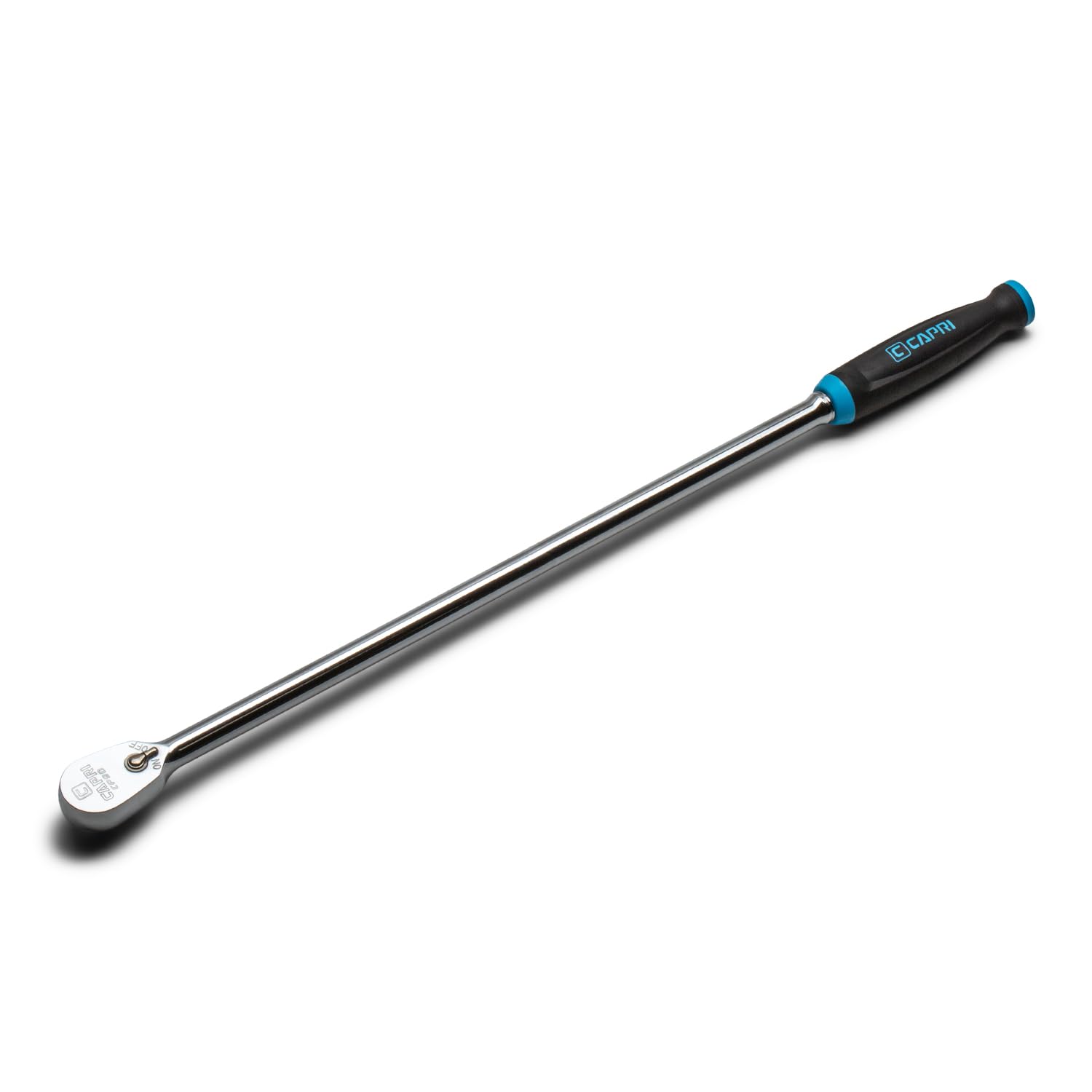
8. Capri Tools 20-Inch Extra Long Ratchet
A 20-inch lever with a 90-tooth head for torque-heavy jobs where reach is everything.
When you need to break loose a stubborn fastener and there is plenty of open space, the standout is a long handle. This Capri Tools ratchet stretches a full 20 inches—the longest bar in this entire lineup and more than twice the length of the Craftsman stubby—giving you exceptional leverage for removing and installing shocks, suspension parts, and other high-torque work. Owners in that exact line of work call it a solid performer that has not skipped a tooth.
The fine gear is a true single-pawl 90-tooth design that needs just a 4-degree swing arc, so you get leverage and fine control in one tool. An anti-dust design seals out debris and preserves the internal lubrication, which should help it keep its smooth feel over time. The soft ergonomic contour grip keeps the long bar comfortable to hold, and the MaxChrome plating resists corrosion.
Over two dozen owners praise the build quality, with handle length and leverage cited almost as often. The one honest durability note: a few owners mention the head breaking under heavy torque, so this is a tool to use as a ratchet, not as a substitute for a breaker bar on the most seized hardware.
The Leverage King
- 20-inch handle delivers the most reach and torque here.
- 90-tooth single-pawl gear needs only a 4-degree swing.
- Soft grip and anti-dust design improve comfort and longevity.
Reach Comes With Size
- Too bulky for tight engine-bay work; this is an open-space tool.
- A few customers note head failure under extreme torque loads.
9. Wera 8004 B Zyklop Metal Ratchet

A precision-engineered German ratchet with an ultra-slim head that feels like fine machinery in your palm.
This is the ratchet for people who notice the details. Wera built the 8004 B with an extremely slim head that owners compare to a Craftsman 1/4-inch head in size, yet it drives 3/8 sockets with authority. The 9.06-inch handle is longer than standard, and the return angle of just 5 degrees means you can ratchet in tight spaces without large hand movements.
The feel is where this tool earns its reputation. A satin-finish grip provides traction even with oily hands, and the mechanism is crisp and precise with no slop. The direction switch is a recessed lever that flips easily, and the socket lock is secure—though a few owners note it does not hold every brand of socket equally, with some universal joints slipping. It is heavier than its slim profile suggests, which owners describe as well-balanced rather than clumsy.
Nearly a hundred owners praise the engineering quality, with ergonomics a close second. It is consistently described as the best-feeling ratchet many have used, outperforming bigger names for sheer versatility and comfort. The honest caveats are that it is not user-serviceable and some report it fails earlier in extreme torque tests than brute-force competitors—so it rewards daily precision work more than max-effort breaking.
Machined Feel
- Ultra-slim head matches 1/4-inch tools for access.
- Satin grip stays secure even with oily hands.
- 5-degree return angle for tight-quarter ratcheting.
Precision Over Brute Force
- Quick release does not hold every socket brand securely.
- Not serviceable, and it gives way earlier in extreme torque tests.
Understanding the Specs
Tooth Count and Swing Arc
The tooth count tells you how much room you need to work the ratchet. A 72-tooth gear needs about a 5-degree arc to catch the next tooth, while a 90-tooth gear cuts that to 4 degrees. More teeth means finer movement, so you can turn a bolt with a small wrist wiggle in tight spaces where a coarse ratchet would not move at all.
Head Profile and Flex
The head is the part that grips the socket, and its size controls where the tool can reach. A low-profile head reduces thickness, but the best designs shrink the head in every dimension. A flex head adds a hinge for angled access, letting you approach a bolt from the side instead of straight on, which is essential for bracket and engine work.
FAQ
What does the tooth count on a 3/8 ratchet actually mean?
Is a flex head ratchet better than a fixed head?
What is the difference between a 72-tooth and a 90-tooth ratchet?
Will a 3/8 ratchet fit all my standard sockets?
How long does a good quality 3/8 ratchet last?
Why do some ratchets have a quick-release button?
Is a longer handle always better for a 3/8 ratchet?
What is the difference between a regular ratchet and a breaker bar?
Final Thoughts: The Verdict
For most people, the winner is the Astro Tools 93808 Nano because it solves the hardest problem a 3/8 ratchet faces—access—without giving up real drive power. If you want maximum leverage for wide-open torque work, the Capri Tools 20-Inch is the one to reach for. And for a dependable everyday companion that disappears into a work bag, the Klein Tools 65720 earns its place in any kit.
How We Picked
We do not accept paid placement. Every pick is matched to a real buyer and a real use-case; we do not hands-on test units.
Sources & Methodology
Specifications: manufacturer listings and product documentation. Review insights: verified customer reviews, as of August 2026. Pricing: not shown on this page (it changes often); check the current price via the retailer link.
As an Amazon Associate, Gadgets Feed earns from qualifying purchases. This does not affect which products we feature.