
Our readers keep the lights on and my morning glass full of iced black tea. As an Amazon Associate, I earn from qualifying purchases.
Specs are compiled from manufacturer listings and verified buyer reviews and can change over time — please confirm the key details on the product page before buying.
Ceramic auto tint blocks heat and glare without jamming phone, GPS, or toll transponder signals like metallic films do.. The catch: “ceramic” is used loosely on DIY rolls, and installation skill matters as much as the material.. This guide sorts through real heat-rejection numbers, VLT choices, and owner experience to help you pick the right roll for your car and DIY skill level..
I’m Min — the founder and writer behind Gadgets Feed. This guide is built by comparing the manufacturers’ published specifications and the patterns across verified customer reviews, so you get each pick’s real strengths and trade-offs instead of marketing spin.
We’ve weighed heat rejection, UV blocking, and installation ease to find the ceramic auto tint that delivers real cabin cooling without demanding professional installer skills.
Quick Picks
- VViViD Window Tint Film 3ft x 5ft — Budget Champion
- Kinsolar 70% VLT Windshield Tint — Windshield Specialist
- RockRose 20% Air Nano Ceramic Roll — Balanced Shade
- MEGICOLIM 80% Light Blue Film — Invisible Shield
- KASHIBANG 35% VLT Tint Kit — First-Timer Kit
- SW 80% VLT Nano Ceramic Roll — Wide-Roll Windshield
- DeserTint Precut Ceramic Kit — Full-Car Precut
- MotoShield Pro 25% VLT Roll — Heat Rejection King
- MotoShield Pro Precut Kit (2 Front Windows) — Custom Front Windows
How To Choose The Best Ceramic Auto Tint
Choosing the right roll means balancing three things: how dark you want it, how much heat you need to stop, and how much installation work you are willing to do. The spec sheet only tells part of the story — the real test is how the film shrinks around curved glass and whether the adhesive holds up over time.
Decoding the VLT (Visible Light Transmission)
The VLT percentage tells you how much visible light passes through. A lower number means a darker film — 5% is limo-style privacy while 70% looks almost clear. Keep in mind that most states regulate how dark your front side windows can be, so a very low VLT could get you a ticket or a failed inspection.
Heat Rejection vs. UV Blocking
These are two different jobs. UV rejection (often around 99%) protects your skin and stops the dashboard from fading. Infrared rejection (IRR) is what actually keeps the cabin cool by blocking the sun’s heat. A film can be excellent at UV blocking but average at heat rejection, so check both numbers before you buy.
The Signal Factor
Ceramic films are often called “signal enabling” because they contain no metal particles. That means they won’t interfere with your phone, GPS, Bluetooth, or toll passes — a real advantage over older metallic tints that can weaken those signals inside the car.
Quick Comparison
| Model | Best For | VLT (Shade) | UV Rejection | Coverage | Amazon |
|---|---|---|---|---|---|
| VViViD 3ft x 5ft Roll | DIY beginners on a budget | 20% | 99% | 15 sq ft | Amazon |
| Kinsolar 70% Windshield | Windshield heat & glare | 70% | 99.9% | 16.3 sq ft | Amazon |
| RockRose 20% Roll | Balanced privacy & heat | 20% | 99% | 20 in x 10 ft | Amazon |
| MEGICOLIM 80% Light Blue | Near-invisible heat protection | 80% | 99% | 30 in x 10 ft | Amazon |
| KASHIBANG 35% Kit | First-timers wanting tools included | 35% | 99% | 24 in x 25 ft | Amazon |
| SW 80% Windshield | Large windshield coverage | 80% | 99% | 40 in x 10 ft | Amazon |
| DeserTint Precut Kit | Precision-cut convenience | 5% – 50% | 99% | Full Car Kit | Amazon |
| MotoShield Pro 25% Roll | High heat rejection | 25% | 99.9% | 20 in x 10 ft | Amazon |
| MotoShield Pro Precut Kit | Custom fit for front windows | 5% – 75% | 99% | 2 Front Windows | Amazon |
In-Depth Reviews
1. VViViD Window Tint Film 3ft x 5ft

The entry-level 20% roll that skips the signal-jamming of metallic films.
This is the budget pick for a night-time privacy shade. At 20% VLT you get a dark, factory-style look on side windows, and the ceramic construction means your phone and GPS keep working — ceramic films carry no metal that would interfere with electronics. The 36 x 60-inch sheet covers a useful 15 sq ft, enough for a couple of side windows or a small project.
The honest catch is the install. Buyers report real difficulty getting air bubbles out, and the phrase “too hard” comes up even from people who have wrapped cars in vinyl before. It’s a peel-and-stick film that demands patience and a very clean, soapy surface.
Where It Excels
- Scratch-resistant coating protects the film surface from wear
- Blocks 99% of UV rays to slow interior fading
- Self-adhesive design for peel-and-stick application
The Trade-Offs
- Air bubbles are notoriously hard to eliminate during install
- Limited 15 sq ft coverage means buying multiple rolls for a full car
Grab it for: a first tinting attempt on a single window where you can practice without a big investment.
Think twice if: you want showroom-smooth results — this one rewards experience, and bubbles may be part of your learning curve.
2. Kinsolar 70% VLT Windshield Tint

A nearly-clear windshield film that kills 99.9% of UV while slashing glare.
It’s built to strengthen the glass too, with anti-shatter properties that help keep glass from spraying into the cabin in an accident.
The 20 x 118-inch sheet gives you 16.3 sq ft to work with, sized for a windshield. Owners describe the finish as offering a “factory look” while cutting enough glare to read a phone in daylight. One owner’s summary: “Went on easy with heat fun and give a factory look while reducing heat and knocking enough light to read my phone. Quality product.”
What wins people over: the combination of near-invisible shading and the strongest UV block in this lineup — 99.9% — makes it a smart pick for daily commuters who want protection without changing the car’s look.
A fair warning: the package doesn’t include instructions, so first-timers should watch a tutorial before starting.
3. RockRose 20% Air Nano Ceramic Roll
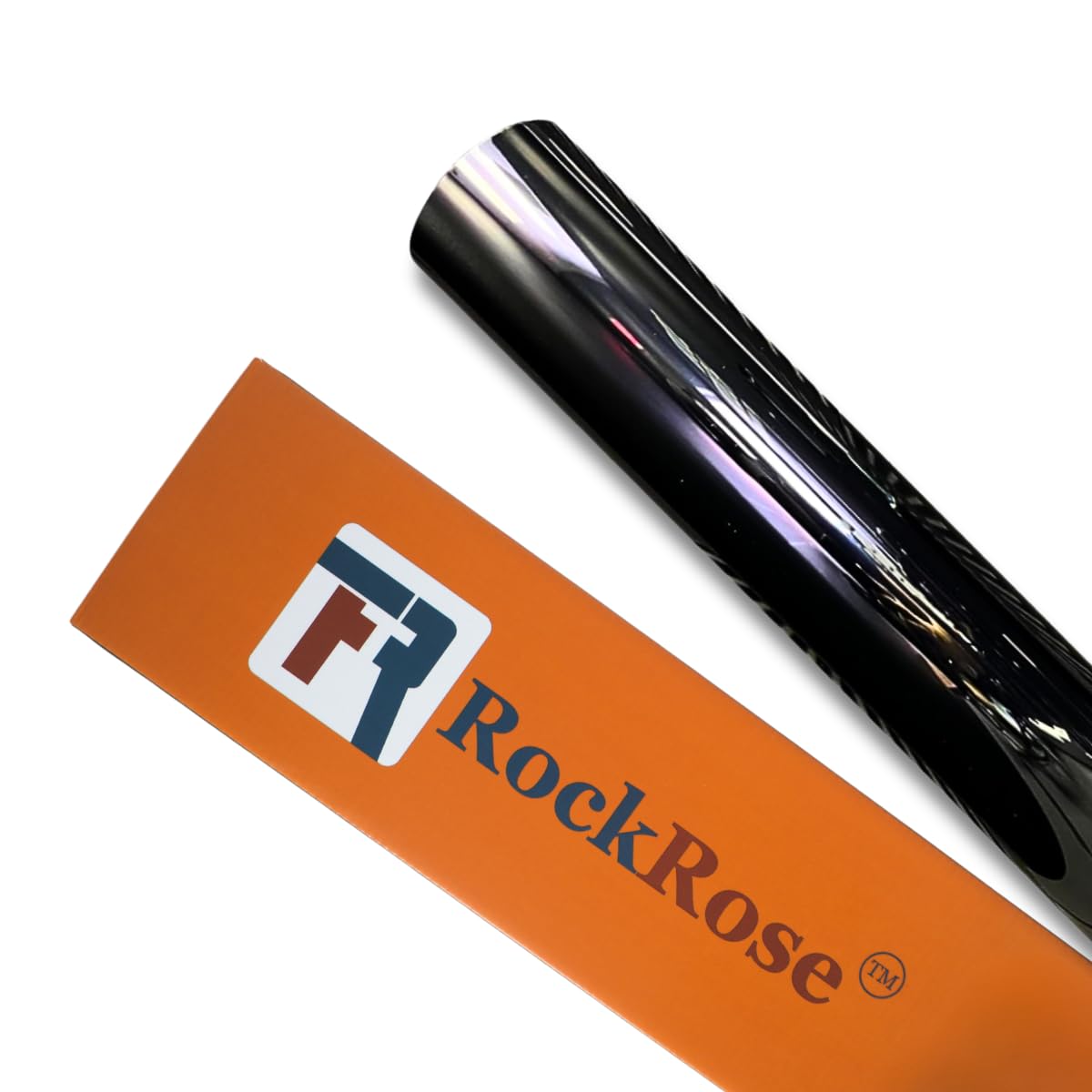
A 2-ply charcoal film that proves its heat-cutting credentials with thermal camera data.
This 20 x 120-inch roll brings serious heat science to the DIY market. The numbers are strong — 99% UV rejection and 93% to 95% infrared rejection — and Owners verified a 10°F drop with a thermal camera: 124°F in direct sun versus 114°F under the tint at 92°F ambient..
The 2-ply construction with a scratch-resistant coating means it’s built to survive years without fading or peeling. It shrinks well for a gloved-hand tinting style, and the charcoal color reads as sleek and black rather than blue. It’s also plotter-friendly if you want to cut custom shapes for home windows.
The standout stat: 93% to 95% infrared rejection is among the highest here, and the owner-measured heat drop backs up the claim.
Reality check: the shade can look more black than the stock images suggest, and some owners wanted a bluer hue — check your expectations on color before committing.
4. MEGICOLIM 80% Light Blue Film

The 80% VLT film that looks like no tint is there at all.
This light blue roll is for drivers who want maximum heat and UV protection with zero visual change — at 80% VLT, visibility is great at night and during the day, which is why owners say it looks like the film isn’t there. It blocks 99% of UV rays and uses a 2-ply design with a scratch-resistant coating, so the maker says it won’t fade, bubble, or peel even after years.
The 30 x 10-foot roll gives you 25 feet of material, plenty for a windshield and rear window. The nano-ceramic principle here absorbs heat first and then dissipates it as the vehicle moves — so the film itself may feel warm to the touch, which is actually the technology working as designed.
Why it stands out: near-invisible UV and heat protection, which is a rare combo for anyone who wants stock looks with cabin comfort.
Who should be careful: large windows are tough to lay without help — the manufacturer itself suggests two people working together, so round up a second set of hands.
5. KASHIBANG 35% VLT Tint Kit

A generous 25-foot roll with free tools for your first DIY tint job.
This kit is built around making your first install a success — it ships with the installation tools you’d otherwise have to buy separately, and the roll is a generous 24 x 300 inches (25 feet) that covers several windows. At 35% VLT you get a moderate shade that balances privacy with decent nighttime visibility, and the one-way perspective blurs the outside view while keeping the inside clear.
The no-metal construction keeps you connected to Bluetooth, GPS, and Wi-Fi inside the car — no dropped signals from this film. Owners who tried it describe it as beginner-friendly and far better than store-brand film, shrinking well and blocking heat effectively.
What You Get
- Clear HD view from inside with privacy from outside
- Scratch-resistant coating on the tint surface
- 60-day guarantee with 12-hour support response
Watch Out For
- A few owners found the film creases like foil instead of shrinking smoothly
- Some doubt whether it’s true ceramic despite the label
Best for: someone who wants a single kit with everything needed to learn the craft without shopping for tools separately.
Look elsewhere if: you need a professional-grade film — quality control on this budget roll is a bit of a coin flip.
6. SW 80% VLT Nano Ceramic Roll

The widest roll here — 40 inches — built for full windshield coverage.
Most windshield rolls come in at 20 or 30 inches wide, but this one gives you a full 40 inches, which means fewer seams and less trimming on a wide front glass. At 80% VLT it’s nearly transparent, so it blends in on slightly blue stock glass, and the non-metallized construction keeps radio and cell signals undisrupted.
Southern-climate owners mention noticeably cooler cabins on long commutes and when parked.. It uses the same 2-ply, scratch-resistant design as the MEGICOLIM above, with a 99% UV block.
The real appeal: the extra width makes this the practical choice for a full windshield without piecing together narrower strips.
Know before you buy: this film demands real technique on curves — the reviews split between “huge heat reduction” and “painful to install,” so budget time for a careful first attempt.
7. DeserTint Precut Ceramic Kit

Skip the cutting — a precut kit with film shaped for your exact windows.
This is the package for people who want a professional look without hand-trimming every window. The kit comes precut for all side windows, the rear window, and a sun strip, so the hard part of matching curves is already done. It’s made with premium polyester and nano-ceramic particles to block up to 99% of infrared and UV rays, and The maker claims the interior stays up to 60% cooler on hot days..
What wins people over is the quality and appearance — owners call the film excellent and say it looks great once applied. Choose your VLT level from 5% to 50% to dial in the right balance of privacy and visibility for your car.
Why Owners Like It
- Precut design for side windows, rear, and sun strip
- Blocks 99% of harmful infrared and UV rays
- Scratch-resistant and fade-resistant polyester build
The Fine Print
- “Precut” still needs trimming on some cars — it’s not always an exact fit
- Some owners reported scratches forming even with proper tinting tools
Reach for it if: you’ve done tinting before and want a head start with precut shapes instead of cutting from a big roll.
Hold off if: you’re a complete beginner — the film can scratch if your technique isn’t smooth.
8. MotoShield Pro 25% VLT Roll
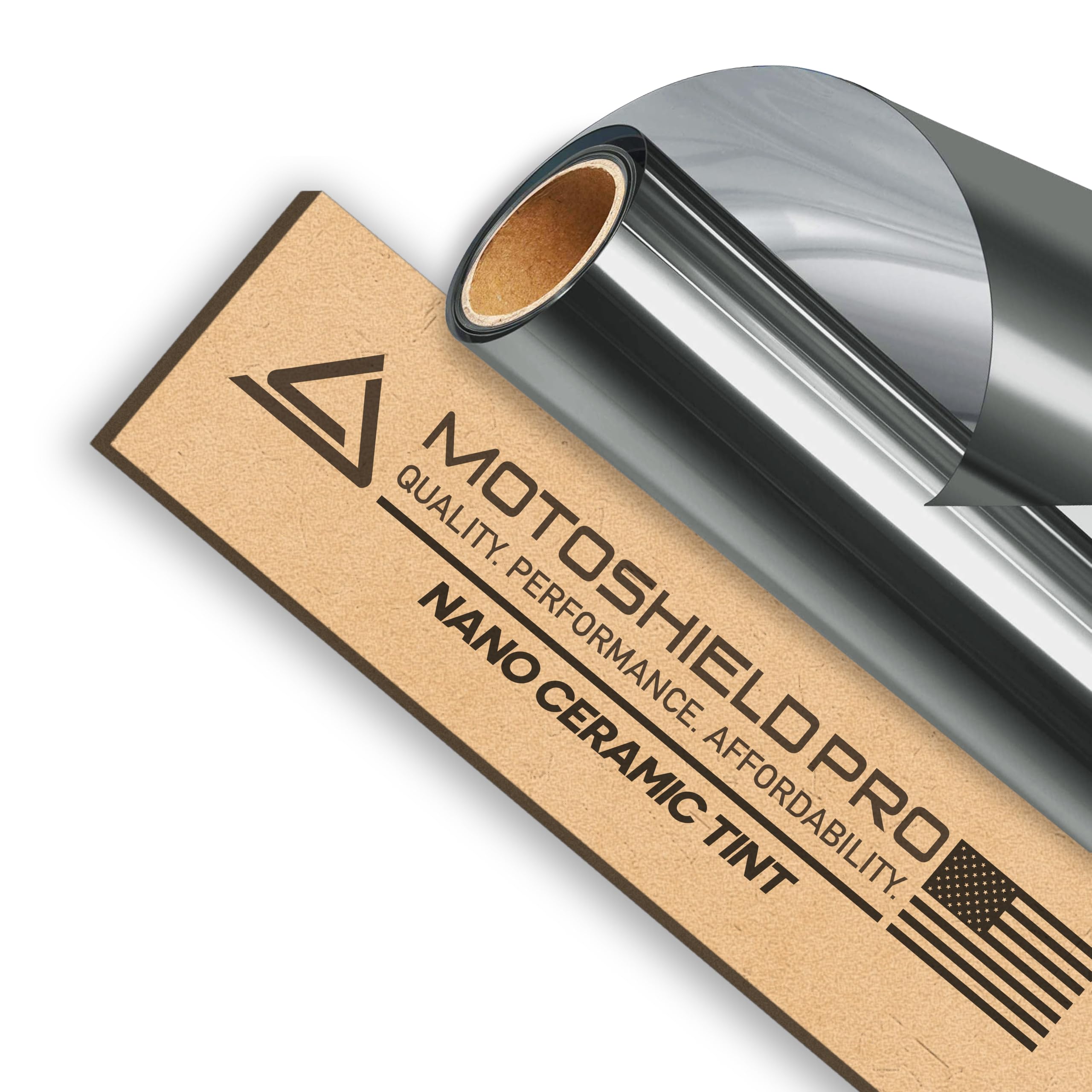
The 2-mil film engineered to reject up to 99% of infrared heat.
This is the heavy hitter for cabin cooling. The headline number is up to 99% infrared heat rejection with a maximum of 70% total solar energy rejected — numbers that put it at the top of this list for raw heat performance. The maker claims it cools interiors by up to 25°F in testing., and owners in Arizona confirm it keeps electronics from overheating where stock tint couldn’t.
At only 2 mils thick, it’s relatively easy to handle, and it ships with a detailed manual and instruction video. It also carries a strong UV block at 99.9%, protecting both your skin and your seats and dash from fading. The 20 x 10-foot roll covers 16.6 sq ft.
The thing everyone raves about: heat resistance — in desert heat, this film keeps the cabin and your gadgets cool where cheaper films give up.
The honest downside: the 2-mil thinness means it can crease from the factory, and heat-shrinking requires patience to avoid wrinkles.
9. MotoShield Pro Precut Kit (2 Front Windows)

Hand-assembled precut film that matches your exact front windows.
This kit starts with a simple idea: you provide your vehicle specs, and it arrives with film cut to fit your two front windows with no trimming required. The hand-assembled-in-USA construction blocks 99% of UV rays and up to 99% of infrared heat, and it’s backed by a lifetime warranty against defects in manufacturing, adhesion, and solar reflective properties.
Owners consistently report effective heat blocking that keeps sun and heat off kids’ faces in the back seat., and the precut fit is easy on side windows. There’s also a practice piece included so you can test your technique before touching the real film.
The Value Pitch
- Precision-cut to your vehicle — no trimming needed
- Blocks up to 99% of infrared heat rays
- Lifetime warranty against manufacturing defects
What To Expect
- Some pre-cut sizes don’t match perfectly — measure before you apply
- Rear curve windows are very hard to do yourself and may need a pro
Perfect for: front-window-only protection with a factory-custom fit and a warranty that covers your investment.
Not for: tackling the rear glass solo — the curve, antennae, and dot matrix make it a shop job.
Understanding the Specs
VLT (Visible Light Transmission)
VLT is the percentage of visible light that passes through the film. Lower numbers mean darker tint: 5% is limo-dark, 20% is factory-style, 35% is moderate, and 70-80% looks almost clear. Darker isn’t always better — check your state’s legal limit for front side windows before choosing.
IRR (Infrared Rejection)
IRR measures how much of the sun’s heat-carrying infrared radiation the film blocks. A higher percentage means a cooler cabin. Look for 85% or higher for real heat relief; the top performers here reach 93% to 99%.
FAQ
What does VLT mean on a ceramic tint roll?
Will ceramic tint interfere with my phone GPS or radio?
What is the difference between UV rejection and heat rejection?
How dark should my window tint be?
Is precut tint worth it over a roll?
Can I install ceramic tint myself or do I need a professional?
How long does ceramic window tint last?
Why does my new tint film have bubbles that won’t come out?
What is the difference between 99% and 99.9% UV rejection?
Final Thoughts: The Verdict
For most buyers, the best ceramic auto tint pick is the MotoShield Pro 25% roll because it pairs the strongest heat rejection numbers with a manageably thin film. If you want the cleanest look without any trimming, grab the DeserTint precut kit. And for near-invisible windshield protection, the MEGICOLIM 80% roll is the one to reach for.
How We Picked
We do not accept paid placement. Every pick is matched to a real buyer and a real use-case; we do not hands-on test units.
Sources & Methodology
Specifications: manufacturer listings and product documentation. Review insights: verified customer reviews, as of August 2026. Pricing: not shown on this page (it changes often); check the current price via the retailer link.
As an Amazon Associate, Gadgets Feed earns from qualifying purchases. This does not affect which products we feature.