
A hollow spot or a persistent gap in an engineered hardwood floor isn’t just an eyesore—it’s a daily reminder that the subfloor bond has failed. The wrong adhesive leaves you with popped planks, creaking joints, and a floor that feels unstable underfoot. Selecting a formulation built for the multi-layer construction of engineered hardwood is the only way to restore that solid, uniform feel.
I’m Min — the co-founder and writer behind Gadgets Feed. I’ve spent years analyzing technical specifications and market data for flooring adhesives, focusing on moisture resistance, VOC levels, and bond strength across various subfloor types.
This guide breaks down the top-performing formulas to help you fix gaps, silence hollow pops, and ensure a lasting repair. Finding the best adhesive for engineered hardwood flooring means matching the right chemistry to your specific repair scenario.
How To Choose The Best Adhesive For Engineered Hardwood Flooring
Engineered hardwood is dimensionally more stable than solid wood, but its multi-ply core requires an adhesive that can handle lateral movement without breaking the bond. A poor match leads to gapping, cupping, or a brittle hold that cracks under foot traffic.
VOC Levels and Indoor Air Quality
Traditional solvent-based adhesives emit volatile organic compounds that linger for days. A low-VOC or zero-VOC water-based formula is safer for occupied spaces and meets LEED requirements. Always check the grams per liter rating—under 50 g/L is considered low, under 5 g/L is essentially zero.
Open Time and Working Window
Open time refers to how long the adhesive stays workable after application. Fast-curing adhesives (under 20 minutes) suit experienced installers, while longer open times (over an hour) give DIYers room to reposition planks. A product that skins over too quickly can cause weak spots at the edges of a plank.
Bond Type: Permanent vs. Pressure-Sensitive
Permanent adhesives lock the floor down with no chance of removal without damaging the plank. Pressure-sensitive adhesives allow the floor to be pulled up later, making them ideal for rental properties or temporary installations. For permanent repairs like fixing hollow spots, a strong permanent bond is usually the right call.
Quick Comparison
On smaller screens, swipe sideways to see the full table.
| Model | Category | Best For | Key Spec | Amazon |
|---|---|---|---|---|
| Sika DriTac RS-2 | Injection Kit | Filling hollow spots & gaps | 1 hour full cure | Amazon |
| ROBERTS 7350 | Acrylic Latex | General plank installation | Microban protection | Amazon |
| ROMAN PRO-690 | Pressure-Sensitive | Releasable or permanent install | Zero g/L VOCs | Amazon |
| Weldbond 3L | PVA Glue | Bonding to non-porous surfaces | 20-minute set time | Amazon |
| Soudal Fix All High Tack | MS Polymer | Small gap filling & edge repair | High initial tack | Amazon |
| DAP Weldwood Landau | Solvent Contact | Bonding backed planks to concrete | 24-hour full cure | Amazon |
| Alpha Systems 8011 | Water-Based Acrylic | Heavy-duty subfloor bonding | Flexible bond | Amazon |
In‑Depth Reviews
1. Sika DriTac RS-2 Professional Wood Floor Repair Adhesive
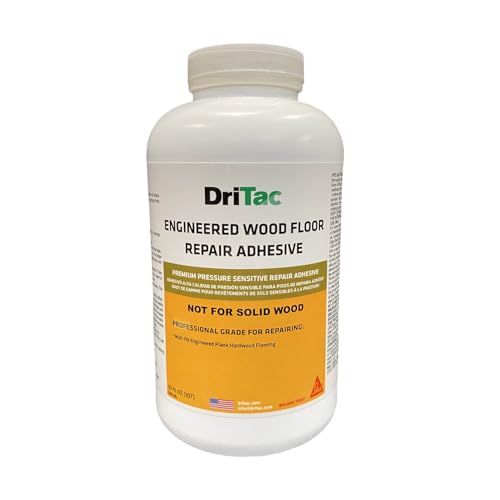
Engineered hardwood floors develop hollow spots and popping sounds when the bond between the plank and subfloor fails. The Sika DriTac RS-2 is specifically formulated for this scenario—it comes thin enough to inject through a syringe into drilled holes, then thickens and cures within an hour to lock the plank back down. The formula is free of VOCs, so you won’t be breathing chemical fumes while working in a living space.
The real-world application process requires patience: users report floating the bottle in warm water for 30 minutes to reduce viscosity, then drawing the material slowly with a large syringe to avoid air pockets. A single quart fills roughly 12 to 14 injection holes, so you may need two bottles for larger hollow areas. The kit includes drill bits and dowels for a flush finish.
For a targeted repair rather than a full-room installation, this is the most precise tool. The bond holds weight within an hour, and a 24-hour cure delivers maximum strength. The drawback is the short shelf life after opening—use the entire bottle within two weeks or the material begins to thicken and clog the syringe.
Why it’s great
- Targeted injection fixes hollow spots without removing planks
- Zero VOCs for safe indoor use
- 1-hour cure time allows quick return to service
Good to know
- Short shelf life after opening—use within 2 weeks
- Requires warm water bath to thin before use
2. ROBERTS Universal Resilient Flooring & Vinyl-Backed Carpet Tile Adhesive

ROBERTS 7350 is an acrylic latex, solvent-free adhesive that delivers high initial strength without the harsh chemical smell. It’s a pressure-sensitive formula, meaning it stays tacky long enough to reposition planks before the final bond sets. The 1-gallon pail covers roughly 40 to 60 square feet depending on trowel notch size, making it a solid choice for medium-sized rooms.
A standout feature is the Microban additive embedded in the adhesive, which fights stain-causing bacteria and helps prevent product degradation over time. This is a meaningful plus for kitchens or bathrooms where moisture and spills are common. The adhesive works with concrete, plywood, and existing well-bonded vinyl floors, but not with self-stick tile or radiant-heated subfloors exceeding 85°F.
Users note the long open time allows for easy application, but the tradeoff is a slower cure—the adhesive can take up to six hours to dry clear in low spots. Cleanup requires soap and water while wet, and mineral spirits if the glue has already dried. For DIYers who value working time over speed, this is a forgiving and effective formula.
Why it’s great
- Microban protection resists bacterial growth
- Long open time allows plank repositioning
- Solvent-free with low odor
Good to know
- Slow cure—can take 6+ hours to fully set
- Not suitable for radiant-heated subfloors above 85°F
3. ROMAN PRO-690 Pressure Sensitive Flooring Adhesive
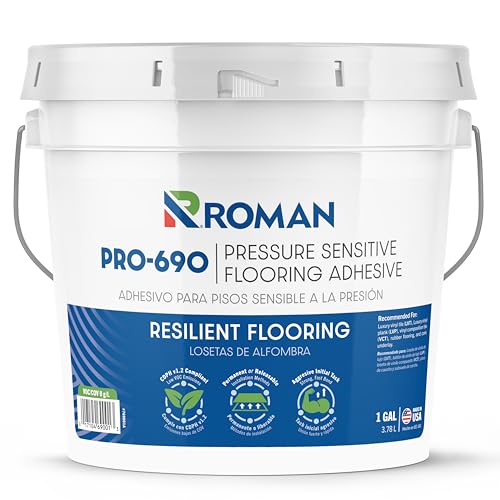
ROMAN PRO-690 is a water-based resin adhesive with a zero g/L VOC rating, making it one of the cleanest options for interior use. Its pressure-sensitive formulation allows two installation methods: apply wet for a permanent bond, or let the adhesive dry tacky before placing planks for a releasable floor that can be pulled up later without damaging the material.
The adhesive works with LVT, LVP, VCT, rubber sports flooring, and cork underlayment. It also meets CDPH v1.2 requirements for low-emitting materials, which is critical for LEED-certified projects or homes with sensitive occupants. The 8-hour full cure time is slightly longer than some competitors, but the high initial tack allows light foot traffic after the bond sets.
Application requires a 1/16-inch trowel, and users report that a 15- to 20-minute tack time gives enough window to adjust planks before the bond locks in. The formula dries clear, so any squeeze-out is nearly invisible on lighter floor finishes. This is a top choice for homeowners who want a professional-grade adhesive without the solvent fumes.
Why it’s great
- Zero VOCs and CDPH compliant for indoor safety
- Dual-mode installation: permanent or releasable
- High tack within minutes for fast placement
Good to know
- 8-hour full cure requires patience
- Not designed for engineered wood subfloors with fabric backing
4. Weldbond Glue 3L Polyvinyl Acetate Adhesive
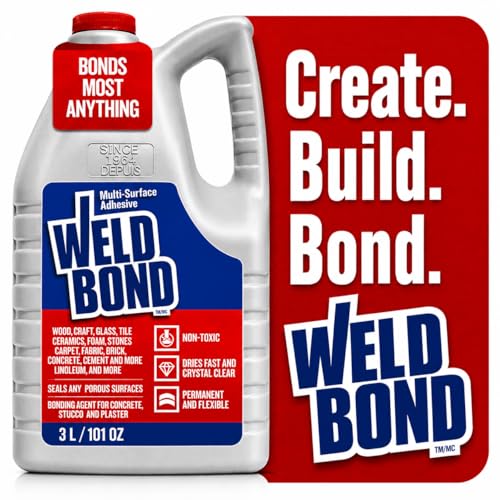
Weldbond is a polyvinyl acetate (PVA) glue that offers a surprising amount of versatility for flooring repairs. It bonds wood, ceramic, stone, glass, and concrete, making it a practical pick if you need to glue trim pieces, fill small gaps at plank edges, or attach threshold transitions. The formula dries crystal clear and remains slightly flexible after cure, which helps accommodate the natural expansion and contraction of engineered wood.
The 3-liter bottle provides generous coverage for multiple small projects. Weldbond sets in about 20 minutes and doesn’t require clamping, though you should keep planks weighted down temporarily for the strongest bond. The glue is non-toxic, odorless, and non-flammable, so it’s safe to use in occupied rooms without ventilation gear.
While Weldbond works well for surface bonding, it is not designed for injection into drilled holes. Its thicker consistency and faster skin-over time make it less suitable for filling hollow spots under the floor. For trim, molding, and small edge repairs, however, it delivers excellent strength at a low cost per ounce.
Why it’s great
- Bonds multiple materials including wood, tile, and stone
- Non-toxic and odorless for safe indoor use
- Dries clear and stays flexible after cure
Good to know
- Not suitable for injection into hollow spots
- Thicker consistency limits deep penetration
5. Soudal Fix All High Tack 420g
Soudal Fix All High Tack is a hybrid MS polymer adhesive that delivers exceptionally high initial grip, meaning you can bond a loose plank edge or threshold without having to clamp or weigh it down. The formula works on wood, metal, concrete, ceramic, and plastic, and it remains slightly elastic after curing to absorb minor movement without cracking.
At 420 grams per cartridge, this is a smaller-volume option best suited for spot repairs, edge gluing, or fixing a single popped joint. The consistency is thick and non-drip, making vertical applications clean and controllable. It’s rated for all-weather use, so it can handle the temperature fluctuations common in basements or ground-level installations.
Some users have reported that the cartridge base can split under pressure from certain caulking guns, which can create a mess and waste product. A quality dual-plate gun with smooth compression reduces this risk. For targeted fixes where immediate holding power is the priority, this is a reliable solution, though the small cartridge size means it’s not economical for whole-room installations.
Why it’s great
- Instant high tack eliminates need for clamping
- Works on multiple surfaces including wood and concrete
- Remains flexible after cure for normal wood movement
Good to know
- Cartridge can split under cheap caulking guns
- Small volume limits use to spot repairs
6. DAP Weldwood Landau Top & Trim Contact Adhesive
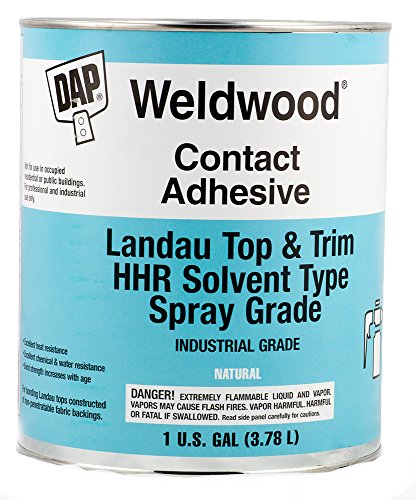
DAP Weldwood Landau is a solvent-type contact adhesive designed for high-heat and exterior applications, making it a niche but powerful option for engineered hardwood installed over concrete slabs or in sun-drenched rooms. The bond is permanent, heat-resistant, and water-resistant once fully cured at 24 hours.
This adhesive is applied to both the subfloor and the plank backing, then allowed to dry before the surfaces are brought together—the instant bond requires precise alignment because repositioning is nearly impossible. The solvent base produces strong fumes, so heavy ventilation and a respirator are mandatory. A siphoning spray gun at 45 PSI is the most effective application method for even coverage.
Weldwood Landau is overkill for standard interior engineered wood installations, but it’s the right choice for high-moisture basements, garage workshops, or any space where temperature swings and humidity threaten bond integrity. The gallon can covers roughly 30 to 40 square feet when sprayed, and the cost per square foot is higher than water-based alternatives.
Why it’s great
- Permanent bond with high heat and water resistance
- Ideal for concrete subfloors in basements
- Instant bond allows immediate foot traffic
Good to know
- Strong fumes require heavy ventilation and respirator
- No repositioning allowed after contact
7. Alpha Systems 8011 Acrylic Water Based Bonding Adhesive

Alpha Systems 8011 is a water-based acrylic adhesive designed for bonding EPDM, TPO, and PVC roof membranes to wood, plywood, and concrete substrates. While its primary application is roofing, its flexible bond and zero odor make it a capable alternative for engineered hardwood floors that need to withstand expansion and contraction without cracking the glue line.
The adhesive has a medium drying time, which means it takes longer to skin over than fast-cure urethanes but provides a wider working window. It’s best applied to one surface only—coating both the subfloor and plank backing can trap moisture and extend cure time to several days. The formula is very low VOC and odorless, so it’s comfortable to use in enclosed spaces.
Users report strong adhesion in high-wind scenarios when used on RV roofs, which translates well to a floor that sees daily traffic and occasional impact. The 1-gallon can provides coverage for roughly 30 to 50 square feet depending on application thickness. For homeowners who prioritize flexibility and safety over raw speed, this is a solid mid-range choice.
Why it’s great
- Flexible bond accommodates wood expansion
- Odorless and very low VOC for safe indoor use
- Strong adhesion on multiple substrate types
Good to know
- Medium drying time requires patience
- Not designed for injection repairs
FAQ
Can I use regular wood glue for engineered hardwood floor repairs?
How do I inject adhesive into a hollow spot without damaging the plank?
Is pressure-sensitive adhesive strong enough for permanent hardwood installation?
Final Thoughts: The Verdict
For most users, the best adhesive for engineered hardwood flooring winner is the Sika DriTac RS-2 because it’s purpose-built for injecting into hollow spots and gaps, with a 1-hour cure that gets your floor back in service fast. If you need a versatile, low-odor adhesive for a full-room installation, grab the ROMAN PRO-690. And for small repairs where instant tack matters, nothing beats the Soudal Fix All High Tack.