
Our readers keep the lights on and my morning glass full of iced black tea. As an Amazon Associate, I earn from qualifying purchases.
Specs are compiled from manufacturer listings and verified buyer reviews and can change over time — please confirm the key details on the product page before buying.
Buying a 4K camera that doesn’t cost a fortune means deciding what you’ll actually film — vlogs, wildlife, streams, or family trips — because each pick here masters a different job. This guide sorts 11 of the most interesting value-focused 4K cameras, using only the manufacturers’ published specs and what real buyers report, so you can match the tool to the task without overspending.
I’m Min — the founder and writer behind Gadgets Feed. This guide is built by comparing the manufacturers’ published specifications and the patterns across verified customer reviews, so you get each pick’s real strengths and trade-offs instead of marketing spin.
All the picks here capture true 4K, though a few stretch the definition of “affordable” — the goal is finding the right fit for your budget and shooting style. This is your practical look at the affordable 4k camera landscape, from pocket gimbals to full-size DSLRs.
Our Picks at a Glance


How To Choose The Best Affordable 4K Camera
The first thing to check is whether a camera records “true” 4K or just stretches a lower-resolution image to fill a 4K frame. True 4K uses the full sensor to record around 3840 x 2160 pixels, while upscaled video looks softer and less detailed when you zoom in or edit. Every camera on this list records true 4K, so you can focus on the other trade-offs.
Sensor Size vs. Portability
Your choice of sensor size decides how your footage looks in low light and how much gear you carry. Bigger sensors (APS-C and Micro Four Thirds) capture more light, so you get cleaner video in dim rooms and that blurred-background look. Smaller sensors, like the 1-inch type in the DJI Osmo Pocket 3, trade some low-light ability for a body that slips into a pocket. A 24.2MP APS-C sensor (a 24.2-megapixel sensor, meaning it captures 24.2 million pixels per image) is the balance for sharp 4K video and great stills, but it lives inside a larger, heavier body. Your choice here depends on if you want the best image quality or the lightest kit.
Stabilization Matters More Than You Think
Shaky footage ruins more videos than any other issue. In-body image stabilization (IBIS) steadies the sensor itself, which works with any lens you mount, while optical stabilization lives inside the lens. The Panasonic G85 offers 5-axis in-body stabilization for both photos and 4K video, which makes handheld shooting look surprisingly smooth. If you plan to walk and film, prioritize a camera with strong stabilization or a gimbal like the DJI.
Quick Comparison
| Model | Best For | Sensor | Video Spec | Stabilization | Amazon |
|---|---|---|---|---|---|
| Nikon D7500★ Best Overall | Action & wildlife | 20.9MP APS-C | 4K/30fps | Lens-based VR | Amazon |
| DJI Osmo Pocket 3Pocket Pro | Vlogging on the go | 1-inch CMOS | 4K/120fps | 3-axis gimbal | Amazon |
| OBSBOT Tail AirStreaming Star | Streaming & tracking | 50MP stills | 4K UHD | Digital + PTZ | Amazon |
| Canon EOS R100 | Budget mirrorless | 24.1MP APS-C | 4K UHD | None (in-body) | Amazon |
| Panasonic LUMIX G85 | Hybrid shooting | 16MP MFT | 4K QFHD | 5-axis IBIS | Amazon |
| Panasonic FZ80D | Superzoom reach | 18.1MP 1/2.3″ | 4K UHD | Power O.I.S. | Amazon |
| OM System E-M10 IV | Stylish beginners | 20MP MFT | 4K UHD | 5-axis IBIS | Amazon |
| Nikon Z 30 | Streamers & vloggers | 20.9MP DX | 4K/30fps | Electronic VR | Amazon |
| Sony ZV-E10 | Content creators | 24.2MP APS-C | 4K (6K oversampled) | None (in-body) | Amazon |
| Sony a6400 | Fast action stills | 24.2MP APS-C | 4K (2.4x oversampled) | None (in-body) | Amazon |
| Canon EOS R50 Kit | Creator starter kit | 24.2MP APS-C | 4K/30fps uncropped | Lens-based IS | Amazon |
In-Depth Reviews
1. Nikon D7500 DSLR with 18-140mm Lens
Our pick — over 4.5★ from 650+ verified ratings; the strongest balance of quality and price.
The crowd-pleasing DSLR that pairs pro-level handling with a lens that covers almost everything.
The Nikon D7500 is the pick for anyone who wants one camera that does it all — sports, wildlife, portraits, and 4K video — without jumping to a full-frame budget. Its 20.9MP sensor delivers the kind of image quality and ISO range you’d expect from the award-winning D500, which means you can push into low light without the noise becoming ugly. The included 18-140mm lens is praised as sharp at every focal length, so you get a huge zoom range right in the box.
For action, the 51-point autofocus system with 15 cross-type sensors pairs with up to 8 frames-per-second shooting, making it easy to lock onto a moving subject and fire off a burst. The 3.2-inch tilting LCD screen with touch functionality is great for framing shots from awkward angles. Owners mention the weather-resistant body and excellent battery life make it a reliable companion, even if the camera is “bulky but discounted.”
It’s a 2017 model, but that’s exactly why it’s such a good value now. The trade-off is that this is a big, heavy DSLR — not something you’ll casually slip into a bag for a night out. Beginners will find the sheer number of buttons and menus intimidating at first. The recurring theme from owners is that this is ideal for those who want a serious, capable camera without the serious price.
What Wins People Over
- Class-leading image quality and low-light performance
- Superb 51-point autofocus for fast action
- Weather-resistant body with excellent battery life
The Trade-Offs
- Large and heavy compared to mirrorless rivals
- Overwhelming for true beginners
Reach for it if: you want a rugged, versatile workhorse for action, travel, and video.
Think twice if: you prioritize a compact kit — this one demands a bag and a shoulder.
2. DJI Osmo Pocket 3
A pocket-sized gimbal that delivers cinematic, gimbal-smooth 4K with zero rigging.
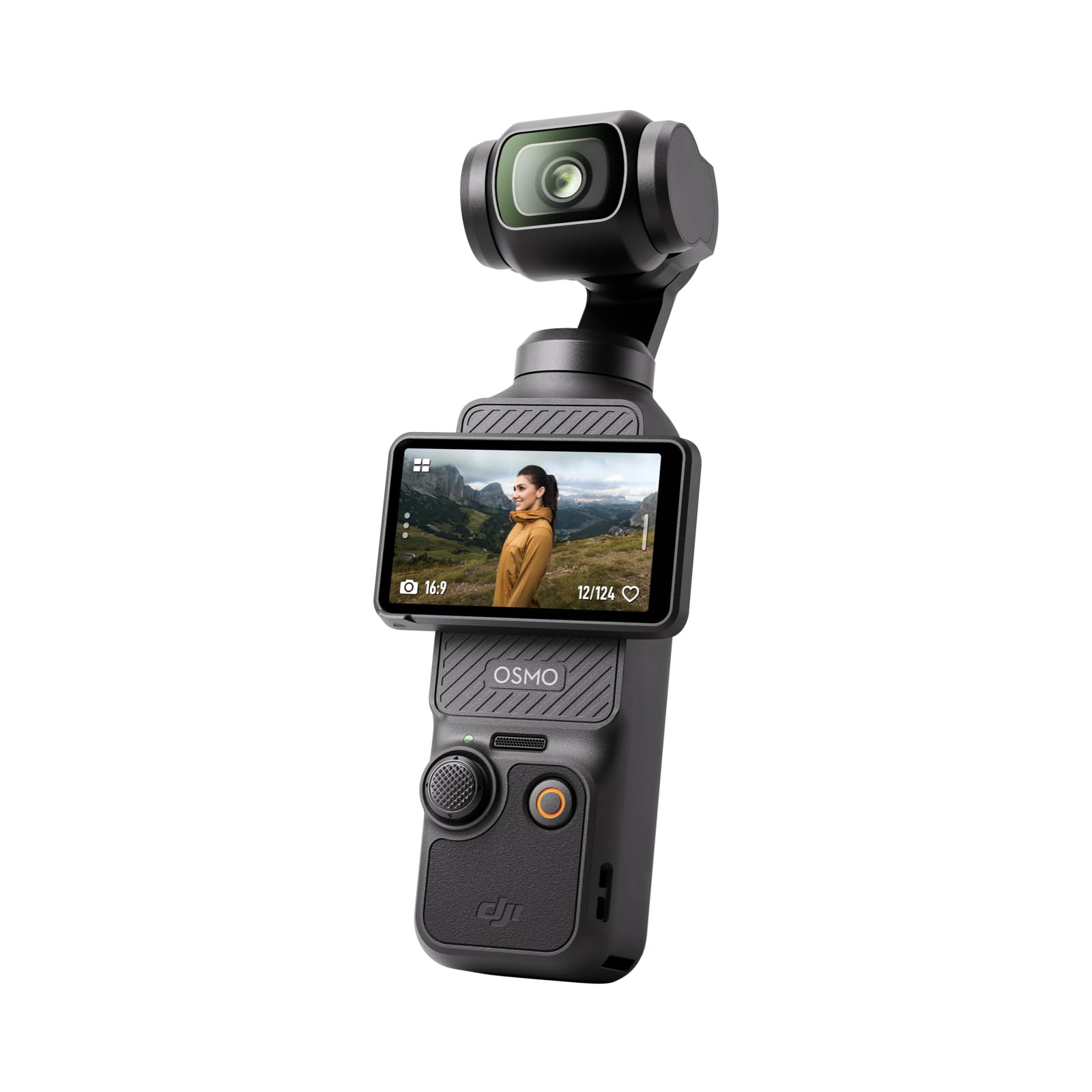
The DJI Osmo Pocket 3 is the answer for creators who live on the move. Its 1-inch CMOS sensor captures 4K at an impressive 120fps, so you can slow down action for dramatic slow-motion while keeping detail sharp. The built-in 3-axis mechanical stabilization is the star here — it keeps walking shots fluid and steady without needing a separate gimbal, unlike the Panasonic G85 above which relies on in-body sensor shifting.
The 2-inch rotating touchscreen flips between horizontal and vertical framing, which is perfect for posting to both YouTube and TikTok. ActiveTrack 6.0 keeps you centered in the frame automatically, even if you set it on a tripod and dance around. For color grading, the D-Log M profile and 10-bit color depth record up to one billion colors, giving you room to adjust in post-production. Battery life reaches about 166 minutes of average use.
The main frustration owners share is the activation process: you must register the camera before the fifth use, or it becomes a paperweight. The companion app can also be tricky to install, and some users raise privacy concerns. It’s a small learning curve for a camera that otherwise delivers “excellent video and audio” in a body smaller than your hand.
What Wins People Over
- Incredibly smooth 3-axis gimbal stabilization
- 4K/120fps for stunning slow motion
- Superb low-light performance for a pocket camera
The Catch
- Mandatory activation and app setup can frustrate
- No gimbal threads; a mount adds about 1.5 inches
Best for: vloggers, travelers, and anyone who hates carrying gear.
Look elsewhere if: you need interchangeable lenses or prefer a traditional camera feel.
3. OBSBOT Tail Air 4K PTZ Camera
This tiny PTZ camera turns AI tracking into a one-person broadcast studio.
The OBSBOT Tail Air is built for streamers, church services, and creators who need to move around, because the camera follows you automatically. It’s smaller than a cola can yet offers a 320° horizontal and 180° vertical rotation, so it covers a room without you touching it. The AI tracking handles humans, and it has been expanded to follow animals and objects, making it genuinely versatile.
For connectivity, it offers four options: Micro HDMI, USB-C, Ethernet, and wireless, which makes it easy to plug into most setups. It supports RTMP, RTSP, and VISCA protocols, so you can stream to platforms like Facebook, YouTube, or Twitch without extra hardware. The companion app, Obsbot Start, gives you fine control over settings, including gesture control and presets. Owners love that it “works very well with OBS.”
There are caveats to understand before buying. The NDI license key requires an additional purchase, and firmware updates need a U3 Micro SD card. More concerning, a few customers note the internal battery degrading over time — one camera died after 13 months because the camera won’t function without a working battery. For long-term, always-plugged-in streaming, consider how the battery fits into your plan.
What Wins People Over
- Compact PTZ design with 320° rotation
- AI tracking for humans, animals, and objects
- Multiple connection options including NDI
Handle With Care
- NDI license sold separately
- Battery dependency is a reported long-term risk
Perfect for: solo streamers and houses of worship wanting automated tracking.
Not for: anyone planning to rely on it as a permanently mounted, battery-free studio camera.
4. Canon EOS R100 Mirrorless Camera

The cheapest ticket into Canon’s RF mirrorless system without sacrificing image quality.
The Canon EOS R100 is a budget mirrorless camera that gives you access to Canon’s modern RF lens mount, which is a big deal for future-proofing. Its 24.1MP APS-C sensor and DIGIC 8 processor produce sharp, high-quality images, including RAW output that owners appreciate for editing flexibility. The Dual Pixel CMOS AF covers up to 143 zones and includes Eye Detection, so portraits stay tack sharp on faces easily.
It shoots up to 6.5 frames per second in One-Shot AF mode, which is enough for everyday subjects and street photography. The body is the smallest and lightest in the EOS R series, making it genuinely easy to carry. Reviewers point out it works great as a webcam and is a solid pick for events and photo walks, describing it as an “amazing budget camera.”
The catch is that it’s a beginner-focused camera with some limitations. It lacks an articulating touchscreen, and the autofocus can struggle for some users in specific situations. The kit lens (RF-S 18-45mm) is fine for starting out, but owners suggest investing in full-frame RF lenses later to really open up the system’s potential. It’s also not designed for fast sports or professional wedding work.
What Wins People Over
- Entry price into the Canon RF lens ecosystem
- Sharp 24.1MP images with RAW support
- Compact and lightweight body
Know Before Buying
- No articulating touchscreen
- Some users report focus issues in certain modes
Pick this if: you’re starting out and want a system you can grow within Canon’s RF lineup.
skip it if: you need a fast-action sports camera or plan to vlog with a flip screen.
5. Panasonic LUMIX G85 with 12-60mm Lens

A weather-sealed hybrid that pairs class-leading in-body stabilization with excellent 4K video.
The Panasonic LUMIX G85 is widely called the “price/performance king” of entry and mid-level mirrorless cameras, and the reason is its dual image stabilization. The 5-axis in-body system works with the lens stabilization to produce remarkably clear handheld shots, even when shooting 4K video in low light. This makes it a fantastic choice if you want to switch between photos and video without buying extra gear.
Its 16MP Micro Four Thirds sensor has no low-pass filter, which the maker says delivers a near 10% boost in fine detail resolution over older 16MP sensors. The camera records 4K QFHD video at 3840 x 2160, and the exclusive 4K Photo mode lets you pull an 8-megapixel frame out of your video after the fact. The weather-sealed body and lens mean you can keep shooting when the weather turns, and the built-in flash is handy for fill light.
Owners highlight the ergonomics, customization, and “outstanding IBIS” as standout features. The trade-offs are the 16MP resolution for stills, which is lower than APS-C rivals, and the fact that some feel the body is a bit heavier than other Micro Four Thirds options. Battery life is decent but not stellar, and there’s no headphone jack for audio monitoring. For hybrid shooters who want a go-anywhere kit, this is a strong value.
What Wins People Over
- Outstanding 5-axis dual image stabilization
- Weather-sealed body and lens
- Excellent 4K video with 4K Photo mode
Consider This First
- 16MP is lower for stills than some APS-C options
- No headphone jack for video monitoring
Choose this for: a versatile, weather-proof hybrid that excels at handheld video and photos.
Look elsewhere if: high-resolution stills are your primary focus — an APS-C sensor serves that better.
6. Panasonic LUMIX FZ80D

One lens to capture a mountain lion or a moon crater from a safe distance away.
The Panasonic LUMIX FZ80D is a point-and-shoot with a mesmerizing 60x optical zoom, covering a focal range of 20-1200mm equivalent. This reaches further than any interchangeable lens kit on this list without costing a fortune, which is why it’s a favorite for outdoor wildlife and hiking. The Power O.I.S. (Optical Image Stabilizer) specifically suppresses hand-shake at the tele-end, so those distant shots stay surprisingly clear.
It records 4K video and the 4K Photo feature lets you extract an 8-megapixel still from the footage, which is great for action moments you might otherwise miss. The 2,360K-dot electronic viewfinder (LVF) has a 0.74x magnification equivalent, keeping your view clear even in bright sunlight. Owners describe it as a “great budget-friendly camera with a mighty zoom” that’s lightweight enough to hang around your neck all day.
The honest caveat is that the small 1/2.3-inch sensor limits image quality, especially in low light and at the very end of the zoom range. Some owners recommend shooting RAW and using Lightroom denoise to clean up the results. Also, this model lacks built-in Wi-Fi, meaning you’ll need a memory card reader to transfer photos to your phone. For bright outdoor shooting where reach matters most, it delivers.
What Wins People Over
- Massive 60x optical zoom for distant subjects
- Lightweight for long hiking sessions
- 4K Photo mode for extracting action stills
The Reality Check
- Small sensor struggles in low light
- No built-in Wi-Fi for easy phone transfer
Ideal for: outdoor enthusiasts who want extreme zoom without carrying heavy lenses.
Better to avoid if: you mostly shoot indoors or at night, where the sensor size will frustrate you.
7. OM SYSTEM Olympus E-M10 Mark IV

A retro-styled mirrorless that packs 5-axis stabilization and 4K into a handbag-sized body.
The OM SYSTEM E-M10 Mark IV is an excellent entry-level camera for those who want serious features without the bulk of a DSLR. Its 20MP Live MOS sensor and in-body 5-axis image stabilization, capable of 4.5 shutter speed steps of compensation, mean you can shoot sharp handheld shots in conditions where other cameras would blur. The camera is genuinely small and lightweight, yet comfortable for larger hands.
A standout for content creators is the flip-down monitor with a dedicated selfie mode that activates automatically, making it a breeze to frame yourself for vlogs or video calls. The 16 Art Filters, including an Instant Film option, add creative flair straight out of camera that beginners love. Owners rave about its macro capabilities and note that the Bluetooth & OI Share app provides an always-on connection to your phone for quick sharing.
The kit lens is capable but not spectacular, with some owners noting the OM SYSTEM 12-45mm PRO lens is noticeably sharper (but heavier). The touchscreen is used frequently, so a screen protector is recommended. While the majority of owners are thrilled, there are a few reports of units simply stopping working, so get a good warranty. For photo-first beginners who value portability and style, this is a joy to use.
What Wins People Over
- Compact, stylish body with excellent 5-axis IBIS
- Flip-down monitor with dedicated selfie mode
- Fun Art Filters and strong macro performance
Things to Note
- Kit lens sharpness is good, not great
- A few shoppers say units failing to power on
Best for: photo-loving beginners who want a small, beautifully-built camera for travel and everyday creativity.
Worth checking first: the warranty and return policy, given rare reports of units failing.
8. Nikon Z 30 with 16-50mm Lens

Nikon’s most compact mirrorless is a purpose-built streaming and vlogging machine.
The Nikon Z 30 is designed specifically for creators, vloggers, and streamers, and it shows in the details. It has a flip-out touchscreen selfie monitor, a built-in stereo microphone with adjustable sensitivity, and a red REC light so you always know when you’re recording. The 16-50mm wide-angle zoom lens is a good fit for handheld vlogging, keeping you in frame without needing to extend your arm far.
For video, it delivers crisp 4K resolution with autofocus that includes eye tracking for people and pets, plus beautifully blurred backgrounds for that professional look. It’s a true plug-and-play webcam — just connect via USB-C for Full HD 60p streaming or HDMI for 4K 30p, with constant power over USB-C so it never dies mid-stream. Owners appreciate that it’s lightweight with a smooth screen and strong stabilization.
The main compromise is the lack of a viewfinder and in-body image stabilization, which some users miss when shooting stills or with non-stabilized lenses. Battery life also receives mixed feedback, with a few reporting charging quirks. It’s note the Z 30 was chosen over the Z50 by one owner specifically because it offers unlimited video recording, while the Z50 overheats at the 30-minute 4K mark. If vlogging is your primary goal, this is a strong, focused tool.
What Wins People Over
- Excellent 4K video with eye-tracking autofocus
- Plug-and-play webcam over USB-C
- Compact and lightweight with flip touchscreen
What’s Missing
- No viewfinder and no in-body stabilization
- Battery life gets mixed reviews
Grab this if: you’re a vlogger or streamer who wants a simple, effective 4K creator camera.
Pass on it if: you shoot stills through a viewfinder or need IBIS for shaky handheld video.
9. Sony ZV-E10 with 16-50mm Lens
Sony’s content-creation powerhouse that borrows pro features from its bigger siblings.
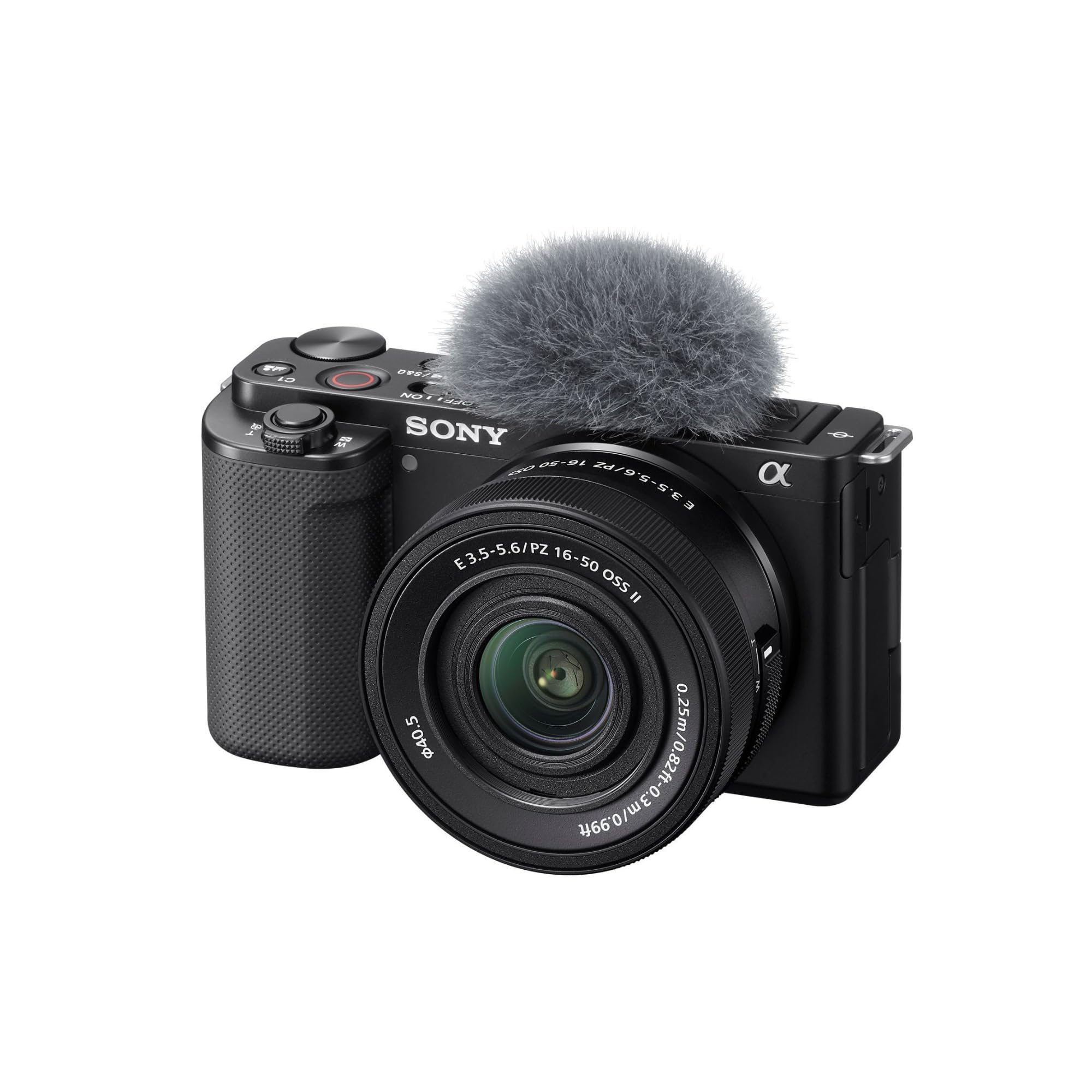
The Sony ZV-E10 is built around a 24.2MP APS-C Exmor CMOS sensor and a fast BIONZ X processor, the same DNA found in Sony’s more expensive Alpha line. Its headline video feature is 4K movie recording oversampled from a 6K readout, which delivers exceptionally detailed footage with no pixel binning. This makes it one of the sharpest 4K images you can get at this price point.
For content creators, the Product Showcase Setting is a killer feature — it instantly transitions focus from your face to an object you hold up to the camera, which is perfect for unboxings and reviews. The Background Defocus button toggles the blurred-background effect on and off with one press. It streams live over a single USB cable with no extra hardware or software. Owners describe it as a “perfect compact quick versatile camera” that’s ideal for hobbyists.
The 425-point autofocus system is fast and reliable for both face and eye detection. The trade-offs are that the body lacks built-in stabilization, so you’ll want a stabilized lens or a gimbal for smooth handheld footage, and there’s no built-in flash. The stock 16-50mm lens is sufficient for family use but not amazing. Owners also mention the companion app is a weak point, and the battery is decent but you’ll probably want spares.
What Wins People Over
- Stunning 4K oversampled from 6K for maximum detail
- Product Showcase for smooth face-to-object focus
- Compact and versatile with swivel screen
The Fine Print
- No in-body stabilization — you’ll need OSS lenses
- No built-in flash and a frustrating companion app
Made for: hobbyist videographers and YouTube beginners who want top-tier 4K quality in a small body.
Be ready for: the need to buy stabilized lenses or a gimbal for smooth handheld shots.
10. Sony Alpha a6400 with 16-50mm Lens

A lightning-fast autofocus specialist that nails focus in 0.02 seconds and never lets go.
The Sony Alpha a6400 is the camera you pick when capturing fast-moving subjects is the top priority. Its Real-time AF and object tracking lock focus in a stunning 0.02 seconds, which makes it feel like the camera reads your mind. The 425-point phase-detection system covers the frame densely, so tracking a child running or a bird in flight is remarkably reliable for the price.
Beyond autofocus, the 24.2MP APS-C Exmor sensor with a front-end LSI pushes sensitivity up to ISO 51,200, giving you room to shoot in dim conditions without a flash. It can fire off up to 11 frames per second in RAW with full AF/AE tracking, which is fantastic for catching the perfect expression or peak action. For video, it records 4K with 2.4x oversampling and full pixel readout, meaning no pixel binning and noticeably sharper footage.
The 180-degree tiltable 3-inch touchscreen LCD is great for vlogging, and the built-in flash is a bonus for stills. Owners upgrading from older DSLRs report “way better quality” and note it works well for streaming. The most common advice is to buy a better lens than the kit 16-50mm, which is a weak point for such a capable body. The menus are deep, so expect a learning curve, but the results justify the effort.
What Wins People Over
- Blazing-fast 0.02-second autofocus with tracking
- 11fps continuous shooting for action
- High ISO tolerance up to 51,200
Upgrade Path
- Kit lens is underwhelming — budget for a better one
- Learning curve is steeper with deep menus
Reach for it if: you photograph family sports, pets, or anything that won’t stay still.
Think about it if: you’re okay investing in a sharper lens later to match the sensor’s potential.
11. Canon EOS R50 Content Creator Kit

The complete starter bundle — camera, tripod, mic, and remote — for creators who want to begin instantly.
The Canon EOS R50 Content Creator Kit is the most complete out-of-the-box solution for a new vlogger. It includes the camera with an RF-S18-45mm lens, a tripod grip, a microphone, and a wireless remote control, so you have everything you need to start creating content the day it arrives. The 24.2MP APS-C sensor with the DIGIC X processor handles both stills and video with ease.
Video is a highlight: it records 4K uncropped at up to 30fps, oversampled from a 6K readout, which produces exceptionally sharp footage. It also offers Full HD at up to 120fps for smooth slow-motion. The Dual Pixel CMOS AF II system covers up to 100% x 100% of the frame with 651 AF zones and uses deep learning to track people, animals, and vehicles. Owners say the video performance is great and the controls are easy to learn.
It shoots up to 12fps with the electronic first curtain or 15fps with the electronic shutter, giving you plenty of speed for capturing moments. The built-in flash is handy for dark rooms. The main point of contention is value — some owners feel the kit is worth less than its asking price, while others note it’s “a little small” for large hands. For a beginner who wants a ready-to-go creator setup from a trusted brand, this kit simplifies everything.
What Wins People Over
- Complete kit with mic, tripod, and remote included
- Sharp 4K uncropped video oversampled from 6K
- Advanced 651-zone Dual Pixel CMOS AF II
What to Weigh
- Some owners question the overall kit value
- Small body may not suit all hand sizes
Start here if: you’re new to vlogging and want a single box with all the essential gear.
Consider separately if: you already own a tripod and mic — the bare camera body might be enough.
Understanding the Specs
Sensor Size and Megapixels
Sensor size is the single biggest factor in image quality. Larger sensors like APS-C (found in the Sony ZV-E10, Canon R50) and Micro Four Thirds (Panasonic G85, OM System E-M10 IV) capture more light, which means less noise in low light and more control over background blur. Megapixels determine how large you can print or crop; 20-24MP is plenty for most creators. Smaller sensors like the 1-inch type in the DJI Osmo Pocket 3 excel at portability but can’t match the low-light performance of larger sensors.
Frame Rate and Resolution
True 4K refers to video recorded at around 3840 x 2160 pixels. The most common is 4K/30fps, which looks smooth and cinematic. Shooting at 4K/120fps, like the DJI’s 120fps capability, allows for smooth slow-motion playback. Some cameras “oversample” 4K by shooting at a higher resolution, like 6K, and scaling down. This produces sharper, more detailed 4K footage than a camera that reads pixels directly. Check for “oversampled” or “full pixel readout” in the specs for the best quality.
FAQ
Is 4K video really that much better than 1080p?
Do I need a gimbal for smooth video?
What is the difference between optical zoom and digital zoom?
Which camera is best for livestreaming?
Is a DSLR or mirrorless camera better for 4K video?
What memory card do I need for 4K video?
How important is autofocus for vlogging?
Can I use these cameras for professional work?
What is the benefit of a flip-out screen?
How long do these camera batteries last?
Final Thoughts: The Verdict
For most people, the affordable 4k camera winner is the Panasonic LUMIX G85 because it balances weather-sealed durability, strong stabilization, and excellent 4K video for a hybrid shooter. If you want the most portable option for vlogging, grab the DJI Osmo Pocket 3 for its gimbal-stabilized 4K/120fps (4K resolution at 120 frames per second, so slow-motion clips stay smooth). And for streaming with AI tracking, the OBSBOT Tail Air is the one to reach for. All three deliver true 4K without the flagship price tag, so your choice depends on how and where you plan to shoot.
How We Picked
We do not accept paid placement. Every pick is matched to a real buyer and a real use-case; we do not hands-on test units.
Sources & Methodology
Specifications: manufacturer listings and product documentation. Review insights: verified customer reviews, as of August 2026. Pricing: not shown on this page (it changes often); check the current price via the retailer link.
As an Amazon Associate, Gadgets Feed earns from qualifying purchases. This does not affect which products we feature.