
Our readers keep the lights on and my morning glass full of iced black tea. As an Amazon Associate, I earn from qualifying purchases.
Specs are compiled from manufacturer listings and verified buyer reviews and can change over time — please confirm the key details on the product page before buying.
Your 13-year-old has outgrown kid bikes but isn’t ready for a full-size adult machine. the balance is a 24-inch frame that fits taller teens (26-inch works too), built sturdy enough for jumps and trails without being so heavy he can’t lift it over a curb. What matters most at this age is gear range for hills, brake control for speed, and a frame he won’t outgrow in one summer.
I’m Min — the founder and writer behind Gadgets Feed. This guide is built by comparing the manufacturers’ published specifications and the patterns across verified customer reviews, so you get each pick’s real strengths and trade-offs instead of marketing spin.
You’ll see that some bikes here flex the 24-inch sizing rules a touch (a few are 20-inch models that fit the same height range), so measure your teen before you click. The best bike for 13 year old boy balances growing room, hill-climbing gears, and brakes he can actually trust.
Our Picks at a Glance
How To Choose The Best Bike For 13 Year Old Boy
At 13, the bike is no longer a toy — it’s a ticket to independence, a tool for sport, and sometimes the only way to get to a friend’s house. Choosing wrong means either a bike he outgrows in months or one that’s too big to handle safely. Here’s what to weigh before you add to cart.
Wheel Size And Fit Come First
Wheel size is the single most important spec, and it’s about height, not age. A 24-inch wheel fits most 13-year-olds, generally riders from about 4’4″ to 6’2″ depending on the model. A 26-inch wheel suits taller teens, roughly 4’11” and up. Don’t buy a bike your kid will “grow into” — a frame that’s too big is unsafe because he can’t plant a foot flat at stops or reach the brakes comfortably. Choose a model that fits now with a little room in the seat post for growth spurts.
Gears Matter More Than You Think
If your teen rides on any kind of hill, gears are the difference between a fun ride and a miserable push home. A 21-speed drivetrain gives a young rider the low gears to climb without standing on the pedals, which is tiring and hard on the knees. Single-speed bikes are great for flat streets and BMX tricks, but they’re brutal on hills. The trade-off: more gears mean more complexity and more to adjust (and more that can go wrong from the start).
Brakes Decide The Safety Margin
Braking is where you don’t want to cut corners. V-brakes (linear pull brakes that squeeze the rim) are simple, cheap, and fine for pavement, but they lose effectiveness in wet conditions. Disc brakes (which clamp a metal rotor at the wheel hub) give more precise, consistent stopping power, especially on trails and in the rain. Many parents prefer disc brakes for a first “real” mountain bike for exactly that reason.
Quick Comparison
| Model | Best For | Wheel Size | Speeds | Brake Style | Amazon |
|---|---|---|---|---|---|
| cubsala Trident★ Best Overall | BMX tricks & durability | 20/24/26″ | 1 | V-Brake | Amazon |
| WEIZE MTBBest Beginner MTB | Beginner mountain trails | 20/24″ | 6 | V-Brake | Amazon |
| Glerc SkylineHill Climber | Hills & diverse terrain | 20/24/26″ | 21 | Disc | Amazon |
| AVASTA Bilbo | Neighborhood & light trails | 18/20/24″ | 1 | V-Brake | Amazon |
| Dynacraft Gauntlet | Full suspension comfort | 24″ | 21 | Linear Pull | Amazon |
| JOYSTAR Brockway | First BMX freestyle | 20/24″ | 1 | U-Brake | Amazon |
| JOYSTAR NEO | Casual paved paths | 24″ | 1 | Caliper + Coaster | Amazon |
| Hiland Fat Tire | Beach, snow & mud | 20/24/26″ | 7 | Disc | Amazon |
| RoyalBaby 7-17 | Lightweight performance | 20/24″ | 8 | Disc | Amazon |
In-Depth Reviews
1. cubsala Trident BMX
Our pick — 4.5★ from 300+ verified ratings; the strongest balance of quality and price.
The trick-ready steel frame that takes a beating and keeps the neighborhood envy alive.
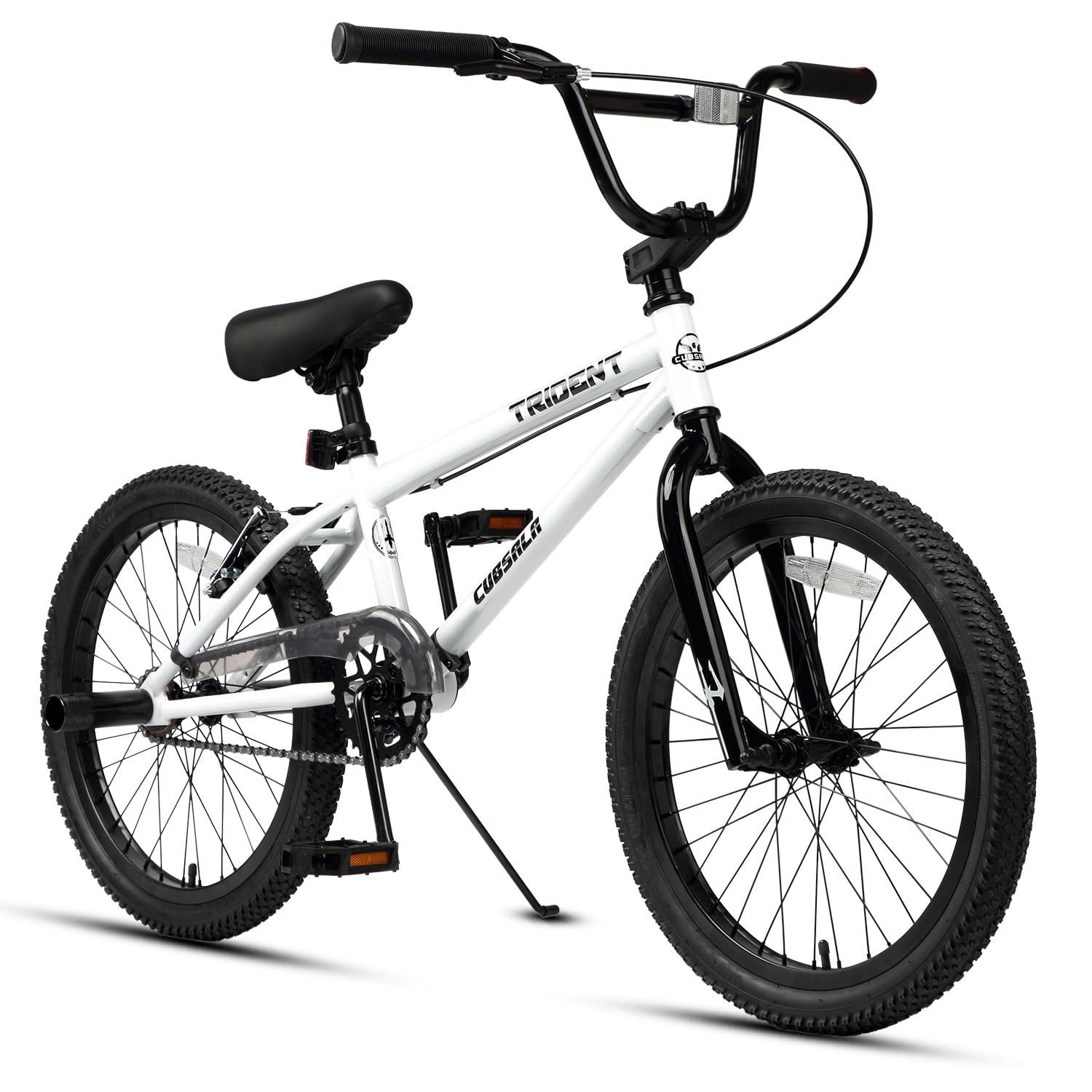
For a 13-year-old who wants to do bunny hops and bar spins, this BMX delivers. The Hi-Ten steel frame (a type of high-tensile steel that resists bending) is built for dirt tracks and skate parks, and buyers report it rides well even after a hard 10-mile session — one rider scored it 9.5/10 for durability on a long ride. It comes in 20-inch, 24-inch, or 26-inch wheels, so you can match the exact size to your teen’s height; the 24-inch fits riders 4’4″ to 6’2″ tall.
The single-speed drivetrain keeps things simple — no derailleur to fuss with — but that’s also the trade-off. The 1-speed setup struggles on steep hills; as owners put it, the gear ratio is “hard on hills.” You’re buying this for flat streets, parks, and tricks, not mountain climbing. The rear V-brake (a rim brake squeezed by cable) gives decent speed control, though some riders note the brakes can be squeaky until they bed in.
At 85% pre-assembled with tools and a kickstand included, most parents have it rolling in under 10 minutes. The trident design is distinctive enough that your kid’s bike won’t get mixed up at the rack. What wins people over is the build quality — the frame is strong but not so heavy that a smaller rider can’t manage it.
Why It Wins
- Durable Hi-Ten steel frame shrugs off crashes and tricks
- Easy 10-minute assembly, tools and kickstand included
- Three wheel sizes (20/24/26″) fit a wide height range
The Trade-offs
- Single-speed gearing struggles on steep hills
- Brakes can squeak before they’re worn in
Grab it if: your teen lives for tricks, flat streets, and a frame that won’t quit — the durability here is the crowd favorite for a reason.
Think twice if: your neighborhood is all hills; a single-speed will leave him pushing the bike home.
2. WEIZE Kids Mountain Bike
The low-standover frame that lets a nervous new rider mount and dismount with total confidence.
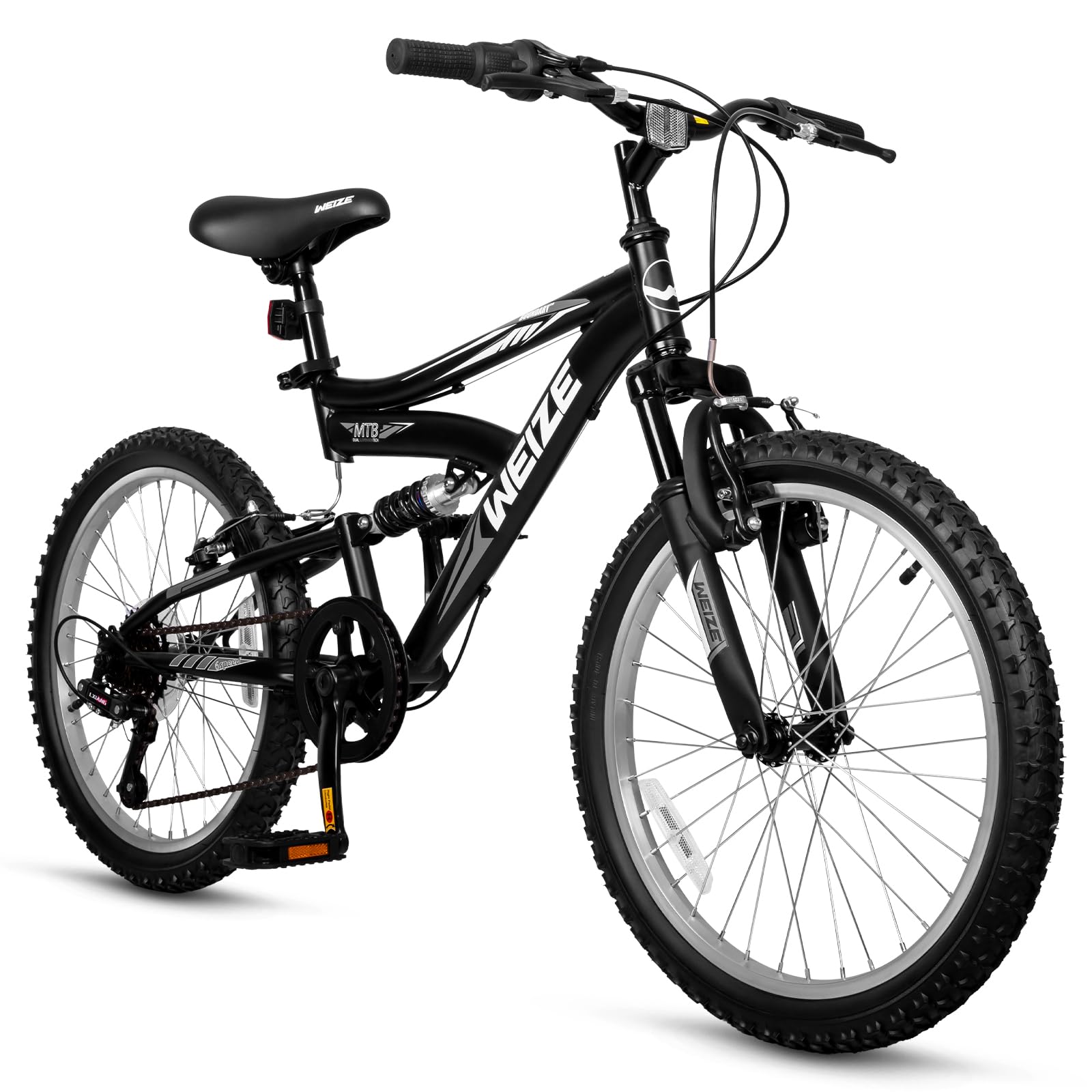
If your 13-year-old is just moving up from a smaller bike, the WEIZE is built to ease that transition. Its whole design revolves around safety: the 14-inch-high carbon steel frame has a lower standover height, which means your son can straddle the bike with both feet flat on the ground. That simple geometry makes a huge difference for a rider who’s still building confidence on trails. The 6-speed drivetrain is enough to tackle gentle climbs without overwhelming a beginner with too many gears.
The 20″ x 2.125″ tires are wide enough to feel stable on gravel and packed dirt, and the dual V-brakes (front and rear rim brakes) are easy for smaller hands to squeeze. Assembly is straightforward — one parent reports having it ride-ready in about 20 minutes using the included height guide. Owners mention that once they got the rear derailleur dialed in, it “shifted smoothly” — but expect a little setup patience there, since gear adjustment is the most common first-ride task.
This bike fits riders 42 to 55 inches tall, so a 4’6″ to 4’7″ 13-year-old fits at the top of the range. The padded seat makes longer rides comfortable, which matters when your kid is still building the stamina for a full afternoon out.
Beginner-first design: the low frame and simple 6-speed setup are exactly what a less experienced rider needs to feel secure.
Worth noting: a couple of owners hit flat tires right from the start — check the tubes before the first real ride.
3. Glerc Skyline 21-Speed
A 21-speed workhorse with disc brakes that makes steep hills feel like flat ground.
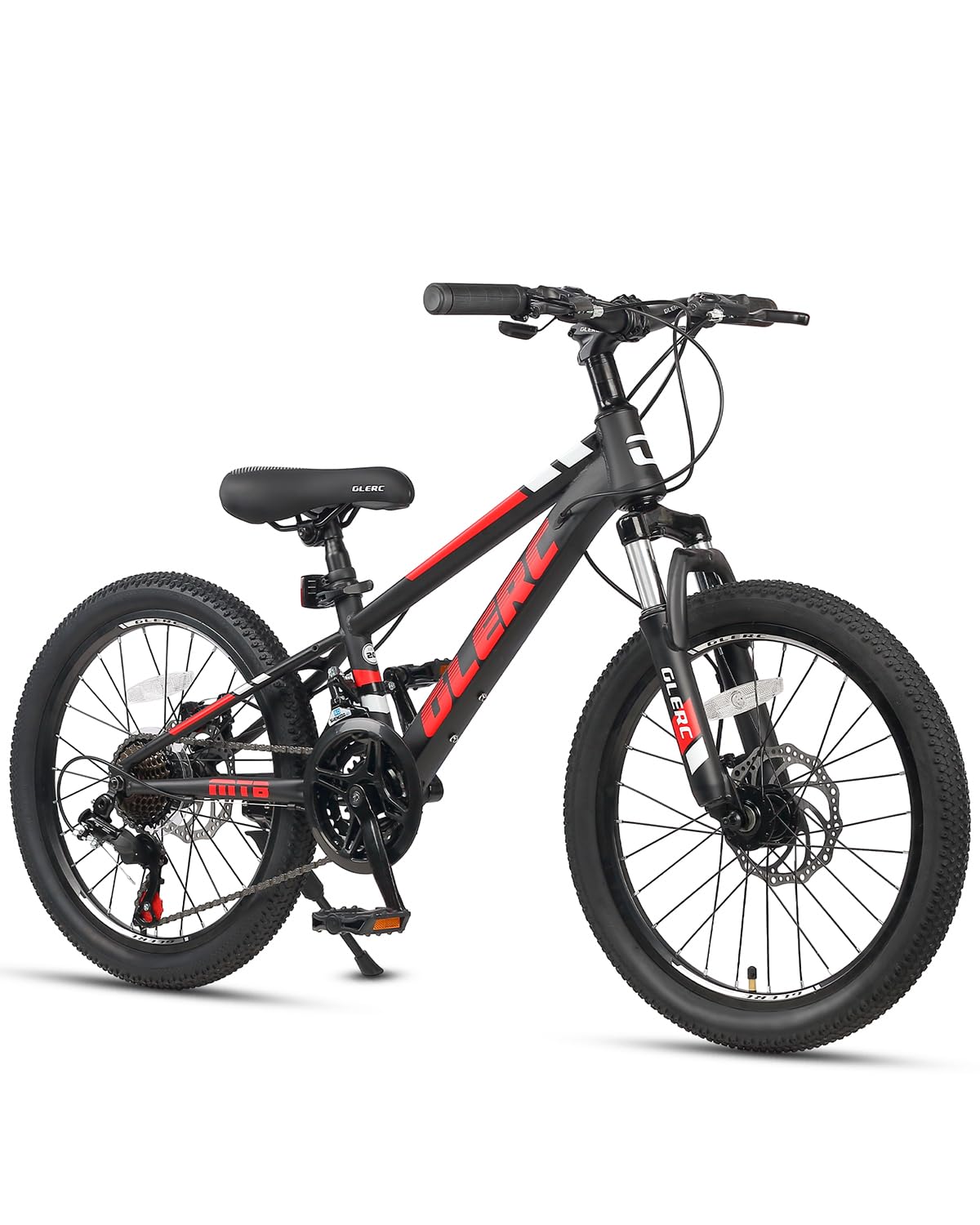
The Glerc Skyline suits a teen whose rides aren’t flat. With 21 speeds and a front-and-rear derailleur (the mechanism that moves the chain between gears), it lets him spin up long climbs without burning out his legs. The responsive disc brakes (which clamp a rotor at the wheel hub instead of squeezing the rim) give precise stopping power when he’s coming down a hill fast or hits a wet patch. The front suspension fork absorbs shock from rough terrain, so roots and rocks don’t rattle his arms.
At 30 lbs, it’s not featherweight, but the carbon steel frame feels solid under aggressive riding. The 24-inch version is the one to watch for a 13-year-old — it fits the 45″ to 55″ height range (the 20-inch is for ages 6-12 with an inseam of 21″-25″). Parents report the bike shifts nicely and looks “really cool,” which matters a lot to a picky tween. The gear shifting is smooth for most, though a few owners note durability concerns over time.
What makes this a great mid-range value is the spec list: 21 gears, disc brakes, and front suspension are features you’d normally pay more for. If your son is the type to explore every trail in the neighborhood, this gives him the tools to do it without upgrading next year.
Serious spec for the money: 21-speed shifting plus disc brakes plus suspension fork covers every terrain a teen will find.
Watch for: a minority of customers note parts wearing out over months of hard use — worth a quick bolt-check before big rides.
4. AVASTA Bilbo
A 19-pound featherweight that’s easy to maneuver and even easier on the wallet.
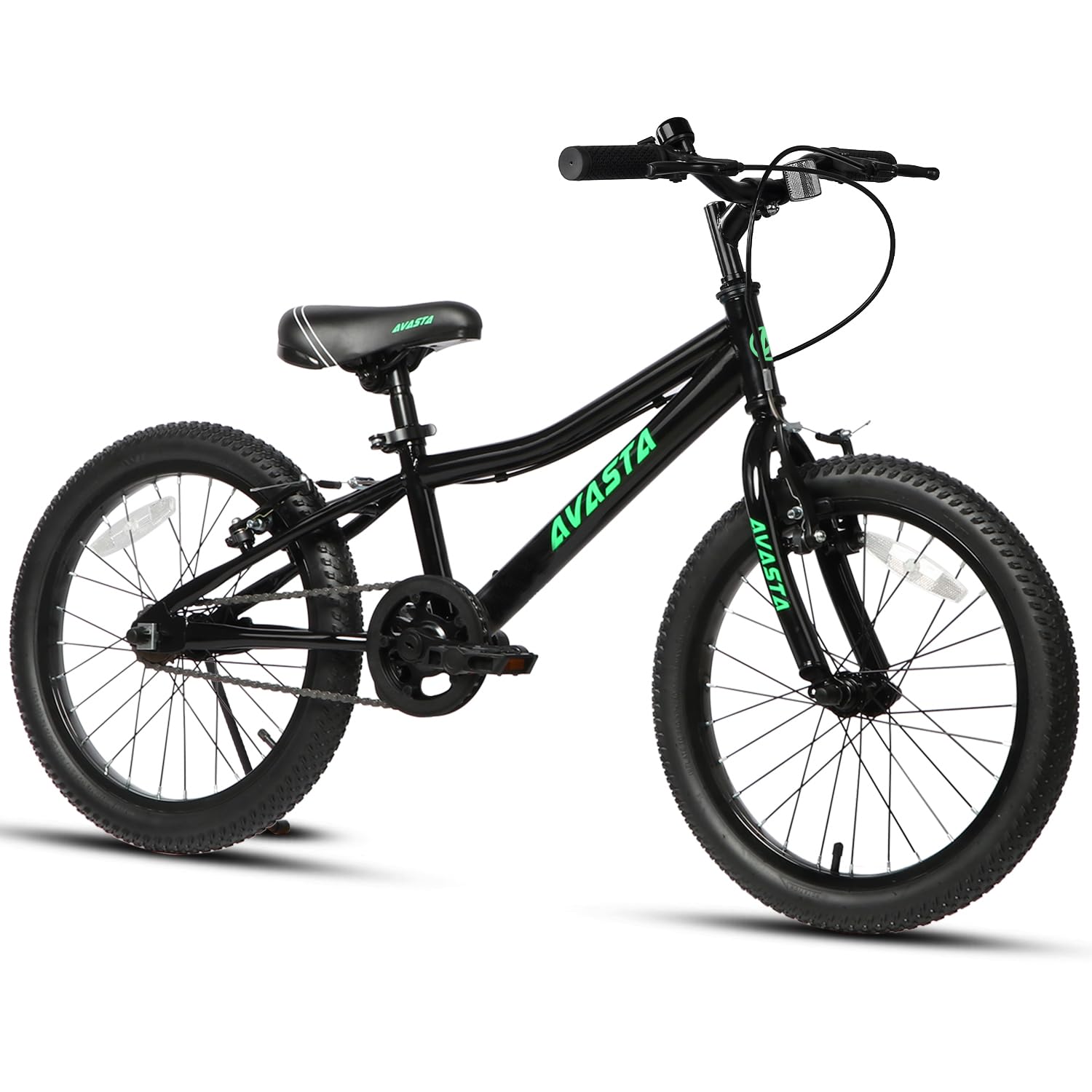
Sometimes the best bike is the one that doesn’t fight back. The AVASTA Bilbo weighs just 19 pounds, which makes it noticeably easier for a smaller or lighter teen to lift, turn, and control — a real advantage when he’s still developing bike-handling skills. The step-over steel frame is easy to mount and dismount, and the dual aluminum V-brakes provide sensitive stopping power. It’s a single-speed, so it’s best suited to flat neighborhood streets and gentle paths rather than serious hills.
Assembly runs under 15 minutes for most parents — the bike arrives 85% pre-assembled with only the front wheel, pedals, handlebar, kickstand, and saddle to install, and all tools are included. The adjustable seat and handlebars let it grow with your rider, which extends the value. One parent’s 10-year-old fit it perfectly and even took it to the BMX track where it performed well. The 24-inch version is designed for children 9-14 years old, or 54-66 inches tall — right in the zone for most 13-year-olds.
Owners consistently praise the value for money and the build quality, calling it sturdy and well-made for the price. It’s a smart, no-frills choice for a kid who mostly rides around the block and needs something reliable that won’t break the budget.
Reach for this if: you want a light, simple, dependable bike for flat streets and neighborhood cruising without paying for gears you don’t need.
Look elsewhere if: there are real hills on his route — the single-speed will make every incline a workout.
5. Dynacraft Vertical Gauntlet

Full front-and-rear suspension that soaks up bumps for the rider who wants a smooth, comfy cruise.
Suspension is the headline here. The Dynacraft Gauntlet pairs a front suspension fork with a rear coil shock, so both ends of the bike absorb the jolts of gravel paths, tree roots, and potholes. That makes it the most comfortable pick for recreational riders who want a smoother feel on long neighborhood loops or easy trails. The 21-speed Shimano grip shifters let him click through gears with a simple twist, and the sturdy carbon alloy steel frame carries a genuine trail-ready look with bold Firestorm Blue graphics.
This bike is designed for teenagers ages 13-17, so the 24-inch frame fits your son’s age group. Reviewers point out their kids love riding it and that it’s easy to assemble, with one calling it a “great beginner/intermediate mountain bike.” The front and rear linear-pull V-brakes (which squeeze the wheel rim to slow down) provide dependable stopping on hills and uneven ground, though a couple of owners mention minor brake tweaks after assembly.
The honest caveat here is that durability reports are split — some owners find it great value while others describe quality issues over time, and an occasional unit arrives with cosmetic scrape damage (the bike ships shrink-wrapped). For the price, it’s best seen as a solid entry-level full-suspension bike rather than a long-term trail weapon.
Plush ride first: the dual suspension is the star — perfect for a teen who values comfort over hardcore trail performance.
Honest fit note: treat it as a beginner-to-intermediate bike; expect to tighten bolts and maybe adjust brakes as it wears in.
6. JOYSTAR Brockway BMX

A first freestyle BMX with pegs and a tough Hi-Ten frame, ready for the skate park.
If your 13-year-old wants to start learning tricks, the JOYSTAR Brockway comes from the start ready for it. The 2 pegs included with the bike let him start practicing grinds and stalls immediately, and the single-speed drivetrain with a 165 mm one-piece crank and 40T chainring is built for quick acceleration rather than hill climbing. The 22″ top tube length suits the intended rider height of 4’6″ to 5’0″, which covers most 13-year-olds.
The wheelset uses 20″ x 2.125″ tires on carbon steel single-wall 36H rims with a sealed bearing cassette rear hub — proper BMX hardware that can handle the impact of landing jumps. Assembly is remarkably easy, with owners saying you “don’t even need instructions,” and the bike arrives 85% pre-assembled. It’s backed by a limited lifetime warranty on the frame, which tells you the maker expects it to survive the abuse kids throw at it.
What wins people over is the quality versus what you’d find at big-box stores — shoppers say it’s noticeably tougher than a department store BMX, and kids love the look. The recurring note is on braking: some owners find the U-brake underwhelming, so it’s worth a careful setup. At 29 pounds, it’s not the lightest, but for a rider mostly jumping and cruising flat ground, that’s a fair trade for the durability.
Built For Tricks
- Includes 2 pegs for immediate freestyle practice
- Sealed bearing rear hub handles jump landings
- Limited lifetime warranty on the frame
Before You Buy
- U-brake needs proper setup for strong stopping power
- Single-speed limits it to flat ground and parks
7. JOYSTAR NEO
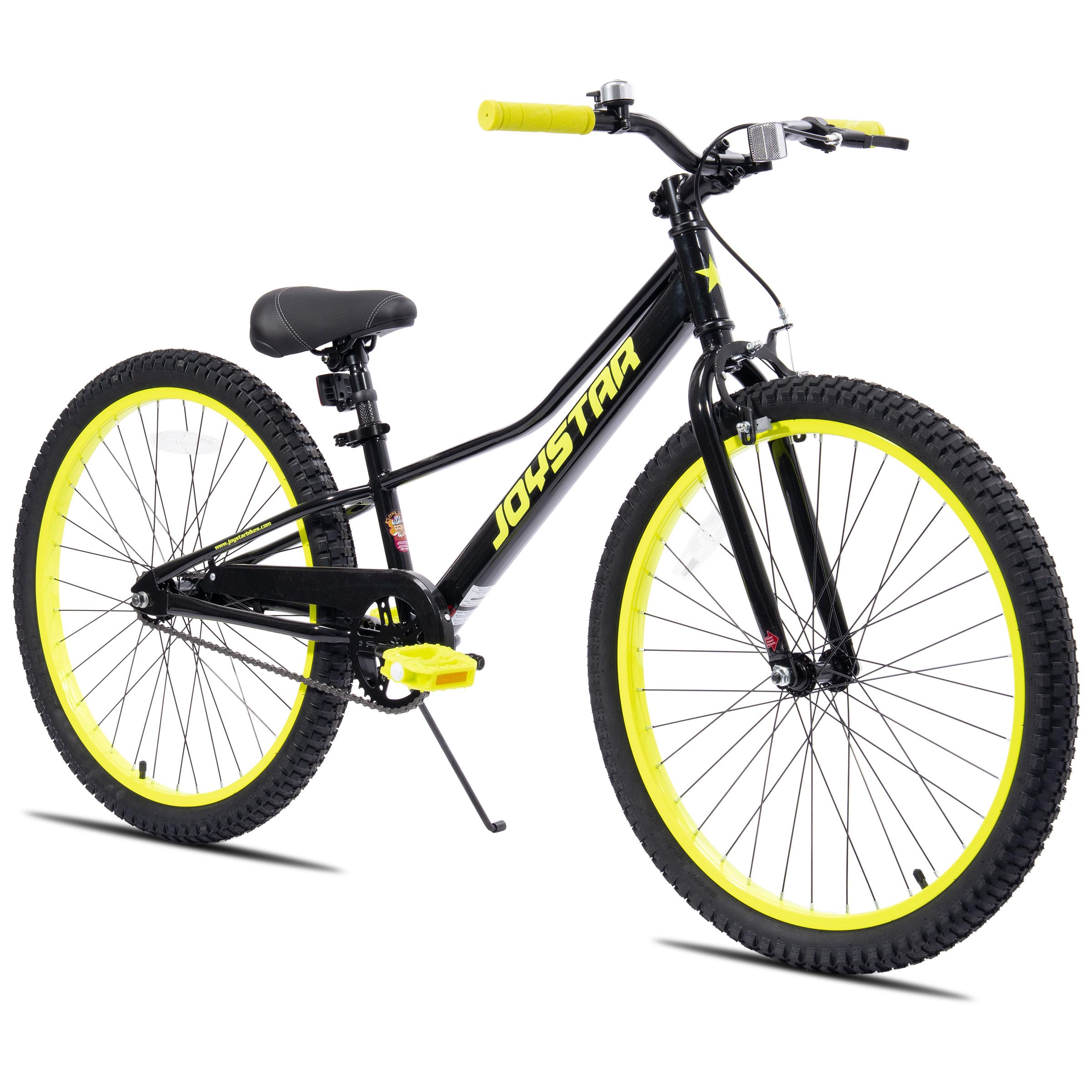
Simple coaster braking plus a caliper handbrake — a no-fuss ride for relaxed neighborhood cruising.
Some 13-year-olds just want a bike to get to the park, not a machine to conquer mountains. The JOYSTAR NEO is that bike — a simple, comfortable 24-inch cruiser with a heavy-duty Hi-Ten steel frame and shock-absorbing fork. It uses a rear coaster brake (pedal backward to stop) paired with a front caliper handbrake, which is a forgiving setup for a rider who’s still getting comfortable with hand-brake coordination. The extra-wide 2.4-inch knobby tires deliver good grip on wet pavement and loose gravel.
This bike fits riders 52-62 inches tall, which covers most 13-year-olds, and arrives 85% pre-assembled so most folks have it ride-ready in about 20 minutes. The quick-adjust saddle raises easily for growth spurts, and the built-in kickstand makes parking low-maintenance. At 28 pounds, it’s a solid, stable ride that won’t feel twitchy for a less experienced rider.
The honest picture: quality feedback is genuinely mixed. Some owners call it “very sturdy, very well built,” while a smaller number report arriving with warped wheels. In other words, check the wheels carefully on arrival — if they’re true, this is a dependable, straightforward bike that will last seasons. The single-speed drivetrain keeps maintenance minimal, which is exactly the point of a casual cruiser.
Keep-it-simple appeal: coaster braking and one gear mean nothing to adjust or break — ideal for a relaxed rider.
Arrival check needed: inspect the wheels before the first ride; a few units have shown up with warped rims.
8. Hiland Fat Tire MTB
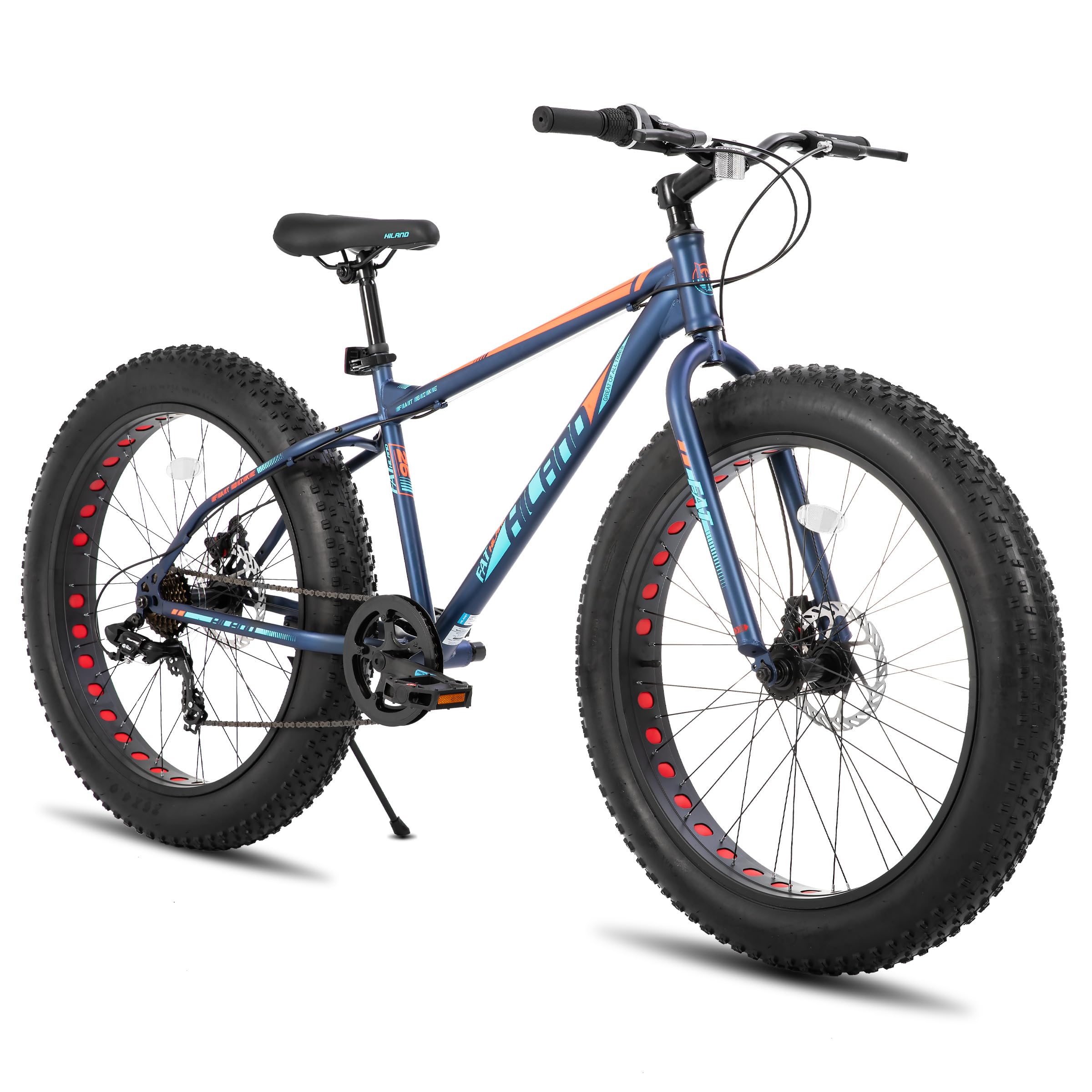
Ultra-wide fat tires that float over snow, sand, and mud when normal wheels sink.
The Hiland is the specialist of the group — a fat-tire mountain bike designed for terrain that stops most other bikes cold. The wide tires provide outstanding grip and traction on loose surfaces, letting a young rider roll confidently over beach sand, snow, mud, and gravel. The dual disc brakes (which clamp a rotor at each wheel hub) are more effective than rim brakes, especially in wet conditions when descending slopes. The high carbon steel frame absorbs bumps for a smooth ride on mountain roads and forest trails.
The 7-speed drivetrain uses a TY300D rear derailleur with MICROSHIFT MS25 shifters, which owners find smooth and easy for kids to operate. The 24-inch version fits riders 47″ to 67″ tall, which comfortably covers a 13-year-old at most heights. Assembly is 85% pre-assembled with tools included. Buyers report the fat tires feel more puncture-resistant than standard ones, and one grandkid rode four straight hours across rough ranch terrain without issue — a strong testament to the tire durability.
The main trade-off is weight — fat tires and a steel frame are inherently heavy, so this is best for a teen who’s not carrying it up stairs. A few owners mention needing to tweak the brake alignment after assembly, and the occasional unit has shipped with a misaligned disc. If your son’s adventures involve snowbanks or the beach, this is the one that won’t get stuck.
Go-anywhere grip: those fat tires are the whole story — snow, sand, and mud become fun instead of obstacles.
Expect some setup: disc alignment is the most common fix; budget a few minutes with an Allen key on arrival.
9. RoyalBaby 7-17 Aluminum MTB
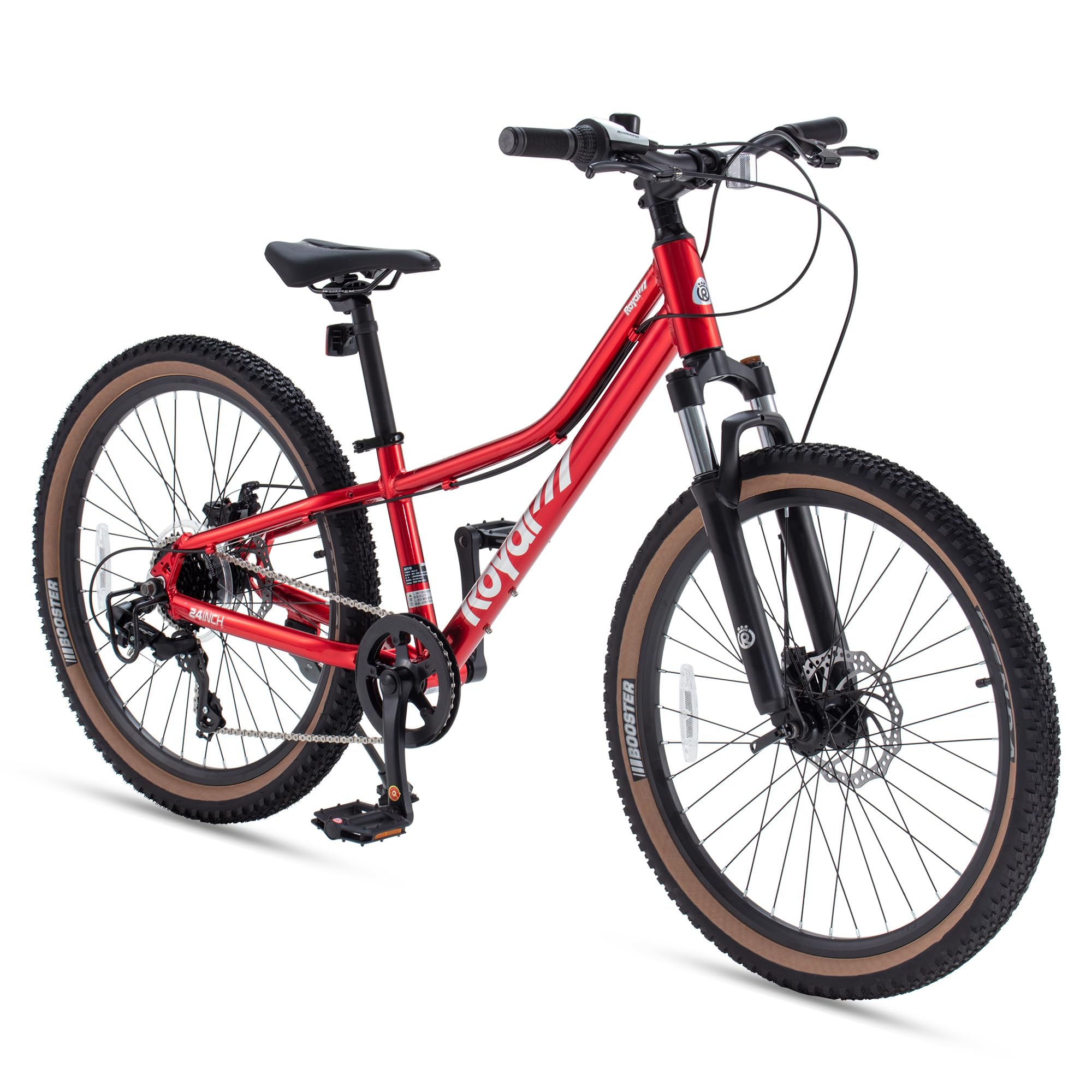
An aluminum frame that shaves real weight, letting a smaller teen muscle it around with ease.
Weight is the spec that separates a premium kids’ bike from a budget one, and the RoyalBaby 7-17 nails it with a lightweight aluminum frame. At roughly 13.5 kg (about 30 lbs), it’s not the absolute lightest, but the aluminum construction means it’s easier for a smaller teen to lift, carry over obstacles, and control at speed than a comparable steel bike. The dual disc brakes provide consistent stopping power in any terrain and weather, a genuine safety advantage. The indexed Shimano TX-500 derailleur delivers 8 speeds of smooth, precise shifting that owners say is easy to tweak using the barrel adjusters.
The suspension fork absorbs trail bumps and keeps the front wheel planted for better handling. It’s designed for ages 7 and up, and the 24-inch wheel fits a growing rider well — one owner notes their 5-foot-tall rider has “plenty of seat height for a couple years to come.” Assembly is simple with all tools included, and it’s backed by a limited lifetime warranty, which is rare at this level and signals real confidence in the build.
Owners are consistently impressed with the quality, with repeat buyers returning to the brand. The main caveat: a small number of units have arrived with a bent brake disc on the front wheel, so it’s worth inspecting before the first ride. This is the pick for a parent who wants performance features — aluminum, disc brakes, 8 speeds — without the rider outgrowing it in a year.
Pick this for: a serious young rider who’ll appreciate the lighter frame and crisp Shimano shifting on longer trail rides.
Budget reality check: it’s the most expensive option here — you’re paying for the aluminum frame and lifetime warranty.
Understanding the Specs
Wheel Size And Rider Height
Wheel size is the non-negotiable spec, and it’s driven by height, not age. A 24-inch wheel is the balance for most 13-year-olds, usually fitting riders around 4’4″ to 6’2″ depending on the model. A 26-inch wheel suits taller teens, roughly 4’11” and up. Use the standover test: your teen should be able to stand over the top tube with both feet flat on the ground. If he can’t, the bike is too big, no matter how cool it looks.
Gears And Drivetrain
The number of speeds tells you how the bike handles hills. A single-speed (1-speed) is simple, lightweight, and great for flat streets and BMX tricks, but it makes climbing exhausting. A 6-speed or 7-speed adds a little range for gentle hills. A 21-speed drivetrain gives a young rider proper low gears to climb steep inclines without standing on the pedals — the deciding factor if your neighborhood isn’t flat. Just remember more gears mean more adjustment and maintenance.
FAQ
What wheel size should a 13 year old boy ride?
How many gears does a teen need on a mountain bike?
What is the difference between V-brakes and disc brakes?
Is a BMX bike good for a 13 year old?
How long will a 24 inch bike fit a growing teen?
What should I check when the bike arrives?
Is a full suspension bike worth it for a teenager?
How much assembly is required for these kids bikes?
Final Thoughts: The Verdict
For most families, the best bike for 13 year old boy is the cubsala Trident — its steel frame durability and easy assembly make it the crowd favorite for riders who want a bike that survives the rough stuff. If your son faces real hills on his rides, the Glerc Skyline with its 21-speed drivetrain and disc brakes is the smarter pick. And for a lighter, more performance-focused machine that he’ll grow into, the RoyalBaby 7-17 aluminum frame is worth the premium — just measure his height against each model’s size chart before you commit.
How We Picked
We do not accept paid placement. Every pick is matched to a real buyer and a real use-case; we do not hands-on test units.
Sources & Methodology
Specifications: manufacturer listings and product documentation. Review insights: verified customer reviews, as of August 2026. Pricing: not shown on this page (it changes often); check the current price via the retailer link.
As an Amazon Associate, Gadgets Feed earns from qualifying purchases. This does not affect which products we feature.