
Our readers keep the lights on and my morning glass full of iced black tea. As an Amazon Associate, I earn from qualifying purchases.
Specs are compiled from manufacturer listings and verified buyer reviews and can change over time — please confirm the key details on the product page before buying.
You can kill that hollow, boomy echo in a home office, game room, or apartment without ripping open your walls—acoustic wall tiles do it fast. Your real choice is between two looks: thin polyester tiles that stick up in minutes, or rigid wood slat panels that look like high-end interior design. This guide separates real sound absorbers from pretty decor, helping you match tile type to your room.
I’m Min — the founder and writer behind Gadgets Feed. This guide is built by comparing the manufacturers’ published specifications and the patterns across verified customer reviews, so you get each pick’s real strengths and trade-offs instead of marketing spin.
Your acoustic wall tiles choice depends on one question: do you need professional sound absorption, or just a quieter living room with a modern look?
Our Picks at a Glance

How To Choose The Best Acoustic Wall Tiles
Before you buy, decide whether you are fighting echo in an empty-sounding room or trying to block noise from the other side of a wall. No tile on this list stops sound from traveling through drywall — they all absorb the reflections that bounce around inside your room, which is what makes a space feel noisy and live.
Match the material to the room
Polyester fiber tiles are thin, light, and made for covering large wall areas quickly to tame reverb in offices and studios. Wood slat panels sandwich acoustically absorbent felt between wooden planks, so they eat echo while looking like intentional decor — the better fit for living rooms and bedrooms where looks matter as much as sound.
Read the NRC number
NRC, or Noise Reduction Coefficient, is a 0-to-1 score of how much sound a panel absorbs. A 0.95 rating means the tile absorbs nearly all sound that hits it, making it excellent for echo reduction. Look for this figure on the spec sheet — it is the single most honest predictor of real performance.
Check the adhesive plan before you start
Peel-and-stick panels save tools but demand a clean, flat, matte wall surface. Some packs include adhesive, others expect you to buy construction adhesive or heavy-duty double-sided tape separately. Renters should weigh the risk of paint damage on removal, because strong glue rarely lets go without a fight.
Quick Comparison
| Model | Best For | Coverage | Panel Size | Material | Amazon |
|---|---|---|---|---|---|
| Art3d Wood Slat Panels★ Best Overall | Premium look & echo control | 31.5 sq.ft | 94.5″ x 7.9″ | Wood Laminate | Amazon |
| Ekkogo Hexagon PanelsBest Value | Budget echo reduction | 0.83 sq ft each | 12″ x 10″ | Polyester | Amazon |
| Amantech Hexagon FoamEasy Install | Quick peel-and-stick install | 12 panels | 12″ x 0.4″ x 10.23″ | Polyester Fiber | Amazon |
| Ultra-High Density Hexagon | Dense absorption in bold color | — | 14″ x 12″ x 0.4″ | ECO 6D Polyester | Amazon |
| Saiqiang 56-Pack Wedge Foam | Large-area studio coverage | 56 sq ft | 12″ x 12″ x 1″ | Polyurethane Foam | Amazon |
| 100-Pack Sound Foam | Whole-room coverage on a budget | 100 panels | 12″ x 12″ x 1″ | Acoustic Foam | Amazon |
| ROOME 22-Pack Panels | Patterned decor plus dampening | 3168 sq in | 12″ x 12″ x 0.4″ | Polyester | Amazon |
| TONOR Dual-Layer Panels | Thick panels for busy households | 1104 sq in each | 47.2″ x 23.6″ x 0.72″ | Polyester | Amazon |
| NeatiEase Wood Slat Panels | Statement wall with teak finish | 33 sq.ft | 96″ x 12.6″ | MDF & Polyester | Amazon |
In‑Depth Reviews
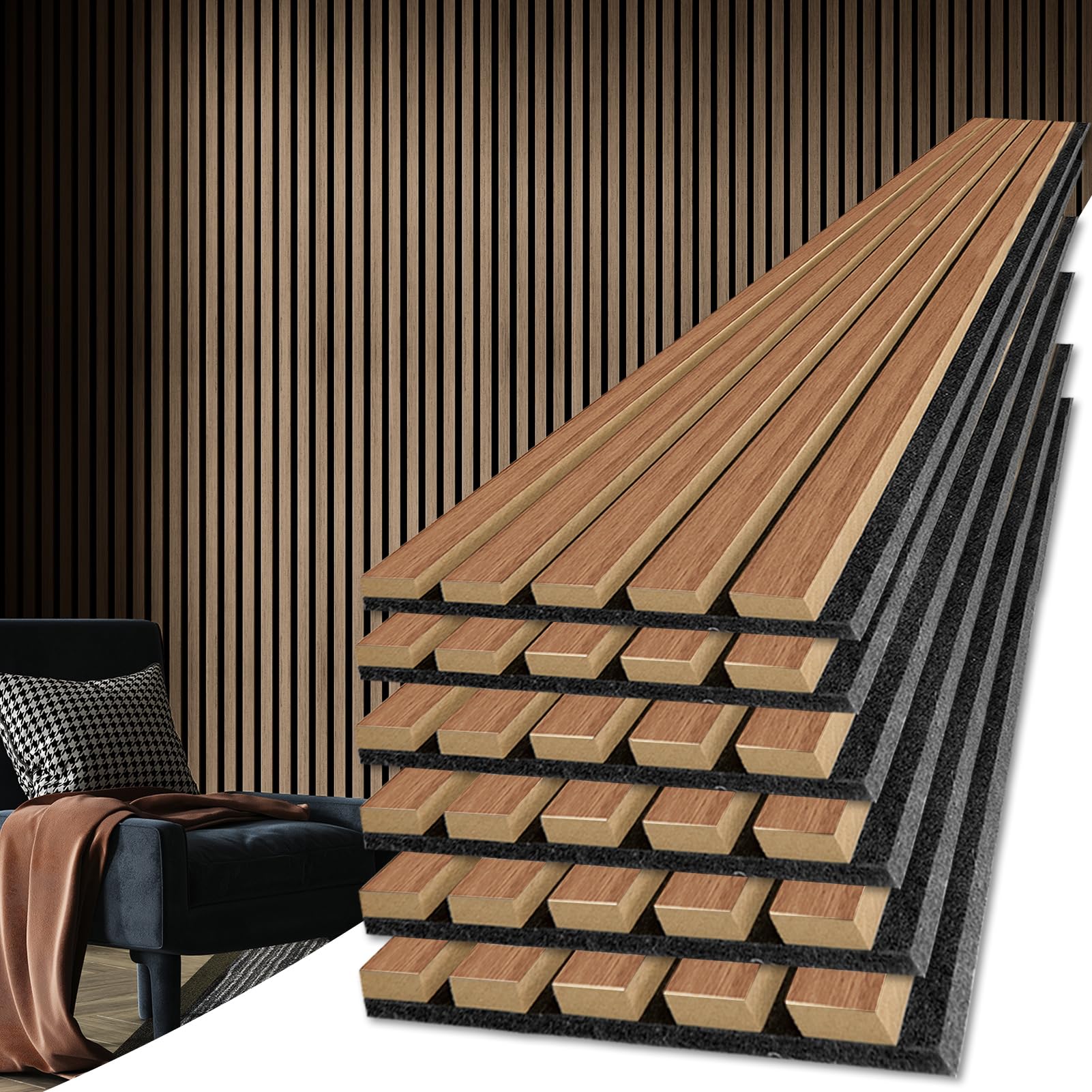
1. Art3d 6-Pack Soundproof Wood Slat Wall Panels (Walnut)
Our pick — over 4.5★ from 800+ verified ratings; the strongest balance of quality and price.
The wood-slat winner that turns a noisy room into a design centerpiece.
If you want the echo gone and the wall to look expensive, this is the pick. Each fluted panel runs a full 94.5 inches long by 7.9 inches wide, and the six-panel pack covers roughly 31.5 square feet — enough for a bold accent wall in a living room or home office. Buyers report “significant echo reduction” and a premium result that reads like a renovation rather than a cheap fix.
The walnut finish stands out as the visual highlight. With a natural, warm laminate look, what wins people over is the quality and the appearance — owners consistently praise the build and the way the color pulls a room together. It mounts on walls or ceilings with basic tools and screws, and the dense polyester felt backing is easy to trim to fit odd spaces. A 7.9x size gap compared to the Ekkogo hexagon tiles means you cover a wall with far fewer, much larger pieces.
The trade-offs are honesty about the work involved. Cut edges come out sharp, so plan to sand or hide them, and the price feels steep for the square footage. New owners also suggest ordering a sample pack first to lock in the finish before committing to a full project.
Why Owners Love It
- True echo reduction in real rooms
- Elegant walnut finish that matches oak decor
- Straightforward screw-and-level installation
Plan Around These
- Sharp edges after cutting need care
- Premium price per square foot
The confident call: Best for anyone who wants acoustic treatment that doubles as high-end wall decor and is willing to plan a weekend install.
The honest caveat: Budget-conscious shoppers covering a full room may find the per-panel cost adds up fast.
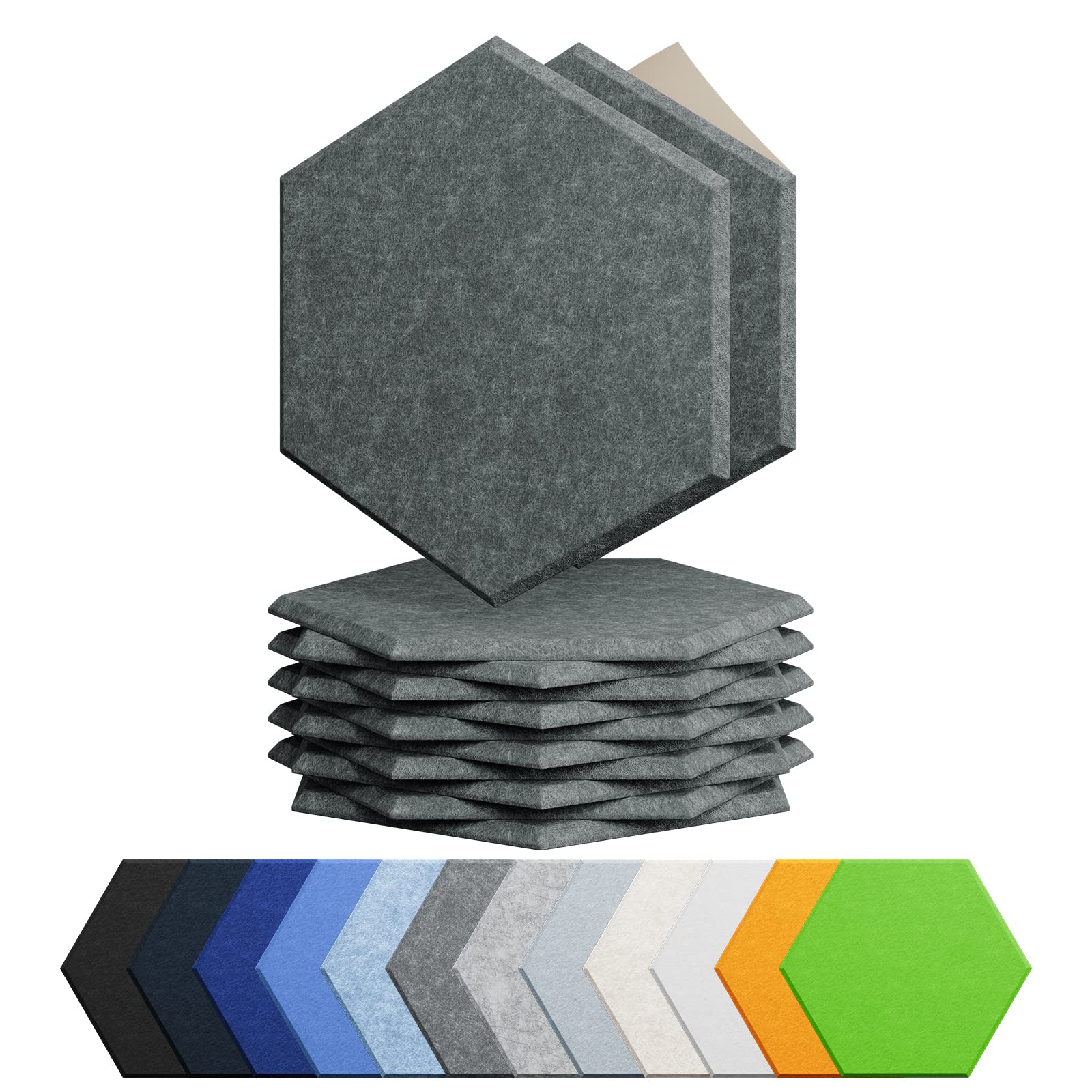
2. Ekkogo 12-Pack Hexagon Acoustic Panels (White)
A lightweight hexagon tile that tames office echo for very little money.
At just 12 by 10 inches and 0.4 inches thick, each tile covers a modest 0.83 square feet, but the pack gives you 12 to build a pattern. These are high-density poly-fiber panels rated with an NRC of up to 0.95, so they genuinely absorb the sound that hits them. In offices and classrooms, owners mention it “noticeably reduced echo and reverb almost immediately.”
No adhesive comes in the box — that is the main planning point. Owners get the best results with construction adhesive on each corner or heavy-duty double-sided tape, and high-ceiling classrooms have held them up with 3M tape successfully. The beveled white edges keep the wall looking clean and modern rather than like an old recording booth.
Set your expectations right and these tiles are a bargain. They dampen reflections and reverb (the echo you hear), but they do not block sound from passing through a wall. One podcast setup with expensive gear found no audible difference in a single case—a reminder that echo control needs enough coverage to matter.
The value read: The cheapest route to a noticeably quieter office or classroom, as long as you bring your own adhesive and manage expectations about sound blocking.
3. Amantech 12-Pack Hexagon Acoustic Foam Panels
Stick-on hexagons that silence a gaming desk or practice room in minutes.
Peel the protective layer, press to the wall, done. Each 100% polyester fiber tile has the glue already on the back, so there are no tools and no separate adhesive to buy. Weighing just 2.88 ounces per panel at 12 x 10.23 inches, they are light enough to hold anywhere — including a fridge wall to quiet its hum, which is exactly how one household used them.
What owners praise most is real effectiveness at absorbing echo, plus the honeycomb design that makes a wall look intentional. Band practice rooms and home offices both report a solid improvement in sound, and the Moonlight Gray color reads far calmer than classic black studio foam. The tiles trim easily with a knife for filling odd gaps.
Keep expectations in line with the price — this is echo absorption, not soundproofing. The recurring note is that they will not block sound coming from outside, so treat them as the decor-and-reverb fix they are.
The practical take: Ideal for renters or quick setups who want instant echo relief with zero install fuss, and who are happy with a light gray honeycomb look.
4. Ultra-High Density Hexagon Acoustic Panels (Orange & Moon Grey)

Dense, bold-colored hexagons that handle live rooms and music practice with ease.
These large hexagons measure a full 14 by 12 inches and use a claimed density of 390 lbs/yd³ — what the maker calls a 2nd-generation vacuum needle punching process that makes the panel denser than typical foam. That density translates into serious absorption for live concrete or hardwood rooms. Clarinet and flute practice in one condo was described as improving in articulation and tuning after install.
The pack includes a free installation gap tool, and the orange and moon grey two-tone look gives a game room or studio a custom feel, especially with color-synced lighting.
Positioning is the one rule to respect: the adhesive bonds firmly on the first press, so lifting a tile to reposition can weaken the stick. Best results come on matte water-based paint, and removal can damage the wall — a consideration for renters.
The High Points
- Long-term adhesive hold on walls and ceilings
- Notably dense panels with bold two-tone color
- Excellent echo control in live rooms
Know Before Installing
- Positioning must be right on first press
- Sticky removal may damage painted walls
Reach for these if: You want professional-grade absorption with a striking color accent and can commit to careful, one-shot placement.
Look elsewhere if: You rent and need a removable option — the strong adhesive is a commitment.
5. Saiqiang 56-Pack Acoustic Wedge Foam Panels (Black)
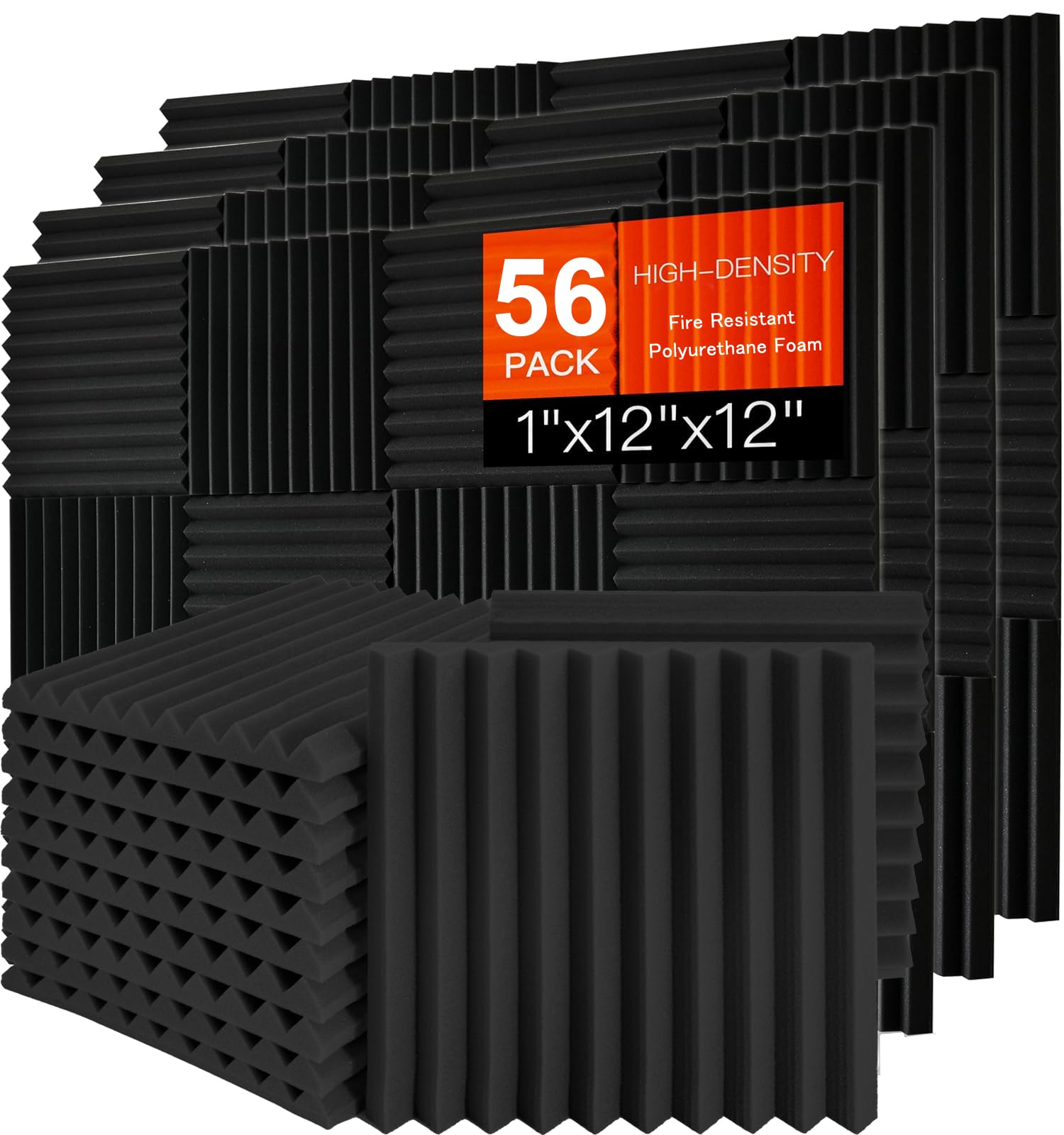
Classic 1-inch wedge foam for podcasters and streamers covering serious wall area.
This is the traditional studio look: 56 panels of 12 by 12 inch polyurethane wedge foam, enough to cover 56 square feet of wall. Customers note a shop dust collector dropped from 80 dB to 70 dB, with speakers sounding richer and the next room quieter.
The panels arrive vacuum-packed and need 24–48 hours to fully expand — a quick 5-minute spin in the dryer speeds that up, and owners confirm they bounce back fast. The 1-inch thickness gives the wedge profile real texture to break up reflections, and the foam cuts cleanly with a utility blade for covering tricky layouts.
Adhesive is the weak link, and it is the most-discussed fit note. The included stickers have failed for some owners after a couple of weeks, so plan on heavy-duty double-sided tape or construction adhesive for a permanent install. Quality impressions are genuinely split, with a few calling it cheap foam — but the sound results speak for themselves when the adhesive is handled.
The straight verdict: A strong large-area echo fix for studios and workshops if you budget for your own adhesive and skip the included tabs.
6. 100-Pack Sound Proof Foam Panels for Walls (12″x12″x1″)

A hundred-tile arsenal that tames traffic noise and gaming screams room-wide.
When you need whole-room coverage, this is the quantity play. The pack ships 100 panels of 12 by 12 inch acoustic foam plus 250 double-sided adhesive tabs, and one owner used roughly 300 square feet across a room to great effect. Two tiles per window drastically cut street traffic noise — motorcycles still audible, but a “night-and-day improvement.”
The install is genuinely tool-free: peel, stick, repeat. Each panel gets five sticker tabs (corners plus center), and the foam expands fully after about 48 hours. One parent mounted a wall of these to significantly reduce their son’s gaming shouts bleeding through the house.
Two honest caveats. The foam smells funny for about a week after unpacking, and the included 250 tabs can run short if you cover a massive wall — ordering extra tape is a common tip. Keep expectations on sound blocking realistic; this is absorption, not isolation.
What It Delivers
- Massive 100-panel volume for one low budget price
- Real reduction in traffic and room-to-room noise
- Peel-and-stick install with no tools
What To Expect
- Initial chemical smell for about a week
- Sticker tabs may run short on big walls
The budget call: The clear pick for covering a large room or apartment wall on a budget, with the patience for a week-long odor.
7. ROOME 22-Pack Self-Adhesive Acoustic Panels
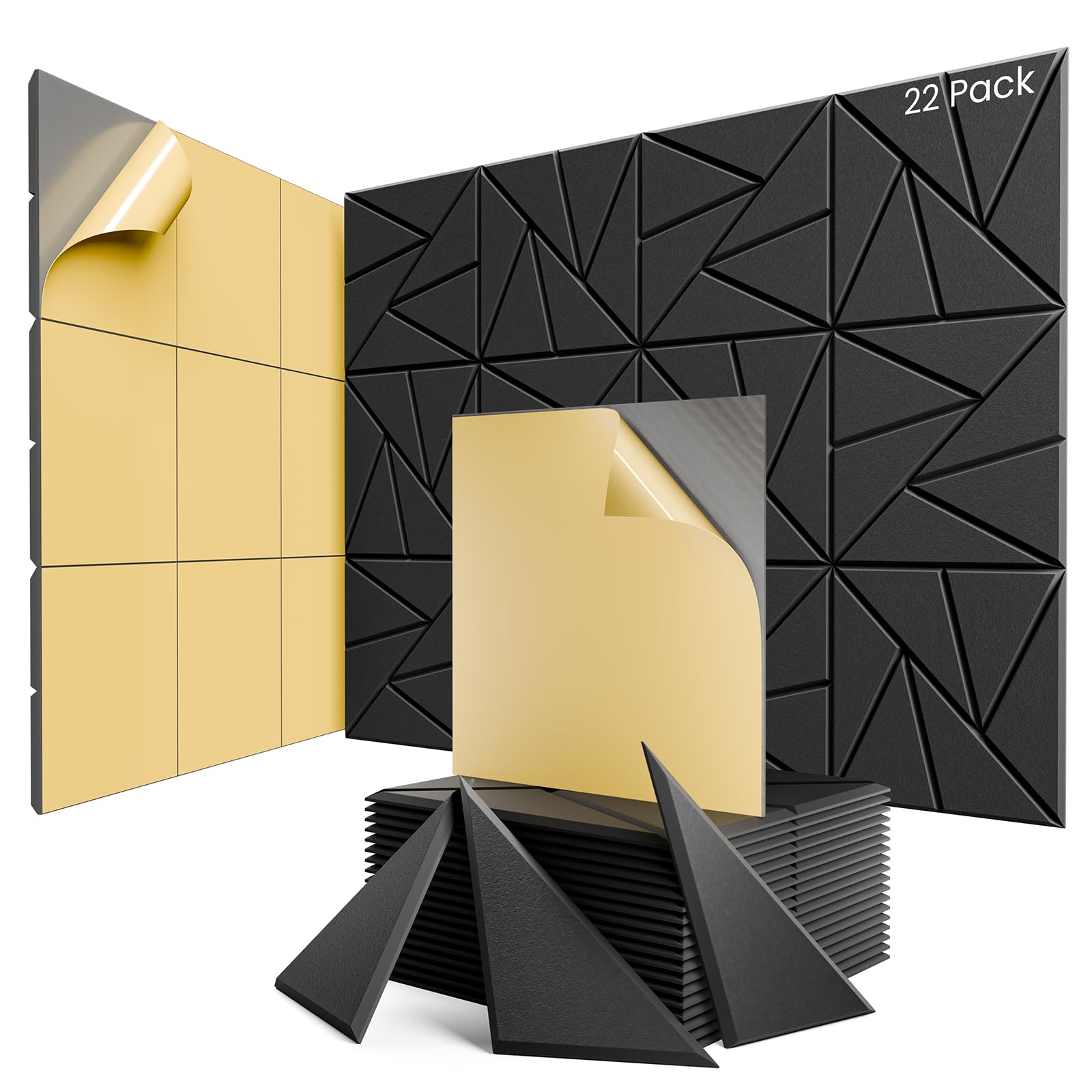
Pattern-friendly polyester tiles that quiet a hallway while looking like art.
These 12 by 12 inch polyester panels carry a claimed absorption coefficient of 0.95, and the design raises them above plain studio foam. The beveled edges and multi-line face let you DIY pinwheel and multi-ring patterns, which is why the appearance gets so much praise — a three-bedroom apartment hallway felt both quieter and more stylish after install. Reviewers point out wall reverberation dropping from rattling to a subtle hum.
Installation is glue-free thanks to the self-adhesive backing, and the panels hold reliably on clean walls without falling off. They are lightweight, easy to cut, and thin at 0.4 inches, so they sit flush without bulky protrusions. The 22-piece pack is noted by the maker as a better per-panel value than smaller 18-piece sets.
The renters’ warning applies here: removal after a month pulled paint and left adhesive residue. Decide whether your wall finish can take the hit before committing, since the stick is strong.
The design-forward read: Best for homeowners who want real echo dampening with a decorative pattern, and who are not planning to remove the tiles later.
8. TONOR Dual-Layer Thickened Acoustic Wall Panels (4-Pack)

Big, hefty panels that muffle noisy neighbors and feel like quality felt.
Each panel is a substantial 47.2 by 23.6 inches and 0.72 inches thick — a dual-layer structure built to disperse echo and noise more effectively than single-layer foam. For thin apartment walls, owners say it is a “standout,” muffling loud music and voices enough to restore peace. The texture is the pleasant surprise: the wall genuinely looks and feels like felt.
Installation is a simple peel-and-stick with the strong pre-applied adhesive, no extra tape needed. The dense panels cut easily, and with four large pieces in the pack you can cover a wide area quickly. One reviewer measured a 50% drop in washer, dryer, and furnace noise, calling the value strong per square foot.
The realism check: placement matters, and inside a door is less effective than outside. Some owners note visible seams between panels as an occasional gripe, and the maker backs it with a two-year warranty.
The Strengths
- Thick dual-layer build swallows neighbor noise
- Felt-like texture that looks premium
- Tool-free self-adhesive install
The Details
- Seams can be visible between panels
- Placement strongly affects performance
The performance call: The one to pick when blanket coverage of a noisy shared wall matters more than a patterned look.
The caution: Expect to plan placement carefully for maximum effect.
9. NeatiEase Wood Slat Wall Panels (Teak, 4-Piece)

Long teak slats that install vertically or horizontally for a luxury-room finish.
Four panels, each a full 96 inches long and 12.6 inches wide, cover about 33 square feet with a rich teak look that owners say resembles cherry wood. The MDF slats sit over high-density polyester fiber, so the wall both absorbs sound and looks like a deliberate architectural choice. One apartment was described as transformed with a “modern luxury” feel, and the sound absorption made a significant difference in room acoustics.
Versatility is the defining trait here. The panels mount with screws or superglue, go up on walls or ceilings, and install horizontally or vertically — letting you run them along a long wall or stack them tall. The appearance is the most-discussed strength, with buyers praising the realistic veneer and sturdy felt backing, and cutting is very doable with an oscillating tool or box cutter.
Two real-world notes. There is a strong odor at the start that takes roughly a month to fully dissipate, and the investment is significant — buyers call it expensive but worth it. Damaged outer boxes are occasional, though panels inside typically arrive intact.
The premium read: The choice for a full feature wall where the teak aesthetic and acoustic benefit justify the higher spend and a little patience with the initial smell.
Understanding the Specs
NRC Rating
NRC, or Noise Reduction Coefficient, is a 0-to-1 score of how much sound a panel absorbs rather than reflects. A panel rated 0.95 soaks up nearly all sound that hits it, making it excellent at reducing echo and reverb. Lower-rated tiles still help but work better as part of a larger coverage plan.
Density & Thickness
Denser panels, like the 390 lbs/yd³ hexagon tiles, absorb more sound per inch of thickness. Thicker panels — think the 0.72-inch TONOR tiles versus the common 0.4-inch designs — tackle lower-frequency rumble more effectively. Thin tiles remain ideal for general echo in voices and mid-range sounds.
Material Type
Polyester fiber is lightweight, odorless, and often made from recycled bottles, which is why it dominates the peel-and-stick market. Wood slat panels pair MDF or laminate planks with a polyester felt core, trading pure absorption power for a furniture-grade look. Polyurethane foam is the classic studio wedge, light and cheap but often shipped compressed.
Adhesive Approach
Self-adhesive panels have glue pre-applied, so install is instant but removal risks paint damage. Some packs ship without adhesive, expecting construction adhesive or heavy-duty double-sided tape. Check which style you are buying before the panels arrive — it changes the whole install process.
FAQ
Will acoustic wall tiles stop noise from my neighbors?
How many panels do I need to notice a difference?
What is the difference between soundproofing and sound absorption?
Will removing self-adhesive panels damage my walls?
Do wood slat panels absorb sound as well as foam tiles?
Can I cut acoustic tiles to fit around outlets and corners?
What does NRC 0.95 actually mean for my room?
Do acoustic panels have a smell when new?
Final Thoughts: The Verdict
For most people, the acoustic wall tiles winner is the Art3d Wood Slat Panels because it delivers genuine echo reduction with a premium walnut look that improve a room. If you want bold, colorful absorption with dense studio-grade build, grab the Ultra-High Density Hexagon Panels. And for covering a large area on a strict budget, the 100-Pack Sound Foam is the one to reach for.
How We Picked
We do not accept paid placement. Every pick is matched to a real buyer and a real use-case; we do not hands-on test units.
Sources & Methodology
Specifications: manufacturer listings and product documentation. Review insights: verified customer reviews, as of August 2026. Pricing: not shown on this page (it changes often); check the current price via the retailer link.
As an Amazon Associate, Gadgets Feed earns from qualifying purchases. This does not affect which products we feature.