
Our readers keep the lights on and my morning glass full of iced black tea. As an Amazon Associate, I earn from qualifying purchases.
Specs are compiled from manufacturer listings and verified buyer reviews and can change over time — please confirm the key details on the product page before buying.
Every handmade greeting card hinges on one moment: that clean, confident fold down the middle. If the paper cracks, splits, or shows a white seam, the whole card reads as homemade in the worst way. Choosing the right cardstock prevents that disaster — the wrong one ruins hours of work.
I’m Min — the founder and writer behind Gadgets Feed. This guide is built by comparing the manufacturers’ published specifications and the patterns across verified customer reviews, so you get each pick’s real strengths and trade-offs instead of marketing spin.
Whether you print at home or craft by hand, the best cardstock for greeting cards balances thickness against printer compatibility so your finished card looks professional.
Our Picks at a Glance

How To Choose The Best Cardstock For Greeting Cards
You need cardstock that feels sturdy in your hand but still folds cleanly and feeds through your home printer without jamming. If it’s too thin, cards feel flimsy; too thick, and your printer may reject it. That balance is what makes card-making enjoyable.
Match the weight to your printer and your fold
For most projects, an 80 lb cover weight (about 216 gsm) is the everyday workhorse: it folds easily, cuts cleanly, and takes ink without show-through. If you want a sturdier, premium feel for a card base, a 110 lb cover (300 gsm) adds rigidity—but some home printers can’t feed sheets this thick, so check your printer’s maximum paper weight before buying.
Look for a clean, consistent fold line
A card is only as good as its crease. Suppliers solve this either with a pre-scored fold down the middle or with paper engineered to take a sharp crease when you fold it yourself. For hand-folded sheets, scoring the paper with a bone folder before bending it prevents the fiber cracks that ruin an otherwise perfect card.
Decide between bright white, ivory, or a full rainbow
Bright white (a 96 or 98 brightness rating) makes photo colors pop and is the default for printed designs. Cream and ivory shades give a softer, vintage look that many card makers love — but some ivory stocks run more yellow than the label suggests. Colored cardstock that’s dyed all the way through keeps its pigment at folds and cut edges instead of revealing a white core.
Count the environmental and acid-free boxes
For keepsakes and photos, acid-free paper resists yellowing and deterioration over the years. Forest Stewardship Council (FSC) certification means the fiber comes from responsibly managed forests. Both are worth checking if your cards are meant to last or matter to you ethically.
Quick Comparison
| Model | Best For | Weight | Sheets | Finish | Amazon |
|---|---|---|---|---|---|
| Cranium Press 80 lb★ Best Overall | All-purpose printing | 80 lb cover (216 gsm) | 100 | Smooth bright white | Amazon |
| Desktop Publishing 110 lbPremium Pick | Ultra-sturdy card bases | 110 lb cover (300 gsm) | 50 | Smooth 98 bright | Amazon |
| Goefun Cream 65 lbStyle Pick | Cream vintage projects | 65 lb (180 gsm) | 50 | Smooth cream | Amazon |
| Neenah Exact Index | Bulk office & cards | 110 lb (199 gsm) | 250 | Ivory index | Amazon |
| TUXIYA Colored | Multi-color crafting | 180 gsm | 100 | Full-core dyed | Amazon |
| Aidunmis White 120 | Double-sided printing | 200 GSM | 120 | Smooth white | Amazon |
| Desktop Publishing 120 lb | Rigid premium cards | 120 lb cover (325 gsm) | 50 | Matte bright white | Amazon |
| Accent Opaque 80 lb | Large ream value | 80 lb (216 gsm) | 250 | Smooth 96 bright | Amazon |
| S Superfine Pre-Folded | Ready-to-fold cards | 80 lb | 100 cards | Textured 96 bright | Amazon |
In-Depth Reviews
1. Cranium Press 80 lb Heavyweight White Cardstock
Our pick — over 4.5★ from 950+ verified ratings; the strongest balance of quality and price.
The all-rounder that prints flawlessly, folds cleanly, and barely shows a crease.
Start with this 80 lb cover stock at 216 gsm: it has a bright-white, smooth finish and comes in a 100-sheet pack, so you have room for practice runs and finished cards. The weight feeds through home printers without jamming, yet feels substantial in hand. Buyers confirm it: “Everything is right about this paper, it is sturdy and the weight is good for envelopes or cards.”
The brighter-white shade and smooth surface mean ink sits on top of the paper instead of soaking in, which keeps colors vivid while minimizing show-through on the back. That matters when you print a dense design on the front and still want a clean inside panel for your handwritten note. Because it’s FSC certified and made in the USA, you’re also getting a responsibly sourced sheet.
What wins people over is the quality — this is the most-praised trait, with a large share of owners highlighting it. It also earns strong marks for value for money, with many noting it’s worth the price for invitations and DIY projects. The bright white color holds up well, and the paper cuts easily for crafts, so it’s genuinely versatile beyond just cards.
What card makers love
- Prints cleanly without jamming on home inkjets
- Thick enough to prevent ink bleed-through
- Cuts easily for die-cutting and craft projects
Worth knowing
- At 80 lb it’s lighter than ultra-heavyweight bases
- A pack of 100 is generous, but not the largest ream size
Reach for it if: you want one dependable white cardstock that prints, folds, and cuts well for most card projects.
Look elsewhere if: you need a rigid, premium-feel base — step up to a 110 lb or 120 lb cover instead.
2. Desktop Publishing Supplies 110 lb Cover (300gsm) Cardstock
An ultra-thick base that gives greeting cards a true heavyweight presence.
If the Cranium Press above feels too light, this 110 lb cover (300 gsm) sheet is the opposite: buyers call it “the best they’ve used” for card bases. It’s a 2.0x weight jump over an everyday 65 lb sheet, so cards stand stiff and feel expensive in hand. The 50-sheet pack is smaller, but each sheet earns its place.
The 98-brightness smooth white surface makes printed text crisp and graphics bold. But the heaviness is a double-edged sword: the maker warns that some home printers won’t accept 110 lb cover, and several owners confirm you’ll likely need a manual feed tray or straight paper path. One buyer reports it fed fine through an HP laser and, at 297 g, this pack is 65% heavier than a comparable 65 lb cream pack — a tangible difference you feel the moment you lift it.
The recurring advice from owners is to score before folding. Fold toward a dark printed side and the fibers can lift, leaving an ugly crease; a quick score line solves it. Buyers also note the paper arrives sealed in plastic and unscented. The paper quality is the top praise, with one owner summing it up: “110lb cover, smooth, white, unscented, undamaged.”
The heavyweight choice: this is the go-to for card makers who want a stiff, professional base and are willing to work with their printer’s manual feed. It also takes die-cutting, scoring, and even Copic markers and careful watercolor in stride.
Fair warning: shipping durability is the weak spot — some units arrive with wrinkled corners, so inspect the pack when it lands.
3. Goefun 50 Pack Cream Cardstock (65 lb)
A soft cream that folds into a sharp, clean edge with no white core showing.
Not every card wants stark white. This 65 lb (180 gsm) cream sheet delivers a warm, off-white look that’s ideal for vintage-style invitations and soft-toned greeting cards. The cream color is exactly as advertised, and at 180 g it’s a full 65% lighter than that 110 lb heavyweight above — so it folds easily and stays printer-friendly for most inkjets and lasers.
The selling point here is the fold. This stock holds a nice sharp crease, and because it’s scored cleanly, no white core shows at the bend — a detail that keeps handmade cards looking polished. It also takes watercolor, stenciling, ink blending, and alcohol markers well, which makes it a favorite for mixed-media card fronts. Quality is the most-praised trait, and owners love the color and versatility for craft projects.
At 50 sheets, this is a smaller pack aimed at a specific project rather than bulk stock. It’s also FSC certified. People have used it for everything from wedding invites to Book Arts class finals, and the paper went through the printer with no problems. For a dedicated cream card base, this is the one to reach for.
Why crafters pick it
- Holds a sharp crease with no white core at the fold
- Compatible with watercolor, markers, and stenciling
- Printer-friendly for most inkjet and laser machines
Keep in mind
- 65 lb is lighter than a premium card base
- Only 50 sheets per pack
Best for: vintage and soft-toned card projects where a warm cream shade beats pure white.
Not for: anyone who needs a stiff, heavyweight base or bulk sheet counts.
4. Neenah Exact Index Card Stock (110 lb / 199 gsm)

A 250-sheet ivory ream that handles big card-making runs while staying affordable.
When you’re making cards in volume — class sets, party favors, or wedding suites — sheet count matters. This Neenah pack gives you 250 sheets of 110 lb index stock at 199 gsm, which is the kind of quantity that makes it a strong value for money. It’s acid-free, so your finished cards won’t yellow or deteriorate over the years.
The smooth, uniform surface enhances ink holdout, meaning ink sits crisply on top rather than soaking in and feathering. It handles printing without smudging or warping, and buyers find it sturdy enough to prevent sagging. It’s also heavier than the 65 lb cream pack above, at a comparable 110 lb index weight, so it stands up well as a card base.
The honest caveat is the color: it’s labeled ivory, but buyers are split—some say it’s good, others find it darker and yellower than true ivory. One buyer put it bluntly: “I agree with others, it should be classified as yellow.” If you need a neutral off-white, this vintage cream with a brown undertone works beautifully; if you need true ivory, it may read warmer than expected.
Bulk and budget: the per-sheet cost on a 250-sheet ream is tough to top, and the paper prints well with no smudging or warping.
The fit note: this is for card makers who embrace a warm, vintage cream tone rather than a crisp neutral.
5. TUXIYA 100 Sheets Colored Cardstock (50 Colors)
Fifty rich colors, each dyed through the paper so folds and cuts never show white.
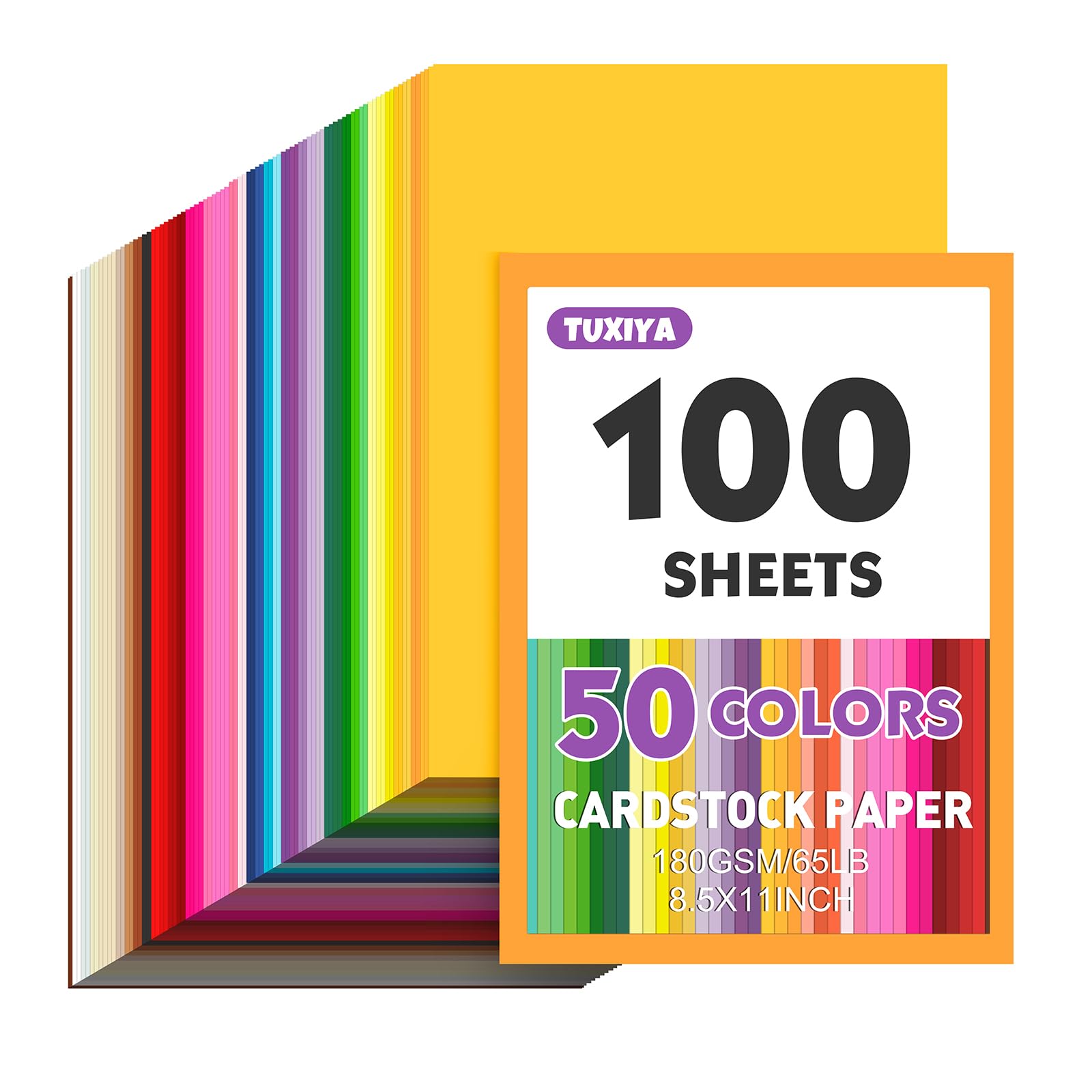
Colored cardstock is where greeting cards get their pop, and this pack delivers 50 colors with 2 sheets of each — everything from fluorescent yellow and hot pink to royal blue and forest green. The 180 gsm weight keeps it sturdy without being too thick for a home printer, and buyers confirm it runs through Brother laser printers cleanly.
The standout feature is the full-core dye. Because the color goes all the way through the sheet, folds, tears, punches, and cuts always reveal rich, consistent color — never white edges. That’s a small detail with a big visual payoff on layered card fronts and folded designs. The color variety is the most-praised trait by a wide margin, with owners calling the range “fantastic” for classroom and craft use alike.
Made from virgin wood pulp and acid-free, the paper resists fading and tearing. It also cuts cleanly without fraying, which matters for intricate die-cuts. Durability gets mixed feedback — most find it sturdy, but a few report it tears easily, so handle it gently on delicate cuts. For cards, crafts, and classroom projects that need a full rainbow, this is the pack to grab.
What stands out
- 50 colors in one pack for maximum variety
- Full-core dye means no white edges on cuts
- Works in laser and inkjet printers
Watch for
- A few sheets may tear more easily on intricate cuts
- 2 sheets per color limits how many matching cards you can make
Grab this if: your card projects lean on color variety and you want crisp, color-through cuts.
skip it if: you need many identical sheets in one color — buy a dedicated single-color pack instead.
6. Aidunmis 120 Sheets White Cardstock (200 GSM)
A smooth 200 GSM white sheet built for double-sided printing and heavy craft use.
Straddling the line between lightweight and heavyweight, this 200 GSM cardstock gives you 120 sheets of white that work for both printed cards and layered crafts. The double-sided blank layout means you can print on both faces without worrying about show-through — the thickness prevents ink bleed, which is exactly what you want on a card interior you plan to write on.
The smooth surface takes cutting, folding, and stamping well, making it a flexible pick for wedding invitations, holiday cards, and scrapbooking. It feeds smoothly through printers, and buyers used it for everything from custom wedding signage to milestone certificates. Quality is the most-praised aspect, and owners note the print quality is solid.
The catch here is consistency. Some owners describe the paper as soft ivory rather than bright white, and thickness gets mixed feedback — some find it perfect while others expected heavier. A few also note the card size runs narrow, so double-check against your envelope before committing to a big batch. When it works, it’s a great value for your money.
Versatile middleweight: the 200 GSM weight and 120-sheet count make this a strong everyday cardstock for printing and crafting alike.
Test first: if you need precise dimensions or a true bright white, confirm the color and size before ordering a large quantity.
7. Desktop Publishing Supplies 120 lb Cover (325gsm) Cardstock
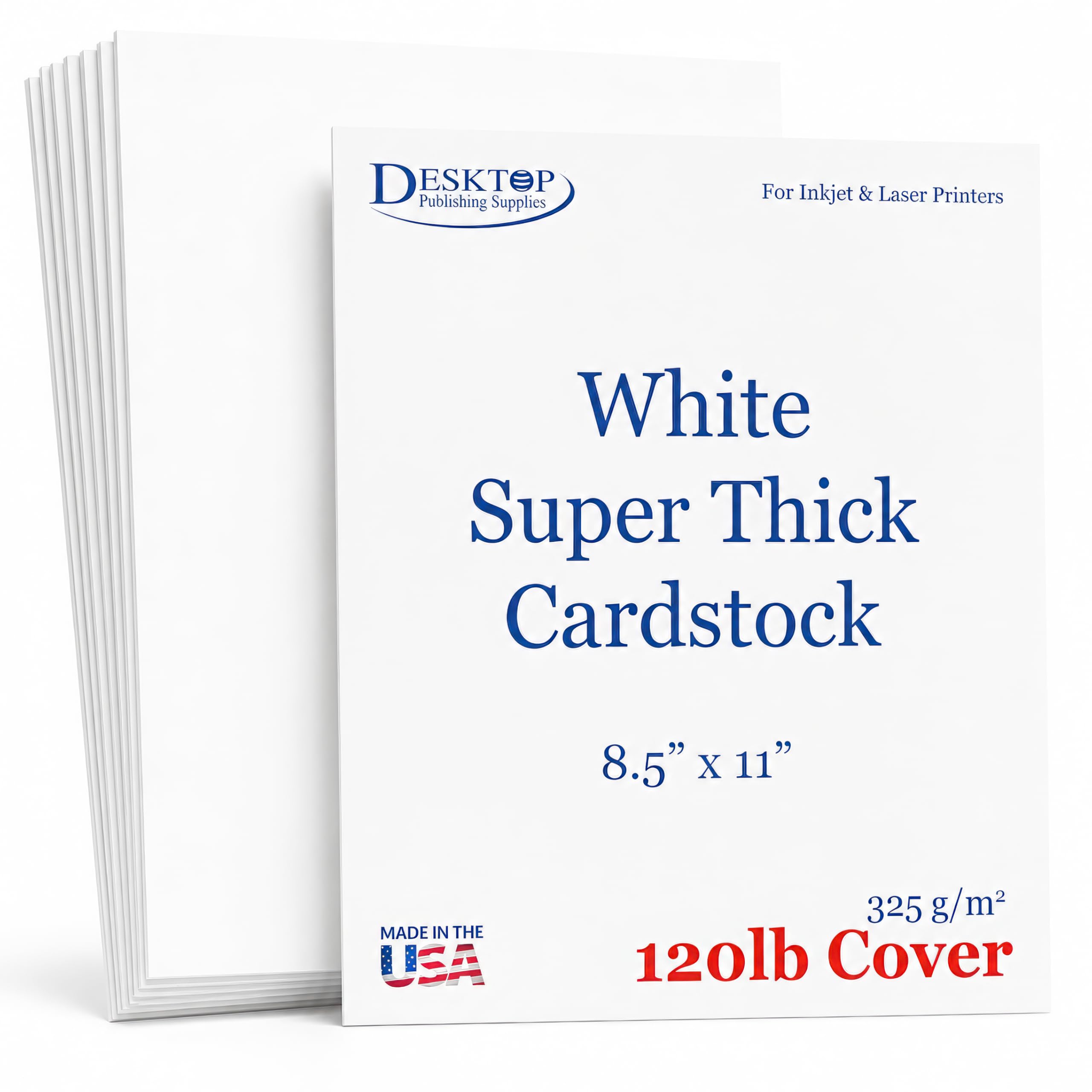
The stiffest sheet here — 120 lb cover that barely bends, for cards that demand rigidity.
If you’ve ever picked up a mass-produced greeting card and felt how crisp and unbending it is, this is that feel. At 120 lb cover (325 gsm), this is the thickest stock in this lineup, and buyers who call themselves paper snobs say it’s the best thick cardstock they’ve ever purchased. It doesn’t lie about the weight — this sheet is genuinely rigid.
The bright white, smooth matte finish gives excellent ink and toner adhesion, so prints look sharp and professional. Beyond cards, owners use it for flashcards, laser engraving, and even game card proxies, because the thickness holds up to heavy handling. The quality and thickness are the two most-praised traits, and value for money gets solid marks too.
The trade-off is real: this ultra-thick stock requires a printer that supports heavy media, and the maker is upfront that many home printers won’t handle it. Buyers confirm inkjet machines like Epson models often reject it entirely. You’ll also want to score before folding to prevent cracking. Made in the USA with free templates and an online designer included, this is a premium choice for card makers who prioritize rigidity.
Why it’s worth it
- Exceptional rigidity that feels premium in hand
- Works for laser engraving and heavy-duty crafts
- Bright white matte surface for professional prints
The catch
- Most home printers cannot feed 325 gsm sheets
- Requires scoring before folding to avoid cracks
The rigid pick: choose this when card stiffness is non-negotiable and you have a printer that accepts heavy media.
Pass on it: if you rely on a standard home inkjet — step down to an 80 lb or 110 lb sheet that will actually feed.
8. Accent Opaque White 80 lb Cardstock (250 Sheets)

A full 250-sheet ream of smooth 80 lb white that’s become a card maker’s go-to.
This is the sheet that card makers keep coming back to. At 80 lb (216 gsm) with 250 sheets in the ream, it’s the workhorse of the lineup — enough stock for months of card projects without reordering. The high bright-white shade (96 brightness) and smooth finish deliver crisp, vibrant prints with proper ink holdout.
Owners describe it as their go-to card stock, praising the texture, weight, and color. “The best of the best for card making, I always come back to this brand,” is how the review pages sum it up — one buyer notes it feels like 110 lb despite being rated 80 lb. It also takes markers, pencils, inks, and PanPastels well without wrinkling, which makes it a favorite for mixed-media card fronts. Quality is the most-praised trait, with printer compatibility close behind.
The durability feedback is mixed — most find it sturdy, but a few describe it as flimsy. It’s made in the USA and FSC certified, which adds to its appeal for environmentally conscious crafters. The only recurring complaint is packaging: some units arrive with the paper undamaged but the box busted, though the sheets themselves typically survive.
The reliable daily driver: this 250-sheet ream pairs the most-praised quality with a weight that prints beautifully in most home machines.
One note: if you need a true heavyweight rigid base, this 80 lb sheet won’t match a 110 lb or 120 lb cover.
9. S Superfine Blank Half Fold Greeting Cards (8.5 x 5.5, 100 Pack)

Pre-scored and ready to fold — skip the cutting step and print straight onto 100 cards.
Why cut and fold your own when you can buy cards already shaped? This pack gives you 100 pre-cut, pre-scored half-fold cards at 5.5 x 8.5 inches when folded — the exact size of a standard greeting card, with a clean score down the middle that eliminates cracking. It’s the fastest route from idea to finished card.
The 80 lb stock has a special textured surface and a 96 brightness rating that makes photo colors appear more vibrant. Buyers report photos print beautifully with no bleed-through, and the heavy stock gives cards a professional look and feel. It works with inkjet, laser, and copier machines, though the maker notes the stock is thick enough that you should check your printer’s manual feed. Foldability is the most-praised trait, followed closely by card quality.
A dedicated space inside each card gives you room for handwritten messages. One owner notes that a single card with an envelope costs one postage stamp to mail — handy if you’re sending a batch. The pre-scored crease folds well but needs a little extra pressing. Packaging is the recurring gripe: the cellophane wrap can damage corners, so inspect the bundle on arrival.
Why it saves time
- Pre-scored fold eliminates cracking
- 100 cards ready to print with no cutting
- Textured surface enhances photo colors
Consider
- Cellophane packaging can damage card corners
- Lacks a glossy or matte print finish
Pick this for: speed — print, fold, sign, and mail 100 cards without touching a paper cutter.
Think twice if: you want to design custom card shapes or need a glossy photo finish.
Understanding the Specs
lb cover vs. gsm: the two weight languages
Cardstock weight is described in two systems. “lb cover” is the traditional US measure — 80 lb cover, 110 lb cover, 120 lb cover — where a higher number means thicker, stiffer paper. “gsm” (grams per square meter) is the metric equivalent that measures the actual density of the sheet. An 80 lb cover typically equals 216 gsm, while a 110 lb cover is around 300 gsm. The heavier the weight, the more rigid the card — but also the harder it is for a home printer to feed.
Brightness and finish
Brightness is a scale from 0 to 100 that tells you how much light the paper reflects. A rating of 96 or 98 means a bright, clean white that makes printed colors look vivid and true. The finish — smooth, matte, or textured — affects how ink sits on the surface and how the card feels in hand. Smooth finishes let ink sit crisply on top, while textured surfaces add a tactile, handmade quality to the finished card.
FAQ
Will a 110 lb or 120 lb cardstock feed through my home printer?
What does it mean when cardstock is “full-core dyed”?
How do I fold cardstock without cracking it?
Is an 80 lb cardstock thick enough for greeting cards?
What’s the difference between cardstock and regular printer paper?
When should I choose cream or ivory cardstock instead of white?
Does colored cardstock bleed ink or fade over time?
What does FSC certification mean for cardstock?
How many sheets of cardstock do I actually need for a project?
Can I write on cardstock with markers, pens, or paint?
Final Thoughts: The Verdict
For the majority of shoppers, the cardstock for greeting cards winner is the Cranium Press 80 lb because it nails the balance of printability, fold quality, and value — and it earns a stellar 4.8-star rating from the crowd. If you want a stiff, premium base that feels like a store-bought card, grab the Desktop Publishing Supplies 110 lb. And for bulk card-making while staying affordable, the Accent Opaque 250-sheet ream is the one to reach for — the crowd favorite with the most reviews behind it.
How We Picked
We do not accept paid placement. Every pick is matched to a real buyer and a real use-case; we do not hands-on test units.
Sources & Methodology
Specifications: manufacturer listings and product documentation. Review insights: verified customer reviews, as of August 2026. Pricing: not shown on this page (it changes often); check the current price via the retailer link.
As an Amazon Associate, Gadgets Feed earns from qualifying purchases. This does not affect which products we feature.