
Our readers keep the lights on and my morning glass full of iced black tea. As an Amazon Associate, I earn from qualifying purchases.
Specs are compiled from manufacturer listings and verified buyer reviews and can change over time — please confirm the key details on the product page before buying.
A budget pitching machine forces a trade-off between speed, portability, and durability. This guide ranks budget-friendly machines by how well they balance speed, portability, and durability for your hitter’s age and skill level.
I’m Min — the founder and writer behind Gadgets Feed. This guide is built by comparing the manufacturers’ published specifications and the patterns across verified customer reviews, so you get each pick’s real strengths and trade-offs instead of marketing spin.
The best budget pitching machine for your family balances ball speed, setup space, and build quality without demanding a premium price tag.
Our Picks at a Glance


How To Choose The Best Budget Pitching Machine
Budget pitching machines split into powered wheel models with set speeds and manual spring-loaded launchers you fire yourself. Your practice space and hitter’s needs determine which camp fits first.
Match Speed to the Hitter, Not the Advertised Max
A 30 mph machine suits a 7-year-old but feels slow to a 14-year-old. Powered models offer multiple speed settings, while manual ones depend on your arm strength, so match top speed to the hitter’s age.
Ball Type Dictates Safety and Space
Lightweight perforated or foam balls are safe indoors and won’t crack wooden bats, but wind affects them outdoors. Regulation baseball machines need more open space and sturdier builds, raising the price.
Power Source Changes Where You Can Use It
Battery-powered and AC-powered machines give you consistent pitch speed but need a power outlet or recharging. Manual machines run anywhere with zero electricity, making them the most portable option for fields without power access.
Quick Comparison
| Model | Best For | Top Speed | Ball Capacity | Weight | Amazon |
|---|---|---|---|---|---|
| Personal Pitcher Pro★ Best Overall | Indoor solo training | Simulates 15–95 mph | 48 balls included | 6 pounds | Amazon |
| SKLZ Lightning Bolt ProBudget Champion | Young beginners | 30 mph | 26 balls | 2.8 pounds | Amazon |
| Furlihong 692BHVisual Acuity Pick | Hand-eye coordination | 18 mph | 40 balls | 4.4 pounds | Amazon |
| Furlihong 3801BH | Beginner kids 5–12 | 30 mph | 8 balls included | 4.5 pounds | Amazon |
| MOXOW Sagitta | Manual field practice | Manual launch | 50 baseballs / 30 softballs | Steel frame | Amazon |
| Franklin Sports Total Pitcher | Coaches on a budget | Manual spring launch | — | Steel frame | Amazon |
| Heater Power Alley Pro | Real baseballs | 45 mph | — | 15.7 pounds | Amazon |
| Heater Slider Lite 360 | Curveball training | 80 mph (lite balls) | — | 13 pounds | Amazon |
| Louisville Slugger Blue Flame Pro | Serious hitters | 30–58 mph | — | 20 pounds | Amazon |
In‑Depth Reviews
1. Personal Pitcher® Pro Pitching Machine
Our pick — 4.5★ from 150+ verified ratings; the strongest balance of quality and price.
The basement-friendly machine that throws curveballs to both lefties and righties
If your practice space is a garage or living room rather than a field, this is the pick that makes indoor training actually work. It mounts onto any standard camera tripod, so you set it up at the exact height you want, and at under 6 pounds it is easy to move between rooms. The 4-hour rechargeable battery means you are not tethered to a wall outlet, though an AC adapter is also included for longer sessions.
What wins people over is the value for money — owners routinely call it a smart alternative to far pricier brand-name machines. It uses lightweight perforated plastic golf-ball-size balls that won’t crack wooden bats, which is a real relief if you are using a game bat. The 48 included balls are consistent, and the machine can throw fastball sliders and curveballs at high velocity while alternating inside, outside, high, low, and straight pitches.
Expect some fiddling before you dial in the rear switches that control speed and pitch type—owner feedback on functionality is genuinely mixed. For setup, plan for about 30 feet of indoor distance, let the machine warm up before feeding balls, and start with soft toss at 15 feet. One basement setup with a 30-foot distance between machine and hitter has worked well for an eleven-year-old intermediate player, showing you the realistic balance.
Pro-grade accuracy
- Throws both curveballs and fastballs with lefty and righty options
- Weighs less than 6 pounds and mounts on any standard camera tripod
- Solo training is easy with the Pro Timing Light for loading
Needs assembly patience
- Speed and pitch switches take time to learn
- Outdoor wind affects the lightweight balls
- Ball pickup after sessions is tedious
serious reps: you want serious indoor hitting and catching drills for an 8-to-14-year-old with room for a 30-foot setup.
casual toss: you need a machine that works reliably outdoors in breezy conditions.
2. SKLZ Lightning Bolt Pro Pitching Machine
The featherweight 2.8-pound starter that gets young kids swinging
At just 2.8 pounds, this is the easiest machine in this lineup to haul to a park, a backyard, or a garage. It automatically pitches soft practice balls at 30 mph, which is a forgiving speed for kids still building hand-eye coordination, and the small balls are great for improving focus on the ball. The 26-ball hopper gives you a solid run of reps before reloading.
What everyone raves about is the fun factor — parents and grandparents report grandkids improving their batting quickly and using it without any adult assistance. The angle adjusts for different pitching locations, so you can vary where the ball comes from to work on different parts of the strike zone. It is a genuinely affordable entry point that works indoors and out.
The honest catch is reliability. Owners have reported defective units arriving — a conveyor gear that runs with the switch off and a wobbly wheel from loose motor screws among them — and quality control is clearly inconsistent. The 5-second delay between pitches also feels rushed for younger hitters who need time to reset their stance. If you get a good unit, it is a fantastic starter; if you get a bad one, be ready to use the return process.
Entry-level value: the compact 3.7 x 4.25 x 3.7-inch size and tiny weight make this the pick to toss in a car trunk for impromptu practice anywhere — just budget for possible quality-control hiccups.
budget starts: families with young kids, roughly 6 to 10, who need a fun, portable introduction to batting practice.
power hitters: you want a machine that will survive heavy daily use for years without any repair risk.
3. Furlihong 692BH Baseball Pitching Machine
The 40-ball hopper that keeps reps flowing for hand-eye work
This machine uses a special 5-inch circumference training ball that pitches at 18 mph, which sounds slow but is deliberately designed to be more challenging and improve batting accuracy. The smaller ball forces your eyes to track a tighter target, and buyers report real progress — one young hitter went from 0-13 to 3-4 after regular use. It delivers 18 mph, which is 12 mph slower than the SKLZ above, so it suits hitters still mastering timing rather than those needing game-speed heat.
It runs on AC power or C batteries (not included), making it genuinely portable for indoor and outdoor use. The included 60 balls give you more to work with than any other machine in this roundup, beating the Personal Pitcher’s 48 by a 25% margin.
Coaches have found it great for 14u team practice, noting that 30 mph from 15 feet forces hitters to make adjustments. The main grumbles: the balls fly far and get lost near woods, no extra balls are sold separately, and there is no launch indicator. The plastic body is light, so long-term durability is an open question, but for value and immediate training effect, this one punches above its price.
backyard drills: a young hitter who needs reps to build hand-eye coordination, especially in a limited space with the big 40-ball basket.
high velocity: you need game-speed pitching beyond 18 mph for an older, advanced player.
4. Furlihong 3801BH Upgraded Electronic Baseball Pitching Machine

The adjustable-wheel machine built for kids aged 5 to 12
This one is aimed squarely at beginners, with adjustable wheels on both sides that let you dial in everything from speed to angle for fastballs, curves, and sliders. It tops out at 30 mph, which is a good ceiling for young hitters, and it uses Furlihong’s polyurethane dimpled balls weighing 1 oz that are sting-free and won’t dent bats. You cannot feed it regulation baseballs, but for its intended young audience that is not a limitation.
Power comes from 4 D batteries (not included) or the provided 6V AC adapter, so you can use it anywhere. Owners consistently call it easy to set up and a great gift for ball players who want to practice hitting and catching without needing another person. It is also versatile enough that some use it for cricket technique training thanks to the independent wheel speed and swing control.
The reliability story is genuinely split. One owner had a ball return fail on first use, though excellent customer service replaced the unit and the new one worked perfectly. Others note the High/Low setting shows little visible difference and the light balls can be inconsistent outdoors in wind. For indoor beginner training with a 5-to-12-year-old, it delivers; for outdoor game-speed work, it falls short.
Upgraded controls: the 8.7 x 7.1 x 18.9-inch frame and 4.5-pound weight make it easy to store, and the 8 included balls are enough to start — just buy extras before you wear them out.
tech-savvy users: you have a young beginner who needs a simple, adjustable machine for indoor hitting and softball practice.
durability seekers: you expect reliable outdoor performance in windy conditions or need higher pitch speeds.
5. MOXOW Sagitta Manual Baseball & Softball Pitching Machine
The quiet steel-frame launcher that needs no electricity at all
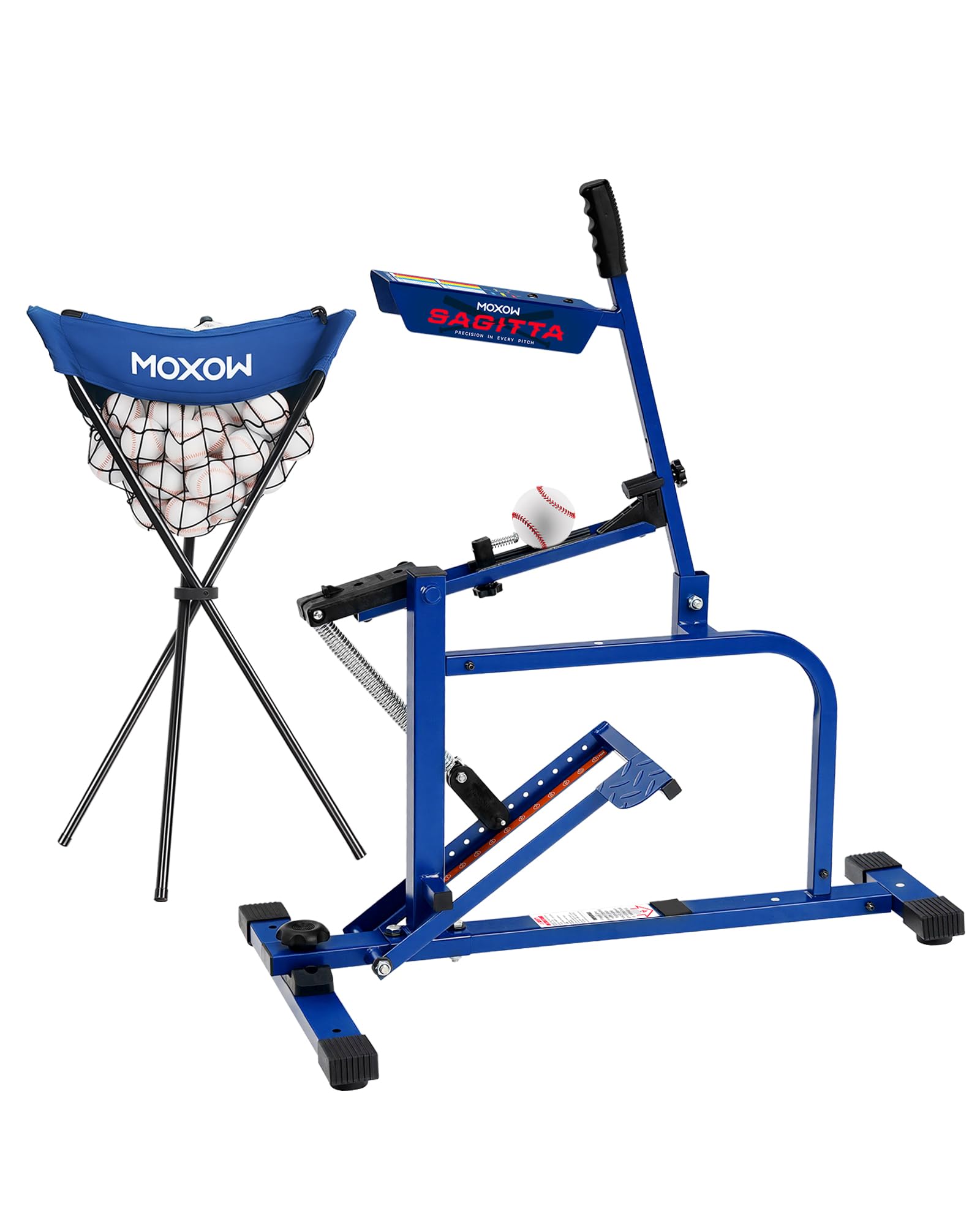
If you coach on a field without power outlets, this manual machine is the answer. It runs with zero electricity, batteries, or charging, instead using a reinforced steel frame and a spring-style mechanism you fire yourself. The dual-function beam serves as both a stability element during throws and a carrying handle, making transport easy. The anti-tilt bar keeps the frame from leaning sideways so pitches stay on target.
What stands out is the included ball caddy that holds 50 baseballs or 30 softballs, saving your back during long practice sessions. Owners describe it as sturdy and heavy, easy to assemble with clear instructions and included tools, and quiet enough for coaching during warmups without shouting over a motor. The color-coded speed setting guide makes it simple to adjust pitch speeds and trajectories, and the height adjusts for different batter sizes.
The recurring concern is the durability of the spring pin, with a few owners reporting it broke after first use. This is a 90-day limited warranty product, so be aware of that coverage window. For everyday hitting and fielding practice with kids, the consistent strikes and easy grounder/fly-ball adjustments make this a reliable manual workhorse, though it is not built for advanced players seeking game-speed pitching.
quiet practice: you coach or practice on fields with no power access and want a quiet, sturdy, adjustable launcher.
long sessions: you want automated pitch delivery without a person firing each ball.
6. Franklin Sports Total Pitcher Training Aid

The spring launcher that handles baseballs, softballs, and teeballs alike
This all-in-one training aid uses a spring-powered launching mechanism, so it needs no batteries or electricity at all. It is compatible with baseballs, softballs, and teeballs, which makes it a flexible option for families with players of different sports. The settings adjust to produce ground balls and pop flies for fielding drills, plus straight pitches for batting practice, all controlled through an attached color-coded speed chart.
For coaches, the appeal is speed of repetition. One owner reports a reload time under 3 seconds with consistent pitches nearly every time, which simplifies batting practice enormously. The detachable basket with handles makes collecting and storing balls between reps easy. It comes with two ground stakes for stability, and the steel frame gives it a solid feel.
The build quality story is the honest concern here. Several owners mention the weld breaking right off the arm during first use, and one describes a flimsy plastic throwing arm that snapped at the joint after three sessions with standard softballs. This is a 90-day limited warranty product, so durability is a gamble. It is a promising coaching tool when it holds together, but quality control is inconsistent enough that you should weigh that risk.
Coach favorite: when it works, the sub-3-second reload and multi-ball compatibility make it a real practice accelerator — the question is whether your unit is one of the good ones.
team training: a coach who needs a portable, no-power launcher for quick batting and fielding drills with multiple ball types.
solo reps: you cannot tolerate the risk of a weld failure on a frame that sees hard use.
7. Heater Power Alley Pro Real Baseball Machine

The 45-mph real-baseball machine that prepares hitters for live pitching
This is the pick when you want to hit real baseballs, not foam or plastic balls. It pitches regulation baseballs up to 45 mph, which is a key step for hitters transitioning from soft toss to live pitching. The adjustable pitch height lets you practice fastballs, grounders, and pop flies, making it versatile for both batting and defensive work with younger players.
Construction is a step up from the budget plastic machines: a tubular steel tripod stand supports an impact-resistant nylon-fiberglass housing. At 15.7 pounds, it is meaningfully heavier than the 2.8-pound SKLZ, but that weight translates to stability during use. It runs on standard 110V power, or you can buy the Power Station (PS100) separately for portable use anywhere.
The honest feedback is split. Plenty of owners find it amazing for light groundballs and pop flies in the backyard, easy to set up, and sturdy, with multiple speeds letting everyone at different ages enjoy it. But the reliability record includes a motor that stopped working after an hour and throws that run too high at all speeds. The noise level is also notable — it vibrates loudly without sandbags on the legs. For a dedicated real-ball trainer, it is a solid mid-tier choice, but quality control varies.
field readiness: families or coaches who specifically want real-baseball practice at up to 45 mph with grounder and pop-fly versatility.
small spaces: the motor reliability and noise level are the trade-offs against its sturdy steel build.
8. Heater Sports Slider Lite 360 Pitching Machine

The pivot-head machine that throws accurate curveballs up to 80 mph
For hitters who need to master breaking balls, this is the specialist. The innovative pivot head design excels at pitching accurate curveballs alongside traditional fastballs, and it throws lite balls up to 80 mph at a distance of 46 feet. That combination of speed and movement makes it ideal for refining reaction time and swing mechanics against game-like pitch styles.
The automatic ball feeder keeps a steady stream of pitches coming, and the tubular steel legs with rubber tips provide stability on any surface with quick tool-free assembly. It is one of the stronger performers for the price, with owners noting 6-year durability through heavy summer use. The multiple speeds let players of all ages enjoy it, from young grandkids to serious teens.
The trade-offs are real: it is plastic, louder than metal machines, and the height adjusts only via the back leg. Owners recommend using white softee balls only, as yellow ones can damage both the net and the machine, and setting up the net takes 45 to 60 minutes. One owner noted a speed potentiometer issue resolved by a free replacement part from customer service, which speaks well to support. The occasional hard-hit ball has cracked the front, so it is not indestructible.
360-degree throw: the 80-mph lite-ball speed and curveball pivot head make this the closest thing to live breaking-ball practice in this price range.
angle drills: a serious hitter who needs curveball and fastball practice at speeds up to 80 mph with a dedicated ball feeder.
stable setups: the 45-60 minute net assembly and plastic body are the main hurdles.
9. Louisville Slugger Blue Flame Pro Pitching Machine
The 58-mph real-baseball machine trusted by Babe Ruth League programs
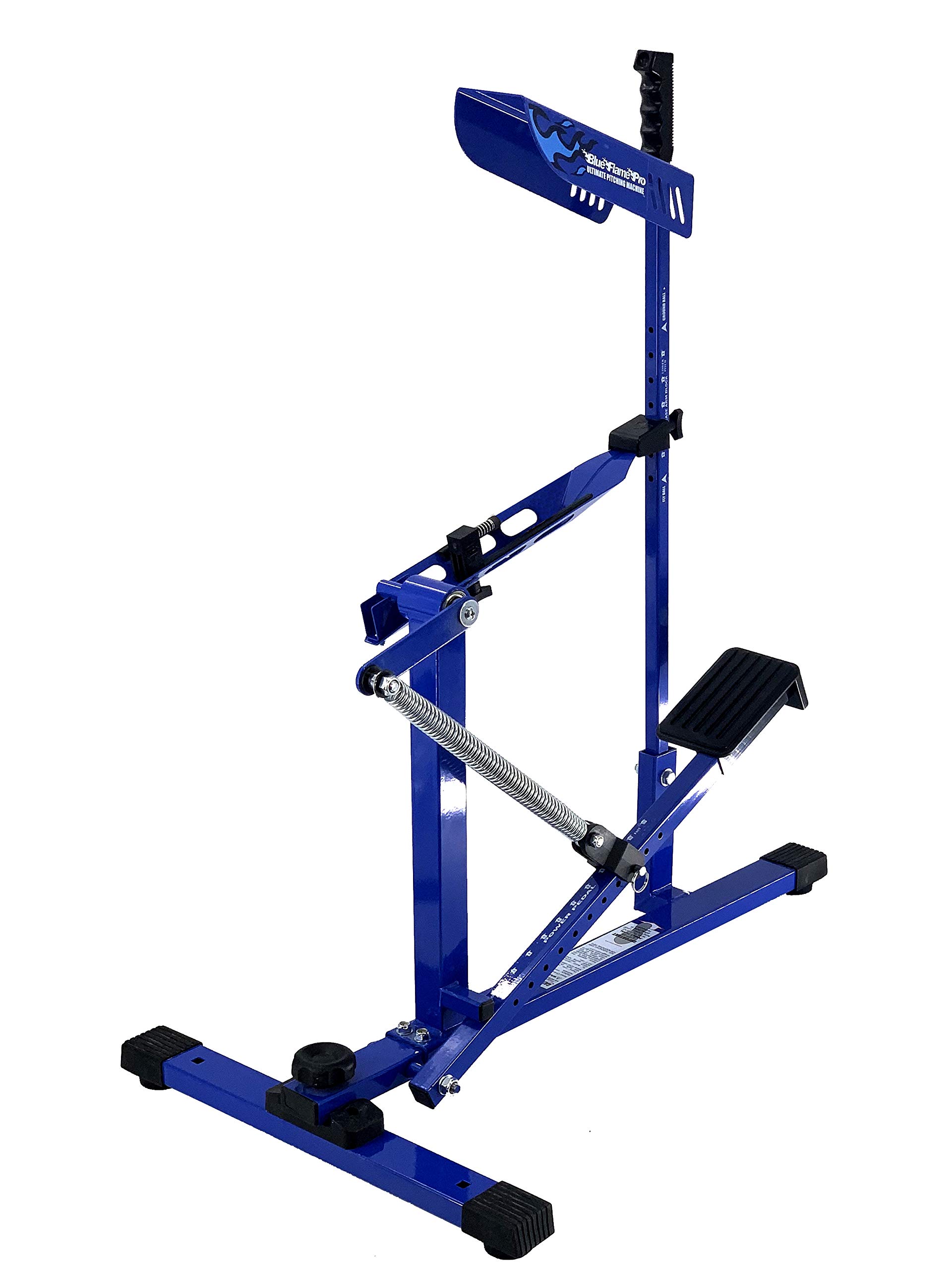
If you need real game speed, this is the top performer. It delivers 30–58 mph with real baseballs and up to 65 mph using restricted-flight balls, making it the fastest real-ball option in this lineup—comfortably beating the Heater Power Alley’s 45 mph ceiling. The upgraded throwing arm provides smoother, more consistent, and more precise throws, if you want level pitches, fly balls, or hard grounders.
Versatility is the headline. It works with tennis balls, dimple balls, plastic balls, softballs, and baseballs, giving coaches a single tool for many training situations. The new ergonomic pedal design reduces the force needed to fire, so it takes less user effort to deliver accurate pitches. It is used by Babe Ruth League and Pony Baseball & Softball programs nationwide, which tells you it performs at a level serious organizations trust.
The pitch speeds are the differentiator—one 10u softball coach found it working well at twice-weekly practices once the exact speed was dialed in, and owners confirm it handles grounders, fly balls, and pitches in a backyard batting cage. The durability story is the honest caution: multiple customers note the spring breaking after just two practices, and a “Like New” warehouse unit arrived with a misaligned weld. At 20 pounds of steel, it is built heavy, but the spring mechanism is the weak point to watch.
traditional feel: serious young hitters and teams needing real-baseball speed up to 58 mph with multi-ball versatility.
low upkeep: the throwing mechanism durability is the main concern despite the sturdy steel frame.
Understanding the Specs
Speed in MPH
The top speed a machine can throw tells you who it suits. A 30 mph machine is forgiving and ideal for young beginners still building hand-eye coordination. A 45–58 mph machine approaches live pitching speed, which is what older hitters need to refine timing before facing real pitchers. Match the speed to the hitter’s age and experience, not the biggest number on the box.
Ball Type and Capacity
The balls a machine uses determine safety and where you can practice. Lightweight foam or plastic balls are safe for indoor basements and won’t crack wooden bats, but wind affects them outdoors. Regulation baseballs demand more open space and sturdier construction. Hopper capacity matters for practice flow — a 40-ball basket means far fewer reloading breaks than a 26-ball one.
FAQ
Can I use a budget pitching machine indoors in my basement?
What speed pitching machine should I get for a 10-year-old?
Are manual pitching machines as good as electric ones?
Will a budget pitching machine crack my wooden bats?
How many balls do I need for a good practice session?
Can a pitching machine throw curveballs and grounders too?
How portable are budget pitching machines really?
Do I need a net to use a pitching machine?
How long do budget pitching machines last?
Is the delay between pitches important?
Final Thoughts: The Verdict
If you want one dependable pick, the budget pitching machine winner is the Personal Pitcher Pro because it delivers curveball variety, tripod-mount portability, and a rechargeable battery in one package that fits indoor spaces. If you want an ultra-light starter for young kids, grab the SKLZ Lightning Bolt Pro. And for a no-power manual option that works anywhere, the MOXOW Sagitta is the one to reach for.
How We Picked
We do not accept paid placement. Every pick is matched to a real buyer and a real use-case; we do not hands-on test units.
Sources & Methodology
Specifications: manufacturer listings and product documentation. Review insights: verified customer reviews, as of August 2026. Pricing: not shown on this page (it changes often); check the current price via the retailer link.
As an Amazon Associate, Gadgets Feed earns from qualifying purchases. This does not affect which products we feature.