
Our readers keep the lights on and my morning glass full of iced black tea. As an Amazon Associate, I earn from qualifying purchases.
Specs are compiled from manufacturer listings and verified buyer reviews and can change over time — please confirm the key details on the product page before buying.
When you need a 4-inch steel pipe, the real question is whether it will survive the environment you put it in. Replacing a rusted muffler, routing smoker smoke outside, or building a custom intake all demand different metal grades and wall thicknesses. This list matches each pipe to a specific job, so you can decide quickly without second-guessing.
I’m Min — the founder and writer behind Gadgets Feed. This guide is built by comparing the manufacturers’ published specifications and the patterns across verified customer reviews, so you get each pick’s real strengths and trade-offs instead of marketing spin.
One honest note before the list: it uses flexible matching, so a pick may offer the 4-inch size as an option rather than as the only listing. The closest same-type size serves the same purpose. Here is how to pick the right 4 steel pipe for your specific project without overpaying.
Our Picks at a Glance

How To Choose The Best 4 Steel Pipe
You likely landed here because a rusted OEM (original equipment manufacturer) pipe failed, or a DIY project needs a clean straight section. Focus on three things: the metal alloy, the wall thickness, and if you need a straight or bent pipe. Get those right, and the rest is just measuring twice.
Match the alloy to the environment
The biggest mistake beginners make is grabbing any “stainless” pipe without checking the grade. T-304 resists rust well for exhaust and general fab work. AISI 316 adds molybdenum, which is why it shrugs off salt, coastal air, acids, and industrial chemicals. If your pipe lives near the ocean or in a chemical lab, 316 is the safer bet even if it costs a little more.
Check the wall thickness before welding
The gauge number tells you the metal’s thickness. A 17-gauge pipe measures about 1.4mm and feels solid for exhaust work. Thinner walls bend easier but can crush under a U-bolt clamp (a U-shaped bolt that wraps around the pipe), while thicker walls are harder to cut with a saw. 16-gauge 304 stainless steel offers a polished finish and predictable welds, making it the balance for most builds.
Know when you need a bend
A straight pipe is perfect for muffler deletes or simple extensions. But if your path turns a corner, a mandrel-bent 45 or 90-degree section keeps the inner diameter consistent so exhaust flows without restriction. A kit with all the angles is the practical way to build a full custom system in one order.
Quick Comparison
| Model | Best For | Material | Length | Wall Thickness | Amazon |
|---|---|---|---|---|---|
| 4 Inch Stainless Exhaust Pipe 2-Pack★ Best Overall | Best Overall / Dual replacements | T-304 Stainless | 47.3 in | 17 Gauge (1.4mm) | Amazon |
| FILPROFI AISI 316 Stainless PipeCoastal Choice | Coastal & chemical resistance | AISI 316 Stainless | 12 in | 26 Gauge | Amazon |
| LCGP Mandrel Straight Exhaust PipeBest Value | Value / smoker venting | Mild Steel | 30 in | — | Amazon |
| A-KARCK 4” Muffler Replacement Pipe | Tool-free muffler swap | Stainless Steel | 30 in | — | Amazon |
| 8SC82 DIY Custom Mandrel Pipe | Polished 304 fab work | T-304 Stainless | 47.25 in | 16 Gauge | Amazon |
| BIGREAT OD 4” Straight Pipe | Heavy-duty custom exhaust | T-304 Stainless | 48 in | — | Amazon |
| TBAPFS Stainless Straight Pipe | Mirror-finish intercooler builds | T-304 Stainless | 47.25 in | — | Amazon |
| A-KARCK 4″ 304 Mandrel Tube | Long-lasting 304 replacement | 304 Stainless | 48 in | — | Amazon |
| FGJQEFG 4-Piece Bend Kit | Full DIY exhaust build | T-304 Stainless | 40 in straight | — | Amazon |
In‑Depth Reviews
1. 4 Inch Stainless Steel Exhaust Pipe, 47.3 Inch Long, 2PCS
Our pick — over 4.5★ from 400+ verified ratings; the strongest balance of quality and price.
A twin-pack that gives you two solid straight sections for the price of one.
You get two pipes, each 47.3 inches long and 4 inches wide, forged from T-304 stainless steel at a sturdy 17-gauge (1.4mm) wall. That thickness is what makes it feel heavier and more substantial than buyers expect — a recurring compliment in the review pages. It welds cleanly, ships fast, and the silver finish arrives unpolished but strikingly shiny.
What wins people over is the quality: owners consistently call it a solid, good-looking piece that works for everything from jet ski exhaust to general fab work. The dual-ribbed rigidity and bolt-on installation type mean you can slap it into place or weld it, depending on your setup. It is a universal fit, so it pairs with most exhaust systems or industrial material runs.
The honest trade-off is the material debate — a few owners expected 304-grade steel and suspect otherwise, and some find the wall on the thin side. If you need maximum corrosion resistance for a saltwater environment, the 316-grade pick below beats it. For a standard exhaust swap or DIY build, this is the safe high-value call.
Why Owners Rave
- Two 47.3-inch pipes included — enough for a full dual setup
- 17-gauge T-304 steel feels solid and welds easily
- Bolt-on or weld-on flexibility for universal fit
Fair Caveats
- Some buyers question whether it is true 304 stainless
- Unpolished finish may not match a mirror-show build
Grab it for: a durable, weldable twin-pack that covers most exhaust or industrial jobs right from the start.
Look elsewhere if: you need 316-grade marine corrosion resistance — this one is not built for that.
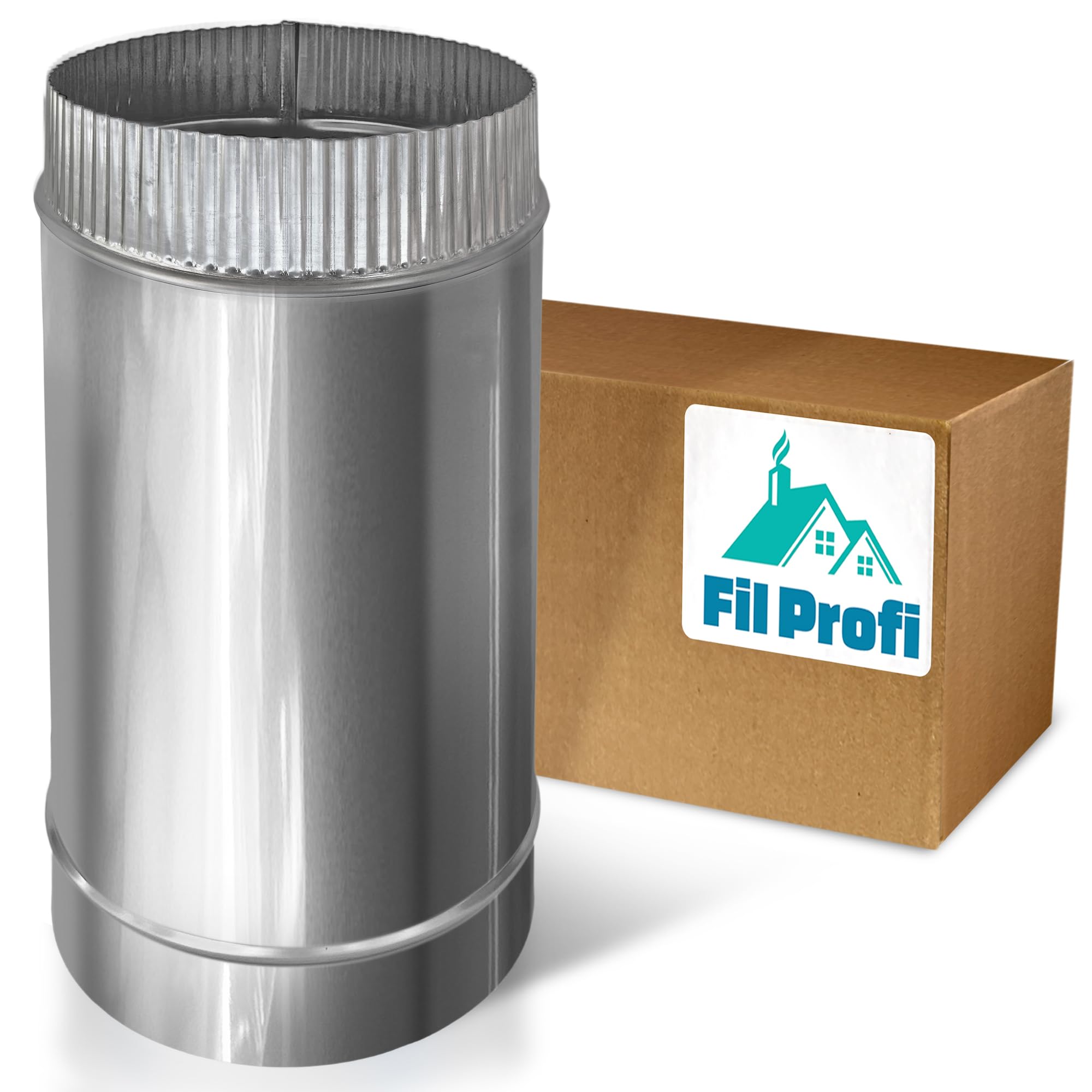
2. 4 Inch-Length 12 inch. Stainless Steel Pipe. AISI 316. Slip Fit, Corrosion Resistant
A 316-grade specialist that resists salt air and industrial chemicals.
This 12-inch pipe is the shortest option here, but it is built for the harshest places. The AISI 316 alloy shrugs off corrosion, salt, humidity, acids, and industrial chemicals, which makes it the right call for coastal areas, marine exhausts, chemical labs, or food-grade facilities. It also withstands temperatures up to 925°C (1700°F), so it is happy in fireplaces, stoves, and ventilation runs.
The build details are pro-grade: a seam-locked falc joint adds rigidity and is non-detachable by design, while a gear-rolled end makes slip-fit connection with other ducts easy. It ships with a removable protective film, so the stainless surface arrives unmarred. Buyers who replaced rusting mild-steel pipes annually expect this 316 pipe to last two years or more, saving money on repeated replacements.
Length is the only real constraint. At 12 inches, this is a connector or a short run, not a full exhaust section. And the 26-gauge wall is thinner than the 17-gauge on the top pick, so it is not the one for heavy structural fab. For a salt-air vent or a chemical-capable duct, nothing here matches its corrosion credentials.
Best for: a short, slip-fit section in marine, coastal, or chemical environments where 304 stainless would eventually pit and fail.
Reach for it when: rust is your sworn enemy and you need 316-grade immunity in a compact 12-inch run.
skip it if: you need a long straight section — this one tops out at 12 inches, a quarter of the length of the 47.3-inch twin-pack.
3. LCGP 4″ Custom Mandrel Straight Exhaust Pipe, 30″ Long, Mild Steel
A budget-friendly mild-steel straight that handles heat without high cost.
For a no-frills straight section at a friendly price, this 30-inch mild-steel pipe gets the job done. It uses high-strength mild steel rather than stainless, which keeps the cost down while still delivering solid durability for standard exhaust work. The 4-inch inlet and outlet tubes hold consistent dimensions, so sliding-fit joints install without fuss.
The thing everyone raves about is real-world versatility. One buyer redirected smoker smoke into an outdoor vent hood and it “worked unbelievably well” — handling the heat with zero issues. Another welded it onto a stock exhaust with a MIG welder and found it took the beads nicely. It is simple, thick-feeling, and a genuine value for custom builds.
The catch is the material. Mild steel is not stainless, so it will surface-rust over time, especially in wet climates. One owner noted rust already forming, which is the nature of the metal, not a defect. If you want corrosion immunity, step up to stainless. If you want a cheap, dependable straight pipe you can weld and forget, this is it.
Why it wins: unbeatable price-to-function ratio for a 30-inch straight that welds easily and survives heat — as long as you accept mild steel’s rust potential.
Perfect for: budget exhaust repairs and creative heat-venting projects where stainless is overkill.
Not for: coastal or salt-exposed installs — the mild steel will rust far sooner than the 316 pick.
4. A-KARCK 4” Muffler Replacement Pipe, 30″ Stainless Steel
A drop-in muffler replacement engineered so you skip cutting and welding entirely.
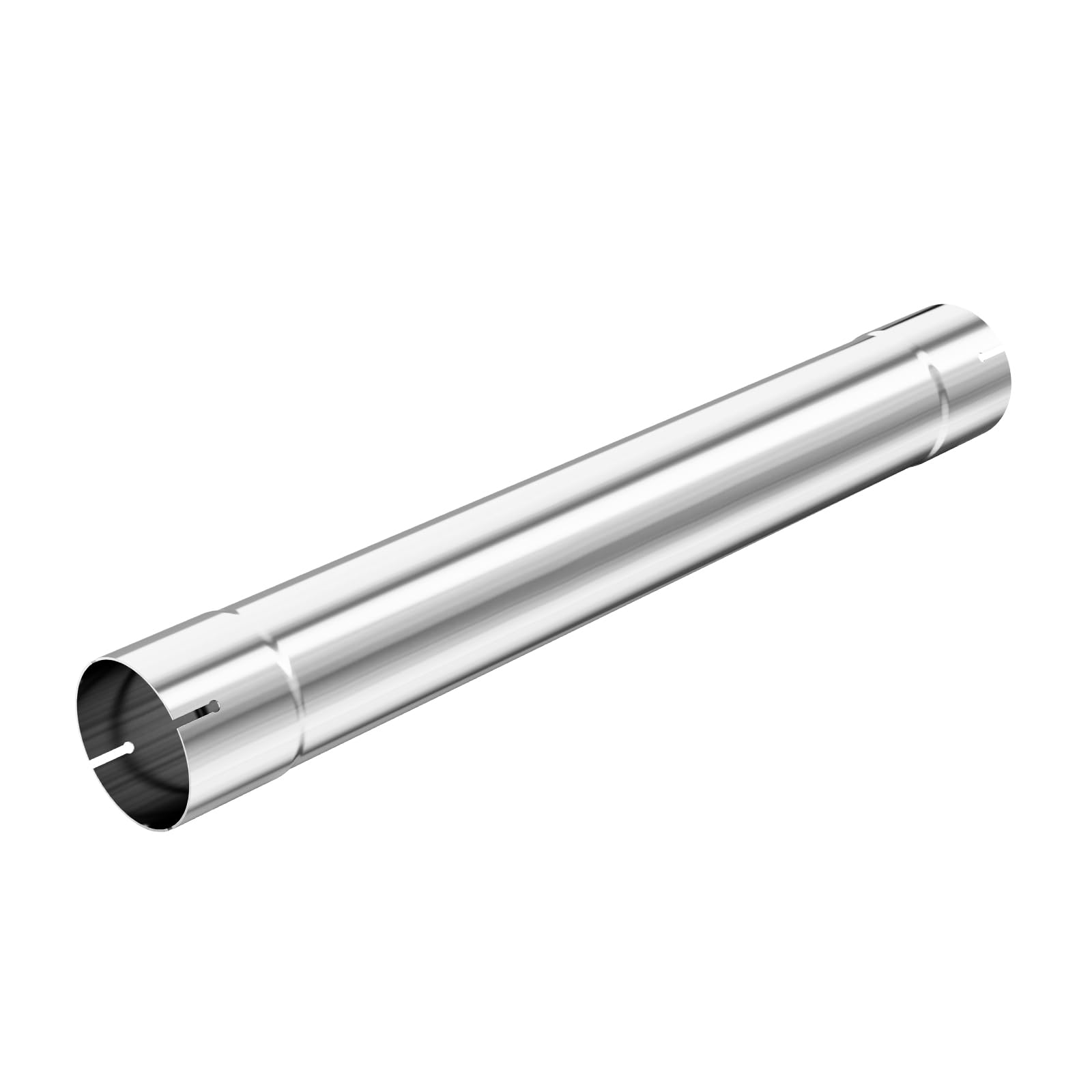
Most exhaust swaps mean breaking out the grinder, but this 30-inch stainless pipe is designed to slide into place. The two ends come with flares and slots that make installation a simple bolt-on job. Buyers report it fits “perfectly in place” of an existing 4-inch muffler with no cutting or welding required — a genuine time-saver for a driveway job.
The stainless construction delivers good rust and corrosion resistance, and the smooth surface protects your hands during handling. It is versatile across trucks, cars, SUVs, and jeeps, and the clear structure lets you cut it down if you need a shorter section. Buyers consistently call the fit exact and the thickness reassuringly durable.
The trade-off is the length: at 30 inches it is a targeted replacement, not a full-system section. Unlike the twin-pack above, you get one pipe here. But for anyone who wants a muffler delete or replacement without welding equipment, this is the most friction-free option in the lineup.
What Makes It Easy
- Flared and slotted ends mean zero cutting or welding
- Rust-resistant stainless for long service life
- Fits trucks, cars, SUVs, and jeeps universally
Consider This
- Single pipe only — no second section included
- 30-inch length is a targeted swap, not a full build
Best suited for: DIYers who want a muffler replacement without renting a welder.
Think twice if: you are fabricating a full custom exhaust — grab the multi-bend kit instead.
5. 4 Inch Straight DIY Custom Mandrel Exhaust Pipe, 47.25″

The 16-gauge 304 straight that looks show-car polished straight from the start.
If appearance matters as much as function, this 47.25-inch pipe delivers. It is made of T-304 stainless steel with a beautifully polished 16-gauge finish that buyers call “exactly what I needed” for fabricated exhaust work. The computerized mandrel construction keeps the inner diameter consistent, so you get smooth flow and structural strength in one section.
What wins people over is the value: owners praise the good price, great packaging, and on-time delivery. The polished 304 takes a weld well — one reviewer noted it welds “a little odd” but had no real concerns — and the length gives you plenty of material to plan a custom build around. It is a universal fit for exhaust systems or industrial materials.
The honest catch: at 47.25 inches, this is a long single piece, so measure your space before ordering. Some buyers found it “not quite long enough” for their full plan, which means you may need a second section. But for a polished, weldable 304 straight at this price, it is a hard value to beat.
High points: the polished 16-gauge 304 finish is the standout — it looks premium while staying fully weldable and functional for custom exhaust work.
Choose it for: a show-quality polished straight section that welds cleanly and looks the part.
Watch out: 47.25 inches may not be enough for a full system — plan for a second section or a bend kit.
6. OD 4” 48 Inch Length Straight DIY Custom Mandrel Exhaust Pipe
A thick-walled 48-inch T-304 straight that refuses to collapse under a U-bolt.
This 48-inch straight pipe earns its spot for jobs where strength is non-negotiable. Its T-304 stainless steel mandrel construction (a process that keeps the pipe’s inner diameter consistent during bending) is thick-walled enough that a U-bolt clamp won’t crush it. Owners mention it handles serious use—one owner used it as a semi-rigid 4-inch exhaust flex duct for a water heater with a 2-inch offset bend. It’s strong, polished, and visually flawless, though you’ll need a saw with a good blade to cut it.
Quality is the most-discussed trait here, and the appearance earns its own praise. The stainless finish arrives free of scratches or discoloration, and the thick walls leave no sharp cut edges. It is versatile beyond exhaust too — the listing notes fitment for air intake, cooling systems, and turbo intercooler piping, making it a solid DIY all-rounder.
The trade-offs are real but manageable. A few owners note the wall is “a bit thinner than 0.065 inch,” and some report the pipe runs a half-inch shorter than advertised. The material is also tough: one buyer found it hard to cut with a reciprocating saw and nearly impossible to expand with a mechanical expander. Bring a good saw and a welding plan.
Built Strong
- Thick T-304 wall resists U-bolt collapse
- Length fits exhaust, intake, and intercooler use
- Flawless polished finish with no sharp edges
Plan For
- Hard to cut and nearly impossible to expand by hand
- Some units arrive a half-inch under the 48-inch spec
Reach for it when: you need a tough, thick-walled straight that can take clamping force and heavy heat.
pass on it if: your plan needs slip-fit expansion — this one demands welding, not force-fitting.
7. Stainless Steel 4” Inch Straight DIY Custom Mandrel Exhaust Pipe

The polished T-304 straight that has become the go-to repair pipe for one shop’s entire fleet.
This 47.25-inch straight pipe pairs T-304 stainless with a polished mirror finish, and it has earned serious loyalty. One owner who runs repairs says they “now use it for all repairs” thanks to the price and the metal’s behavior — it cuts and welds easily, which is exactly what a busy shop wants. The mandrel-bent construction keeps the inner diameter consistent for smooth flow.
Quality is the top praised trait, with buyers calling it beautiful, easy to weld, and great value for the money. One long-term tester waited to review until after real use and confirmed the pipe holds up well. The finish is nice from the start, though it does discolor slightly after significant heat use — a normal stainless trait, not a flaw.
The fair caveats: one buyer found it about an inch shorter than the description, and a few units arrive with slight dents from shipping. Neither is a functional problem, but if you need an exact fit, measure first. For a polished, weld-friendly 304 straight, this is a top-tier premium pick.
Why it stands out: the combination of easy cutting, clean welding, and a polished look makes it the quiet favorite for shops doing frequent repairs.
Great for: anyone who welds regularly and wants a polished 304 straight that behaves predictably under the torch.
Worth knowing: watch for minor shipping dents and a possible inch of variance in length.
8. A-KARCK Straight Exhaust Pipe 4″ Inlet, 304 Stainless Steel 48″ Long

The 48-inch 304 straight that has proven itself rust-free through three years of outdoor use.
This 48-inch pipe is 304 stainless steel throughout, and it has an unusual track record: One owner used it as a Starlink antenna mount and reports it “has not rusted in 3 years of use.” That’s real-world proof of corrosion resistance, so it’s a solid pick for outdoor or damp environments. You’ll also find clamps that fit the 4-inch outer diameter easily, and the flared ends make sliding installation simple—though the flares mean you’ll need to measure carefully if you’re welding to another pipe.
Fit and functionality are the most-praised traits. The pipe is thick enough to butt-weld easily, and the expanded ends let you slide it over smaller pipe — one buyer mentioned one end is flared to fit over a 2.25-inch pipe. It is versatile beyond exhaust too, working for structural mounts and custom tubing projects. The polished finish looks clean and professional.
The honest downsides: rust resistance is mixed in the broader review set, with most seeing none for years but one reporting rust within a week. Shipping is the weakest link — customers note dents from minimal packing material. For a proven 304 straight with flared ends, this is a strong premium pick, just check the delivery condition.
Why It Endures
- 304 stainless proven rust-free after 3 years outdoors
- Flared ends slide easily over smaller pipe sizes
- Thick enough for clean butt welds
Mind The Delivery
- Minimal packing can mean dents on arrival
- Rust resistance varies — most see none, a few see it fast
Best for: long-term outdoor installs where proven 304 corrosion resistance is worth paying for.
Think twice if: you need pristine delivery condition — the sparse packing is a known issue.
9. 4 Inch DIY Custom Mandrel Exhaust Pipe Kit, Straight & Bend (45/90/180) 4PCS

One box with every angle you need to build a full custom exhaust from scratch.
This is the complete DIY kit: one 40-inch straight pipe, plus 45, 90, and 180-degree mandrel bends, all in T-304 stainless. Instead of piecing together separate orders, you get the full set of angles to route a custom exhaust around whatever the chassis throws at you. The polished mandrel construction keeps the inner diameter consistent through every bend.
Quality is what owners praise most — the bends come clean and straight, the straight pipe is packed well with no marks, and the whole kit welds nicely. One buyer called it “worth the money” and another noted it “got me taken care of” for a full build. The efficient packaging also helps keep oversized-shipping fees down.
The trade-offs are worth flagging. Reviewers point out the 90-degree bends run several degrees off spec, the metal is on the thin side, and the pipes can arrive dirty inside and prone to quick rust. One owner found the thin walls allowed easy squeeze-fit but questioned under-truck durability. For a price-conscious full system, it works — just manage expectations on bend accuracy.
Complete Package
- All four angles — straight, 45, 90, 180 — in one order
- Polished T-304 stainless welds cleanly
- Efficient packaging keeps oversize fees low
Set Expectations
- 90-degree bends run a few degrees off spec
- Thin walls and interior grime are common complaints
Perfect for: a first-time full exhaust build where having every bend in one shipment beats perfect bend geometry.
Not for: precision work demanding exact angles — the bends are close but not spot-on.
Understanding the Specs
304 vs 316 Stainless Steel
The alloy number tells you how much corrosion resistance you are buying. T-304 is the workhorse — it resists rust well for exhaust and general fabrication. AISI 316 adds molybdenum, which is why it survives salt air, acids, and industrial chemicals that would eventually pit 304. If your pipe lives near the ocean or in a chemical environment, 316 is worth the extra cost. If it is a standard exhaust or shop project, 304 does the job.
Gauge Thickness and Wall Strength
Gauge is the wall thickness, and lower numbers mean thicker metal. A 17-gauge pipe measures about 1.4mm and feels substantial for exhaust work, while 16-gauge is slightly thicker still and welds predictably. Thin walls are easier to bend and cut, but they can collapse under a U-bolt clamp. Thick walls hold their shape under clamping force but are tough to cut and nearly impossible to expand by hand. Match the gauge to whether you are clamping or welding.
Mandrel Bends and Flow
Mandrel bending keeps the inner diameter consistent through a curve, so exhaust gases flow without restriction. A crushed bend — the cheap alternative — narrows the passage and robs performance. If your exhaust path turns a corner, look for mandrel-bent 45 or 90-degree sections rather than a forced kink in a straight pipe.
Slip-Fit Joints vs Weld-On
Slip-fit pipes have flared or gear-rolled ends that slide over an adjacent pipe for a clamp-on connection — no welding required. Weld-on pipes are cut to size and fused permanently with a welder. Slip-fit is faster and friendlier for driveway repairs, but weld-on creates a stronger, leak-proof joint for permanent builds. Know which your setup demands before ordering.
FAQ
What is the difference between 304 and 316 stainless steel pipe?
How do I know if a 4-inch pipe will fit my exhaust system?
Can I install a 4-inch steel pipe without welding?
What gauge thickness should I choose for my exhaust pipe?
How long will a stainless steel exhaust pipe last compared to mild steel?
Is a 4-inch straight pipe the same as a mandrel-bent pipe?
What can I use a 4-inch steel pipe for besides exhaust?
Why do some 4-inch pipes arrive shorter or bent?
Is it better to buy a straight pipe or a full bend kit?
Can I cut a 4-inch steel pipe to a custom length?
Final Thoughts: The Verdict
For most buyers, the 4 steel pipe winner is the 4 Inch Stainless Exhaust Pipe 2-Pack because it delivers two long, weldable 17-gauge T-304 sections that cover nearly any project. If you need the best corrosion immunity for coastal or chemical environments, grab the FILPROFI AISI 316 Pipe. And for a complete from-scratch exhaust build, the 4-Piece Bend Kit has every angle you need in one box.
How We Picked
We do not accept paid placement. Every pick is matched to a real buyer and a real use-case; we do not hands-on test units.
Sources & Methodology
Specifications: manufacturer listings and product documentation. Review insights: verified customer reviews, as of August 2026. Pricing: not shown on this page (it changes often); check the current price via the retailer link.
As an Amazon Associate, Gadgets Feed earns from qualifying purchases. This does not affect which products we feature.