
Our readers keep the lights on and my morning glass full of iced black tea. As an Amazon Associate, I earn from qualifying purchases.
Specs are compiled from manufacturer listings and verified buyer reviews and can change over time — please confirm the key details on the product page before buying.
That shimmy when you accelerate onto the highway, the hard jolt into second gear, the delay before the car moves when you hit the gas from a stop sign—these are the classic warning signs of an aging automatic transmission. Before you even think about a multi-thousand-dollar rebuild, the smart first move is a chemistry refresh, and that’s exactly where a quality additive earns its keep. This guide breaks down the nine best additives for shudder, slipping, leaks, and rough shifts.
I’m Min — the founder and writer behind Gadgets Feed. This guide is built by comparing the manufacturers’ published specifications and the patterns across verified customer reviews, so you get each pick’s real strengths and trade-offs instead of marketing spin.
Whether you are chasing a shudder fix, a leak stop, or long-term conditioning, we have analyzed the top contenders for the best automatic transmission additives on the market today.
Our Picks at a Glance


How To Choose The Best Automatic Transmission Additives
Before you pour anything into your dipstick tube, you need to know what problem you are actually solving. The wrong chemistry can worsen a worn clutch pack’s slip, not just waste money. Here is the simple breakdown of what each type does.
Diagnose the Symptom First
If you feel a rhythmic vibration under light acceleration around 30-45 mph, that is torque converter shudder, and you want a friction modifier. If you see a puddle under the car and have to top off fluid, you need a seal conditioner to rehydrate hardened rubber gaskets. If shifts are just lazy and rough, a cleaner that dissolves varnish will free up sticking valve bodies.
Check Compatibility With Your Transmission Type
Most of these products are designed for traditional automatic transmissions, not continuously variable transmissions (CVTs) which use a belt and pulley system instead of gears. Pouring a standard additive into a CVT can damage the belt. Always check the label—several top picks here explicitly warn against CVT and Ford Type F applications, so verify your vehicle’s fluid type before buying.
Consider Mileage and Condition
For a newer transmission with healthy fluid, a preventative conditioner helps keep seals soft and prevents oxidation. For a vehicle pushing 150,000+ miles with existing slip, you want a high-mileage formula designed to add viscosity and friction modifiers to a worn system. Know your fluid’s age—additives work best when mixed into fresh, clean ATF.
Quick Comparison
| Model | Best For | Volume | Focus | CVT Safe | Amazon |
|---|---|---|---|---|---|
| BG ATC Plus★ Best Overall | Overall Conditioning | 11 oz | Seals & Oxidation | No | Amazon |
| Sea Foam Trans TuneBest Cleaner | Deep Cleaning | 16 oz | Gum & Varnish | Yes | Amazon |
| CRC Trans-X High MileageHigh Mileage Hero | Slip & Leak Repair | 16 oz | Seal Swell | No | Amazon |
| CRC Trans-X Slip-Stop | Delayed Engagement | 15 oz | Slip Stop | No | Amazon |
| ATP AT-202 | Synthetic Protection | 8 oz | Heat & Wear | No | Amazon |
| Lucas Transmission Fix | Quick Slip Remedy | 24 oz | Foaming & Temp | No | Amazon |
| Lubegard 50902 | Heat Reduction | 32 oz | Thermal Stability | No | Amazon |
| BG Service Flush Kit | Full Flush Service | 2-Part Kit | Clean & Condition | No | Amazon |
| Lubegard Shudder Fix (6-Pack) | Torque Converter Shudder | 6 x 59.2ml | Friction Modifier | No | Amazon |
In-Depth Reviews
1. BG ATC Plus
Our pick — over 4.5★ from 600+ verified ratings; the strongest balance of quality and price.
The professional-grade conditioner that softens seals and tames shudder in one 11 oz pour.
BG ATC Plus earns its top spot because it is the most complete preventive treatment, enhancing the fluid’s oxidation stability to prolong both fluid life and the life of the transmission itself. It conditions hardened seals, keeping them soft and pliable to prevent leaks before they start, while also helping to control shudder and retarding the formation of sludge and varnish deposits. This is the additive to use when you want to protect a healthy transmission rather than rescue a dying one.
Real-world results back up the chemistry. Buyers report that a 2009 Outback shifted smoother and felt less lazy, though it’s not a cure for physical gear slipping. A 2021 Silverado 2500HD with a new thermostat and fresh fluid saw temps drop from 212-225F down to 147-160F after adding the 11 oz can, with shifts running perfectly—proof that this product shines in higher-gear transmissions running at improve temperatures. The most dramatic save came from a 2004 F250 where two cans “fixed torque converter shutter/stall immediately,” saving thousands in potential repairs.
The one honest caveat is that it is not a band-aid for mechanical failure. If your gears are physically missing or the clutch packs are burnt, no additive will rebuild them—BG ATC Plus is for softening shifts, boosting viscosity, and replenishing friction modifiers in a transmission that still has life left in it.
What Makes It The Crowd Favorite
- Real-world owners mention operating temps dropping by up to 65°F.
- Conditions seals to prevent future leaks
- Effective within the first 1,000 miles of driving
Where It Has Limits
- Only 11 oz per can—big trucks may need two
- Won’t fix physically missing gears or burnt clutches
Reach for this if: you want a trusted maintenance dose that keeps a mid-to-high-mileage transmission shifting smooth and seal-tight.
Look elsewhere if: you have a severe, immediate slip that needs a stop-gap fix rather than a long-term conditioner.
2. Sea Foam Trans Tune
The solvent-style cleaner that dissolves gummy varnish, safe for power steering and hydraulics too.
Sea Foam Trans Tune is the specialist in this lineup for cleaning, not conditioning. Its job is to dissolve and liquefy the harmful gum and varnish buildup in fluid, cleaning and lubricating valve bodies, shift actuators, and solenoids. The 16 oz bottle is safe in most types of automatic transmission fluid, as well as hydraulics and power steering systems, and works with both conventional and synthetic fluids without swelling seals or harming gaskets, O-rings, or clutch material.
The proof is in the sticky problems it solves. A 2005 VW Beetle with an 09G transmission was having hard shifts into 2nd and 3rd and slipping into 4th; after adding this and driving about 100 miles, the owner noticed the symptoms decreased and were “almost eliminated.” Another owner using it in a transfer case confirmed it breaks down the gum formed there. Beyond specific fixes, customers note you can “definitely feel” the difference in shift fluidity after a single treatment.
The one thing to keep in mind is that as a cleaner, it is not designed to add viscosity back into a worn transmission. If your fluid is badly burnt and thin, this will clean the varnish but won’t thicken the fluid—pair it with fresh ATF for the best results.
Deep-Clean Duty: The top choice when hard shifts and lazy solenoids are caused by years of baked-on varnish, not worn metal parts.
Watch For: This won’t repair a slipping clutch—it frees sticky valves, so manage your expectations on high-mileage failures.
3. CRC Trans-X High Mileage
A thicker 12.6 oz pour that swallows leaks and refreshes high-mileage shifts in one bottle.
Built for vehicles with 75,000 miles or more, this CRC formula extends transmission life by stopping leaks, repairing existing ones, and preventing future ones while restoring smooth shifting. The 12.6 oz bottle packs a heavier weight than the BG ATC Plus at 11.2 oz, giving it more conditioning punch per pour for tired seals. This is the go-to when your transmission is starting to lose hydraulic pressure through hardened seals and you need that pressure back.
Real-world saves are dramatic. A Tundra with 320,000 miles “starting to slip and not reengage at a fast stop” was fixed instantly by this stuff, though the owner admits it’s not a permanent fix. A 2008 RAV4 with delayed shifting (taking 5 minutes to engage) had the issue fixed immediately with a full bottle, serving as an inexpensive alternative to costly repair. A 24-year-old 2000 Subaru Forester also got extended life, with no slipping or hesitation after a month of use.
One critical note in the fine print: this product is not compatible with CVT or manual transmissions. It is highly flammable, so store it in a well-ventilated place away from heat, sparks, and open flame, and wear safety glasses and gloves when handling.
Seal Revival: The best pick when your issue is fluid loss and delayed engagement from dried-out seals at high mileage.
Remember: Treat this as a lifeline, not a rebuild—it restores pressure but won’t fix a mechanically shattered gearbox.
4. CRC Trans-X Slip-Stop Leak-Fix

The vibration-killer that fixes a 40-50mph shimmy with a simple 15 oz bottle.
This CRC variant takes a slightly different angle than its High Mileage sibling, focusing squarely on stop-slip and leak-fix duty. Its claims of fixing delayed drive engagement and stopping leaks are backed by a strong consensus of owners who report their cars “running properly again” and experiencing smoother operation. The 15 oz volume is substantial enough for one solid treatment on most sedans and SUVs.
The most compelling real-world fix came from a 16-year-old Honda that had an obscure vibration at 40-50mph and 80mph for years; it took two bottles to eliminate it, likely by dissolving torque converter gunk that other additives had failed to touch. A 2007 Toyota Vanguard needing 250ml of this every 3-4 months has used it for 3 years to restore movement after an idle delay. A Corolla owner also confirmed it fixed automatic transmission issues, saving hundreds versus a repair with no disassembly needed.
The honest trade-off here is that the effect is not permanent on severe cases—the Vanguard owner’s 3-4 month reapplication cycle is the norm, not the exception, for an aging torque converter. Treat it as an effective maintenance dosage rather than a one-time cure.
The Wins
- Eliminates torque converter vibration where other additives failed
- Restores delayed drive engagement without disassembly
- Also works in power steering systems
The Trade-Off
- Severe cases may need a re-dose every 3-4 months
- Two bottles may be needed for stubborn shudder
Pick this for: a nagging mid-speed vibration or delayed engagement that other additives haven’t cured.
Who should pass: anyone with a healthy, smooth-shifting transmission looking only for preventive maintenance—a conditioner suits you better.
5. ATP Automotive AT-202

An 8 oz synthetic concentrate that melts clutch chatter and TQ shudder on contact.
ATP’s AT-202 is a synthetic formula that protects the transmission by reducing internal heat and wear, resisting fluid thermal breakdown, oxidation, varnish, and sludge. It improves shift quality in normal to severe duty conditions, and its key claim is eliminating torque converter shutter and clutch pack chatter. The 8 oz volume is a concentrated dose compared to the larger 15-16 oz bottles, blending with existing fluid for immediate effectiveness.
The results are fast-acting but with a caveat about longevity. A 2006 Nissan Sentra at 225,000 miles on its original automatic had hard shifts into 2nd and clumsy shifting completely eliminated—”shifts like new.” A skeptical owner dumped half a bottle into a 1989 car with a jerky transmission and woke up the next morning to perfectly smooth shifts. However, a 2007 Volvo XC90 V8 saw immediate improvement in a 3rd-4th gear shudder, but the effect faded after 2 weeks, requiring new fluid and another additive dose.
This is the additive for a quick, dramatic improvement in shift quality, but understand that it acts as a temporary friction modifier rather than a permanent fix. If your transmission is mechanically sound, the effect can last; if the clutch packs are genuinely worn, you’ll be re-dosing.
Quick Fix Chemistry: Choose this for an instant smoothing of hard shifts and chatter, especially in high-mileage daily drivers.
Keep In Mind: The blend’s performance can fade within weeks on severely worn units—pair with a fluid change for lasting results.
6. Lucas Transmission Fix

A giant 24 oz bottle that thickens thin fluid and stops slipping without solvents.
Lucas Transmission Fix takes the “big dose” approach with a 24 oz bottle that contains no solvents, making it one of the safest bets for a gentle viscosity boost. It lowers operating temperatures, stops foaming, and can be added to existing fluid without draining any out—a huge convenience for topping off a low system. This is the product to grab when your transmission is slipping because the fluid has thinned out over years of heat.
The feedback is consistently positive for hard shifts and slipping. A Ram ProMaster at 130,000 miles saw hard shifts helped substantially. Reviewers point out it “restored my slipping transmission” and made a “big difference” with gears switching easier. The catch is that the effect can take time—some owners note a noticeable improvement only after about 500 to 1000 miles of driving, so don’t expect an instant miracle in the parking lot.
The 24 oz size is the biggest in this lineup, meaning you get more product for your money, but it also means you should be careful not to overfill. Check your dipstick after adding—a transmission overfilled by even a quart can foam and cause more damage than it fixes.
The Viscosity Boost: Best for high-mileage transmissions where thin, burnt fluid is causing slip—the large bottle gives you margin for error.
Time Factor: Patience is required; the full effect may take up to 1,000 miles of driving to appear.
7. Lubegard 50902 Automatic Transmission Fluid Protectant

A 32 oz thermal stabilizer that cuts temps by up to 40°F and restores seals.
Lubegard’s 50902 is the premium choice for heat management, claiming to reduce improve operating temperatures up to 40 degrees Fahrenheit while optimizing total transmission performance. It eliminates fluid foaming and oxidation, reduces wear throughout the transmission, and has a unique property: it is the only protectant that increases the fluid’s ability to transfer heat. The 32 oz bottle is the largest single-dose here, protecting new seals and permanently restoring older seals to a like-new condition.
The most impressive real-world result came from a neglected ’96 F-150 where the additive fixed hard shifting and gear slipping, making shifts “unnoticeable” and feeling like a new transmission. A 2018-era owner confirmed the shudder was gone within 100 miles, and another reported immediate, very smooth shifting when using exactly the amount called for. Even a skeptical buyer who usually doubts these products said “this one is the real deal” after seeing results.
The trade-off is the price point—this sits at the premium end of the additive spectrum—and the strict warning that it is NOT for CVT use, only normal automatic transmissions. It’s also a wax-based formula, so follow the dosage instructions precisely to avoid over-conditioning the fluid.
Standout Benefits
- Lowers operating temps by up to 40°F to protect the fluid.
- Permanently restores aged seals
- The only additive proven to boost the fluid’s heat-transfer ability.
Consider This
- Premium price for the largest 32 oz bottle
- Strictly not for CVT applications
Go with this if: you tow, drive in heat, or want the best thermal protection for a transmission you plan to keep for years.
skip it if: you just need a cheap one-dose slip fix—the bigger bottle costs more than you’ll need for a small car.
8. BG Transmission Service Flush Kit PN K6600

A shop-style two-step kit that deep-cleans then conditions, with a pocket screwdriver included.
This BG kit is the whole service in a box: it includes the PM 106 Cleaner and the PN 310 Conditioner, plus a pocket screwdriver for the job, bringing the professional two-step flush process home. The cleaner step removes deposits during the flush, and the conditioner step prolongs fluid life, maintains transmission performance, and prevents thermal breakdown of the fluid. At 1.7 pounds, it’s the heaviest kit here because it contains two full treatments.
This is the favorite for transmission shudder on modern vehicles. A 2020 Ford Edge had its transmission shudder fixed completely, and another owner who watched a promotional video confirmed it worked “great in conjunction with another product to remedy a shudder.” A user who does transmission flushes regularly says it does a great job cleaning inside the transmission. The two-part nature means you get both a deep clean and a long-term protectant in one purchase, rather than buying them separately.
The catch is that this kit requires a bit more effort than a simple pour-in additive. True flush kits work best when you use the cleaner during a fluid exchange, which means either a shop visit or some DIY valve-body/drain knowledge. It’s also the second most expensive pick here, reflecting its “full service” positioning rather than a quick top-off.
Professional-Grade Service: The right pick when you’re already planning a fluid flush and want the complete clean-and-condition treatment in one kit.
Not For: Quick top-offs on a healthy system—this much chemistry is overkill if you just want a maintenance dose.
9. DR TRANNY LUBEGARD Instant Shudder FIX 6 Pack
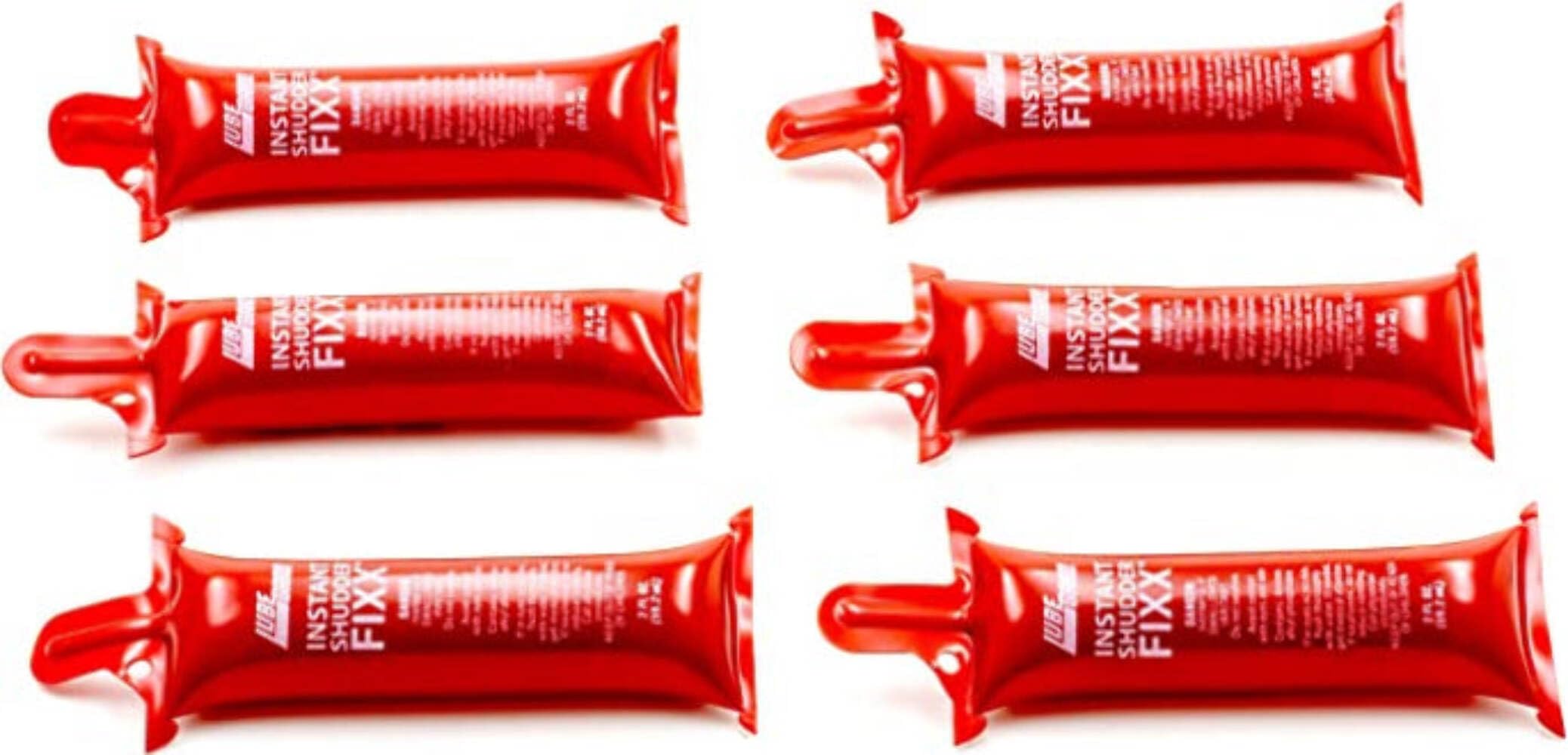
A six-tube arsenal of concentrated friction modifier targeting torque converter lock-up shudder.
This is the original transmission shudder fix—a concentrated friction modifier formulated specifically for instantly eliminating torque converter lock-up shudder. Each of the six tubes holds 59.2 ml, giving you enough product for multiple vehicles or repeated doses on a stubborn one. The maker claims it provides four times less wear than regular ATF, and Voted a top product by transmission pros.. It is for use in any automatic transmission fluid, with the exception of Ford Type F and CVT applications.
The results on severe cases are remarkable. A 2008 Expedition with 300,000 miles and three failed torque converters had a shudder at 30-40mph; after adding one tube with no change, two more tubes fixed it completely within about a month, even restoring cruise control at 60mph. A 2016 Chevy Traverse with transmission shutter saw noticeable improvement after a fluid change plus two tubes. High-mileage Hondas with a 35-40mph judder were fixed on a CRV without even changing the fluid first—a powerful testament to the concentrated formula.
The noteworthy caveat is that this is a heavy-duty fix, not a preventive conditioner. The maker explicitly warns against using it in Ford Type F or CVT applications, and on severely worn units, the effect may need periodic reapplication (one Traverse owner saw the shudder return after a cross-country trip). If you’re facing a torque converter shudder that other additives haven’t fixed, this is the heavy artillery.
Why It Wins
- Six tubes give you multiple doses or multi-car coverage
- Instantly targets torque converter lock-up shudder
- Delivers four times less wear than standard ATF.
The Fine Print
- Not for Ford Type F or CVT transmissions
- Severe cases may require 2-3 tubes and a month of driving
Choose this when: you have the classic 30-45mph torque converter shudder and want the strongest friction-modifier fix available.
Pass on this: if your transmission shifts fine and you just want routine protection—a single-dose conditioner is simpler and cheaper.
Understanding the Specs
Friction Modifiers vs. Cleaners
Friction modifiers change how the clutch plates grip each other, which is why they stop torque converter shudder and clutch chatter instantly. Cleaners dissolve the varnish and gum that make valves stick. Most shudder fixes are friction modifiers, while products like Sea Foam Trans Tune are pure cleaners. For a transmission with both rough shifts and old fluid, you may need one of each.
Seal Conditioners and Leak Stoppers
Seal conditioners work by rehydrating the rubber seals that harden and shrink with age, which is what causes fluid leaks and lost hydraulic pressure. Products like the CRC Trans-X High Mileage and Lubegard 50902 focus on this. They swell the seals back to size to stop drips. The trade-off is that over-conditioning can make seals too soft, so follow the dosage exactly.
Viscosity and Thermal Stability
Viscosity is how thick the fluid is; over time, heat breaks down the fluid’s viscosity, making it thin and unable to hold pressure, which causes slipping. Additives like Lucas Transmission Fix add viscosity back. Thermal stability is the fluid’s resistance to breaking down under heat—Lubegard claims to reduce operating temps by up to 40°F, which keeps the fluid from thinning in the first place.
CVT and Type F Compatibility
Continuously variable transmissions (CVTs) use a belt and pulley instead of gears and need entirely different friction properties. Standard additives can cause the belt to slip on the pulleys, so almost every product here warns against CVT use. Ford Type F fluid is an older spec with higher friction, and mixing modern friction modifiers in can cause harsh shifts. Check your owner’s manual for your fluid type before buying.
FAQ
Will an additive fix a transmission that is already slipping badly?
Can I use these additives in a CVT transmission?
How long does it take for a transmission additive to work?
Will a leak-stop additive damage my transmission?
Can I add transmission additive to old, dirty fluid?
What is torque converter shudder and why do additives fix it?
Is BG ATC Plus better than Lucas Transmission Fix?
How much additive should I use per quart of transmission fluid?
Can I use a transmission additive in my power steering system?
What is the difference between a flush kit and a single additive?
Final Thoughts: The Verdict
For most drivers, the automatic transmission additives winner is the BG ATC Plus because it is the most complete preventive treatment—it conditions seals, retards sludge, and stops shudder all at once. If you are dealing with a stubborn torque converter shudder at highway speeds, grab the DR TRANNY LUBEGARD Shudder FIX. And for a high-mileage transmission that has started slipping, the Lucas Transmission Fix is the one to reach for to get you back on the road.
How We Picked
We do not accept paid placement. Every pick is matched to a real buyer and a real use-case; we do not hands-on test units.
Sources & Methodology
Specifications: manufacturer listings and product documentation. Review insights: verified customer reviews, as of August 2026. Pricing: not shown on this page (it changes often); check the current price via the retailer link.
As an Amazon Associate, Gadgets Feed earns from qualifying purchases. This does not affect which products we feature.