
Our readers keep the lights on and my morning glass full of iced black tea. As an Amazon Associate, I earn from qualifying purchases.
Specs are compiled from manufacturer listings and verified buyer reviews and can change over time — please confirm the key details on the product page before buying.
Picking the right saw means matching the tool to the task — a 15-amp circular saw for framing lumber, a Japanese pull saw for precise joinery, or an oscillating multi-tool for flush cuts in tight spots. This guide compares power tools and hand saws across the categories that matter, so you can find the one that fits your projects and your skill level.
I’m Min — the founder and writer behind Gadgets Feed. This guide is built by comparing the manufacturers’ published specifications and the patterns across verified customer reviews, so you get each pick’s real strengths and trade-offs instead of marketing spin.
Whether you are a weekend DIYer or a serious woodworker, this breakdown of the best all-purpose saw options focuses on real-world performance, blade quality, and the honest limits of each tool.
Our Picks at a Glance

How To Choose The Best All-Purpose Saw
An all-purpose saw is a compromise — you trade the perfection of a dedicated tool for the versatility of one that does most jobs well. The trick is deciding which jobs you do most, and then picking a saw whose strengths match those tasks. If you are cutting framing lumber all weekend, a pull saw will frustrate you; if you are building fine furniture, a circular saw is overkill.
Match the Cutting Action to Your Projects
There are two fundamental cutting motions: pushing and pulling. Western-style circular saws and hand saws cut on the push stroke, which packs a lot of force but can bend a thin blade. Japanese pull saws cut on the pull stroke, which lets you use a much thinner blade — the result is a finer kerf (the width of the cut), less effort, and a cleaner edge. Oscillating multi-tools vibrate side-to-side instead, which makes them perfect for plunge cuts and flush cuts where a spinning blade can’t reach.
Look at the Blade Before the Motor
On any saw, the blade is the part that actually does the work. On circular saws, a carbide-tipped blade stays sharp far longer than a plain steel one. On pull saws, the teeth per inch (TPI) determines the finish — more teeth mean a smoother cut but slower progress. Higher TPI numbers, like 15 on one side of a ryoba, cut clean; lower TPI, like 9, remove material fast. A blade that dulls quickly turns any tool into a chore.
Know Your Power Source and Portability
Corded tools give you unlimited runtime, so you are never waiting on a charge. The trade-off is the cord. You need an outlet nearby, which can be a problem on a roof or at the far end of a yard. Weight matters too — a 15-amp circular saw close to 9 pounds will tire your arm faster than a 3.2-ounce pull saw that you can use one-handed all day. Match the tool’s weight and power source to where you actually work.
Quick Comparison
| Model | Best For | Blade Length | Weight | Power Source | Amazon |
|---|---|---|---|---|---|
| SKIL 15 Amp Circular Saw★ Best Overall | Framing and fast sheet cuts | 7-1/4 inches | 8.7 pounds | Corded 15 Amp | Amazon |
| IRWIN Pull SawBest Value | Accurate trim and flush cuts | 12 inches | 3.2 ounces | Hand power | Amazon |
| GreatNeck 15″ Hand SawTop Performer | Rough cuts on wood, PVC, and light metal | 15 inches | 12.8 ounces | Hand power | Amazon |
| SUIZAN Ryoba Pull Saw | Beginner-friendly Japanese joinery | 9.5 inches | 7.04 ounces | Hand power | Amazon |
| Temple Tool Ryoba Pull Saw | Ripping and crosscutting stock | 9.5 inches | 1 kg | Hand power | Amazon |
| WORKPRO Oscillating Multi-Tool | Versatile DIY cutting and sanding | — | 5.2 pounds | Corded 3 Amp | Amazon |
| BLACK+DECKER Oscillating Tool | Home DIY cutting and scraping | — | 4.3 pounds | Corded 2.5 Amp | Amazon |
| JORGENSEN Oscillating Multi-Tool | Heavier cuts with a 5° swing | — | 4.71 pounds | Corded | Amazon |
| Dremel Ultra-Saw | Compact flush and plunge cutting | 4 inches | 4.6 pounds | Corded 7.5 Amp | Amazon |
In‑Depth Reviews
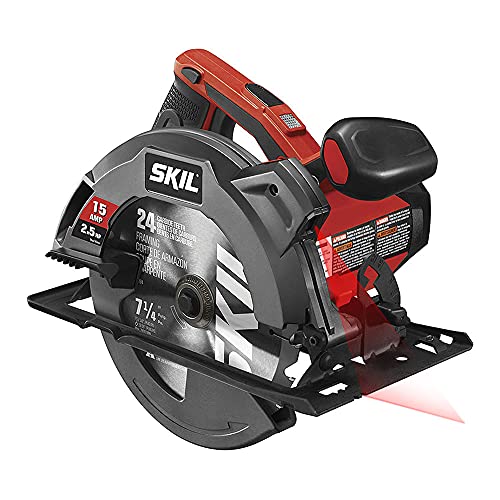
1. SKIL 15 Amp 7-1/4 Inch Circular Saw with Single Beam Laser Guide
Our pick — over 4.5★ from 14,000+ verified ratings; the strongest balance of quality and price.
The weekend warrior’s answer to fast, clean sheet cuts with a laser to guide you.
What wins people over here is pure cutting speed. Its 15-amp motor spins the blade at 5,300 RPM, powering through engineered wood and framing lumber without bogging down. You get a 7-1/4 inch carbide-tipped blade right in the box, plus a spindle lock that makes swapping blades a quick job when it dulls.
The bevel range is a step above the basics — you can angle the base to 51° with a positive stop at 45°, which covers everything from simple miter cuts to steeper angles for roofing and deck work. The built-in laser draws a line along your cut path, so you are not eyeballing a pencil mark that sawdust will cover. Buyers report the dust blower clears the line as you go, which keeps the laser visible and the cut accurate. There is also a power-on indicator light and a guarded trigger with a safety lock, so you won’t start it accidentally when you grab it from the bag.
It weighs 8.7 pounds, and a recurring theme in the reviews is that it feels lighter than that for the power on tap. The included carry bag and wrench mean you can grab everything you need in one hand. The main durability gripe is the depth-adjustment lever — a handful of owners found it broke within weeks of use, so treat that lever gently. The laser is also fixed, not adjustable, and owners mention it washes out in bright sunlight; on a shaded site or indoors it earns steady praise.
Its combination of power, speed, and a laser guide makes it the top-rated choice among thousands of owners.
What Owners Rave About
- Cuts through materials like butter, even dense engineered wood
- Laser guide improves accuracy on long cuts
- Powerful yet feels light for the output
- 51° bevel for a wide variety of angles
The Trade-Offs
- Laser is non-adjustable and hard to see in direct sun
- Depth lever durability is the main complaint
- Stock blade is good but not premium
Reach for this if: you want one corded saw that handles framing, sheet goods, and bevel cuts without flinching.
Look elsewhere if: you need a tool for fine joinery — this is a power tool, not a precision instrument.
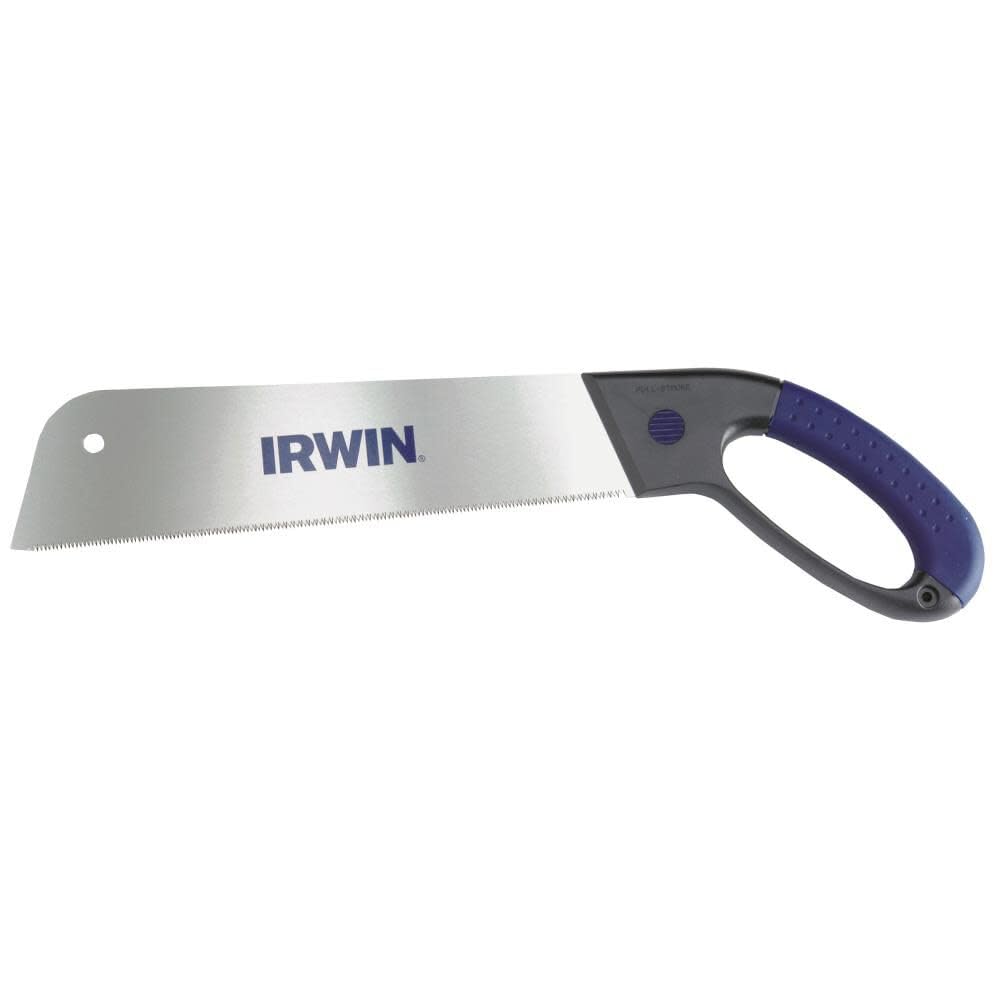
2. IRWIN Tools General Carpentry Pull Saw, 12-Inch
A 3.2-ounce blade that cuts like a much heavier tool, with a flexible edge for flush work.
Here is the featherweight that humbles far heavier saws. At just 3.2 ounces with a 12-inch blade, this Japanese-style pull saw is light enough to use one-handed all day, and customers note it “cuts like butter” through lumber, PVC, and even pruning jobs. The flexible blade means you can lay it flat against a surface and trim the overhang of a gable soffit or cut a dowel flush without marring what is underneath.
The pull-stroke action is the secret to its efficiency. Because you cut by pulling toward yourself, the blade stays under tension and stays straight, which is why owners describe fast, accurate cuts with minimal tearout. The 2-polymer ProTouch handle is comfortable for extended sessions, and the 14-point blade gives you a good balance of speed and finish for general carpentry.
The honest catch is blade life under heavy use. Reviewers point out the teeth can break if you force the saw with heavy pressure, and a broken tooth tends to lead to more breakage. The guidance is to use light-to-medium force and let the blade do the work — which is the correct technique for any pull saw. There are no replacement blades sold separately, so when it dulls or a tooth snaps, you replace the whole saw. That said, it is accurate, versatile, and reviewers flat-out call it a great value.
Sharpness First: the thing everyone raves about is the super sharp blade that stays sharp for a long time. Shoppers say using it for tree pruning and small jobs alike, and it still cuts straight and clean.
The Real Cost: no replacement blades and teeth that dislike heavy force — treat it gently and it rewards you.
Who it beats: any push-style handsaw in the same class on effort and cut cleanliness — it is a 3.2-ounce tool that out-cuts tools 10 times its weight.
Who it doesn’t: anyone planning to cut pressure-treated lumber; buyers report it struggles there.
3. GreatNeck 15″ Hand Saw, SK-5 Steel Blade
The 12.8-ounce carpenter’s saw with an SK-5 steel blade that stays sharp and cuts fast.
This is the saw you grab when the job needs muscle in a hand tool. The 15-inch SK-5 steel blade is engineered to hold an edge for a long time, and the induction-hardened tri-bevel teeth — 9 teeth per inch — remove material fast. Owners who are no carpenters report it “cuts so easily” through wood, and the built-in 45° and 90° angle markings give you a built-in guide for straight and angled cuts without reaching for a square.
The composite handle with an anti-slip grip reduces hand fatigue during extended cutting, and the aluminum frame keeps the whole thing at a manageable 12.8 ounces. That is a full 3.2 pounds lighter than the SKIL circular saw, so you can use it overhead for tree trimming without the arm burn. It handles wood, PVC, and even light metals with precision, according to the manufacturer.
While it is rated a half-star higher than the SKIL in overall satisfaction, its review count is far lower — the SKIL has thousands of owners behind it, while this saw has a smaller but very satisfied crowd. The one skeptical voice in the reviews wonders if it is worth a price markup over other saws, so if you are simply after the cheapest thing that cuts, there are cheaper options. For the quality, the sharpness, and the integrated guides, most owners are won over.
Sharp and Fast: buyers love that it has measurements printed on the blade and that it “cuts very well and fast” from the start.
A Fair Pause: at least one owner questions the value versus cheaper saws — know that you are paying for SK-5 steel and better edge retention.
Best if: you want a durable framing-style hand saw that doubles as a precision guide for angles.
Think twice if: you only cut occasionally and price is the only factor — a basic push saw will do.
4. SUIZAN Ryoba Double Edge Saw 9.5″ Assembly ver

A beginner-friendly Japanese pull saw with two edges — one for rip cuts, one for crosscuts.
The ryoba design gives you two saws in one. One edge carries 9 teeth per inch for aggressive rip cuts along the grain; the other has 15 teeth per inch for clean crosscuts across it. That combination, on a thin 0.02-inch blade, is why owners describe the cuts as clean, fast, and almost easy. Because a pull saw cuts on the pull stroke, you use less physical power and get a cleaner edge than a push saw delivers.
The 9.5-inch blade is made from Japanese steel, and the saw is manufactured in Japan. It arrives as an assembly version — you attach the handle yourself, and the included tools make it a five-minute job. Owners note the teeth are scary sharp from the start, and it handles hardwoods like hickory and oak with ease right away. The handle is individually wrapped by hand, so the appearance varies slightly from saw to saw, and the maker notes small cracks can occur in the wood during manufacturing without being a defect.
You get a saw that cuts cleanly while staying affordable, but the handle divides owners — some love it, others say it feels cheap. The steel earns universal praise, and after a year of use one owner reports it “still works like new.” If you are curious about Japanese woodworking and want an affordable entry point, this ryoba will not hold you back.
easy Cutting: the thin kerf (0.03 inches) means you remove less material, so you cut faster with less effort — owners call it “a joy to use.”
Know Before Buying: this version needs assembly, and the wooden handle is the most common durability complaint.
Pick this for: a first Japanese pull saw that is beginner-friendly and sharp enough for hardwoods.
Skip this for: heavy demolition — a pull saw’s thin blade is built for precision, not abuse.
5. Japanese Pull Saw – 9.5 Ryoba Hand Saw by Temple Tool Co.

A Japanese pull saw with a solid Wingnut wood handle that cuts hardwoods like butter.
This is the pull saw for the woodworker who wants performance with a touch of beauty. The dark brown solid wood handle is made of Wingnut — a wood in the walnut family — with brass components, so it looks as good sitting on the bench as it does cutting. The 9.5-inch blade is made of high-carbon Japanese steel, and owners describe it as the sharpest hand saw they have ever used, cutting through cherry, maple, and even hickory like a knife through butter.
This ryoba is roughly 50% larger than a typical pull saw, so it feels like a sword in your hands — ideal for timber framing and breaking down large stock. The rip teeth taper near the handle, which owners say gives a smoother pull. You get the full ryoba versatility: rip teeth on one side for cutting with the grain, crosscut teeth on the other for cutting across it, all on a pull stroke for better control.
What owners praise most here is the ergonomics and the cutting speed; it works well in tight spaces where a power tool cannot reach, and with a guide it rivals a miter saw for straight crosscuts. The thin blade does demand a small adjustment if you are used to push saws, but owners mention it becomes the go-to tool in the shop quickly. Blade corrosion is mentioned as a positive aspect — a sign the steel resists rust well — but it is not made for flush cuts given the wide kerf, and it has no spine for dovetails.
Craftsmanship You Feel: the Wingnut handle and brass fittings make this feel like a heirloom tool, and owners confirm the quality is exceptional.
Not a Flush Saw: the wide kerf means this is not the tool for flush cutting — leave that to a dedicated flush-cut saw.
Reach for this if: you are serious about woodworking and want a handsome, razor-sharp saw for ripping and crosscutting.
Look elsewhere if: you need a compact saw for dovetails or flush cuts — this one is built for cutting stock, not joinery.
6. WORKPRO 3.0 Amp Corded Oscillating Multi-Tool Kit

A 17-piece oscillating kit that replaces several tools, at a price that respects a DIY budget.
An oscillating multi-tool vibrates a blade side-to-side, enabling plunge cuts, flush cuts, and sanding in corners that spinning blades cannot reach. It vibrates a blade side-to-side rather than spinning it, which lets you make plunge cuts, flush cuts, and sanding passes in corners no other saw can reach. Its 3.0-amp motor swings the blade at a 3° angle, and owners say it replaces multiple garage tools for cutting, sanding, scraping, and polishing.
You get 7 speed settings ranging from 15,000 to 23,000 RPM, so you can slow down for precision sanding or open it up for fast cuts through wood, nails, screws, and medium or low-hardness metal pipes. The kit is generous: 2 wood and metal blades, 3 wood and plastic blades, a scraper, a sanding pad, and 10 sanding sheets. Blade changes are tool-free — you flip a button, swap the blade, and press it closed, no wrench required.
Owners note the variable speed “makes a world of difference” and the tool feels well-built with some heft to it. The honest concern is durability — a small number of units reportedly died after just 2 hours of use, and several buyers mention it is heavier than expected. The universal accessory interface means most standard oscillating blades will fit, so you are not locked into one brand’s accessories.
What It Replaces
- 17-piece kit covers cutting, sanding, and scraping
- 7 speeds from 15,000 to 23,000 RPM
- Tool-free blade changes
- Universal accessory fit
Before You Commit
- Durability is the biggest concern — some units failed early
- Heavier than some competitors at 5.2 pounds
Best for: the DIYer who wants one affordable tool for small cuts, sanding, and scraping around the house.
Who should skip: professionals who need a tool that survives daily abuse — buy a premium oscillator instead.
7. BLACK+DECKER Oscillating Multi-Tool, Variable Speed, 2.5-Amp

A reliable 2.5-amp oscillator with a quick-release lever and universal accessory compatibility.
This is the oscillating tool that owners describe as a “workhorse” for home use. Its 2.5-amp motor drives through nails and wood, with a variable-speed dial offering 6 settings from 10,000 to 20,000 oscillations per minute. That range lets you drop the speed for delicate sanding or open it up for aggressive cutting. Owners consistently report it made cutting carpet clearance, removing flooring, and sanding trim drastically easier.
The quick-release lever is the standout feature — it eliminates the need for a hex key entirely, so you can swap a blade in seconds mid-project. The accessory adapter gives you universal compatibility with most manufacturers’ blades, though customers note that in practice, BLACK+DECKER and Rockwell blades fit best. The kit includes a wood and metal blade, 12 sandpaper sheets, a sanding base, and a storage bag — enough to handle a wide range of first projects from the start.
The durability picture is genuinely mixed. Some reviewers point out the tool lasting over 4.5 years with zero issues, while others had it break after roughly 56 days of use. Because spare parts can be hard to source, a failure sometimes means replacing the whole unit. Comfort grips help minimize muscle fatigue, and the 2-year limited warranty offers a small safety net. It has plenty of power for heavy home use, and the variable speed is what owners praise most.
Quick Changes: the quick-release lever is the thing owners rave about — blade changes take seconds, no tools needed.
The Real Caveat: durability is split — some units last for years, others fail within two months, and spare parts are scarce.
Choose this for: a dependable, well-supported brand name for home DIY cutting and scraping.
Think twice if: you need guaranteed daily professional use — the mixed durability reports make that a gamble.
8. JORGENSEN Corded Oscillating Multi Tool, Variable Speed with 16 PCS Blades

A 5° oscillation swing that makes it feel 4 to 5 times more efficient than standard multi-tools.
The JORGENSEN’s 5° oscillation angle (versus the standard 3°) removes more material per vibration, which the maker says makes it 4 to 5 times more efficient than typical oscillating tools. Owners confirm the result — it cuts through 1/2-inch cabinetry “like a hot knife through butter” and handles metal, nails, and 2×4 lumber without complaint.
A 7-speed switch offers 8,000–16,000 oscillations per minute, and soft-start ramps power over about one second for precise first cuts. The quick-change mechanism locks blades in firmly, and a locking bracket protects your fingers during the swap — a thoughtful touch. The 16-piece accessory set covers most jobs: flush-cut wood blades, a bi-metal universal blade, a scraper, a sanding pad, and 10 sanding papers ranging from 60 to 240 grit.
The auto-adjusting variable speed senses the load and adjusts output — efficient, though owners note it can feel slightly laggy. The honest trade-offs are weight and heat: shoppers say it runs hot during heavy cuts, and the stock blades wear fast when they hit nails, so plan on quality aftermarket blades for serious work. It handles heavier jobs than the WORKPRO, and the 5° swing is what separates it.
Power To Spare
- 5° oscillation angle for faster material removal
- 16-piece kit with blades from 60 to 240 grit
- Soft start improves precision
- Universal fit for most blade brands
The Weight of Power
- Runs hot during heavy cuts
- Stock blades dull quickly on nails
- Heavier than basic oscillators at 4.71 pounds
Reach for this if: you have heavier renovation cuts — pressure-treated decking, nails, and 2x4s — and you want corded power that will not quit.
Look elsewhere if: you only need occasional light trimming — the extra swing and weight are wasted on small jobs.
9. Dremel US40-04 Ultra-Saw Corded Compact Saw Tool Kit

A compact 7.5-amp saw that reaches where full-size circular saws cannot.
You need a saw that reaches where full-size circular saws cannot fit — the Dremel Ultra-Saw is a mini electric saw with a 4-inch carbide blade, built for plunge cutting, flush cutting, and surface prep like removing rust, paint, or thinset. Its compact size lets you work close to adjacent objects; buyers report it is effective for undercutting baseboards and cutting 3/4-inch plywood smoothly, right up against a wall or corner.
The 7.5-amp motor gives it surprising punch for its size, and the adjustable depth guide lets you set cuts up to 3/4 of an inch deep in wood, metal, tile, plastic, laminate, and masonry. The integrated soft start gradually increases speed, which improves stability and control on the first contact. The included kit covers the basics: the US40 tool, a 4-inch carbide wood cutting wheel, a 4-inch flush cutting wheel, a 2.5-inch metal cutting wheel, and an auxiliary handle for two-handed control.
Owners praise the ergonomics and the easy paddle switch, plus the convenience of a corded tool with no battery or charger to babysit. The main limitation is size — it is “too small for regular dimensional lumber,” and the 4-inch wheel leaves about a 3/16-inch gap when undercutting, which may need planing. It is not a workhorse for framing; it is a precision, entry-level homeowner tool that saves money and space if you have an outlet nearby.
Precision in Tight Spots: the #1 praise is how well it works getting close to adjacent objects — flush cuts no other saw handles.
Know the Limit: the small blade means it is not for dimensional lumber, and it does not come with a storage case.
Best for: hobbyists and solo DIYers who need a compact, precise saw for flush cuts, plunge cuts, and surface prep.
skip it if: your primary work is framing or ripping full sheets — this is a specialist, not a generalist.
Understanding the Specs
Motor Amperage and Blade Speed
On a corded saw, amperage is a direct measure of motor power — more amps means more cutting force. The SKIL runs 15 amps at 5,300 RPM, while the Dremel minis out at 7.5 amps in a much smaller package. Higher RPM generally means faster cuts, but the blade quality matters just as much. A carbide-tipped blade at moderate RPM will cut cleaner and last longer than a plain steel blade at high speed.
Teeth Per Inch and Kerf Width
On pull saws, teeth per inch (TPI) tells you the cut finish. More teeth (like 15 TPI) give smooth, fine cuts; fewer teeth (like 9 TPI) remove material faster but rougher. Kerf is the width of the cut itself — the thinner the blade, the narrower the kerf, which means less material wasted and less effort. The SUIZAN’s 0.03-inch kerf on a 0.02-inch blade is why Japanese saws cut so easily.
FAQ
What is the difference between a push saw and a pull saw?
Can a circular saw replace a hand saw?
What does the bevel capacity on a circular saw mean?
Is a Japanese pull saw good for beginners?
What is a ryoba saw and why does it have two edges?
What jobs is an oscillating multi-tool best for?
How long does a high-carbon steel saw blade stay sharp?
Can I cut metal with an all-purpose saw?
Is a corded saw better than a cordless one?
What is a flush cut and why do I need a special saw for it?
Final Thoughts: The Verdict
For most people, the SKIL 15 Amp Circular Saw is the true all-purpose winner — it turns framing, sheet cuts, and bevels into fast, confident work, with the best owner satisfaction behind it. If you want precision joinery and a clean edge without the noise, the Temple Tool Ryoba Pull Saw offers the sharpest hand-cutting experience. For a tool that reaches into corners no other saw can touch, the WORKPRO Oscillating Multi-Tool gives you the most versatility for the money. On a strict budget, the IRWIN Pull Saw is the value king — a 3.2-ounce blade that out-cuts tools 10 times its weight.
How We Picked
We do not accept paid placement. Every pick is matched to a real buyer and a real use-case; we do not hands-on test units.
Sources & Methodology
Specifications: manufacturer listings and product documentation. Review insights: verified customer reviews, as of August 2026. Pricing: not shown on this page (it changes often); check the current price via the retailer link.
As an Amazon Associate, Gadgets Feed earns from qualifying purchases. This does not affect which products we feature.