
Our readers keep the lights on and my morning glass full of iced black tea. As an Amazon Associate, I earn from qualifying purchases.
Specs are compiled from manufacturer listings and verified buyer reviews and can change over time — please confirm the key details on the product page before buying.
The hardest part of buying a 6V rechargeable battery isn’t the voltage — it’s figuring out which chemistry, capacity, and terminal type your device actually needs. Ride-on toys, emergency lights, deer feeders, and RC cars all demand 6 volts, but a sealed lead-acid (SLA) pack and a NiMH hobby pack are built for completely different jobs. This guide sorts the nine most dependable options by what they power best, so you can match the right cell to the right gadget and skip the return trip.
I’m Min — the founder and writer behind Gadgets Feed. This guide is built by comparing the manufacturers’ published specifications and the patterns across verified customer reviews, so you get each pick’s real strengths and trade-offs instead of marketing spin.
You need a 6v rechargeable battery that fits your device and lasts long enough between charges. Match capacity, physical size, and chemistry to your device’s needs. Here is how each pick stacks up.
Our Picks at a Glance


How To Choose The Best 6V Rechargeable Battery
Every 6V battery delivers the same 6 volts, but the chemistry inside defines how heavy it is, how many times it can recharge, and whether it can survive being mounted upside down. Your first step is to identify the exact battery your device came with — its capacity in amp-hours and its terminal style — then pick a replacement that matches.
Match Capacity to the Job
Capacity is measured in amp-hours (Ah), which tells you how long the battery can deliver a steady current before needing a recharge. A 4.5Ah pack is plenty for a small ride-on toy or an emergency exit light, while a 12Ah unit triples the runtime for a deer feeder or a power wheel. Bigger capacity almost always means a physically larger and heavier battery, so check the compartment dimensions before you commit.
Pick the Right Chemistry
Sealed lead-acid (SLA) and AGM batteries are the budget workhorses — spill-proof, maintenance-free, and easy to find, but heavy and limited to a few hundred charge cycles. NiMH packs are the lightweight choice for RC hobby gear. LiFePO4 (lithium iron phosphate) is the modern upgrade: dramatically lighter than lead-acid, spanning 2000+ cycles, but it needs a compatible charger and costs more upfront.
Check the Terminal Before You Buy
Most 6V batteries use F1 or F2 spade terminals — thin or wide metal tabs that slide onto your device’s connectors. An F2 terminal is wider than an F1, and swapping between them often means shaving the tab or replacing the connector. The reviews show this is the single most common fit complaint, so compare the terminal type against your old battery’s connector before ordering.
Quick Comparison
| Model | Best For | Chemistry | Capacity | Weight | Amazon |
|---|---|---|---|---|---|
| Tenergy 2 Pack★ Best Overall | RC cars & nitro receivers | NiMH | 1600mAh | 0.25 kg | Amazon |
| ExpertPower EXP650Best Value | Ride-on toys & exit signs | SLA | 5Ah | 1.5 pounds | Amazon |
| Casil CA645Compact Pick | Barbie cars & alarm panels | SLA/AGM | 4.5Ah | 2.3 pounds | Amazon |
| NASTIMA LiFePO4 | Lanterns & emergency lights | LiFePO4 | 6000mAh | 350 g | Amazon |
| Mighty Max ML12-6F2 | UPS backups & power wheels | SLA/AGM | 12Ah | 3.8 pounds | Amazon |
| ExpertPower EXP6120 | Deer feeders & scooters | SLA/AGM | 12Ah | 3.5 pounds | Amazon |
| Power-Sonic PS-6100 | Ride-on toys & solar | SLA/AGM | 12Ah | 3.7 pounds | Amazon |
| Interstate SLA0955 | Security systems & fence chargers | SLA/AGM | 10Ah | 4 pounds | Amazon |
| Parmak 901 | Solar electric fences | Gel Cell | 14 amp/hour | 4 pounds | Amazon |
In‑Depth Reviews
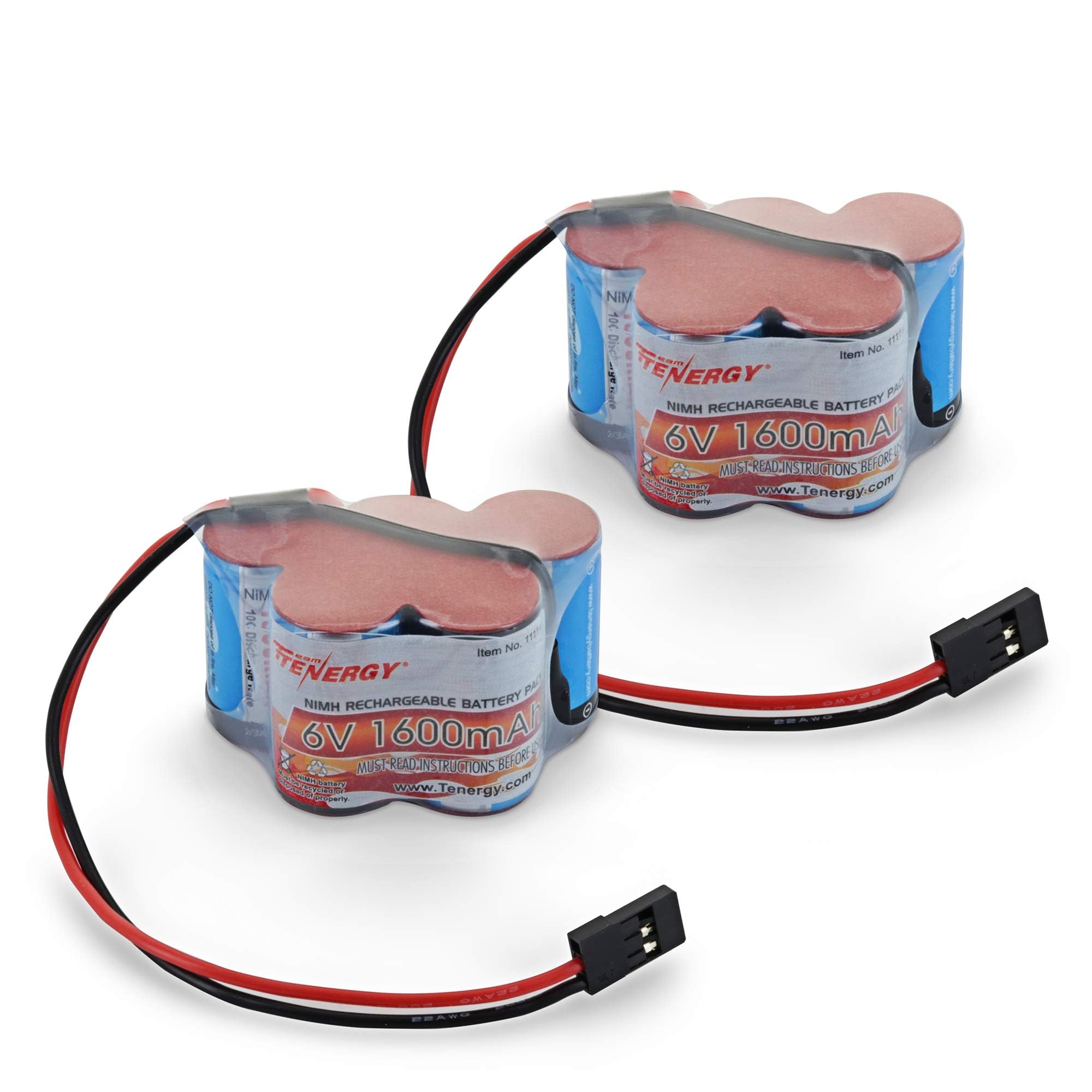
1. Tenergy 2 Pack 6V 1600mAh NiMH Hump Pack
Our pick — over 4.5★ from 600+ verified ratings; the strongest balance of quality and price.
The featherweight that revives nitro receivers without the lead-acid bulk.
This is the pack for RC hobbyists, not for toys or backup lights. It’s a NiMH (nickel-metal hydride) battery — a chemistry built for repeated fast charges and light weight — delivering 6 volts at 1600mAh through a Hitec connector that clicks straight into most nitro and monster truck receivers. At only 117g and measuring 50 x 30 x 30mm, it tucks into tight chassis spaces where a sealed lead-acid cell would never fit.
NiMH cells recharge anytime without draining, so you can top up without memory effect. Buyers report it holds its charge well even when buried deep inside a Savage chassis, and it’s a perfect drop-in fit for a Kyosho MP10 nitro car without any wiring changes.
The one thing to keep in mind is that this is a hobby battery, not a general-purpose cell. Its 1600mAh capacity is tiny next to the 5Ah and 12Ah lead-acid packs below, so it’s the right choice only for receivers and small RC electronics that sip power rather than demand it.
Why hobbyists love it
- Weighs just 117g — barely noticeable in a chassis
- Recharge anytime, no full-drain needed
- Comes as a 2-pack, so a spare is always ready
Where it falls short
- 1600mAh is low for anything beyond RC receivers
- Hitec connector won’t fit non-RC gear without an adapter
Reach for this if: your nitro or monster truck receiver needs a dependable, tiny, fast-charging pack that slips into a tight bay.
Look elsewhere if: you’re powering a ride-on toy or an exit light — those need the amp-hours of a lead-acid cell.
2. ExpertPower EXP650 6V 5Ah SLA Battery
The exact-fit replacement that gets kids’ ride-on cars rolling again.
This is the battery to grab when a child’s electric car or a rechargeable lamp dies and you want a straight swap with zero fuss. The EXP650 is a sealed lead-acid cell rated at 6V 5Ah with AGM (Absorbent Glass Mat) technology, which means the acid is held inside fiberglass mats so it can’t spill no matter how the battery sits. It weighs just 1.5 pounds, making it noticeably lighter than comparable 4.5Ah lead-acid cells — a 53% weight gap versus the Casil CA645 below.
Its exact-fit dimensions and F1 terminals make it a true drop-in replacement. Owners mention it’s an exact replacement for the old battery in a kid’s riding electric car, arriving charged and spinning the drive wheel the moment it’s connected. It also slots into antique 6V motorcycles with only minor shimming, and even powers a rechargeable OttLite without modification.
The honest caveat is charging behavior: some units arrive almost fully charged, but a few customers note the cell dying after about two months. Treat the first charge gently and it’s a dependable budget workhorse for toys, exit signs, and deer feeders alike.
Drop-in dependability: the exact dimensions and F1 terminals make this the lowest-effort replacement for most ride-on toys and emergency lights.
Worth noting: charging experiences vary — give it a full initial charge and monitor the first few cycles.
3. Casil CA645 6V 4.5Ah SLA/AGM Battery
The compact SLA that makes a Barbie car pull like it’s brand new.
Casil’s CA645 packs 6V and 4.5Ah into the same footprint as the ExpertPower above — 2.76 x 1.85 x 3.94 inches — but tips the scale at 2.3 pounds, a full 0.8 pounds heavier. That extra heft comes from a durable plate construction reviewers point out delivers more power than the original battery, with several owners reporting it pulls a full-grown adult around the house without complaint.
Shoppers say it revives frozen scooters and outlasts original batteries in ride-on cars. One family revived a frozen scooter with this cell and grandkids have been riding it together for a couple of years. Another owner swapped it into a Power Wheels-style car and found it compact enough to fit the compartment perfectly while outlasting the original. It’s maintenance-free and leak-proof thanks to AGM technology, so no water top-ups and no spills — ever.
There are two fit checks to make before you buy. The F1 prongs are standard, but one owner found them too large for a particular light fixture and the battery wound up unused in a drawer. And while most praise the longevity, a single report of a cell stopping charge after three weeks is a reminder to test new batteries early.
Best if: you need a compact, powerful 4.5Ah replacement for a ride-on car, alarm panel, or small UPS where the original just wasn’t strong enough.
Think twice if: your device uses narrow F1 connectors or a tight terminal bay — double-check the prong fit first.
4. NASTIMA 6V 6Ah LiFePO4 Battery
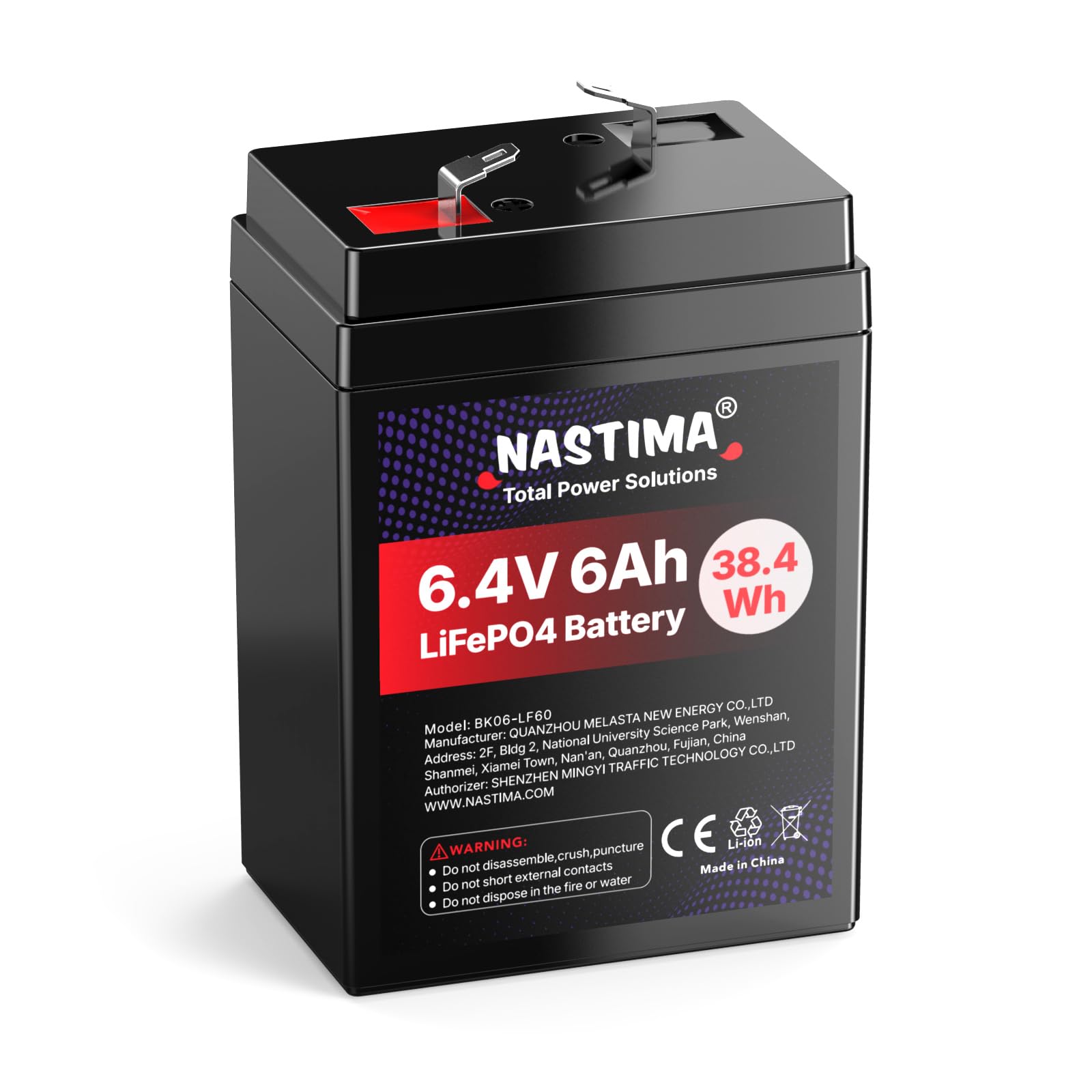
The featherweight lithium that replaces lead-acid and charges 10x more often.
If you are tired of lifting heavy lead-acid cells, the NASTIMA is your pick. It delivers 6.4V nominal (the standard voltage for a 6V system) at 6000mAh (6Ah) capacity, yet weighs just 350g — about 0.77 pounds, a fraction of the 2.3-pound Casil above. The brand rates it for 2000+ charge cycles, compared to 200-300 cycles for a traditional lead-acid battery, so you could get a decade-plus of daily recharges before it wears out.
Safety is built directly into the cell with a BMS (Battery Management System) that guards against over-charge, over-discharge, short-circuit, and over-temperature. Owners using it to replace old SLA cells in Coleman lanterns report both bulbs running 12 hours before needing a recharge, and it works with the original charger in many cases. The same 2.76 x 1.85 x 3.94-inch footprint as the Casil means it drops into most existing compartments.
The catch is honest and specific: battery life draws mixed feedback, with some owners reporting long-lasting power while others say it doesn’t hold a charge. A teardown suggests the protection circuit lacks the cell-balancing that would prevent capacity loss over time, so this is a great lightweight upgrade today but not the longest-lived lithium option.
The lithium advantage
- Weighs only 350g — easy to lift and mount
- 2000+ cycles versus lead-acid’s 200-300
- Built-in BMS protection on all four failure modes
The trade-off
- Longevity reports are mixed — some cells fade faster than expected
- Needs a compatible lithium charger for best results
Grab this if: you want maximum power-to-weight ratio in a lantern, emergency light, or kids’ ride-on car and don’t mind a modern chemistry.
skip it if: you need a set-and-forget cell for years of heavy use — the classic lead-acid packs below have more consistent long-term records.
5. Mighty Max ML12-6F2 6V 12Ah SLA Battery

The 12Ah workhorse that triples playtime in power wheels and revives dead UPS units.
If your device has room for a bigger cell, this Mighty Max is the runtime king. It’s a sealed lead-acid battery rated at 6V 12Ah — nearly triple the capacity of the ExpertPower EXP650 — with an F2 terminal and a UL-certified build. Buyers report swapping it into a dead Power Wheels battery bay and immediately seeing much longer runtime per charge than the original, with one noting it extends playtime significantly without any wiring changes.
Buyers consistently praise its long-lasting, strong performance. It also revived a dead Tripp-Lite 350HG UPS after a 24-hour charge, and the exact dimensions made it a perfect fit. The AGM construction means it’s spill-proof, resists shocks and vibration, and can be mounted in any position — handy for tight compartments.
The one fit note to flag: it uses F2 terminals, which are wider than the F1 style. A few owners had to shave the brass tabs with a dremel to slide into F1 connectors on older gear like a Streamlight LiteBox. It’s a five-minute fix, but worth knowing before you order.
Choose this when: you want the most runtime per dollar in a ride-on toy, UPS backup, or emergency light with space for a bigger cell.
Mind the terminal: F2 tabs may need a slight trim to fit F1 connectors on older devices.
6. ExpertPower EXP6120 6V 12Ah SLA Battery

The 12Ah upgrade that keeps deer feeders running for years instead of weeks.
If a 5Ah cell dies too fast for you, the ExpertPower EXP12120 is the upgrade. It packs 12Ah of capacity into a 5.91 x 1.97 x 3.66-inch case, so it fits where a smaller unit did. One feeder owner reports they had enough room in the compartment for this larger battery and ditched the short-lived 5Ah unit — the 12Ah replacement has worked great since. Power wheel owners mention the same: longer runtime than the original at a lower cost.
It’s a valve-regulated AGM (Absorbent Glass Mat) design, which means minimal maintenance and stable output whether it’s on standby duty in an emergency light or cycling daily in a solar setup. Customers note getting “a few good years” out of these in house emergency lighting, and it arrives partially charged so it can go to work almost immediately.
The recurring note in the reviews is charging behavior — most units work well, but a few owners had mixed experiences. It’s also worth checking your compartment height, since the F1 terminals add about a quarter-inch to the overall profile.
Built for the long haul
- 12Ah doubles or triples runtime over 5Ah packs
- F1 terminals make it a direct, quick swap
- Compact footprint fits most feeder and scooter bays
Before you commit
- Charging feedback varies — test the first few cycles
- Needs more vertical room than 4.5Ah cells
Best for: deer feeders, emergency lights, and power wheels where the added 12Ah capacity translates directly into weeks more runtime.
Not ideal if: your compartment only fits a compact 4.5Ah cell or your mount is height-constrained.
7. Power-Sonic PS-6100 6V 12Ah SLA Battery

The premium AGM that turns a 5Ah ride-on toy into an all-afternoon machine.
Power-Sonic is a name buyers trust for quality, and the PS-6100 earns it. This 6V 12Ah sealed lead-acid battery uses AGM (Absorbent Glass Mat) technology with a rugged, vibration-resistant ABS case, and it’s rated at 12.0 Ah at the 20-hour rate — meaning it delivers steady, dependable current over long draws. One parent replaced a 6V5Ah cell with this 12Ah unit in a child’s ride-on toy and reported much longer use time per charge, which is the upgrade story that keeps repeating.
Reviewers point out decade-long runs in game cameras, outperforming cheaper cells. Owners running these in game cameras for 12 years say they outperform cheaper UB-brand cells, holding charge longer and snapping more photos between recharges.
The honest caveat: one buyer reports a UPS install where the battery malfunctioned after about 5 months. It is a single report against a strong long-term record, but it shows even premium cells can have a bad unit. Power-Sonic’s gas recombination technology (which recombines oxygen and hydrogen inside the cell to prevent water loss) and spill-proof construction mean the rest of the experience is typically trouble-free.
The longevity leader: decade-long game camera runs and multi-week toy charges make this the cell buyers trust for years of service.
Fair warning: a rare UPS install failed after 5 months — quality is high, but no battery is immune to an occasional defect.
8. Interstate Batteries SLA0955 6V 10Ah Battery

The 10Ah standby cell that keeps security systems and fence chargers armed.
Interstate’s SLA0955 is a 6V 10Ah sealed lead-acid battery built specifically for standby applications like fire and security systems, emergency lighting, and UPS backups — and it’s backed by a 12-month warranty. The VRLA (valve-regulated lead-acid) construction eliminates spills and overpressure, so it’s maintenance-free and safe to mount in tight, enclosed spaces like a fence charger housing or an emergency exit sign.
Owner reports span a wide range of gear. It powered a solar/battery electric fence charger that “worked great,” revived an emergency exit sign that now holds power for 30-40 minutes without wall current, and buyers specifically praise how it holds its charge better than expected. Buyers praise its dependable performance across 6V auto radios, animal scales, and lift tables.
The recurring note to flag: this is a sealed battery with no visible charging port, which confused one buyer who expected a separate charger input. It’s a rechargeable cell — you charge it through the connected device, not a port on the battery itself. Also confirm the F1 terminal width fits your connectors, since exit sign tabs can vary.
Standby specialist
- 10Ah capacity with a 12-month warranty
- Spill-proof VRLA design safe for any position
- Holds charge well across security and fence gear
Know before you buy
- No built-in charging port — the device charges it
- F1 tabs may not match every older connector
Pick this for: security panels, UPS units, and electric fence chargers where a dependable 10Ah standby cell with a warranty is the priority.
Pass if: you expect to plug a charger directly into the battery — that’s not how this sealed cell works.
9. Parmak 901 6-Volt Gel Cell Battery

The gel cell that keeps solar fences snapping through storms and seasons.
Parmak’s 901 is the specialist here — a 6-volt, 14 amp/hour gel cell built specifically for solar-powered electric fences, and it’s non-hazardous so it’s safe to handle and dispose of. Unlike the AGM and SLA cells above, this uses a gel electrolyte that holds charge exceptionally well in standby service. One owner installed it, dropped it into the charger, and it went to work immediately — still running great years later and holding charge through storms while keeping the fence “snapping.”
Buyers praise its great value and easy install — one swapped it in under a minute. It comes fully charged and delivers sufficient voltage for horses, and it held charge well even after 8 months in storage, with enough zap to deter a bear from bee hives after a period of cloudy days.
The honest fit note: battery life draws mixed feedback. Some owners say it lasts for years, while others report failure in under three years. Replacement tabs on one unit were slightly different from the original, requiring a minor fix, and one buyer found it showed a higher charge reading than the original Parmak cell.
Fence-first design: 14 amp/hour capacity and gel chemistry make this the right cell when your fence charger needs dependable, storm-proof power.
The reality check: longevity is a lottery — years of service for some, under three years for others — so keep the warranty in mind.
Understanding the Specs
Amp-Hours (Ah) and Runtime
Amp-hours measure how much energy the battery stores — a 12Ah cell can deliver 12 amps for one hour, or 1 amp for 12 hours. For a ride-on toy that draws 2 amps, a 5Ah battery runs about 2.5 hours, while a 12Ah cell runs closer to 6 hours. Bigger Ah means longer operation, but also a heavier, larger battery, so match capacity to both the device’s draw and its compartment size.
Chemistry: SLA, AGM, NiMH, LiFePO4
Sealed lead-acid (SLA) and its AGM (Absorbent Glass Mat) variant are the budget workhorses — spill-proof and maintenance-free, but heavy and limited to a few hundred charge cycles. NiMH (nickel-metal hydride) packs are lightweight and recharge anytime without draining, ideal for RC gear. LiFePO4 (lithium iron phosphate) is lightest and lasts 2000+ cycles, but costs more and needs a compatible charger.
FAQ
How do I know which 6V battery fits my device?
Can I replace a 6V 4.5Ah battery with a 6V 12Ah battery?
What is the difference between AGM and gel cell batteries?
How long does a sealed lead-acid 6V battery last?
Is a LiFePO4 battery better than a sealed lead-acid 6V battery?
Why does my new 6V battery not hold a charge?
Can I use a 6V battery charger on any 6V rechargeable battery?
What is the difference between F1 and F2 terminals?
Final Thoughts: The Verdict
How We Picked
We do not accept paid placement. Every pick is matched to a real buyer and a real use-case; we do not hands-on test units.
Sources & Methodology
Specifications: manufacturer listings and product documentation. Review insights: verified customer reviews, as of August 2026. Pricing: not shown on this page (it changes often); check the current price via the retailer link.
As an Amazon Associate, Gadgets Feed earns from qualifying purchases. This does not affect which products we feature.