
Our readers keep the lights on and my morning glass full of iced black tea. As an Amazon Associate, I earn from qualifying purchases.
Specs are compiled from manufacturer listings and verified buyer reviews and can change over time — please confirm the key details on the product page before buying.
Choosing an auto fuel cell is about safety and fuel delivery, not just looks. A quality cell keeps fuel stable in corners, seals fumes, and withstands heat and vibration for years. A poor choice risks leaks, inaccurate gauge readings, or failure at the worst moment.
I’m Min — the founder and writer behind Gadgets Feed. This guide is built by comparing the manufacturers’ published specifications and the patterns across verified customer reviews, so you get each pick’s real strengths and trade-offs instead of marketing spin.
Whether you’re building a drift car, a derby machine, or a classic truck, the auto fuel cell that fits your build is here, with the real-world details that decide if it’s a keeper.
Our Picks at a Glance
How To Choose The Best Auto Fuel Cell
An auto fuel cell replaces your stock gas tank, usually for racing, off-road, or custom builds. It’s a closed container that holds fuel safely, but the real differences are in the material, the fittings, and whether it includes a level sender that talks to your dashboard gauge.
Match capacity to your build’s real range
Smaller cells like 5 gallons suit demolition derby cars and reserve tanks where weight matters more than range. A 10-gallon cell fits street and drift cars that need a full day of driving. A 15-gallon unit is for trucks or boats where you want maximum range and don’t mind the extra bulk. Measure your mounting space first — a 10-gallon cell at 16.5″ x 16.5″ is a lot wider than a compact 12″ x 12″ 5-gallon unit.
Check the level sender’s ohm range
The level sender is the part that tells your fuel gauge how full the tank is. Most aftermarket cells use a 0-90 ohm sender, which matches many GM and universal gauges. Some use a 3–90 ohm range. If your car’s gauge expects a different resistance, you’ll need an adapter or a new sender, so confirm this before you buy.
Fittings, foam, and the little details that save you time
Look for cells with -10 or -8 AN outlets so you can run proper fuel line. Anti-slosh foam stabilizes fuel in corners and reduces flashback explosion risk. The fuel cap matters too — some flush-mounted caps leak if water sits on them, which is a real problem for trucks exposed to rain.
Quick Comparison
| Model | Best For | Capacity | Level Sender | Fittings | Amazon |
|---|---|---|---|---|---|
| EVIL ENERGY 10 Gallon★ Best Overall | Street & Drift Builds | 10 Gallon | 3–90 Ohm | 10AN Inlet/Outlet | Amazon |
| labwork 5 GallonDerby Favorite | Demolition Derby & Racing | 5 Gallon | 0–90 Ohm | 6AN Inlet/Outlet | Amazon |
| GSTP Universal 5 Gallon | Budget Hot Rod & Track | 5 Gallon / 20 L | Built-In | Dual 10 Outlets | Amazon |
| BOMLING 10 Gallon | Project Cars & Trucks | 10 Gallon / 40 L | 0–90 Ohm | 6AN Kit + 10AN Ports | Amazon |
| RCI 2161A 15 Gallon | Trucks, Boats & Max Range | 15 Gallon | Built-In | -8 Fittings | Amazon |
In‑Depth Reviews
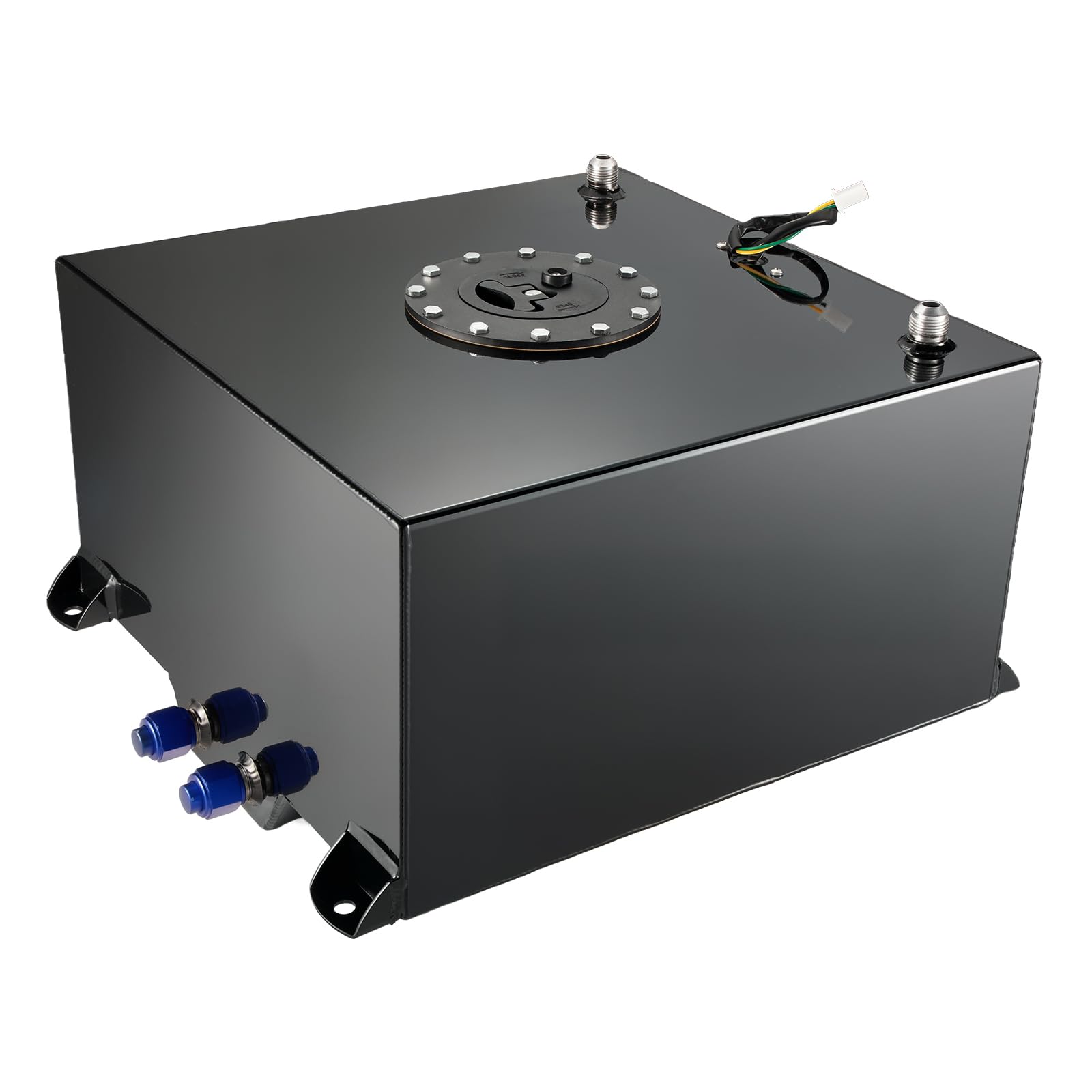
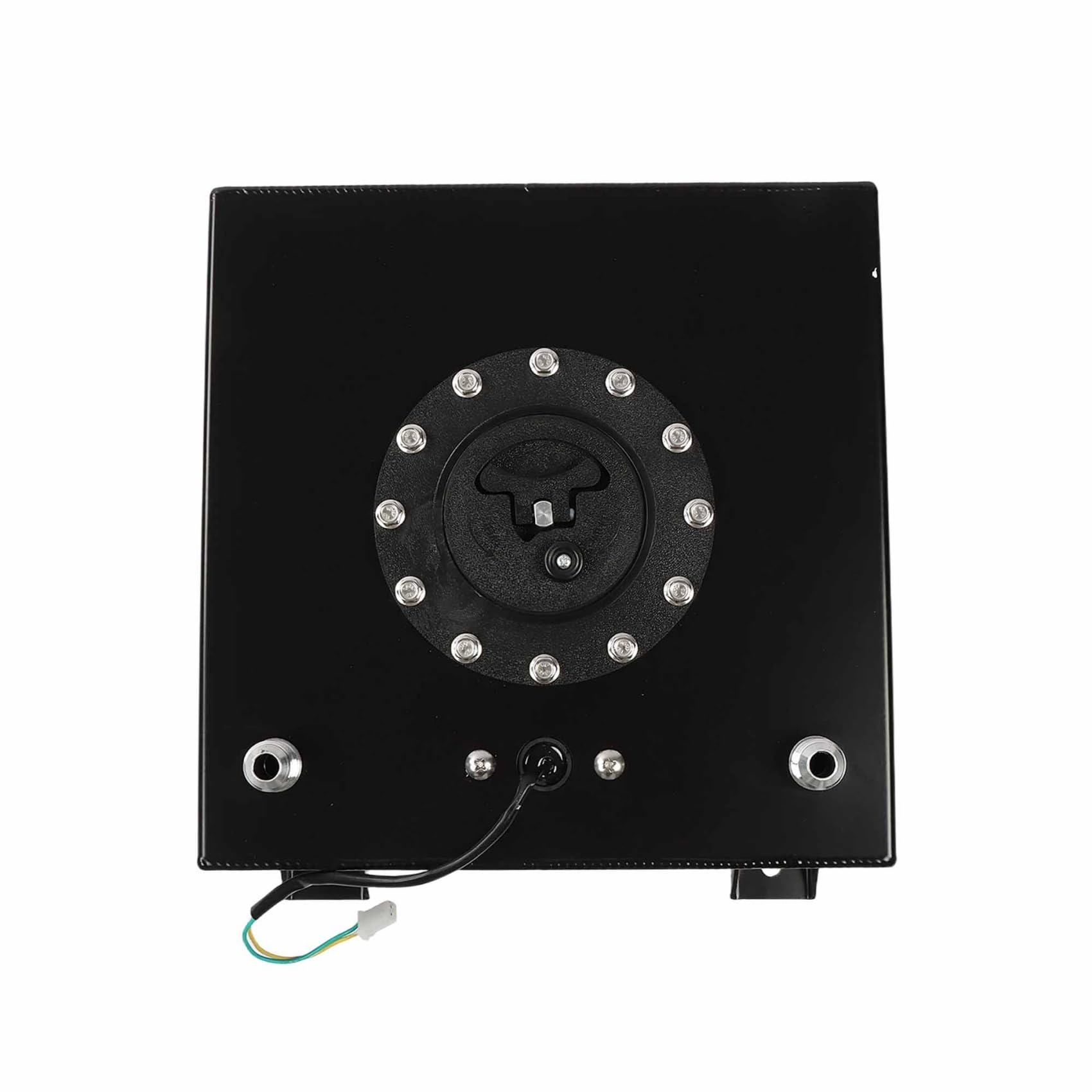
1. EVIL ENERGY 10 Gallon Fuel Cell Gas Tank
Our pick — over 4★ from 300+ verified ratings; the strongest balance of quality and price.
The 10-gallon street-and-drift favorite that balances size, foam, and a working sender.
Start with the headline feature: a 10-gallon capacity in a tank that measures 16″ (L) × 16″ (W) × 9.05″ (H), which gives you real range without turning the trunk into a drum. It’s built from 1060-H24 aluminum alloy for strength, and it runs on fuel or diesel — just keep alcohol, methanol, water, and ethanol out of it. Buyers report the tank is “super nice and light weight,” and the weld quality earns regular praise.
The built-in 3–90 ohm level sensor talks to your fuel gauge, and the internal anti-slosh foam keeps fuel stable in corners and can prevent flashback explosions. Follow the manufacturer’s advice to inspect foam for wear regularly. The mounting tab is 3.46″ in diameter, and the inlet/outlet fittings are 10AN — but you have to order those fittings separately unless you spend the extra money for the full kit. That’s the one catch most buyers flag: “You have to order them here or just pay the extra – to get the tank with all the fittings included.”
The recurring caution from owners is placement — “not for the bed of a truck needs to be enclosed” is how one puts it, after two units leaked rainwater and a front weld cracked. In an enclosed, protected spot, this is a solid value; exposed to the elements, it’s a risk. The flexibility to run in a converted 99 Honda Civic that was modified to fill from the factory location shows how adaptable it is.
big capacity value
- Genuine 10-gallon capacity for real-world driving range
- Complete with level sender and anti-slosh foam included
- Strong aluminum construction praised for its welds
installation prep needed
- Fittings sold separately unless you buy the full kit
- Not sealed for open-air truck beds — needs an enclosure
- Plastic cover, not all-metal construction
reach for it if: you want a proven 10-gallon cell with a working gauge sender for a street, drift, or track car that keeps the tank protected.
think twice if: your build leaves the tank exposed to weather, or you want fittings in the box without ordering extras.
2. labwork 5 Gallon Fuel Tank with Built-in Level Sender
The compact 5-gallon cell that demolition derby drivers run again and again.
This is the tank derby racers swear by for one big reason: it simply doesn’t leak. Owners mention it “worked perfectly for my demolition derby car” and have “yet to have a leak” even after multiple runs. One owner has purchased three of them and says all are great — that repeat-buying is the strongest signal of trust in this category. At 12″ (L) x 12″ (W) x 8″ (H) and 5 gallons, it’s noticeably more compact than the 10-gallon EVIL ENERGY, which makes all the difference when you’re shoehorning it into a stripped-down race car.
The high-grade aluminum construction gives you extra protection, and the built-in 0–90 ohm fuel sender feeds a clean reading to your gauge. It comes with a quick-release fuel cap and dual -10 outlets plus dual -10 vent outlets on top of the cell. The inlet and outlet diameter is 6AN, though customers note the unit arrives with 10AN male fittings instead of the 8 or 6 AN they expected — plan your fuel line adapters accordingly. Included anti-slosh foam prevents fuel movement during hard cornering.
For a jet boat owner using it as a reserve tank, it’s “perfect for my application.” For derby cars, the lightweight build and easy installation make it a standout. The main planning point is the fitting mismatch — know your line size before it arrives. This is the value pick that earns its reputation through sheer reliability and repeat orders.
who it beats: any 5-gallon cell that costs more without a working sender — its leak-free record and compact size make it the derby standard.
who it doesn’t: builders who want a large capacity or who refuse to adapt from the 10AN fittings it ships with.
3. GSTP Universal 5 Gallon 20L Fuel Cell Tank

A polished budget cell that swaps cleanly into hot rods, track cars, and SUVs.
At 5 gallons / 20 L, this is a universal fit for hot rods, street racing cars, track machines, trucks, and SUVs, and it runs on both diesel and gasoline. The polished aluminum exterior is “beautiful looking” and easy to clean, bringing some show quality to a budget price point. Dual 10 outlets and dual 10 vent outlets sit on top of the cell, and the anti-sloshing foam inside helps maintain fuel supply at the same level in corners.
Owners found it “worked great” in a 1983 Ford Mustang GT hatchback, and the general consensus is that it works as it should with easy installation. One buyer’s note cuts through the noise about fittings: “no fittings leak, all these reviews about leaking fittings are likely user error with no thread sealant.” The cap is described as sturdy enough that only user error would break it — a direct answer to the most common worry in this category.
Quality here is a genuine mixed bag, and it’s the most-discussed point — some call it “amazing for the price” while others describe the build as cheap. This fits the budget tier honestly: the functionality is there, but you’re trading some material refinement for the lower cost. If you want a polished, working 5-gallon cell without spending mid-range money, this is the value play.
best for spenders: anyone who wants a good-looking polished cell on a budget and is willing to apply their own thread sealant to fittings.
look elsewhere if: you need a level sender with a specific ohm range or expect premium-grade welds at this price.
4. BOMLING 10 Gallon Fuel Cell with 6AN Fuel Line Kit

The complete 10-gallon kit that lands with everything you need to plumb it in.
This is the kit that solves the EVIL ENERGY’s biggest headache: it arrives with the fuel line included. The package contains the 10-gallon/40L tank, a 0–90 ohm level sender, the cap, and a 6AN fuel line kit, so you’re not scrambling for fittings on day one. One buyer on a 1978 Dodge pickup “had about 3 feet of fuel line leftover as well” — meaning the included line covers even long truck runs. It’s built for hot rods, street racing, drift, trucks, and SUVs, with high-quality aluminum that’s light, sturdy, and rust-resistant.
The dimensions are the largest of the 10-gallon options: 16.5″ (L) x 16.5″ (W) x 9″ (H), with a sump that measures 6″ x 6″ x 2″ deep. That sump is a real bonus for fuel pickup under hard acceleration. Owners were “shocked the fuel cell came with sending unit, fittings that are anodized” and note it’s “powder coated” with “nice welds top quality.” Value for money is a consistent praise point — this delivers a lot for what you pay.
The honest caveats: there’s no wiring diagram for the sending unit, and the flush filler cap can leak water if left uncovered in the rain. Functionality is genuinely mixed, with some buyers reporting the sending unit doesn’t work. Still, for a project car or truck where you want one box with everything, this is the strongest complete kit on the list.
complete kit ready: If you want a 10-gallon cell that arrives ready to plumb with line included, this beats the EVIL ENERGY on convenience — though the sending unit is a gamble.
5. RCi 2161A Aluminum Fuel Cell, 15 Gallon
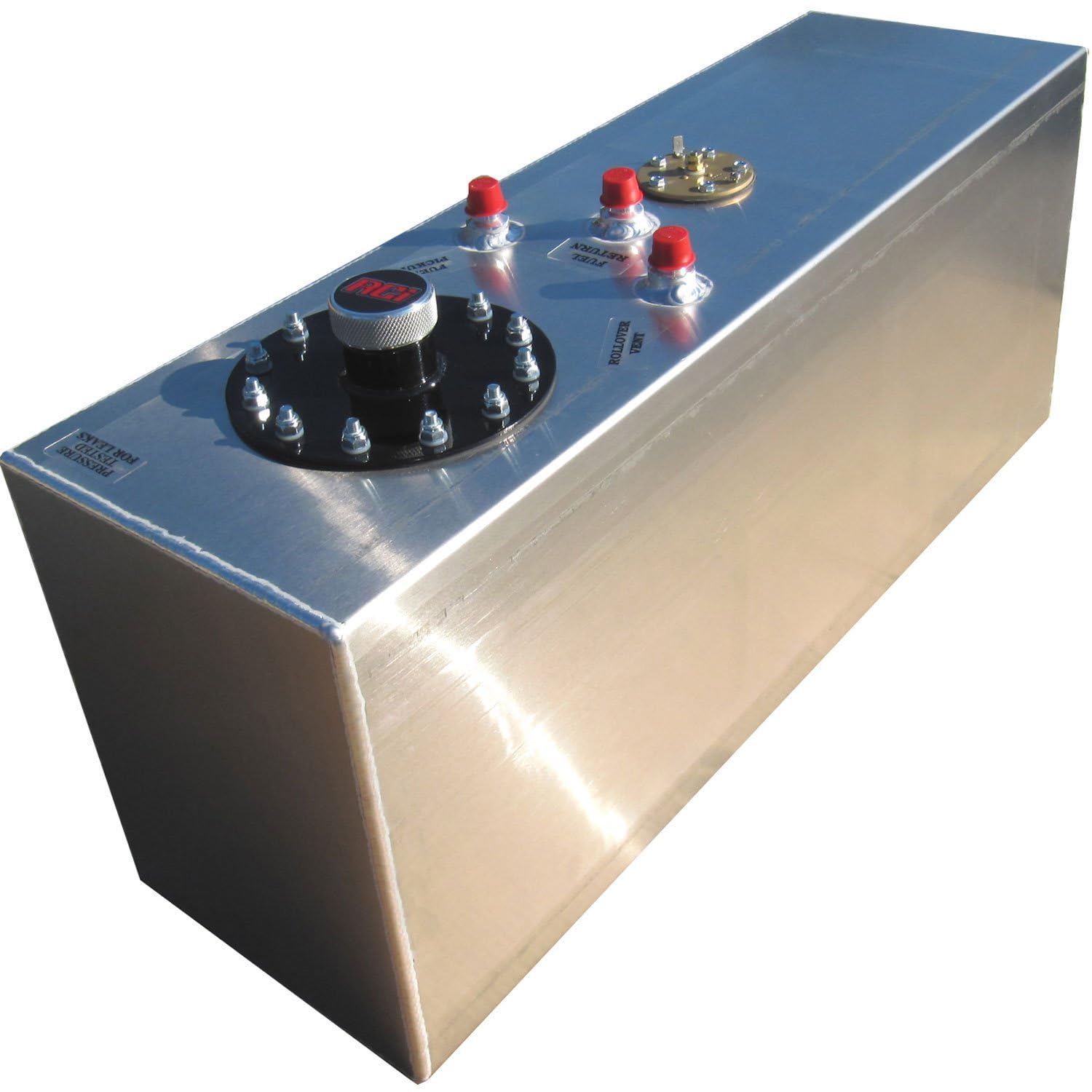
The biggest 15-gallon cell here, built for trucks and boats that need serious range.
This is the heavy hitter of the list — a 15-gallon cell in natural aluminum that’s made for applications where range matters more than weight. It fits “perfect in the frame of a 1990 c1500,” and one buyer calls it a “perfect for fishing boat upgrade.” The quality and appearance earn consistent praise, and the -8 fittings are a solid middle ground for most fuel line setups. At 17.25 pounds in the box, you feel the extra capacity, but that’s the trade-off for holding 50% more fuel than the 10-gallon cells.
The standout value here is that you get 15 gallons of genuine capacity, which is a 1.5x step up from the 10-gallon options on this list — enough for a full day of boating or a long-haul truck run. The welds are “nice,” per buyers, and the finish looks good in a frame. It’s the pick for anyone who’s done the math and knows they need the range.
Two honest planning points: the tank lacks mounting tabs, which some reviewers point out older cells had, and the top fittings sit nearly level with the fill neck, which complicates flat-surface mounting. The sending unit is the real risk — shoppers say it can be intermittent and may not work unless you tap on it. The occasional arrival with the pickup in pieces is a quality-control gamble. If you need max capacity and can fabricate your own mounting, this delivers the most fuel per dollar.
grab it for: maximum 15-gallon range in a truck frame or boat where you can handle your own mounting solution.
skip it if: you want plug-and-play tabs, a dependable gauge sender, or a compact footprint — this is the biggest and most finicky cell here.
Understanding the Specs
AN Fittings & Fuel Line
AN is a standard for hose and fitting sizes used in racing and custom builds. A -10 AN fitting is larger than a -6 AN fitting, so it flows more fuel. Match fitting size to your pump and line flow needs, not just bigger numbers. Always use thread sealant on these fittings, because that’s the most common cause of leaks.
Level Sender Ohm Range
The level sender is a variable resistor that tells your gauge how full the tank is. Most aftermarket cells use a 0-90 ohm range, which matches many universal and GM gauges. Your car’s gauge must expect the same resistance, or the reading will be wrong. Check your gauge’s range before picking a cell.
FAQ
Will an auto fuel cell work with my car’s factory fuel gauge?
What is anti-slosh foam and why does it matter?
What is the difference between a 5 gallon and a 10 gallon fuel cell?
Can I mount an auto fuel cell in the bed of my truck?
Do I need to buy fittings separately with my fuel cell?
What kinds of fuel can I run in these fuel cells?
How do I prevent leaks at the fittings?
What if my fuel cell has no mounting tabs?
Final Thoughts: The Verdict
The crowd favorite is the auto fuel cell winner, the EVIL ENERGY 10 Gallon, because it pairs real capacity with a working sender and foam at a price that wins over builders. If you want a compact, leak-free tank for a derby car, grab the labwork 5 Gallon that racers buy multiple times. And for a complete setup that arrives with line included, the BOMLING 10 Gallon kit is the one to reach for.
How We Picked
We do not accept paid placement. Every pick is matched to a real buyer and a real use-case; we do not hands-on test units.
Sources & Methodology
Specifications: manufacturer listings and product documentation. Review insights: verified customer reviews, as of August 2026. Pricing: not shown on this page (it changes often); check the current price via the retailer link.
As an Amazon Associate, Gadgets Feed earns from qualifying purchases. This does not affect which products we feature.