
Our readers keep the lights on and my morning glass full of iced black tea. As an Amazon Associate, I earn from qualifying purchases.
Specs are compiled from manufacturer listings and verified buyer reviews and can change over time — please confirm the key details on the product page before buying.
Traveling with a little one means every ounce in your bag counts, and a bulky carrier can wreck a carefully packed carry-on. The best travel carriers solve one problem above all: they disappear into your luggage when the baby walks, then reappear in seconds when those little legs give out. This guide sorts through the lightweight, foldable options that actually earn their space on a plane, a trail, or a long day at a theme park.
I’m Min — the founder and writer behind Gadgets Feed. This guide is built by comparing the manufacturers’ published specifications and the patterns across verified customer reviews, so you get each pick’s real strengths and trade-offs instead of marketing spin.
The secret to a stress-free trip is choosing the right baby carrier for travel that packs down small while keeping your child snug and your back happy.
Our Picks at a Glance


How To Choose The Best Baby Carrier For Travel
Before you compare straps and buckles, you need to decide what kind of traveler you are. Are you a city hopper who needs something to toss in a tote for museum days, or a trail hiker who will carry a toddler for miles over uneven ground? That single answer rules out half the options immediately.
Weigh the packed size against the carry weight
A true travel carrier folds into a pouch barely bigger than a water bottle — think under 2 pounds and stowable in its own pocket. But a framed hiking backpack, even a lightweight one, cheats on that promise by trading packability for structure. Decide which sacrifice you can live with before you fall in love with a feature list.
Check the weight range against your baby’s stage
Carriers are not one-size-fits-all across a baby’s whole childhood. Some start at newborn weight with head support, while others refuse to accept a child under 12 pounds and require head and neck control. Match the lower end of the range to your baby today, not to the toddler they will become.
Look for even weight distribution, not just padding
A wide waistband and padded shoulder straps matter, but the “M” position seat—where the baby’s knees sit higher than their hips—is what protects their developing hips and spine. A wide waistband and padded shoulder straps matter, but the “M” position seat — where the baby’s knees sit higher than their hips — is what protects their developing hips and spine.
Quick Comparison
| Model | Best For | Carry Weight | Carrier Weight | Positions | Amazon |
|---|---|---|---|---|---|
| Baby Tula Lite★ Best Overall | Everyday packability | 12–30 lbs | Ultra-light | Front & Back | Amazon |
| Bc Babycare CloudTouchNewborn Pick | Newborn comfort | Newborn & up | Light | Front, Back, Hip | Amazon |
| Chicco SnugSupport 4-in-14-in-1 Value | Versatile positions | 7.5–33 lbs | Standard | 4 positions | Amazon |
| Boba Air | Stash-in-purse portability | 15–45 lbs | 0.9 lbs | Front & Back | Amazon |
| Colugo Carrier 2 | Dad-friendly features | 7–35 lbs | 1.5 lbs | 4 positions | Amazon |
| besrey Hiking Backpack | Casual trails | 16–44 lbs | 5.5 lbs | Back carry | Amazon |
| Happy! Original | Warm-weather minimalism | 7–45 lbs | Lightweight | Front & Back | Amazon |
| WIPHA Frame Carrier | Serious hikes | up to 40 lbs | 5.5 lbs | Back carry | Amazon |
| Osprey Poco SLT | Folding frame travel | Toddler | 4.72 lbs | Back carry | Amazon |
In‑Depth Reviews
1. Baby Tula Lite Compact Baby Carrier
Our pick — over 4.5★ from 700+ verified ratings; the strongest balance of quality and price.
The carrier that vanishes into a fanny pack yet carries a 30-pound toddler in comfort.
The defining move here is the packable design: the whole carrier stuffs into its own attached waistband to become a compact waist or cross-body pouch. It is made from durable, quick-drying ripstop fabric — the same stuff used in outdoor and sportswear — so it shrugs off a water park splash and dries fast. The crowd favorite among 747 owners, this pick earns its spot because the portability is paired with real comfort, not just a clever fold.
What wins people over is the weight — owners single it out more than any other trait as the reason they reach for it day after day. At 63 mentions, the lightness is the headline, with portability close behind at 44. The built-in storage pouch holds a phone, diaper, or wipes, so you can skip the diaper bag on short outings. A removable UPF 50+ hood adds sun coverage, and the fit adjusts to sizes XS through 4X, making it an easy carrier to share between partners of very different builds.
The honest trade-off: this carrier is designed for babies who already have head and neck control, so it skips the newborn stage entirely and starts at 12 pounds. Back support gets mixed feedback, and the back buckle takes practice to master solo. For hot climates and active days, however, the breathable fabric and featherlight feel are hard to argue with.
Reach for it if: you want one carrier that lives in your bag for theme parks, stadiums, and warm-weather trips, and your baby is past the newborn phase.
Look elsewhere if: you need newborn head support or expect to wear it for hours on end without adjusting — the light build trades a little lumbar support for portability.
2. Bc Babycare CloudTouch Soft Infant Carrier
A newborn-ready carrier that grows with your baby while your back gets real lumbar relief.
The standout here is the CloudTouch fabric — a blend of breathable Rayon, durable Nylon, and flexible Spandex that feels soft against delicate newborn skin while keeping airflow moving on warm days. It is built for the earliest days, supporting the recommended “M” position for healthy hip and spine development with padded leg openings. The built-in EVA lumbar panel and cushioned shoulder straps work together to spread weight and relieve pressure from your back and shoulders.
Quality leads the conversation among owners — it is the top-praised aspect, with comfort close behind. The carrier folds into an integrated storage bag that slips into a diaper bag or carry-on, and phone pockets on both sides keep essentials within reach. D-ring clips let you attach toys or pacifiers, and the windproof hood guards against sun and breeze. It is Oeko-Tex Standard 100 (Class 1) certified and complies with CPSC and CPSIA safety standards.
The recurring complaint is heat — as owners put it, he “got very hot wearing it while carrying the baby.” The soft, stretchy fabric that feels like a cloud can run warm for the wearer. Fit also gets mixed notes, with some finding it too loose for slim frames even at the tightest waist setting. For plus-size users, though, the adjustable straps are a genuine win.
Best for: parents with newborns who want one carrier that covers front, back, hip, and side sling positions from day one — no infant insert required.
Keep in mind: if you run hot or have a very petite frame, the cozy CloudTouch fabric and loose fit might not be ideal.
3. Chicco SnugSupport 4-in-1 Infant Carrier
Four carry positions and a 23-to-46-inch waist range make this the family-shared workhorse.
This carrier earns its “4-in-1” name with four distinct setups — parent facing, outward facing, and back carry — that accommodate growth from 7.5 to 33 pounds. The expert-recommended “M” position seat gives full leg support from hip to knee, and padded head support handles the newborn stage while adjustable leg panels grow with your child. Wide shoulder straps and structured lumbar and abdomen support spread weight along your back and shoulders instead of dumping it on one spot.
The breakthrough moment for many owners is the long-haul comfort. As buyers report, one carried a 7-month-old weighing 20 pounds around for 3+ hours on Halloween “without any pain or discomfort” — the exact scenario a travel carrier needs to survive. The waist and back straps create a custom fit for waists from 23 to 46 inches, so it genuinely fits two very different parents.
The honest caveat: comfort gets genuinely mixed feedback, and a few owners found it unsuitable for newborns despite the head support. The fit is the most-discussed downside, with some wearers noting it doesn’t accommodate their needs properly. This is a carrier to try on before you commit, and it rewards practice with the adjustments.
Where it shines
- Four positions cover newborn to 33-pound toddler
- Extremely wide waist adjustability for shared use
- Structured support praised for long no-pain carries
Where it’s picky
- Comfort and newborn suitability earn mixed reviews
- Fit issues reported by several owners
- Not the most compact option in this lineup
Choose this if: you want maximum position variety and a waist fit that truly spans two parents’ sizes.
Think twice if: you need the smallest possible packed size — other picks fold far smaller.
4. Boba Air Lightweight Toddler & Baby Carrier

At just 0.9 pounds, this carrier clips to your purse when the baby wants to walk.
The number that defines the Boba Air is its weight — 0.9 pounds — which makes it the lightest option in this whole lineup by a wide margin. It folds into its own hood pocket, so you can stash it in a diaper bag, clip it to a purse strap, or tuck it into a carry-on without thinking. Made from quick-drying, durable nylon, it leaves no salt stains, wet marks, or sticky sand behind after a beach day.
The thing everyone raves about is the size — owners mention it more than any other feature, praising how the whole carrier packs into a bundle small enough for a diaper bag. Portability and lightweight design follow close behind in the conversation. It is certified hip-healthy, holding your child in a natural ergonomic position, and it fits plus-size and petite parents alike with an adjustable waist belt and shoulder straps.
The trade-off is that the nylon fabric runs warm, and the fit gets mixed notes — some owners find the shoulder straps too wide. It also lacks an outward-facing option, and back carry is less comfortable than the front position. But for a carrier whose entire reason to exist is disappearing into your luggage, those are fair prices to pay.
Grab this for: hikes, beach trips, and flights where every ounce matters and you want a carrier that clips to your bag when not in use.
Pass if: you need outward-facing carry or plan to wear it for many hours — the minimalist build trades support for portability.
5. Colugo Baby Carrier 2
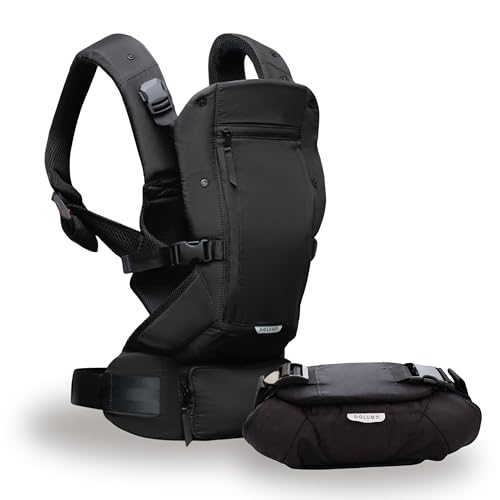
One-touch magnetic buckles and a fanny pack make this the hands-free favorite for dads on the move.
The Colugo Carrier 2’s signature upgrade is the one-touch magnetic buckle system, letting you click in and out with a single hand while holding a squirmy baby. It weighs only 1.5 pounds and folds down small enough for a diaper bag, stroller, or carry-on. The attached front fanny pack and an expanded phone pocket that fits any phone size keep essentials within reach, while the all-weather fabric wipes clean and is machine washable.
Quality is the most-praised aspect here, with back support earning specific callouts — one taller dad at 6’0″ and 200 pounds found it fit him perfectly while still fitting his wife. It supports children from 7 to 35 pounds across four positions: inward, outward, hip, and back carry. The built-in UPF 50 sunshade adds outdoor protection for sunny travel days.
The recurring friction point is the magnetic straps themselves: they can be hard to remove and sit near the baby’s face, sometimes requiring a cloth buffer. The fit also gets mixed feedback, with some owners reporting the straps cut into the baby’s face. For most families, though, the convenience of one-hand attachment outweighs those quirks.
Perfect for: the 6-foot dad who wants a carrier that fits his frame, with magnetic buckles that make solo setup genuinely one-handed.
Note: if your baby is sensitive around the face, the strap placement might need a workaround.
6. besrey Toddler Hiking Backpack Carrier

A 5.5-pound framed backpack that swallows gear and keeps your toddler secure on casual trails.
If your travel involves actual hiking, this framed backpack shifts the job from “carry the baby” to “carry everything.” At 5.5 pounds, it handles total weights between 16 and 44 pounds — child, gear, and backpack included — with a durable frame and 5-point seat belts made of super-soft material. The flexible straps and stirrups keep your toddler in a comfortable, safe position even on uneven terrain.
The most-praised feature is the size, with owners highlighting how much storage the carrier provides. It has pockets for diaper wipes, water bottles, flashlights, and light gear, plus storage under the seat and small zipper pockets on the waist belt. A detachable sunshade protects from rain, wind, and sun, and a washable drool pad gives the baby a soft, clean surface for their face. The kickstand lets you set it down without laying the whole pack on the ground.
The downsides are predictable for a framed carrier: it’s bulky when unused and gets heavier as your child grows. A few owners found the baby straps and buckles hard to see because they’re black against the shaded pack area. The shoulder pads also lack cushioning for some wearers. But for casual hiking with even weight distribution, this is a strong value.
What makes it travel-worthy
- Ample storage for a full day of trail essentials
- Kickstand and easy on/off without help
- Even weight distribution across shoulders and waist
What to expect
- Bulky when not in use — not a diaper-bag option
- Black buckles hard to spot in low light
- Grows heavier as your child approaches 44 pounds
Pick this for: day hikes and outdoor trips where you need a stable frame, real storage, and a sunshade, all without premium pricing.
Skip it for: flights or city days where the carrier must fit inside a compact carry-on.
7. Happy! Original Baby Carrier

Premium natural linen keeps both of you cool without the bulk of thick padded panels.
The Happy! Original earns its name with a genuinely different material story: premium natural fiber linen that keeps baby and caregiver cool without thick padding or bulky structure. It is newborn-ready with no infant insert, supporting babies from 7 to 45 pounds with healthy hip positioning and natural spine alignment. The smart ergonomic design spreads weight across shoulders and torso, reducing pressure points without rigid lumbar panels.
Quality is what owners praise most, with ease of use and comfort following close behind. The minimalist silhouette lets you sit comfortably while wearing it, and a discreet pocket hides the hood or small essentials. It folds compactly for diaper bags, supports discreet nursing, and the X-style straps provide additional back support. Adjustable straps and waistband adapt from petite through plus-size caregivers without needing to pick a size.
The catch is the trade-off for that minimalism: it lacks lumbar support, and one owner found it less comfortable than a padded option for carries over 20 minutes. The hidden hood is also tricky to access with a sleeping baby. But for warm-weather everyday use and errands, the breathability is a genuine relief.
Reach for it if: you live somewhere hot, want a newborn-compatible carrier with zero infant insert, and prefer a sleek, low-profile look.
Consider the trade: no lumbar panel means less back support on marathon carries, and the hood is fiddly mid-nap.
8. WIPHA Baby Backpack Carrier with Sunshade
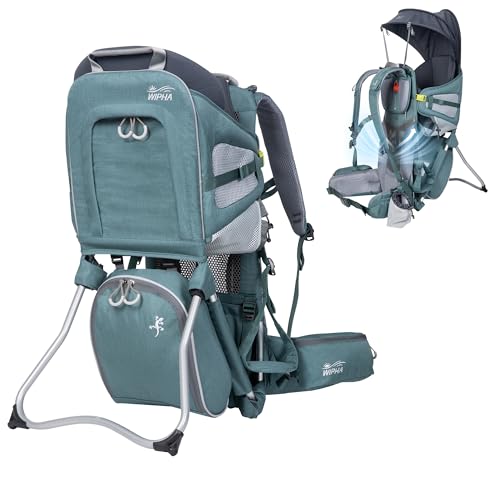
A TUV-certified aluminum frame that folds nearly flat but carries up to 40 pounds of toddler.
This green hiking backpack does something rare for a framed carrier: it folds down almost completely flat when the journey ends. The high-strength, lightweight aluminum frame weighs only 5.5 pounds and is TUV certified for safety, supporting up to 40 pounds (6 months to 3 years) with child-lock buckles for extra security. The one-pull adjustable suspension system makes fitting quick, while the padded hip belt and shoulder straps distribute weight evenly.
Quality is the dominant theme in owner feedback — it’s the most-praised aspect by a wide margin, with comfort close behind. The suspended mesh back panel and side air vents deliver 360-degree ventilation, and a removable drool pad plus a built-in UPF 50+ sun canopy add all-weather protection. The 8L main compartment, dedicated water bottle holder, and zippered compartments hold everything from diapers to trail snacks. Owners mention packing their kids around nine miles of rugged terrain without a problem.
The only real complaint is minor: nothing in the feedback suggests a significant downside beyond the usual framed-carrier bulk. For a metal-frame option, owners say it avoids the premium price tag while delivering the stability that makes kids comfortable enough to sit all day.
Why it’s a favorite
- Folds nearly flat for storage and travel
- TUV-certified aluminum frame with child-lock buckles
- 8L main compartment plus dedicated bottle holder
Worth knowing
- Still a framed carrier — heavier than soft options
- Back carry only, no front-facing position
Buy this for: serious hikes and long trail days where a stable aluminum frame, ventilation, and huge storage matter more than packable size.
Skip it for: city travel where you need something to stuff inside a small carry-on.
9. Osprey Poco SLT Child Carrier Backpack

A patented folding steel frame that collapses smaller than most carriers yet carries like a serious pack.
The Osprey Poco SLT is the bridge between a soft carrier and a framed backpack, and it does it with a patented lightweight stainless steel frame that folds flat. It locks securely in place for a stable carry or freestands when you set it down. At 4.72 pounds with dimensions of 23.6H x 13.8W x 16.9D inches, it is the most packable framed option here — designed for everyday errands, travel, and family hikes.
The AirScape backpanel combines deep-ridged foam and mesh for maximum airflow during extended wear, and six inches (15 cm) of torso adjustment makes it easy to share between parents, caregivers, or grandparents of different heights. Customers note it “saved our vacation,” enabling extensive hiking on rough terrain with a toddler. The quality is the most-praised aspect, and support lands in all the right places.
The two honest caveats: it doesn’t come with a sunshade — that’s sold separately despite a zippered compartment designed to store one — and it lacks foot stirrups, so your child’s legs dangle. A few owners note the balance between price and features is debatable, though the stability on steep terrain keeps it a top pick for its category.
Best for: families who want a framed carrier that genuinely folds small for transport, with premium backpanel ventilation and multi-wearer adjustability.
Budget for: an extra sunshade purchase and consider whether dangling legs will bother your toddler on long carries.
Understanding the Specs
Weight Range vs. Baby’s Stage
The lower number in a carrier’s weight range tells you the minimum size your baby must be before it is safe to use. A carrier starting at 12 pounds requires head and neck control, while a 7-pound start usually means newborn support with proper head positioning. Match the lower end of the range to your baby today, not to the toddler they will become.
Carrier Weight and Packed Size
The carrier’s own weight and how small it folds are the two numbers that matter most for travel. A 0.9-pound carrier that stuffs into its own pocket is a different beast than a 5.5-pound framed backpack. For flights and city days, look for under 2 pounds with a self-storage pouch; for trails, accept more weight in exchange for a frame.
The “M” Position
The “M” position describes how the baby’s legs should sit: knees higher than hips, with the seat supporting from hip to knee. This position protects developing hips and spines, and it is why the best carriers have a structured, ergonomic seat rather than a flat sling. Look for carriers that explicitly support it.
Carry Positions
Front inward-facing carry is for newborns and closeness, outward-facing lets older babies see the world, and back carry distributes weight best for longer hikes. A carrier that offers at least front and back carry covers most travel needs. Framed hiking backpacks are back-carry only by design.
FAQ
What is the lightest baby carrier for travel?
Can I use a travel carrier for a newborn?
What does the “M” position mean in a baby carrier?
How is a framed hiking carrier different from a soft carrier?
How do I know which weight range fits my baby?
Can two parents of different sizes share one travel carrier?
What should I look for in a carrier for hot climates?
Is a sunshade included with these carriers?
Final Thoughts: The Verdict
For most travelers, the baby carrier for travel winner is the Baby Tula Lite because it packs into its own waistband, carries up to 30 pounds, and fits a huge range of body sizes while staying breathable for warm days. If you want a featherweight that clips to your purse, grab the Boba Air at 0.9 pounds. And for serious trail days where your child needs a real frame and you need real storage, the WIPHA frame carrier is the one to reach for.
How We Picked
We do not accept paid placement. Every pick is matched to a real buyer and a real use-case; we do not hands-on test units.
Sources & Methodology
Specifications: manufacturer listings and product documentation. Review insights: verified customer reviews, as of August 2026. Pricing: not shown on this page (it changes often); check the current price via the retailer link.
As an Amazon Associate, Gadgets Feed earns from qualifying purchases. This does not affect which products we feature.