
Our readers keep the lights on and my morning glass full of iced black tea. As an Amazon Associate, I earn from qualifying purchases.
Specs are compiled from manufacturer listings and verified buyer reviews and can change over time — please confirm the key details on the product page before buying.
You will stop hauling heavy plastic jugs and gain a tank that resists corrosion for years when you switch to aluminum. Your main choice is between a permanent below-deck mount and a portable tank, with capacities ranging from 3 to 17 gallons. We compare seven aluminum boat gas tanks to help you match capacity, dimensions, and fitting requirements to your hull.
I’m Min — the founder and writer behind Gadgets Feed. This guide is built by comparing the manufacturers’ published specifications and the patterns across verified customer reviews, so you get each pick’s real strengths and trade-offs instead of marketing spin.
For a permanent below-deck install or a portable reserve, the best aluminum boat gas tanks hold fuel safely, resist corrosion, and survive years of sun and spray.
Our Picks at a Glance
How To Choose The Best Aluminum Boat Gas Tanks
Decide first whether the tank will be permanently mounted or portable, as this dictates size and fitting needs. A fuel cell that mounts permanently under the deck frees up floor space, while a portable tank you can lift in and out suits smaller boats and temporary setups. Measure the space first, then match the tank’s dimensions to it.
Capacity vs. Physical Size
Capacity matters less than physical fit—measure your hull’s space before choosing a gallon rating. A 15-gallon cell is roughly 30 inches long, while a 13-gallon rectangle is closer to 18 inches — make sure the footprint clears your stringers and hatches before you commit.
Fittings and Fuel Pickup
Most of these tanks don’t come with the AN fittings you need to connect fuel lines, so budget for that extra step.
Senders and Foam
If you want a fuel gauge on your dash, look for a tank with a built-in level sender (often 0-90 ohm). Internal anti-slosh foam keeps fuel from slamming back and forth in rough water, which protects your engine’s pickup from air.
Quick Comparison
| Model | Best For | Capacity | Dimensions | Level Sender | Amazon |
|---|---|---|---|---|---|
| DNA MOTORING 3 Gal★ Best Overall | Diesel heaters / small reserves | 3 gal | 17 x 12 x 10 in | No | Amazon |
| Parts-Diyer 15 GalTop Performer | Center console / pontoon installs | 15 gal (53L) | 30 x 12 x 9 in | Yes (0-90 ohm) | Amazon |
| waltyotur 15 Gal | Pontoon boats / budget builds | 17 gal (57L) | 30.71 x 19.69 x 8.66 in | Yes (0-90 ohm) | Amazon |
| EVIL ENERGY 10 Gal | Rear-mounted cells / race builds | 10 gal | 19.05 x 16.53 x 16.53 in | Yes (3-90 ohm) | Amazon |
| JSD 12.5 Gal | Hot rods / farm machinery | 12.5 gal | 12″ x 26″ (round) | No | Amazon |
| GSTP 15 Gal | Engine stands / track cars | 15 gal (60L) | — | Yes | Amazon |
| RDS 13 Gal | Permanent pontoon replacement | 13 gal | 18.5 x 14 x 12 in | Yes (mechanical gauge) | Amazon |
In‑Depth Reviews
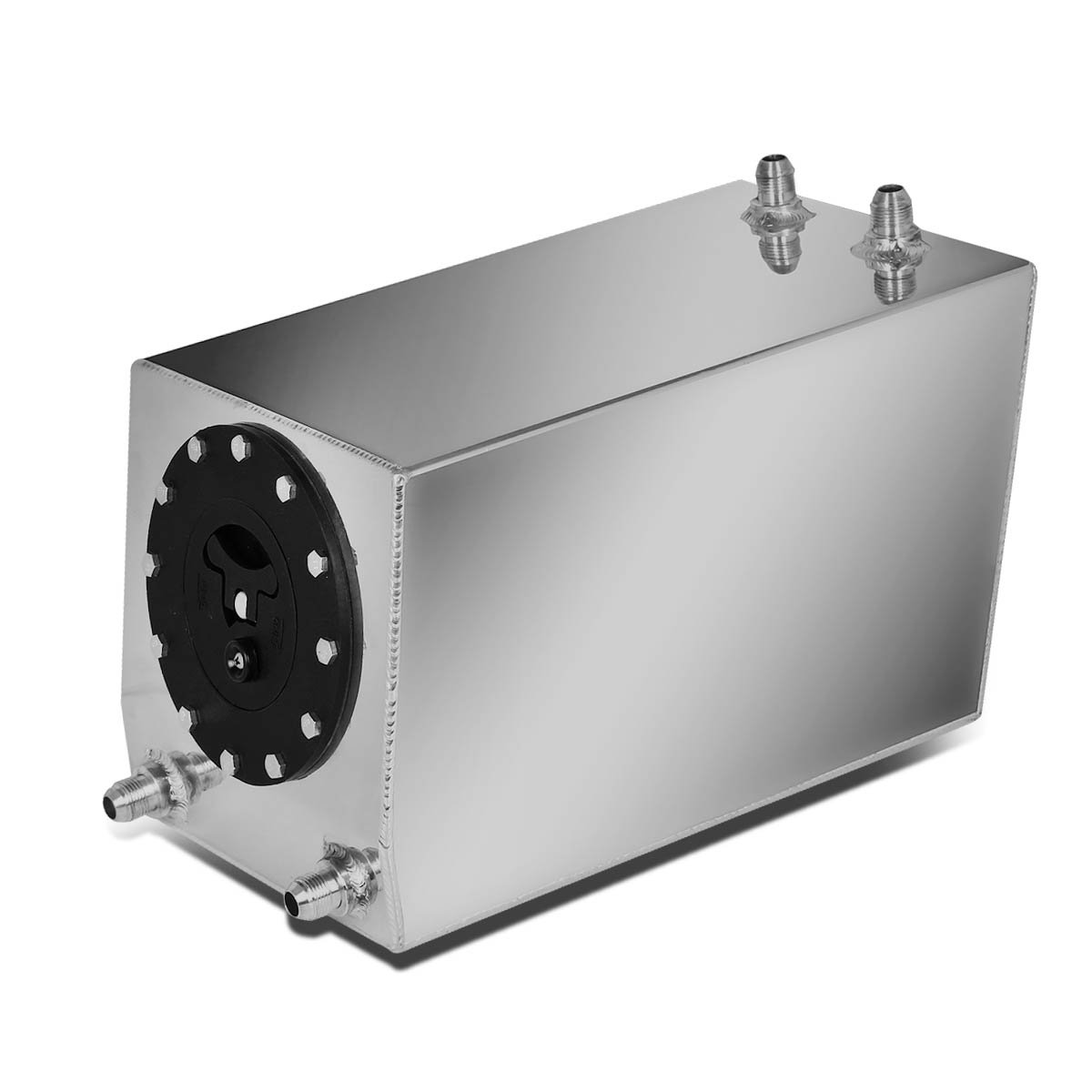
1. DNA MOTORING 3 Gal Aluminum Bottom-Feed Fuel Cell
Our pick — over 4.5★ from 150+ verified ratings; the strongest balance of quality and price.
The compact workhorse that keeps a boat heater fed all season.
This 3-gallon tank is the smallest on the list at just 17 x 12 x 10 inches, which makes it a perfect fit for tight spaces like a pontoon’s side locker. It’s a bottom-feed design, meaning fuel is drawn from the bottom, and it includes a rollover vent plus a fuel return port.
Owners who mounted it as a diesel heater tank on their boat report it fits perfectly and isn’t too big, and they’re impressed with the quality for the money. The trade-off is that the tank arrives bare: you’ll need to buy your own fittings and plug any unused holes. As buyers report, “Fits perfect and not too big, just right for our boat heater diesel fuel tank!”
This cell requires an external fuel pump, so it won’t work with a gravity-fed outboard without modification. For a heater reserve or emergency supply, its low price makes it a practical choice.
Why it wins
- Compact enough to tuck into tight beams
- Bottom-feed design with rollover vent
- Replaceable anti-slosh foam included
Fitting note
- Ships without any attachments — you’ll build or buy your own mounts
- Only works with an external fuel pump
Grab it for: a boat heater or auxiliary reserve that needs a small, rigid tank.
Think twice if: you want a plug-and-play install — budget for fittings and a pump.
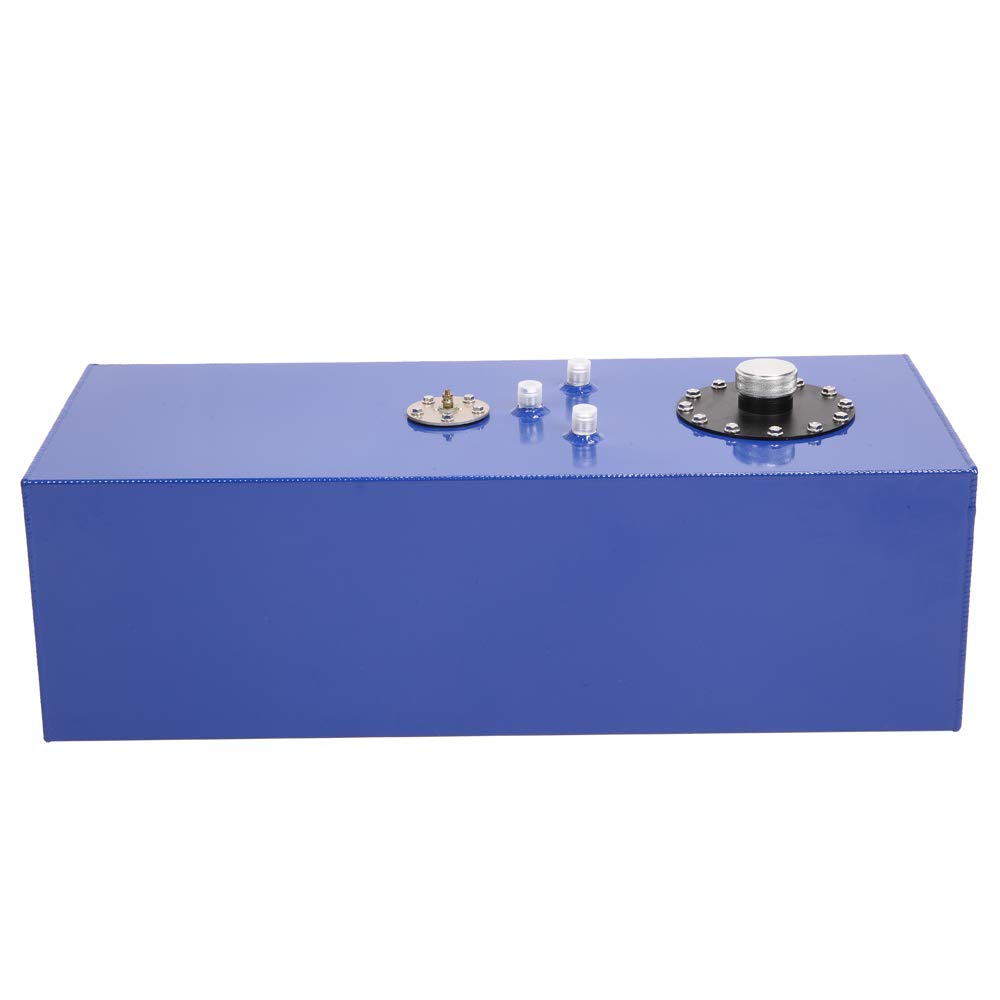
2. Parts-Diyer 15 Gal Fuel Cell Aluminum Tank
The center-console favorite that ends the loose-tank shuffle for good.
At 30 x 12 x 9 inches, this 15-gallon (53L) top-feed cell is sized for permanent mounting, and boaters keep praising how it kills the wobble of flimsy plastic tanks. It ships with a quick-release cap, anti-slosh foam, and a 0-90 ohm fuel sender so your gauge actually reads the level.
The included fuel gauge works reliably, and owners mention refilling only twice a summer with typical use. One buyer measured the real capacity at 13 gallons rather than the advertised 15, which is worth knowing if you’re planning a long-distance run. The tank is leak-free and the finish is praised for its quality.
Unlike the waltyotur cell, this one’s listing dimensions line up closely with what arrives, so you can trust the fit. The only complaint is that the suction and vent ports aren’t labeled, which slows the install.
Solid pick: a well-built universal cell with a working sender, ideal for above-deck or permanent boat mounts. The pairing of a 15-gallon rating with a real-world 13-gallon capacity is the one honest caveat to plan around.
Reach for this if: you’re done tripping over portable tanks and want a fixed install with a working gauge.
Look elsewhere if: you need every advertised gallon — this one measures closer to 13.
3. waltyotur 15 Gal 57L Slim Aluminum Race Cell
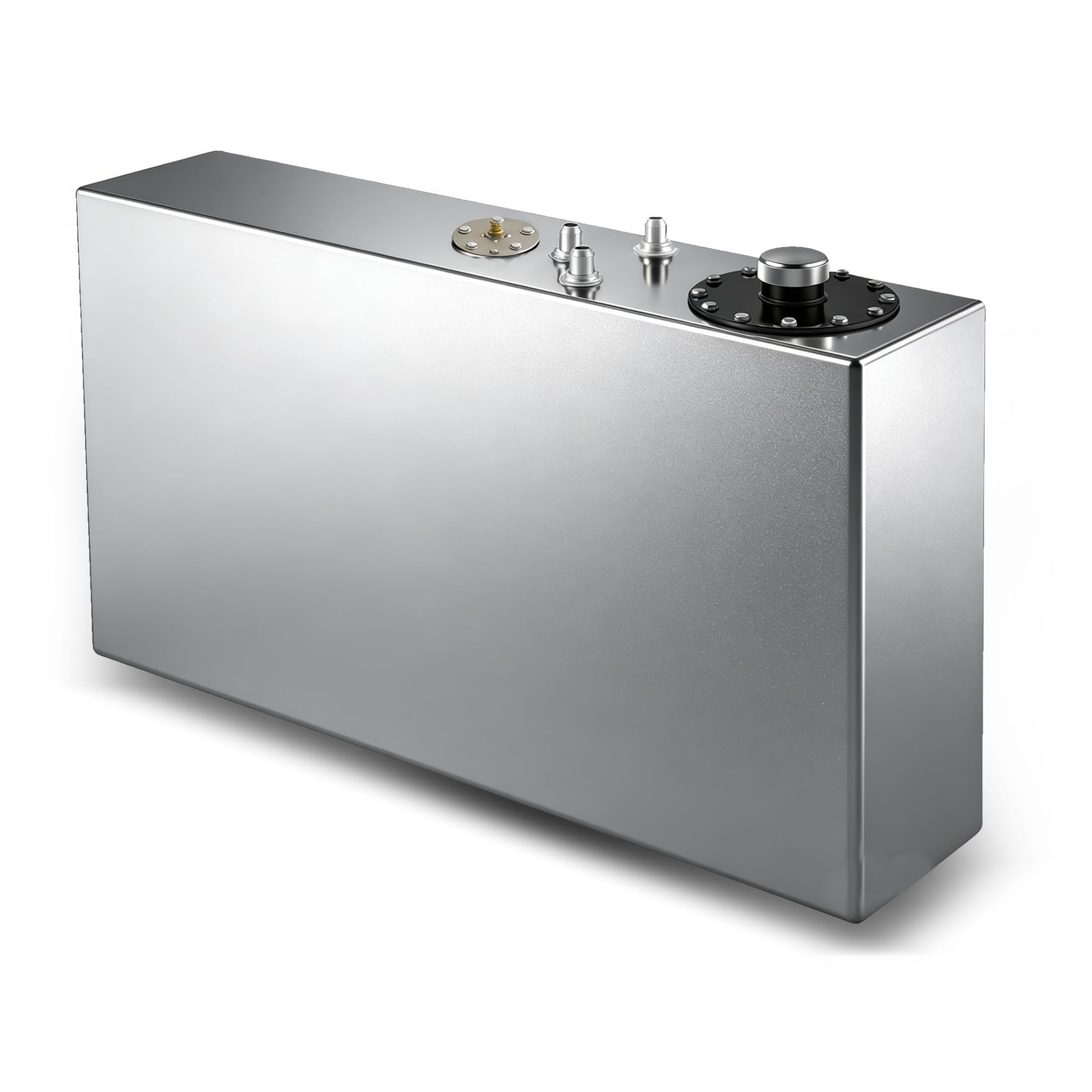
A slim race cell that looks great under a pontoon deck — if the capacity checks out.
This tank’s slim profile — 30.71 x 19.69 x 8.66 inches — is unusual, and pontoon owners love how it tucks away while looking sharp. It lists a 17-gallon (57L) capacity with a 0-90 ohm level sender, integrated sump, and dual -10 vent outlets up top.
The appearance is the thing people rave about, and one buyer called it the best tank for the money after it fit their pontoon perfectly. But the capacity story is shaky: several customers note it actually holds closer to 5 gallons despite the 17-gallon claim. As one buyer put it, “The measurements are no where near close.”
There’s also no mounting hardware included, and one buyer found the listed -10 AN ports actually needed -8 AN fittings. Weigh the low price against the real risk that your “17-gallon” tank is much smaller.
Likes
- Slim, low-profile shape suits pontoon decks
- Integrated sump and quick-release cap
- Good-looking finish that owners praise
Watch out
- Reported to hold far less than 17 gallons
- No mounting brackets included
Buy it for: a budget pontoon install where looks matter more than exact capacity.
skip it if: you genuinely need 15+ gallons — size the space for a smaller real volume.
4. EVIL ENERGY 10 Gal Fuel Cell with Level Sender
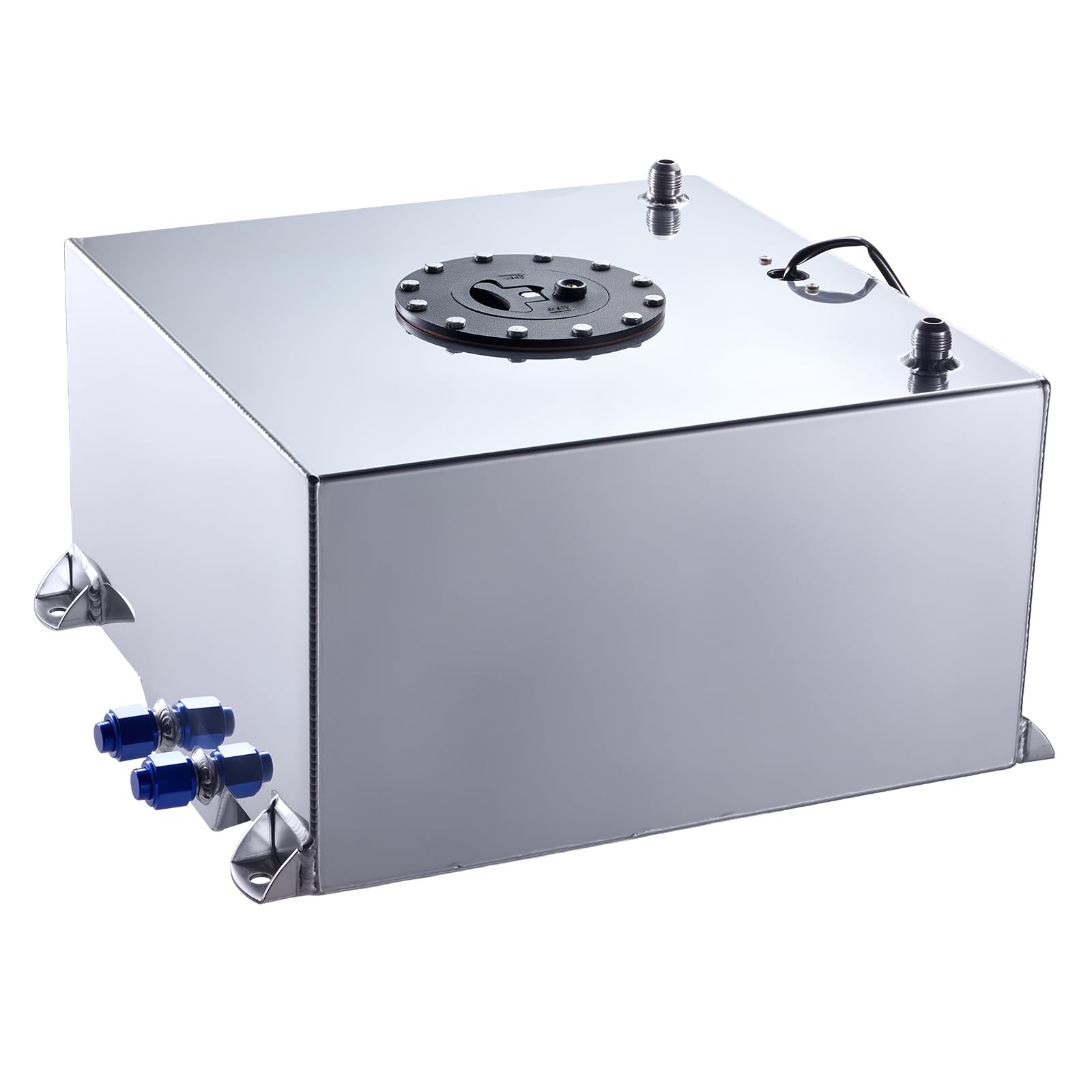
A light 10-gallon cell that slides into rear mounts and race builds without drama.
Made from 1060-H24 aluminum alloy, this 10-gallon cell weighs just 6.9 kg, which makes it far easier to handle than the 9.1 kg waltyotur 15-gallon unit. It measures 19.05 x 16.53 x 16.53 inches and comes with a built-in 3-90 ohm level sensor plus internal anti-slosh foam.
Buyers praise the build quality most, saying the finish looks great and the value is tough to top for a rear fuel cell conversion. Owners note it is super nice and lightweight, with the only hiccup being the fuel line fittings. As one buyer reports, “Super nice and light weight only thing is I found a complications with was the fittings for the fuel lines.” You will likely pay extra for the fitting kit.
Durability is a mixed bag: some units arrive leak-free, but a few report weld cracks, especially if left exposed to rain in a truck bed. Keep it enclosed and it’s a stellar budget pick.
Balanced read: light, good-looking, and genuinely affordable — the classic “Perfect Budget Fuel Cell.” Just remember the fittings are extra and the welds prefer shelter from the elements.
Reach for this if: you want a lightweight 10-gallon cell for a rear mount or a clean race build.
Look elsewhere if: your tank sits fully exposed to weather — go enclosed or sealed.
5. JSD 12.5 Gal Aluminum Spun Round Tank

A spun-round tank with proper steel brackets, made for hot rods and farm rigs.
This 12.5-gallon round tank (12″ x 26″) is the one that addresses the mounting problem head-on: it ships with two powder-coated black steel brackets, so you’re not left scratching your head about how to bolt it in. The 3/8″ NPT outlet is a standard connection many boaters and hot rod builders already have parts for.
It’s a universal fit that works on trucks, off-road rigs, boats, and farm machinery, and owners love the look. Quality is the top praise here, with buyers calling it great looking, leak-free, and well built. A couple of hot rod owners note the real capacity feels closer to 16 gallons, which gives extra cruising miles.
The catch is internal baffles: there aren’t any, so fuel sloshes hard in rough conditions. That’s the trade-off for keeping the interior open and the weight down.
High points
- Comes with mounting brackets included
- No-leak, good-looking build
- Standard 3/8″ NPT outlet
Consider
- No internal baffles means fuel sloshes
- Round shape limits where it fits
Pick this if: you want a ready-to-mount round tank with a proven, leak-free reputation.
pass on it if: your boat rides rough — slosh without baffles could starve the pickup.
6. GSTP 15 Gal 60L Polished Aluminum Fuel Cell

A polished 60L cell with pretty welds and a quiet following on engine stands.
This 15-gallon (60L) fuel cell ships with a level sender and dual 10 outlets up top, plus anti-slosh foam built in to keep fuel supply steady. It’s a universal fit for hot rods, track cars, trucks, and SUVs, and the polished aluminum finish draws compliments.
The welds are the standout feature — owners call them really pretty, and the build quality earns steady praise. It works great on an Engine Run Stand and shows no rust or leaks in normal use. The recurring complaint is the fuel cap: it’s not the best quality, and rain can find its way through the seal on exposed installs.
One owner in a truck bed now keeps a mud flap over the tank when parked, which is a practical workaround if you mount it open to the sky. Inside a boat’s engine bay, the cap concern mostly disappears.
Nice piece: a good-looking, well-welded 15-gallon cell that performs flawlessly in sheltered spots. The cap seal is the one weak link when left out in the weather.
Reach for this if: you want a polished cell that looks great and keeps fuel steady on a stand or track car.
Think twice if: it’ll sit fully exposed to rain — plan a cover for the cap.
7. RDS MFG 13-Gal Rectangle Marine Fuel Tank
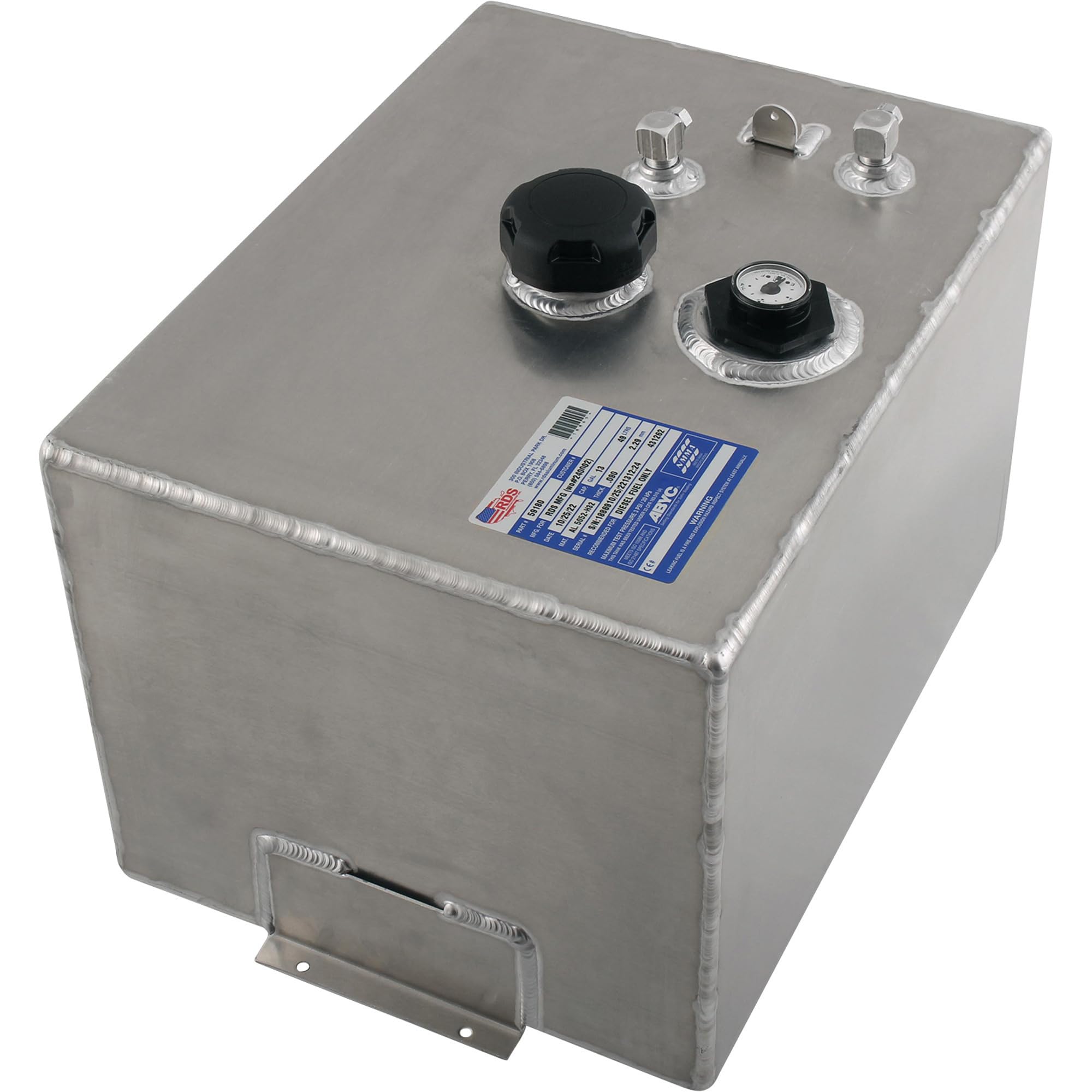
The heavy-duty rectangle that finally replaces a cracked plastic tank for good.
This 13-gallon rectangle (18.5 x 14 x 12 inches) is purpose-built for boats — it’s a vehicle-specific marine tank, not a universal race cell. It includes a built-in mechanical fuel gauge, which is a genuine bonus since you don’t need to wire a separate sender.
Boaters repeatedly call it very well built and heavy-duty, and one pontoon owner replaced a plastic tank for the third time in three years before switching to this aluminum unit and finally getting a solid seal. It’s approved for gasoline auxiliary fueling if you siphon from the top using an electric fuel pump.
The trade-off is the price — this is the premium option on the list. And a few units arrived with a broken cap in shipping, an occasional QC slip rather than a pattern.
Why it’s worth it
- True marine-specific design with a mechanical gauge
- Beats plastic on UV and thermal damage
- Heavy-duty build that holds up season after season
Fair warning
- Premium price compared to universal cells
- Occasional broken cap in transit
Buy it for: a permanent pontoon or boat install where durability matters more than upfront cost.
Consider otherwise: universal cells give more capacity per dollar if you’re comfortable with wiring a sender.
Understanding the Specs
AN Fittings
These are the standardized threaded connections for fuel lines, sized like -8 AN or -10 AN. The number refers to the line’s diameter in sixteenths of an inch, so -10 is larger than -8. Many tanks ship without the fittings, which are sold separately — check the required size before you order so you don’t buy the wrong hardware.
Level Sender & Ohm Range
A fuel level sender is a variable resistor that tells your gauge how much fuel is left. A 0-90 ohm sender is a common standard for aftermarket gauges, while some cells use a 3-90 ohm range. If your boat’s gauge expects a different range, you’ll need an adapter or a compatible sender.
FAQ
Can I use an aluminum race cell on a boat?
Why would I pick aluminum over a plastic fuel tank?
Do these tanks come with the fittings I need?
What is anti-slosh foam and why does it matter?
How do I know a tank’s real capacity matches the label?
Can I mount a tank in the bed of a truck?
What does bottom-feed mean for fuel delivery?
Is a mechanical fuel gauge better than a sender?
Final Thoughts: The Verdict
If you want one dependable pick, the winner is the aluminum boat gas tanks pick — the DNA MOTORING 3 Gal — because it nails the compact, rigid fuel storage most boaters actually need for heaters and reserves. If you want a full 15-gallon install with a working gauge, grab the Parts-Diyer. And for a permanent, marine-grade replacement that outlasts plastic, the RDS 13-Gal is the one to reach for — its rating and owner satisfaction make it the standout premium choice, even against more heavily reviewed budget cells.
How We Picked
We do not accept paid placement. Every pick is matched to a real buyer and a real use-case; we do not hands-on test units.
Sources & Methodology
Specifications: manufacturer listings and product documentation. Review insights: verified customer reviews, as of August 2026. Pricing: not shown on this page (it changes often); check the current price via the retailer link.
As an Amazon Associate, Gadgets Feed earns from qualifying purchases. This does not affect which products we feature.