
Our readers keep the lights on and my morning glass full of iced black tea. As an Amazon Associate, I earn from qualifying purchases.
Specs are compiled from manufacturer listings and verified buyer reviews and can change over time — please confirm the key details on the product page before buying.
The hardest part of a backpacking trip isn’t the climb—it’s the moment you peel off your boots and realize you’ve got nothing warm, light, or grippy to slip into at camp. The right camp shoes protect your feet, keep your sleeping bag clean, and boost morale after a long day on the trail.
I’m Min — the founder and writer behind Gadgets Feed. This guide is built by comparing the manufacturers’ published specifications and the patterns across verified customer reviews, so you get each pick’s real strengths and trade-offs instead of marketing spin.
These picks cover everything from ultralight booties for the tent to rugged clogs for creek crossings. Find your perfect pair of backpacking camp shoes before you hit the trailhead.
Our Picks at a Glance

How To Choose The Best Backpacking Camp Shoes
Your camp shoes have one job: give your feet a break after the trail. But they also carry weight in your pack, so every ounce needs to earn its place. The right choice balances warmth, weight, and grip for your specific style of camping.
Weight vs. Warmth Trade-Off
A 4-ounce bootie keeps you toasty in the tent but won’t survive a walk to the creek. A full-foam clog handles camp chores but adds noticeable bulk. Decide where you’ll spend your camp time—sleeping or exploring—before you pick a side.
Insulation and Ground Protection
Insulated booties shine inside a sleeping bag, not on rocky terrain. If you need to step outside for a midnight bathroom break, look for a rubber outsole that can handle damp ground. Match the outsole to your camp routine, not your hiking route.
Quick Comparison
| Model | Best For | Weight | Warmth | Outsole | Amazon |
|---|---|---|---|---|---|
| Columbia Landroamer™ Camper★ Best Overall | All-Day Camp Comfort | Standard | Thermal-Reflective Lining | Rugged Rubber | Amazon |
| WHITIN Barefoot Sock ShoesBest Value | Lightweight Versatility | 10.58 oz | Breathable Knit | Textured Rubber | Amazon |
| Oboz Whakata Coast Mule | Recovery & Arch Support | 8.7 oz / 247 g | Dual-Density EVA | Trail Tread Rubber | Amazon |
| Outdoor Vitals LoftTek Booties | Ultralight Tent Warmth | 4 oz | 650+ Fill Power | None (Tent Only) | Amazon |
| Rab Cirrus Hut Boots | Post-Hike Hut Comfort | 7.3 oz / 206 g | PrimaLoft Silver | Non-slip PU | Amazon |
| Xero Pagosa Fireside Slippers | Barefoot Camp Lounging | Not Specified | 200g Insulation | Full Rubber | Amazon |
| SITKA Ranger Camp Shoe | Durable Camp Chores | Full-Foam | Not Specified | Wet-Grip Foam | Amazon |
In‑Depth Reviews
1. Columbia Landroamer™ Camper
Our pick — over 4.5★ from 200+ verified ratings; the strongest balance of quality and price.
A slip-on that handles camp chores and casual evenings without feeling like a compromise.
The Landroamer Camper delivers all-day comfort with a thermal-reflective lining that holds heat close to your feet. The rugged rubber outsole gives you reliable traction for walking from the tent to the fire ring, and several owners say the quality is noticeable and worthy of the price.
Fit is where opinions split — some find it true to size, others say it runs slightly off. A D width fits wider feet comfortably, and the slip-on design earns mixed reactions on how easy it is to get into. One buyer with wide feet found the D width “still fit pretty good,” while another noted it works for both thick wool socks and thinner sports socks across different days.
This is a versatile camp shoe that bridges the gap between pure tent slippers and serious trail footwear. It’s not built for hiking — several owners explicitly use it for the office or going out — but for camp comfort after a long day, it hits the mark.
Camp Comfort Wins
- Thermal-reflective lining locks in warmth
- Rugged rubber outsole grips camp terrain
- Quality construction praised by buyers
Fit Is A Mixed Bag
- Sizing accuracy varies by owner
- Slip-on ease gets mixed feedback
- Not designed for hiking use
Reach for this if: you want one camp shoe that works from tent to campfire without needing a second pair.
Look elsewhere if: you need a bootie for sleeping-bag warmth or a zero-drop barefoot feel — this is a standard-fitting camp clog.
2. WHITIN Ultra Portable Barefoot Sock Shoes
A foldable barefoot shoe that disappears into your pack and grips slick surfaces with ease.
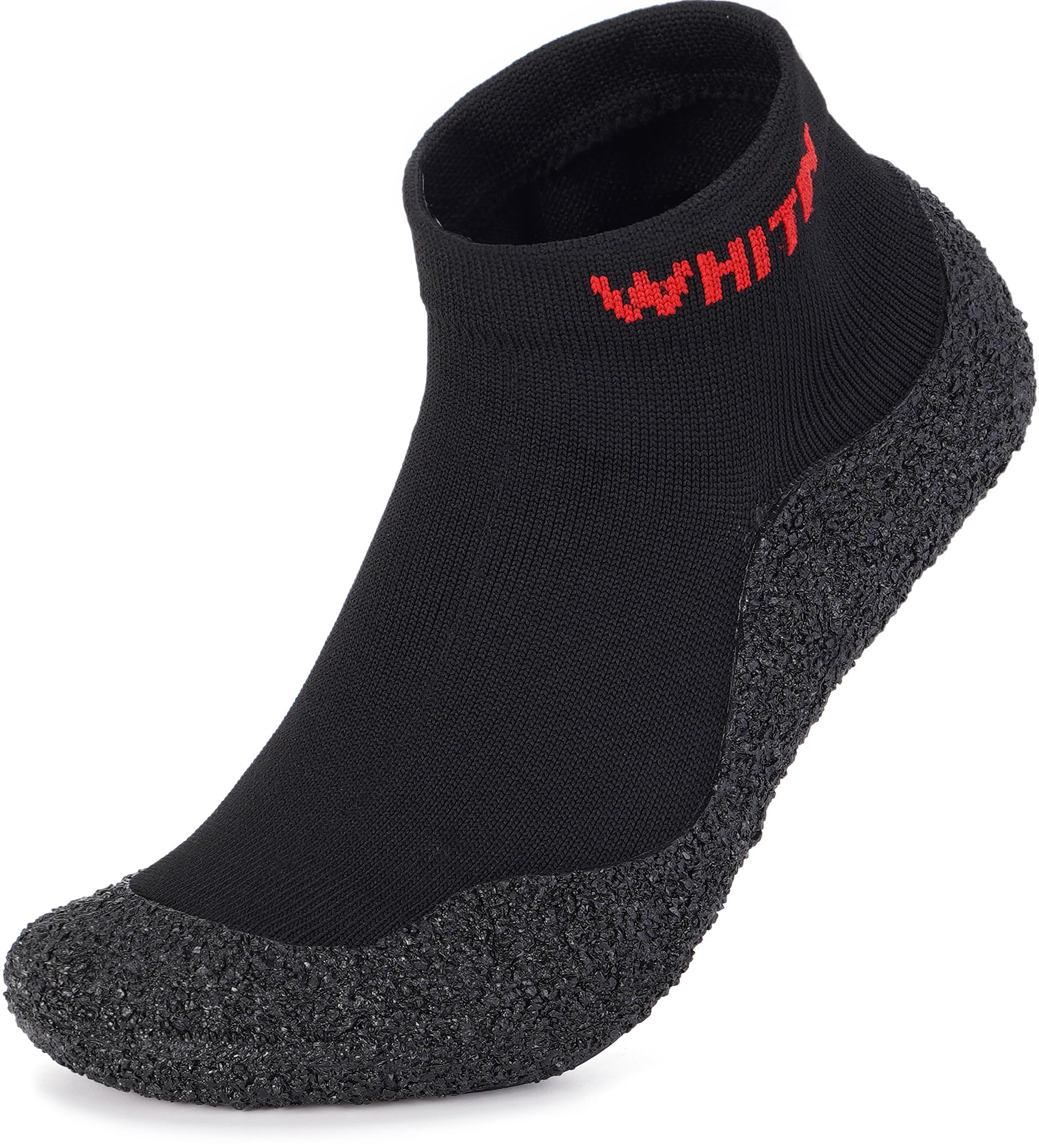
The WHITIN sock shoes are the chameleons of camp footwear — a stretch-knit upper wraps your foot like a sock while a textured rubber sole provides traction on smooth, slippery surfaces. At 10.58 ounces, they’re light enough to fold into a backpack and forget until you need them.
The reinforced rubber toe cap protects against stubbed toes and scrapes during light outdoor activities, and the elasticized heel cuff keeps the shoe secure. Buyers report they’re perfect for a walking pad with 15,000 steps, and the grip earns high praise on ice, snow, and wet rocks — one owner wore them through Disney and hiking trips without issue.
Warmth is a trade-off: they’re warm in cool weather but sweat-inducing in heat, so plan for breathable socks. Sizing runs slightly small for some — a men’s 11 fits more like a half-size smaller — and wide feet may struggle. They’re machine washable on a gentle cycle, which keeps them fresh after muddy camp days.
Versatile Minimalism: You get barefoot-style freedom with real grip and toe protection. The lack of arch support means your feet do the work, which is the point of a zero-drop design.
The One Catch: Durability gets mixed reviews — the sole wears down over time, and the knit attracts pet hair initially.
Grab these if: you want one ultralight shoe for camp, stream crossings, and yoga that packs down smaller than a water bottle.
Skip them if: you need arch support or thick insulation for cold nights — they’re breathable, not winter-warm.
3. Oboz Unisex Whakata Coast Mule & Clog
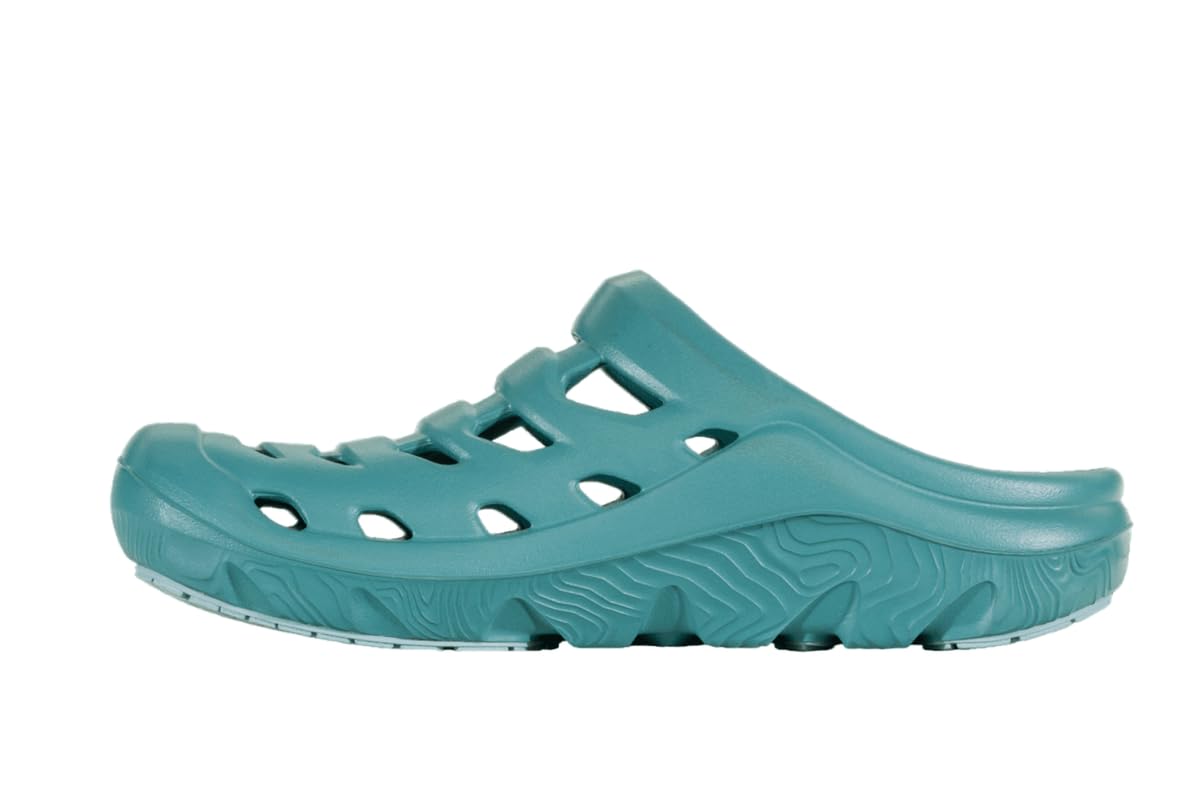
A recovery clog that cradles tired arches and gets you back on the trail sooner.
The Oboz Whakata Coast is built for the moment your feet are done — a sculpted underfoot surface and dual-density EVA midsole deliver cushioning, rebound, and stability for post-adventure recovery. At 8.7 ounces (247 grams), it’s light enough for camp while the Bio-EVA footbed’s raised heel cup offers ergonomic cushioning that buyers with Plantar Fasciitis call “great therapy.”
Strategic ventilation windows keep air flowing and help the shoe dry quickly after stream crossings, while the Trail Tread rubber outsole gives reliable traction across varied surfaces. Owners rate the quality above Crocs, and one notes the arch support makes it “way better than Crocs” — with room to spare for a Jibitz charm in the holes.
Fit is the real conversation here, and it’s the most-discussed aspect by far. Multiple owners mention sizing runs large compared to other Oboz models — one usually wears a size 10 but found the men’s 9 perfect. Others note it’s too wide for average-width feet. The soft foam lip behind the heel provides relief during long shifts, but you’ll want to research sizing before ordering.
Recovery-Focused Design
- Raised heel cup supports tired arches
- Dual-density EVA rebounds with each step
- Ventilation windows speed drying
Sizing Demands Research
- Runs large compared to other Oboz styles
- Too wide for some average-width feet
- New pairs may fit a full size smaller than older ones
Choose this for: camp recovery after big miles or long work shifts, especially if you want real arch support in a slip-on.
Think twice if: you’re between sizes or have narrow feet — the fit inconsistency is the biggest complaint owners raise.
4. Outdoor Vitals LoftTek Hybrid Booties

Featherweight 4-ounce booties that finally end cold feet in the sleeping bag.
If your feet freeze in your sleeping bag even with thick wool socks, the LoftTek Hybrid Booties solve that. At just 4 ounces, they are among the lightest options here, and the 650+ fill power LoftTek Hybrid insulation (a synthetic fill that keeps its warmth when damp) stays lofted even when wet — so you can pull them on with soaked feet and still stay warm.
The 10D nylon liner and shell (a very thin, lightweight fabric) keeps weight down, while the elastic stretch band at the ankle traps heat. The full-coverage length wraps your feet and ankles, and the slip-on design lets you put them on easily inside a cramped tent. Customers note finally having warm feet backpacking, calling them a “standout” for cold-weather sleep systems.
This is a tent-only product — the lack of a sole means walking on open ground compresses the insulation and reduces warmth. Multiple owners explicitly note they’re “NOT MEANT FOR WALKING ON THE OPEN GROUND” and should be used in the tent only. If you need to step outside at night, bring a separate pair of shoes.
Sleep-System Essential: If your feet get cold at night regardless of socks, these are the fix. The wet-friendly insulation is a standout — it keeps working even when your feet aren’t dry.
Know The Limit: They’re not camp shoes for walking. They’re booties for sleeping, and that’s it.
Perfect for: ultralight backpackers and cold sleepers who want maximum warmth per ounce inside the tent.
Not for: anyone planning to walk to the creek, cook dinner, or do camp chores in them.
5. Rab Cirrus Hut Boots
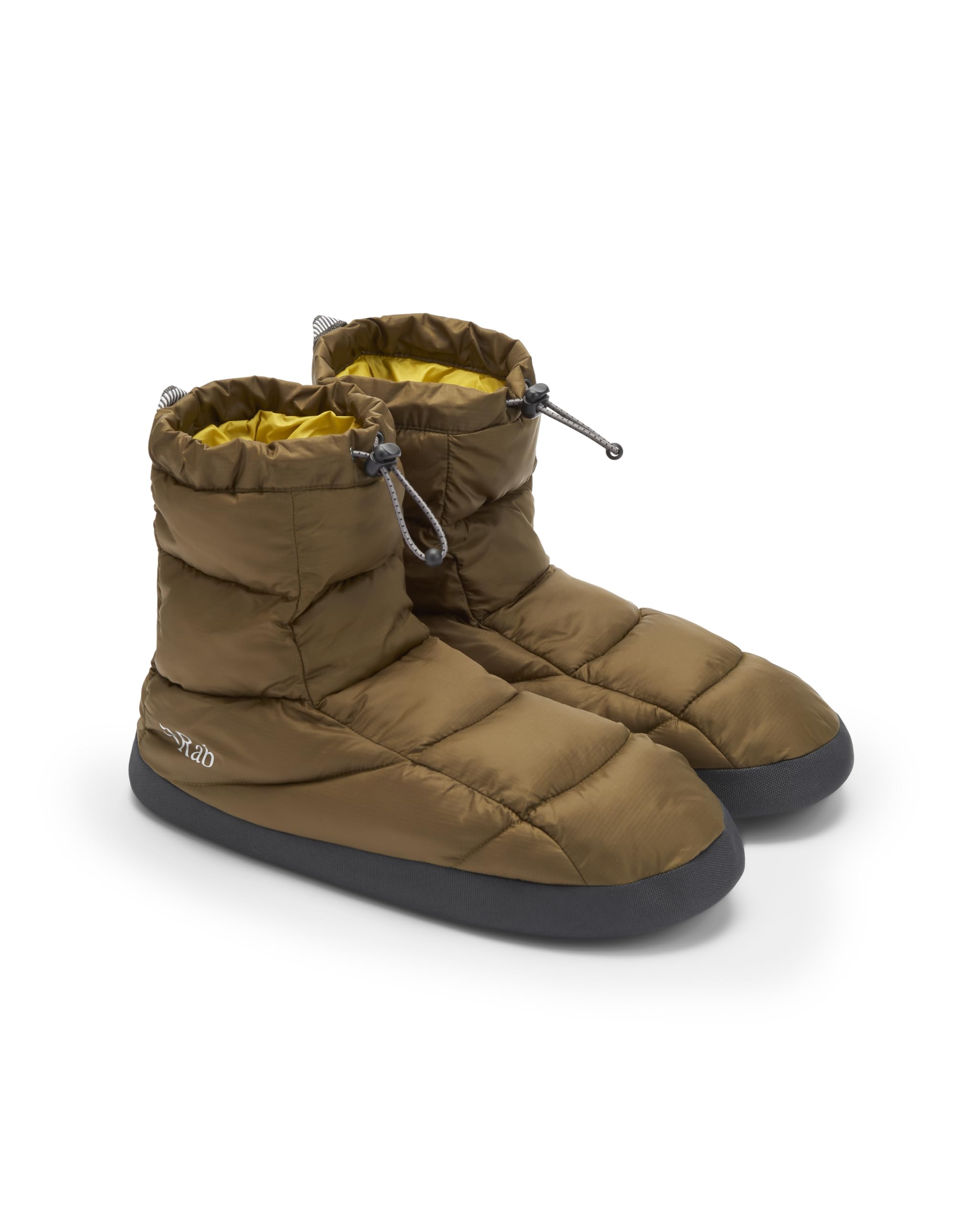
Seriously warm hut boots with a drawcord cuff that traps heat after a day in mountaineering boots.
The Cirrus Hut Boots are designed for the end of a long day in mountaineering boots, climbing shoes, or ski boots. The above-ankle cuff traps heat in, and the PrimaLoft Silver insulation delivers efficient warmth without extra bulk. The non-slip PU outsole provides tacky traction on slick hut floors and damp ground — one owner used them to step onto damp or dirty ground “where socks would get nasty” without issue.
Owners call the quality excellent, and the boots pack down into a pouch for easy stowing. The rough nylon sole grips snow well, and the drawcord cuff lets you cinch the fit. They’re warm enough for sleeping bag use and cozy under a blanket, though some found them “not as warm as hoping for” in deep cold.
The recurring issue is foot entry — the ankle opening runs snug, especially for larger feet (size 8.5+), causing jamming during entry. A back loop helps pull them on, but the fit feedback is mixed. Some love the warmth; others want more. The non-slip sole is noted as unsuitable for rocky terrain, so keep them for camp and hut use, not scrambling.
Hut-Ready Warmth
- Above-ankle cuff traps heat effectively
- Non-slip PU outsole grips slick surfaces
- Packs down with included pouch
Entry Is Tricky
- Ankle opening too snug for larger feet
- Warmth level divides opinion
- Soft sole not for rocky terrain
Pick these for: hut stays, chalet evenings, and cozy camp nights where you want serious warmth in a packable boot.
Pass if: you have larger feet or want a shoe for walking rocky ground — the snug cuff and soft sole limit both.
6. Xero Shoes Men’s Pagosa Fireside Outdoor Slippers
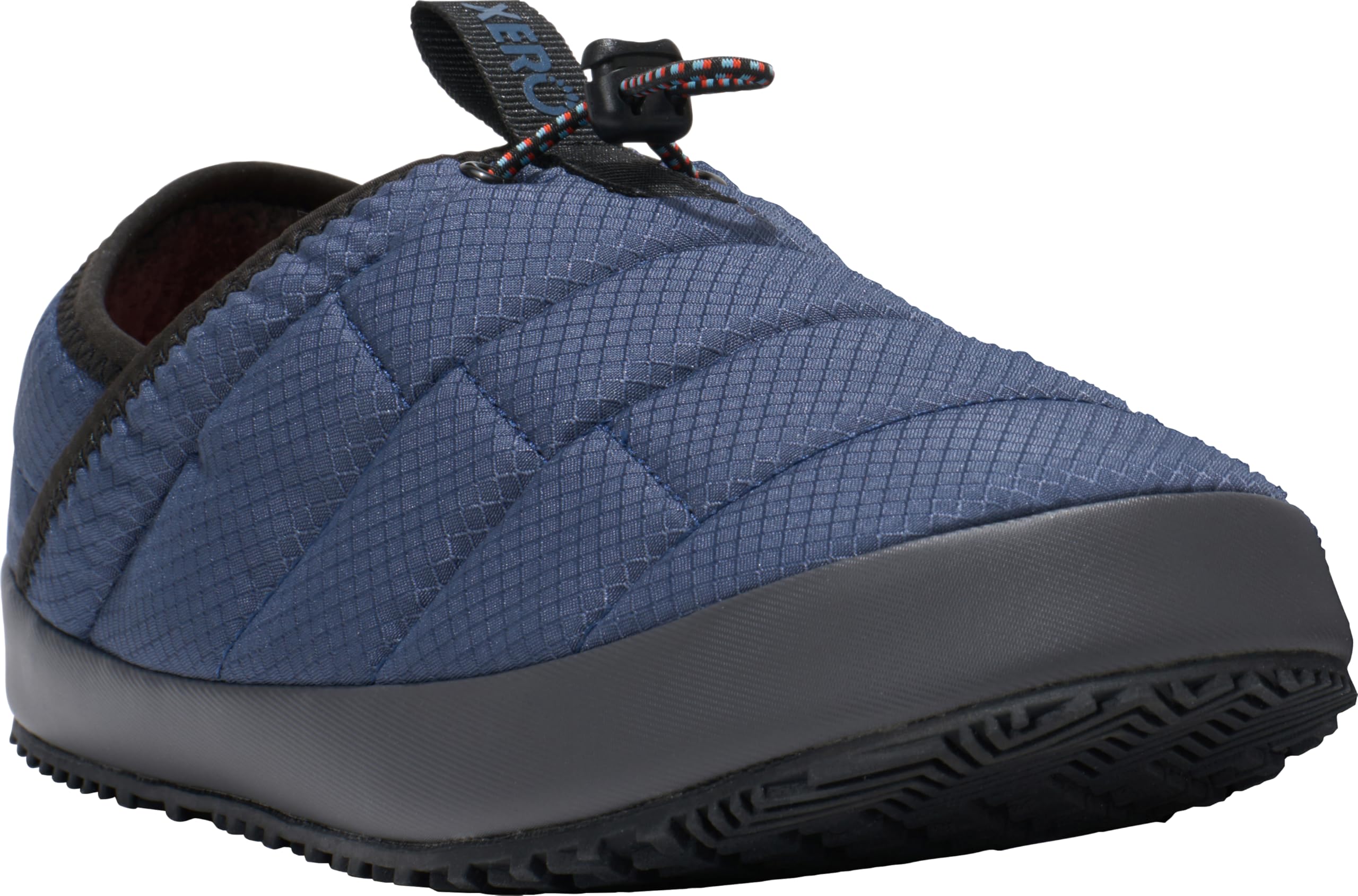
A slipper-soft barefoot shoe that’s outdoor-ready with 200g of insulation and a full-rubber sole.
The Pagosa Fireside brings Xero’s zero-drop philosophy to camp. The nylon puff upper pairs with 200g of cozy insulation (that’s the insulation rating, not the shoe’s total weight), and a draw-cord secures the fit. The full-rubber outsole means you can step out of the tent onto damp ground without soaking through — a step up from tent-only booties.
Buyers describe them as “sleeping bags for your feet,” warm enough for cold Alaska winters and comfortable enough to convert a house-shoe skeptic. The draw-cord collar collapses nicely, and the roomy toe box accommodates natural foot splay. The zero-drop, barefoot feel is the draw — but one owner notes they’re not truly foot-shaped, more a wide fit than anatomical.
Fit runs about a half-size small, and there are no half sizes available, so size up if you’re between sizes. They’re on the premium end — reviewers point out the value is strong on discount but steep at full price for home-slipper duty. The insulation keeps feet warm for camp lounging and quick errands, but they’re not for serious walking.
Barefoot Camp Luxe: You get real outdoor capability in a slipper form — full rubber sole, warm insulation, and a packable build. Owners who love Xero’s feel find these a natural camp companion.
Fair Warning: Sizing runs small with no half sizes, so order carefully. Some find the price hard to justify unless it’s on sale.
Best for: barefoot-shoe fans who want a warm, packable camp slipper with a real outsole for short outdoor trips.
Look elsewhere if: you need a foot-shaped toe box or want maximum warmth per dollar — these run small and pricey.
7. SITKA Ranger Camp Shoe
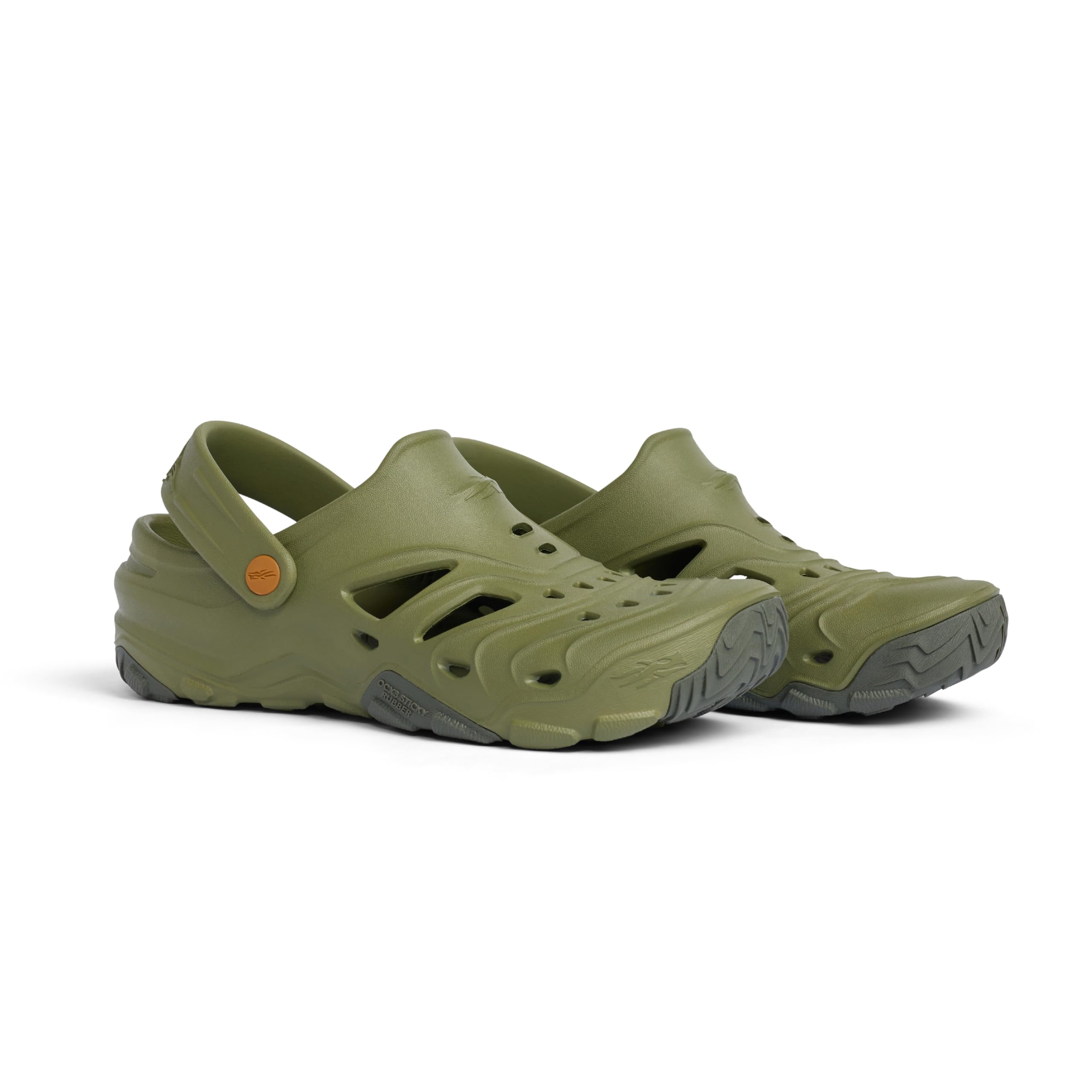
A full-foam water shoe that tackles camp chores and wet ground better than any Crocs clone.
For camp chores around wet ground, the SITKA Ranger Camp Shoe is a lightweight, full-foam water shoe that slips on easily and handles wet conditions. Buyers consistently rate the quality above Crocs, calling it “way more comfortable than Crocs, not even close.” The heel strap locks your foot in place, and the wide toe box gives your toes room after a day in hiking boots.
The wet grip extends all the way to the toe, making it ideal for stream crossings and damp camp mornings. The full-foam design dries fast and cleans easily, and the lack of front holes means debris stays out — a smart design choice for camp. One owner calls it their “new favorite summer work shoe of all time.”
Fit is a mixed bag: some find it true to size, while others say it’s snug with thick hiking socks. The camo version has more wiggle room than the green version, and there’s a slight heel-to-toe drop that zero-drop fans may notice. The price point draws comments — it’s a premium for the SITKA brand — but owners who bought it call it fair for the quality.
Camp Chore Champion
- Superior wet grip extends to the toe
- Dries fast and cleans easily
- Heel strap locks a secure fit
Fit And Price Notes
- Snug with thick hiking socks for some
- Slight heel-to-toe drop
- Premium pricing draws comment
Reach for it if: you want a durable, easy-cleaning camp shoe that handles wet ground and camp chores without a second thought.
Pass it by if: you’re on a tight budget or need a zero-drop sole — this one carries a premium and a small heel drop.
Understanding the Specs
Insulation Ratings
Fill power (like 650+) measures how much loft an insulation provides per ounce — higher fill power means more warmth for less weight. The 200g rating on the Xero slippers refers to the insulation’s weight rating, not the shoe’s total weight. PrimaLoft Silver and LoftTek Hybrid are synthetic insulations that stay warm even when wet, unlike down.
Outsole Types
A rubber outsole gives you traction for walking on rocks, damp ground, and camp terrain. Booties with no sole (like the Outdoor Vitals) are strictly for sleeping-bag use — walking on them compresses the insulation and reduces warmth. Full-foam designs like the SITKA balance cushioning with wet grip for camp chores.
FAQ
What is the difference between camp shoes and hut boots?
Can I wear tent-only booties outside to the bathroom at night?
How do I know my camp shoe size will fit?
Are barefoot camp shoes good for backpacking?
How much weight do camp shoes add to my pack?
Which is better for camp, Crocs or a designed camp shoe?
Can I hike in my camp shoes?
How do I clean camp shoes after a muddy trip?
What makes a camp shoe good for wide feet?
Are camp shoes worth the pack weight?
Final Thoughts: The Verdict
For most buyers, the backpacking camp shoes winner is the Columbia Landroamer Camper because it balances all-day comfort, warmth, and a rugged rubber outsole for real camp duty. If you want ultralight sleeping-bag warmth, grab the Outdoor Vitals LoftTek Booties at just 4 ounces. And for recovery with serious arch support after big miles, the Oboz Whakata Coast Mule is the one to reach for.
How We Picked
We do not accept paid placement. Every pick is matched to a real buyer and a real use-case; we do not hands-on test units.
Sources & Methodology
Specifications: manufacturer listings and product documentation. Review insights: verified customer reviews, as of August 2026. Pricing: not shown on this page (it changes often); check the current price via the retailer link.
As an Amazon Associate, Gadgets Feed earns from qualifying purchases. This does not affect which products we feature.