
Our readers keep the lights on and my morning glass full of iced black tea. As an Amazon Associate, I earn from qualifying purchases.
Specs are compiled from manufacturer listings and verified buyer reviews and can change over time — please confirm the key details on the product page before buying.
Wrist-based watches can lag or lock onto your cadence, chest straps feel like a vice, and a flaky connection ruins an interval session in seconds. Your best bet is a dedicated sensor that talks directly to your bike computer, watch, or app—and this guide breaks down which form factor, battery life, and connection standard actually fit the way you train.
I’m Min — the founder and writer behind Gadgets Feed. This guide is built by comparing the manufacturers’ published specifications and the patterns across verified customer reviews, so you get each pick’s real strengths and trade-offs instead of marketing spin.
Accuracy, battery endurance, and paired-device compatibility separate a great tool from a gadget that sits in a drawer. Here are the best athletic heart rate monitor options that earn their place on your arm or chest for the long haul.
Our Picks at a Glance


How To Choose The Best Athletic Heart Rate Monitor
Kitting out for serious training starts with a simple question: do you want something that measures your pulse continuously and feeds it to every device you own? The top options share a few core traits, but the right one depends on your sport, your budget, and whether you mind a strap around your torso.
Form Factor: Chest Strap vs. Armband
For beat-perfect accuracy, chest straps read your heart’s electrical signal directly, so they respond instantly to intensity changes. Armbands use an optical sensor (a light that shines through your skin to read blood flow), which is more comfortable for all-day wear and skips wetting electrodes, but they can lag a beat or two on rapid spikes. Trail runners and HIIT athletes often prefer the freedom of an armband, while cyclists and rowers who want beat-perfect cadence data lean chest strap.
Connectivity: The ANT+ and Bluetooth Duo
A monitor that broadcasts via both ANT+ and Bluetooth can stream heart rate to a GPS bike computer on one channel and a phone app on the other simultaneously. The data shows up as two copies of the same workout, so you can record on a Wahoo or Garmin head unit while Zwift or Strava logs the session on your phone. If you only train with apps, Bluetooth alone is fine—but dual-band gives you the flexibility to add gear later.
Battery and Charging Realities
Battery life ranges from a 20-hour single charge to a 1000-hour coin cell that you might never replace. Rechargeable models with a magnetic cable are convenient but add a daily habit, while a coin-cell strap can run for over two years of normal training without a thought. Consider how often you want to plug something in versus how long you can tolerate a proprietary charger on your desk.
Quick Comparison
| Model | Best For | Battery Life | Type | Connectivity | Amazon |
|---|---|---|---|---|---|
| Garmin vívoactive 5★ Best Overall | All-day health + GPS | Up to 11 days | Smartwatch | Bluetooth | Amazon |
| Magene H603 Chest StrapBest Value | Long-haul cyclists | 1000 hours | Chest Strap | ANT+ & Bluetooth | Amazon |
| CYCPLUS H1 ArmbandBudget Zone Coach | Zone training on a budget | 110 hours | Armband | ANT+ & Bluetooth | Amazon |
| COOSPO HW807 Armband | Multi-device pairing | 20 hours | Armband | ANT+ & Bluetooth | Amazon |
| COOSPO HW9 Armband | Calorie and zone focus | 35 hours | Armband | ANT+ & Bluetooth | Amazon |
| POWR LABS HW805 Armband | Auto-start convenience | Rechargeable (mixed) | Armband | ANT+ & Bluetooth | Amazon |
| COROS HR Monitor | COROS ecosystem + comfort | 38 hours | Armband | Bluetooth only | Amazon |
| Wahoo TRACKR Monitor | Rechargeable chest strap | Up to 200 hours | Chest Strap | ANT+ & Bluetooth | Amazon |
| Polar FT7 Bundle | Simple watch + strap combo | 1 year (watch) | Chest Strap + Watch | Gym Link | Amazon |
In‑Depth Reviews
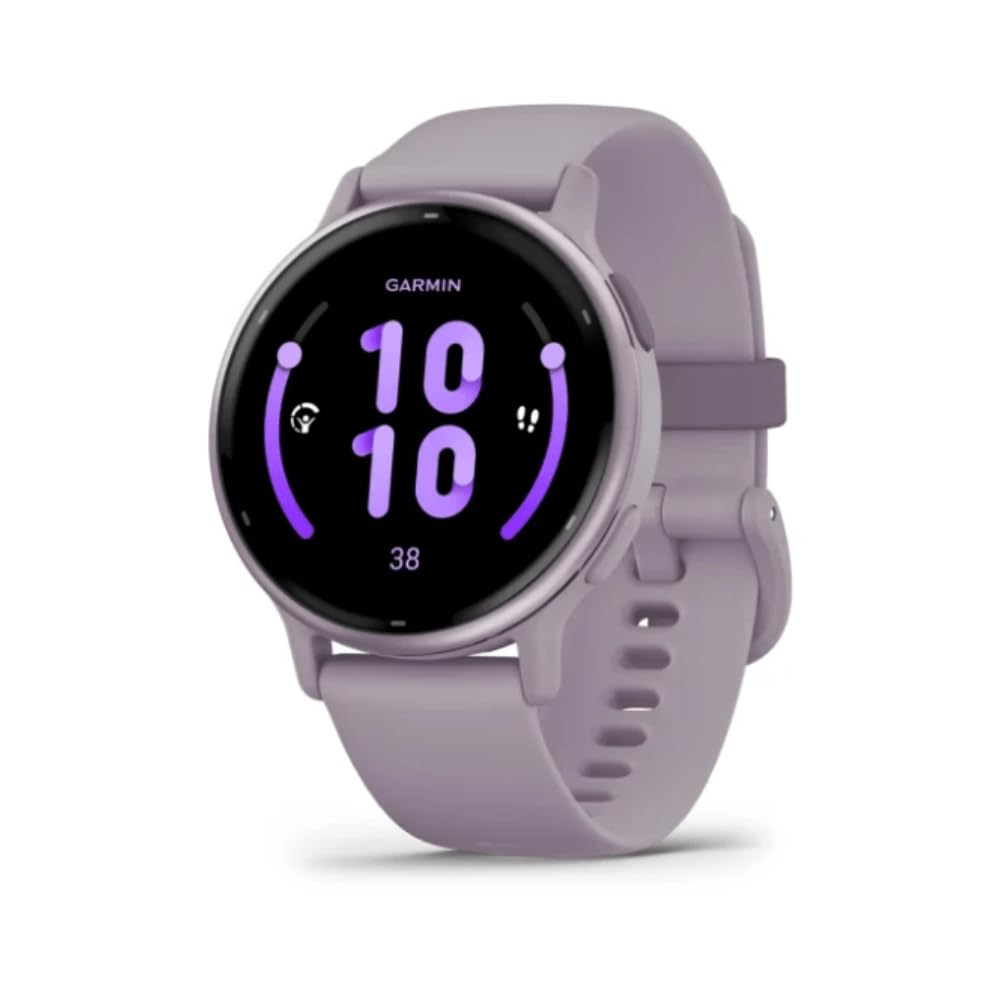
1. Garmin vívoactive 5, Health & Fitness GPS Smartwatch, 42mm
Our pick — over 4★ from 11,500+ verified ratings; the strongest balance of quality and price.
The full-picture health hub for the everyday athlete, not just the race-day split chaser
This is the pick for you if you want one wrist device that covers training, recovery, and daily life without feeling like a lab instrument. The bright AMOLED screen makes it easy to read your metrics mid-run, but the real win for athletes is the battery: up to 11 days in smartwatch mode, so you are not hunting for a charger every night. Most buyers report a full week or more between charges, a huge upgrade from daily watch charging.
You get more than 30 built-in indoor and GPS sports apps—walking, running, cycling, HIIT, swimming, golf—and a Body Battery energy monitor that tells you when you are charged up or need rest. Sleep scoring, HRV status, and personalized sleep coaching help you see how your nights affect your workout readiness. The watch even tracks recovery time after hard efforts, so you know when to push and when to back off.
This wrist-based monitor earns its spot with a 4.3 average across more than 11,000 owners, who praise its quality and clean, customizable interface. The main grumble is battery consistency: a small number of units drain faster than the promised 11 days, with one frustrated owner noting the charge held for “a day and a half.” Compared to the dedicated sensors below, a wrist-based optical sensor is convenient but not quite as instant as a chest strap for pure interval accuracy.
Versatile fitness companion
- Long battery life, with many owners getting over a week per charge
- Broad health tracking: sleep score, HRV status, body battery, stress
- Wheelchair mode tracks pushes instead of steps—rare inclusivity thought
- Downloadable music from Spotify, Amazon Music, or Deezer for phone-free runs
Screen needs care
- Battery life is impressive but not guaranteed—some units drain far faster
- No voice commands or smart-assistant features; it is a fitness watch first
- Lacks the beat-instant response of a dedicated chest strap for sprints
all-rounder: The person who wants one watch for training, sleep, and everyday wear without charging anxiety.
screen skeptics: If you are a marathoner or racer needing split-second heart-rate spikes, a chest strap is still the accuracy king.
2. Magene H603 Chest Strap Heart Rate Monitor
A 1000-hour chest strap that outlasts your training year and then some
Set-and-forget battery life is the headline here. The Magene H603 runs for a claimed 1000 hours—that is roughly 2.5 years if you train an hour a day, four days a week—because it uses a CR2032 coin cell instead of a rechargeable pack. For comparison, the CYCPLUS armband below delivers 110 hours per charge, a 9.1x gap that matters if you hate plugging things in. You will likely replace your bike before you replace this battery.
The split chest strap design separates the sensor from the strap, and the whole unit weighs just 16 g, so it disappears during a ride. It broadcasts two data streams at once via ANT+ and Bluetooth—GPS bike computers on one channel, Zwift or Strava on your phone on the other. Compatibility list includes Wahoo, Garmin Edge units, Peloton, Concept2, and more. Riders report it syncs instantly with Bryton and Wahoo head units and stays accurate throughout a session.
Accuracy splits opinions here. Owners love the value and comfort—even a larger rider at 5’9″ and 220 lbs says they don’t notice it during a ride—but reliability is the most-discussed aspect, and owners mention it can drift. “After about a month the monitor stopped working,” one owner wrote, describing readings that ran 30 to 40 beats high before matching a watch briefly. The brand backs it with a 1-year warranty (excluding man-made damage), so an early failure is covered, but it is a reminder that budget chest straps can be a lottery.
chest purist: You want chest-strap accuracy and a battery you will never think about, without paying Garmin or Polar prices.
comfort seekers: You need guaranteed long-term reliability—the occasional unit dies within weeks.
3. CYCPLUS Heart Rate Monitor Armband H1
An armband that keeps your wrist free and your wallet happy
Slip it on your upper or lower arm, press the single button, and you are ready—no chest strap to wet, no electrodes to fuss with. The CYCPLUS H1 uses a patented optical sensor claimed to hold accuracy within ±1 BPM while you train. That claimed precision is why it beats the COOSPO HW807 on paper, and owners who pair it with a Garmin Fenix 6 report the two track nearly identically, one describing it as workable for Zwift cycling sessions.
The battery story is strong for a rechargeable: a full charge takes just 30 minutes and lasts over 110 hours, so a solid week of daily training is easily covered. The magnetic charger clicks on and off without hunting for a cable port. Color-coded LED lights tell you your zone at a glance—green up to 80 BPM, orange between 80 and 140, red at 140 and above—so you can hold your effort without staring at a screen mid-class.
Connectivity is the wrinkle. It supports both Bluetooth 5.1 and ANT+, but pairing is the most-discussed aspect, and some owners hit the occasional dropped link. Set up with a Coospo CS600 was smooth, but a phone Bluetooth pairing failure once required a retry. Durability is a gamble at this price, with one owner mourning a unit that stopped working after 5 weeks. It is a fantastic value while it holds up, but treat the warranty (none mentioned in the data) as your safety net.
arm fans: Zone-based training on a budget, with an easy single-button start and fast charging that beats most rivals.
long rides: The band is comfortable and the battery stellar, but occasional pairing hiccups and early failures show the price tier.
4. COOSPO Heart Rate Monitor Armband HW807

The armband that connects to everything short of your toaster
If your training setup spans a phone, a bike computer, and gym equipment, the HW807 is built to bridge them all. It broadcasts via Bluetooth 5.0 and ANT+, and the compatibility list reads like a who’s who: Garmin Edge and Forerunner series, Wahoo, COOSPO bike computers, Peloton, Concept2, Nordic track, Bowflex, Pro-Form, iFIT, Echelon—plus more than 200 apps including Wahoo Fitness, Strava, Polar Beat, and DDP Yoga. It even supports a free replacement cable for the first 12 months, which addresses the weakest link in any magnetic-charger design.
What wins people over is the connectivity—it is the most-praised aspect by a wide margin, with owners noting it pairs easily with iPhones and Garmin/TACX platforms and stays linked through a 4-hour ride. The IP67 rating means rain on your run is not a problem, though swimming is off the table. At 10 g, you forget it is there, a common theme in reviews from cyclists and runners.
Accuracy is genuinely good against a watch—one owner swapped out a Wahoo chest strap and found the armband matched an Apple Watch—but it has a learning curve about placement. Wear it on the forearm during paddling and it can read wildly off; shift it to the thigh and it behaves. One frustrated owner saw 175 BPM walking versus 120 on a Samsung watch, a placement issue rather than a universal flaw. Battery life (20 hours per charge) is the other honest caveat: it is the shortest of the rechargeable armbands here, so weekly charging becomes routine.
value pick: You want one sensor that talks to every app, watch, and treadmill you own, and you do not mind learning the right arm placement.
app critics: You need multi-day battery endurance between charges—the 20-hour limit will have you hunting the magnetic cable weekly.
5. COOSPO HW9 Bluetooth 5.0 ANT+ Heart Rate Monitor Armband

The upgrade armband that vibrates when you push past your max heart rate
COOSPO’s HW9 takes the HW807 formula and adds two things serious trainers care about: a vibration warning and customizable max heart rate. The default max is 200 BPM, but via the Heartool/CooSporide app you can dial in your real max, and the armband will vibrate when you exceed it—a safety net during hard intervals or hot races. It also tracks calories burned and supports HRV, all from an optical sensor with a claimed ±1BPM error.
The 5-color LED zone indicator is the standout interaction: bright bars light up to show your current heart rate zone, and you can customize the zone colors in the app. An owner who upgraded from the HW807 says the LED colors changed but the new elastic strap is a real improvement—it sits comfortably on the upper forearm and stays put. Battery life stretches to 35 hours with a fast-charging magnetic cable, beating the HW807’s 20 hours comfortably.
What wins people over is functionality and battery life, with the sensor reading within 1 BPM of a blood pressure cuff in one owner’s test. The honest trade-off is the build: the plastic that holds the band is the reported weak point, with one owner’s breaking after a single month (they repaired it with superglue and kept using it). The strap also stretches faster than expected, so a snug placement needs occasional re-tightening. Like its sibling, the HW9 does not auto-shut-off, so you must long-press the button to power down after a session.
connectivity: Runners and cyclists who train by zone and want a vibration warning when effort drifts too high, plus longer battery than the HW807.
minimalists: The sensor is accurate and the LEDs clear, but the plastic band anchor can crack—handle it gently.
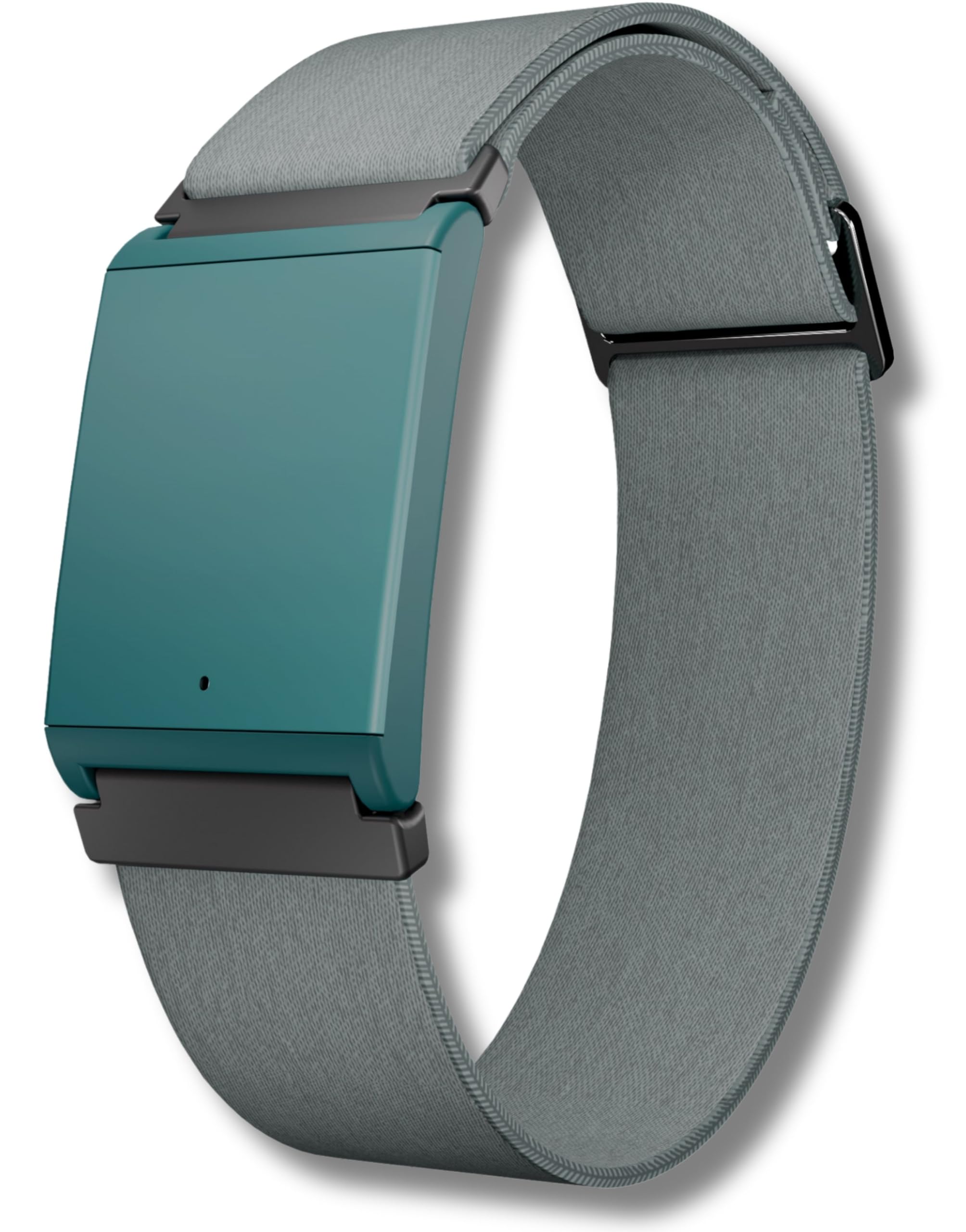
6. POWR LABS Rechargeable Heart Rate Armband HW805
A sensor that wakes up the second it touches your skin, no button needed
This is the armband for the athlete who is tired of fumbling with power buttons before a workout. Intelligent sensors detect skin contact and activate automatically—no pairing rituals, no wasted warm-up minutes. It broadcasts over dual Bluetooth and ANT+ to up to three devices at once, so your Peloton, phone, and Garmin watch can all log the same effort simultaneously. Customers note it syncs easily with Peloton, iPhone, and Apple Health, and pairs cleanly with Garmin watches without contact loss.
The build is what you would expect from a higher price point: a 20 g sensor on a soft-touch, medical-grade silicone strap sits flush without bouncing. The case is made from polyamide 66 reinforced with glass fibers, which explains why it survives daily wear and washing. For thin-armed athletes, it fits well, and owners note it keeps its shape after months of use and rinse cycles.
Reliability and connectivity are the most-praised aspects here. But battery life is genuinely mixed, and the durability data flags a real pattern: some reviewers point out the material degrades and the unit struggles after roughly 4 months, and battery life ranges from “holds for many workouts” down to a disappointing two hours per charge. The proprietary USB-A magnetic charging cable is a single point of failure—lose it and you are stuck. It is comfortable, accurate, and convenient while it works, but it is not the unit you buy for decade-long endurance.
rechargeable: A zero-friction, auto-start armband that pairs with everything and is comfortable enough for long marathon training days.
fussy fits: Battery and long-term durability are the trade-offs at this price—if you train daily, watch the charge level weekly.
7. COROS Heart Rate Monitor
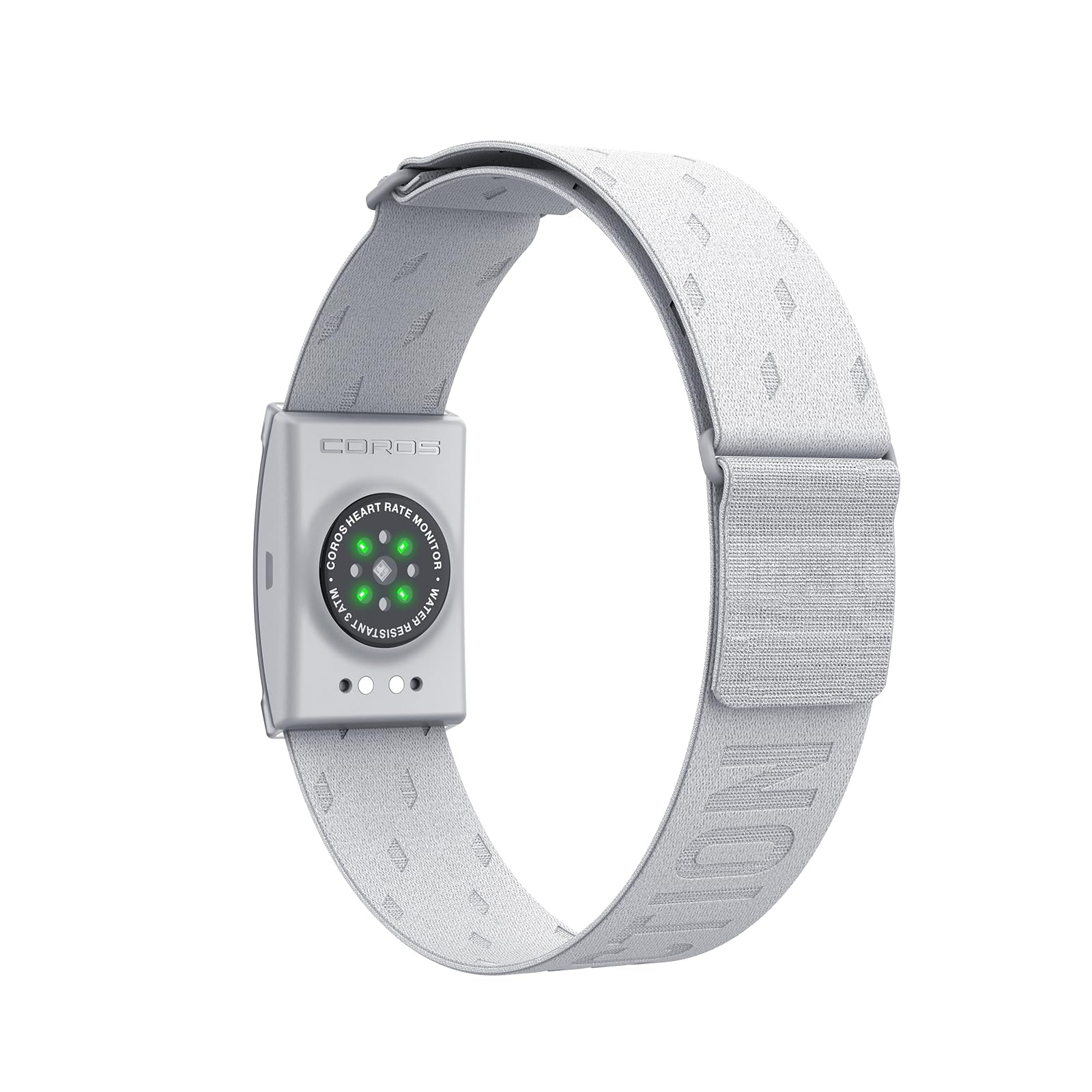
The fabric-strap armband that owners forget they are even wearing
Comfort is the defining trait here, and owners say it plainly: the soft, breathable fabric band is far more pleasant than a chest strap, and the sensor locks flat with a textured surface and sliding buckle that holds tension securely. It is designed for sports use, not daily tracking, and the battery reflects that focus—38 hours of full operation or 80 days of standby on a single charge, with a 2-hour full recharge via the magnetic cable.
For COROS watch owners, this is a no-brainer: it pairs smoothly with COROS watches and apps, and connects simultaneously to up to three devices (sports watches, indoor trainers, bike computers, phones, apps, treadmills, rowers). A major note for everyone else: it is Bluetooth only, not ANT+, so verify your head unit supports Bluetooth heart-rate sensors. Owners running a Garmin Edge Explore 2 report pairing is easy, but COROS builds this primarily for its own ecosystem.
Accuracy is the most-praised aspect here, and the reviews back it: owners say it matches a Polar H10 chest strap in accuracy and outperforms it in CrossFit because it does not slide. One owner highlighted that it solves optical HR issues for people with non-vascular skin, where wrist sensors can fail. The mixed notes are around connectivity—some users simply cannot get it to pair correctly, and third-party apps may require subscription fees. With 80 days of standby, you can leave it in a drawer for two months and still find it ready.
premium feel: Comfort and accuracy matter most, you use a COROS watch, and you want an armband that auto-powers on and off without buttons.
budget buyers: You rely on ANT+ for an older bike computer, or you need daily all-day heart-rate tracking—this is built for workouts.
8. Wahoo TRACKR Heart Rate Monitor

A chest strap that ditches the coin-cell battery for a USB-C rechargeable life
If you are a die-hard chest-strap loyalist tired of swapping CR2032 batteries every 8–12 months, the TRACKR is the upgrade. It packs a high-capacity rechargeable battery with up to 200 hours of active life, and it charges over USB-C—the same cable you use for your phone and bike computer. Owners say they charge it infrequently even after long runs, and the battery indicator LED keeps you informed of the level. The slim, soft strap keeps the pod secure during hard efforts.
Connectivity is fully dual-band via ANT+ and Bluetooth, so it broadcasts to smartphones, gym equipment, and popular training apps. It works with Zwift from the start, a relief for owners who tried two cheaper straps that dropped the link or delivered odd readings. Pairing with the Wahoo app and Cyclemeter is described as easy, and it is notably less finicky than the older TICKR, with no disconnects or drops reported.
The most-discussed aspect is battery life, and it runs the full spectrum: some owners charge weekly, others say it lasts 6–8 weeks, so your mileage varies by how often you ride. Functionality earns the most praise—owners call it a worthy upgrade that eliminates battery changes. The honest caveats: the included strap does not fit larger users comfortably (a third-party strap may be needed), and the pod lacks a wake-up button, so removing the sensor feels delicate. Durability shows as a concern in the data, so treat it gently.
sleek option: Chest-strap users who want the accuracy of a strap plus the convenience of USB-C charging and reliable multi-device pairing.
quick setup: The strap fit may not suit larger frames, and the pod design is less sturdy than older tickr-style units.
9. Polar FT7 Heart Rate Monitor Bundle

The old-school chest strap and watch combo that still nails the basics
Sometimes you just want a dedicated heart-rate watch and a strap that does one job well, and the Polar FT7 is the classic that refuses to go away. It pairs the Polar H1 chest strap with a watch that shows continuous heart rate, calories burned, and an Energy Pointer that tells you whether your session is building fitness or burning fat. Smart Calorie uses your personal data for a more accurate burn count. The chest strap connects to compatible gym equipment via Gym Link and is water resistant to 30 meters.
Value for money is the most-praised aspect, and it makes sense: you get a complete watch-plus-strap system that encourages you to make the most of every session. Owners praise the simple menu navigation and accurate workout tracking, noting it reliably shows average and max heart rate, duration, and time spent in fat-burn versus fitness zones. The chest strap fits comfortably around a 34-inch chest, and the battery lasts for months of daily wear.
The recurring complaint is the display, not the heart-rate data itself. The red-on-black screen is hard to read in dim light—the most-discussed negative—and some owners find it unreadable in low light without the backlight. Accuracy, though, holds up: one owner found the Polar beat an Apple Watch during sprints, reading an accurate 170 BPM where the watch showed 66. There is no phone sync and no step counter, so this is purely a training tool, and the heart-touch feature (tap the sensor to see your HR on the watch) is a nice physical touch.
traditional: You want a no-nonsense watch and strap set for medium to high-level training, with fat-burn and fitness zone feedback that keeps you motivated.
tech moderns: You need a bright, glanceable screen in all light or any smartphone connectivity—the FT7 is proudly old-school.
Understanding the Specs
Optical vs. Electrical Sensors
Chest straps measure the electrical signal of your heart, so they respond in real time and are the standard for accuracy. Armbands use an optical sensor that shines light through your skin to read blood flow; they are comfortable and require no gel, but they can lag by a beat or two on sudden surges. If you do interval sprints or want beat-instant data, chest wins. For all-day wear and multi-sport freedom, arm wins.
Battery Life and Charging
Battery life spans a huge range: a coin-cell chest strap like the Magene H603 can run 1000 hours (roughly 2.5 years of daily training), while a rechargeable armband like the Wahoo TRACKR offers up to 200 hours per charge via USB-C. Armbands typically use a magnetic cable for 30-minute to 2-hour charges. Match the battery to your routine: if you hate plugging things in, go coin cell; if you already charge a phone nightly, a rechargeable armband fits right in.
FAQ
Is a chest strap or an armband more accurate for heart rate?
What does ANT+ and Bluetooth dual connectivity actually do for me?
Will an armband heart rate monitor work with my Garmin watch or Peloton bike?
How long does a rechargeable armband battery actually last per charge?
Can I swim with these heart rate monitors?
Why does my optical armband sometimes read a different heart rate than my watch?
Do I need a subscription or special app to use these monitors?
What is HRV and why does it matter for training?
How do heart rate zone LED lights work during a workout?
Is a smartwatch enough, or do I still need a dedicated heart rate monitor?
Final Thoughts: The Verdict
For most buyers, the athletic heart rate monitor winner is the Garmin vívoactive 5 because it covers training, recovery, and daily life in one wrist device with exceptional battery endurance. If you want a dedicated sensor that never needs charging, grab the Magene H603 chest strap. And for a comfortable armband that connects to everything you own at a fair price, the COOSPO HW807 is the one to reach for. The crowd clearly trusts Garmin here—its 4.3-star average across 11,000-plus owners makes it the safest bet if you want a single device to drive your whole fitness life.
How We Picked
We do not accept paid placement. Every pick is matched to a real buyer and a real use-case; we do not hands-on test units.
Sources & Methodology
Specifications: manufacturer listings and product documentation. Review insights: verified customer reviews, as of August 2026. Pricing: not shown on this page (it changes often); check the current price via the retailer link.
As an Amazon Associate, Gadgets Feed earns from qualifying purchases. This does not affect which products we feature.