
Our readers keep the lights on and my morning glass full of iced black tea. As an Amazon Associate, I earn from qualifying purchases.
Specs are compiled from manufacturer listings and verified buyer reviews and can change over time — please confirm the key details on the product page before buying.
That sickening moment when your foot folds under you again — the one thing every ankle brace buyer wants to stop. A proper brace uses figure-8 straps and side stabilizers to physically block the inversion and eversion motions that cause sprains. We rank each brace by support level, shoe compatibility, and real-owner feedback on daily wear.
I’m Min — the founder and writer behind Gadgets Feed. This guide is built by comparing the manufacturers’ published specifications and the patterns across verified customer reviews, so you get each pick’s real strengths and trade-offs instead of marketing spin.
To stop re-rolling, you need a brace that locks the joint during movement. We’ve matched every top contender to the right activity, and the ankle brace to prevent rolling below is the one that stands out for severe sprains.
Our Picks at a Glance
How To Choose The Best Ankle Brace To Prevent Rolling
Match the support level to your daily activity, not the price tag. A brace for a weekend hiker needs different features than one for a basketball player who cuts hard on the court. Here’s what separates effective braces from ones that only feel tight.
Support Architecture: Straps and Stays
The core of any anti-roll brace is its strapping system. A figure-8 strap mimics athletic tape by wrapping around the heel and crossing over the ankle, physically blocking the side-to-side motion that causes sprains. For even more rigidity, look for removable side stabilizers (thin plastic or metal stays) that sit along the ankle bone to resist forced rolling. Braces with both — a figure-8 strap and side splints — offer the highest level of protection against re-injury.
Closure Type: Laces vs. Speed Laces vs. Hook-and-Loop
Traditional laces offer the most precise, even compression, which is why serious athletes still favor them. But they take time to adjust. Speed laces use a quick-pull hook-and-loop system that tightens evenly in seconds — you just pull and stick. Pure hook-and-loop straps are the fastest to put on but can loosen during intense activity. Your choice here is a trade-off between speed and adjustability, so think about how often you’ll be taking the brace on and off.
Fit and Profile
A brace only works if it stays put, so accurate sizing is non-negotiable. Most brands size by ankle circumference measured at the narrowest point above the ankle bone. A low-profile design matters too — a bulky brace that doesn’t fit inside your shoe can cause blisters and change your gait, which defeats the purpose. Look for a brace that fits comfortably inside your regular athletic footwear so you can actually wear it during activity.
Quick Comparison
| Model | Best For | Support Type | Closure | Side Stabilizers | Amazon |
|---|---|---|---|---|---|
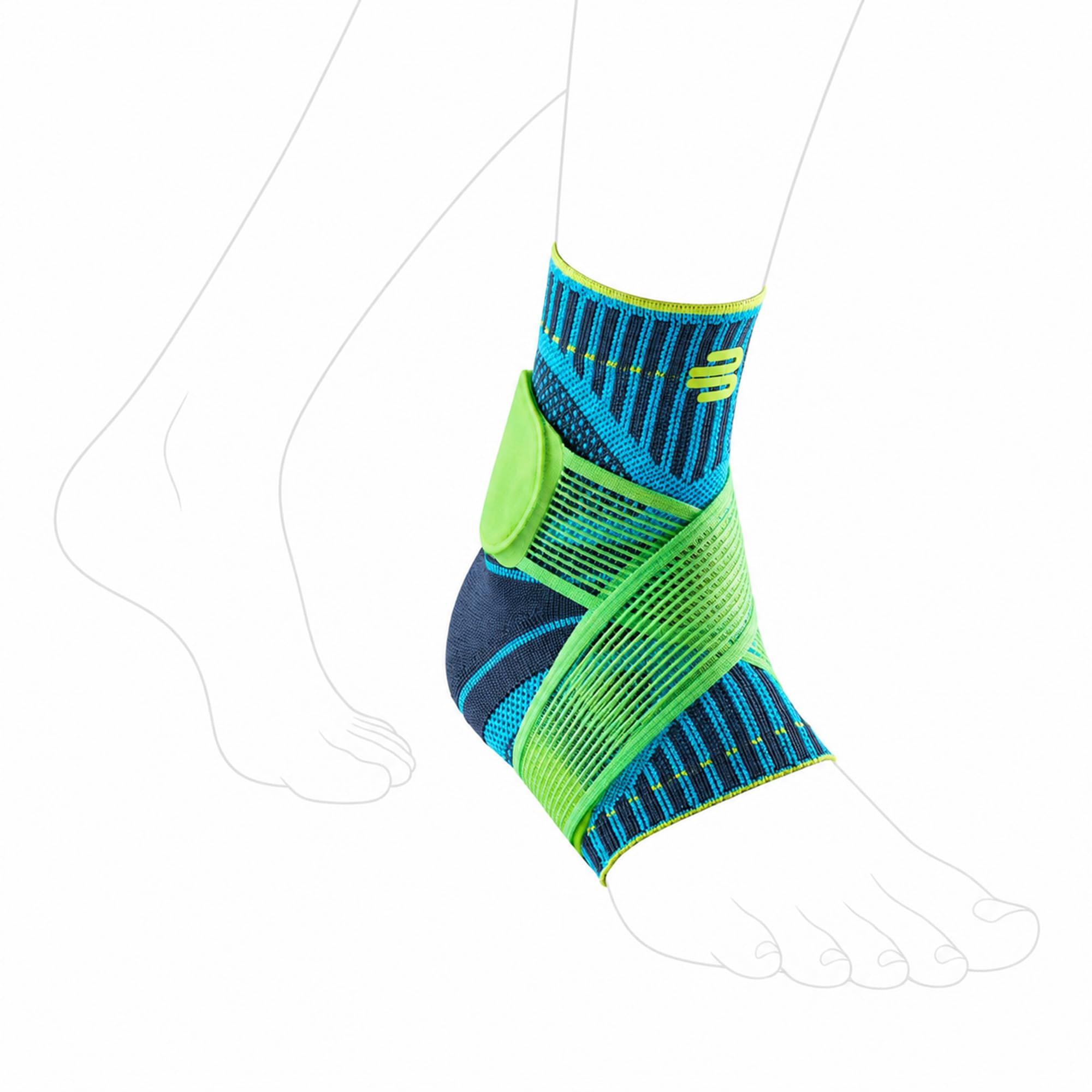
| Bauerfeind Sports Ankle Support★ Best Overall | All-day wear & proprioception | Figure-8 Strap | Strap | No | Amazon |
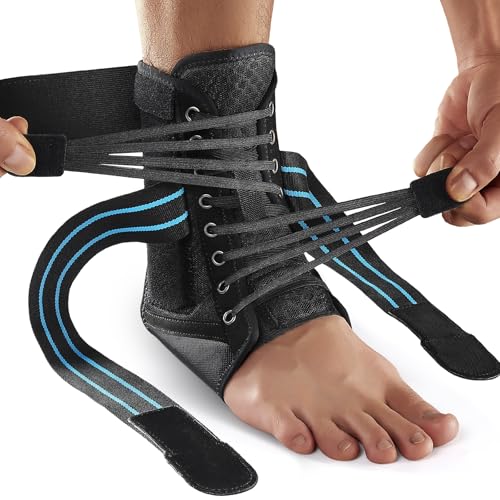
| AGPTEK Lace-Up StabilizerMost Versatile | Recovery & custom rigidity | Triple-Support | Hook & Loop, Lace-Up | Yes (Removable) | Amazon |
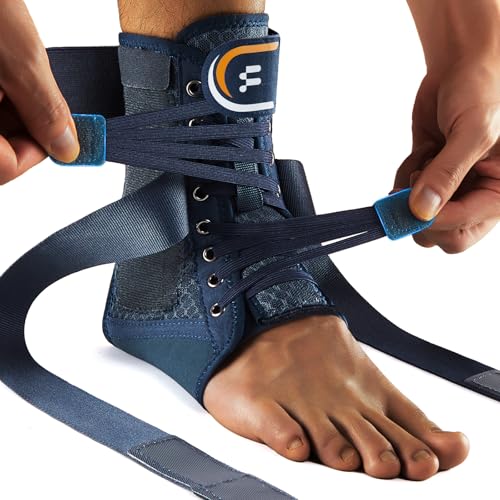
| Fitomo Figure-8 BraceTop Performer | High-quality sprain recovery | Triple-Lock | Hook & Loop | Yes (Removable) | Amazon |
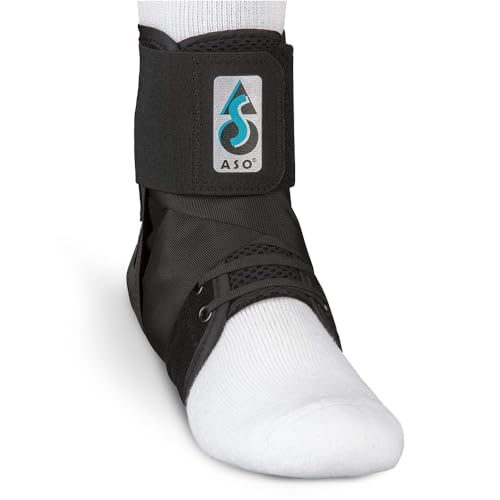
| Med Spec ASO Speed Lacer | Fast on/off with locked stability | Figure-8 Stabilizing | Speed Lace, Hook & Loop | No | Amazon |
| Fitomo Quick Lace-Up | Basketball & volleyball players | Three-Level Strap | Hoof-and-Loop | Yes (Removable) | Amazon |
| DonJoy Stabilizing Speed Pro | Demanding athletes | Figure-8 Strap | Speed Lace, Hook & Loop | Yes (Removable) | Amazon |
| McDavid Adjustable Lace-Up | Spring steel support | Lace-Up w/ Stays | Lace-Up | Yes (Steel) | Amazon |
| Shock Doctor Ultra Wrap | Maximum support with wrap | “U” Shape & Steel Stays | Lace-Up | Yes (Steel) | Amazon |
| BioSkin TriLok | Arch support plus stability | FootLok & Figure-8 | Figure-8 Strap | No | Amazon |
In‑Depth Reviews
1. Bauerfeind Sports Ankle Support
Our pick — over 4★ from 550+ verified ratings; the strongest balance of quality and price.
The gold standard that disappears inside your shoe while quietly locking out twists.
This is the brace for anyone who lives on their feet — nurses, hikers, and soccer players alike. The knit shell uses a figure-8 taping strap that works like athletic tape to stabilize the joint, yet the design is low-profile enough to fit under socks and into cleats without a noticeable bulge. At just 2.12 ounces, it’s so light you’ll forget it’s there until you need it.
The key benefit is improved proprioception. By improving joint coordination through targeted compression, it helps your muscles react faster to uneven ground. Buyers report that after a grade 3 sprain left permanent instability, this brace enabled pain-free running again. Others mention wearing it for 24 hours straight without chafing, and supporting 8-12 hours of standing on cement.
There’s a clear trade-off at this level. The compression knit is superb, but it demands careful handling — the sizing guide needs a precise circumference measurement, and the seam can split if you pull it on like a sock instead of folding it first. It’s a premium pick, and the price reflects the German engineering.
Support that shines: The support is the thing everyone raves about — it stabilizes the joint and has kept ankles from rolling even once during wear.
The honest catch: Treat the knit with care. The seam shows wear after a few months if you stretch it aggressively, and the cost is high for a brace that might need replacing.
Reach for this if: You need all-day comfort with serious stabilization and can follow the fit guide precisely.
Look elsewhere if: You’re on a strict budget or tend to yank braces on and off harshly — this one rewards patience.
2. AGPTEK Lace-Up Foot Stabilizer
A recovery powerhouse that lets you strip down the armor as you heal.
If you’re transitioning from post-surgery stiffness back to active sports, this brace grows with you. The triple-support system pairs reinforced dual side stabilizers with X-cross compression straps, delivering 360° support aimed at relieving pain and reducing swelling. Owners mention that after a week of constant wear during work, their ankle hurt noticeably less with less swelling.
The standout feature is the removable lateral splints. Keep them in for rigid protection during rehabilitation, or pop them out for flexible mobility during daily activities or high-intensity sports like basketball and tennis. The quick-lace system with dual-direction hook-and-loop fasteners secures in about 1 second — no tangled laces to fight with.
The trade-off is in the fit. The honeycomb ventilation and abrasion-resistant nylon Oxford fabric are excellent for breathability, but the medium size can feel bulky in a snug shoe. Some customers note it’s chunkier than a compression sleeve, so you may need to loosen your shoelaces to get comfortable.
Customizable support: The removable splints are the defining feature, letting you dial in rigidity from post-surgery recovery to athletic performance.
Fit note: The fit is the most-discussed point — size up if you’re between sizes, and expect some bulk inside your regular shoes.
Get this if: You want one brace that handles both recovery and active play without buying a second.
skip it if: You need the slimmest possible profile for tight-fitting athletic footwear.
3. Fitomo Figure-8 Brace with Side Splints
The doctor-approved stand-in that replaced a walking boot.
If you’re recovering from a severe sprain, this brace gives you triple-lock protection—buyers describe it as “very well made.” It uses top strap compression (a strap that tightens around the top of the ankle), dual removable side stabilizers (rigid inserts on both sides), and cross straps (straps that cross over the foot) to support the ankle and stop it from rolling during movement. One customer with a severe sprain credited it with helping the ankle heal completely.
The figure-8 strap is where it shines. It lets you fine-tune compression for different activities, whether you’re on the court or just walking around the office. Buyers praise the Velcro for holding up well and appreciate that it doesn’t bunch under the heel. It fits inside most athletic shoes and flats without feeling like you’re wearing a boot.
The catch is in the material blend — 69% polyester, 17% nylon, and 11% plastic. While breathable and lightweight, one buyer with plantar fasciitis found the stitching caused ankle blisters when worn with low ankle socks. It’s a fixable issue (just wear higher socks), but it’s worth knowing before a long workday.
Build quality wins: Quality is the single biggest praise here — buyers consistently call it well-constructed and durable, with comfortable Velcro that stays put.
Comfort caveat: The fit is praised across all shoe types, but the internal stitching can irritate bare skin — wear a higher sock to be safe.
Best for: Active recovery — anyone who needs strong, adjustable support without the bulk of a boot.
Not for: Those who wear only low-cut socks and want zero risk of stitching irritation.
4. Med Spec ASO Speed Lacer
The athlete’s favorite that delivers locked-in stability in seconds flat.
This is the pick for team sports and tournaments where you can’t waste time fiddling with laces between plays. The Speed Lacer design uses a quick-pull hook-and-loop closure that tightens evenly in seconds, giving you repeatable compression without re-tying mid-game. The figure-8 stabilizing straps integrate with the closure to secure the heel and resist inversion and eversion — the exact motions that cause rolling.
Buyers consistently call it “great support” that holds up to volleyball practice and daily training without slippage. The low-profile shape slides into most athletic footwear, and the oversized finger loops let you dial tension one-handed. A physical therapist even noted using the same brand for his own sprain.
The honest limitation: this is not a fully rigid brace. It allows some flex, which is great for comfort but means it won’t completely prevent a re-roll on a severe injury. Sizing can also be tricky if you’re between sizes — the guidance is to size up for wide feet, but some buyers found sizing down gave a better fit.
Just works: The support and quick on/off design are the twin strengths owners praise most — it’s fast, even, and stays put.
Not fully rigid: It adds stability and compression but allows some flex, so it won’t fully stop a roll on a badly weakened ankle.
Choose this if: You play sports that require quick changes and need reliable, even compression.
Think twice if: You need maximum rigidity for a severe, unstable ankle — this leans toward function over immobilization.
5. Fitomo Quick Lace-Up with Side Splints

Basketball and volleyball players get the rigid side protection they need without missing a step.
If your sport demands explosive lateral cuts, this brace delivers the rigid protection that prevents the roll. The removable side stabilizers combined with a three-level strap system provide excellent support and stability for sprains, ligament damage, and swelling. One buyer with a basketball-sprained ankle found it aided recovery significantly, and an 11-year-old could self-apply it with ease.
The upgraded hook-and-loop fasteners eliminate the hassle of laces entirely — just pull and stick. Buyers praise the comfort, noting it can be worn for five to six hours at a time without irritation. The material blend of 69% polyester, 17% nylon, 11% plastic, and 3% metal creates a soft, breathable feel that’s “better than the doctor’s version.”
The main gripe is sizing. The chart has been called inaccurate, with several buyers reporting the brace runs small. It’s also note the side splints are flexible rather than rock-hard — one buyer wanted sturdier splints for a more secure hold. For everyday protection and recovery, it’s a standout; for extreme instability, you might want more rigidity.
What Owners Rave About
- Strong support from rigid side splints that block rolling
- Easy for young athletes to put on themselves
- Comfortable enough for 5-6 hours of continuous wear
Fit and Feel Notes
- Sizing chart runs small — double-check measurements
- Side splints are flexible, not fully rigid
- Straps may need occasional readjustment during play
Get this if: You’re a court-sport player who wants rigid side protection that’s easy to manage.
Pass if: You’re between sizes and can’t risk a poor fit — the sizing is the most common complaint.
6. DonJoy Stabilizing Speed Pro

The durable workhorse for anyone who rolls their ankle regularly and needs it to stop.
Built with 800D Ballistic nylon and a reinforced eyelet area, this brace is engineered for demanding athletes who put serious miles on their gear. The full circumferential elastic strap secures all the strapping while adding tibia and fibula compression — think of it as a stability sandwich that wraps your whole lower leg. Buyers coming out of a cast after a dislocation found it provided a firm hold that prevented re-rolling while still allowing natural foot movement for driving.
The speed lace system is the star here. Two figure-eight Velcro straps wrap around the heel and arch, with a wide top cuff for extra stability. It goes on in about 10 seconds — one long-term buyer with chronic pain called it their “ride or die,” noting it reduced pain from a 9 to a 2-3 when worn with supportive shoes.
The trade-offs are real but manageable. The fit gets mixed feedback, with some finding the small size too short. The D-rings that anchor the laces can hit pressure points on some ankles. And after 3-5 months of heavy use (40 hours a week), the lacing stability can warp. It’s a great brace, but it may not be a forever brace.
Support that’s trusted: The support is the most-praised feature — several reviewers point out it’s “so much better” than full lace-ups for ease and stability.
Fit is the question: The fit is the most-discussed negative — the small size runs short, and D-rings can dig in on certain ankle shapes.
Best for: Active adults who want professional-grade support that goes on in seconds.
Not for: Those with wide calves or between sizes — the fit is finicky, and you may need to size up.
7. McDavid Adjustable Lace-Up
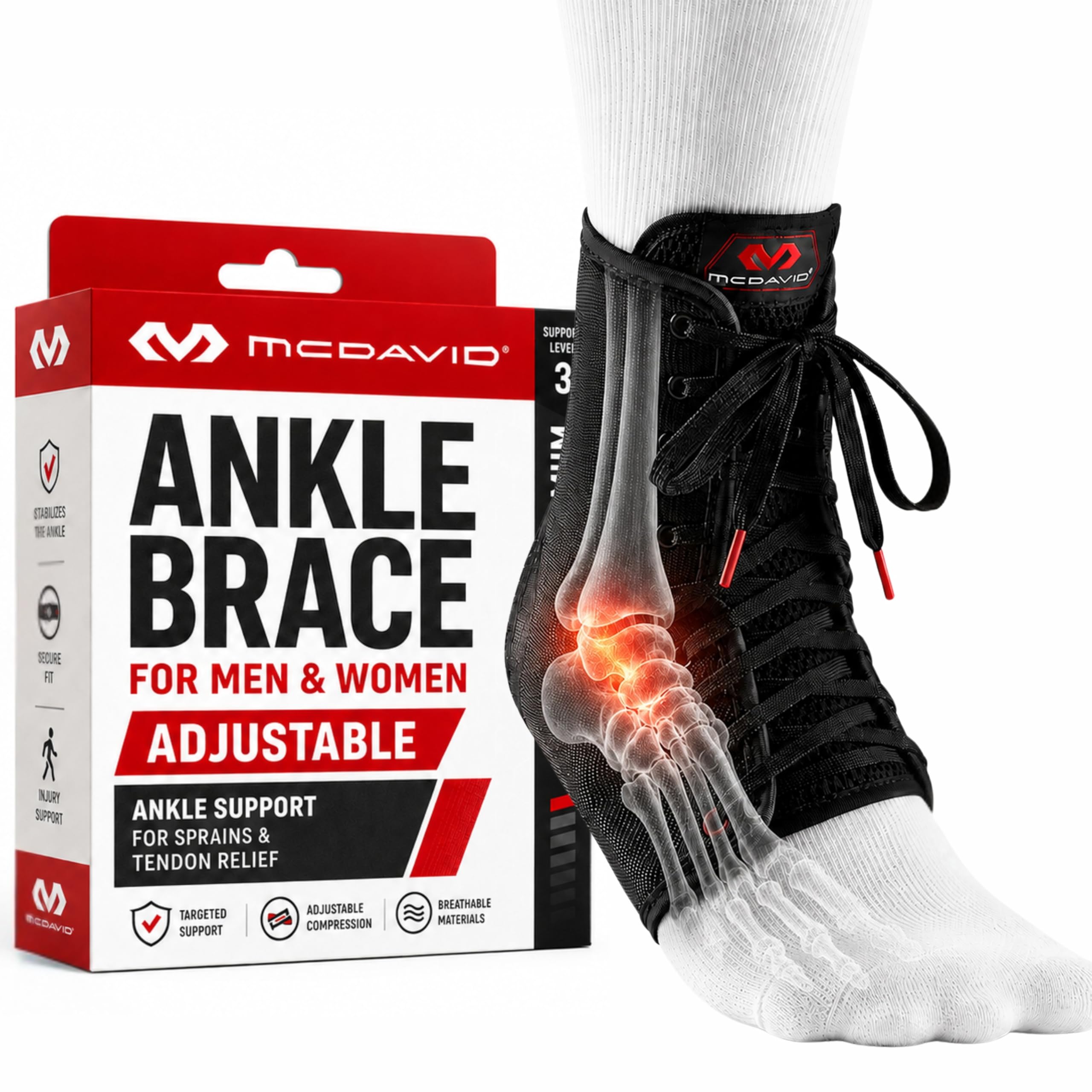
The steel-reinforced option that survived four miles of workouts without a single chafe.
For the athlete who wants a traditional lace-up with serious internal support, this brace packs spring steel medical stays. These coil springs distribute stress up the leg and provide a level of stability that flexible plastic simply can’t match. It’s the “first-on, last-off” choice for players who want maximum protection during training and competition.
The ventilated tongue keeps your foot cool during peak performance, and the reinforced eyelets ensure a secure fit that won’t rip out. Buyers wore it through 4 miles of workouts without chafing or support issues, and one post-surgery patient found it sturdy enough to reduce their limp. It’s durable, breathable, and machine washable — it dries overnight.
The bulk is the honest downside. At 4 ounces with steel stays, it feels like you’re wearing a second shoe, which can be tight inside snug footwear. The material and eyelet seams can also irritate sensitive skin or scars — a thin sock solves it, but it’s not the softest option here. If you need discreet, low-profile support, this isn’t it.
Stability is king: The support and stability win people over—the spring steel stays (metal strips inside the brace) provide class-leading rigidity for weak ankles, so you can walk with confidence without fear of rolling.
Bulk is the caveat: It’s noticeably bulky compared to compression-style braces, and the internal seams can irritate bare skin.
Reach for this if: You need serious steel-backed rigidity for heavy training and don’t mind extra bulk.
pass on it if: You need a slim profile for tight shoes or have sensitive skin that reacts to rough seams.
8. Shock Doctor Ultra Wrap Lace
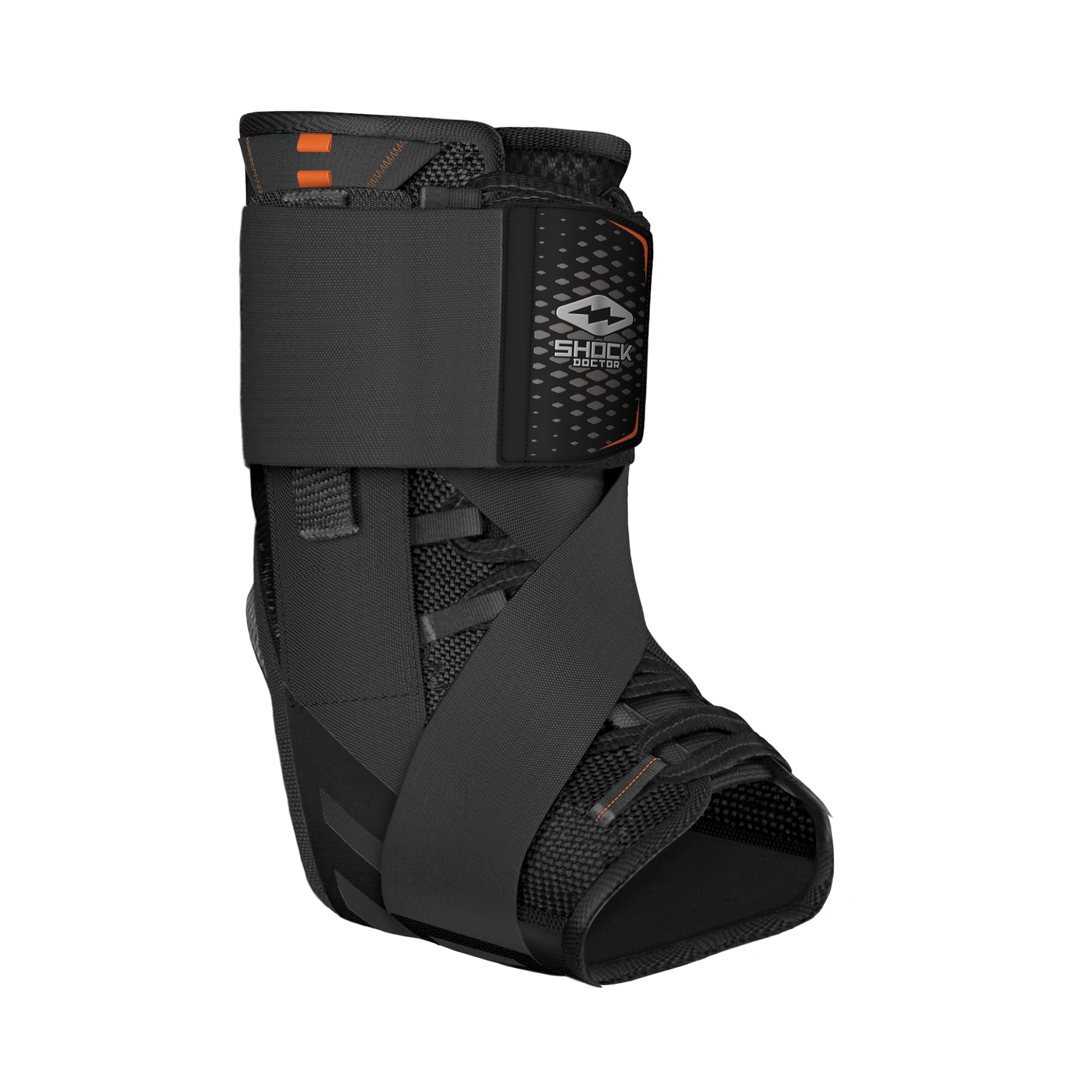
A serious support system with a “U” shape and steel stays that resist rolling and squatting alike.
This brace is built for maximum support, and its “U” shape with flexible steel side stays delivers exactly that. The supportive design prevents and heals medial and lateral instability, minor ligament sprains, and more. One golfer recovering from ankle surgery called it essential for navigating uneven terrain on the course, and a baseball player found it enabled playing with minimal pain after a lateral inversion sprain.
The breathable two-layer polyester and vinyl mesh, paired with a ventilated tongue, fights that dreaded wet-sock feeling during long activity. It’s a true lace-up with three securing straps, so you can fine-tune compression as swelling changes. A buyer who tested 8 different braces for peroneal tendonitis ranked this among the best for effectiveness.
The tight fit is the main consideration. It needs to be snug to work, which one reviewer noted restricted circulation and limited wear to about 2 hours. The top cuff strap can also run long on some sizes, leaving excess Velcro that risks fraying. It’s a high-performance brace that demands a commitment to proper fitting.
Serious support: The support and effectiveness are the biggest wins — this brace has the rigidity to handle unstable ankles and demanding sports.
Tight fit trade-off: Comfort and fit are mixed — it runs snug by design, and the top strap can be too long on certain sizes.
Choose this if: You want maximum support for sports and have the patience for a precise, snug fit.
Pass if: You have circulation concerns or need a brace you can wear comfortably for hours on end.
9. BioSkin TriLok

The podiatrist-favorite that combines arch lift with ankle stability in one low-profile wrap.
This is the pick for anyone whose ankle rolling comes with arch issues — plantar fasciitis, tendonitis, or PTTD. The unique FootLok strap lifts and supports the arch while the figure-8 wrap stabilizes the ankle, so both are supported together rather than separately. Buyers with multiple ankle sprains call it a lifesaver, and one severe fracture survivor (3 surgeries, 19 screws) credited it with eliminating pain and enabling walking again within 2 weeks.
The low-profile design is a major plus. Made from lightweight, breathable, hypoallergenic nylon and Lycra, it fits inside trainers, flats, boots, and cleats without needing to size up your shoes. It’s a bilateral design that works on either foot and can be adjusted to control rolling inward or outward. At 6.4 ounces, it’s featherlight for the support it provides.
The learning curve is real. With four straps and a specific wrap path, it takes a few wears to master — most people have it down by the second or third try. The Velcro straps can stick together and are tricky to apply at first. Sizing is by shoe size, and the chart has been called inaccurate, with fit being the most common complaint.
The Life-Changing Stuff
- Arch and ankle support work together for total foot stability
- Low-profile enough for almost any shoe, no sizing up needed
- Delivers serious pain relief for chronic conditions
The Learning Curve
- Four-strap system is complicated — expect practice time
- Sizing by shoe size can be inaccurate
- Velcro straps can stick together during application
Get this if: You need combined arch support and ankle stability in a slim, shoe-friendly package.
Not for: Those who want a quick, intuitive on-and-off brace — this one demands a learning curve.
Understanding the Specs
Figure-8 Straps
The figure-8 strap is the workhorse of anti-roll protection. It wraps around the heel and crosses over the top of the ankle, mimicking the way athletic tape is applied by a trainer. This pattern physically restricts the inversion and eversion motions — the sideways rolling that causes most sprains. Braces with a figure-8 strap (like the Bauerfeind and Med Spec ASO) offer significantly better roll prevention than a simple compression sleeve.
Removable Side Stabilizers
Side stabilizers are rigid stays — usually plastic or steel — that sit along the outside of the ankle bone. They act like a splint, physically blocking the joint from collapsing sideways. Removable stabilizers are a huge advantage because they let you adjust protection as you heal: keep them in for maximum rigidity during recovery, or remove them for more natural movement during daily wear. Steel stays (as in the McDavid and Shock Doctor) offer the most rigidity, while plastic splints (Fitomo, AGPTEK) trade a bit of stiffness for lighter weight and comfort.
FAQ
How tight should an ankle brace be to prevent rolling?
Should I wear an ankle brace over or under my sock?
Can I play basketball or volleyball with an ankle brace?
How do I know which size ankle brace to buy?
Is a lace-up brace better than a strap-on for preventing ankle rolls?
How long does an ankle brace last with daily wear?
Can I wear an ankle brace while sleeping or all day?
What is proprioception and why does it matter for ankle braces?
Can an ankle brace help with plantar fasciitis or Achilles tendon issues?
How do I put on a figure-8 ankle brace correctly?
Final Thoughts: The Verdict
Across the board, the ankle brace to prevent rolling winner is the Bauerfeind Sports Ankle Support because it delivers the best balance of all-day comfort, low-profile fit, and effective figure-8 stabilization in a featherlight 2.12-ounce package. If you want customizable rigidity that grows with your recovery, grab the AGPTEK Lace-Up Stabilizer with its removable side splints. And for combined arch and ankle support that fits in any shoe, the BioSkin TriLok is the one to reach for. Whichever you choose, measure your ankle carefully and prioritize a brace with a figure-8 strap or side stabilizers — those are the features that actually stop the roll.
How We Picked
We do not accept paid placement. Every pick is matched to a real buyer and a real use-case; we do not hands-on test units.
Sources & Methodology
Specifications: manufacturer listings and product documentation. Review insights: verified customer reviews, as of August 2026. Pricing: not shown on this page (it changes often); check the current price via the retailer link.
As an Amazon Associate, Gadgets Feed earns from qualifying purchases. This does not affect which products we feature.