
Our readers keep the lights on and my morning glass full of iced black tea. As an Amazon Associate, I earn from qualifying purchases.
Specs are compiled from manufacturer listings and verified buyer reviews and can change over time — please confirm the key details on the product page before buying.
Most people think an affordable compact camera is just a step up from a phone. That’s wrong. A dedicated lens, physical zoom, and tactile controls give you creative control a phone can’t match. From gimbal-stabilized vlogging to 40x concert zoom, this category covers every shooting scenario.
I’m Min — the founder and writer behind Gadgets Feed. This guide is built by comparing the manufacturers’ published specifications and the patterns across verified customer reviews, so you get each pick’s real strengths and trade-offs instead of marketing spin.
We’ve sorted through the noise to find the affordable compact camera that fits your pocket, your budget, and the exact way you like to shoot, from steady gimbal vlogging to a 40x zoom for the back row.
Our Picks at a Glance


How To Choose The Best Affordable Compact Camera
The best affordable compact camera matches your shooting style, not just the price tag. Start by identifying your primary subject—vlogs, hikes, or concerts. A vlogger needs a flip screen and steady video. A hiker needs a durable body. A concert-goer needs a long zoom. Lens reach and sensor size determine your zoom range and low-light performance.
Decide what you actually shoot most
Ask one question: do you need a wide-angle selfie lens or a long telephoto reach? Do you want a clean ultra-wide shot of yourself talking to the lens from an arm’s length away? That demands a fixed wide-angle lens. Or do you want to pull in a distant mountain peak or a stage from across an arena? That demands a superzoom lens with a long telephoto reach. Choosing the wrong type means a camera that can’t handle your daily shooting needs.
Match the stabilization to your movement
Stabilization is critical—a gimbal smooths walking shots, while lens-based stabilization helps static subjects. There are two main ways to fix it. A pocket gimbal camera physically holds the lens steady on motors, which is the smoothest for walking and running but adds a moving part. A superzoom camera relies on optical image stabilization built into the lens, which helps stills and video but won’t match a gimbal’s glide.
Look at the sensor, not just the megapixels
For low-light performance, the physical size of the imaging chip matters more than pixel count. A 1-inch sensor is a large step above the smaller sensors in budget point-and-shoots, capturing more light for cleaner night shots and softer backgrounds. A 20-megapixel 1/2.3-inch sensor in a 40x zoom camera still delivers, but it needs plenty of daylight to shine.
Quick Comparison
| Model | Best For | Sensor & Stabilization | Zoom Reach | Video Capability | Amazon |
|---|---|---|---|---|---|
| DJI Osmo Pocket 3★ Best Overall | Steady gimbal vlogging | 1-inch CMOS + 3-axis gimbal | 4x digital | 4K at 120fps | Amazon |
| PENTAX WG-1000Rugged All-Terrain | Underwater & rugged use | Small sensor, no gimbal | 4x optical | Standard HD | Amazon |
| Xtra MuseBudget Gimbal Champ | Budget gimbal vlogging | 1-inch CMOS + 3-axis gimbal | Standard | 4K at 120fps | Amazon |
| Canon ELPH 360 HS | Everyday point-and-shoot | 20.2MP CMOS, optical stabilizer | 12x optical | HD | Amazon |
| Canon PowerShot V10 | Pocket vlogging with stand | 15.2MP 1-inch BSI CMOS | Fixed wide-angle | 4K at 30fps | Amazon |
| Sony ZV-1F | Creator-friendly beginner vlog | 1-inch sensor + F2 lens | Ultra-wide fixed | 4K Video | Amazon |
| Panasonic ZS99 (Silver) | Travel & concert close-ups | 10-bit, LEICA lens | 30x optical (24-720mm) | 4K at 30p | Amazon |
| Panasonic ZS99 (Black) | Pocket travel zoom | 10-bit, LEICA lens | 30x optical (24-720mm) | 4K at 30fps | Amazon |
| Canon SX740 HS (4PC Bundle) | Long zoom with starter kit | 20.3MP CMOS + DIGIC 8 | 40x optical (24-960mm) | 4K Video | Amazon |
| Canon SX740 HS (Silver Bundle) | Authorized long-zoom travel | 20.3MP CMOS + DIGIC 8 | 40x optical (24-960mm) | 4K UHD | Amazon |
In-Depth Reviews
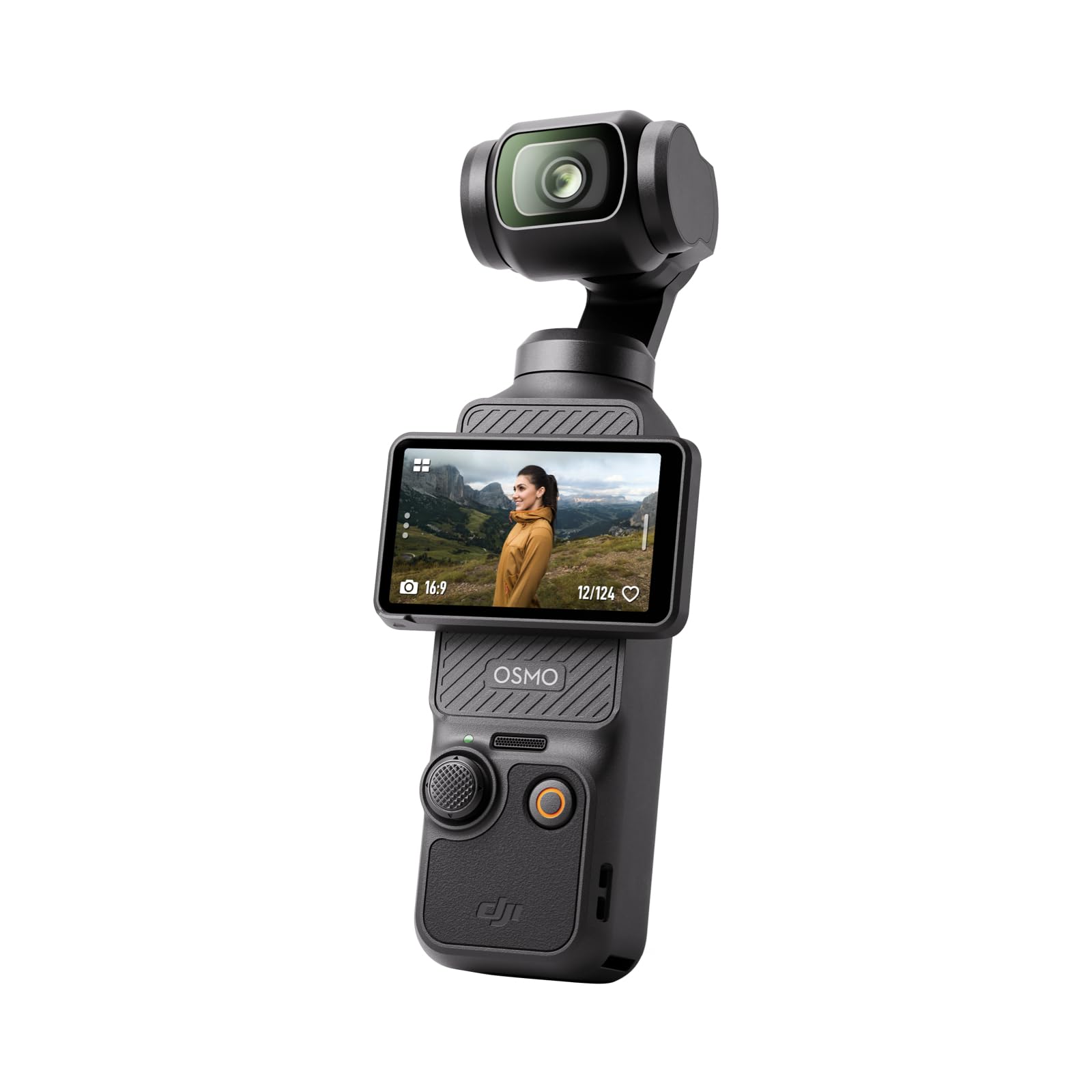
1. DJI Osmo Pocket 3
Our pick — 4.5★ from 10,000+ verified ratings; the strongest balance of quality and price.
The pocket gimbal that makes walking shots look like they came from a rail.
The DJI Osmo Pocket 3 is the crowd favorite here — 4.5 stars from over 10,000 owners — and the reason is obvious. It packs a 1-inch CMOS sensor and records 4K video at 120fps, which means you get that big-camera depth and clean low-light footage in a body small enough to drop in a jacket. The 3-axis mechanical stabilization does the heavy lifting, so you can jog with a dog or spin in a dance and your footage stays smooth.
What wins people over is the ease. The 2-inch touch screen rotates for horizontal or vertical shooting, which turns a single camera into a tool that fits social media and cinema-style work without any extra gear. The ActiveTrack 6.0 keeps you centered in the frame even when you’re bouncing around, and since it pairs directly with two DJI Mic 2 transmitters, you can record clean interviews and vlogs without a separate audio recorder.
Buyers report the video quality is excellent and the whole thing feels lightweight and easy to use — great for travel and everyday content creation. Its battery runs for 166 minutes, which outlasts the Xtra Muse below by a small margin — a 3% gap — so you can film a full day of outings on one charge.
There is one setup quirk to know about: you must register the camera before your fifth use, or the device locks up. The app install can be finicky depending on your phone, so plan a bit of time for the initial setup. The case also leaves the bottom and back exposed, so a small tripod mount is a smart add.
Where It Shines
- The gimbal is why you buy this — smooth footage while walking, hiking, or dancing is its a neat extra.
- One-inch sensor in a pocket body delivers sharp 4K and 10-bit color for serious post-production grading.
- Rotating touch screen means no awkward flipping between portrait and landscape modes.
- DJI wireless mic compatibility keeps audio quality high without a separate recorder.
Know Before You Buy
- Activation is mandatory — register before the fifth use or the camera bricks itself.
- The companion app setup can be tricky, especially on Android with APK installs.
- The included case leaves the bottom and back of the unit exposed to bumps.
- No 360-degree photos — this is a dedicated video tool, not a photo everything-camera.
The verdict: This is the pick if your content is video and you want buttery-smooth footage without investing in a full rig — it earns the top spot on this list.
Think twice if: You need a long optical zoom for wildlife or concerts; the Osmo Pocket 3 has only 4x digital zoom, which crops rather than truly zooms.
2. PENTAX WG-1000
The soggy, sandy, clumsy-day hero that phones and gimbals both fear.
This is the camera you take where you wouldn’t dare take a phone. The PENTAX WG-1000 is waterproof down to a depth of 15 meters for up to one hour, dustproof against dirt and stains, and shockproof against a fall from two meters. It’s built for the splash zone, the campsite, and the beach bag, and owners mention being impressed with it on camping trips.
The image quality here is more about durability than raw power. It shoots with a 4x optical zoom lens covering a 27mm wide-angle, and it can push sensitivity up to ISO 3200 for low-light beach sunsets. You get seven capture modes including a dedicated Underwater mode, plus 20 color modes like Black and White, Sepia, and Sketch to finish shots in-camera.
This is where the data splits. The camera’s quality earns mixed owner reactions — some find it excellent for casual use, while others find the image quality not great and the video unusable. It’s a fair trade-off: this is a tough outdoor tool first, a serious imaging device second. The 4x optical zoom and slow shutter also fall short of the classic Ricoh WG-series waterproof cameras this replaces.
Owners praise the grippy rubberized cover that protects from liquids and shock, plus the carabiner strap that clips to a backpack. The catch is you must remove the cover every time you charge, upload, or swap the SD card — a minor ritual for a camera that can handle a two-meter drop.
Best fit: If you snorkel, hike, or take the family to the beach, river, or dusty trail, this is a low-maintenance second camera. You get a drop-proof body that survives bumps, even though you trade off the highest-resolution stills for that toughness.
The honest limit: The 4x optical zoom is modest and video quality gets flagged as weak, so it’s for stills-first outdoor capture in good light, not for making movies.
3. Xtra Muse
A gimbal shooter that gives the big-name pocket cam a serious run.
If the DJI Osmo Pocket 3 is the gold standard for gimbal vlogging, the Xtra Muse is the budget-friendly alter ego that owners say rivals it on image quality. It runs on a 1-inch CMOS sensor recording 4K at 120fps, and its 3-axis gimbal stabilizer keeps the footage smooth while you’re walking, running, or hiking. Owners consistently call it a smart, budget-friendly DJI Pocket 3 alternative.
The thing everyone raves about is the quality — over a hundred owners single out the build and output as the reason they love it, with video quality earning dozens of positive calls. It shoots in True 10-bit X-Log color for up to one billion colors, which is a favorite for sunset and sunrise grading. The 2-inch touch screen flips between horizontal and vertical, and a Master Follow mode keeps you centered when you mount it on a tripod and move around.
On battery, the Xtra Muse runs for 161 minutes. That’s a 3% shorter runtime than the DJI Osmo Pocket 3’s 166 minutes — a gap small enough that you’d be hard-pressed to notice in a normal day of shooting.
The catch here is reliability. Owners love the iOS app connection, but report real issues on Android, plus a handful of units showing overheating and SD card format errors, especially at 4K60 with a SanDisk Extreme PRO card. It’s not weather-resistant, so keep it dry.
Why It’s a Steal
- The 1-inch sensor and 4K/120fps video rival the DJI pick for a more approachable price.
- The 3-axis gimbal is the standout — steady footage with no extra rig needed.
- 10-bit X-Log color grading gives you a massive creative range in editing.
- Carrying bag, wrist strap, and a 1/4-inch threaded handle are all in the box.
The Trade-Offs
- Android app connectivity is the most common complaint — iOS users have a far smoother experience.
- A few customers note overheating and SD card errors during long 4K60 sessions, so carry a backup card.
- There is no weather sealing, so it stays out of the rain and surf.
- Battery life is solid at 161 minutes but still trails the DJI by that small 3% margin.
Reach for this if: You want gimbal-smooth 4K video and don’t want to spend DJI money — you’re getting 90% of the experience for less.
Look elsewhere if: You’re on Android and need airtight app reliability, or you need a camera that handles long, hot recording sessions without complaint.
4. Canon PowerShot ELPH 360 HS
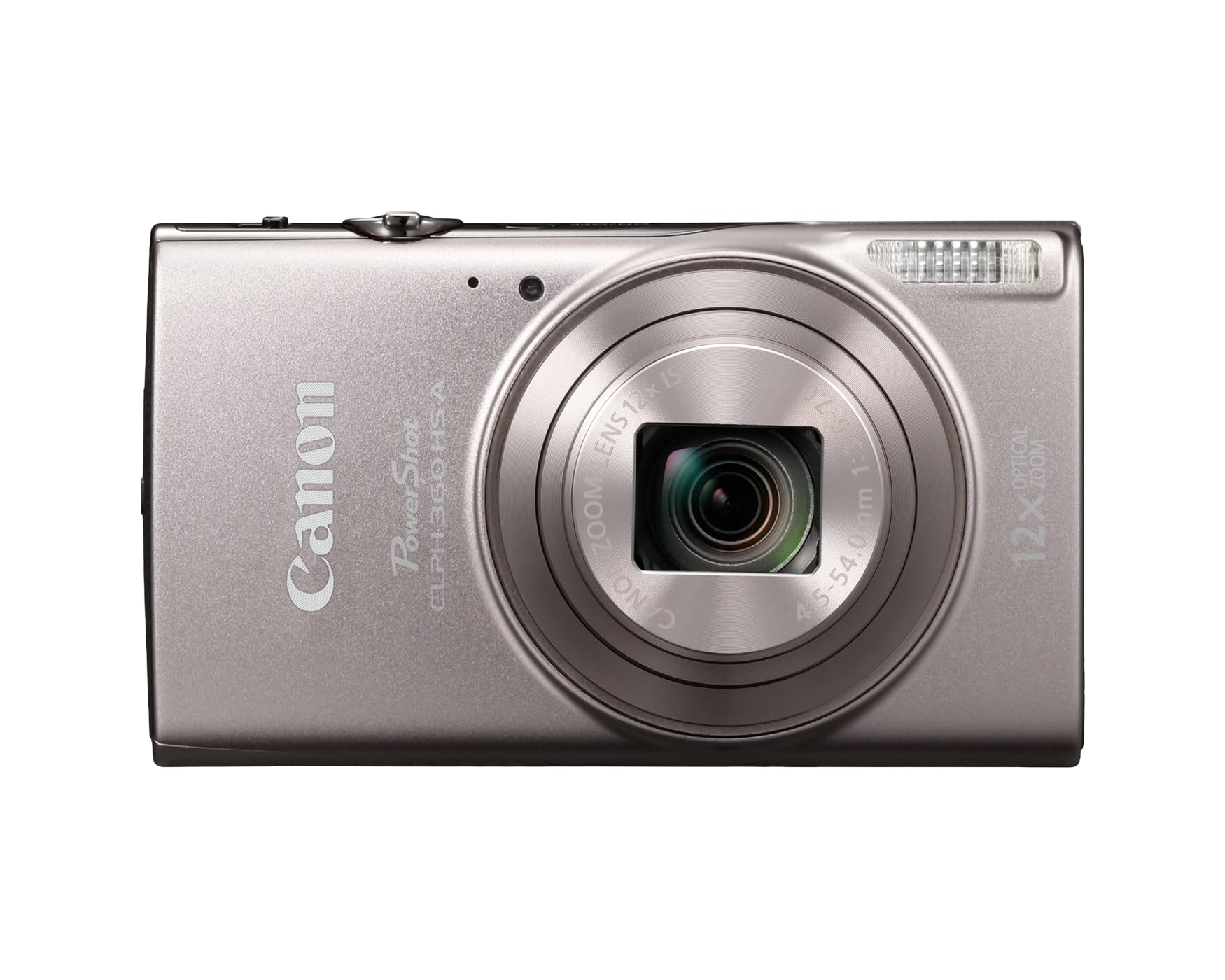
The cute, chunky point-and-shoot that makes brunch look easy.
This one is for the person who just wants a proper camera that fits in a purse and takes cute pictures. The Canon PowerShot ELPH 360 HS is a classic pocket point-and-shoot with a 20.2-megapixel CMOS sensor and a DIGIC 4+ image processor, so it handles dim indoor lighting far better than a phone. Owners describe the photos as “sooo cute” and the body as beautiful, compact, and easy to use.
Its standout trick is the 12x optical zoom with an optical image stabilizer. That’s enough reach to pull a concert stage from far back or grab a sharp shot of a dish across the table without getting up. It records four seconds of video before each still in Hybrid Auto mode and stitches the clips into a recap of your day automatically — a fun feature for casual creators.
This is a point-and-shoot that rewards a little learning. The settings can be adjusted manually if you want to grow, but owners say the menus are easier to figure out with a quick YouTube tutorial. It doesn’t include a microSD card, so budget for one (or have one on hand) before your first shoot. Battery charging is quick at 15-20 minutes, but drains fast — carry a spare for a full day out.
Image stability matters here — owners with shaky hands find the stabilizer a huge help. It’s the third PowerShot in some households, and they keep coming back for the point-and-shoot ease.
Great for: Everyday snapshots, travel, and anyone who wants a real camera without learning manual controls — it’s a charming, reliable starter that also looks the part.
The catch: No built-in memory and a battery that drains quickly on a full day, so plan on a microSD card and a spare battery from day one.
5. Canon PowerShot V10

A tiny camera with its own built-in stand, ready for desk vlogs in seconds.
The Canon PowerShot V10 is a purpose-built vlogging camera with a 15.2-megapixel 1-inch back-illuminated CMOS sensor. That sensor is the key — it captures serious low-light footage without pushing grain all over your video. Owners describe it as the best vlogging camera they’ve bought, praising the video and photo quality, and one even notes it fits in a fanny pack.
Its defining design choice is the fold-out stand that flips to the front or back. You can set it on a counter or table for hands-free shooting in seconds — no tripod required. The fixed 19mm wide-angle lens (35mm equivalent) is perfect for holding the camera at arm’s length and still getting you and your surroundings in the frame.
What wins people over is its quality — over fifty owners single it out as excellent, with video quality the next most-praised feature. It records 8-bit 4K at up to 30fps and Full HD at up to 60fps with three stabilization modes. A third microphone in the middle of the stereo pair helps remove unwanted background noise.
The honest limit is that this camera has no zoom — it’s a fixed wide-angle tool, so if you need to pull in a distant subject, this isn’t the one. Buyers also find the battery drains fast, and the lack of a lens cover means you’ll want a small case for pocket carry.
The Highlights
- The 1-inch back-illuminated sensor delivers genuinely good low-light video in a pocket body.
- The built-in stand is genius — instant hands-free shooting on any flat surface.
- Three image stabilization modes keep handheld vlogs presentable.
- A third mic cancels background noise, so your voice stays clear indoors and out.
What to Know
- No optical zoom at all — you’re locked to the 19mm wide-angle view.
- Battery life is the recurring gripe; the 2-hour rated runtime feels shorter in real use.
- There’s no lens cover included, so a DIY pouch or case is a sensible add.
The verdict: If your world is vlogs and social clips filmed at arm’s length, this is the most elegant, all-in-one compact creator tool on this list.
skip it if: You want any zoom flexibility — this camera will not bring a distant stage or mountain closer.
6. Sony ZV-1F

The creator camera that Sony built for the selfie-generation, with a lens that sees everything.
The Sony ZV-1F is the vlogging camera that beginners and young teens seem to love most, and it’s a crowd favorite at 4.5 stars. Its defining spec is the ultra-wide 20mm lens that gets you and your background in the frame even at arm’s length. It pairs that with a large 1-inch sensor and a bright F2 lens, which gives you blurred backgrounds and clean low-light footage that immediately looks a step above a phone.
What wins people over is its quality — nearly 200 owners single it out, with picture quality the second most-praised feature. It has 425 autofocus points and uses Eye-AF and tracking technology to lock onto your face as you move around. For product demos, a Product Showcase mode keeps whatever you hold up sharp and in focus.
Audio is a major reason creators pick this. The built-in directional 3-capsule mic with a windscreen accessory captures clear voice without needing an external mic, which owners say beats many dedicated add-ons. The side-articulating touchscreen LCD makes composing selfie shots natural, and the body is compact and lightweight enough for all-day carry.
The trade-off is that it’s a pure creator tool. There’s no flash, battery life is the most-mentioned downside (expect around 45 minutes per charge, so buy spares), and owners note the body is fragile — a minor drop has been known to ruin a friend’s autofocus. It’s a stereo-typical gateway camera, meaning many owners see it as a start and plan to upgrade later.
Perfect for: Beginner vloggers and young creators who want a real camera that’s still dead simple — the flip screen, great mic, and face tracking make it almost easy.
Be ready for: A battery that needs a backup or two, and a body that demands a padded bag rather than a bare pocket.
7. Panasonic LUMIX TZ/ZS99 (Silver)

A 24-720mm LEICA lens in a pocket camera — that’s the whole review.
The Panasonic LUMIX ZS99 is the travel zoom king. Its headline feature is a LEICA lens that spans 24-720mm with 30x optical zoom. That means you can capture a sweeping landscape and then instantly pull in a distant landmark with the same camera. Owners call it stunning for a first camera and praise the huge settings variety and incredible zoom reach.
What wins people over is the functionality — owners find the controls and shooting options impressive, and the zoom earns its own round of praise. The 4K video at 30p and 4K PHOTO burst at 30fps give you sharp, bright images, and it can shoot HD slow-motion at 120fps for creative flexibility. A dedicated Send Image button plus Bluetooth v5.0 pushes your photos straight to your phone.
Universal USB Type-C charging means you can always top up on the go, and the 1,840k-dot tiltable touchscreen helps you shoot from tricky angles. Owners compare it favorably to the Sony SX740, calling the quality nicer, the auto function easier, and the value better — though it does have less zoom.
The honest limit is physical. Reviewers point out it’s heavy and not truly pocketable despite the marketing. The user interface and image quality get mixed marks — some call it user-friendly, others find the UI terrible, and low-light handheld shots can come out unusable. It’s a daylight camera that rewards a steady hand.
Why It Wins
- The 30x LEICA zoom is the star — 24-720mm reach covers everything from ultra-wide to super-telephoto.
- USB Type-C charging means a shared cable with your phone keeps it powered.
- 4K photo bursts at 30fps and 120fps HD slow-mo give creative flexibility.
- The tiltable 1,840k-dot touchscreen aids high and low angle shots.
The Reality Check
- This body is heavy and not as pocket-friendly as advertised — it’s more a small bag camera.
- Low-light handheld shots are weak; keep it in daylight for the best results.
- The menu and image quality split owner opinions — learn the settings to get the most out of it.
Reach for this if: You travel and want one camera for landscapes, portraits, and far-away detail — the zoom reach does the work of three lenses.
Look elsewhere if: You need pocket-size portability or mostly shoot indoors after dark, where the 30x zoom can’t help.
8. Panasonic LUMIX ZS99 (Black)
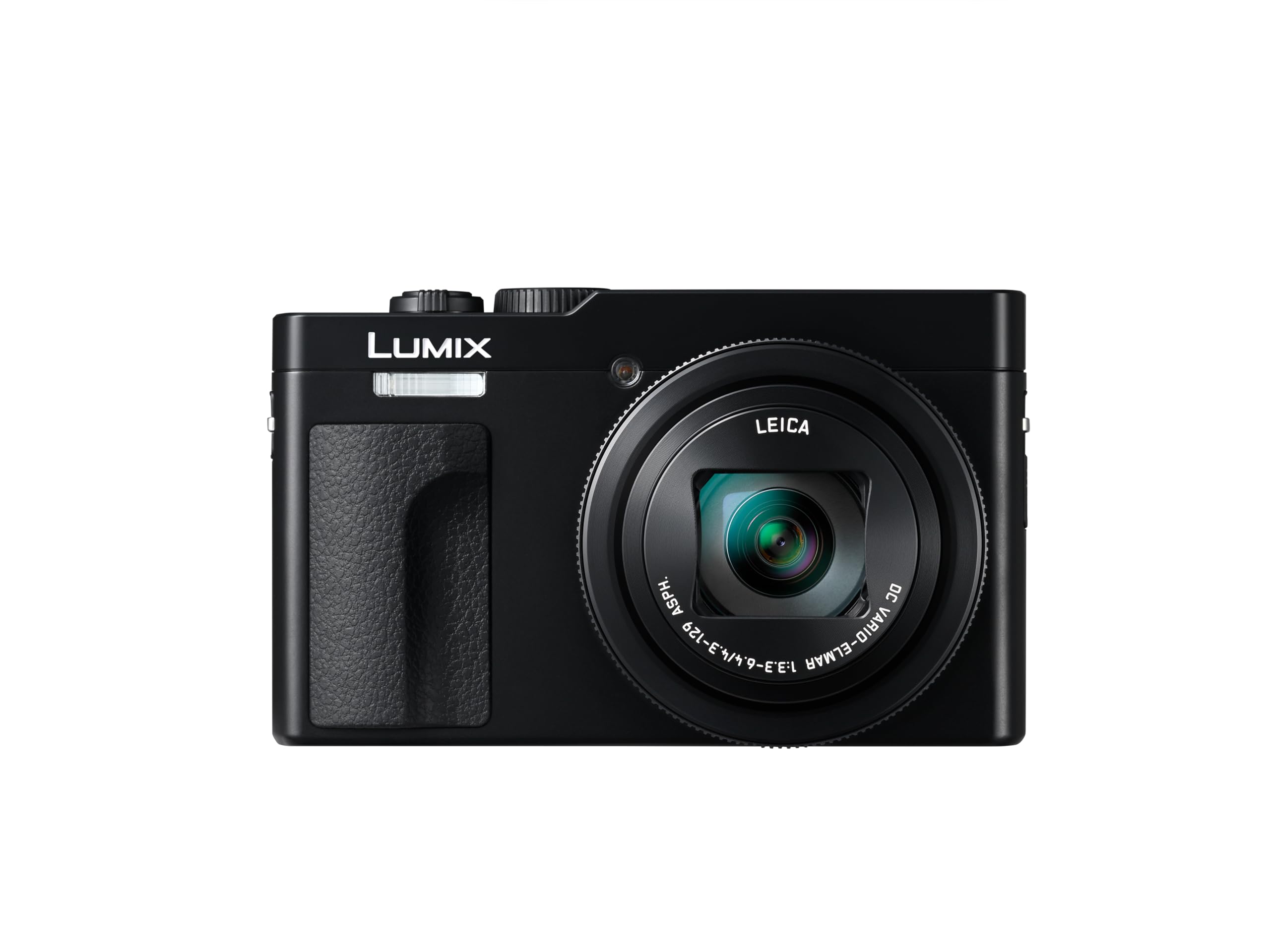
The official concert camera for the back-row peeps who want the band on their face.
The Panasonic LUMIX ZS99 in black packs the same 30x optical zoom as the silver version — a LEICA lens spanning 24-720mm — but this one earns a dedicated following as a “concert camera.” Owners rave that it zooms in on a stage from far away better than any phone, with pictures coming out clear and sharp.
What wins people over is the quality, with over forty owners praising it and zoom earning the second-highest share of positive comments. It’s praised as a daily pocket camera that fits in jeans, and the portability is a strong theme across owner feedback. It records 4K video at 30fps and HD slow-motion at 120fps for creative flexibility.
The reality check is that this camera has real limits under pressure. Shoppers say it overheats during long sessions, and 4K recording caps out at 15 minutes while 1080p stops at 30 minutes — so you can’t just let it roll all night. The video quality also gets mixed feedback, with some finding it good enough and others saying it’s not acceptable. Live-event shooters recommend AFC autofocus mode for the best results.
The other sore point is the tilting screen hinge — at least one owner found the mechanism flimsy after a few months of use, requiring a workaround to hold the viewing screen up. It’s a sturdy-feeling camera overall, but that hinge is the part to treat gently.
Great for: Concert and live-event fans who need real telephoto reach in a small body — the 30x zoom is the whole reason to own it.
The catch: Overheating and recording-time limits on 4K make it a burst-and-rest camera, not a continuous recorder, and the screen hinge deserves gentle handling.
9. Canon PowerShot SX740 HS (4PC Bundle)

A 40x superzoom that arrives ready to shoot right from the start.
The Canon PowerShot SX740 HS is the superzoom for people who want maximum reach. Its 40x optical zoom lens covers a 24-960mm focal length range with optical image stabilization — enough to turn a distant bird into a frame-filling subject or capture a concert stage from the cheap seats. Owners describe it as a perfect size, not too big, and lightweight.
Under the hood sits a 20.3MP CMOS sensor with a DIGIC 8 image processor, which shoots 4K video and 4K time-lapse recording at 10-fps continuous shooting. The 3-inch tilting LCD display helps you compose from high and low angles, and Wi-Fi plus Bluetooth lets you transfer shots straight to a phone. This bundle also includes a 64GB SD memory card, a padded carrying case, and a microfiber cleaning cloth, so you can start shooting immediately.
The catch here is not the camera — it’s the seller. Owners who got the bundle love the hardware, calling it the best camera they’ve owned and praising the quick delivery. But at least one buyer received a grey-market unit with packaging marked “FOR JAPAN ONLY” and no US warranty, which they found deceptive. It’s a warning to check what you’re actually receiving.
If you’re comfortable verifying you’re getting a US-region unit and you want the most zoom per dollar with the extras included, this is a compelling package. The camera itself, when it’s the right region, is dependable with strong 4K output.
Best if: You want the maximum 40x optical zoom with everything you need in one box — memory card, case, and cloth included means zero extra shopping.
Check carefully: Confirm your unit is a US-model with warranty before buying, since some buyers receive grey-market imports that can’t be registered in the US.
10. Canon PowerShot SX740 HS (Silver Bundle)
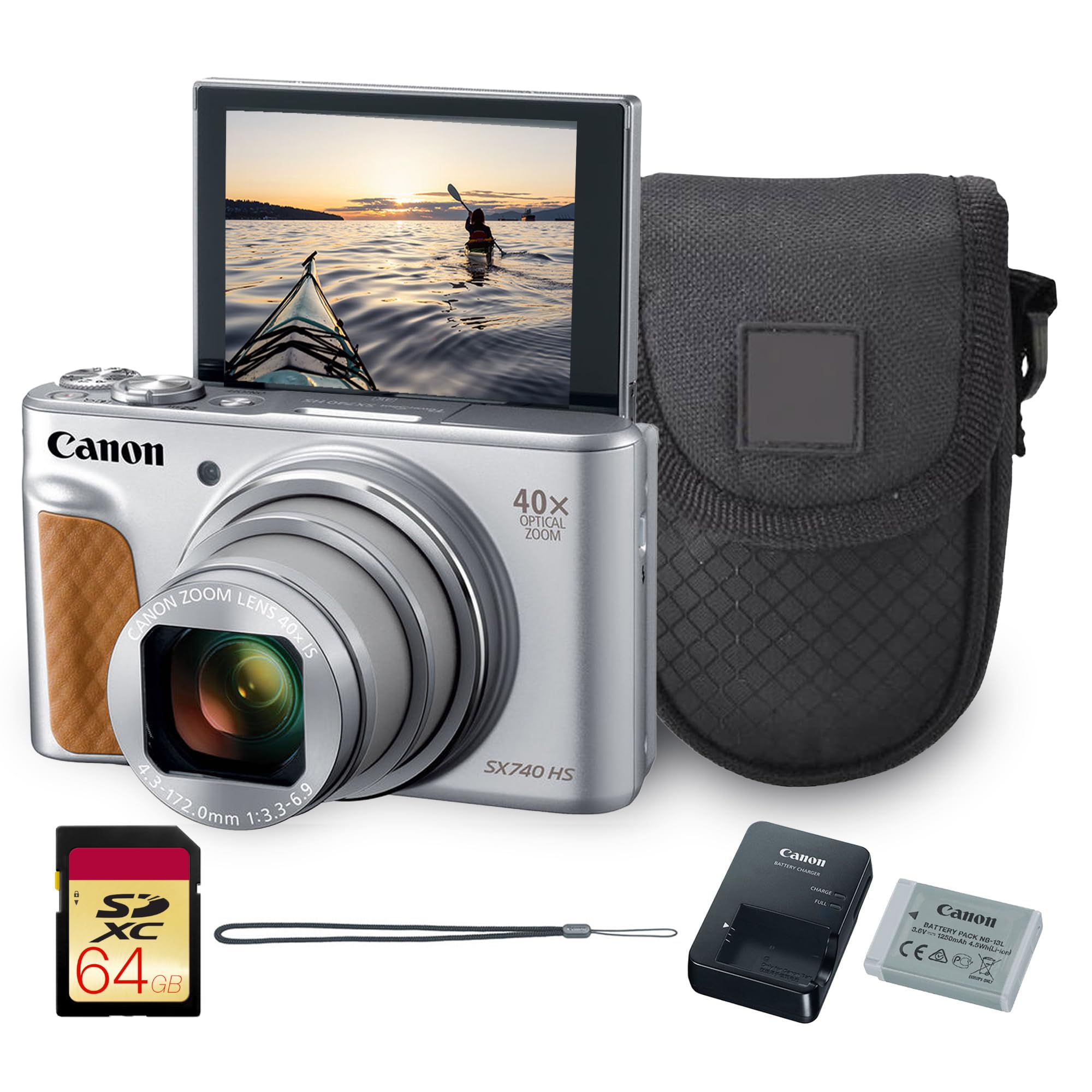
The silver 40x zoom gives you US-region confidence that other picks lack.
This silver version of the Canon PowerShot SX740 HS is explicitly listed as Canon USA Authorized, which makes it the safer choice for buyers who worried about the grey-market bundles above. It packs the same 40x optical zoom lens with a 24-960mm equivalent focal length and Optical Image Stabilization for crisp, steady shots — and it includes a bag and a 64GB UHS-I SDXC memory card.
What wins people over is the quality — over thirty owners call it a well-built, solid camera, and the value-for-money is the second most-praised trait. It shoots vivid 4K UHD video with a 20.3MP sensor and DIGIC 8 processor, and the 4K time-lapse mode adds a creative storytelling angle. Wi-Fi and Bluetooth connect to the Canon Camera Connect app for easy sharing and backups.
The picture quality earns its own positive run, with owners getting great bird shots from far away. It’s a lightweight, travel-friendly body that feels premium in hand, though size receives mixed reactions — some find it nicely compact while others note it’s too big for a pocket.
The trade-offs are specific. There’s no built-in flash, so low-light shots rely fully on the sensor and any external light source. And the gear has a learning curve — owners repeatedly say you must get the settings right before the photos look their best. But once you do, the pictures are consistently described as great.
The Strengths
- The 40x optical zoom (24-960mm) with Optical Image Stabilization keeps distant subjects sharp.
- Being Canon USA Authorized means it registers for warranty — no grey-market surprises.
- 4K UHD video plus 4K time-lapse adds serious creative range.
- Bag and 64GB UHS-I SDXC card included — shoot ready immediately.
What to Note
- No built-in flash — low-light shooting depends on the sensor and external lighting.
- Some owners find the body too big for a jeans pocket despite the compact name.
- There’s a real learning curve — plan time to dial in the settings for best results.
The verdict: If you want the 40x superzoom reach with US warranty confidence and a starter kit included, this is the version to buy.
Think twice if: You need a body that truly disappears into a pocket or you shoot mostly indoors after dark without a flash.
Understanding the Specs
Sensor size and low light
A 1-inch CMOS sensor is the single most important spec for image quality in this category. It captures significantly more light than the smaller sensors found in budget zoom cameras, which means cleaner video and photos at dusk, indoors, or under stage lights. It also gives you that creamy blurred background that makes footage look professional. Before you buy, decide whether you’ll often shoot in dim conditions — if yes, push for a 1-inch sensor.
Gimbal vs optical stabilization
Physical stabilization is what separates a gimbal camera from a superzoom. A 3-axis mechanical gimbal holds the lens steady on motors, making walking, running, and dancing footage look like it was shot on rails. Optical image stabilization built into a lens helps both stills and video but can’t match a gimbal’s glide. If your footage is mostly you moving, a gimbal camera wins. If you shoot mostly static subjects like concerts and wildlife, lens stabilization plus a long zoom is the better fit.
FAQ
Will a 1-inch sensor camera really look better than my phone?
What does 4K at 120fps actually mean for my videos?
Is a gimbal camera fragile compared to a standard compact?
How much optical zoom do I really need?
Why does the PENTAX WG-1000 have mixed reviews if it’s waterproof?
Should I buy a camera that pairs with my phone’s app?
<
What is the difference between optical zoom and digital zoom?
How long does a compact camera battery actually last?
Can I use an affordable compact camera for underwater photos?
Is a point-and-shoot camera better than my phone for concerts?
What does a tilting touchscreen actually help with?
How do I choose between the two Panasonic ZS99 versions?
Final Thoughts: The Verdict
Across the board, the affordable compact camera winner is the DJI Osmo Pocket 3 because its 1-inch sensor, 4K/120fps video, and 3-axis gimbal deliver the smoothest, most versatile footage you can pocket. If you want a budget-friendly gimbal with nearly the same output, grab the Xtra Muse. And for concert seats and far-away landscapes, the Panasonic ZS99 is the one to reach for with its 30x LEICA zoom.
How We Picked
We do not accept paid placement. Every pick is matched to a real buyer and a real use-case; we do not hands-on test units.
Sources & Methodology
Specifications: manufacturer listings and product documentation. Review insights: verified customer reviews, as of August 2026. Pricing: not shown on this page (it changes often); check the current price via the retailer link.
As an Amazon Associate, Gadgets Feed earns from qualifying purchases. This does not affect which products we feature.