
Our readers keep the lights on and my morning glass full of iced black tea. As an Amazon Associate, I earn from qualifying purchases.
Specs are compiled from manufacturer listings and verified buyer reviews and can change over time — please confirm the key details on the product page before buying.
Most dash cams tie you to a cigarette-lighter cable snaking across your dashboard or a hardwire install into your fuse box. A battery powered dash cam no wires option breaks that tether, so you can mount it, charge it, and go — but the catch is that “no wires” means different things to different cameras. This guide separates the truly untethered picks from the ones that quietly need a cable the moment you actually drive, so you pick the one that matches your real routine.
I’m Min — the founder and writer behind Gadgets Feed. This guide is built by comparing the manufacturers’ published specifications and the patterns across verified customer reviews, so you get each pick’s real strengths and trade-offs instead of marketing spin.
You want a dash cam that records without a messy hardwire kit, but not all battery-powered models deliver on that promise. This breakdown of the best battery powered dash cam no wires options shows which one fits your driving style and which one may leave you reaching for a cable.
Our Picks at a Glance
How To Choose The Best Battery Powered Dash Cam No Wires
Before you buy, understand the single biggest trade-off in this category: a dash cam’s internal battery almost never powers continuous recording while you drive. That job is normally handled by your car’s power, which is why you need to read the fine print on what “no wires” actually covers.
Decide what the battery is really for
Some cameras use the battery for parking protection — they sit in low-power standby and wake up to record a short clip only when they detect a bump. Others use the battery to let you carry the camera with you as a body cam. Neither type can film non-stop for hours on battery alone, so match the battery’s job to what you actually need.
Check the field of view
The field of view is the angle your lens captures. A wider angle shows more of the road and your blind spots, but it can distort the edges of the frame. A narrower angle shows less but often keeps detail sharper in the center, which matters when you need to read a license plate.
Look for a G-sensor and loop recording
A G-sensor detects a collision and locks that clip so it won’t be overwritten. Loop recording automatically deletes the oldest footage when your memory card fills up, so the camera keeps recording without you having to manage storage. Together they mean you never miss an incident and never run out of space mid-drive.
Quick Comparison
| Model | Best For | Field of View | Front Recording | Included Card | Amazon |
|---|---|---|---|---|---|
| Type S 4K Mini Dash Cam★ Best Overall | 2-in-1 dash cam and body cam use | 136 degrees | 4K | 32 GB | Amazon |
| Baseus VD1 Pro Solar Dash Cam | Solar-assisted parking protection | 140 degrees | 4K | 32 GB | Amazon |
| Car Dash Cam Front Rear 360 | Full 360-degree surround coverage | 360 degrees | 4K | 128 GB | Amazon |
In-Depth Reviews
1. Type S 4K Mini Dash Cam & Body Camera
Our pick — over 4.5★ from 20+ verified ratings; the strongest balance of quality and price.
One small camera that rides your windshield by day and your pocket by night.
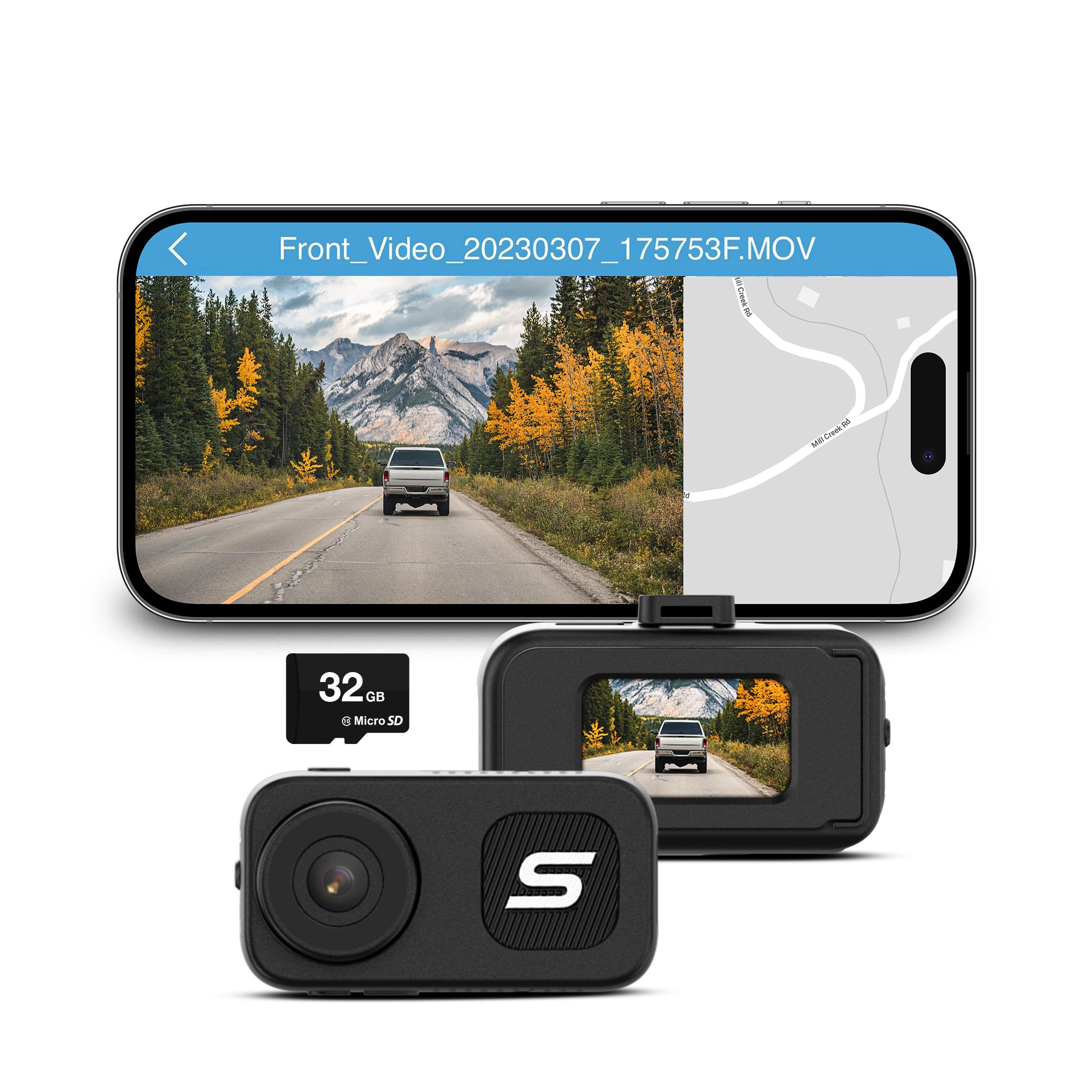
This is the rare pick that doubles as a wearable body camera, so the rechargeable battery has a real second job beyond parking. With a lithium polymer cell inside, you can lift it off the windshield mount, clip it on, and record a scene outside your vehicle — that flexibility is the core reason to choose it over a fixed dash cam.
The camera shoots in crisp 4K at 3840×2160 with built-in audio, and buyers report video stabilization keeps footage smooth while walking.. Voice control lets you start recording or grab a snapshot hands-free, and the G-sensor locks incident footage automatically so a collision clip survives loop recording. A 32GB MicroSD card is pre-installed, and the slot supports expansion up to 256GB, so you can grow storage as you go.
The trade-off is honest and consistent across owner experiences: body-cam mode runs on a 1-2 hour battery and the camera runs hot during those wearable sessions. Buyers are blunt about it — “Body mode: battery 1-2hrs, runs hot, uncomfortable.” That makes it a superb dash cam with a body-cam mode best saved for short emergencies rather than all-day wear.
What makes it shine
- True 4K front recording with steady video stabilization while walking
- Voice commands and G-sensor incident locking work without touching it
- 32GB card is included, with support up to 256GB
Where it bends
- Body-cam mode holds 1-2 hours of battery and runs uncomfortably hot
- The companion app feels clunky and lacks an export option for clips
Reach for it if: you want one device that covers your drive and brief moments outside the car, and you value 4K clarity over long wearable sessions.
Look elsewhere if: you need all-day body-cam recording or you rely heavily on a polished phone app to manage footage.
2. Baseus VD1 Pro Solar Dash Cam
A solar panel and lithium battery that keep watch while your car sleeps.
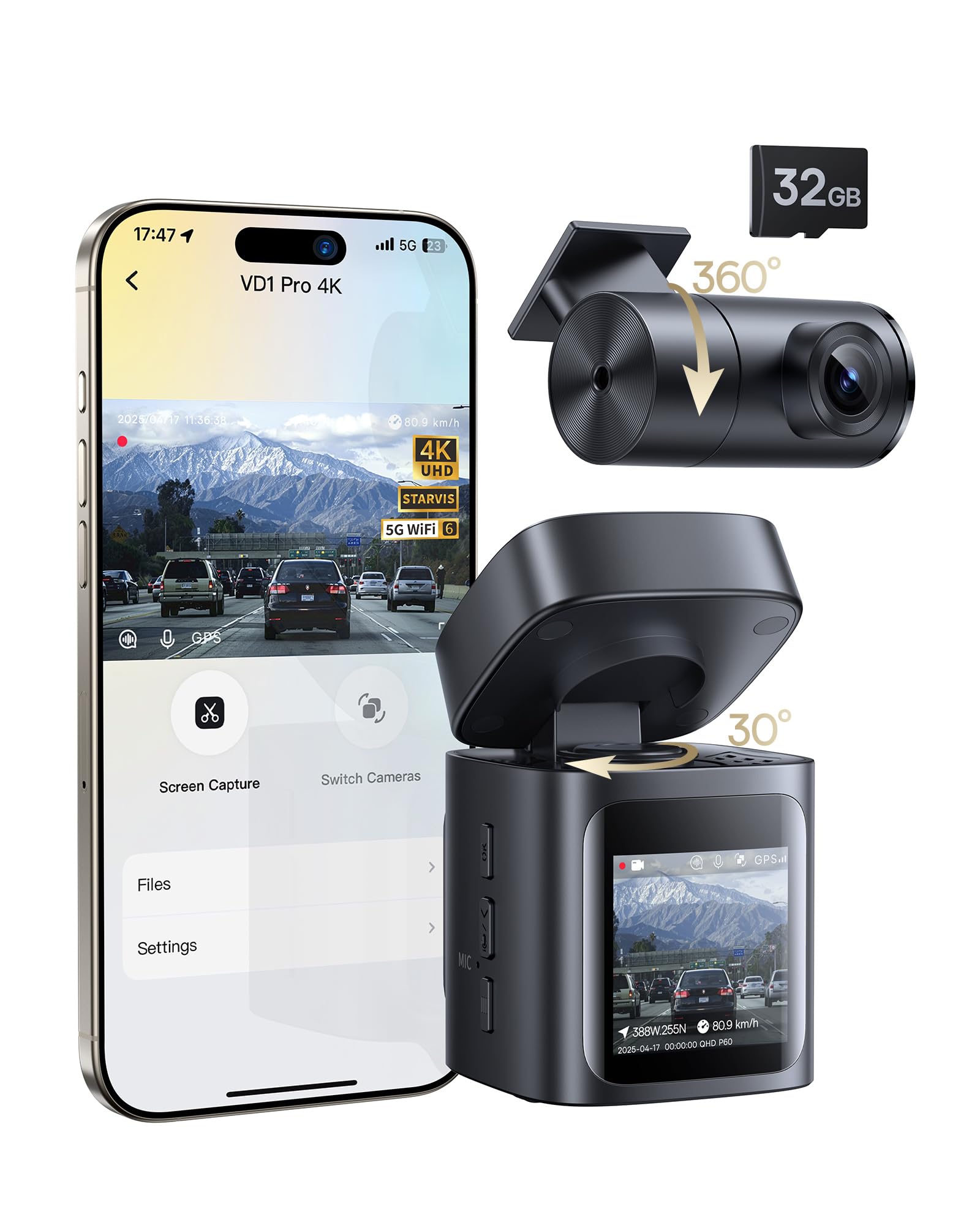
The most-discussed pick here is this Baseus, and the reason is its parking protection. A built-in lithium battery and the Baseus Solar Sync System deliver up to 14 days of parking-mode coverage without a hardwire kit. — when the car is off, it drops into low-power standby and records a 30-second clip only when a collision is detected. That is event-triggered recording, not continuous filming, and it is designed specifically for parking incidents.
Video quality is the thing everyone raves about: the 4K UHD HDR front lens and 1080P rear camera capture sharp plates and road signs day or night, helped by the IMX335 STARVIS sensor (a low-light sensor that boosts visibility in the dark), a 6-layer glass lens, and an f/1.6 aperture (a wide opening that lets in more light) for near-total darkness. The 140-degree front and 120-degree rear lenses give solid coverage, and built-in 5GHz WiFi 6 (the latest wireless standard) lets you download clips up to 3 times faster through the free Baseus app.
The honest catch sits in the power note: solar and battery power support parking protection only. Continuous recording while you drive requires the included car cable, and the rear camera needs a wired connection too — so this is not a fully wire-free driving camera, it is a wire-free parking camera. Owners mention the app connects quickly over 5GHz but occasionally drops, and some units overheat and shut off.
Parking-mode star: Up to 14 days of solar-assisted, event-triggered protection without a hardwire kit — a genuinely rare feature at this level.
Keep in mind: You will still plug it in while driving, and the rear cam needs a wire, so set expectations around the word “solar.”
3. Car Dash Cam Front Rear 360 Full View 4K Dual Security
Four waterproof cameras that watch every side of your vehicle at once.
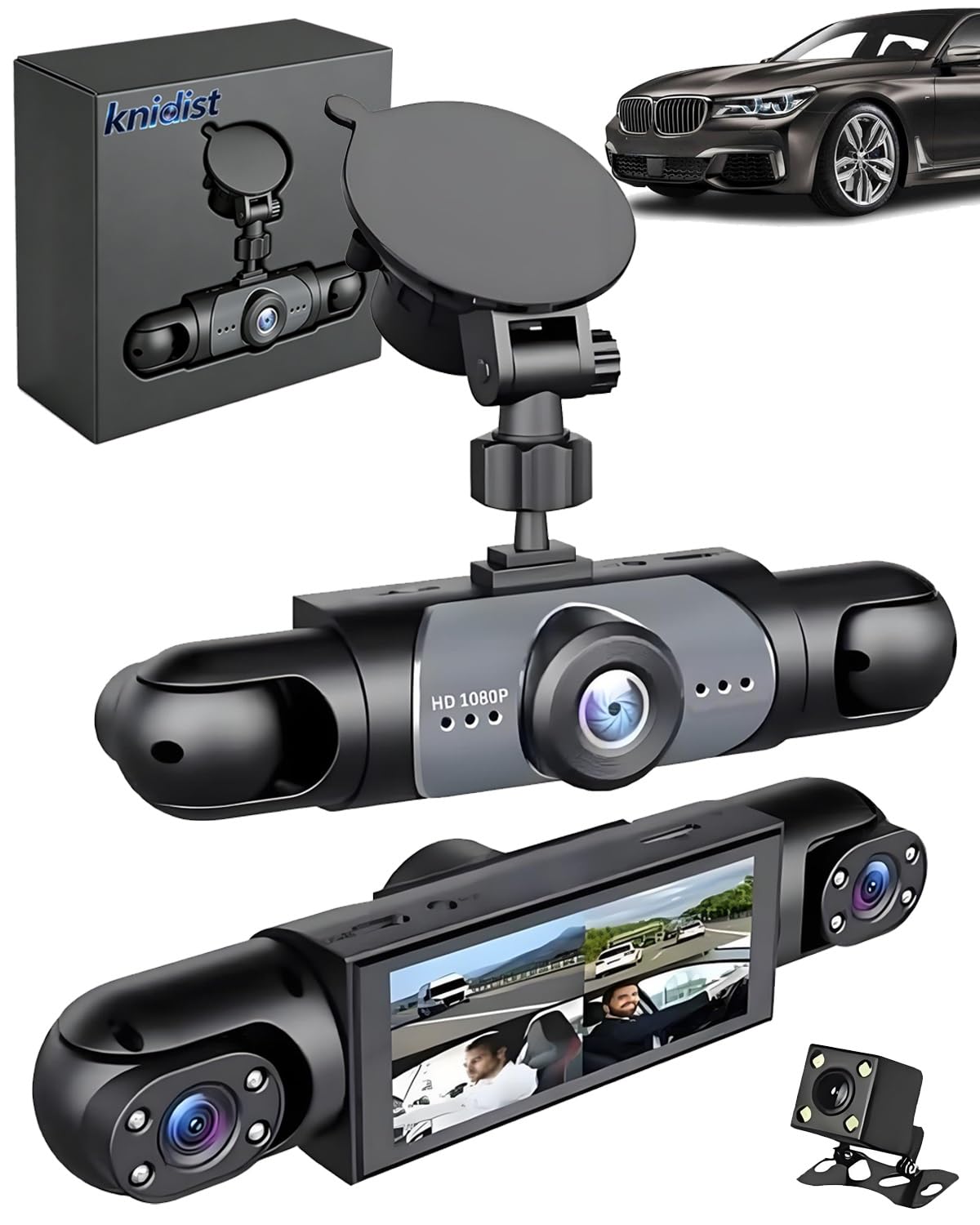
If eliminating blind spots is your top priority, this one is unique in the lineup: it records a full 360-degree view using four waterproof cameras monitoring front, rear, and both sides simultaneously. The field of view here is 360 degrees versus 136 degrees on the Type S — a 2.6x gap that translates into genuinely complete surround coverage of your car or truck.
Spec-wise it is loaded: a 4K UHD front lens, 1080P full HD side and rear lenses, Starvis 2 grade sensors for night vision, and continuous loop recording. It ships with a pre-installed 128GB high-endurance SD card built in, so you have serious storage without buying anything extra.
The reality check is battery life, and buyers are direct about it. “Charged it for 2 full days,” reports one owner, “It works for. 15- maybe 20 min then battery is dead.” Several verified purchasers echo this: the battery fails to hold a charge, making it unreliable for true wire-free use., and one owner found it still required the power outlet to operate in their car.. The 360-degree concept is compelling, but the execution around the rechargeable core falls short of the other picks.
Coverage king: A genuine 360-degree surround view with 4K front detail and 128GB included is class-leading in this list for blind-spot elimination.
The honest limit: Owner experiences point to a battery that struggles to hold a charge past 15-20 minutes, so treat the rechargeable promise with caution.
Understanding the Specs
Field of View
This is the angle your lens captures, measured in degrees. A wider field of view, like 360 degrees or 140 degrees, shows more of your surroundings and helps cover blind spots, but it can slightly distort the edges of the frame. A narrower view, like 136 degrees, keeps the center of the image sharper — which helps when you need to read a license plate straight ahead.
G-Sensor and Loop Recording
A G-sensor is a small motion detector that feels a bump or collision and instantly locks that clip so it cannot be overwritten. Loop recording automatically deletes the oldest footage when your memory card fills, so the camera never stops recording. Together they mean you always have evidence of an incident and you never have to manually clear space.
FAQ
Will a battery powered dash cam record continuously with no wires?
How long does the battery last on a wire-free dash cam?
What is parking mode and how does it work without wires?
What does field of view mean and why does it matter?
What is a G-sensor?
Is a 4K front camera worth it over 1080P?
Can a dash cam with voice control help while driving?
How much memory card storage do I need?
Final Thoughts: The Verdict
For most buyers, the battery powered dash cam no wires winner is the Baseus VD1 Pro because it is the only pick where the rechargeable battery genuinely transforms your parking coverage — up to 14 days of solar-assisted protection with no hardwire kit. If you want a single camera that also works as a body cam, grab the Type S 4K. And if every blind spot matters more than battery reliability, the 360 Full View model offers the widest coverage, though its battery performance is the weakest link in this lineup.
How We Picked
We do not accept paid placement. Every pick is matched to a real buyer and a real use-case; we do not hands-on test units.
Sources & Methodology
Specifications: manufacturer listings and product documentation. Review insights: verified customer reviews, as of August 2026. Pricing: not shown on this page (it changes often); check the current price via the retailer link.
As an Amazon Associate, Gadgets Feed earns from qualifying purchases. This does not affect which products we feature.