
Our readers keep the lights on and my morning glass full of iced black tea. As an Amazon Associate, I earn from qualifying purchases.
Specs are compiled from manufacturer listings and verified buyer reviews and can change over time — please confirm the key details on the product page before buying.
Fogged-up windshields and icy side windows turn every cold morning into a scraping ritual, and a plug-in heater is the shortcut that ends it. These small 12V units draw power straight from your car’s cigarette lighter, blowing warm air over the glass while your engine’s own heater slowly catches up. The right one clears your view in a couple of minutes; the wrong one can pop a fuse or, worst case, smell like burning plastic. This guide separates the heaters that actually move warm air from the ones that just spin a fan.
I’m Min — the founder and writer behind Gadgets Feed. This guide is built by comparing the manufacturers’ published specifications and the patterns across verified customer reviews, so you get each pick’s real strengths and trade-offs instead of marketing spin.
From compact defrosters to heavy-duty kits, these are the best car plug-in heater options that balance warm airflow with safety and real-world durability.
Our Picks at a Glance
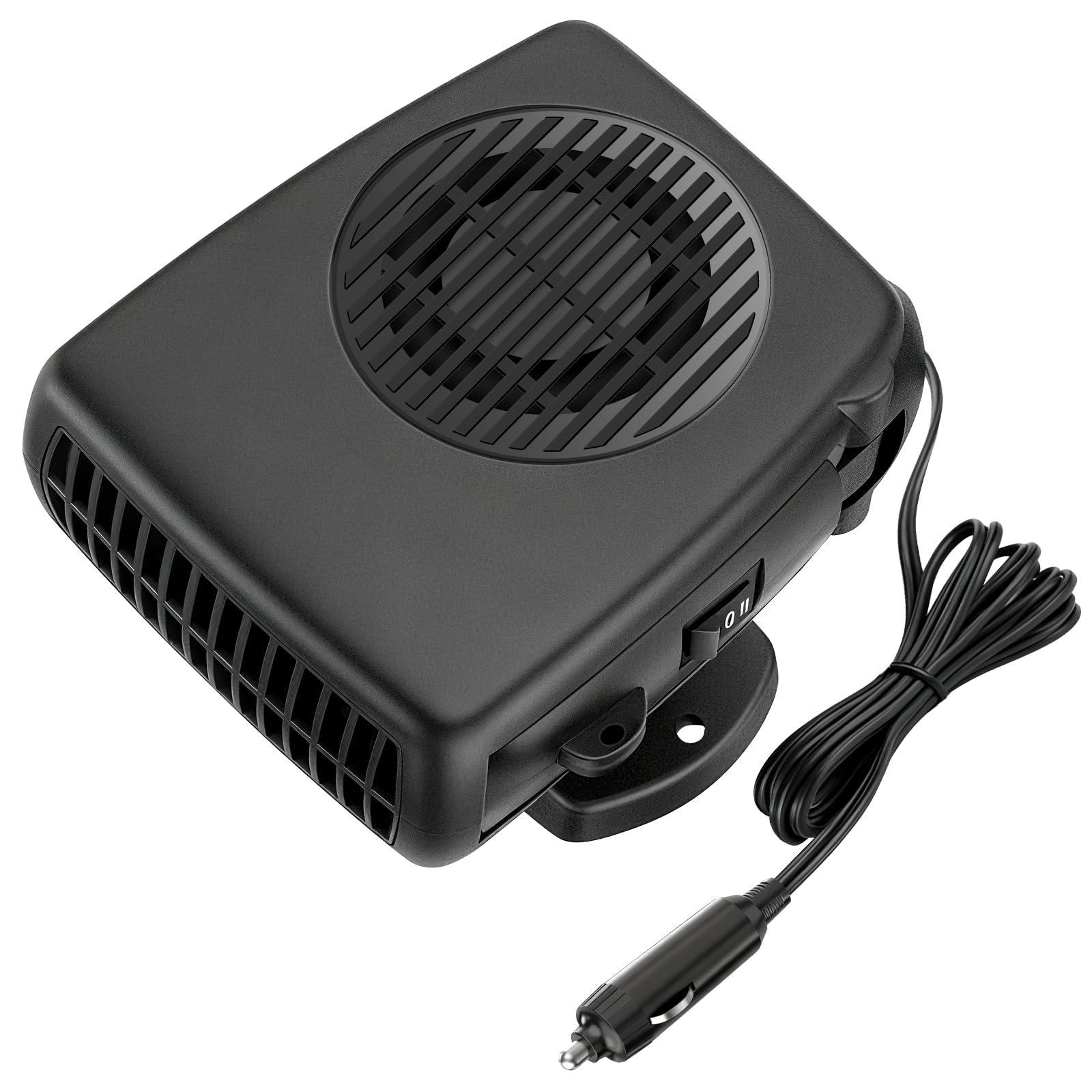
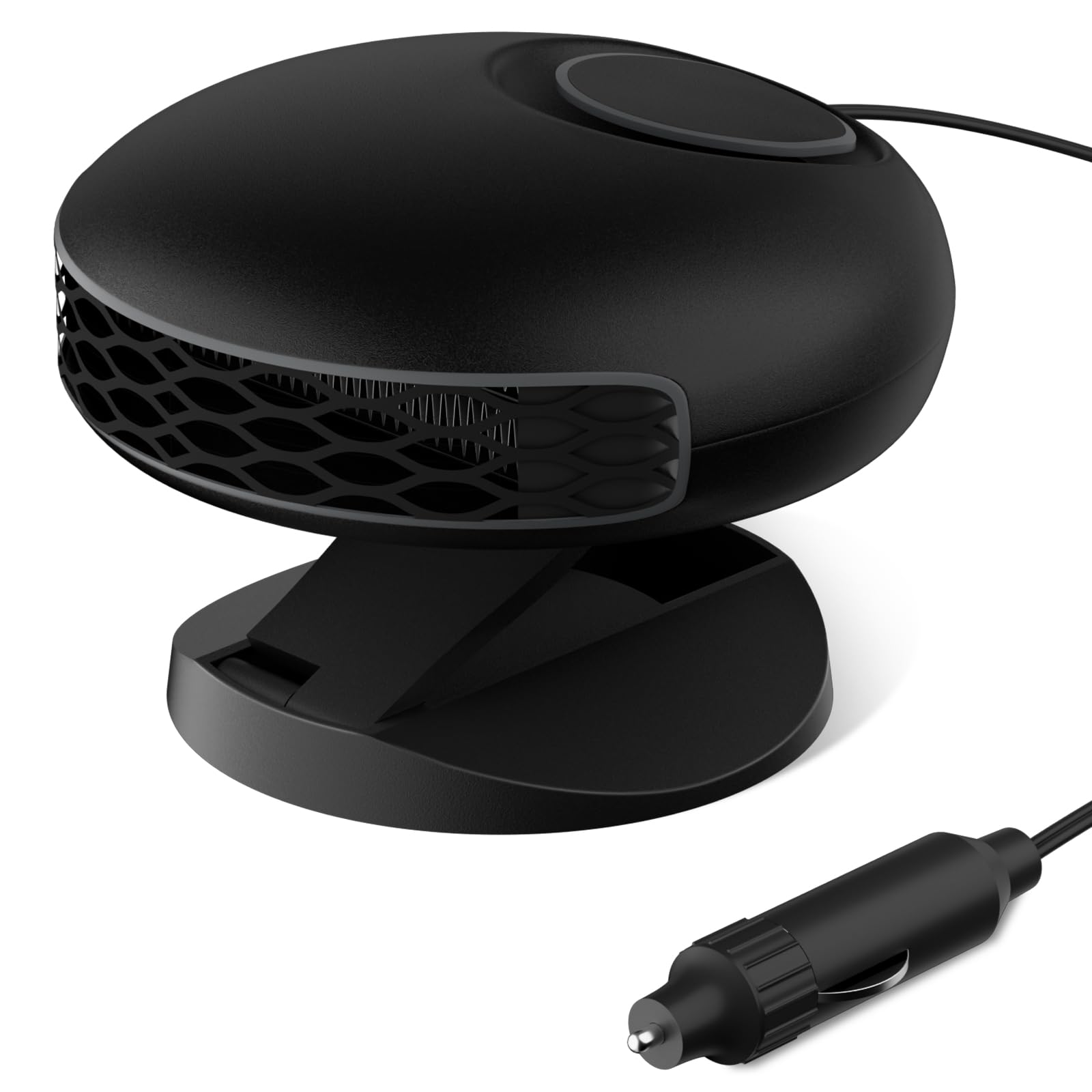
How To Choose The Best Car Plug-In Heater
Before you buy, understand what these devices are and are not. A 12V plug-in heater is a supplemental warmth booster and a defogging tool, not a replacement for your car’s main heater. It shines during the first few minutes of a drive, clearing your windshield and warming the cabin while the engine heats up.
Match the Wattage to Your Fuse
Most cigarette lighter sockets are fused at 10 or 15 amps, which translates to roughly 120W to 180W of continuous draw. A 150W unit plugs in safely; an 800W unit absolutely does not. If a heater demands more power than your socket’s circuit can deliver, the result is a blown fuse — or worse, a hot wire. Check your vehicle’s manual or use a lower-wattage model if you are unsure about your socket’s limit.
Look for PTC Ceramic Elements
You get safer, faster heat with PTC (positive temperature coefficient) ceramic elements. These self-regulate: as they heat up, their resistance rises, which naturally caps the temperature, so the element never glows red-hot like cheaper wire-based heaters can. A PTC element also heats faster and uses less power while holding a steady temperature, which is why the best picks in this guide all use it.
Check the Airflow Direction
A heater that blows air straight up is useless. The best units offer a 360° rotatable head or a suction mount that lets you aim warm air directly at the windshield or your feet. Look for an adjustable outlet and a base that keeps the unit steady, whether it is a self-adhesive pad or a clamp. If the nozzle points where you need it, the defogging happens in seconds instead of minutes.
Know How It Powers On
Not all “car heaters” plug into the cigarette lighter, even when the listing says so. Some higher-wattage units require direct wiring to the battery with a red wire to the positive terminal and a black wire to the negative — these are a DIY install, not a plug-and-play gadget. If you want zero tools, stick to models that explicitly connect to a 12V socket with a standard plug. If you want real heat output and are comfortable with a 10-minute install, a wired unit is the trade-off.
Quick Comparison
| Model | Best For | Wattage | Mount Type | Heating Element | Amazon |
|---|---|---|---|---|---|
| Blytra 200W★ Best Overall | Overall fast defogging | 200W | Self-adhesive base | PTC | Amazon |
| Blytra 150WQuiet Performer | Quiet, portable warmth | 150W | Adhesive pad | PTC | Amazon |
| CYDZSW 800W | Hardwired high heat | 800W | Wired install | PTC ceramic | Amazon |
| LLWAN | Suction-mount targeting | n/a | 180° suction mount | Alloy wire | Amazon |
| Ejoyous 600W | Floor/foot warming | 600W | Screw mount | PTC ceramic | Amazon |
| Therwen 3-pack | Budget value (use with care) | 150W | 360° bracket | n/a | Amazon |
| Nedittpy | Year-round fan mode | n/a | 180° rotary holder | n/a | Amazon |
In-Depth Reviews
1. Blytra Portable Car Heater 200W
Our pick — over 4.5★ from 80+ verified ratings; the strongest balance of quality and price.
The windshield clearer that earns its keep on every frosty commute.
This is the pick that solves the actual morning problem: you get warm air in about two minutes and a windshield that clears in seconds, not after ten minutes of idling. Its 200W heat output is the reason — it is higher than the 150W units on this list, which means noticeably faster defogging. The high-efficiency PTC heating element (a self-regulating ceramic chip that holds a safe temperature) delivers that warmth on a standard 12V cigarette lighter plug, with zero tools required.
The mounting is thought out for real cars. A self-adhesive base sticks to a clean, dry surface near your console, and the 360° adjustable outlet swings to point exactly where you need the air. Buyers report it is compact and low-noise, and several note it pairs perfectly with the built-in heater for cold-morning startups. It is built from ABS plastic and pure copper cables, and reviewers running it in trucks and UTVs call the construction sturdy.
The one honest limit: this is supplemental warmth, not a main heater replacement. As owners mention, it is the tool for initial defogging and short drives, clearing condensation fast while your vehicle’s own heater warms up. It also runs both heating and cooling/fan modes, so it is not a one-season gadget.
Why It Wins
- 200W output tops the plug-in group for faster heat
- 360° rotatable outlet aims air exactly at the fog
- Dual heat and fan modes for year-round use
- Self-adhesive base, no install tools needed
Keep In Mind
- Warms the cabin, but does not replace the car’s main heater
- Best for short drives and startup defogging
Reach for this if: you want the quickest defogging from a simple lighter plug and a 360° aim that covers the whole windshield.
Think twice if: you expect it to heat an entire cabin on its own — it is a booster, not a furnace.
2. Blytra Portable Car Heater 150W
A featherlight sidekick that warms slow-heating SUVs without a sound.
This 150W sibling shares the same DNA as the top pick but trades a little heat output for an even lighter, quieter footprint. It uses the same high-efficiency PTC heating element and the same 360° rotatable head, so you still get instant warm air and fast windshield defrosting — it is simply a touch less powerful than the 200W model above. For slow-warming SUVs and vans, buyers call it the ideal companion on cold winter mornings, pushing heat into the cabin while the engine catches up.
You can mount this in seconds without tools: a self-adhesive pad sticks to any clean surface, and the plug-and-play 12V connection fires it up instantly. The ABS shell and pure copper cables hold up to daily use, and the built-in overheating protection adds confidence for extended runs. Because it is so compact, it stores easily when summer rolls around, though it also works as a simple fan in the warmer months.
The catch is the same physics as every plug-in unit — 150W is gentle, not roaring. It clears a fogged windshield quickly and warms the front seats, but you’ll still rely on your vehicle’s own heater for full-cabin comfort on very cold days. For short trips, it is exactly the “winter lifesaver” the review pages make it out to be.
Quiet warmth: Owners consistently describe it as quiet and instant, with an impressive power-to-size ratio that makes it a great glovebox regular.
Fit note: Choose this if you want the lighter, quieter feel; choose the 200W model if raw defrost speed matters more.
Best for: commuters who want silent, instant defogging they can carry between vehicles.
Look elsewhere if: you need maximum heat output and are willing to accept a bigger, heavier unit.
3. CYDZSW 800W Battery-Powered Car Heater

Serious heat for garages, forklifts, and RVs — if you are willing to wire it.
This is the outlier of the group, and it is a different breed entirely. At 800W it produces dramatically more heat than any plug-in lighter unit on this list — customers note raising the temperature inside a covered forklift by 25°–35° from ambient. That power is exactly why it cannot use a cigarette lighter plug; it comes as a hardwired kit with a red wire for the positive battery terminal and a black wire for the negative. The listing promises the install takes under 10 minutes following the video.
The build is built around the PTC ceramic heating unit with automatic constant temperature control, no-flame operation, and switch overload protection. Made from aluminum alloy ceramic, it heats quickly and holds a steady temperature. It is intended for golf carts, trucks, UTVs, RVs, and 12V gasoline vehicles — situations where real heat output matters more than portability. The trade-off for that power is real, though: it draws hard on a 12V system.
Here is the honest warning that the review pages hammer home: this is not a simple plug-and-play gadget, and it should never be treated like one. Because it demands far more current than a lighter socket can supply, owners caution against expecting it to run safely through a standard car plug — the wiring gets hot. This is a “hardwire it properly to the battery or skip it” tool.
The Payoff
- 800W output delivers real, cabin-warming heat
- PTC ceramic element holds constant temperature safely
- Wide compatibility with RVs, trucks, and carts
The Catch
- Must be wired directly to the battery — no lighter plug
- Owners caution about hot wires and weak blower at full draw
- Not for a standard car’s lighter circuit
Choose this for: workshop vehicles and RVs where you can do a proper 10-minute battery install and want serious warmth.
skip it if: you want to plug something into your car’s lighter and drive — this unit is out of its depth there.
4. LLWAN 12V Car Heater with Suction Mount
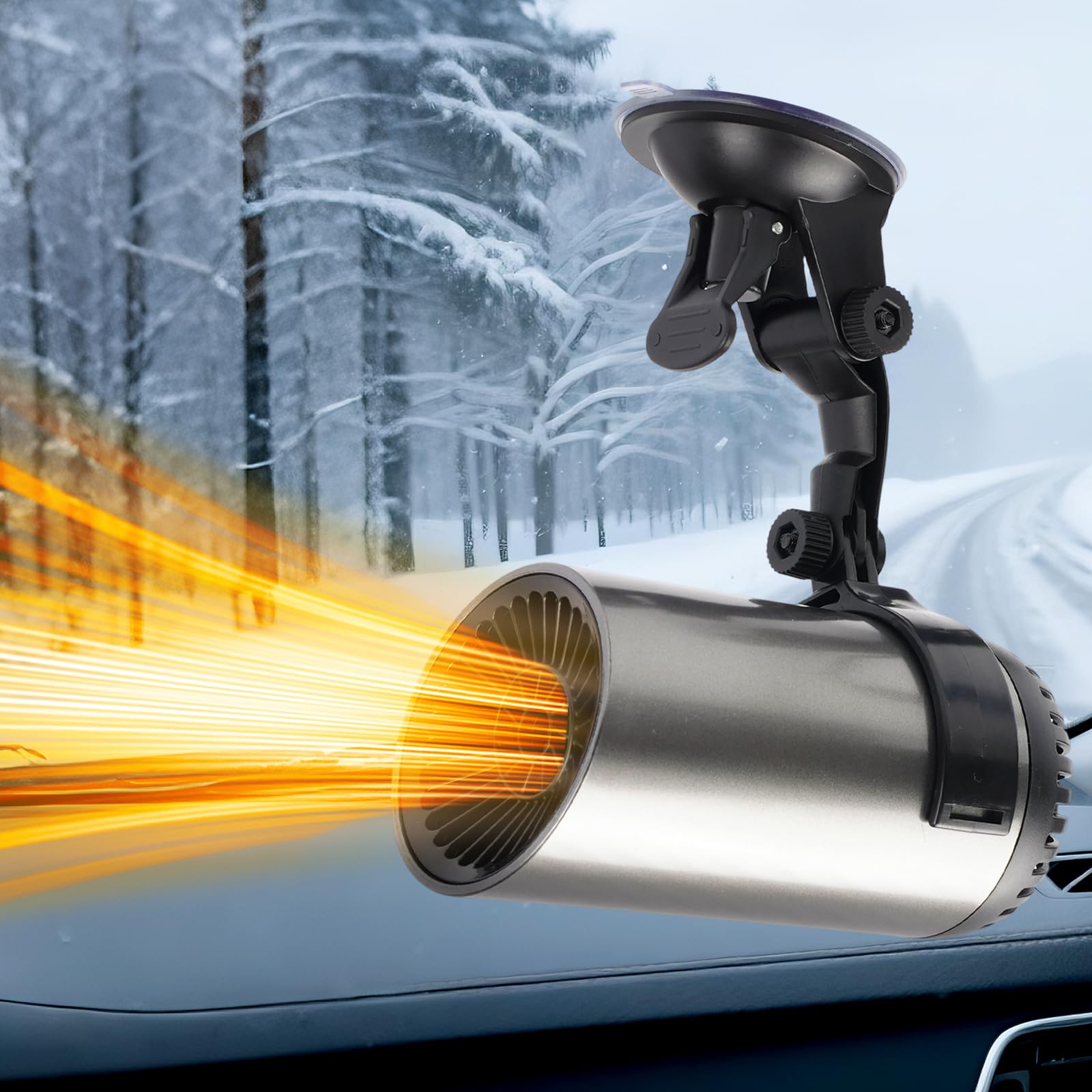
Point-and-shoot defrosting with a suction grip most others lack.
The defining feature here is the 180° rotatable suction mount, which lets you stick this heater to the glass or dash and swing the nozzle exactly where the fog sits. That targeting ability is what wins owners over — you can direct a stream of warm air straight at a fogged windshield spot instead of hoping the air drifts that way. It runs on a standard 12V lighter plug and switches between heat and fan modes with a simple control.
The built-in alloy heating wire (a metal coil that warms when electricity passes through) heats up fast, and the ABS and polymer heat-resistant shell includes overheat protection so the exterior does not burn your hands. Weighing just 13.1 ounces, it is light enough to reposition freely, and the listing markets it as an anti-fog, anti-frost, and light-ice tool for frosty mornings. One buyer measured it drawing 166W from a 12V lighter, safely within a typical car socket’s range.
The honest fit note: heat output is mixed in the review pages. Some owners say it warms the interior faster than the vehicle’s own heater, while others find the airflow weak — one comparison joked that a breath has more air pressure. It clears a small windshield spot, but it is not a cabin heater. Treat it as a targeted defogger for a specific patch of glass, not a whole-car warmer.
Targeted defog: The suction mount and 180° rotation make this the best pick for aiming heat at one stubborn fogged spot.
Fair warning: The fan pushes modest volume — expect to clear a pizza-sized area, not the whole windshield at once.
Reach for this if: you want the flexibility to stick a heater on the glass and aim it precisely with one hand.
Look elsewhere if: you need powerful airflow that rushes across the full windshield — this one is gentle by design.
5. Ejoyous 600W 3-Hole Floor Heater

A mount-anywhere floor unit built to warm your feet, not your dash.
This is a different shape for a different job. Instead of a dash-mounted nozzle, the Ejoyous is a floor heater with three air outlets and a dual-gear temperature switch, designed to bolt under a seat or to the footwell with self-tapping screws. It uses PTC ceramic constant-temperature elements and pushes air out at 75°C, aimed at warming your feet and legs during winter drives. At a compact 1.34 pounds, it disappears under the seat.
The build pairs high-quality PVC with high-strength aluminum alloy, listing low energy consumption and low noise as headline traits. It is marketed as suitable for gasoline cars, trucks, buses, RVs, campers, and even boats — anywhere you can mount it with screws and run a 12V feed. For camping and travel, this is the kind of unit you install once and forget.
The catch is its power appetite. At 600W, this also is not a simple lighter-socket device — reviewers point out it kills the battery if run while the engine is off, and the cigarette plug, if used, needs a 30-amp fuse. Buyers who installed it in a cargo trailer note it works better as a fan than a heater at distance, with warm air only felt about four inches away. It is a directed foot-level warmer, not a cabin blower.
Focused warmth: The 3-outlet design and 75°C PTC elements make it a strong choice for cold feet on long winter drives.
Power note: It draws serious current — run it with the engine on and use a proper fuse, or it will drain the battery.
Best for: DIY-minded owners who want a permanent under-seat warmer for trucks, RVs, and campers.
Think twice if: you want a simple plug-and-play unit — this one needs a real install and a beefy fuse.
6. Therwen 3-Pack 150W Car Heaters

Three cheap heaters for three vehicles — if you accept the risk that comes with them.
Here is the most honest entry on the list: a 3-pack of 150W, 12V heaters with 360° rotating brackets and dual heating/cooling function. You get three units for about the price of one premium heater, which means you can outfit a car, a camper, and a spare. Each one plugs straight into a cigarette lighter and switches between warm and cool air, with a compact 5.12 x 4.33 x 2.76-inch profile that tucks into a cupholder area.
The price is the entire pitch, and it is the entire problem. The review pages are dominated by safety and durability warnings: shoppers say one unit popped a truck’s fuse in four seconds, others describe plastic burning smells and units failing within the first week. The maker’s own listing warns to unplug immediately after use and avoid unattended operation — which tells you the margins here are thin. A few owners do report they “defrost fast” and keep the cabin toasty, so it is not a total dud, but it is a gamble.
Who is this for, honestly? The budget-conscious buyer who understands they are buying disposable commodity hardware and will supervise it closely. Given the recurring reports of hot wires and melting, this is not the unit to gift to a nervous driver or leave running unattended. Spending a little more on a PTC-equipped single heater removes most of this risk.
What You Get
- Three units for the price of one premium heater
- 150W each, plugs into a standard 12V lighter
- 360° rotating bracket for aiming
What Risks It
- Recurring reports of blown fuses and hot wires
- Multiple owners describe units failing within the first week
- No meaningful safety features cited in reviews
Reach for this if: the budget is the absolute priority and you will supervise the heater closely, unplugging it right after use.
Avoid it if: you want a set-and-forget heater — the safety reports here are too consistent to ignore.
7. Nedittpy 2-in-1 12V Heater & Fan
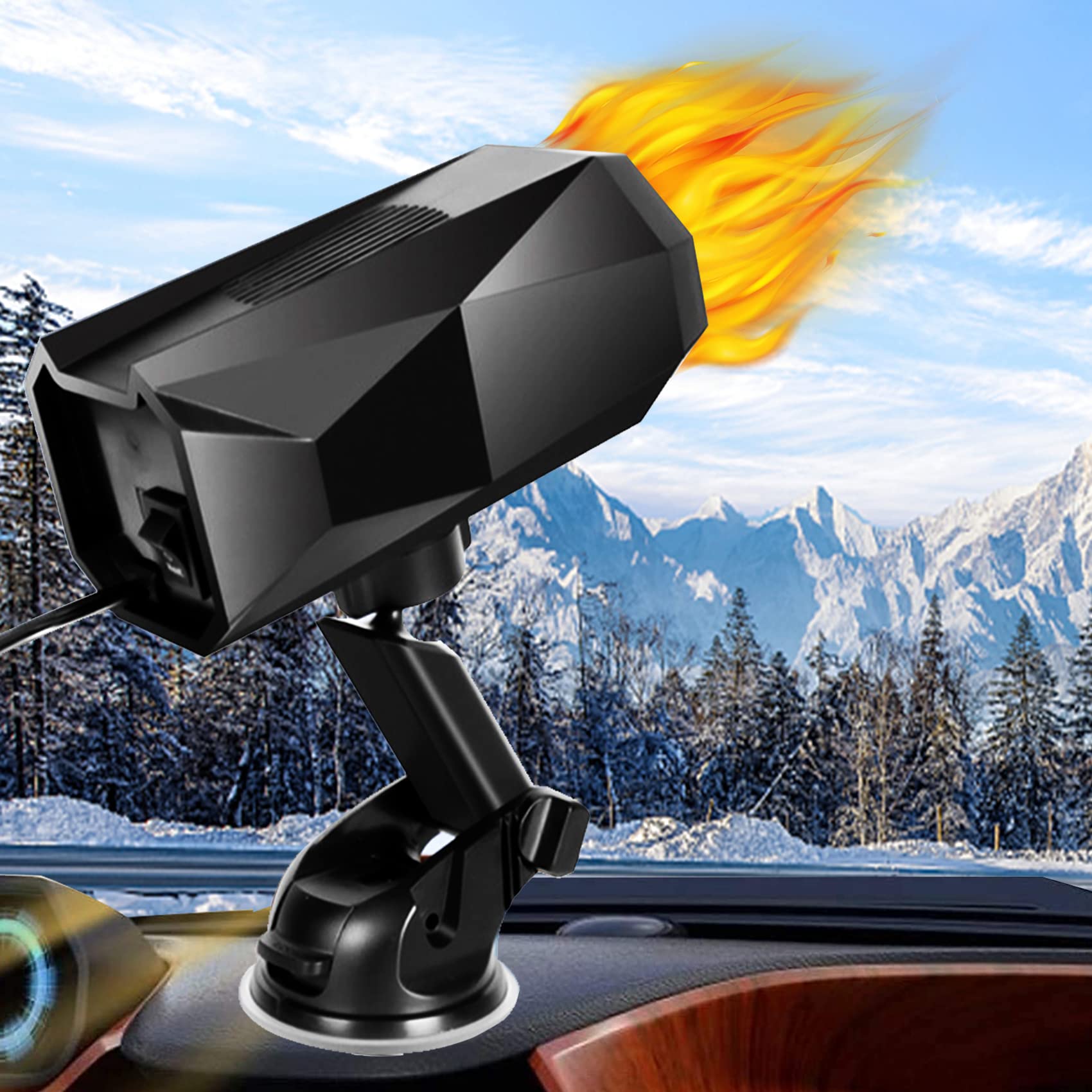
A dual-mode gadget that promises winter heat and summer breeze in one plug.
The pitch is clever: one unit that heats your windshield in winter and cools you in summer, all from a 12V lighter socket. The Nedittpy uses an 180-degree rotary holder that adjusts like a car vent, and the maker claims it heats in about 60 seconds and clears frost and fog fast. The heat-resistant ABS and polymer shell includes a built-in fuse and automatic power-off protection, with a one-month warranty and 24-hour customer service response promise behind it.
The dual function is the real draw. In fan mode it works year-round as a small cabin circulator, and in heating mode it attacks fog and frost on the glass. At just 11.3 ounces it is light enough to move between vehicles, and it mounts on a non-slip mat or double-sided tape. Buyers who got a working unit report strong airflow, instant heat, and a compact footprint that clears a windshield in under a minute.
Here is the honest split: the review pages show a wide quality gap. A few owners describe it as a handy, fast defroster, but a meaningful number report defects — units that shut off after 10–20 seconds repeatedly, one that blew a car outlet within two minutes, and another that never got warmer than lukewarm. The automatic power-off protection meant to prevent battery damage may be tripping prematurely on some units. It is a coin flip on quality, which is a real consideration at this price.
The Appeal
- Dual heat and fan modes for year-round use
- Built-in fuse and automatic power-off protection
- Compact 11.3-ounce design with 180° holder
The Gamble
- Several buyers report defective units that shut off repeatedly
- Quality control is inconsistent between units
Choose this for: a do-it-all compact unit if you are willing to test your luck on quality control.
pass on it if: reliability is non-negotiable — the defect reports make this the riskiest single-unit buy here.
Understanding the Specs
Wattage (W) and Your Fuse
Wattage is the single most important number, because it tells you how much electrical current the heater draws. A standard 12V cigarette lighter socket is usually fused at 10–15 amps, which safely supports roughly 120W–180W of continuous load. That is why 150W and 200W plug-in units are the safe, common choice, and why 600W and 800W units must be wired directly to the battery instead. Exceeding the socket’s limit does not just blow a fuse — the wire itself can overheat. When in doubt about your vehicle’s fuse rating, choose the lower-wattage plug-in unit.
PTC vs. Alloy Wire Elements
The heating element determines both safety and speed. PTC (positive temperature coefficient) ceramic elements are the modern standard: they self-regulate by increasing electrical resistance as they heat up, which naturally caps the temperature and prevents the element from glowing red-hot. Alloy wire elements are cheaper and heat fast, but they lack that self-limiting behavior, so they rely on separate overheat protection. For a device that lives in a car, PTC is the safer bet and explains why the strongest picks in this guide use it.
360° Rotation and Mount Types
Airflow direction decides whether a heater is useful or just noise. A 360° rotatable head or a swiveling suction mount lets you aim warm air directly at the fogged glass or your feet, which clears the view in seconds rather than waiting for air to drift. Mount type matters for install: self-adhesive bases and suction cups are truly tool-free and repositionable, while screw-down floor units are permanent. Match the mount to how often you plan to move the heater between vehicles.
Heat vs. Fan Mode
Many of these units double as air circulators, and that is a genuine feature, not a gimmick. A 2-in-1 heater with a fan-only mode is useful in summer to push air around the cabin, which extends the gadget’s usefulness beyond winter. It also means the “heater” is really a small fan with a heating coil inside — a design that warms the air near the unit but does not roar like a household space heater. Understand this distinction and your expectations for cabin-wide warmth stay realistic.
FAQ
Can a car plug-in heater actually warm my whole car?
Will a 12V heater blow the fuse in my cigarette lighter?
How long does a car plug-in heater take to defrost a windshield?
What is a PTC heating element and why does it matter?
Should I buy a car heater that plugs in or one that wires to the battery?
Is it safe to leave a plug-in car heater running unattended?
Can I use a 12V car heater in a truck, UTV, or RV?
Why do some car heaters smell like burning plastic?
Is a more expensive car heater always better?
Can a car plug-in heater drain my car battery?
Final Thoughts: The Verdict
For most drivers, the strongest car plug-in heater is the Blytra 200W because it pairs the highest plug-in-safe wattage with a PTC element, a 360° rotatable head, and consistently happy owners. If you want the lighter, quieter sibling, grab the Blytra 150W. And for workshop vehicles and RVs that need serious warmth, the CYDZSW 800W hardwired kit is the one to reach for — just respect that it demands a real battery install.
How We Picked
We do not accept paid placement. Every pick is matched to a real buyer and a real use-case; we do not hands-on test units.
Sources & Methodology
Specifications: manufacturer listings and product documentation. Review insights: verified customer reviews, as of August 2026. Pricing: not shown on this page (it changes often); check the current price via the retailer link.
As an Amazon Associate, Gadgets Feed earns from qualifying purchases. This does not affect which products we feature.