
Our readers keep the lights on and my morning glass full of iced black tea. As an Amazon Associate, I earn from qualifying purchases.
Specs are compiled from manufacturer listings and verified buyer reviews and can change over time — please confirm the key details on the product page before buying.
Backpacking food has a bad reputation for a reason: too many pouches taste like salty cardboard and leave you hungry an hour later. The right pick delivers a hot, filling meal that weighs just ounces and needs only water. This guide cuts through the marketing to find the meals worth the pack space for any trip length.
I’m Min — the founder and writer behind Gadgets Feed. This guide is built by comparing the manufacturers’ published specifications and the patterns across verified customer reviews, so you get each pick’s real strengths and trade-offs instead of marketing spin.
You’ll leave with a clear winner and a few strong alternatives, plus the expertise to spot quality backpack food that actually satisfies on the trail.
Our Picks at a Glance
How To Choose The Best Backpack Food
Every hiker wants a trail meal that’s light, quick to fix, and tasty enough to finish. The market now offers solid choices for every style of trip.
Calories per ounce is the real currency
Your pack weight directly affects how much energy you burn on the trail. A 650-calorie pouch gives you more usable energy per pound than a heavier meal with fewer calories. Compare calorie density, not bag size, when choosing between dinners.
Freeze-dried vs. dehydrated: the texture tells the truth
Freeze-drying locks in the original shape and crunch, so chicken and fruit rehydrate closer to fresh. Dehydration is slower and gentler, which some brands say keeps more texture and nutrients, but it can leave foods drier. Both are lightweight and shelf-stable, so the choice depends on taste and mouthfeel.
Shelf life decides if it’s trail food or emergency food
Some brands back their pouches with a decades-long taste guarantee, which makes them perfect for a go-bag that sits in your car for years. Others are made to be eaten fresh within a season or two, which suits a trip you have planned for next month. Knowing the difference stops you from stashing a short-life breakfast in your emergency kit by mistake.
Quick Comparison
| Model | Best For | Meal Type | Servings | Key Spec | Amazon |
|---|---|---|---|---|---|
| Mountain House Chicken & Mashed Potato★ Best Overall | Best Overall Dinner | Freeze-Dried | 2 | 4.48 oz | Amazon |
| Wild Zora Cliffside Coconut BerryBest Breakfast | Best Breakfast Variety | Freeze-Dried | 2-Pack | 5.61 oz | Amazon |
| Mountain House Mint Chocolate ChipTrail Treat | Best Trail Treat | Freeze-Dried | 6 | 6-Pack | Amazon |
| GOOD TO-GO Weekender | Best Gourmet Flavor | Dehydrated | 3 | 3-Pack | Amazon |
| Meat Shredz Pulled Pork | Best Protein Boost | Dehydrated | 6 | 2.2 oz per pack | Amazon |
| Greenbelly Backpacking Meals | Best No-Cook Fuel | Meal Bar | 5 | 650 calories | Amazon |
| Backpacker’s Pantry Granola | Best Camp Breakfast | Freeze-Dried | 6 | 16g protein | Amazon |
| Harmony House Veggie Sampler | Best Value Variety | Dehydrated | 15 | 40 cups yield | Amazon |
| Harmony House Backpacking Kit | Best Bulk Supply | Dehydrated | 18 | 70+ servings | Amazon |
In‑Depth Reviews
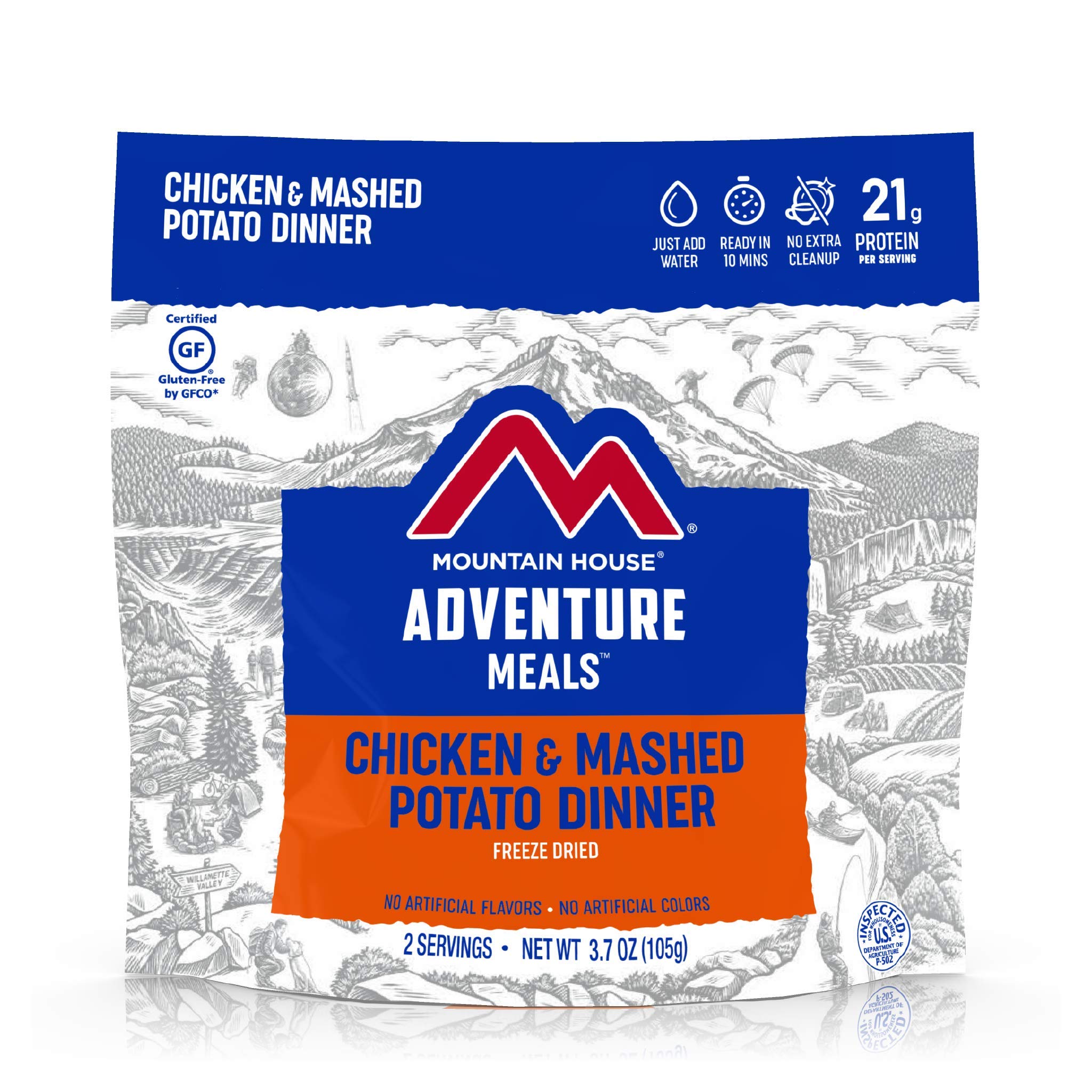
1. Mountain House Chicken & Mashed Potato Dinner
Our pick — over 4.5★ from 700+ verified ratings; the strongest balance of quality and price.
The crowd-favorite dinner that turns a cold campsite into a comfort-food kitchen in under ten minutes.
The defining feature here is the taste — it’s what wins people over every time. The chicken comes out large and chunky, not shredded to nothing, and the creamy mashed potatoes are seasoned with herbs and chives. At 4.48 ounces per pouch, it’s noticeably lighter than many breakfast options like the Wild Zora 2-pack at 5.61 ounces, which means you save weight without sacrificing a full two-serving meal.
Preparation is about as simple as it gets: add hot water straight to the pouch and eat in less than 10 minutes, with no cleanup afterward. The pouch holds heat for a very long time, which is great on a cold evening but means you might want to transfer it to a bowl if you’re in a hurry to cool it down. The trade-off is that some owners find the flavor a bit mild and reach for garlic, rosemary, or pepper to bring it up a notch.
This pouch is built for long-term storage. It’s certified gluten-free by GFCO (a third-party certifier), carries a 30-Year Taste Guarantee, and buyers sum it up: “It’s for longTerm storage I’m not going to eat it now. I’ll eat it in 50 years but it’s the best tasting stuff I have ever had in my entire life.” The main complaint is value — some wish it cost less to justify stocking a full supply.
Why Hikers Love It
- Chunky, high-quality chicken with creamy herb-seasoned potatoes
- Just add hot water and eat in under 10 minutes, no cleanup
- 30-Year Taste Guarantee makes it ideal for emergency storage
- Certified gluten-free with no artificial flavors or colors
The Honest Trade-Offs
- Mild flavor that some owners boost with extra seasoning
- Pouch holds heat long, so it cools slowly in the bowl
- Several buyers feel it’s a bit pricey per pouch
The go-to dinner: This is the safest, tastiest pick for anyone who wants a reliable two-serving meal, whether you’re on the trail or building a survival stash.
Think twice if: You want bold, heavily seasoned food without carrying your own spice kit to add it.
2. Wild Zora Cliffside Coconut Berry
A morning bowl that tastes like real oats and berries, not a chemical imitation of breakfast.
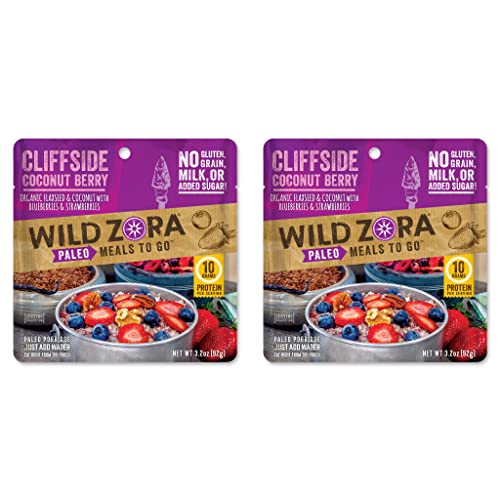
The standout quality here is the clean ingredient list. This Cliffside Coconut Berry blend mixes berries, crunchy pecans and walnuts, and a touch of mango, with no added sugar and nothing you can’t pronounce. Owners who are gluten-intolerant especially appreciate that it works as a real alternative to oatmeal, with the oats and nuts giving a satisfying texture that needs no sweetener.
At 5.61 ounces for the 2-pack, it’s about 25% heavier than the Mountain House dinner pouch at 4.48 ounces, but you’re getting two separate breakfasts rather than one dinner, so the weight makes sense. These are made in the USA by a woman-owned, family-run business in small batches in Loveland, Colorado, which explains the freshness that comes through in reviews.
The recurring caveat is the shelf life. One reviewer noted it’s only 6-9 months, which is too short to trust for an emergency stash, so treat this as a buy-it-fresh-for-the-next-trip option rather than a long-term supply. Value also gets mixed feedback — it’s pricey, but those who love it call it the best hiking breakfast they’ve found.
Clean fuel: Real ingredients with no added sugar make this a genuinely healthy start to a trail day, and the berry-nut crunch keeps it interesting bite after bite.
Freshness window: With roughly half a year of shelf life, this is for your planned trips, not your go-bag.
Reach for this if: You want a wholesome, gluten-free breakfast that tastes like real food and skips the artificial sweeteners.
Look elsewhere if: You need a pouch you can forget in a cupboard for a few years and still trust.
3. Mountain House Mint Chocolate Chip Ice Cream Sandwich
The zero-effort dessert that satisfies a sweet tooth without melting all over your jacket.
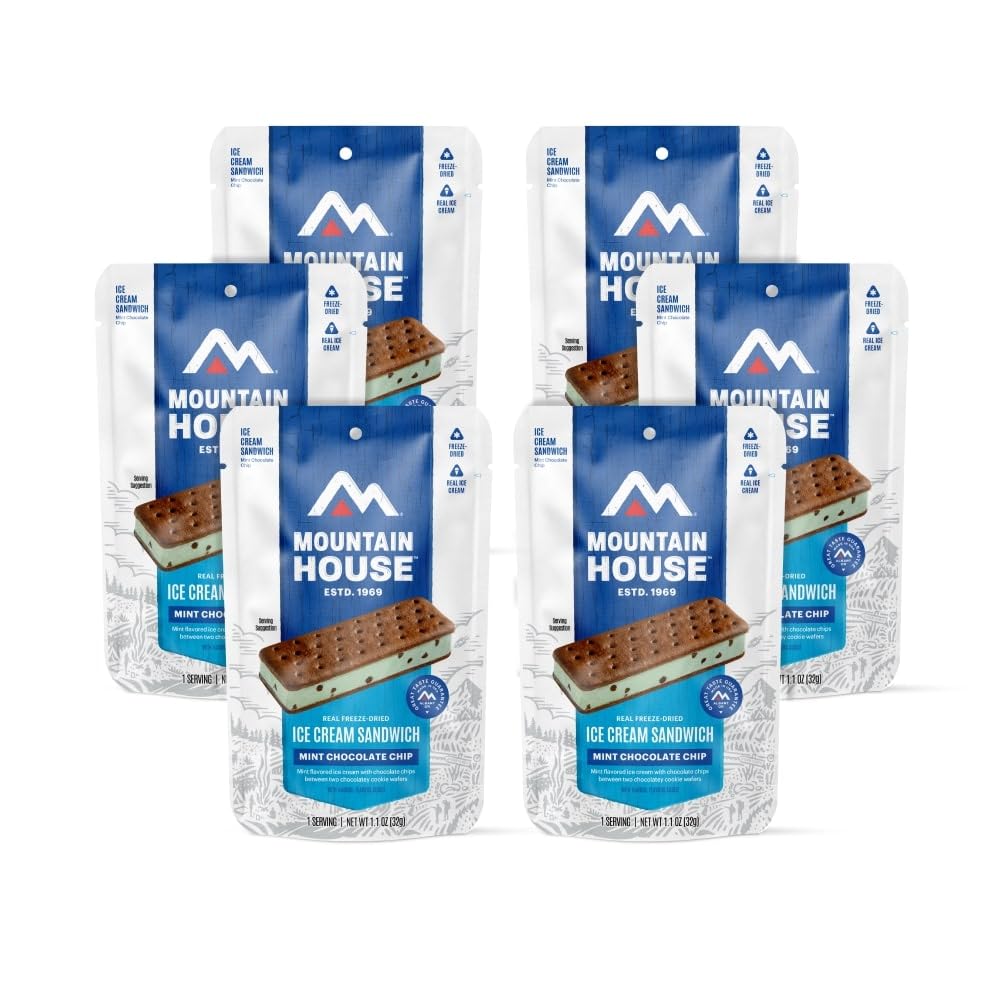
The joy of this pick is the sheer novelty: a mint ice cream with chocolate chips between two chocolaty wafers that’s ready to eat straight from the pouch with no preparation and no refrigeration. Because it’s freeze-dried, it won’t drip on your shirt or stick to your fingers, making it the rare dessert you can eat while walking. It’s lighter than a real sandwich too, so you need to nibble it slowly to feel like you’ve actually eaten something.
Each pouch holds one sandwich, and this 6-pack gives you a nice stash for a multi-day trip or a glove-box emergency treat. The taste reactions split down the middle — plenty of owners are delighted, but a few find it’s not worth the space compared to more substantial food for their bug-out bag. It carries a two-year shelf life from the date of manufacture, so it’s a snack for the near term rather than a decades-long staple.
That comparison with the Chicken & Mashed Potato dinner is worth making: this is a treat, not a meal, and the two-year taste window confirms it’s for enjoyment, not storage. One note for those with dietary restrictions — it’s not gluten-free or dairy-free, so it’s a splurge for the general crowd rather than a safe pick for everyone.
A fun splurge: The freeze-dried texture keeps the mess away, and the novelty of eating “ice cream” on a ridgeline is genuinely delightful for kids and adults alike.
Know the limits: With a two-year shelf life and no gluten-free option, it’s a treat for the next trip, not an emergency supply.
Grab this if: You want a mess-free dessert that doubles as a conversation piece at camp and vanishes without any cleanup.
skip it if: You’re counting every ounce for a serious ultralight push or need a snack everyone at camp can eat.
4. GOOD TO-GO Weekender 3-Pack

Handcrafted meals from real cooks that bring restaurant-level Thai and Mexican flavors to the backcountry.
What sets GOOD TO-GO apart is the philosophy: these are handcrafted by real cooks, not food scientists, and dehydrated rather than freeze-dried. The brand argues dehydration retains the original texture and nutrients that freeze-drying can lose — and the flavors back that up. The Thai Curry, in particular, gets effusive praise for hitting the spot at the end of a long day in the backcountry, with a generous hand on the spices.
This Weekender 3-Pack gives you two entrees and one breakfast, covering a full day of meals on the trail. They’re gluten-free, low in sodium, and made with no preservatives, all produced in Kittery, Maine. The minimum 2-year shelf life makes them a solid middle ground between a fresh-purchase breakfast like the Wild Zora and a long-storage dinner like the Mountain House.
The honest caveat is value — a few owners find the price hard to swallow, especially if they’re used to cheaper commodity pouches. But the quality ingredients and the absence of additives win over most who try them, with descriptions like “my favorite camping meals” and “so tasty” showing up repeatedly. If you want to feel like you’re eating a real meal instead of ration food, this is the pack.
Real chef energy: The spice-forward Thai Curry is the standout, and the dehydrated process keeps the vegetables from turning to mush.
Cost reality: This is a premium flavor experience, and the price reflects it — treat it as a splurge for a weekend, not a budget bulk buy.
Choose this for: A weekend trip where the meal is part of the adventure and you want something closer to a restaurant dish than a ration pouch.
Pass on it if: You’re feeding a large group on a budget and need the most food for the least weight and cost.
5. Meat Shredz Premium Dried Pulled Pork
The tender, high-protein meat that turns instant ramen into a real dinner in seconds.
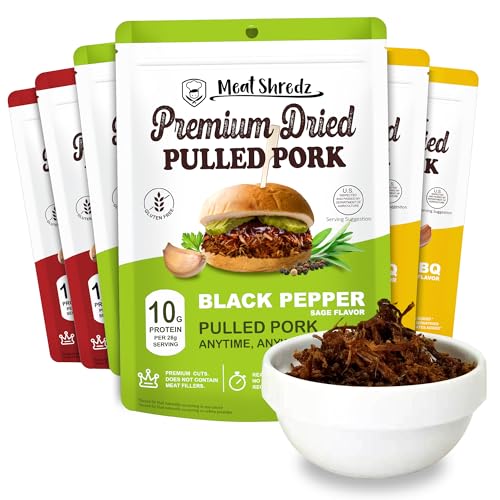
This is a protein-packed topping, not a full meal. The 6-pack includes 2x Black Pepper Sage, 2x Carolina BBQ, and 2x Sriracha pouches. Each 2.2-ounce resealable package adds real pulled pork texture to ramen, soup, salad, eggs, or a cold-water soak for a trail sandwich.
It’s not your typical jerky. The slow-cooked cuts are described as the most tender jerky on the market, with none of the jaw-paining chew that puts people off traditional jerky. It’s gluten-free, contains no MSG or preservatives, and lasts up to a year, which makes it a smart addition to a kayak or canoe trip where refrigeration isn’t an option. Backpacker Magazine even named it an “Essential Backpacking Food.”
The texture does split opinions — while most call it tender and flavorful, a few describe it as odd. And it’s an expensive way to get your protein if you’re using it every day; one owner notes that a half a pack is plenty when you’re using it for flavor, which stretches the value. The sweet-tangy mustard BBQ and the Sriracha get the most love, with the Sriracha showing up as a favorite for spicing up trail dinners.
What It’s Great At
- Tender pulled pork texture that rehydrates in seconds with any moisture
- Three flavor variety means you won’t get bored on a long trip
- High protein, low sugar, gluten-free with no preservatives
- Resealable 2.2-ounce packs are ultralight and packable
What To Know
- Texture gets mixed reviews, with a few owners finding it unusual
- Pricey if you’re using it daily rather than as a flavor booster
- One-year shelf life means it’s for trips, not decades of storage
Best for: Adding serious protein and flavor to otherwise boring trail meals — the Sriracha version is the one owners keep reordering.
Not for: Anyone who expects a complete meal in a pouch rather than a versatile meat topping.
6. Greenbelly Backpacking Meals

The stoveless meal bar that delivers a full 650 calories without a pot, a stove, or a single dish to wash.
The defining stat here is the calorie density. Each pouch holds two big, fluffy meal bars that together pack a whopping 650 calories — roughly three times the nutrition of a typical 200-calorie snack bar. That makes it the standout choice for ultralight hikers who want to ditch the stove entirely and still get real fuel. Owners describe the texture as “like a cereal bar on steroids,” soft and dense rather than brick-like.
The portability is the thing everyone raves about. It’s lightweight, survives heat without melting — one owner carried it through the Amazon Jungle Ultra — and the zip-seal bags double as trash storage so you pack out your wrappers cleanly. Bars are handmade by a gourmet culinary chef, usually within a week of shipping, which keeps them fresher than most shelf-baked options. They’re gluten-free and mostly vegan.
The catch is they’re dry. You’ll want water on hand to wash them down, and the flavor is muted rather than notable — described as “okay not amazing” by more than one owner. The foil packaging also takes some effort to open without a knife. But the energy payoff is real: hikers report staying full for 7 or more hours on a single pouch, which beats most freeze-dried dinners for pure staying power.
Trail-proven fuel: The 650 calories in each pouch kept hikers going through 40-mile desert treks and jungle ultras without any cooking gear.
Bring water: The dry, dense texture demands a sip with every bite, and the flavor is functional rather than gourmet.
Reach for this if: You’re an ultralight hiker who wants to eliminate the stove and pack maximum calories per ounce without any cooking or cleanup.
Look elsewhere if: You crave a hot, savory dinner at camp and don’t mind carrying a stove to get it.
7. Backpacker’s Pantry Granola with Blueberries, Almonds & Milk
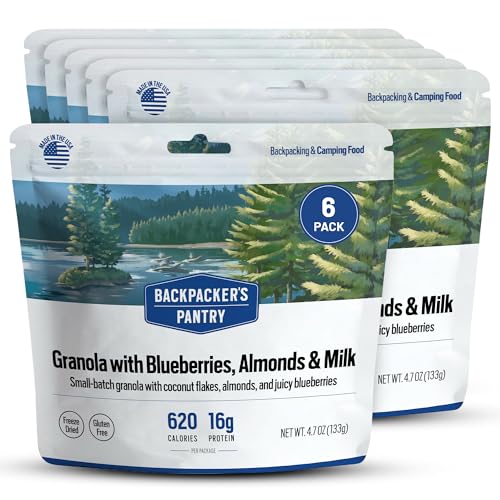
A taste of home that’s ready in minutes, with oats, real butter, and blueberries that survive the trek.
The magic of this breakfast is how close it comes to the real thing. It’s granola with oats, real butter, almonds, blueberries, coconut, and milk — and reviews consistently call it the best version of this recipe among the brands that make it. It works hot or cold, with one owner describing it as “positively yummy” either way. That flexibility makes it a genuine treat on a cold, wet morning where you want something warm, or a quick summer breakfast where you’d rather not fire up the stove.
The 6-pack gives you a full week of trail breakfasts, and each serving delivers 16 grams of protein to keep you moving through the morning. It’s lightweight, shelf-stable, and needs no prep beyond adding water — the brand’s “no preparation necessary” claim holds up. It’s also a smart emergency food supply, since it stores easily and needs nothing but water to become a filling meal.
Compared to the Wild Zora breakfast above, this one is more of a traditional granola experience with real butter and milk, while the Zora leans paleo with nuts and berries and no added sugar. The trade-off is cost — it’s not cheap, though owners note it’s in line with other premium options at the same price point. The texture and portion size (one bag feeds two people) are consistently praised.
Kitchen taste, trail weight: The real butter and milk make this taste like actual granola, and the 16g of protein makes it a legit breakfast rather than a snack.
The cost factor: It’s a premium-priced breakfast, but owners feel the flavor justifies it compared to other dried granolas.
Pick this for: Anyone who wants a genuinely delicious, protein-rich camp breakfast that works hot or cold and feeds two people per pouch.
Think twice if: You’re strictly avoiding dairy or want a no-added-sugar paleo-style morning bowl instead.
8. Harmony House Dehydrated Vegetable Sampler
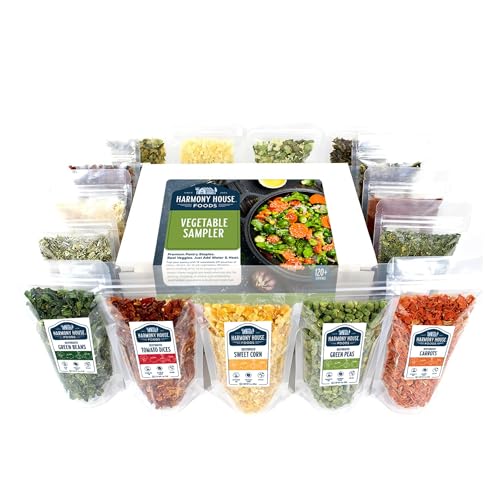
Fifteen separate vegetable pouches that turn any trail meal into a colorful, nutritious feast.
This is the build-your-own-meal approach, and it’s a clever one. Instead of a single pre-made pouch, you get 15 resealable zip pouches covering broccoli, cabbage, carrots, celery, corn, green beans, jalapenos, leeks, onions, peas, bell peppers, potatoes, spinach, and tomatoes. You mix and match to boost whatever you’re already cooking — ramen, rice, soups, or stews — and the whole lot rehydrates in 10-15 minutes of soaking or simmering.
The numbers tell the value story: the entire sampler yields 40 total cups (10 quarts) when rehydrated, which is a lot of meals from one purchase. Owners call it a “rainbow in a jar” for how it adds color and flavor to plain rice. The variety is the big draw, with one family noting how each member can pick their own favorite vegetables. Everything is non-GMO, gluten-free, and kosher OU.
Trail notes are specific: carrots rehydrate slowly, so soak them longer, and jalapenos are extremely spicy because they include seeds — use a teaspoon max unless you want a kick. The tomato powder is a favorite for instant sauce. It’s edible dry too, so it works as a snack on a long day.
Custom trail nutrition: You’re not locked into one recipe — this sampler lets you build endless combinations and add real veggies to any meal you’re already carrying.
Watch the spice: The jalapenos are genuinely hot and the carrots need extra time, so plan your rehydration and seasoning around those two.
Best for: Campers and hikers who cook from scratch on the trail and want a lightweight, versatile vegetable pantry that lasts for years in the cupboard.
Not ideal for: Anyone who wants grab-and-go complete meals with zero cooking or ingredient decisions.
9. The Backpacking Kit by Harmony House Foods
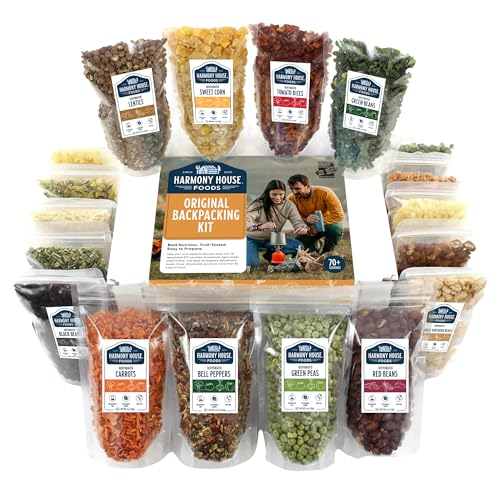
An award-winning 18-pouch kit that feeds a whole trip with over 70 servings of veggies, beans, and lentils.
For long trips and serious meal planning, this kit is the heavy hitter. The 18 pouches of air-dried vegetables, beans, and lentils yield over 70 servings in total, which is enough to cover breakfasts and dinners for two people across a multi-night trek. Owners describe using it as a base and mixing in flavors like Mexican, Italian, Creole, and Indian to keep every meal different. Backpacker Magazine named it an Editor’s Choice winner for overall excellence.
The weight math is the real draw: the whole kit weighs only 4.5 pounds and replaces a lot of individual pouches, which saves both money and pack space. Ingredients are non-GMO, gluten-free, kosher OU, and free from pesticides and additives, with everything gently air-dried to keep nutrients intact. You just add water, cook, and season to taste — no prep work on the ingredients.
The honest trade-off is that this is a DIY kit, not a ready-made meal. You’ll be doing your own seasoning, and some vegetables need extra rehydration time — the potatoes specifically were called out as needing additional cooking to get the best texture. The value argument is strong though: owners say it beats buying pre-made individual packets, and the versatility means you won’t get bored eating the same thing every night.
Why It Wins For Big Trips
- Over 70 servings from a single 4.5-pound kit — exceptional value per meal
- 18 pouches of variety let you mix endless flavor combinations
- Clean, single-ingredient bags with no chemicals or additives
- Editor’s Choice winner from Backpacker Magazine
What To Plan Around
- Requires your own seasoning and creativity to make it notable
- Some items like potatoes need extra rehydration time
- It’s an ingredient kit, not a pour-and-eat meal
Grab this for: Multi-night trips where you want maximum variety and value from a single lightweight kit you can split across the whole crew.
pass on it if: You want zero cooking decisions and prefer opening one pouch that’s already a complete seasoned meal.
Understanding the Specs
Calories per ounce
This is the number that decides how much fuel you get for the weight you carry. A meal like the Greenbelly bar hits 650 calories in a lightweight pouch, which means more usable energy per pound than a heavier option with fewer calories. When you’re choosing between dinners, compare calorie density rather than bag size — it directly affects how far you can hike before needing to eat again.
Servings per pouch
A “serving” is a flexible word. The Mountain House dinner lists two servings in one 4.48-ounce pouch, which works for one hungry hiker or two people splitting a lighter meal. The Backpacking Kit, by contrast, stretches its 18 pouches into over 70 servings because each pouch is an ingredient you add to other food. Match the serving math to your appetite and group size before you buy.
Shelf life
This tells you whether a pouch belongs in your emergency kit or your next-weekend trip pack. Mountain House backs its dinners with a 30-Year Taste Guarantee, making them ideal for long-term storage. The Mountain House ice cream carries a two-year window, and Wild Zora’s breakfast is good for only 6-9 months — so always check the date before you decide where to store a purchase.
Freeze-dried vs. dehydrated
These two processes change the final texture. Freeze-drying preserves the original crunch and shape, so chicken and fruit come back closer to fresh. Dehydration is a slower process that brands like GOOD TO-GO argue retains more natural texture and nutrients. Both are lightweight and shelf-stable, so the best choice is whichever taste and mouthfeel you prefer on the trail.
FAQ
How much backpacking food should I pack per day?
What is the difference between freeze-dried and dehydrated backpacking food?
How long does backpacking food last in storage?
Can I eat backpacking food without cooking it?
Is gluten-free backpacking food easy to find?
What is the best backpacking food for breakfast?
How do I add protein to my backpacking meals?
Is it cheaper to buy backpacking food in bulk?
Final Thoughts: The Verdict
Across the board, the backpack food winner is the Mountain House Chicken & Mashed Potato because it combines the best flavor, easy two-serving prep, and a 30-Year Taste Guarantee that suits both trips and emergency storage. If you want to go stoveless and boost calories per ounce, grab the Greenbelly Backpacking Meals. And for long trips on a budget, the Harmony House Backpacking Kit is the one to reach for — it feeds a whole crew with over 70 servings from a single lightweight kit.
How We Picked
We do not accept paid placement. Every pick is matched to a real buyer and a real use-case; we do not hands-on test units.
Sources & Methodology
Specifications: manufacturer listings and product documentation. Review insights: verified customer reviews, as of August 2026. Pricing: not shown on this page (it changes often); check the current price via the retailer link.
As an Amazon Associate, Gadgets Feed earns from qualifying purchases. This does not affect which products we feature.