
Our readers keep the lights on and my morning glass full of iced black tea. As an Amazon Associate, I earn from qualifying purchases.
Specs are compiled from manufacturer listings and verified buyer reviews and can change over time — please confirm the key details on the product page before buying.
If you have hallux rigidus, the pain comes from your big toe joint bending too much with every step you take. A carbon fiber insole solves this by being a stiff plate that stops that bend, letting you walk, hike, and stand with far less discomfort. This guide breaks down the best carbon fiber insoles for hallux rigidus, focusing on the stiffness, thickness, and fit that actually make a difference.
I’m Min — the founder and writer behind Gadgets Feed. This guide is built by comparing the manufacturers’ published specifications and the patterns across verified customer reviews, so you get each pick’s real strengths and trade-offs instead of marketing spin.
The right plate turns a painful morning walk into a comfortable one, so here are the carbon fiber insoles for hallux rigidus that owners say deliver on that promise.
Our Picks at a Glance


How To Choose The Best Carbon Fiber Insoles For Hallux Rigidus
Every carbon fiber insole here does the same core job — it acts like a splint to stop your big toe from bending upward. But the differences in thickness, whether you get one or two, and how you fit them decide whether it works brilliantly or ends up in a drawer.
Thickness and Stiffness Trade-Offs
A thicker plate like the 1.6mm option gives you maximum rigidity, which is great for severe stiffness but takes up more room in your shoe. Thinner plates at 1.2mm to 1.3mm are easier to slide under your existing insole and are less likely to crowd your toe box, but some owners find them slightly flimsier. You want the stiffest plate that still fits comfortably inside your current footwear.
Fit: Measuring Is Non-Negotiable
Almost every manufacturer tells you to remove the insole from your shoe and measure it first. The carbon plate should be about ¼ to ½ inch shorter than that insole, because the stiff material won’t bend around the curve of your shoe. If you’re between sizes, round down to the smaller size — a plate that’s too long can dig into your toes.
Pair or Single Piece
Some insoles are sold as one piece and some as a pair. A single piece works if you only need support on one foot, but a pair prevents imbalances if your other foot might benefit too. If you’re buying a single, remember you might want a matching one in the other shoe to keep your gait balanced.
Quick Comparison
| Model | Best For | Thickness | Comes As | Weight | Amazon |
|---|---|---|---|---|---|
| Morton’s Extension Orthotic★ Best Overall | Trusted podiatrist pick | Thin & durable | 1 Pair | 2.89 oz | Amazon |
| FAKILO Carbon Fiber InsoleBest Value Pair | Recovery after injury | 1.3mm | 1 Pair | 3.53 oz | Amazon |
| CN Carbon Fiber InsoleMatte Finish Pick | Matte finish value | 1.2mm | 1 Pair | 3.2 oz | Amazon |
| ARRIS Morton’s Extension | Aerospace-grade rigidity | 1.5mm | 1 Piece | 1.45 oz | Amazon |
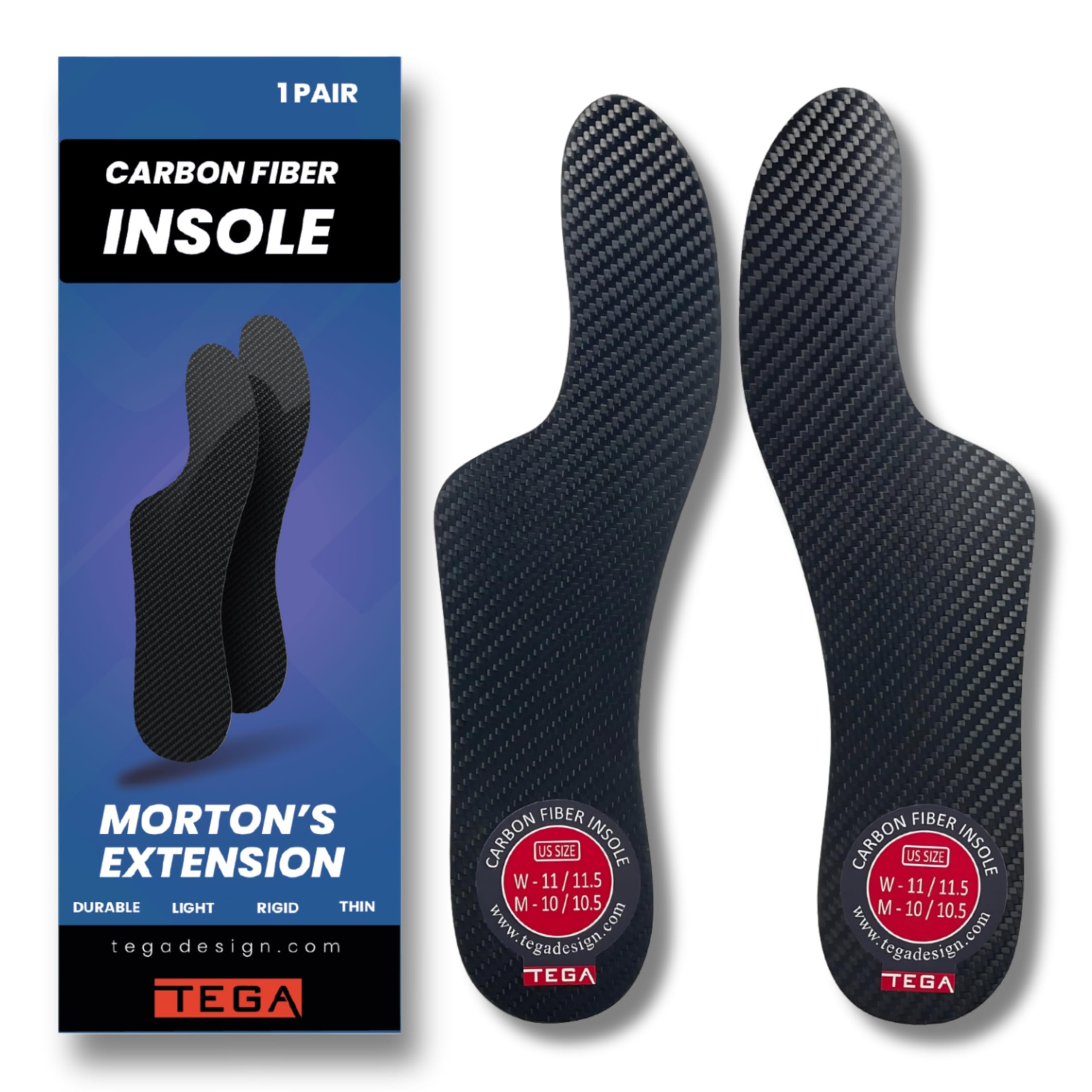
| TEGA Carbon Fiber Insole | European build quality | 1.3mm | 1 Piece | 2.08 oz | Amazon |
| Erismet Carbon Fiber Insole | High review volume | 1.6mm | 1 Piece | 1.76 oz | Amazon |
| MRTHN Morton’s Extension | Balance for both feet | Rigid footplate | 1 Pair | 3.53 oz | Amazon |
| PowerStep Morton’s Extension | Arch support plus plate | Full-length plate | 2 Insoles | — | Amazon |
In‑Depth Reviews
1. Morton’s Extension Orthotic, Carbon Fiber Rigid Insole
Our pick — 4.5★ from 400+ verified ratings; the strongest balance of quality and price.
The podiatrist-recommended pair that marries serious stiffness with a genuinely thin profile.
What wins people over here is the foot support — it’s the thing owners mention most, and it makes sense why. The design limits big toe joint motion to reduce pain from Hallux Rigidus, Hallux Limitus, and Turf Toe, and it’s built from 100% genuine 3K carbon fiber so it stays thin, lightweight, and extremely durable. At 2.89 ounces for the pair, it’s noticeably lighter than the FAKILO option, which cuts down on that heavy feeling in your shoe.
You get immediate relief, as one buyer reports the insoles “have made it easier to walk for long distances without toe pain.” They slide under the regular padding of a New Balance shoe, and the stiffness feels professional-grade. The honest catch: because it’s a flat, rigid plate, it adds a little height and can crowd the toe box if you have bone spurs, and running may still cause some pressure.
Buyers report it costs a fraction of custom orthotics yet delivers a similar effect, and the 3-year warranty adds confidence. A few found the fit tricky — it has no half sizes, so it slides inside a 10.5 shoe and requires precise alignment to sit correctly.
What Owners Rave About
- Strong foot support is the top praised feature, with over 100 mentions
- Thin build slides under existing insole padding easily
- 3-year warranty included for confidence
The Fit Reality
- No half sizes, so precise alignment is required
- Adds slight height, which can crowd a tight toe box
- May not fully eliminate pressure during running
Reach for this if: you want a podiatrist-recommended pair that balances rigidity with a thin profile for daily wear and sports.
Look elsewhere if: your shoe has a narrow toe box or you have bone spurs that make extra height painful.
2. FAKILO Carbon Fiber Insoles
A recovery-focused pair that keeps your foot flat to reduce metatarsal pressure after injuries.
This one speeds up recovery after injuries or surgery by keeping your foot flat, so it suits builders, athletes, and anyone returning from foot trauma. At 1.3mm thick, it matches the TEGA option but is slightly thicker than the 1.2mm CN Fiber insole, and it won’t reduce your shoe’s inner space. The pair weighs 3.53 ounces, which is heavier than the Morton’s Extension at 2.89 ounces.
The functionality is what owners praise most here, with one person noting it prevents toe bending after a toe amputation and restores balance when biking and riding. Another owner found it cured their bursitis heel pain, praising its very stiff, minimal-flex design. That stiffness is exactly what hallux rigidus needs, but it comes with a caveat — it makes shoes feel tighter, so some owners suggest going up half a size.
Quality is the second most-mentioned positive, and the thin, durable build holds up well. The honest catch: one buyer had a painful experience, saying “After putting them in my Hoka running shoes and walking a few miles my feet killed me!!!” That stiff plate needs an adjustment period, and if your shoes are narrow, you might need to size up or ease into wearing them.
Best for recovery: This is the pick for post-injury or post-surgery support where keeping the foot flat matters most.
The adjustment caveat: Budget for a break-in period, and consider a half size up if your shoes run snug.
3. CN Carbon Fiber Insole for Turf Toe
The thinnest plate here at 1.2mm, with a smooth matte finish that slides into any shoe.
If you want the slimmest option, this is it — at 1.2mm thick, it’s lighter than the FAKILO’s 1.3mm and the CN Carbon plate, which makes it a good choice if you’re worried about your shoe feeling tight. The pure premium carbon fiber is durable, rigid, thin, and corrosion-free, with a perfect matte surface that won’t look out of place under a clear insole. It weighs 3.2 ounces for the pair.
One owner reported it “cured second-toe capsulitis pain instantly” when placed under the insole of a New Balance shoe. Another simply put it: “Excellent no more foot & toe pain.” The stiffness gets mixed feedback though — some find it perfectly rigid, while one owner stacked two and still found it “too flimsy for really supporting my foot.” That tells you this thinner plate is best for mild to moderate stiffness, not severe cases.
One unique quirk owners flag is that the carbon fibers can trigger airport metal detectors, so you’ll need to remove them before security. Also, the manufacturer recommends the insert be ¼ to ½ inch shorter than your removable insole, so measure carefully. For most people, this is a comfortable, effective daily option, especially in roomy sneakers or hiking boots.
Thinnest comfort: This suits mild hallux rigidus where you want support without a bulky feel.
Severe cases note: If you need maximum rigidity, a thicker plate like the 1.6mm option will serve you better.
4. ARRIS Morton’s Extension Carbon Fiber Insole
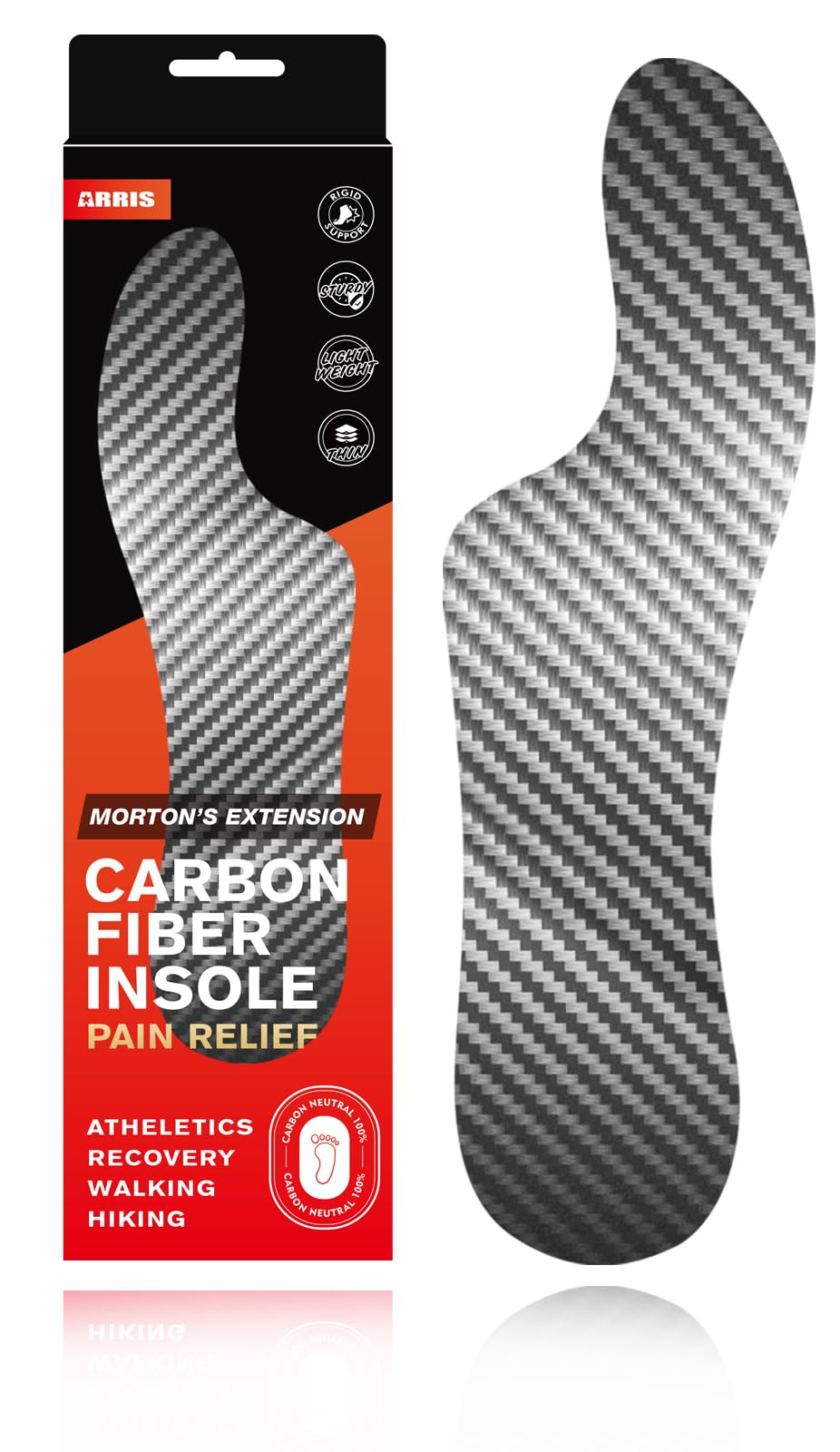
A premium single-piece plate using aerospace-grade carbon fiber for serious forefoot stability.
At 1.5mm thick, this sits between the thinner value options and the thickest 1.6mm plate, and it’s built from aerospace-grade carbon fiber weave to create the strongest while lightest footplate. At just 1.45 ounces, it’s remarkably light for its stiffness, and it’s reversible so one piece fits either foot. The angle here is “minimized bending with tune stability,” which is exactly the language of hallux rigidus support.
Owners praise the smooth carbon finish and chamfered edges, which prevent rubbing inside work boots. One buyer with a broken toe said it provided “just enough height to let my big toe float in my work boots,” offering support without joint pressure. It also works as a post-op shoe alternative, making it versatile beyond just daily wear.
The catch is that it’s sold as a single piece, not a pair, so you’ll pay more if you need both feet covered. Sizing is also critical, with the manufacturer insisting the plate be ¼ to ½ inch shorter than your removable insole, and one owner suggests ordering a smaller size than you think. Because it’s so rigid, it’s best in athletic shoes with roomy toe boxes rather than dress shoes.
For single-foot support: Ideal if you only need one foot covered or want a rigid plate for a specific injury.
Think twice if: you want a matched pair for both feet — you’ll need to buy two of these.
5. TEGA Carbon Fiber Insole

A European-made plate with a perfect surface finish for those who value craftsmanship.
Made in Europe using 3K twill plain real carbon fiber, this insole is all about finish quality — it has a perfect flat surface finish that feels premium in hand. At 1.3mm thick and 2.08 ounces, it’s a middle-ground thickness that balances rigidity with comfort, and it’s designed to minimize bending and add stability for conditions ranging from Hallux Rigidus to Turf Toe and Morton’s Toe.
Owners who bought it for hallux rigidus report simply being able to walk “without toe pain,” calling it a simple solution. It fits true-to-size for many, and the thin profile means it doesn’t add noticeable bulk. Because it’s sold as one reversible piece, you can flip it to either foot, which is convenient if you only need support on one side.
The trade-off is the classic one for rigid plates: since your foot can’t bend normally, your heel may slip out of the shoe when walking. Tying laces tighter can then hurt your instep, as one owner found. The manufacturer recommends choosing an insole ½ inch shorter than your original, so sizing down is key to minimizing that heel slip. It’s also not for high heels or dress shoes.
For the quality-focused: This suits buyers who want European manufacturing and a flawless carbon finish.
The heel slip note: Pair with shoes that have a snug heel counter, or you’ll feel your foot slide while walking.
6. Erismet Carbon Fiber Insole

The thickest plate at 1.6mm, trusted by orthopedic specialists for severe stiffness.
If you have severe hallux rigidus and need the most rigid support, this 1.6mm thick plate is the one. It’s made of 3K twill pure carbon fiber with no contoured arch, meaning it’s a flat, serious stiffener that raises the level of the big toe and limits range of motion. At 1.76 ounces, it’s remarkably light despite being the thickest option here, and it works as an alternative to a turf toe brace, post-op shoe, or broken toe boot.
Owners with bilateral sesamoiditis and hallux rigidus report significant pain reduction, with one walking over 3 miles or on a treadmill incline of 7.0 with zero pain when paired with a larger shoe and orthotic. Pain relief is the most-cited positive by a wide margin. However, this is also the pick with the most honest mixed feedback — the fit is a recurring negative, with the plate sometimes sliding to the back of the shoe or not lying flat in curved footbeds.
Because it’s so rigid, it demands a shoe with room. Owners recommend wide shoes for toe box space and warn that it may require going up half a size. The flat design can also cause squeaking due to friction against your insole. It’s a powerful tool, but it asks more of your footwear than thinner options do.
For maximum rigidity: This suits severe hallux rigidus where thinner plates just don’t cut it.
The footwear demand: You’ll need wide, roomy shoes, and the plate may slip in curved footbeds.
7. MRTHN Morton’s Extension Carbon Fiber Insole

A pair designed to prevent the imbalances that come from wearing just one plate.
This one is sold as a pair specifically to prevent imbalances caused by using only one carbon fiber insole. If you have hallux rigidus in one foot but want to keep your gait even, having both feet supported is a smart move. The carbon fiber footplate minimizes bending and provides tune stability, reducing pressure between the metatarsal joints and toes.
What owners praise most is the functionality, with one person with hallux limitus saying the pain in their big toe eased noticeably during their daily dog walks. Another found it “instantly creates stability” in wide-toe Altra shoes, which is a great sign for anyone wearing zero-drop or foot-shaped footwear. The rigidity is also highlighted as a positive, providing stability for forefoot issues.
The honest caveat is that these work best in flat shoes. One owner found them “useless in any heeled/curved sole” because the rigid flat insert reduces foot room and causes pain even when sitting. The toe cutout can also be uncomfortable if your insole lacks cushioning. This is a pair for flat-soled sneakers, not for anything with a heel drop.
For balanced support: Pick this if you want both feet covered to avoid gait imbalances.
The flat-shoe limit: Avoid heeled or curved-sole shoes — this plate needs a flat footbed to work.
8. PowerStep Morton’s Extension Carbon Fiber Orthotic

The only pick here that pairs a carbon fiber plate with real arch support and cushioning.
Every other insole on this list is a bare carbon plate, but the PowerStep is a full orthotic — it combines a lightweight carbon fiber stability plate with a contoured flexible arch and a deep heel cradle. That makes it the most complete option if you need both big toe control and arch support. It also has dual-layer cushioning from heel to toe, with top fabric designed to minimize heat, friction, and perspiration.
Pairing this with a wide Brooks Ghost Max 3 eliminated Hallux Limitus pain within 10 days for one owner, who noted “the fact that I can walk it wouldn’t matter” despite a slight squeak. Pain relief is the most-cited positive, with comfort and quality following closely. It’s designed for footwear where the factory insoles can be removed, and it fits Hoka Arahi 8 without cutting.
The trade-off is that it needs a break-in period — it’s firmer than cheap insoles, and you should loosen your laces initially. It’s also the most premium option here, so you’re paying for the extra arch support and cushioning that bare plates don’t offer. One owner with advanced hallux rigidus saw no benefit, so it’s best for mild to moderate cases.
For combined support: Choose this if you need arch support and heel stability alongside big toe control.
Break-in required: Expect a firmer feel at first, and give your feet time to adapt before long walks.
Understanding the Specs
Thickness in Millimeters
The thickness of the carbon plate, measured in millimeters, directly affects how much room it takes up in your shoe. A 1.2mm plate is the thinnest and least noticeable, while a 1.6mm plate offers maximum rigidity but requires more toe box space. Thicker isn’t always better — it’s about finding the stiffest plate that still fits comfortably in your existing footwear without crowding your toes.
Pair vs. Single Piece
Some carbon fiber insoles are sold as a single piece for one foot, while others come as a pair. A single piece is cheaper if you only need support on one side, but a pair prevents the gait imbalance that can happen when one foot has support and the other doesn’t. If you buy a single, consider whether your other foot might benefit from a matching plate to keep your walking pattern even.
FAQ
How tight should a carbon fiber insole fit in my shoe?
Can I use a carbon fiber insole in running shoes?
Will a carbon fiber insole set off airport metal detectors?
How long do carbon fiber insoles last?
Can I wear carbon fiber insoles with dress shoes?
Will a carbon fiber insole help with severe osteoarthritis?
How do I know which size carbon fiber insole to order?
Should I get a single insole or a pair?
Final Thoughts: The Verdict
If you want one dependable pick, the carbon fiber insoles for hallux rigidus winner is the Morton’s Extension Orthotic because it balances serious rigidity with a thin, lightweight profile that owners trust daily. If you want added arch support and cushioning, grab the PowerStep Morton’s Extension. And for a budget-friendly pair that supports recovery, the FAKILO Carbon Fiber Insoles are the ones to reach for.
How We Picked
We do not accept paid placement. Every pick is matched to a real buyer and a real use-case; we do not hands-on test units.
Sources & Methodology
Specifications: manufacturer listings and product documentation. Review insights: verified customer reviews, as of August 2026. Pricing: not shown on this page (it changes often); check the current price via the retailer link.
As an Amazon Associate, Gadgets Feed earns from qualifying purchases. This does not affect which products we feature.