
Our readers keep the lights on and my morning glass full of iced black tea. As an Amazon Associate, I earn from qualifying purchases.
Specs are compiled from manufacturer listings and verified buyer reviews and can change over time — please confirm the key details on the product page before buying.
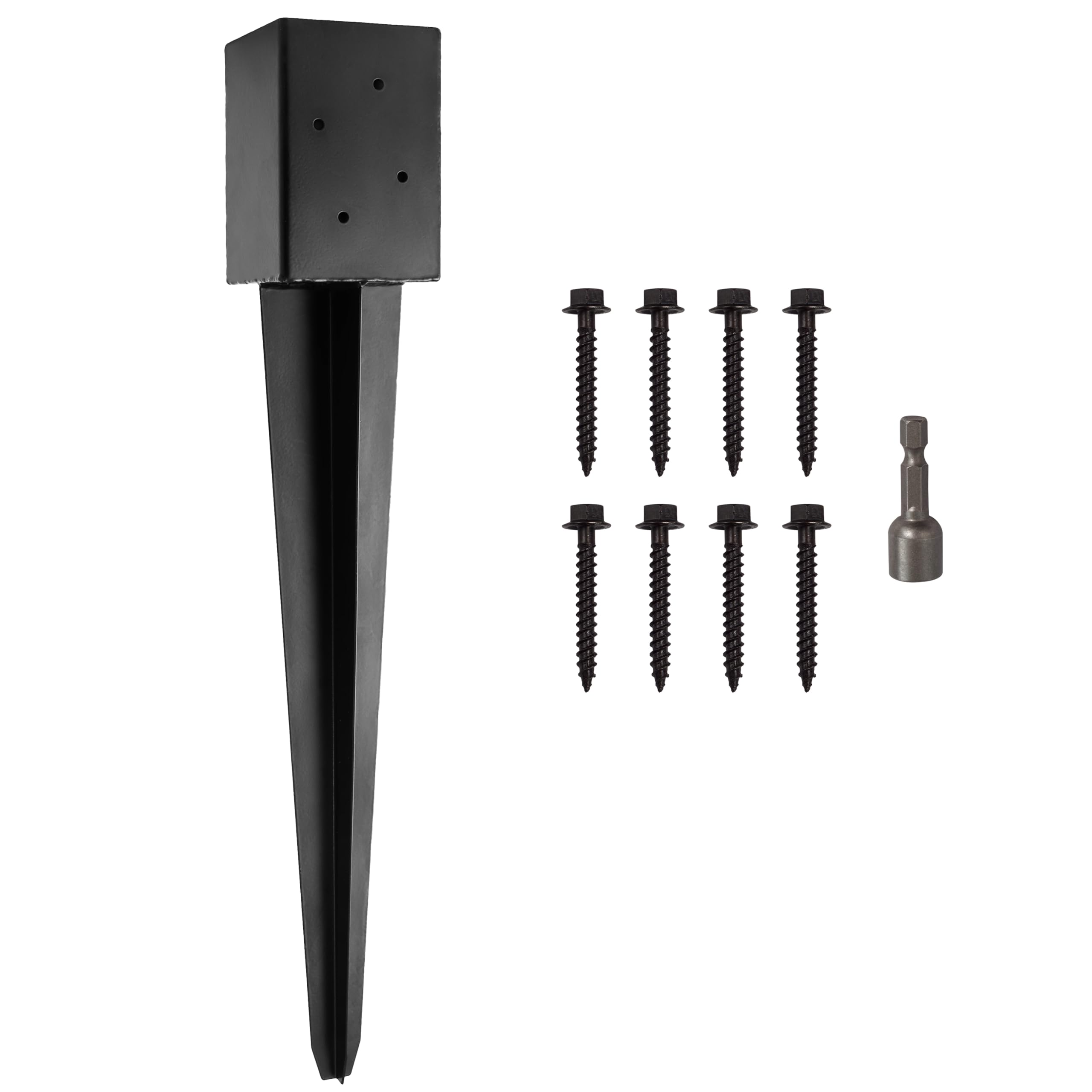
Digging a post hole, hauling bags of concrete, and waiting days for it to cure is the slowest, messiest part of any fence or mailbox project. A 4×4 post spike changes that by giving you a steel socket you drive straight into the ground — you hammer it in, drop in your post, and tighten a few bolts. You want a spike that anchors deep enough for your soil, uses thick steel that won’t bend, and suits the weight of what you’re holding — a mailbox needs far less grip than a 6-foot privacy fence panel that catches wind like a sail. Here are the best options, based on anchor depth, build quality, and what buyers report after a season of weather.
I’m Min — the founder and writer behind Gadgets Feed. This guide is built by comparing the manufacturers’ published specifications and the patterns across verified customer reviews, so you get each pick’s real strengths and trade-offs instead of marketing spin.
Every pick here suits a slightly different job, from single mailbox posts to full fence runs. Keep reading to find the 4×4 post spike that matches your soil type, post height, and how many anchors your project really needs.
Our Picks at a Glance


How To Choose The Best 4×4 Post Spike
Choosing a post spike depends on three things: how deep it anchors into the ground, how thick the steel is, and what you are actually supporting. A mailbox post needs far less grip than a 6-foot-tall privacy fence panel that catches wind like a sail.
Anchor Depth and Ground Contact
The length of the spike determines how much surface area holds your post upright. A longer spike, like a 24-inch or 27-inch model, reaches deeper into stable soil and gives you more resistance against frost heave and sideways wind pressure. Shorter spikes around 16 inches work fine for light jobs like bird feeders or temporary fencing, but they will not hold up the same way in loose or sandy soil.
Steel Gauge and Coating
Steel thickness is the biggest predictor of whether a spike bends while you hammer it in or twists in rocky ground. Thicker steel, measured by a lower gauge number like 12-gauge or 13-gauge, resists deformation better than thinner material. The powder coating matters just as much — it is the barrier that keeps water and soil from rusting the metal and rotting the wood post resting inside it.
Hammer-In vs Screw-In Design
Hammer-in spikes are the classic choice: you place a scrap wood block on top and drive the stake into the soil with a sledgehammer. Screw-in anchors work differently, using a twisting motion with a winding bar to pull themselves into the ground — great for hard clay where a hammer would bounce off. Your soil type and how much physical effort you want to invest should decide which style you buy.
Quick Comparison
| Model | Best For | Spike Length | Steel Material | Pack Size | Amazon |
|---|---|---|---|---|---|
| Sekcen 6 Pcs★ Best Overall | Multi-post fence projects | 24 inches | 13 gauge Alloy Steel | 6 Count | Amazon |
| LADECH 24″Best Value | Budget single-post jobs | 24 inches | Powder-coated Steel | 10 Pieces | Amazon |
| American Ground ScrewTop Performer | Hard clay and relocation | 27 inches | Galvanized Steel | 1 Anchor | Amazon |
| XYADX 24″ Pack of 4 | Deck and railing support | 24 inches | 14 gauge Steel | 4 Count | Amazon |
| Nrspp 16″ Pack of 4 | Mailbox and light posts | 16 inches | Carbon Steel | 4 Count | Amazon |
| Insaga 23″ 2-Pack | Chicken wire fencing | 23 inches | Carbon Steel | 2 Count | Amazon |
| VEVOR 36″ Pack of 4 | Top-heavy tall posts | 36 inches | 1.7mm Steel | 4 Pack | Amazon |
| Simpson Strong-Tie FPBS44 | Premium windy-site posts | 30 inch shaft | 12-gauge Steel | 4 Count | Amazon |
In‑Depth Reviews
1. Sekcen 6 Pcs Fence Post Anchor
Our pick — over 4.5★ from 450+ verified ratings; the strongest balance of quality and price.
The six-pack that turns a weekend fence build into an afternoon.
This is the pick for anyone fencing a real perimeter, because you get six anchors in one box — enough for a decent run of panels without a second order. Each 24-inch stake is built from 13-gauge alloy steel with a powder-coated finish, which is the kind of thickness that shrugs off a sledgehammer and keeps the metal from rusting where it meets wet soil. The package even includes the bolts you need to lock your post in tight.
What wins people over is the installation speed — the labor-saving design is the most-praised feature.. You hammer a scrap block in place of your post, drive the spike down, swap in the real post, and tighten the included bolts. Owners mention the whole thing is a “quick way to put in a post” and that it beats concrete for a privacy fence around a pool. In fact, this anchor comes with a full 24 inches of stake, which is 3 inches longer than the 21-inch ground screw option you will see later — more depth means more resistance to sideways pull.
The recurring gripe is the weld where the stake meets the box, with owners noting it can bend if you are rough with it. Treat the driving step gently and keep the block centered, and you will likely never hit that issue. The fit is built for standard 4×4 lumber, which is actually 3.5″ x 3.5″ once planed, so your post drops in snug rather than rattling.
Why Owners Reach for It
- Six anchors per box means one order covers a full fence section
- 13-gauge steel stands up to hard hammering without deforming
- Bolts included — no extra trip to the hardware store
Where to Be Careful
- The weld joint at the stake-to-box meeting can bend if driven off-center
- Heavy clay soil may need a pilot hole first
Grab these for: a real fence project where you need several posts anchored at once.
Think twice if: you only need one mailbox post — a single anchor would suit you better.
2. LADECH 4×4 Fence Post Anchor
Ten stakes for the price of four elsewhere, and they hold their own in hard soil.
If your project list is long — a fence, a couple of mailbox posts, a garden trellis — the sheer count here is the story. You get ten 24-inch anchors in one box, which is a 67% bigger gap in piece count compared to the six-piece Sekcen set above. That makes it the best per-anchor value in this lineup for anyone who hates making repeat purchases.
Owners consistently report the spike end makes installation dramatically faster. One buyer paired it with quick-drying concrete and said it “reduced the time of the project by hours,” while another mounted a heavy hose reel 4 feet up on the post and found it “less rigid than concrete but sufficient.” The included screws come with pre-drilled pilot holes in the box, so you are not fighting to line up your own drill marks. It works in tough Texas soil without bending or warping, which says a lot about the build quality.
The honest trade-off is durability feedback that goes both ways — some find it solid, others report it can bend if you hit it wrong or try to reuse it. Since the stake meets the ground at 24 inches, you get plenty of depth, but the metal is not the thickest in this list. For light-to-mid duty work, this is a fantastic deal; for a heavy gate that swings daily, you might want thicker steel.
The Volume Play: ten anchors for the cost of a four-pack elsewhere makes this the clear choice for multi-structure yards, so long as you are not hanging a heavyweight gate on it.
Pick this if: you have several posts to set and want maximum count per dollar.
Look elsewhere if: your soil is full of rocks or you need maximum bend resistance.
3. American Ground Screw U-Model
The screw-in anchor that twists past clay where hammers bounce off.
This is the pick for hard, dense soil. Instead of a hammer, you use the included 20-inch winding bar to screw the anchor into the ground, which gives you mechanical advantage that a sledgehammer simply cannot match in clay. At 27 inches from end to end, it is 12% longer than the 24-inch stakes above, and that extra reach buys you stability in loose topsoil. The hot-dipped galvanized finish is a genuine upgrade — it holds up to moisture far better than painted steel.
Customers note this anchor “survived two snowstorms” holding a mailbox, and one called it “ROCK SOLID” after installing two in just a few minutes. The screw design also means you can remove and relocate it later, which is a flexibility no hammer-in stake offers. Five lag bolts are included for a secure post connection, and the 3.5-inch diameter grips soil firmly once seated. It is note the installation can be physically demanding — owners suggest splitting the work over two sessions and using a long 2×4 for extra leverage.
The catch is the included rebar, which several owners found too weak and replaced with a longer piece, and the sharp jagged edges that demand gloves. If your ground is soft and easy, a hammer-in stake is simpler; but for clay, rocky, or frequently relocated posts, this screw anchor is the smarter engineering.
The Relocator’s Edge: no other pick here lets you unscrew and move the anchor later — that flexibility alone justifies the premium for changing layouts.
Reach for this if: your soil is hard clay or you want the option to relocate posts later.
skip it if: you want the simplest possible install — hammer-in stakes are faster in soft ground.
4. XYADX 24-Inch Pack of 4

A scratch-resistant coat that keeps rain and soil off your deck posts.
Deck and railing posts sit low to the ground, which means they are constantly splashed with water. This anchor is built for exactly that job — the 14-gauge steel carries a scratch-resistant powder coating that resists cracking, flaking, and rusting, so the metal stays intact season after season. The 24-inch length gives you solid depth, and the 3.6″ x 3.6″ inner size fits standard 4×4 lumber with a snug grip.
Owners call these “very sturdy and easier than digging post holes and filling with concrete,” and the wind-resistance on fence panels has held up well so far. The quality is the most-discussed strength here, with buyers appreciating how the coating protects the wood post by keeping it out of direct soil contact. Each of the four anchors includes two tightening screws and locking nuts, so you have everything needed in the box.
The biggest recurring complaint is stability during installation — the spikes tend to twist while you hammer them in, and the metal is not the thickest near the bottom, so it can bend if you try to pull the posts out and reuse them. One owner had minor trouble getting the post end into the hole, though that was partly blamed on the wood quality. For a one-time install on a deck or railing, this is a solid, protected choice.
What Holds Up
- Scratch-resistant coating fights rust where posts meet wet ground
- Two screws plus locking nuts per anchor for a firm post grip
- Suitable for fencing, shed supports, pergolas, and signposts
What to Watch
- Spikes can twist during hammering — keep them aligned
- Thinner metal near the base may bend if posts are removed and reused
Choose this for: deck railings and low posts where moisture protection matters most.
Not for: projects where you plan to pull posts out and reposition them repeatedly.
5. Nrspp 4 Pcs 16-Inch Anchor
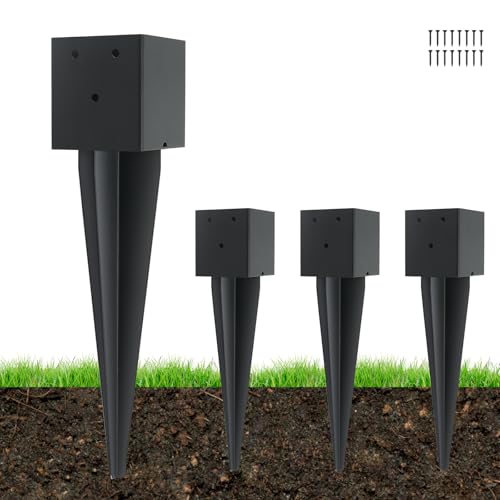
The short-stake specialist that keeps mailboxes and planters off the wet ground.
Not every post needs 24 inches of anchoring depth. For mailboxes, bird feeders, and decorative posts, the extra length is overkill — and this 16-inch anchor is lighter and easier to drive where a long stake would feel like overkill. It is built from carbon steel with a black powder-coated finish that resists corrosion, and the upper chevron design lifts your post up out of the wet soil. That separation is the real trick: keeping wood out of direct ground contact is what slows rot.
Buyers have used these for mailboxes repurposed as flower planters and found them “heavy, stable and durable and super easy to use,” and the double-layered embedded panels mean no assembly is required from the start. The crossover design on the lower panels gives you the grip you need without the digging. A full 32 screws come in the package, so all four anchors can be secured immediately.
Because the stake is shorter, it is best for posts that do not carry heavy wind loads. One buyer used these to hold a 6-foot 4×4 securely, but a top-heavy privacy fence panel would demand more depth. If your posts are tall and catch wind, step up to a 24-inch model; if they are mailbox-height, this saves you effort while doing the job cleanly.
Light-Duty Winner: the shortest stake here, and the right call for anything under about 6 feet tall — beyond that, the depth starts to run short.
Best for: mailbox posts, planters, and signs that need a clean, quick mount.
Not enough for: full-height fence panels that face strong prevailing winds.
6. Insaga 4×4 Post Anchor 2-Pack

A 23-inch bite that keeps chicken wire and light fencing tight for years.
This one earns its place with sturdiness — the most-praised feature. — and owners specifically mention it has not moved or come loose over time. One buyer used it for wire fencing to keep chickens confined, and the posts have stayed put. The 23-inch spike gives you deep anchoring, and the 3.6″ x 3.6″ inner head creates a snug fit around standard 3.5″ x 3.5″ lumber, maximizing ground contact so posts do not shift under wind or animal pressure.
The heavy-duty carbon steel with a black powder-coated finish is built to handle harsh outdoor conditions, and buyers confirm it “does not bend and fits perfect.” Each package includes 12 screws and two post base spikes, so you can install both anchors immediately. The large-diameter head is the standout design choice here — it spreads the load across more soil, which is exactly what keeps fence posts upright when something pushes against them.
The honest limitation: this is a 2-pack, not a 6-pack, so the per-anchor cost is higher if you need many posts. One owner noted the included screws stripped out on a single head, and the lack of drainage holes in the base means water can pool and rot the wood over time. For a couple of sturdy fence or chicken-run posts, this is a quality buy; for a full perimeter, the math favors a bigger pack.
The Strong Points
- Snug 3.6″ inner head prevents post shifting under load
- Reviewers point out zero loosening over time
- Rust-proof coating handles year-round outdoor exposure
The Trade-Offs
- Only two anchors per box — pricier per spike than bulk packs
- No drainage holes mean standing water can reach the wood
Reach for these if: you need two rock-solid posts for fencing or a privacy screen.
Look elsewhere if: you are buying for a long fence run — the 6-pack gives you more for the money.
7. VEVOR Fence Post Anchor 36-Inch

The 36-inch giant built for top-heavy posts that smaller stakes cannot hold.
This is the heaviest anchor in the lineup at 14.6 pounds and a full 36 inches of total height, with a 30-inch nail length buried in the ground. When you are anchoring a tall, top-heavy fence post, that extra depth is the difference between a post that stays put and one that leans after the first storm. The 1.7mm thickened steel is designed to resist deformation, and the black powder finish protects against corrosion from soil and rain while keeping the wood inside from rotting.
Owners are emphatic about the strength. One buyer replaced a flimsy 2-inch steel pole that had been knocked over by a snow plow and reported this setup is “very stable” — if the plow hits it again, the 4×4 can simply be swapped without touching the anchor. An elderly owner found these “easier to install than they look” even for 6-foot top-heavy fence posts. The 3.7-inch inner width fits 3.5″ x 3.5″ square timber, and the set includes all the nuts and screws you need.
The catch is effort and a stability note. The included installation bar could be thicker, and some shoppers say the base can start to twist during installation if the ground is hard. Driving a pilot hole first with a stake is the workaround mentioned most. At 14.6 pounds, this is a serious piece of hardware — the 14.6-pound weight makes it the clear choice for permanent, load-bearing posts..
Maximum Grip: at 36 inches tall with a 30-inch buried spike, nothing else here approaches this anchoring depth — the deepest anchor here for permanent, load-bearing posts..
Choose this for: tall privacy fences, gates, and any post facing serious wind or snow load.
Think twice if: you want the lightest install — this one demands real effort and a pilot hole in hard ground.
8. Simpson Strong-Tie FPBS44 E-Z Spike
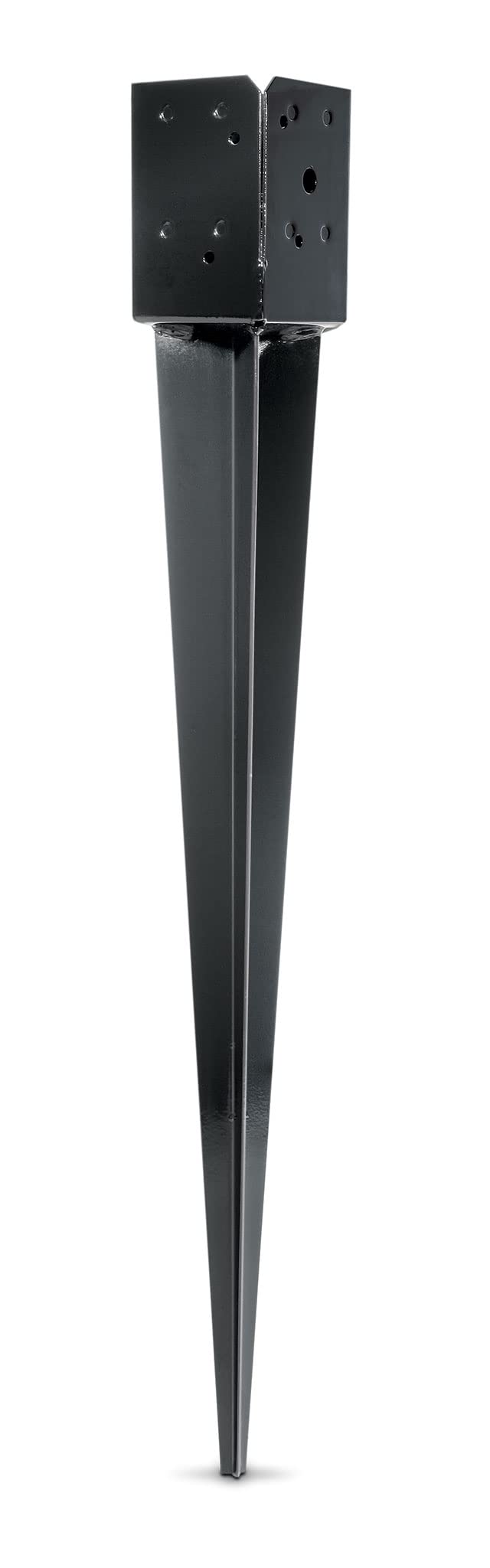
The brand-name heavyweight that laughs at 30-inch shafts and Illinois storms.
Simpson Strong-Tie is a name you see on structural connectors at every lumber yard, and this E-Z Spike carries that reputation into the ground. It is built from 12-gauge steel — the thickest material in this entire lineup — with a black powder-coated finish for a clean look. At 22.8 pounds for the pack of four, the 22.8-pound pack signals heavy-duty construction., and the 30-inch shaft gives you anchoring depth that beats every hammer-in stake here.
Buyers report surviving Illinois storms with no chance of the post being blown over in strong winds. The 30-inch shaft anchors well and fits 3.5″ x 3.5″ posts, and buyers specifically call out how easy post replacement is — after snow plow damage, the old post can be unbolted and a fresh one dropped in without touching the spike. The powder coating is noted as “solid” with no wobble for mailbox use, and the four-pack covers a small fence or multiple single posts.
This is the premium pick, and the trade-off is primarily price per anchor. One owner could not use it with standard 4×4 posts due to compatibility, so measure your lumber before buying. Installation also demands care — keep the tip centered and level while driving, and consider pre-driving a pilot hole in rocky soil. If you want the strongest steel and the most trusted brand name backing your posts, this is the one.
The Premium Case
- Thickest 12-gauge steel resists bending like nothing else here
- 30-inch shaft provides deep, wind-resistant anchoring
- Post swaps are simple — unbolt and replace without re-digging
The Premium Cost
- Highest price per anchor in this list
- Check your lumber fits — compatibility has been mixed for some owners
Best for: buyers who want the thickest steel and a trusted brand for permanent, storm-prone posts.
Not for: budget-driven bulk projects where the 6-pack or 10-pack gives far more coverage per dollar.
Understanding the Specs
Steel Gauge and Thickness
Steel gauge is the number that tells you how thick the metal is — and the lower the number, the thicker the steel. A 12-gauge spike is thicker and more resistant to bending than a 14-gauge one, which matters when you are hammering into hard or rocky soil. Thicker steel also survives accidental hits from a sledgehammer better, so it is worth the small weight penalty if your ground is tough.
Anchor Depth and Post Height
Spike length (measured from the top of the box to the tip) determines how deep your anchor seats in the soil. A 16-inch stake suits mailbox-height posts, while 24-inch and longer models hold taller, wind-catching fences. The general rule of thumb is that taller posts need deeper anchors, but the soil type matters just as much — loose sandy ground needs more depth than dense clay.
FAQ
Will a 4×4 post spike fit my actual lumber?
How long does a 4×4 post spike last in the ground?
Is it better to use concrete or a post spike?
How do I keep the spike from bending while I hammer it in?
Whats the difference between a hammer-in spike and a screw-in anchor?
How deep should the spike go for a mailbox post?
Can a post spike hold a tall privacy fence?
Will the wood post rot faster inside a metal spike?
Final Thoughts: The Verdict
Across the board, the best 4×4 post spike overall is the Sekcen 6-Pack because it pairs a generous six anchors with sturdy 13-gauge steel at a fair price — the crowd favorite with a 4.7-star rating.. If you are on a budget and need maximum count, the LADECH 10-Pack stretches your dollar furthest. And for a single mailbox on hard clay, the American Ground Screw is the smarter engineering choice.
How We Picked
We do not accept paid placement. Every pick is matched to a real buyer and a real use-case; we do not hands-on test units.
Sources & Methodology
Specifications: manufacturer listings and product documentation. Review insights: verified customer reviews, as of August 2026. Pricing: not shown on this page (it changes often); check the current price via the retailer link.
As an Amazon Associate, Gadgets Feed earns from qualifying purchases. This does not affect which products we feature.