
Our readers keep the lights on and my morning glass full of iced black tea. As an Amazon Associate, I earn from qualifying purchases.
Specs are compiled from manufacturer listings and verified buyer reviews and can change over time — please confirm the key details on the product page before buying.
Musty, damp air settles in basements because it has nowhere to go. A window exhaust fan pulls that stale air and humidity out through the window frame, so your space feels fresher. The Allvent 141 CFM leads with a 4.4-star rating from 300+ owners, pairing a spring-loaded backdraft damper with quiet operation.
I’m Min — the founder and writer behind Gadgets Feed. This guide is built by comparing the manufacturers’ published specifications and the patterns across verified customer reviews, so you get each pick’s real strengths and trade-offs instead of marketing spin.
This guide reveals which basement window exhaust fans actually move air and which just spin blades.
Our Picks at a Glance


How To Choose The Best Basement Window Exhaust Fan
Before you buy, you need to match the fan to your window size and the amount of air your basement holds. A fan that fits badly leaks air, and one that is too weak will not clear humidity from a larger room.
Airflow That Matches Your Space
The key spec is CFM — cubic feet per minute — which tells you how much air the fan pushes out. A higher number means faster air exchange. For a small basement bathroom or a single room, a 141 CFM unit can keep up, but for a full basement you want something in the 300 CFM range or higher, like the Fanspex 8-inch at 310 CFM. If you pick a unit that is too weak, you will hear it running but still smell mustiness.
Window Size and Mounting Type
Measure your window opening before you order, because slider and double-hung windows need different mounting approaches. Expandable accordion side panels let a fan stretch to fit a range of widths — the Comfort Zone fits windows from 22-1/4″ to 31-1/4″ wide, while the Vornado uses a modular block system for windows 24″ to 38″ wide. Also check the height: low-profile fans like the Vornado need at least an 8″ tall opening to fit.
Quick Comparison
| Model | Best For | Airflow (CFM) | Power Draw | Noise Level | Amazon |
|---|---|---|---|---|---|
| Allvent 141 CFM★ Best Overall | Quiet, damper-equipped exhaust | 141 cfm | 18W | Under 41 dB | Amazon |
| Nalle 10″ ReversibleBest Reversible | Reversible louvered exhaust | 460 cfm | — | — | Amazon |
| shinic 9″ TwinBest Smart Features | Remote-controlled twin fan | 350 cfm | — | — | Amazon |
| Amazon Basics Twin | Reversible dual-fan cooling | — | 63W | — | Amazon |
| Comfort Zone Twin | High-volume dual action | 272 cfm | — | — | Amazon |
| Fanspex 8″ Shutter | Powerful quiet exhaust | 310 cfm | — | 40 dB | Amazon |
| MEOZRI 12″ Industrial | Heavy-duty high volume | 720 cfm | — | 50 dB | Amazon |
| BEYOND BREEZE 9″ Twin | Budget twin-fan versatility | — | — | — | Amazon |
| Vornado PORTAL | Low-profile premium fit | — | — | — | Amazon |
In‑Depth Reviews
1. Allvent Bathroom Exhaust Fan 141 CFM
Our pick — over 4★ from 300+ verified ratings; the strongest balance of quality and price.
The quiet basement workhorse that stops cold air leaking back in.
This Allvent fan is the pick for a basement window because its spring-loaded check valve closes the duct automatically when airflow stops. That means you get exhaust power without letting winter drafts and outdoor humidity creep back through the vent.
At 18W it sips power, and the noise stays under 41 dB — quiet enough that a home gym owner runs it without annoyance. Buyers report it still works after 18 months, with 141 cfm clearing a small room in minutes.
The trade-off: at 6 inches, its 141 cfm trails the 272 cfm Comfort Zone twin for large open basements.
small baths: you want a discreet, damper-equipped fan for a small basement room or workshop that runs quietly all day.
big rooms: your basement is one big open space — you will want a higher-CFM twin or industrial unit.
2. Nalle 10 Inch Reversible Exhaust Fan
A louvered box that pulls smoke out and cool night air back in.
The Nalle stands out because it is genuinely two-way: it exhausts 460 CFM outward, then a pull of the cord reverses it to intake 380 CFM of fresh air. That makes it brilliant for a basement that doubles as a smoking room or cat area that needs constant air turnover.
Its sleeve bearing motor is rated for 9,000 hours of continuous use. The 55-inch power cord gives you flexibility in where you place it. A basement pet foster owner says it keeps the room fresh.
What it is not: a silent whisperer. Several owners note the louver door rattles when it first turns on from the pressure change, and the higher airflow comes with noticeable noise.
garages: a basement room where you need to push out smoke, odors, or humidity and then pull in fresh air on demand.
bedrooms: noise is your top concern — this moves serious air, and you will hear it.
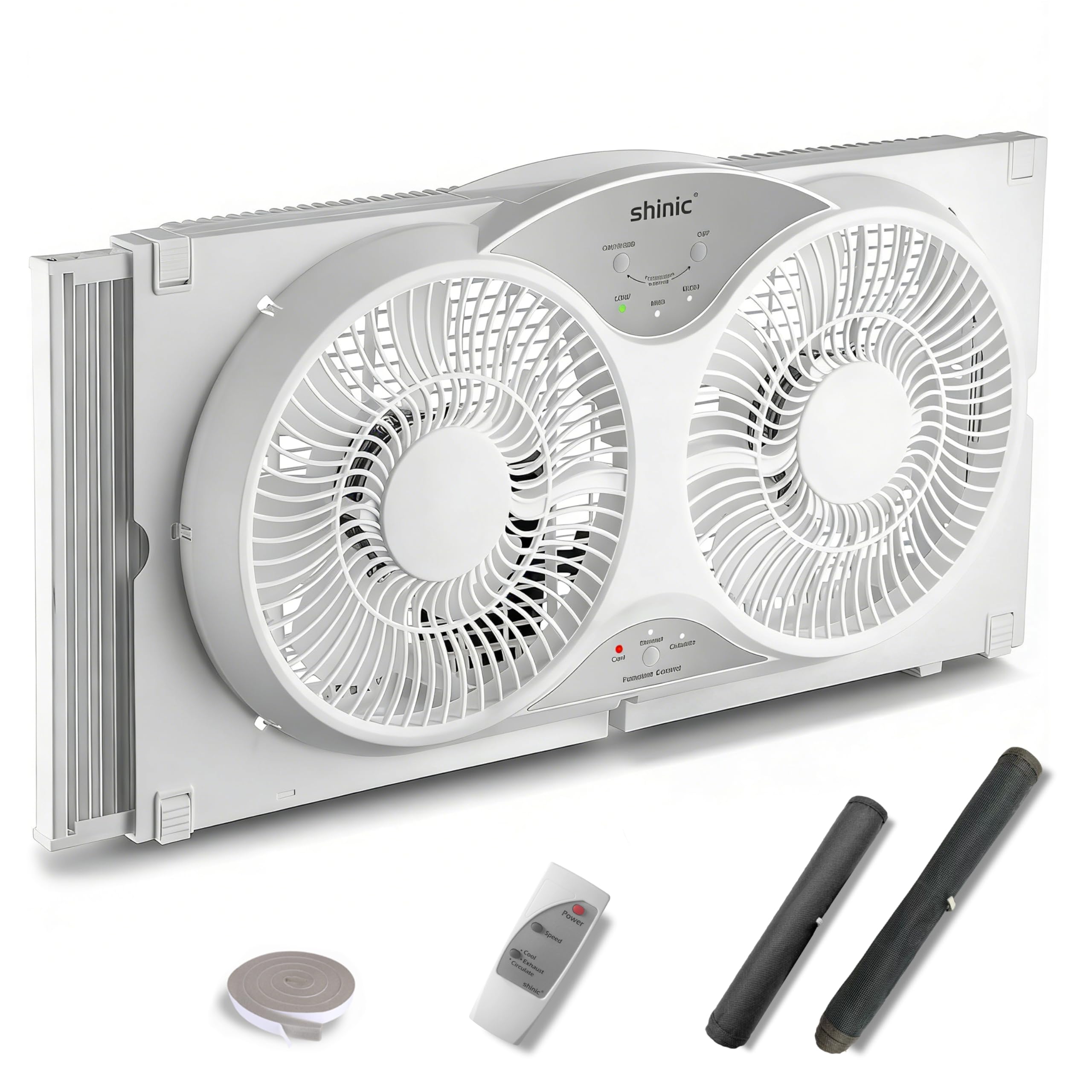
3. shinic 9″ Twin Window Fan with Remote
Twin 9-inch blades with a remote that works from across the room.
The shinic is the easiest twin fan here because the included remote lets you switch between Intake, Exhaust, and Circulate modes from up to 20 feet away. No getting off the couch to flip a switch — you adjust airflow from your seat.
It pushes 350 cfm through twin 9-inch blades, and the expandable panels stretch to fit most windows from 23.5 to 37 inches. The removable front cover and detachable bug screen mean you clean the blades and keep mosquitoes out in one easy step.
Its 4.3-star rating reflects owner praise for quality and airflow. The main caveat is that high speed brings typical fan noise for a 9-inch twin — low speed is the quiet sleeping setting.
easy reach: you want the ease of a remote and the flexibility of intake, exhaust, or circulate modes in one window unit.
rough use: you need heavy-duty 24/7 exhaust duty rather than a comfort-focused twin fan.
4. Fanspex 8″ Shutter Exhaust Fan
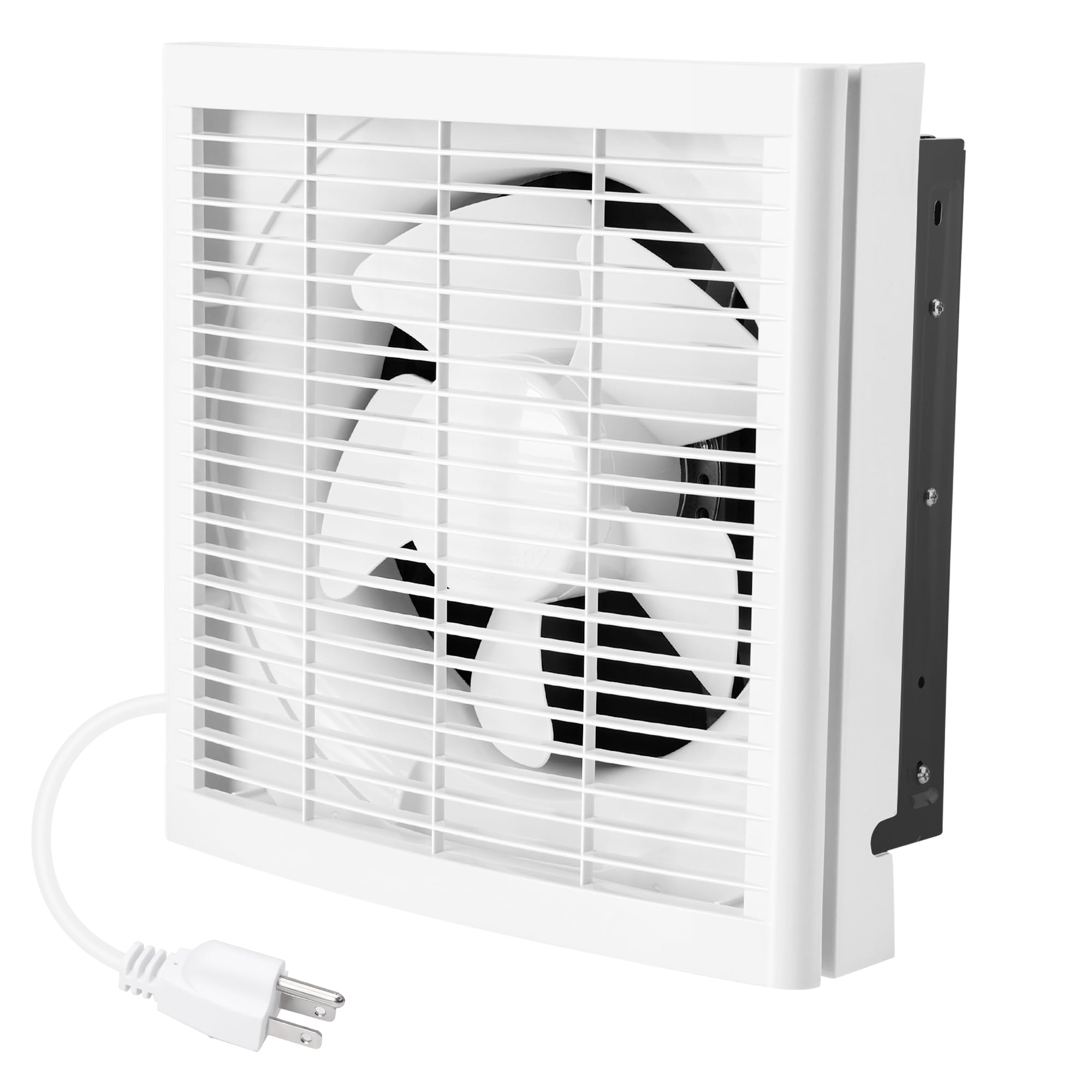
The quiet 8-inch shutter that clears a bathroom or cigar room fast.
The Fanspex delivers 310 CFM (cubic feet per minute, a measure of airflow) through a shutter design that closes when off, so it blocks outside air and pests when not running. Owners praise it most for its low 40 dB noise level — about as loud as a quiet library — and one reviewer notes a basement cigar room runs it nearly 24/7 without complaint. It offers more airflow than the Allvent 141 CFM model, making it a stronger pick for larger spaces.
Its 5-foot power cord makes installation forgiving, and the front panel oil sink disassembles for easy cleaning. A bathroom with no other exhaust found it moves a lot of air without being loud.
The one honest fit note: an occasional unit arrives with excessive plastic or runs noisier than expected, so it is not the most premium-feeling build — but for the price, owners mention it is worth the money.
tight windows: anyone wanting high airflow and low noise from a simple shutter fan that mounts in a window.
open areas: those who want reversible airflow — this is a one-way exhaust only.
5. MEOZRI 12 Inch Window Exhaust Fan

A metal-bodied 720 CFM brute that actually fits a 12-inch slider window.
If airflow is your only priority, the MEOZRI is the strongest unit here at 720 CFM — over twice the output of the 310 CFM Fanspex. Its sturdy metal construction and seven aluminum blades are built for demanding spaces like garages, workshops, and grow tents.
Despite its power, customers note it is extremely quiet with no vibration, and it fits perfectly into a 12-inch slider basement window. The simple knob control lets you adjust speed and then forget about it.
The trade-off is in the details: at 50 dB it is louder than the quiet Fanspex, and a few reviewers point out it gets noisier after a few months, especially at lower speeds. It also does not auto-restart after a power failure.
wide rooms: a large basement or workshop where raw air-moving muscle matters more than whisper-quiet operation.
small spaces: you need a reversible fan or you are sensitive to fan noise over time.
6. Comfort Zone Twin Blade Reversible Window Fan
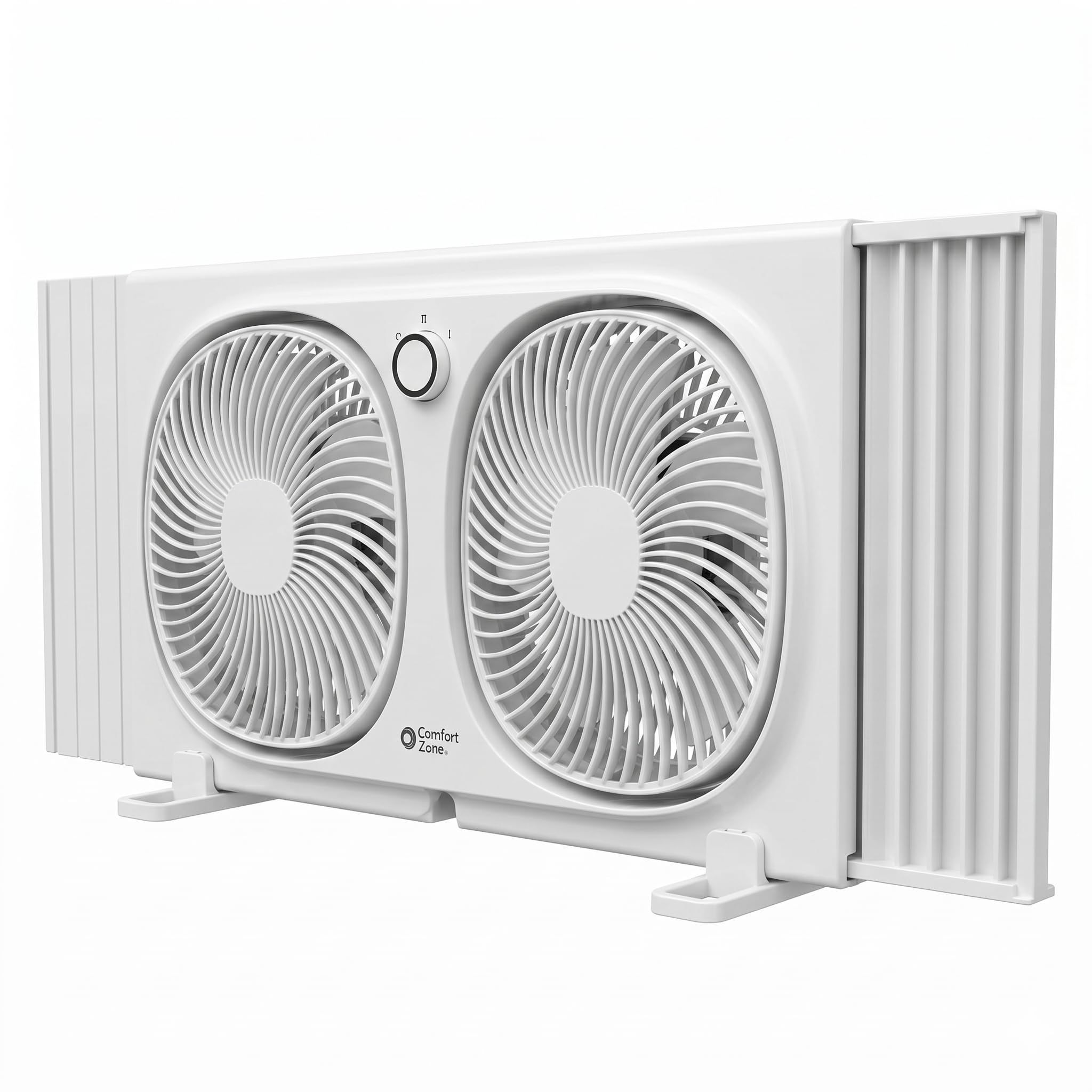
The fan that turns into a tabletop unit and seals out bugs when idle.
The Comfort Zone is the most adaptable pick because its two attachable feet convert it from a window exhaust into a freestanding tabletop fan. The built-in carrying handle makes moving it from a basement window to a desk easy.
Its 272 cfm output doubles the Allvent’s 141 cfm, and the auto-locking accordion expanders stretch to fit windows from 22-1/4″ to 31-1/4″. The custom-fit fabric cover blocks bugs, dust, and hot humid outdoor air when the fan is off.
Owners love the rotating blades that let one fan exhaust while the other intakes. The honest caveat is that while it is a workhorse for many, some find the airflow modest and high setting loud, so treat it as a versatile comfort fan, not a heavy-duty extractor.
cross breeze: you want one fan that works in a window in summer and on a table the rest of the year.
quiet fans: you need maximum exhaust power for a large damp basement — look at the MEOZRI instead.
7. Amazon Basics Twin Head Window Fan

Dual 9-inch reverse fans with independent controls at a bargain price.
The Amazon Basics twin delivers the most control per dollar, with each 9-inch fan independently controlled for speed and direction. That means you can set one to intake and the other to exhaust for balanced cross-ventilation, or reverse both to pull cool air in.
Its copper motor runs at 63W — a 3.5x power gap over the 18W Allvent — giving it stronger pull for pushing basement air out. The expandable panels fit standard windows 25 to 32 inches wide, and its white-noise hum is about half that of a box fan.
The catch is reliability: shoppers say some units stop working after a few months, and the warranty process has been frustrating for some. The plastic build also feels lightweight, so treat it as a great budget comfort fan, not a long-haul workhorse.
cheap fix: an affordable, reversible twin fan that cools a bedroom or small basement room.
long term: you need a fan that will run daily for years — durability is the weak spot here.
8. BEYOND BREEZE 9″ Dual Window Fan
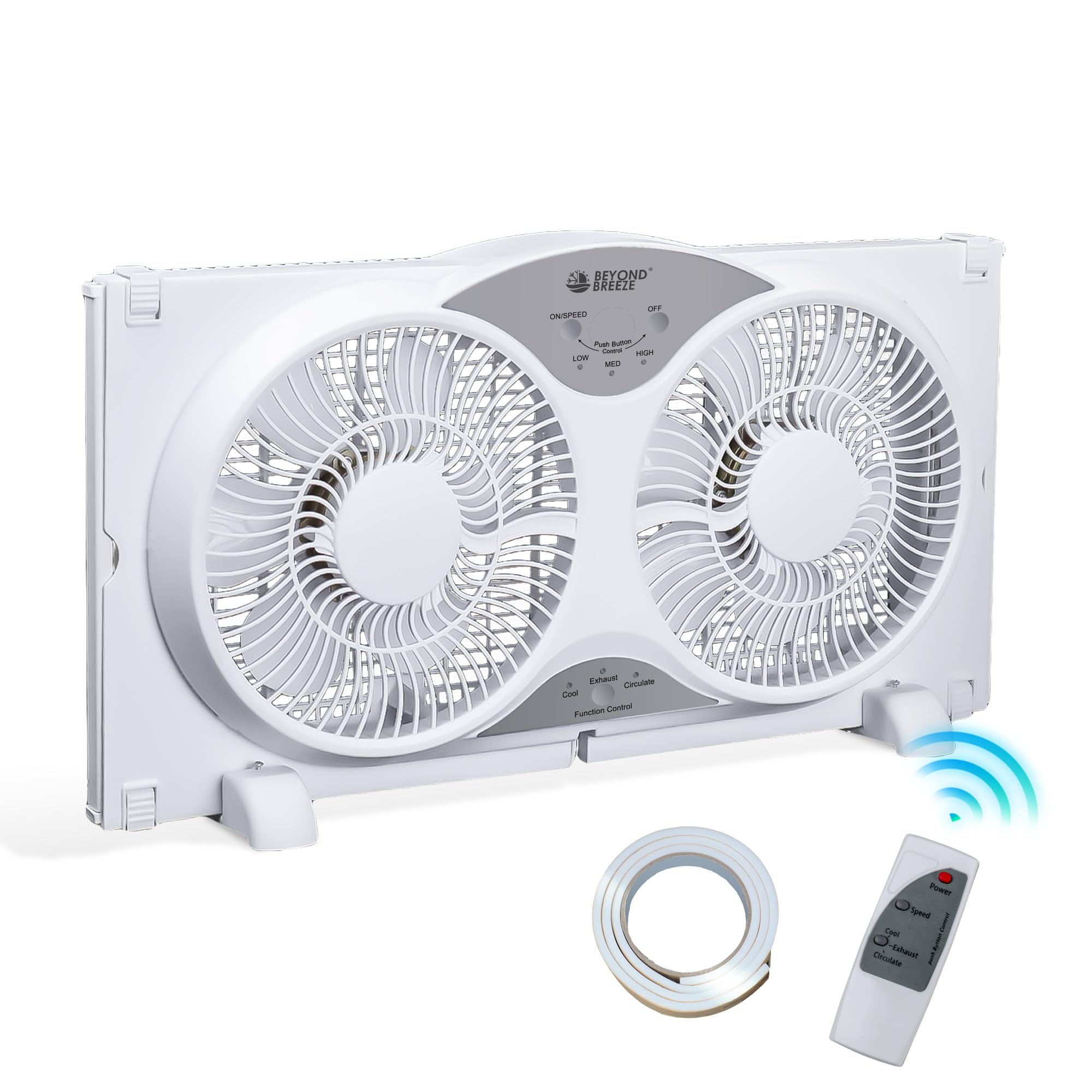
The remote-controlled twin fan that pulls evening air in fast.
The BEYOND BREEZE is the budget-minded sibling to the shinic, offering a remote control and three speeds at a lower entry point. Its twin 9-inch blades with independent reversible motors let you pick COOL, EXHAUST, or CIRCULATE modes.
The expandable panels adjust from 23-1/2″ to 37″, and two removable legs turn it into a table or floor fan with a built-in carrying handle. Desert-climate buyers report 3+ years of durability and fast cooling on high.
The honest caveat: build quality is where it saves money. Some owners mention blades breaking after a few weeks of use or a fan arriving with one side not working, so inspect it early and use the responsive customer service if needed.
window use: cool-night air pulling on a budget, especially if you want a remote without paying a premium.
floor use: constant heavy-duty exhaust — the plastic build favors light, occasional use.
9. Vornado PORTAL Window Fan

The slim, quiet 6.9-pound fan that fits narrow old basement windows.
The Vornado PORTAL is the premium pick for a specific problem: narrow or older windows where bulkier twin fans simply will not fit. Its low-profile design measures just 6.58 inches tall and fits windows 24″ to 38″ wide using a modular block system for a snug seal.
Owners consistently praise its quiet operation and slim appearance — several note it is quieter than a box fan and fits old 21-inch narrow windows that other fans cannot handle. The reversible design flips between pulling cool air in and exhausting stale air.
The honest trade-off is airflow: while it performs well as a home exhaust unit, some owners find it does not blow as hard as expected, and the foam seal system can be confusing. There is also no bug mesh, so you may need to remove the window screen.
longevity: you have narrow or older windows and want a low-profile, quiet, good-looking fan that fits.
tight budgets: raw CFM output is your priority — the cheaper MEOZRI moves far more air.
Understanding the Specs
Airflow (CFM) and Power Draw
CFM stands for cubic feet per minute — the volume of air the fan moves. Higher CFM means faster air exchange in your basement. Power draw, measured in watts, tells you how much electricity it uses. The 18W Allvent uses far less energy than the 63W Amazon Basics twin, but the twin moves more air for larger spaces.
Noise Level and Backdraft Damper
Noise is measured in decibels (dB) — lower numbers are quieter. A fan at 40 dB is library-quiet, while 50 dB is more noticeable. A backdraft damper or shutter is a flap that closes when the fan is off, stopping cold outdoor air and bugs from coming back in through the vent. If a fan lacks one, winter drafts will leak through your window.
FAQ
What CFM do I need for a basement window exhaust fan?
Will a window exhaust fan fit my basement window?
What is the difference between intake and exhaust mode?
How loud is a basement window exhaust fan?
Do I need a backdraft damper?
Can I leave a window exhaust fan running all the time?
Is a twin window fan better than a single exhaust fan?
How do I install a fan in a basement window?
Final Thoughts: The Verdict
Across the board, the basement window exhaust fan winner is the Allvent 141 CFM because it pairs a backdraft damper with quiet, low-energy operation that clears humidity without driving up your power bill. If you want reversible airflow and a remote, grab the shinic 9″ Twin. And for a large basement or workshop that needs serious air movement, the MEOZRI 12 Inch at 720 CFM is the one to reach for.
How We Picked
We do not accept paid placement. Every pick is matched to a real buyer and a real use-case; we do not hands-on test units.
Sources & Methodology
Specifications: manufacturer listings and product documentation. Review insights: verified customer reviews, as of August 2026. Pricing: not shown on this page (it changes often); check the current price via the retailer link.
As an Amazon Associate, Gadgets Feed earns from qualifying purchases. This does not affect which products we feature.